You pull a shirt from the closet and a stack of folded clothes shifts onto the floor. The shelf above is too shallow for the things you need to store, while the hanging space is crowded with items you rarely wear. A closet organization system can help, but only if it fits your room, belongings, and living situation. Renters, in particular, may need storage that works without permanent changes.
What Closet Organization Systems Are and Why They Matter
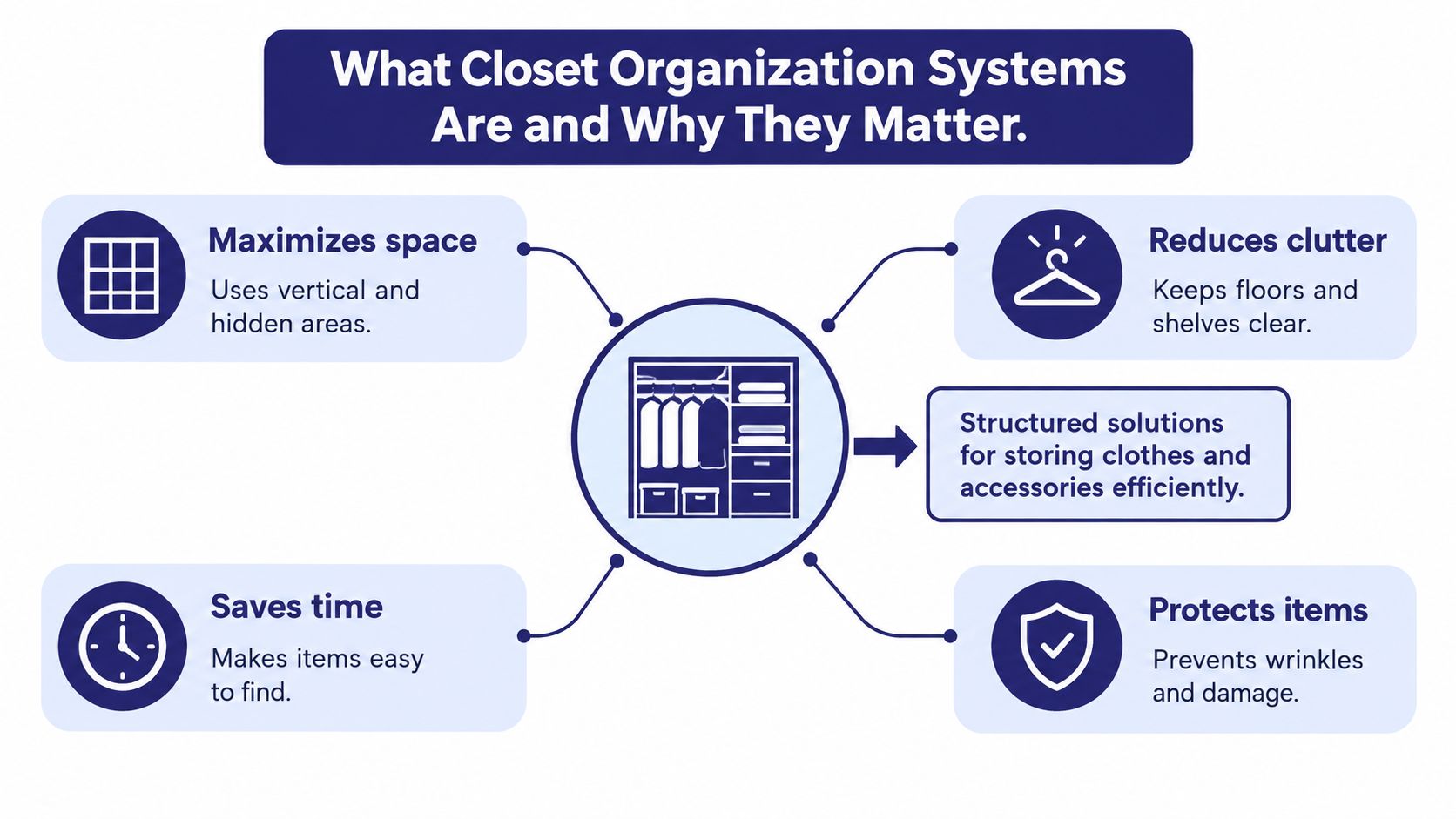
A closet organization system is a coordinated arrangement of storage components, such as hanging rods, shelves, drawers, bins, and shoe racks. Some systems are freestanding and easy to move. Others attach to the walls, adjust to different needs, or are designed as built-ins. Their purpose is to make the available space easier to use, not merely to make the closet look tidy.
That distinction matters. A row of bins may hide clutter without making daily items easier to find. A better layout puts frequently worn clothes within reach, gives folded garments a stable surface, and keeps the floor clear enough to access the rest of the closet.
Why a system can help
When storage has a clear place for different belongings, getting dressed can take less searching and reshuffling. Separating hanging clothes from folded items also reduces the chance that stacks topple each time you take something from the bottom. A system won't remove belongings you no longer use, but it can make what you keep more visible and accessible.
The need for organized storage isn't limited to large walk-in closets. A 2024 U.S. consumer survey found that 55% of homeowners said they didn't have enough home-storage solutions, such as cabinets, benches, shelves, or racks, to give everything a proper place. The survey covered home storage broadly, not closets alone, but it shows why closet planning can be part of a larger effort to create usable storage around the home. (2024 U.S. homeowner storage survey)
Start with what the closet needs to do
Think about the items that cause the most trouble. If shirts and jackets crowd the rod, a second hanging level may help. If shoes and folded clothes compete for shelf space, adjustable shelves or drawers may suit them better. If the problem is a lack of storage in a rental, a portable wardrobe may be more practical than a wall-mounted installation.
The right system depends on space, belongings, and daily habits, not on one universal closet plan. A small freestanding piece can be enough for a narrow closet, while a larger shared space may need several distinct zones.
Comparing Closet System Types and Who Each Fits Best
Different system types solve different problems. The main choices are freestanding units, modular systems, wire shelving, and custom built-ins. Compare them by how they attach, whether they can move with you, and how much flexibility you need, rather than assuming one category works for every home.
Freestanding units
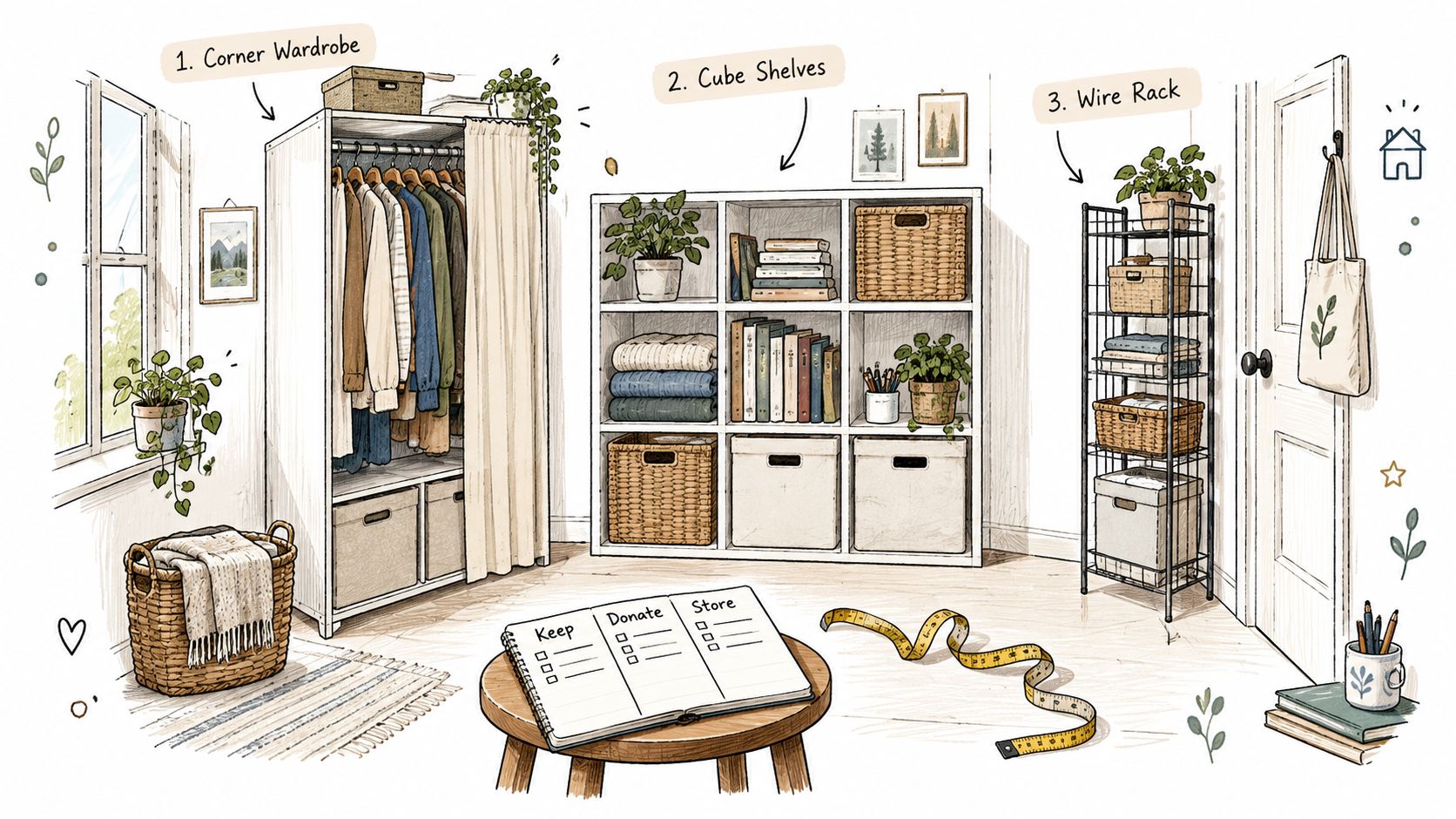
Wardrobes and armoires provide hanging space and may include shelves or drawers. Because they don't require a permanently installed closet framework, they can suit renters, bedrooms without closets, or households that need portable storage. The tradeoff is that the unit occupies floor space, so check that doors and drawers can open without blocking pathways.
Modular systems
Modular pieces combine components that can be rearranged or expanded. They can be a practical option if you want to tailor a layout without committing to a fully built-in design. You'll need to confirm that the available widths and heights fit your closet, and that assembly and wall attachment, if required, are appropriate for your home and lease.
Wire shelving
Wire systems leave items visible and allow air to move around stored belongings. They're often used in utility and linen closets, but the open grid can be less suitable for small objects or delicate folded items. Don't assume a shelf can hold a particular load just because it's made of metal; span, supports, fasteners, and installation all matter.
Custom built-ins
Built-ins are designed for a particular space and can use its walls and vertical area efficiently. They're a more permanent choice, which can make them a poor fit for a renter or someone expecting to move soon. Before choosing one, consider whether the added fit and fixed installation suit how long you plan to stay and how you use the room.
A September 2022 storage report found that more than 53% of homeowners in homes larger than 2,000 square feet had wire organizers or a built-in closet organizer, and 27% upgraded their closet system after moving in. The figures illustrate that closet storage can be both an existing home feature and a later project. (September 2022 storage report)
For another homeowner-focused perspective on planning a fitted layout, see this closet organization guide for South Jersey homeowners.
Materials and Load Limits to Know Before You Buy
A shelf's material alone doesn't tell you how much weight it can safely hold. Unsupported span, fastener penetration, the number of fasteners, panel density, and anchor quality all affect performance. A sturdy-looking shelf can still sag if it's too long for its supports or attached to the wall with unsuitable hardware.
As a general benchmark, a shelf spanning 24–36 inches may support approximately 50–75 pounds under a static, evenly distributed load. At a 36–48 inch span, the approximate capacity may fall to 40–50 pounds. These are not universal ratings for every product, so use them as context and follow the manufacturer's tested specifications for the actual shelf and installation. (closet shelf span and load guidance)
| Shelf span | Approximate load capacity | Notes |
|---|---|---|
| 24–36 inches | 50–75 pounds | Static, evenly distributed load |
| 36–48 inches | 40–50 pounds | Longer spans may need added support |
Distributed weight isn't the same as a heavy stack
A load rating for weight spread across a shelf doesn't automatically apply to a concentrated pile. A dense stack of books, shoes, or folded linens puts more pressure in a smaller area. If a shelf will hold heavy or tightly grouped items, check the manufacturer's guidance for that use rather than relying on a distributed-load figure.
Practical rule: Keep regularly loaded shelves within the manufacturer's tested span and load range. Add a center support or vertical panel when the design calls for one.
Check the wall connection
Whenever possible, secure the system to structural studs using the specified hardware. If studs aren't available where you need the supports, choose anchors with a rated capacity that exceeds the calculated load, including the shelf, brackets, and contents. Follow installation instructions for the wall type; drywall alone shouldn't be treated as a reliable support method without appropriate rated anchors.
This is especially important for renters. Ask the property manager what attachments are permitted before drilling, and make sure the system's weight and anchoring needs suit the approved installation. A freestanding unit avoids many wall-attachment questions, though it still needs to fit the room and remain stable in use.
Measuring Your Closet and Planning the Layout
Measure before choosing a system. A product that looks suitable online may be too deep for a door to close over, or too tall for a closet with a low ceiling. Write down the clear dimensions and note anything that could interfere with installation or everyday access.
Record the usable space
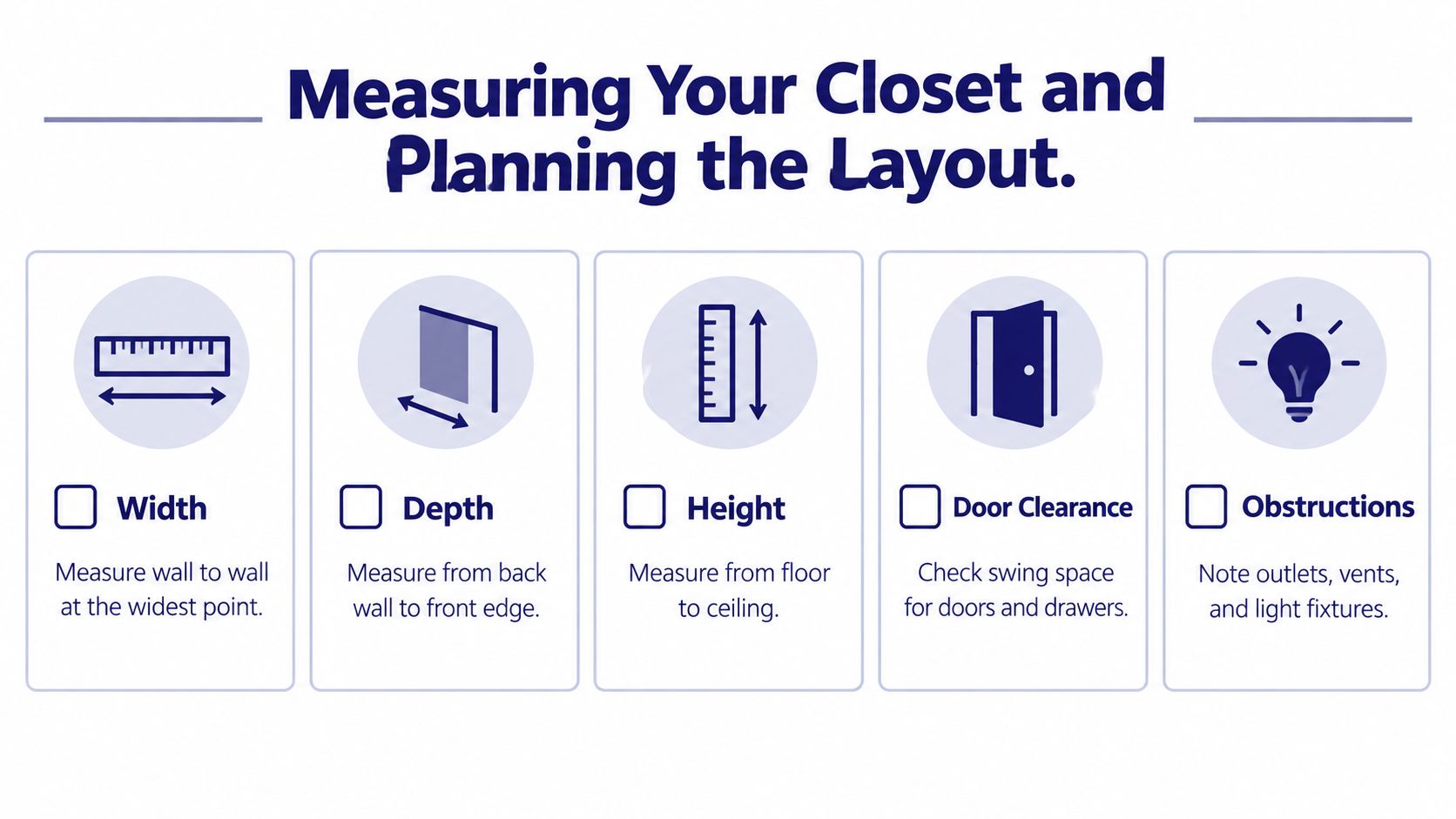
Measure width from wall to wall, depth from the back wall to the front edge, and height from the floor to the ceiling. If the walls or floor aren't perfectly even, note that too. Record door swing and clearance for drawers, and mark outlets, vents, light fixtures, and existing shelving that might limit where components can go.
Then inventory the belongings you plan to store. Separate clothes that hang from those you fold, and set aside space for shoes, bags, and accessories. If two people share a closet, identify which items each person needs to reach daily. That inventory gives you a more useful starting point than choosing a layout based only on an attractive display.
Put daily items where they're easy to reach
Place the items you use most often in convenient locations, then assign less-used or seasonal belongings to harder-to-reach areas. The 2010 ADA Standards use a forward-reach range of 15 to 48 inches above the floor, which can serve as a practical reference for frequently accessed clothing and accessories. It's a helpful planning benchmark, not a substitute for adapting the layout to the people who use the closet. (2010 ADA Standards reference for reach range)
Preserve airflow
Closets also need ventilation. Building Science Corporation identifies relative humidity above approximately 80% as a condition associated with mold growth in closets and recommends airflow paths that help equalize closet temperature and pressure with adjacent rooms. (Building Science Corporation on closet airflow and humidity)
Avoid blocking return grilles with bins, and don't close off an intended door undercut or transfer opening when arranging storage. In humid areas, leave airflow paths open and avoid crowding dense clothing storage tightly against every surface where practical.
Choosing a System Based on Space, Budget, and Lifestyle
A useful choice balances three things: the physical room, the amount you want to spend, and how you use your belongings. A system that holds a lot but makes daily items hard to see may not solve the problem. Similarly, a permanent installation may be a mismatch if you expect to move.
Consider a renter in a small apartment. A freestanding wardrobe or a combination of removable hanging organizers and a portable drawer unit may provide useful storage without permanent wall changes. The tradeoff is floor space, so measure the room and check that doors, drawers, and walkways remain clear.
A family sharing a walk-in closet has a different challenge. Instead of filling every wall with identical shelving, assign separate zones for each person and for different storage needs. Open shelves can make folded clothes easier to spot, while drawers keep smaller items contained. If seasonal belongings take up too much room, set aside a designated area for items that aren't in current use rather than mixing them into everyday storage.
For a homeowner planning to stay in the home, a built-in may be worth considering if the closet's existing layout wastes space or doesn't suit the household. Compare that investment with adjustable or modular alternatives, and decide whether you want the system to remain in place if your needs change.
A workable closet is the one you can use and reset without turning putting clothes away into another chore.
Before adding more capacity, ask whether everything needs to stay in the closet. A visible, easy-to-edit arrangement can be more useful than extra shelves that make it easier to hold items you rarely wear. Choose the simplest layout that supports your routines and makes the belongings you want to keep easy to find.
Installation and Maintenance Options and What They Cost
Installation can be a do-it-yourself project, a professional job, or a mix of the two. Freestanding furniture typically avoids permanent closet construction, though you'll still need to assemble it and confirm it sits safely in the room. Modular systems may require careful assembly and wall attachment; built-ins usually need accurate measurement and installation suited to the walls and product.
If you're renting, check your lease or ask the property manager before drilling or making any other lasting change. For a portable system, keep the assembly instructions and hardware together so you can dismantle and move it more easily. A hybrid approach can also work: have a qualified installer handle the structural work while you organize clothes and accessories afterward.
Costs vary with size, materials, drawers, accessories, delivery, and installation, so compare itemized quotes rather than relying on a broad label such as “custom.” Wire shelving is generally a more economical category, modular systems offer a middle ground, and custom built-ins typically require a larger investment. Ask what the quoted price includes, including measurements, hardware, removal of existing fixtures, and any wall repair.
Maintain the system you choose
Use cleaning guidance for the specific finish and material. Check that fasteners and brackets remain secure, and adjust shelves or rods when your storage needs change. Do not overload a component because it has held a lighter load without problems; use the product's instructions and rated limits.
A flexible system can also make later changes easier. If your wardrobe shifts from mostly hanging clothes to more folded items, adjustable shelves may save you from replacing the whole layout. That flexibility has value, but only if the system's components can be repositioned safely and the wall attachments remain suitable.
Getting Local Design Help and Planning Your Purchase
A local furniture or storage consultant can help translate measurements and storage needs into a workable layout. Bring photos of the closet, your measurements, and a rough list of what you need to store. Be clear about whether you rent or own, whether you can drill into the walls, and whether the system may need to move later.
Ask how each option attaches, what wall types it supports, what load limits apply, and which parts are included. If you're comparing quotes, check that they describe comparable materials, components, installation, and service. The Federal Trade Commission says advertisers need a reasonable basis for objective claims before publishing them, so statements such as “fits any closet” or “doubles storage” should be backed by measurable specifications and clear conditions. (FTC advertising substantiation policy)
Woodstock Furniture & Mattress Outlet offers armoires and wardrobes with hanging space, shelves, drawers, and removable closet rods for clothing storage. Seeing a piece in person can help you judge its size and layout, especially if you're considering a portable option instead of permanent installation.
Bring your measurements and photos to Woodstock Furniture & Mattress Outlet and ask about wardrobes and armoires that suit your room and storage needs. The team can help you compare practical options in person, including pieces with hanging space, shelves, drawers, and removable closet rods. Visit Woodstock Furniture & Mattress Outlet to explore what may fit your home.
Leave a Reply
You must be logged in to post a comment.