
Does your bookshelf need to store more, look calmer, define an undefined room, or display objects that mean something to you? Those needs can point to very different arrangements, and copying a polished shelf from a photo often creates problems in a real North Georgia home. Bright windows, warm wood floors, open-plan rooms, children, pets, rental restrictions, and frequently used books all affect what will work.
Start with the shelf you already have. Measure its depth, height, and clearance between levels. Note the room's wall color, natural and evening light, foot traffic, nearby furniture, outlets, and any restrictions on drilling or anchoring. Then decide which books need to remain easy to reach and which objects can serve as display pieces.
The following bookshelf styling ideas connect appearance to practical problems, including visual clutter, limited storage, awkward proportions, and rooms that lack a clear purpose. Each method has a tradeoff. Color organization can look cohesive but make browsing less intuitive. Decorative objects add personality but reduce book capacity. Dense shelving stores more but needs stronger attention to scale, weight, and access. Use the approaches selectively, then finish with a reusable checklist, common mistakes, and simple seasonal updates.
1. The Curated Mix With Color and Spine Design
Color can calm a visually busy bookshelf, especially when the shelf sits against a strong wall color or near patterned upholstery. Instead of sorting every title alphabetically, arrange books by related spine tones, moving gradually through warm colors, cool colors, or a restrained monochromatic palette. A living room with blue-gray walls might use blue, charcoal, and cream spines, while a home office with warm wood furniture could emphasize rust, tan, olive, and brown.
The approach works best when you still protect access to books you use often. Keep reference books, cookbooks, or current reads in a consistent zone rather than burying them inside a carefully arranged color sequence. Neutral spines in white, gray, and black can act as visual breaks between stronger sections, giving the eye somewhere to rest.

Make color work with North Georgia light
Natural light changes how book jackets read during the day. A sunny room can make saturated reds and yellows feel stronger, while a dim corner may flatten muted greens or blue-grays. Arrange the books in daylight, then check the display from the room's main sight line in the evening.
Try these adjustments:
- Use your existing collection first: Let the colors you already own determine the palette instead of buying books to complete a rainbow.
- Mix orientations: Stand most books upright, then add horizontal stacks to interrupt repeated vertical lines.
- Photograph the result: A phone photo makes uneven color transitions and crowded sections easier to spot.
- Keep useful books visible: Color order shouldn't prevent quick access to titles you regularly consult.
A rainbow shelf can feel playful in a family room, while a single-color arrangement may suit a bedroom or compact office better. The tradeoff is clear. This method prioritizes visual flow over strict cataloging, so it works best for readers who can tolerate a little less organizational precision.
2. The Layered Look With Books, Objects, and Art
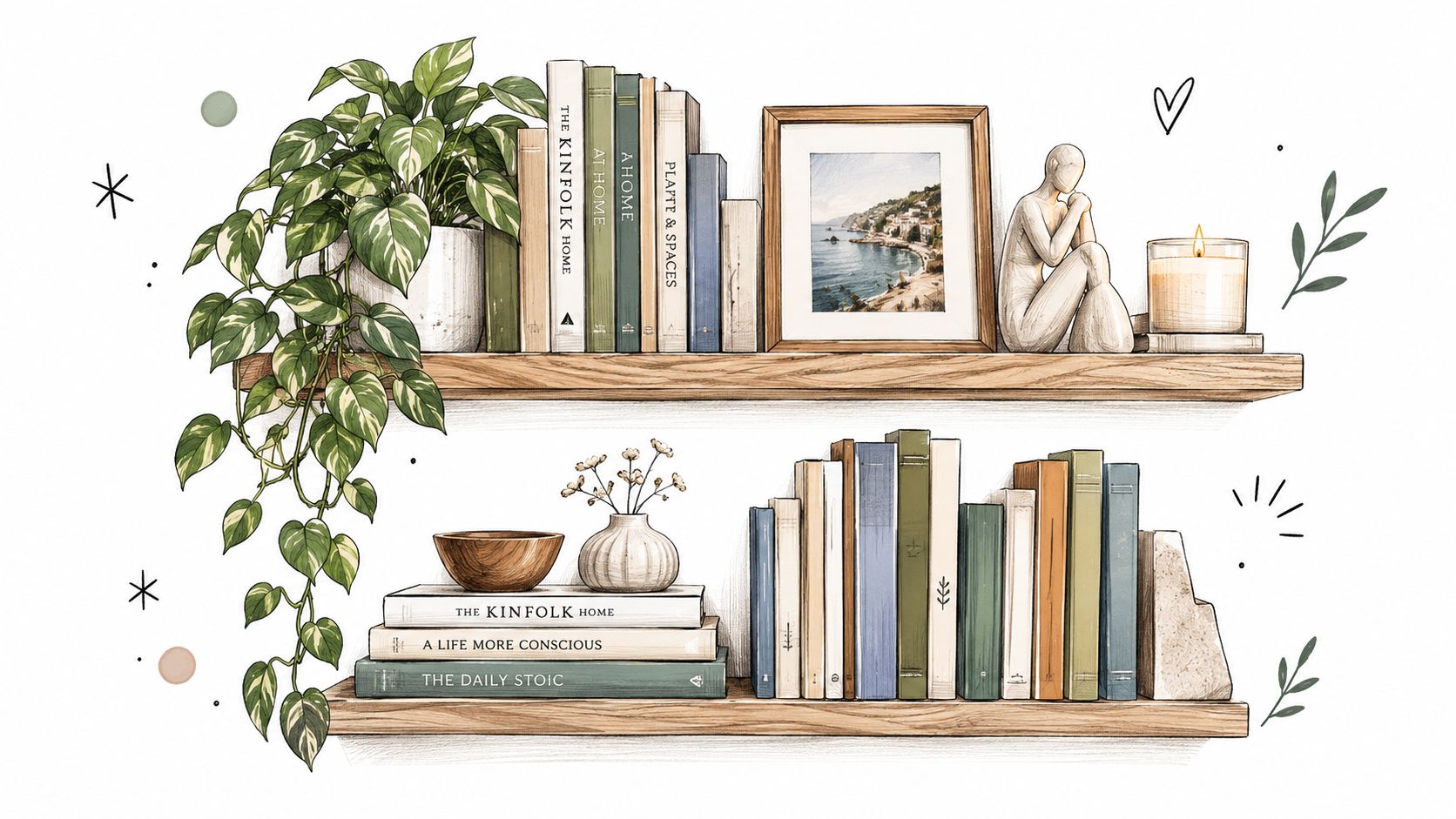
A bookshelf becomes part of a room's story when books share space with framed photographs, small sculptures, plants, candles, and meaningful objects. This solves a common problem: a wall of uninterrupted spines can read as heavy storage, while a shelf filled only with accessories may feel disconnected from how the room is used.
Begin by removing everything and treating the shelf as a blank surface. Put books back in groups, then add objects that relate to the room. A bedroom might pair novels with a small plant, a candle, and a framed family photograph. A home office could place professional books near an award or a piece of artwork. In a living room, travel photography and a decorative box can sit beside coffee table books.
A useful styling benchmark is the 60/30/10 rule, approximately 60% books, 30% decorative objects, and 10% empty space, as described in this shelf-styling guide. Treat it as a starting point, not a rigid requirement. A family bookshelf may need more books, while a bedroom display may benefit from more breathing room.
Build depth without creating clutter
Group related objects rather than scattering single items across every shelf. Vary height by placing a small object on a horizontal book stack, lean a frame against the back, or let a plant soften one edge. An office shelf should support concentration, while a bedside arrangement should feel quieter and less visually demanding.
For artwork intended to shape an office atmosphere, you can browse these art prints for offices. Keep fragile or sharp objects away from children's reach and avoid placing candles where heat could damage books or finishes.
Practical rule: Empty space isn't wasted space. It separates groupings so the display remains readable from across the room.
3. The Minimalist Stack With Horizontal Books
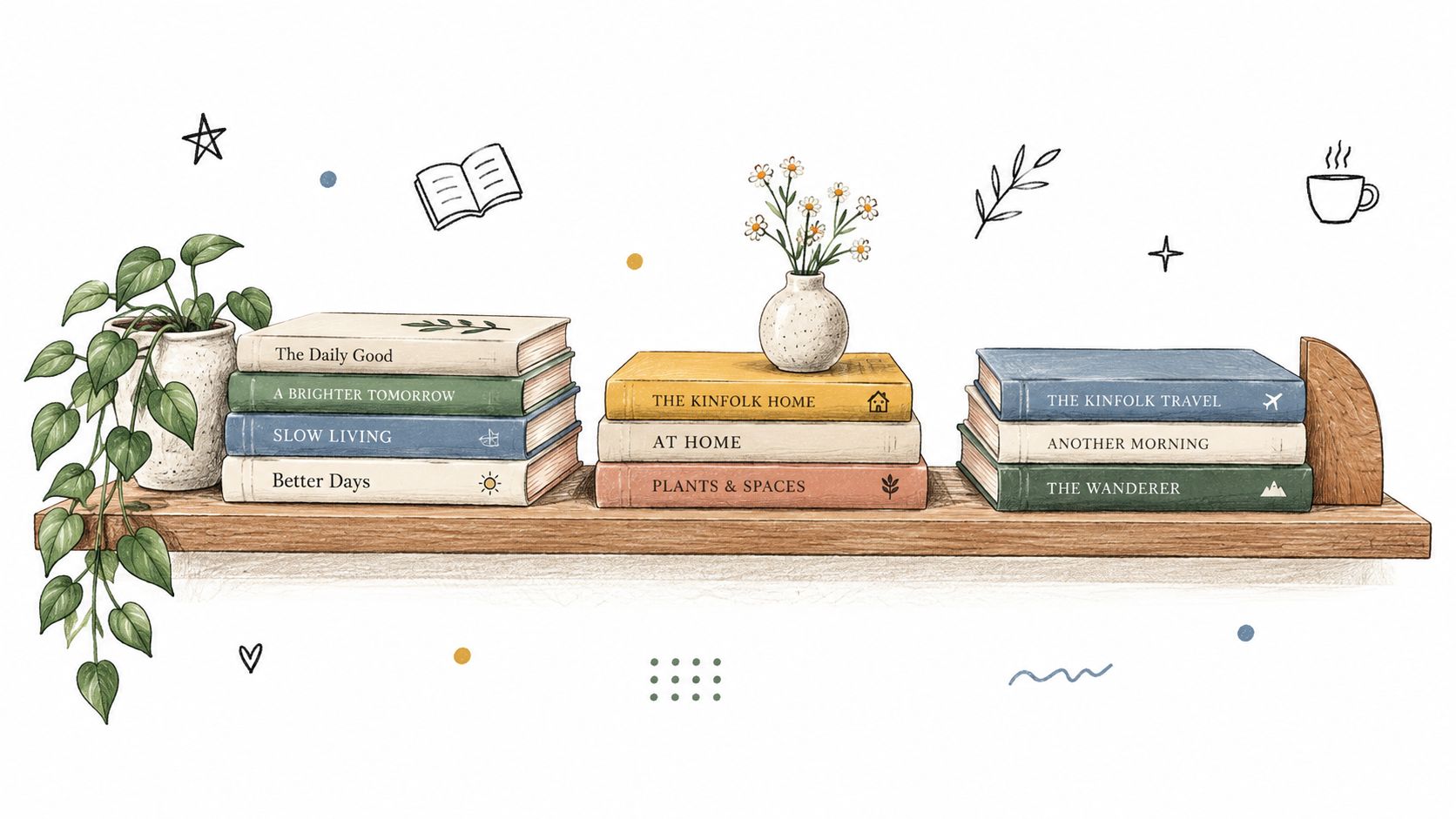
Horizontal stacks create visual pauses on shelves dominated by upright books. They also let you display attractive covers, support smaller objects, and use awkward low-height areas that won't comfortably fit a row of standing books. This arrangement suits a modern home office, a Scandinavian-inspired living room, or a bedroom where visual calm matters more than maximum capacity.
Start with a few stable stacks rather than turning every book sideways. Place larger, heavier books lower on the unit and smaller books higher up, following the practical hierarchy recommended by Homes & Gardens' bookcase styling guidance. A small vase, framed photograph, or decorative object can sit on a stack when the books remain stable and the object doesn't make the pile difficult to use.
Keep the stacks usable
Stacking is attractive until the reader has to dismantle half the shelf to reach a frequently used title. Put occasional-use books in horizontal piles and keep daily reads upright or near the front of an accessible section. Bookends or dividers can prevent shifting, especially on a shelf near a frequently used chair or a busy hallway.
A simple sequence helps:
- Create varied heights: Use stacks of different sizes so the shelf doesn't become a flat series of identical blocks.
- Protect stability: Keep piles aligned and avoid leaning books against unstable objects.
- Show selected covers: Rotate the top book when you want a low-effort change in the display.
- Preserve breathing room: Leave visible gaps between groups, but don't force identical spacing if the shelf proportions don't support it.
This method offers calm and structure, but it sacrifices some storage efficiency. If you own a large collection, use horizontal stacks as accents within a primarily upright arrangement rather than making them the entire system.
4. The Reading Nook Integration
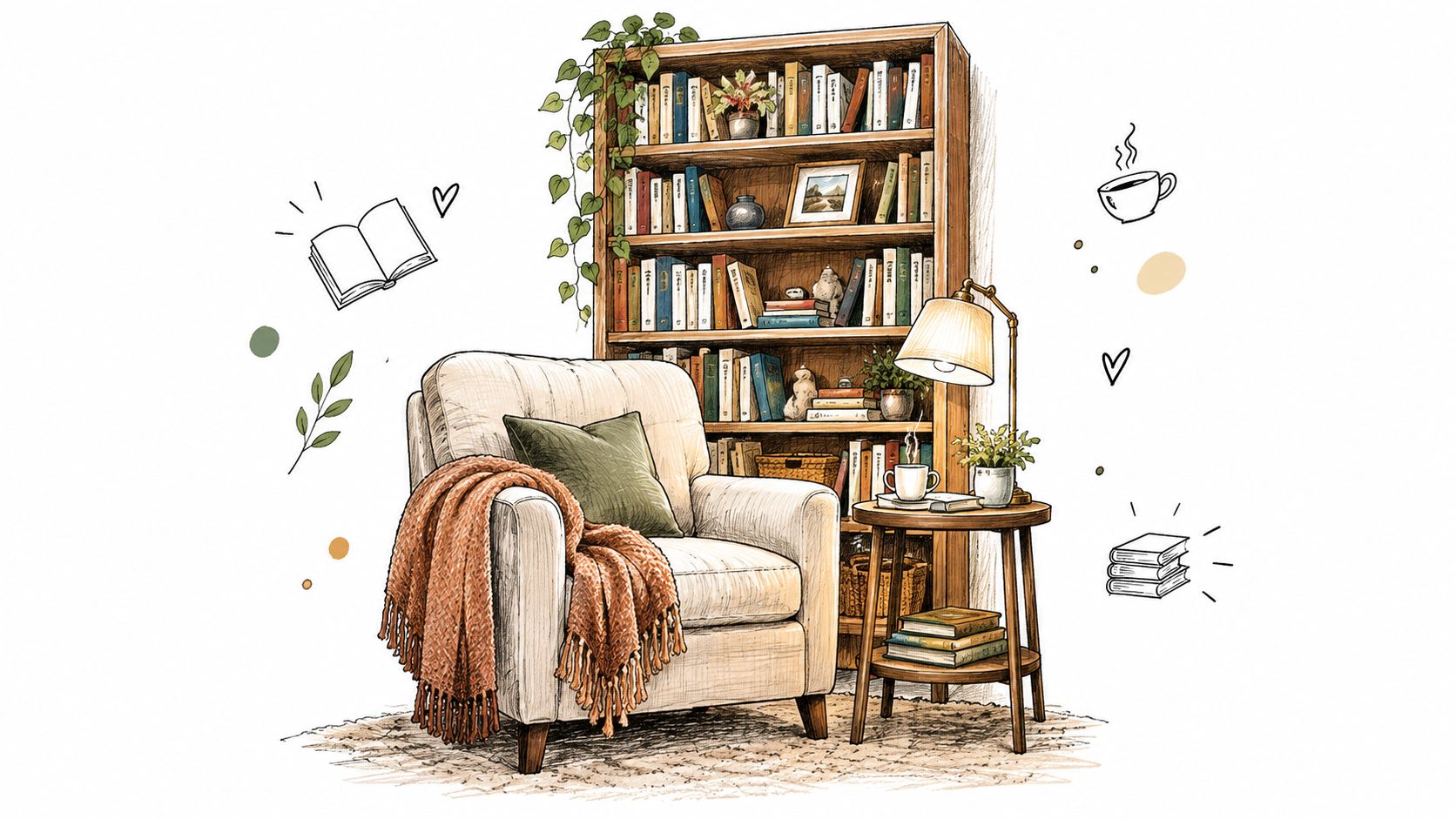
A bookshelf can solve more than a storage problem when it helps define a reading corner. Pair a tall bookcase with an upholstered chair, ottoman, side table, or bench, and the shelf becomes a backdrop for a space with a clear purpose. This is especially useful in open-plan North Georgia homes where a corner might otherwise feel unfinished.
Place books at the eye level you naturally see while seated, with favorite or current titles easy to reach. A chair positioned near the shelf should allow comfortable movement without blocking cabinet doors, walkways, or lower storage. A side table can hold a current book, reading glasses, or a drink, while a floor lamp or wall-mounted light provides task illumination after daylight fades.
Match scale, not just color
A large bookcase behind a small chair can overwhelm the corner, while a narrow floating shelf above a substantial bench may look undersized. Compare the visual weight of the seating, shelf, lamp, and nearby rug. Upholstery can echo one color from the books without matching every spine.
A bedroom corner might use a soft chair and a short shelf for a quiet retreat. A home office could place a tall unit behind a reading chair, creating a secondary zone without adding a partition. In a living room, a shelf behind an armchair can make an unused corner feel intentional.
Keep the books you want to read within comfortable reach. A beautiful reading nook that requires you to cross the room for every book won't support the habit.
The tradeoff is floor space. Seating makes the arrangement more useful, but it also increases the footprint and may not suit a narrow rental or a high-traffic family room. In smaller spaces, a wall-mounted shelf above a compact bench can provide the same visual cue with less obstruction.
5. The Vintage and Eclectic Mix
A vintage and eclectic shelf works when a room feels too anonymous or overly coordinated. Leather-bound books, old maps, antique boxes, travel souvenirs, writing tools, and collected art can give the display a personal history. The arrangement doesn't need a single color scheme, but it does need relationships between objects so it feels collected rather than accidental.
Choose one or two anchor pieces first. A vintage globe might establish a travel theme in a living room, while an antique writing box could anchor a creative home office. Build around those pieces with books and smaller objects that share an era, material, subject, or personal connection.
Give variety a quiet structure
Group similar stories together. Travel books can sit with maps and souvenirs, while vintage photography can share a shelf with older art books. Use horizontal stacks to change height, and place smaller objects in trays or wooden boxes so they don't spread into visual noise.
An eclectic arrangement benefits from pauses. Leave a little wall or shelf surface visible between collections, especially if the unit stands against a dark wall or near patterned furniture. Plants or fresh flowers can add a living element, but choose containers that don't compete with fragile antiques.
This approach is ideal for a home library or character-rich living room, yet it can feel crowded quickly. Avoid treating every keepsake as a focal point. Select objects that invite discovery, then store the rest elsewhere so the display has room to breathe.
6. The Symmetrical Arrangement With Anchor Pieces
Symmetry can calm a room with awkward proportions, mismatched furniture, or several competing focal points. Matching bookends, paired objects, or a central artwork can create a visual center that makes a bookshelf feel deliberate. The method suits traditional and transitional rooms, but a near-symmetrical arrangement can also bring order to a contemporary office.
Start with visual weight rather than item count. Two small objects may not balance one substantial sculpture, even if they occupy similar shelf areas. Place the anchor at the center or use matching anchors at the ends, then arrange books and objects so both sides feel comparable without requiring identical contents.
Use near-symmetry in lived-in rooms
Strict duplication can make a shelf feel staged. Try similar heights, materials, or colors with small differences in the books or personal objects. A home office might center framed artwork on one level and balance reference books on both sides. Bedside shelving can use matching bookends while allowing each side to reflect the person who uses it.
For an example of how bookends can combine function and decorative character, see this bookend guide. Choose supports that hold books securely and suit the shelf's material, whether that means wood, metal, or another finish.
Stand several feet away and check the arrangement from the doorway or sofa, not only from directly in front of the bookcase. Symmetry that looks precise up close can appear lopsided from the room's main sight line if one side carries darker colors or larger objects.
7. Themed Collections by Subject or Interest
Themed sections solve an everyday access problem. When travel books, cookbooks, children's classics, art books, and professional resources have clear zones, you can find what you need without sacrificing the shelf's visual character. The categories also turn the unit into a series of small stories instead of one uninterrupted block.
Choose a manageable set of themes. A kitchen shelf might combine cookbooks, recipe cards, food artwork, and a vintage utensil. A home office could separate professional development, industry resources, and creative inspiration. A living room travel section might include guidebooks, maps, photographs, and souvenirs from places you've visited.
Let each section do useful work
Keep frequently referenced books at a comfortable height. Use bookends, dividers, or a meaningful object to mark the change between subjects. If visitors won't immediately understand the categories, a small label can help, but the books and objects should still feel natural without signage.
Avoid creating so many categories that each group contains only a few isolated books. A themed area should feel intentional and substantial, not like a filing system broken into tiny fragments. For families, lower shelves can hold children's books by reading stage or interest, while fragile objects stay higher and out of reach.
Rotate one or two related objects when the season or household interest changes. A gardening section can gain a small botanical print in spring, while a winter reading area might emphasize scenic photography and warm textiles. The books remain useful, and the display changes without requiring a new collection.
8. Open Shelving for a Bedroom or Bathroom Retreat
Bedrooms and bathrooms often benefit from shelves that feel lighter and calmer than storage-heavy units. Interspersing wellness, nature, art, or design books with folded linens, plants, smooth stones, and restrained decorative pieces can create a retreat-like mood. The approach addresses a room that feels purely functional, but it requires careful material choices.
Use a quiet palette such as cream, soft gray, muted earth tones, and natural wood. In a bedroom, combine a small group of books with a plant, a framed print, or a soft textile. In a bathroom, rolled towels can add texture, but keep books and paper items away from direct splashes, steam, and areas where water may collect.
Treat moisture as a design constraint
Bathrooms can damage moisture-sensitive books, photographs, untreated wood, and some decorative finishes. Keep valuable or irreplaceable pieces in a drier room, and use the bathroom shelf for items that can tolerate the environment. Avoid open flames near towels, paper, and toiletries, and don't block ventilation or outlets with decorative objects.
A guest bedroom may use calming books, soft lighting, and a few welcoming objects. A primary bedroom can keep the shelf intentionally sparse so it doesn't compete with sleep. The tradeoff is storage capacity. This style favors atmosphere over maximum book count, so it works best when the display holds selected titles and practical linens rather than the entire household library.
In a bathroom, durability and moisture safety come before styling. A shelf should look peaceful without putting vulnerable books or objects at risk.
Comparison of 8 Bookshelf Styling Ideas
| Style | Implementation complexity | Resource requirements | Expected outcomes | Ideal use cases | Key advantages |
|---|---|---|---|---|---|
| The Curated Mix: Combining Books by Color and Spine Design | Medium, initial sorting and periodic updates | Mostly existing books; time to sort; neutral-spined breaks optional | Visually cohesive, gallery-like color flow | Open shelving in living rooms, bedrooms, home offices | Strong visual impact; encourages browsing; cohesive aesthetic |
| The Layered Look: Mixing Books with Decorative Objects and Art | Medium–High, thoughtful composition and updates | Decorative objects, artwork, plants, lighting; more styling time | Rich, personalized layered display with depth | Bedrooms, living rooms, home offices that showcase personality | Highly personal; dynamic variety; easy seasonal refresh |
| The Minimalist Stack: Strategic Horizontal Book Arrangements | Low–Medium, simple to implement but needs upkeep | Few books per stack, bookends/dividers, tidy shelves | Calm, organized minimalist look; covers featured | Small spaces, reading nooks, Scandinavian or contemporary interiors | Reduces visual clutter; easy access; highlights covers |
| The Reading Nook Integration: Bookshelves as Part of a Functional Seating Display | High, requires furniture coordination and layout planning | Seating, side table, task lighting, coordinated shelving, space | Functional, inviting focal reading zone that encourages use | Bedrooms, living rooms, home offices with a spare corner | Encourages reading; combines storage and seating; cozy focal point |
| The Vintage and Eclectic Mix: Incorporating Books with Antiques and Collectibles | Medium–High, curatorial skill to avoid clutter | Vintage/antique items, collectibles, careful maintenance | Story-driven, characterful, conversational display | Home libraries, eclectic living rooms, creative home offices | Unique personality; conversation pieces; sustainable reuse |
| The Symmetrical Arrangement: Balanced Shelving with Anchor Pieces | Medium, requires matching pieces and balance checks | Matching bookends/anchor objects, consistent spacing | Orderly, formal, harmonious shelving | Traditional or transitional living rooms, offices, bedside tables | Calm, easy-to-maintain symmetry; intentional sophistication |
| The Themed Collections: Organizing Shelves by Subject or Interest | Medium, requires categorization and periodic maintenance | Related objects, labels/dividers, sufficient themed books | Narrative mini-sections that simplify discovery | Kitchens (cookbooks), home offices, living rooms with hobbies | Functional organization; highlights passions; encourages browsing |
| The Open Shelving Display: Creating Bedroom and Bathroom Spa-Like Atmospheres | Medium, curated selection and regular upkeep | Spa-like objects (towels, diffusers, candles, plants), few books | Tranquil, retreat-like atmosphere prioritizing wellness | Primary bedrooms, guest rooms, master bathrooms | Promotes relaxation; minimalist calming aesthetic; multi-sensory appeal |
Make the Arrangement Easy to Live With
A styled shelf should support the way your household moves through the room. Before you buy accessories or move furniture, test the existing unit with the books and objects you already own. A shelf that looks balanced in a close-up photograph may feel too dark, too tall, or too crowded when viewed from the entry, sofa, bed, or kitchen sight line.
Use this checklist before calling the arrangement finished:
- Measure the shelf: Check depth, internal height, overall width, and clearance around doors, windows, outlets, and walking paths.
- Clean the surface: Remove everything, dust the shelves, and inspect for loose hardware or unstable brackets.
- Protect daily access: Keep current reads, reference books, children's favorites, and frequently used items within easy reach.
- Vary orientation: Combine upright rows with horizontal stacks to interrupt repetitive lines.
- Balance visual weight: Distribute dark colors, large books, plants, and dense objects instead of concentrating them on one side.
- Reserve empty space: Use breathing room to separate groupings and prevent the shelf from reading as a solid block.
- Secure unstable pieces: Use proper bookends or shelf supports, and keep fragile objects away from children, pets, and busy walkways.
- Check the main sight line: Step back and view the shelf from where people sit, enter, or work.
Mistakes that make shelves harder to use
Overcrowding is the most common problem. Adding one more object can hide the book behind it, make dusting difficult, and turn intentional groupings into visual noise. If the shelf feels heavy, remove items before rearranging everything.
All objects at one height create a rigid band, while ignoring scale can make a small shelf look overwhelmed by oversized art or a tall bookcase look underfilled. Blocking light, outlets, vents, or access to nearby furniture also creates a practical problem that decoration can't solve. Symmetry shouldn't be forced when the shelf, wall, or furniture isn't symmetrical. Let visual weight guide the arrangement instead of duplicating objects mechanically.
In bathrooms, don't use moisture-sensitive books, photographs, untreated wood, or fragile materials without considering steam and splashes. A guest bath may be better served by durable accessories and rolled linens than by a valuable collection.
Refresh the display without replacing it
Seasonal updates can stay simple. Change a few book jackets, exchange heavy throws for lighter textiles, add branches or a small plant, or rotate a framed print and a few display objects. In cooler months, warm wood tones and textured fabrics can make a reading corner feel inviting. During brighter seasons, lighter covers, green foliage, and more visible wall space can keep the arrangement airy.
You don't need to restyle every shelf at once. Photograph the arrangement you like, keep a few objects in storage, and swap only what changes the room's mood. The most useful bookshelf styling ideas are the ones you can maintain while still finding your books, cleaning the surface, and living normally around the furniture.
Woodstock Furniture & Mattress Outlet can help you compare furniture proportions, storage pieces, seating, and décor in person when you're deciding how a bookshelf will relate to the rest of a room. Its Room Planner tools and design resources can also help you think through placement before making changes, while an in-store visit lets you judge scale and finish in a real setting.
Woodstock Furniture & Mattress Outlet offers furniture, mattresses, storage, seating, and décor for rooms that need to work as well as look finished. Visit Woodstock Furniture & Mattress Outlet to compare proportions and room pieces in person, and bring your shelf measurements so the guidance can stay practical.
Leave a Reply
You must be logged in to post a comment.