
Waking up with a sore back is an awful way to start the day. More often than not, the mattress you’re sleeping on is the real culprit. It’s tempting to search for a single mattress brand for back pain, but the truth is: the right mattress isn’t about a brand name—it's about matching specific support and comfort features to your body and sleep style.
Why Your Mattress Is the Foundation of a Healthy Back
Think of your mattress as the foundation of a house. If that foundation is cracked, unstable, or uneven, the whole structure on top of it—your body—is going to have problems. Starting your day with stiffness, aches, and soreness is a clear sign that your mattress isn't doing its job anymore. This usually boils down to a few common issues.
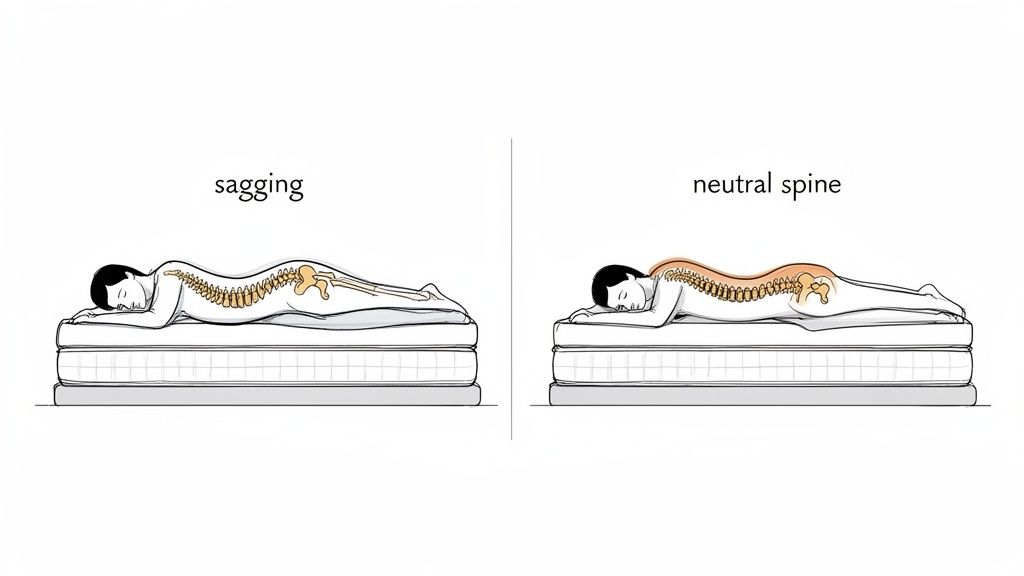
Over time, mattresses wear out. The foams and springs that once held you up can soften and break down, creating a hammock-like dip right in the middle. When that happens, your spine is forced into an unnatural curve, straining muscles and ligaments all night long.
Identifying the Root of the Problem
Figuring out why your current mattress is causing you pain is the first step toward finding a real solution. Is it too soft, letting your hips sink way too far and throwing your spine out of whack? Or is it too firm, creating painful pressure points on your shoulders and hips while leaving your lower back totally unsupported?
Here are a few tell-tale signs that your mattress is the source of your back pain:
- Visible Sagging or Body Indentations: This is a clear indicator that the support system has failed.
- Waking Up Stiffer Than When You Went to Bed: This means your body isn't being held in a neutral, relaxed position while you sleep.
- Tossing and Turning to Find a Comfortable Spot: Your body is instinctively trying to get away from bad alignment and pressure points.
The goal isn't just to buy a new mattress; it's to find the right mattress that solves these specific problems. When you focus on fundamentals like spinal alignment and personalized support, you can cut through the marketing noise and find genuine, lasting relief.
This guide will walk you through exactly what makes a mattress supportive, helping you understand what to look for based on your own needs. Making a smart choice starts with knowing what you’re looking for, and trying different options firsthand is an important part of the process. At Woodstock Furniture & Mattress Outlet, our knowledgeable team is ready to help you explore these solutions in person, ensuring you find a mattress that will truly support a healthier back for years to come.
The Science of Support and Spinal Alignment
To get to the bottom of your back pain, you have to look past marketing slogans and understand what a mattress is really supposed to do. Think of your spine as a gently curving bridge—it needs consistent support from end to end. The number one job of your mattress is to provide that support, helping you maintain what sleep experts call neutral spinal alignment all night long.
When your spine is neutral, it holds its natural S-curve without being pushed or pulled into an awkward position. This allows the muscles, ligaments, and discs in your back to finally relax and recover while you sleep. A mattress that can’t keep you aligned is often the direct cause of that dreaded morning stiffness and pain.
Support vs. Firmness: What Is the Difference?
This is easily one of the biggest points of confusion for mattress shoppers. People use the terms "support" and "firmness" interchangeably, but they are two very different things. Getting this right is critical for finding real back pain relief.
- Support is the mattress's ability to push back against your body, keeping your spine in that ideal neutral alignment. This comes from the inner workings, like the coil system or high-density foam core. A properly supportive mattress keeps your heavier parts, like your hips and shoulders, from sinking in too far.
- Firmness is simply how hard or soft the mattress feels right on the surface. It's that immediate impression you get when you lie down. This is all about the top comfort layers—things like memory foam, latex, or soft pillow tops.
Here's the key takeaway: you can have a very soft mattress that is incredibly supportive, or you can have a rock-hard mattress that offers almost no support at all. The goal is to find a mattress with a strong, supportive core and then pick a firmness level that feels comfortable for your body and the way you sleep.
The Myth of the Extra-Firm Mattress
For decades, the common advice for back pain was to sleep on the hardest mattress you could find. We now know that's not good advice for everyone. Modern sleep science and real-world feedback tell us that a mattress that’s too firm can be just as bad as one that's too soft.
If a mattress is too firm, it won't let your shoulders and hips sink in even a little bit. This can push your spine into an unnatural, flat line and create painful pressure points. Your lower back may end up getting no support, and you can wake up feeling just as sore and stiff as you would on an old, sagging mattress.
Finding Your Ideal Firmness Level
So, what’s the right firmness for you? It's all about finding a balance that’s tailored to your body and your sleep habits, not a one-size-fits-all solution. There are two main factors that will point you in the right direction:
- Your Body Weight: Sleepers with a lighter frame (under 130 lbs) often do better on a slightly softer mattress. They need that extra give to get proper contouring and pressure relief. On the flip side, individuals with a heavier frame (over 230 lbs) typically need a firmer, more substantial mattress to prevent sinking too deep and to ensure their spine stays supported.
- Your Primary Sleep Position: The position you sleep in most of the night drastically changes how your weight is distributed across the mattress. A side sleeper needs a lot more cushioning for their hips and shoulders, while back and stomach sleepers generally need a firmer surface to keep their spine from dipping.
Of course, a good mattress is just one piece of the puzzle. Adding some core stability exercises for a stronger back can build up the muscles that support your spine, making you more resilient to pain. When you combine a supportive sleep surface with a stronger core, you’ve got a powerful strategy for long-term relief.
Armed with this knowledge, you can now look at mattresses with a more critical eye. You're no longer just shopping for a mattress; you're looking for a real solution for your back.
Comparing Mattress Types for Back Pain Sufferers
Once you’ve got a handle on support vs. firmness, you can start digging into the different kinds of mattresses out there. It’s easy to get lost in brand names, but it’s more helpful to look at how a mattress is actually built. Each type—from memory foam to hybrid—has its own unique feel and support system, and that’s what makes one better than another for you.
The mission is simple: find a mattress construction that keeps your spine in a neutral line while also feeling comfortable enough to sleep on. There’s no single "best" type for everyone with back pain. The right choice is all about your body, how you sleep, and what feels right when you lie down. Let’s break down the main categories so you know what you’re getting into.
Memory Foam Mattresses: Who They Are For
Memory foam is famous for that deep, body-hugging sensation. It uses your own body heat to soften and mold to your shape, creating a cradle that’s amazing for relieving pressure. This makes it a go-to for anyone who needs serious cushioning around their joints.
This type can be a great match for:
- Dedicated Side Sleepers: The way it contours allows your shoulders and hips to sink in just enough, which is key to keeping your spine straight when you’re on your side.
- Individuals with Sharp Pressure Points: If you’re constantly waking up with sore hips or shoulders, the way memory foam absorbs that pressure can be a game-changer.
- Couples Concerned with Motion Transfer: Memory foam is incredible at isolating movement. Your partner can toss and turn all night, and you’re much less likely to feel a thing.
Latex Mattresses: Who They Are For
Latex mattresses offer a really unique feel that’s both contouring and responsive. Instead of the slow-sinking feeling of memory foam, latex gives you a more buoyant, lifting support. It feels more like you’re sleeping on the mattress rather than in it. It still molds to your curves, but it bounces back into shape almost instantly.
You might want to consider a latex mattress if you are:
- A Combination Sleeper: The springy, responsive nature of latex makes it super easy to switch positions during the night without feeling like you’re stuck in quicksand.
- Someone Who Sleeps Hot: Natural latex is naturally breathable and doesn't hold onto heat the way some traditional memory foams are known to do.
- Looking for Exceptional Durability: High-quality latex is one of the toughest, most durable mattress materials you can find. It’s fantastic at resisting sagging and body impressions for years to come.
This visual guide is a helpful starting point for connecting your body weight and sleep style to the right firmness level, which is a huge part of picking the right mattress type.
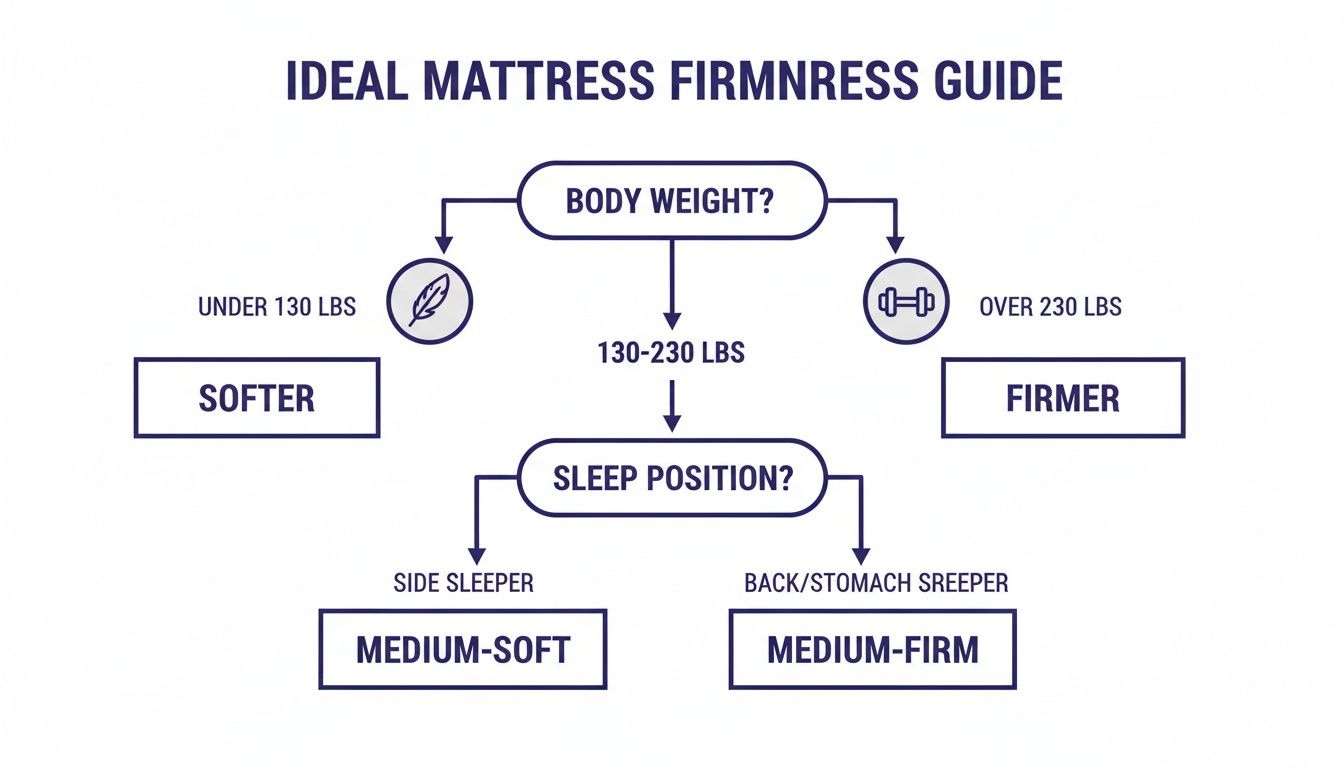
As the chart shows, lighter sleepers generally get better pressure relief from a softer mattress, while heavier sleepers usually need a firmer surface to get the spinal support they need.
Innerspring Mattresses: Who They Are For
Traditional innerspring mattresses are the kind most of us grew up sleeping on. The core is built from interconnected steel coils, which gives them a firm, bouncy feel and allows for tons of airflow. While they don’t offer the same deep contouring as foam beds, modern innerspring designs are much more comfortable than they used to be.
An innerspring mattress could be the right fit for:
- Strict Stomach and Back Sleepers: These positions really benefit from a firm, even surface that keeps the hips from sinking and throwing the spine out of alignment.
- Shoppers Prioritizing Airflow: The wide-open structure of a coil system lets air move freely, making innerspring mattresses one of the coolest options you can buy.
- Those Who Prefer a Bouncy Feel: If you like a responsive surface that makes getting in and out of bed easy, you can’t beat the classic bounce of an innerspring.
Hybrid Mattresses: Who They Are For
Just like the name says, hybrid mattresses aim to combine the features of other mattress types. They start with a support core of individually pocketed coils (like an innerspring) but top it with thick comfort layers made of memory foam, latex, or other materials. The goal is to deliver both robust support and pinpoint pressure relief.
A hybrid mattress is often a go-to recommendation for back pain because it balances robust support from the coils with the conforming comfort of foam or latex, providing a solution that works for a wide range of sleepers.
This do-it-all option can be excellent for:
- Sleepers Needing a Balance of Support and Cushioning: This is where hybrids shine. The coils provide the foundational support your spine craves, while the foam layers cushion your joints.
- Couples with Different Preferences: The blend of features often makes both partners happy, even if one prefers foam and the other prefers springs.
- Anyone Unsure Where to Start: Because they offer such a balanced feel, hybrids are a fantastic starting point for people who are just beginning their search for a mattress to help with back pain.
To help you compare these options at a glance, we've put together a simple chart outlining the key characteristics of each mattress type for those dealing with back pain.
Mattress Type Characteristics for Back Pain Sufferers
| Mattress Type | Primary Support Mechanism | Pressure Relief Level | Ideal For Sleep Position | Typical Feel |
|---|---|---|---|---|
| Memory Foam | High-density foam core | High | Side sleepers | Deep contouring, slow response |
| Latex | Latex foam core | Medium to High | Combination sleepers | Buoyant, responsive |
| Innerspring | Interconnected steel coils | Low | Stomach & back sleepers | Bouncy, firm |
| Hybrid | Pocketed coils & foam layers | High | All positions | Balanced, supportive |
Ultimately, this table is just a guide. The best way to know for sure is to try them out yourself, but this should give you a much clearer idea of what to expect from each construction.
How Your Sleep Position Determines Your Mattress Needs
Even if we’ve picked the perfect materials and construction, there's one more piece to the puzzle that trumps just about everything else: your favorite sleep position. This is probably the single most critical factor in finding relief from back pain.
The way you sleep every night determines where your body puts the most pressure on the mattress and exactly what kind of support you’ll need to keep your spine in that happy, neutral alignment. A mattress that feels like heaven to a side sleeper could be a total nightmare for someone who sleeps on their back. It’s all about finding the mattress that’s perfectly matched to you.
Needs of the Side Sleeper
Side sleeping is incredibly common, but it also creates a unique challenge for keeping your spine straight. When you’re on your side, your body's widest points—the shoulders and hips—dig into the mattress more than anything else.
If the mattress is too firm, it’ll just push back against those pressure points, forcing your spine to curve uncomfortably. This is a fast track to waking up with sore shoulders, hips, and a strained lower back. On the flip side, a mattress that’s too soft will let you sink in too deep, causing your spine to sag into a hammock-like position. Not good.
For side sleepers, the sweet spot is a mattress with enough give in the top layers to cushion the shoulders and hips. You want them to sink in just enough to let your spine stay perfectly straight from your neck all the way down. This is usually found in medium-soft to medium-firm mattresses, particularly hybrids or memory foam models.
Needs of the Back Sleeper
Sleeping on your back is generally considered one of the best positions for spinal health, but there's a huge catch: your mattress must provide solid support to your lower back, or lumbar region.
The biggest pitfall for back sleepers is a mattress that allows the lower back to sink down, creating a gap. When your lumbar spine isn't supported, your muscles have to work overtime all night to hold you in place, which is why you might wake up stiff and sore.
A mattress that’s too soft will let you sag, and one that's too firm can also create a gap because it doesn't conform to your body's natural curve. The goal is to find a surface that perfectly fills in and supports the small of your back. This is why a medium-firm feel often hits the mark, giving you that ideal balance of contouring and deep-down support.
Needs of the Stomach Sleeper
Of all the positions, stomach sleeping is easily the riskiest for your back and neck. Lying on your stomach puts a ton of stress on your spine. Since most of us carry our weight in our midsection, that area tends to sink deepest into the mattress.
When your hips dip lower than your shoulders, it forces your lower back into a dramatic, unnatural arch. Holding that posture for hours is a recipe for chronic pain. For this very reason, stomach sleepers almost always need a firmer mattress.
A firm or even extra-firm surface keeps the hips from sinking, which helps keep the spine on a more level plane. You still want a little cushioning for comfort, but preventing that spinal curve has to be the top priority. Innerspring and firm hybrid mattresses are often great choices here.
Recent analysis confirms just how critical finding this balance is. Some studies show that a medium-firm feel helps maintain the spine's natural curve, and that proper spinal alignment is a key priority for shoppers with back pain. You can read the full analysis of mattress features for back pain to better understand these connections.
Why You Should Always Test a Mattress In Person
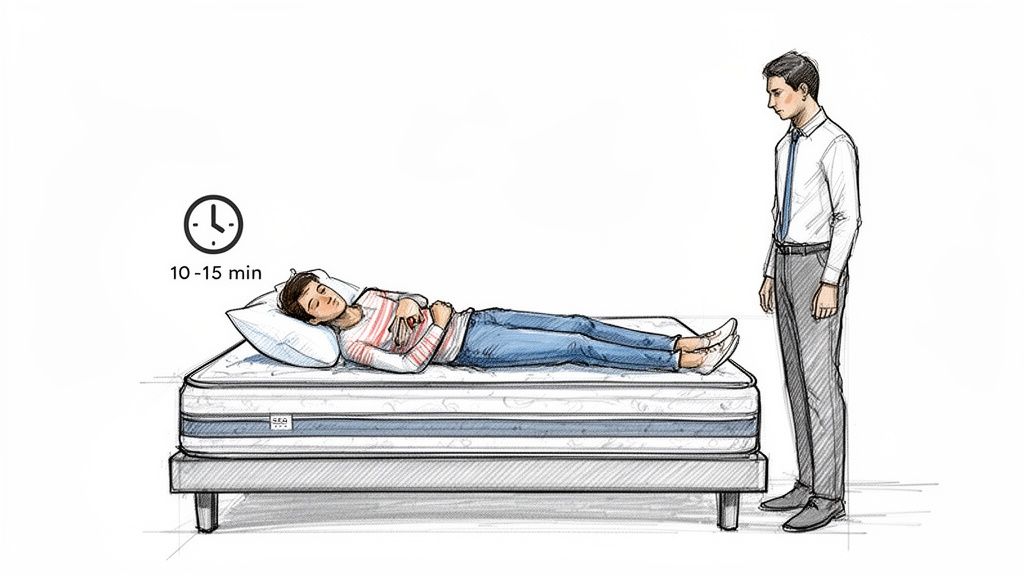
Reading online reviews and comparing specs is a great way to start your mattress search. It helps you narrow down the field. But here’s the thing: no amount of research can tell you how a mattress will actually feel when you lie on it. That’s why there’s no substitute for testing a mattress in person.
Think about it. Words like "medium-firm" or "plush" are completely subjective. What feels like a cloud to one person might feel like a rock to another. The only way to truly know if a mattress gives your back the support it needs is to lie down and let your body decide.
How to Properly Test a Mattress in a Showroom
Walking into a showroom is the final, most important step of your research. To get the most out of your visit, don’t just pop in for a quick look. Treat it like a proper test drive.
- Wear Comfortable Clothes: You wouldn't test drive a car in a tuxedo, right? Wear something loose and comfy, like what you’d lounge around the house in.
- Assume Your Position: Don’t just sit on the edge. Lie down in the exact position you normally sleep in, whether you’re a side, back, or stomach sleeper. This is the real test.
- Stay for a While: This one’s key. Don’t just lie down for 30 seconds and hop off. Plan to spend at least 10-15 minutes on any mattress you’re seriously considering. This gives your body time to settle and really feel how the mattress contours and supports you.
- Focus on Key Areas: Pay close attention to your lower back, hips, and shoulders. Do you feel any uncomfortable pressure? Critically, is there a gap between your lower back and the mattress, or does it feel properly supported?
The goal of an in-store visit isn't to be sold, but to be educated. Our team is here to offer guidance and give you the space you need to make a confident, unhurried decision.
This hands-on experience is where you can truly feel the difference between different mattress technologies. For instance, you can read about a hybrid mattress with a zoned coil system, but you can’t understand how that targeted lumbar support feels until you try it. Some designs focus on this kind of targeted support, which may help reduce lower back and hip pain compared to a standard innerspring for some individuals.
Ultimately, reading about mattress tests is helpful, but feeling the support for yourself is what makes all the difference. To dig deeper into how mattress construction can impact your sleep quality, you can explore the findings of comprehensive mattress tests from industry experts. A little time spent in a showroom is a great way to ensure you find a long-term solution you’ll love for years to come.
Finding Your Long-Term Back Pain Solution
Ultimately, the journey to finding a mattress that actually helps your back pain isn’t about chasing a specific brand. It's about finding the one that gives you personalized support and neutral spinal alignment for your own unique body and the way you sleep. The real solution is understanding what you need, whether that’s a side sleeper needing pressure relief or a back sleeper who requires solid lumbar support.
Making the right choice means you’ve got to shift your focus from marketing claims to the core principles we’ve talked about. A mattress that truly works for you is a long-term investment in your health, setting you up for restorative sleep night after night.
Enhancing Your Sleep System
To really dial in your comfort, don’t forget how other pieces can help with pain relief. An adjustable base, for example, can be a total game-changer. It lets you raise your head or feet, helping you find those perfect angles that take a ton of pressure off your lower back.
A whole-body approach usually gets the best results. Lasting relief from back pain often involves more than just a great mattress. For instance, you might find it helpful to look into additional strategies for back and shoulder pain relief to better support your body during the daytime too.
Building long-term trust through honest education is how we help our customers. We believe an empowered shopper makes the best decision for their health and home.
At Woodstock Furniture & Mattress Outlet, that customer-first mindset is behind everything we do. Our team is experienced and knowledgeable, and we’re here not just to sell you a mattress, but to help you find a lasting fix for better sleep and a healthier back.
We invite you to come visit one of our North Georgia showrooms and try these options out for yourself. Feel the difference, ask us all your questions, and let us help you find the right foundation for a pain-free night's sleep.
Frequently Asked Questions About Mattresses for Back Pain
Shopping for a mattress can bring up a ton of questions, especially when you're trying to solve a real problem like nagging back pain. Here are answers to a few common questions our furniture experts get from shoppers every day, designed to give you clear, straightforward info to help you make your decision with confidence.
How Long Should I Try a New Mattress for My Back Pain?
Most sleep experts say you need to give a new mattress a minimum of 30 nights to really know if it’s working for you. This gives your body time to adjust to the new support system and also allows the mattress materials to fully break-in and settle.
Don't be surprised if you feel a little different or even slightly sore for the first few nights. That's your spine learning to hold a new, healthier alignment! This is exactly why many mattress brands and retailers offer trial periods—it gives you plenty of time to be sure the mattress is truly helping your back pain without feeling rushed.
Is a Firm or Soft Mattress Better for Lower Back Pain?
There’s an old myth that a rock-hard mattress is the only way to fix back pain. However, sleep science consistently shows that a medium-firm mattress is the sweet spot for many people. Why? It offers a great combination of robust support and gentle, pressure-relieving comfort.
A mattress that's too firm will create painful pressure points on your hips and shoulders and can actually leave your lower back hanging without support. On the flip side, if it’s too soft, your hips will sink in too far, knocking your spine right out of alignment. The goal is to find that perfect balance where your body is held in place and cushioned at the same time.
Can an Adjustable Base Help With My Back Pain?
For those dealing with chronic back pain, an adjustable base can be a game-changer. By letting you raise your head and feet, it helps you find what sleep pros often call a “zero-gravity” position. This can take a huge amount of pressure off your spine.
For instance, slightly elevating your upper body can relieve discomfort from certain conditions, while lifting your legs can ease the strain on your lower back. When you pair an adjustable base with a compatible mattress, you’re creating a custom sleep system built specifically to manage your pain and boost your overall sleep quality.
Here at Woodstock Furniture & Mattress Outlet, our whole goal is to give you the knowledge and the hands-on experience you need to find lasting relief. Come on down to the showroom to explore these options for yourself and let us help you find the right sleep solution for a healthier, happier back. Find out more at https://woodstockoutlet.com.
Leave a Reply
You must be logged in to post a comment.