Picking the right mattress firmness goes beyond what just feels good at first. The goal is finding a mattress that keeps your spine in a neutral, natural line all night long. Nobody wants to wake up stiff and sore, and the right firmness is what prevents your body from either sinking into a hammock-like position or resting on a surface that’s too rigid.
For most people, that sweet spot tends to be a medium (5-6/10) or medium-firm (7-8/10) mattress.
Why Mattress Firmness Is More Than Just a Feeling
It’s time to move past the old "soft vs. hard" debate. While everyone's idea of comfort is different, a mattress has one critical job: to provide proper support. And that's where firmness is everything.
When a mattress is too soft, your heaviest points—usually your hips and shoulders—sink in too deep. This throws your spine into an unnatural curve, which is a recipe for waking up with nagging lower back pain and stiffness. It might feel cozy for a few minutes, but your back will pay the price after a full night.
On the other hand, a mattress that’s too firm creates its own set of problems. It doesn't contour to your body's shape, leading to uncomfortable pressure points and pushing your spine out of alignment. If you're a side sleeper, you’ll especially feel this in your shoulders and hips. The right mattress strikes a delicate balance, supporting your body evenly from head to toe.
The 1-10 Firmness Scale Explained
To help shoppers make sense of it all, the mattress industry uses a 1-10 scale. While it's not a perfectly standardized system, it gives you a great starting point for understanding what you're looking for when you walk into a showroom.
Here’s a quick breakdown of what those numbers actually mean.
| Firmness Level (1-10) | Feel Description | Generally Good For |
|---|---|---|
| 1-4 (Soft) | A deep, sinking, "in-the-bed" feel with lots of body contouring and hug. | Lightweight side sleepers who need maximum pressure relief for their joints. |
| 5-6 (Medium) | A balanced feel with gentle contouring and noticeable underlying support. | A wide variety of sleepers, but especially average-weight back and combination sleepers. |
| 7-8 (Medium-Firm) | A supportive, "on-top-of-the-bed" feel with just a little bit of give. | Sleepers with back pain, heavier individuals, and many back or stomach sleepers. |
| 9-10 (Firm) | A very solid surface with minimal sinkage. Feels like sleeping on the floor. | Strict stomach sleepers and those who need the most robust level of support. |
Think of this scale as a way to turn a feeling into something you can more easily shop for. It takes the guesswork out and helps you narrow down your options to find the right long-term fit.
A Growing Focus on Spinal Health
Lately, the conversation around mattresses has shifted. It's less about "comfort" and more about overall health and wellness. With so many people dealing with back and joint pain, shoppers are smarter than ever and are actively looking for beds that provide real support and pressure relief.
This is a big reason why many ultra-soft beds have fallen out of favor. People now realize that letting your spine sag all night is a bad idea. As a result, foam and hybrid mattresses in the medium to medium-firm range have become very popular—they offer the contouring people love without sacrificing the support needed for issues like lower-back pain. You can read more about these mattress market trends here.
For shoppers here in North Georgia, this means putting your spinal health first. Figure out what support you need, and then fine-tune it to the comfort you want.
Aligning Firmness With Your Sleep Position
If there's one single clue that tells us more about your ideal mattress firmness than anything else, it's how you sleep. Your go-to sleep position dictates where your body puts the most pressure on the mattress. More importantly, it determines what kind of support you need to keep your spine in a healthy, neutral alignment all night long.
Getting this right is the difference between waking up refreshed and waking up sore.
Think of it like this: your mattress should conform to your body's natural curves, not the other way around. Each sleep style creates its own unique pressure points and support gaps, and the right firmness is the solution.
This guide can help you visualize how your sleeping habits point toward the right firmness for you.
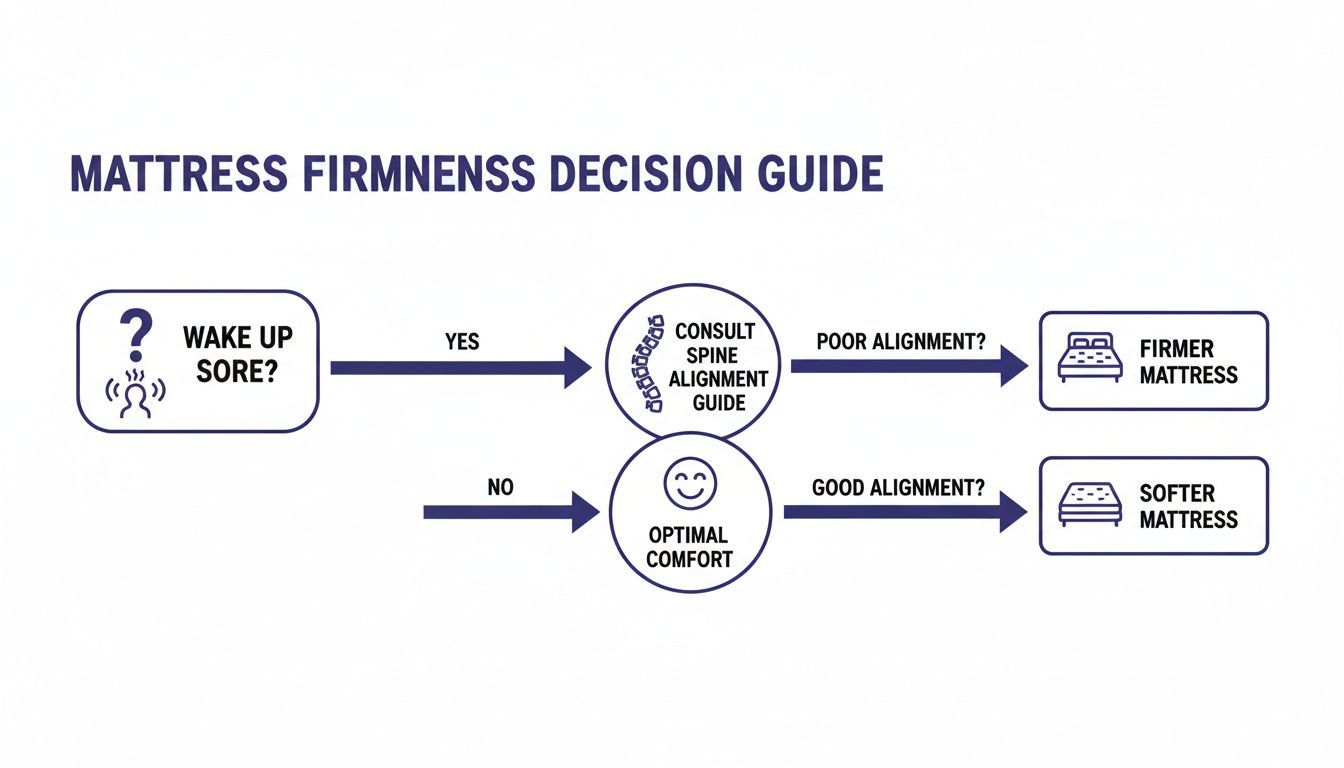
If you're waking up with nagging soreness, that’s often your body telling you that your spine is out of alignment. The fix is usually finding a mattress that better supports your spine’s natural curve.
Side Sleepers Need Pressure Relief
Side sleeping is the most common position, but it also creates a ton of pressure on your hips and shoulders. A mattress that’s too firm won't let these joints sink in properly. Instead, it pushes back, forcing your spine into an unnatural upward curve that can cause everything from discomfort to numbness in your arms.
To fix this, side sleepers almost always do best with a soft to medium (3-6/10) mattress. This allows the surface to contour around the body's widest points, giving you that critical pressure relief while the support layers underneath keep your spine straight.
Back Sleepers Require Balanced Support
If you’re a back sleeper, your mission is to maintain the natural “S” curve of your spine. When a mattress is too soft, your hips will sink lower than your shoulders, creating a hammock effect that puts strain on your lower back. On the flip side, a mattress that’s too firm won’t have enough give to support the small of your back, leaving a gap.
For this reason, back sleepers often find their sweet spot in the medium to medium-firm (5-8/10) range. This level of firmness strikes the right balance — it offers gentle contouring to fill in the lumbar gap and has enough backbone to keep your hips elevated and aligned.
Stomach Sleepers Must Prioritize Firmness
Of all the positions, stomach sleeping can put the most strain on your spine. The biggest danger here is your midsection sinking too deep into the mattress. This causes your back to arch in a way it’s not meant to, leading to significant lower back pain over time.
To prevent this, stomach sleepers need a medium-firm to firm (7-9/10) surface. A firmer mattress gives you the pushback required to keep your hips and abdomen on top of the bed, ensuring your spine stays in a much straighter, healthier position all night.
Key Takeaway: The goal is always a neutral spine. A soft mattress helps a side sleeper achieve this by cushioning the shoulders and hips, while a firm mattress helps a stomach sleeper achieve it by preventing the hips from sinking.
What About Combination Sleepers?
Do you find yourself tossing and turning all night, starting on your side, rolling to your back, and maybe ending up on your stomach? If that sounds familiar, you're a combination sleeper, and you need a mattress that can keep up.
The real challenge for you is finding a firmness that works for multiple positions. You need a surface that’s soft enough for when you’re on your side but firm enough to support you when you’re on your back or stomach.
A medium-firm (6-7/10) mattress is usually a great choice for combination sleepers, as it offers a compromise of support and contouring. You’ll also want to look for a responsive mattress, like one with latex or pocketed coils, that lets you change positions easily without feeling like you’re stuck. This way, you get consistent support no matter how much you move around.
How Body Weight Changes How a Mattress Feels
Have you ever laid on a mattress a friend raved about, only to find it feels completely different to you? It happens all the time, and it highlights a critical point: mattress firmness isn't a fixed, universal measurement. It's a highly personal perception, and your body weight is the single biggest factor that changes how a mattress feels underneath you.
A firmness rating on a label is just a starting point. The real test is how the mattress responds when you're actually lying on it. What feels like a supportive medium-firm surface to one person might feel like an unyielding board to someone lighter, or like unsupportive quicksand to someone heavier.
Getting a handle on this dynamic is key to choosing a mattress that will actually do its job for you.
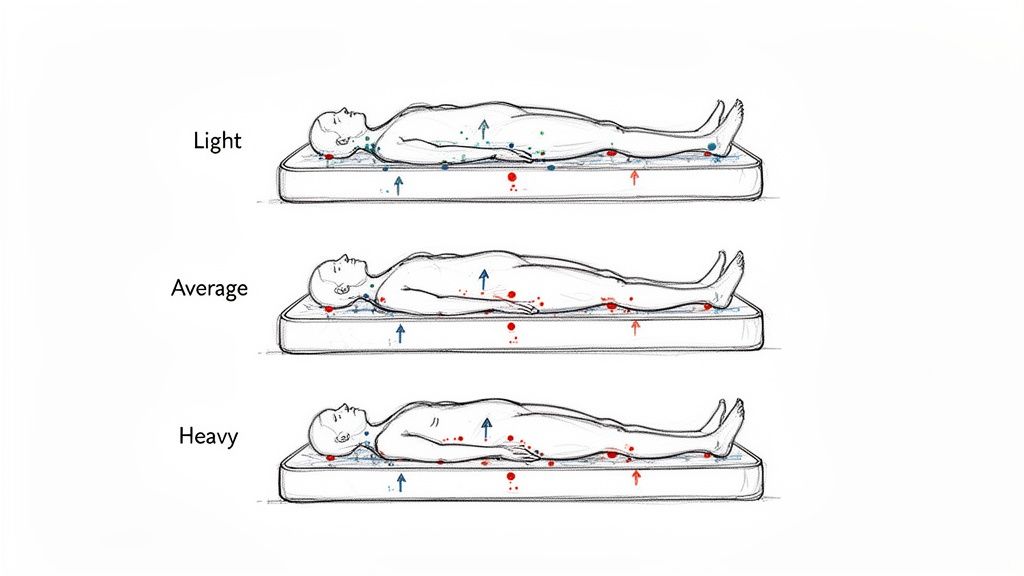
Lighter Sleepers (Under 130 lbs)
For those who weigh less than 130 pounds, firmer mattresses can be a real problem. Lighter individuals don't exert enough pressure to sink into the comfort layers of a medium-firm or firm mattress the way they're designed to be used.
The result? You end up feeling like you're floating on the very top surface, missing out on contouring and pressure relief. This can lead to pressure points and throw your spine out of alignment, especially if you're a side sleeper. A soft to medium-soft (3–5/10) mattress is almost always a better fit, as it allows your body to sink in just enough to cushion joints and support your natural curves.
Average Weight Sleepers (130–230 lbs)
If your weight falls into this range, you're in luck. Most mattress firmness ratings are built with you in mind. When a manufacturer calls a mattress "medium-firm," it's very likely to feel that way to someone between 130 and 230 pounds.
This group has a wide variety of good options, typically from medium to medium-firm (5–8/10). Your choice within this sweet spot will have more to do with your sleep position and personal preference than your weight alone. For instance, a back sleeper might lean toward the firmer end of that range, while a side sleeper will probably prefer something a little softer.
Heavier Sleepers (Over 230 lbs)
For sleepers weighing over 230 pounds, robust support becomes the top priority. A mattress that's too soft is going to cause excessive sinkage, especially around the hips and torso. When that happens, your spine can fall into an unhealthy, hammock-like position, which is a recipe for chronic lower back pain.
Heavier folks need a mattress that provides serious pushback to keep the spine properly aligned. A medium-firm to firm (7–9/10) mattress is usually the right call to make sure the core support layers can do their job effectively. It's also a good idea to look for mattresses made with durable, high-density materials that won't sag or break down under more pressure over time.
Why Sinkage Matters: Proper sinkage isn't about being swallowed by your bed. It’s about letting your body’s curves—like your shoulders and hips—dip in just enough so that the mattress can rise up to support the rest of your body, like your lower back. This is what keeps your spine straight and pain-free.
The "Default" Firmness for Most People
Although mattress labels often go from 1 to 10, real-world buying habits show that most people land somewhere in the middle. Queen-size mattresses—which are overwhelmingly offered in medium to medium-firm feels—now account for about 40–46% of global mattress sales by size. This isn't just a coincidence; a medium to medium-firm queen is a proven "default" for adults between 130–230 lbs.
On top of that, industry data shows that foam mattresses, often engineered for that 5–7/10 medium feel, hold roughly 45% of the market by type, partly because they excel at pressure relief. You can dig deeper into these global mattress market trends if you're curious. For our customers at Woodstock Furniture & Mattress Outlet, this all boils down to a simple rule of thumb: unless your body weight or sleep style is an outlier, a medium to medium-firm mattress is a statistically sound place to start your search.
Finding a Solution for Aches, Pains, and Partners
Figuring out the basics like sleep position and body weight gets you most of the way there, but real life often throws a couple of curveballs into the mattress shopping process. The two biggest hurdles we see shoppers face are dealing with chronic pain and sharing a bed with a partner who has completely different sleep needs.
These situations call for a bit more finesse than just picking a number off the firmness scale. You're no longer just buying a mattress; you're looking for a solution. The goal is to find a bed that actively alleviates pressure on a sore hip or ensures one person’s tossing and turning doesn’t feel like a seismic event for the other.
Navigating Chronic Aches and Pains
If you’re waking up sore, that’s your body’s way of telling you that your mattress isn’t pulling its weight. Different kinds of pain often point toward different firmness solutions.
-
For Lower Back Pain: This is one of the most common complaints we hear. When a mattress is too soft, your hips sink in too far, knocking your spine out of alignment and putting strain on your lower back. A medium-firm (7/10) mattress is often the sweet spot, providing enough lift to keep the hips supported while still offering a comfortable cushion.
-
For Shoulder or Hip Pain: Side sleepers, we're looking at you. A mattress that's too firm will feel like you’re sleeping on a board, creating intense pressure points right on your shoulders and hips. A softer, more contouring mattress—typically in the medium-soft to medium (4-6/10) range—is a much better fit. It allows your shoulders and hips to sink in just enough to relieve pressure and keep your spine perfectly straight. Keep an eye out for mattresses with zoned support, which are often designed to be softer under the shoulders and firmer under the hips for targeted comfort.
A Note on Compromise: Let's be real—finding the right mattress to fix a specific pain point sometimes involves a small tradeoff. For instance, a stomach sleeper who also has shoulder pain might need a mattress that’s just firm enough to support their hips without being so rigid that it makes their shoulder ache.
For a clearer picture, we've put together a quick reference table to help you connect common sleep issues with potential mattress solutions.
| Finding the Right Firmness for Common Issues | |||
|---|---|---|---|
| Common Problem | Primary Sleep Position | Suggested Firmness Range | Why It Helps |
| Lower Back Pain | Any | Medium-Firm (6-7/10) | Prevents hips from sinking too low, promoting better spinal alignment. |
| Shoulder or Hip Pain | Side Sleepers | Medium-Soft to Medium (4-6/10) | Cushions pressure points and allows the shoulders and hips to sink in comfortably. |
| Waking Up Stiff | Back or Stomach Sleepers | Medium to Firm (6-8/10) | Offers robust support to maintain a neutral spine position throughout the night. |
| Restlessness/Tossing & Turning | Any | Medium (5-6/10) | Provides a balanced feel that accommodates multiple positions without creating pressure points. |
This table is a great starting point, but remember that personal comfort is always the final decider.
Sharing a Bed With a Partner
Shopping for one person is hard enough. When you're trying to find a mattress that works for two people with different body types, sleep styles, and preferences? It can feel downright impossible.
Thankfully, you don't have to resort to separate bedrooms. Modern mattresses offer some fantastic solutions.
A medium-firm (6-7/10) mattress is a great starting point for many couples. It’s the universal crowd-pleaser of the mattress world, often serving as a happy medium that satisfies a wide variety of sleepers.
But what if one partner is a 110-pound side sleeper and the other is a 240-pound back sleeper? A single firmness level might be asking for trouble. In cases like this, you need to look at other mattress features. Beds with excellent motion isolation, like memory foam or pocketed coil hybrids, are non-negotiable. They are designed to absorb movement, so when one person rolls over or gets up, the other person sleeps on, undisturbed.
For couples with truly polar opposite needs, a split king mattress can be a great problem-solver. A split king is simply two Twin XL mattresses placed side-by-side on a king frame. This setup allows each person to choose their own mattress with their own ideal firmness. No more compromising—each of you gets exactly what you need for a good night’s sleep.
Why You Should Test a Mattress In Person
Reading online descriptions, customer reviews, and looking at firmness scales are great for doing your homework and narrowing down the field. But they can only get you so far.
The honest truth is that firmness is subjective. What one brand calls a “medium-firm” can feel completely different from another’s. It all comes down to the unique materials and construction they use. This is why trying a mattress in-store is still so important. It’s your only real chance to feel how a mattress supports your body, taking the guesswork out of a major investment in your health.
Making the Most of a Showroom Visit
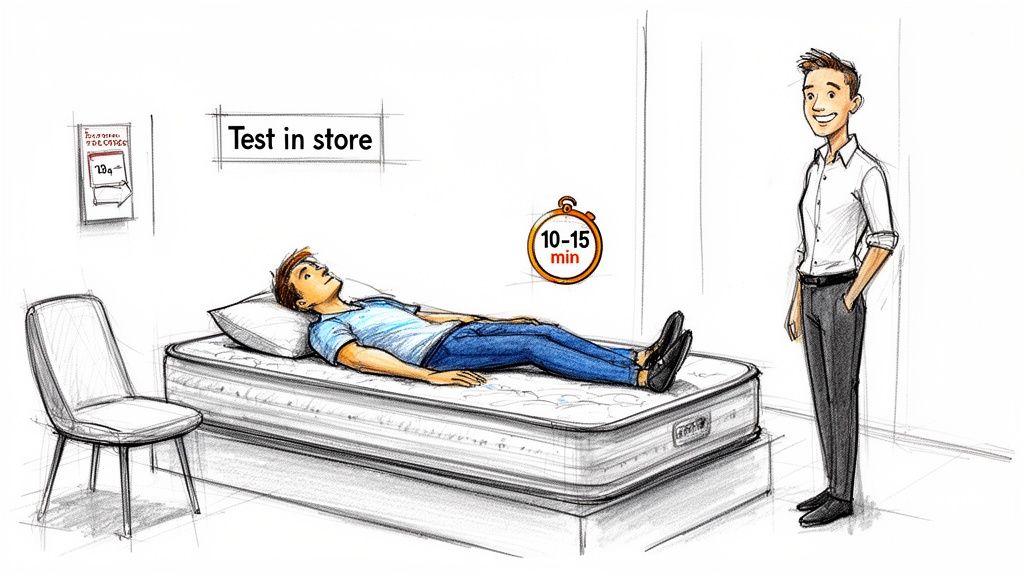
To get an accurate feel for a mattress, you have to do a little more than just push down on it with your hand. Think of your showroom visit as a dress rehearsal for a fantastic night's sleep.
Here’s what our experienced staff often suggest to customers:
- Dress Comfortably: You’ll want to wear clothes that are easy to move around in. This isn't the time for stiff jeans or business attire.
- Assume the Position: Don’t be shy! Lie down in your go-to sleeping position, whether you’re a side, back, or stomach sleeper.
- Stay a While: You’ve got to give it a real test drive. Plan to lie on any serious contender for at least 10-15 minutes. This gives your body time to settle in so you can truly feel its support and pressure relief.
- Bring Your Partner: If you share a bed, you absolutely should shop together. Both of you need to lie on the mattress at the same time to see how it handles movement and if it can comfortably support two different people.
While you're lying there, listen to your body. Do you feel your shoulders or hips getting pinched? Is there a gap under your lower back, or does it feel properly supported? The goal is to feel cradled and supported with your spine in a neutral, straight line.
A mattress should conform to your body, not force your body to conform to it. If you feel your spine arching or your joints getting pinched, it’s a clear sign that the firmness level isn’t right for you.
Global Trends Meet Local Needs
Believe it or not, where people live can even shape their mattress preferences. North America holds roughly 32–35% of the global mattress market landscape and, as a whole, we tend to prefer thicker, more supportive mattresses with a wide variety of firmness options. This is a bit different from the Asia-Pacific region, for instance, where balanced-firmness mattresses that fit smaller living spaces are more popular.
For a retailer right here in North Georgia, these stats just confirm what we see every day. Our local shoppers have high expectations for both comfort and support, which is why offering a great selection of firmness levels is a must for us.
And please, don't ever hesitate to ask questions. Our team is here to guide you, not rush you into a decision. Visiting one of our showrooms gives you that critical hands-on experience you need to feel confident you’re choosing a mattress that will give you years of restful sleep.
Common Questions About Mattress Firmness
Even after sorting through sleep positions, body weight, and your own aches and pains, a few questions always seem to pop up right at the end. Let's tackle some of the most common ones we hear from shoppers in our showrooms to clear up any final confusion and help you feel confident in your choice.
Is It Better to Sleep on a Firm or Soft Mattress?
This is the classic question, but the truth is, the answer is always: it depends entirely on you.
Neither firm nor soft is automatically "better." A plush, soft mattress can be a dream come true for a lightweight side sleeper who needs serious pressure relief for their shoulders and hips. On the flip side, a firm mattress is often the perfect solution for a stomach sleeper who needs to keep their hips elevated to prevent their spine from falling out of alignment.
The best mattress isn't the one that's hardest or softest; it's the one that keeps your spine in a neutral, straight line all night long.
How Do I Know If My Mattress Is Too Firm?
Your body will tell you. If your mattress is too firm, you'll start noticing a few telltale signs. You might wake up with a nagging soreness or even numbness in your shoulders and hips—that's because the surface isn't giving your pressure points the cushion they need.
Another dead giveaway is feeling like you’re sleeping on the bed rather than in it. If you lie flat on your back and there's a noticeable gap between your lower back and the mattress, that's a clear signal it's too rigid to conform to your body’s natural curves.
What Is the Most Popular Mattress Firmness?
By a long shot, the crowd favorite is medium-firm. It’s the versatile sweet spot that works for a huge range of people.
It’s especially popular with back sleepers, combination sleepers, and even couples who have different sleep styles. A medium-firm mattress just strikes that perfect balance, offering plenty of support to keep the spine aligned while still having enough give for comfort.
Can Firmness Prevent Back Pain?
Getting a mattress with the right firmness can absolutely help ease or even prevent back pain. For many people struggling with back issues, especially in the lower back, a medium-firm mattress is the go-to recommendation.
This level provides enough support to keep the hips from sinking in too deep—a common cause of spinal strain—but it isn't so hard that it creates new pressure points. The goal is always proper alignment. While mattress firmness is a huge piece of that puzzle, don't forget to consider a holistic approach to sleeping better by looking at other ways to improve your rest.
At the end of the day, picking a mattress firmness is a personal journey. This guide gives you a solid starting point, but the final decision really comes down to what feels best for your unique body and sleep habits.
Here at Woodstock Furniture & Mattress Outlet, our team has years of experience helping people navigate these choices. We invite you to come visit one of our North Georgia showrooms, test out a few different firmness levels, and let us help you find the right mattress for years of restful sleep. Learn more about our locations and what to expect.
Article created using Outrank
Leave a Reply
You must be logged in to post a comment.