Before you think about pinning living room ideas or shopping for a new sofa, there's a critical first step that separates a functional space from a frustrating one: creating a floor plan.
This isn't just for architects or designers. Think of it as your personal blueprint, a practical map that ensures every piece you choose will not only fit but will also contribute to a room that feels comfortable, intentional, and easy to live in. Skipping this part is a common challenge, often leading to that sinking feeling when a new sofa arrives and it overwhelms the space or blocks a natural walkway.
Your Blueprint For A Better Living Room
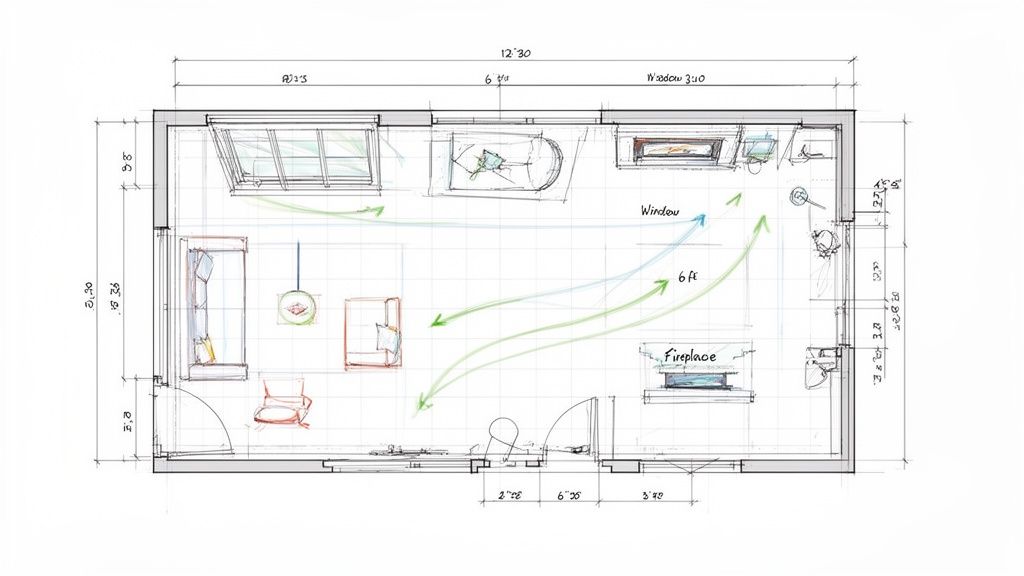
The goal here is simple: to create a detailed map of your living room before you move a single thing. This process takes the guesswork out of the equation. It empowers you to make thoughtful, confident decisions about furniture scale and placement, turning an abstract idea into a concrete, workable plan.
Start with Accurate Measurements
First, grab a tape measure, a notepad, and a pencil. Precision is helpful here—eyeballing it now can lead to headaches later.
Start with the basics: the length and width of the room. Jot those down. Next, measure the ceiling height. This might seem minor, but it has a significant impact on the scale of everything from tall bookcases to pendant lights.
Now, let’s get into the details. You need to account for all the fixed architectural features you’ll have to work around.
- Doors and Windows: Measure the width and height of each one, and also measure their distance from the nearest corner.
- Fireplace or Built-Ins: Note the full dimensions of the hearth, mantel, and any shelving that's part of the structure.
- Outlets and Switches: Walk the room and mark the location of every electrical outlet, light switch, and connection point. Knowing this now is a game-changer for planning where your lamps, TV, and sound system will go.
Identify Natural Traffic Patterns
Every room has invisible lanes—the paths people naturally take to move from the doorway to the sofa, or from the living area to an adjoining room. Defining these "traffic patterns" is the secret to a layout that flows instead of feeling like an obstacle course.
Think about how you actually use the space. Where do you enter? Where do you exit? Is there a direct line to the back door or the hallway?
A useful rule of thumb is to keep these main walkways clear. As a benchmark, you’ll want to allow for at least 30 to 36 inches of clear space for major traffic routes. This ensures movement feels effortless and the room doesn't feel cramped.
Placing a chair or an oversized coffee table right in the middle of a natural pathway is a common layout blunder. It can instantly make a room feel poorly planned and difficult to navigate.
Sketch Your Floor Plan
Alright, you have your measurements and you know where people walk. Now it’s time to bring it all together and create your blueprint. You don’t need any specialized software or drafting skills.
A simple sheet of graph paper works well. You can let each square represent 6 inches or a foot, which helps you keep everything to scale. If you're more comfortable working digitally, there are many free, easy-to-use room planner tools online that let you drag and drop elements.
Start by drawing the outline of your room. Carefully add in the windows, doors, fireplace, and all those other fixed elements you measured. Then, use dotted lines to mark out the main traffic lanes you identified. This visual map is now a powerful tool for arranging and rearranging furniture without the heavy lifting.
Whether you're planning a complete overhaul or just staging your space to sell, getting the layout right is fundamental. For more on creating that picture-perfect look, you can find helpful information in guides like these Top 10 Staging Tips for Selling Your Home. Your floor plan is the essential first step to achieving a professional, polished result.
Carve Out Functional Zones in Your Space
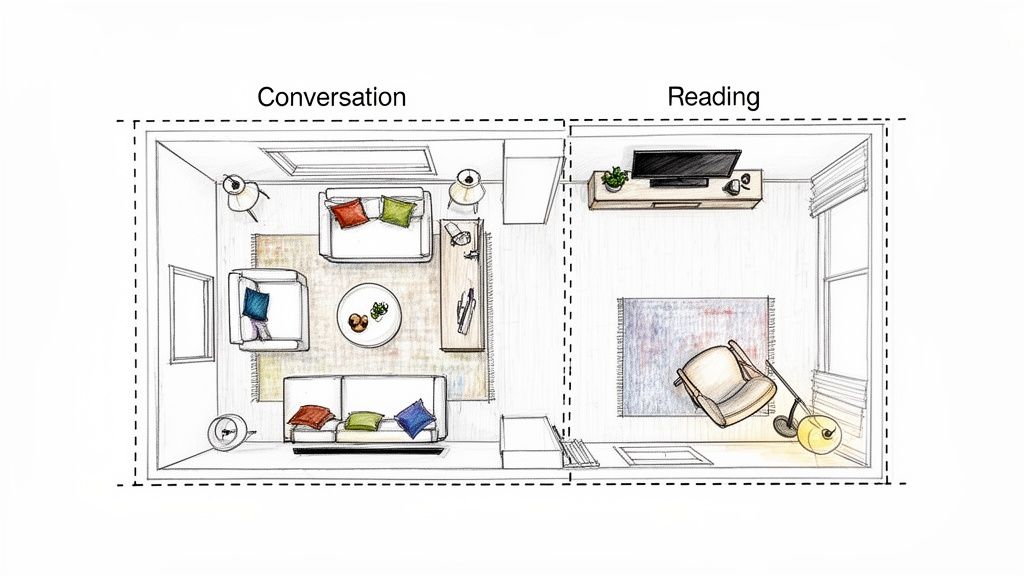
Modern living rooms are often multitasking spaces. One minute they're hosting a family movie night, the next they're a quiet spot for reading, a conversation area for guests, or a play space for kids. A helpful way to bring a sense of order to this activity is to think in terms of functional zones—creating distinct areas for different activities within the same room.
This technique, which designers call "zoning," is about giving your layout purpose. Instead of a single, sprawling space, you’re creating smaller, intentional environments that support the way your family lives. The trick isn't to put up walls, but to use your furniture, rugs, and lighting as visual cues to gently separate one area from another.
Figure Out Your Primary Zones
Before you start shifting furniture, take a minute to think about what happens in your living room. What are the most common activities? Your daily and weekly routines will tell you exactly which zones you need to create.
For most people, it boils down to a few core functions:
- The Conversation Zone: This is often the social heart of the home. It’s usually built around your main sofa and a couple of chairs, arranged to make conversation easy. The goal is to create a setup where people can chat comfortably.
- The Media/Entertainment Zone: This area is focused on the screen—be it a TV or a projector. Here, furniture placement is focused on clear sightlines and comfortable seating.
- The Reading Nook: This can be a personal escape. It's often a smaller zone tucked into a quiet corner, featuring a single chair, a small side table, and a dedicated task light.
- The Play Area: This can be a great addition for families with young children. This space can be as simple as a soft rug and some low, easy-to-access toy storage to help contain the fun.
Use Furniture to Create Smart Separation
An easy way to carve out your zones is by strategically placing your furniture. By grouping pieces together, you naturally create visual boundaries. A common technique is to float a sofa in the middle of a large room; its back acts like a low-slung wall, clearly dividing the main seating area from a walkway or dining space.
To enhance this, an open-backed bookcase or a sleek console table behind a floating sofa reinforces that division. It defines the zone while adding surface and storage space—all without blocking the view.
This isn't just for big pieces, either. An armchair angled just right in a corner, paired with an ottoman and a floor lamp, instantly suggests a "cozy reading spot." You're essentially creating little "rooms within a room" that tell people how to use the space without saying a word.
The Defining Power of Rugs and Lighting
Furniture does the heavy lifting, but rugs and lighting are effective tools for defining your zones. An area rug works like a visual anchor, grounding a cluster of furniture and clearly marking its territory. A common designer approach is to place at least the front legs of your sofa and chairs on the rug—it instantly pulls the conversation area together, making it feel deliberate and cohesive.
Lighting is just as powerful for sculpting your space. Think in layers:
- Ambient Lighting: A central chandelier or ceiling fixture can define the primary conversation hub.
- Task Lighting: A focused floor lamp or wall sconce can put a spotlight on your reading nook, making it feel distinct and inviting.
- Accent Lighting: Putting the lights in your media zone on a dimmer switch can create a theater-like vibe for movie night.
By layering different light sources, you can highlight each zone on its own, changing the mood and function of the entire room with the flip of a switch. This combination of furniture, rugs, and lighting transforms a single room into a truly versatile space.
Choosing Your Anchor Piece and Getting the Scale Just Right
Now that you’ve mapped out your zones, it's time to talk about the most influential player in a living room layout: the anchor furniture. In many cases, this is your sofa or sectional. It’s often the largest piece in the room, the one that sets the tone for everything else. When you get this choice right, the rest of the puzzle pieces can fall into place more easily.
This foundational piece does more than just offer a place to sit. It establishes the scale, the style, and the function of your living space. A large, deep-seated sectional can suggest "casual comfort and movie nights." A more upright, tailored sofa, on the other hand, might suggest a space geared more toward conversation. The trick is to pick something that not only physically fits but also aligns with what you do in that room.
Your Sofa Is the North Star of Your Layout
Think of your sofa as the sun, and other furniture—chairs, tables, lamps—are planets orbiting around it. Its placement dictates where accent chairs will live, where the coffee table will land, and how people will move through the space. In many layouts, the sofa's position can determine a significant portion of the room's functional flow.
It’s no wonder sofas and sectionals are a large part of the home furnishings world. Their central role in our homes is a major driver of market trends. If you're interested in the data behind this, you can explore insights on the household furniture market here.
Before you settle on a sofa, think about where it will go. Will you face it toward the fireplace to create a cozy, traditional focal point? Or will its back create a soft "wall," dividing the living and dining areas in an open-concept home? Each decision creates a completely different experience.
Getting the Scale Just Right
One of the most common problems people encounter is getting the scale wrong. A sofa can look perfectly normal in a large showroom but feel too large in a smaller living room. The flip side is also true—a small loveseat can feel lost in a huge room with vaulted ceilings.
What you're aiming for is visual balance. Your main piece needs to be substantial enough to ground the room, but not so big that it suffocates it.
A Helpful Tip: Before you decide, grab some painter's tape and mark the exact dimensions of the sofa or sectional on your floor. Live with this "ghost" furniture for a day or two. Can you walk around it easily? Is there still room for a side table? This simple trick gives you a real-world feel for the piece's footprint and can help you avoid a costly mistake.
Also, consider visual weight, not just physical size. A sofa on tall, skinny legs will feel much lighter and less imposing than a blocky one sitting right on the floor, even if they have the same length and depth.
Sectional Configurations for Different Spaces
Sectionals are popular because they offer a lot of seating, but their specific shape means you have to choose wisely. Not every sectional works in every room.
Here’s a quick rundown of common options:
- L-Shaped Sectionals: A classic choice. These are great for tucking into a corner to save floor space in small or medium-sized rooms. You can also "float" one in a larger room to neatly define your main conversation area.
- U-Shaped Sectionals: These are often used for large family rooms or dedicated media rooms. A U-shaped sectional creates an instant, cozy conversation pit that’s very social, but you need the square footage to pull it off without feeling boxed in.
- Sectionals with a Chaise: This can be a good compromise for smaller spaces where a full L-shape is too much. The chaise gives you that spot to stretch out and relax, but without the visual bulk of a whole other corner piece. It helps keep the room feeling more open.
Ultimately, picking your anchor piece is a balancing act between what you need and what your room can handle. By taking the time to nail the scale and placement, you're setting the stage for a living room that not only looks great but feels comfortable.
Mastering Furniture Placement And Traffic Flow
Once your anchor pieces are roughly in place, it’s time to bring in the rest of the furniture. This is a game of inches that separates a room that feels effortless from one that feels like an obstacle course. Getting the placement right is all about creating a natural flow that makes the room easy to move through and live in.
The goal is simple: let people walk around without bumping into corners or squeezing past chairs. To do this, you have to think as much about the empty areas between your furniture as the furniture itself. When you nail it, the layout just works. Conversations are easier, and the whole space feels balanced.
This little graphic breaks down the core process. Know your space, pick your main piece, then test the flow. It’s a simple but effective way to think.
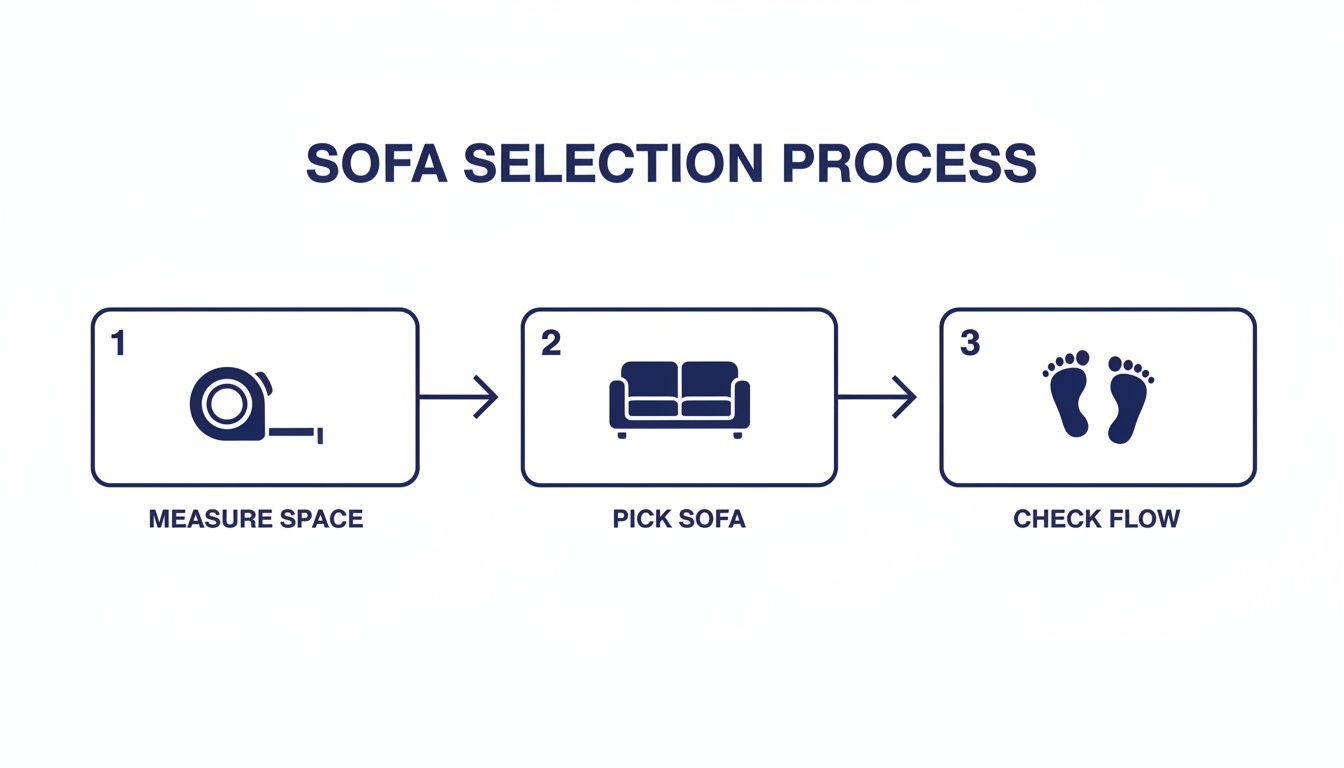
Following this keeps you focused on how everything works together, helping you sidestep common layout mistakes from the get-go.
Key Spacing And Clearance Rules
Think of these as reliable guidelines, not rigid laws. They’re based on how people actually move and use a space, making your living room comfortable and functional.
To make things easier, here's a quick cheat sheet for the most common clearances you'll need to think about.
Living Room Clearance And Spacing Guide
| Placement Area | Recommended Distance | Why It Matters |
|---|---|---|
| Sofa to Coffee Table | 16 to 18 inches | Close enough to reach your drink, but far enough to walk through easily. This is the sweet spot for functionality. |
| Main Walkways | 30 to 36 inches | This is your main artery. Keeping it this wide prevents bottlenecks and makes the room feel open and accessible. |
| Seating Apart | 3.5 to 10 feet | Keeps people close enough for a natural conversation without shouting, but still gives everyone their personal space. |
| Side Table to Seat | 2 to 3 inches | Just enough space so it doesn't look crammed, but still close enough to be a convenient landing spot for a book or lamp. |
These measurements aren't arbitrary; they’re tried-and-true distances that help create a space that feels considered and is a breeze to use every day.
Navigating Traffic And Focal Points
A well-designed living room respects the natural pathways people take. The routes from the door to the sofa, or from one room to the next, need to stay clear. This is where your floor plan sketch becomes your friend.
The most important rule? Keep your main walkways at least 30 to 36 inches wide. For smaller paths, like the space between your coffee table and TV stand, you can get away with about 24 inches.
If your room has a built-in focal point like a fireplace or a large window, lean into it. Arrange your main seating to face it. This gives the room an immediate sense of purpose. No obvious focal point? You can create one with a large piece of art or even the TV.
Speaking of the TV, a question people often ask is how far away the sofa should be. A good rule of thumb is to start at about 7 feet from the screen. This usually provides a comfortable viewing angle without straining your eyes or neck.
Getting your traffic flow right is one of the biggest upgrades you can make to your room. It's not just about looks; a well-planned layout can genuinely reduce daily frustration. As our living spaces become more fluid and less formal, these principles are more important than ever.
Putting It All Together: A Practical Example
Let’s walk through a common scenario. Imagine a rectangular living room. You have a fireplace on one of the short walls and the main doorway on the wall opposite it.
-
Place the Anchor: The sofa goes down first, facing the fireplace to establish that focal point. Pulling it 4 inches or so off the back wall gives it a little breathing room—it makes a surprising difference.
-
Create the Zone: Two accent chairs are placed across from the sofa, forming a U-shaped conversation area centered on the fireplace. This setup feels intimate and keeps the view of the fire open.
-
Ground the Space: A coffee table sits in the middle, about 18 inches from the sofa and chairs. It ties the whole seating group together.
-
Define the Flow: This is crucial. A clear 36-inch walkway is left open from the entryway, running behind the accent chairs to the rest of the house. Now, nobody has to cut through the middle of a conversation just to get by.
By applying these spacing and placement ideas, you’ve taken a collection of furniture and turned it into a cohesive, comfortable, and livable space.
Now that your main furniture pieces are in place and you can walk through the room without tripping, the foundation is solid. But right now, it’s just a functional space. Let's add the layers that make it feel like home.
These finishing touches—the right rug, a smart lighting plan, and well-chosen decor—are what will bring your living room to life. They aren't just afterthoughts; they’re the essential elements that pull everything together, creating a space that’s cozy, complete, and full of personality.
Ground Your Space with the Right Area Rug
Think of an area rug as the visual anchor for a seating area. It’s one of the most effective tools you have for defining a specific zone and making it feel cohesive. A common mistake is choosing a rug that’s too small for the space.
When a small rug is just floating in the middle of the room, it can make all the furniture around it feel disconnected and can even shrink the room visually. The fix is simple, though.
Your area rug should be large enough for at least the front legs of your sofa and accent chairs to sit on it. This one rule instantly ties all the pieces together, creating a unified and grounded conversation area.
If you’re working with a larger living room, you might even be able to get all the furniture legs onto the rug. Just make sure to leave some of the floor showing around the edges—aim for about 18 to 24 inches of bare floor between the rug and the walls. This keeps it from looking like wall-to-wall carpet that doesn't quite fit.
Illuminate with a Layered Lighting Plan
Good lighting can completely transform the vibe of a room. The key is to think in layers. If you're only relying on one overhead light, you're likely casting harsh shadows and creating a flat, uninviting atmosphere. A better approach is to combine three different types of light.
- Ambient Light: This is your room's general illumination. It usually comes from a central ceiling fixture, like a chandelier or flush-mount light, or recessed lighting. Its job is to provide a comfortable, even level of brightness.
- Task Light: This is all about function. It’s the focused light you need for specific activities. Think of a floor lamp next to your reading chair or a table lamp on an end table. It makes things like reading or doing a puzzle easier on the eyes.
- Accent Light: This is where you can add flair. Accent lighting is used to highlight features you love, whether it’s a piece of art, an architectural detail, or a plant. Wall sconces and picture lights are perfect examples.
When you combine these three layers, you get a lighting scheme that’s both dynamic and flexible. You can adjust the mood for any occasion, from a bright family game night to a softly lit, relaxing evening.
Accessorize with Intention
Now for the final, personal touches. This is where you bring in things like side tables, plants, artwork, and throw pillows. The goal here is curation, not clutter. Every accessory should complement the layout you've worked so hard on, not compete with it.
Side tables need to be practical. Place them within easy reach of a sofa or chair—just 2 to 3 inches away is a good guideline. Try to match the height of the table to the height of the chair’s armrest.
Plants are fantastic for adding life, color, and texture to a room. If you love the look of greenery but don't have a lot of time for care, there are many beautiful low maintenance indoor plants that can add vibrancy.
Finally, when it’s time to hang artwork, a good rule of thumb is to place it at a comfortable eye level. The center of the piece should be about 57 to 60 inches from the floor. This ensures it feels integrated into the room's design instead of floating too high or sitting too low.
Common Questions About Living Room Layouts
Even with well-laid plans, things can get a little tricky when real furniture starts entering the room. It’s normal to hit a snag or two. Let's walk through some of the most common layout challenges people ask about.
How Do I Handle an L-Shaped Room?
An L-shape can feel like a puzzle, but it’s actually an advantage. A common mistake is trying to treat it as one single, continuous space. Instead, lean into the architecture. The shape gives you a natural, built-in way to create different zones.
Think of the larger, longer part of the "L" as your main event. This is an ideal spot for your primary seating area, where you’ll put your sofa, coffee table, and maybe a couple of chairs for conversation or watching TV.
The shorter leg of the "L" then becomes your secondary space. It's the perfect corner for something more specific. Some ideas include:
- A quiet reading nook with a comfy armchair, an ottoman, and a good floor lamp.
- A small, dedicated workspace with a slim desk and a chair that can be tucked away.
- A designated play area for kids, defined with a soft rug and some low-profile toy storage.
To make this work, using an area rug in each zone can be helpful. It’s a simple trick that visually separates the two functions and makes the whole room feel more intentional and pulled-together.
Can I Mix Different Furniture Styles?
Absolutely. A room where every piece matches perfectly can sometimes feel a bit impersonal. Mixing styles is what can give a space soul, personality, and a collected-over-time vibe. That said, there's a fine line between "eclectic" and "chaotic."
The secret to making different styles work together is to find a common thread that connects them. This unifying element creates a sense of harmony, even if the pieces themselves are from different eras or aesthetics.
So, what kind of common thread are we talking about?
- A Consistent Color Palette: If your color scheme is tight, a traditional rolled-arm sofa and a sleek, modern accent chair can live in harmony.
- Repeating Materials: Using the same wood tone or metal finish across several different pieces helps tie everything together. Think a walnut coffee table, walnut legs on a chair, and a walnut-framed mirror.
- Similar Scale: Make sure your furniture has a similar visual weight. A huge, overstuffed traditional armchair might overpower a delicate, minimalist side table. Balance is key.
Our advice is to start with your biggest, most important piece—usually the sofa. Once that's in place, you can slowly bring in other items, always asking yourself if they complement the main piece or compete with it.
Should I Get a Sectional or a Sofa and Loveseat?
This is one of the top questions we hear, and there's no single right answer. It comes down to your room's size, your lifestyle, and what you’re trying to achieve with the space.
A sectional might be a good fit if:
- You have a large, open-concept family room and you want to carve out a cozy, defined zone for lounging.
- Your main goal is to maximize casual seating for movie nights and family get-togethers.
- You need to create a visual divider in a large room. The back of a sectional can work like a low "wall" to separate the living area from a dining area.
A separate sofa and loveseat (or a pair of chairs) is often a better option if:
- You're working with a smaller or more formal living room. Separate pieces give you more flexibility in how you arrange them.
- You like to switch things up. A traditional layout is much easier to rearrange when you want a change.
- Your room has a lot of doorways or awkward traffic paths that a large, immovable sectional might block.
Here’s a helpful tip: Before you commit, grab some painter's tape and outline the footprint of each option on your floor. Seeing it in your actual space will give you a much better feel for how it impacts traffic flow and the overall scale of the room.
Working through these details is part of the process. If you'd rather see these options in person and get some hands-on advice from knowledgeable staff, we invite you to visit one of our showrooms. Here at Woodstock Furniture & Mattress Outlet, we’re ready to help you find pieces to make your vision a reality. Come see what we have to offer at https://woodstockoutlet.com.