You're probably looking at a crib, a dresser, and a changing setup all at once, and every product page seems to say some version of “wooden,” “safe,” or “built to last.” That sounds simple until you realize those words can describe very different things. One crib may be solid wood. Another may be mostly composite with a wood-look finish. Both can fit the room. They won't behave the same over time.
That's the nursery problem for most first-time parents. You're not just picking a look. You're choosing material health, structural longevity, and room fit at the same time. If one of those gets missed, the room can become frustrating fast. A dresser swells after repeated wipe-downs. A crib looks beautiful online but feels bulky in person. A painted finish seems clean and bright, but you're left wondering what's under the coating.
Wood remains the default material in this category for a reason. A 2026 industry report says wood accounts for 59.45% of the kids and nursery furniture market in 2025, and another market study places wood at 61.4% of global baby nursery furniture revenues in 2025, according to Mordor Intelligence market coverage. Parents still tend to trust wood for cribs, storage, and long-use pieces because it feels familiar, sturdy, and easier to live with over time.
If you're still building your checklist, this complete nursery guide is a helpful companion for sorting the full room, not just the furniture.
Introduction to Wooden Nursery Furniture That Lasts
A couple comes into a furniture store with screenshots on their phone. They've picked out a warm oak crib, a white dresser, and a glider. Then the questions start. Is all wooden nursery furniture equally safe? Does painted wood mean solid wood underneath? Will this dresser still work when the baby becomes a toddler? Those are the right questions.
Most confusion comes from one label doing too much work. Wooden nursery furniture can mean solid hardwood, plywood, veneer over engineered board, or a mix of several materials in one piece. That matters because a crib handles repeated movement, pressure, and hardware stress differently than a decorative shelf. A changing topper gets wiped down often. A dresser may be opened and closed many times a day. The material choice changes how each piece performs.
Practical rule: Don't shop nursery furniture as one style decision. Shop each piece by the job it has to do.
A crib has the strictest role. It needs stable construction, reliable hardware, and surfaces you feel comfortable keeping near a sleeping baby. A dresser has a different role. It needs drawer function, storage depth, and enough durability to stay useful after the nursery stage. The changing setup sits in between, because it takes moisture, movement, and daily cleaning.
That's why chasing trends usually doesn't help much. A room can look calm and coordinated without every item matching, and it can function well without every piece being top-tier solid hardwood. The better approach is to decide where material quality matters most, where a lower-cost construction can still make sense, and how the layout supports daily use.
Understanding Wood Types for Nursery Furniture
The word “wood” sounds straightforward. In furniture, it rarely is. If you want to compare pieces calmly, it helps to think about nursery furniture wooden options as a short ladder of materials rather than one category.
Solid wood and why it matters most in cribs
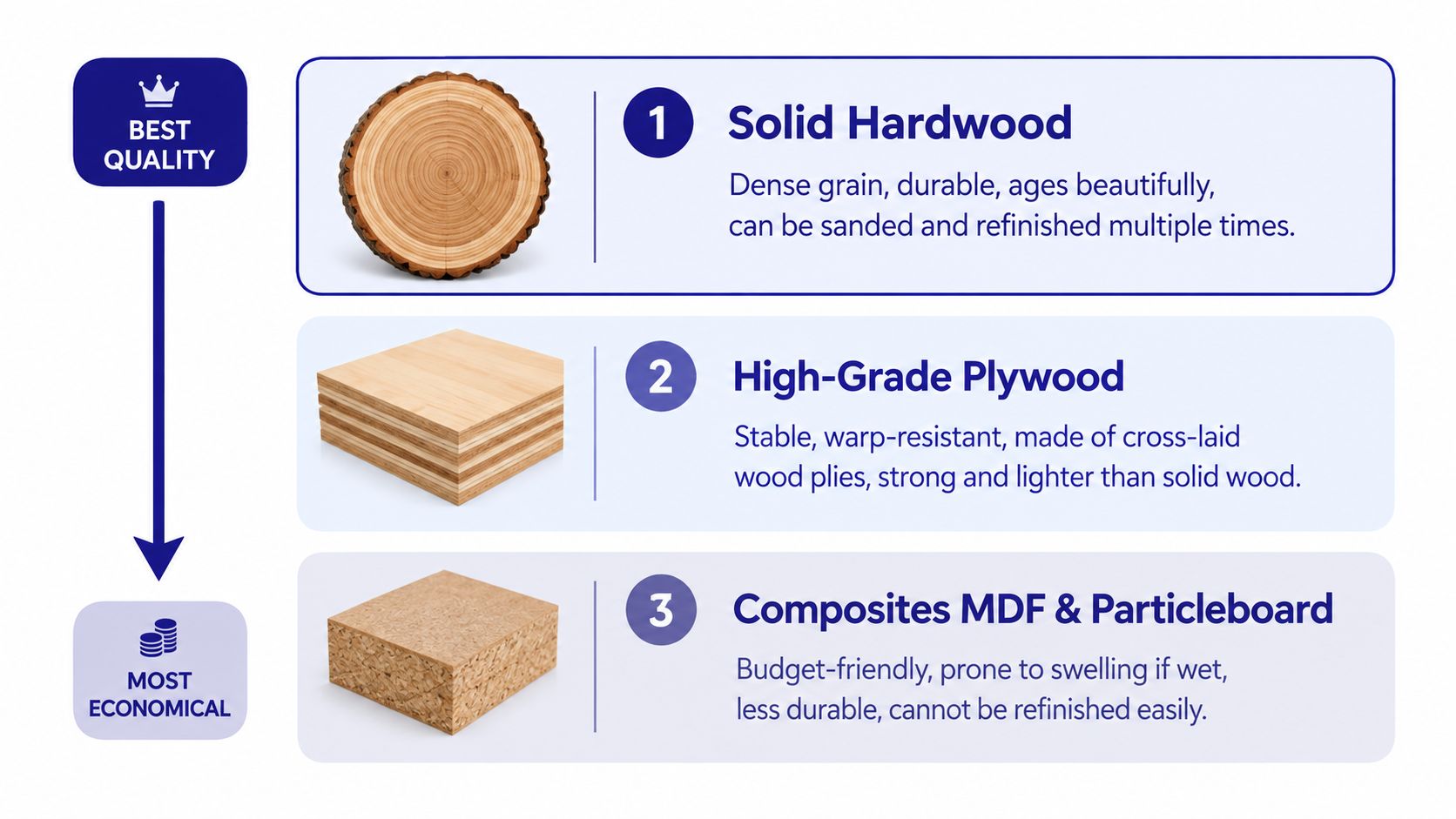
Solid wood is the closest thing to what you might picture when they hear “wood furniture.” Think of a single board cut from a tree, shaped into rails, legs, drawer fronts, or side panels. It tends to be more hard-wearing and generally holds fasteners better under repeated loading and relocation, according to Nursery World engineering commentary.
That fastener point matters more than it sounds. A crib gets assembled, leaned on, adjusted, and sometimes moved from room to room. If screws and bolts stay secure in the material, the piece is more likely to feel steady over time. That's one reason many parents prioritize solid wood for the crib first, even if other pieces in the room use different construction.
Plywood and when it's a sensible middle ground
Plywood is made of thin layers of wood bonded together with the grain running in alternating directions. A simple way to picture it is a stack of playing cards glued crosswise for stability. Good plywood can perform well because those layers resist warping better than some single boards.
The same engineering source notes that plywood can be a viable option when it's built with many layers, with nine-ply birch cited as a useful benchmark in higher-quality construction, as noted in the same Nursery World engineering commentary. For side panels, drawer boxes, and some non-critical structural parts, quality plywood can be a smart compromise between cost, weight, and durability.
MDF and particleboard and where caution helps
Composite boards such as MDF and particleboard are made from wood fibers or particles bound together with adhesives. They can look smooth and consistent, especially under paint or veneer. They also tend to be more vulnerable to moisture absorption, swelling, and long-term joint loosening, according to the same Nursery World engineering commentary.
That doesn't mean every composite piece should be ruled out. It means you should place it carefully in your budget. A low-stress bookcase may be one thing. A heavily used changing dresser is another.
Solid wood usually earns its price in the pieces that get opened, wiped, leaned on, and moved the most.
How to tell what you're really buying
In store or online, use these clues:
- Check the product description: Look for exact terms like solid wood, plywood, MDF, particleboard, veneer, or engineered wood.
- Look at edges and backs: Exposed layered edges often indicate plywood. A very smooth painted panel may be MDF.
- Ask where the hardware goes: Drawer slides and bed bolts perform differently depending on the core material.
- Read beyond the headline: “Wooden” may describe the appearance, not the full construction.
One practical example. A convertible crib in solid wood or high-grade plywood usually makes more sense than a composite-heavy crib. A painted nursery dresser can still be a reasonable choice if the structure is sound, the finish is appropriate, and the top will handle changing-pad use.
Safety Standards and Healthy Finishes to Look For
Parents often get told to “check safety standards,” but that advice is too vague to help in a store aisle. What helps is knowing which parts of the label matter and why.
Start with the category specific rule
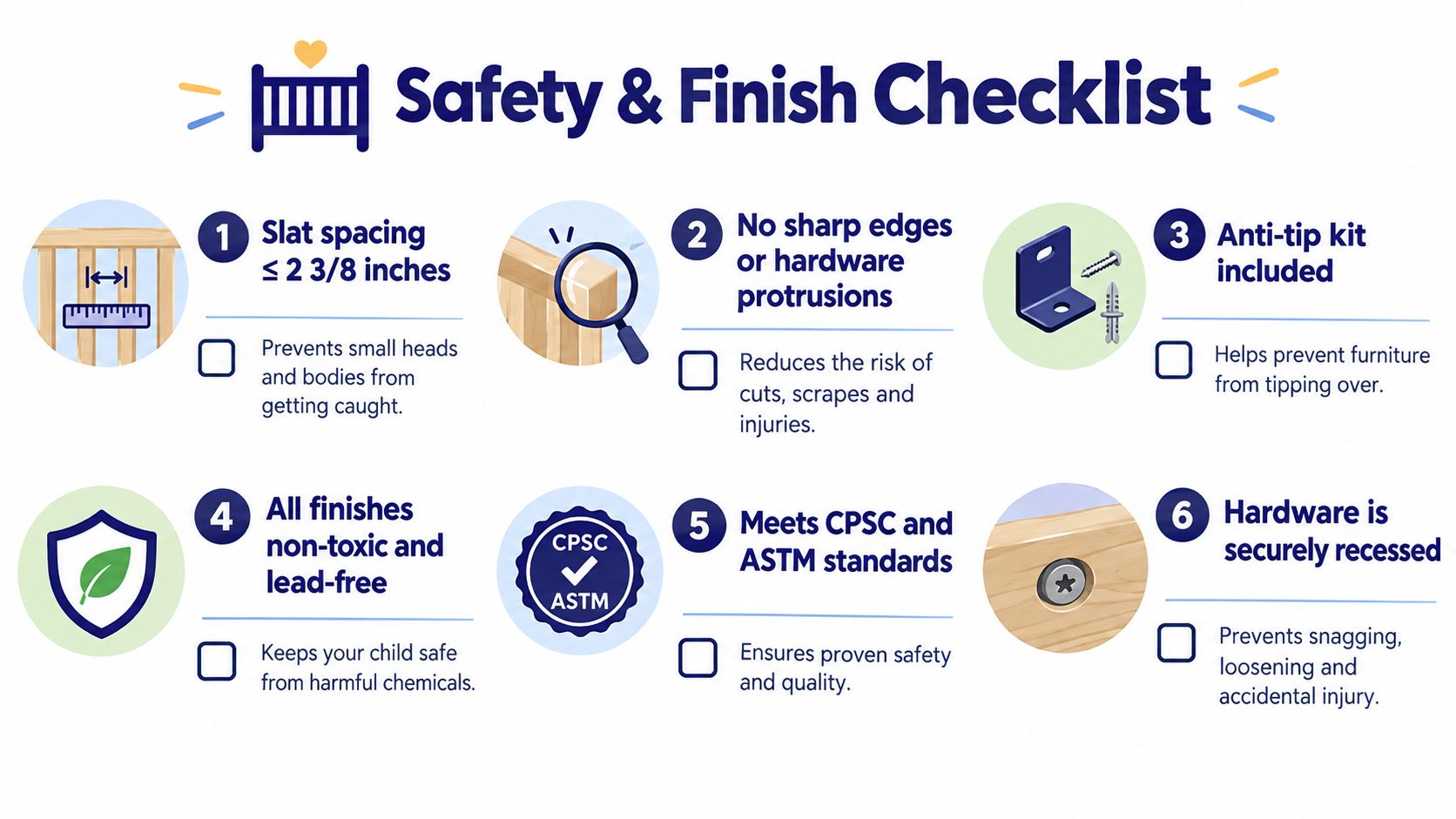
Nursery furniture isn't governed by one blanket rule. The Consumer Product Safety Commission ties different product types to different standards. Toddler beds must comply with ASTM F1821, full-size baby cribs are tied to ASTM F1169, and non-full-size cribs are tied to ASTM F406, according to the CPSC guide to U.S. furniture requirements.
That matters because a crib label should tell you what the piece is meant to be. If a product is sold as a crib, look for crib compliance. If it converts later, ask whether the conversion kit keeps it within the intended use for the next stage.
The U.S. also formalized nursery safety rules through federal regulations including 16 CFR Part 1219 for full-size baby cribs, 16 CFR Part 1220 for non-full-size baby cribs, and 16 CFR Part 1217 for toddler beds, as summarized in the CPSC furniture requirements highlights.
What to physically inspect
A standards label is important. A physical check still matters.
- Slat spacing: Federal crib safety guidance has long used a maximum spacing of 2 3/8 inches between components such as slats and spindles to reduce entrapment risk, according to the federal crib guidance archive.
- Hardware fit: Check that bolts, brackets, and screws sit flush and feel secure.
- Edge condition: Run your hand along rails, top edges, and drawer fronts. You're checking for rough spots, chips, or exposed corners.
- Stability: A dresser should feel grounded, and it should come with anchoring hardware for wall attachment.
If a piece looks fine but feels shaky in the joints, keep walking. Finish color won't fix weak construction.
Lead limits and coated surfaces
Painted wood can be a completely reasonable nursery choice, but the finish has to meet children's product rules. The CPSC specifies a 90 ppm (0.009%) lead limit in paint and similar surface coatings on furniture, according to the CPSC furniture requirements highlights. CPSIA Section 101 also sets a 100 ppm limit for lead in accessible parts of children's products, and it reduced allowable lead in paint and surface coatings on household furniture from 600 ppm to 90 ppm, according to the American Home Furnishings Alliance summary of CPSIA.
For parents, the practical takeaway is simple. Painted doesn't automatically mean unsafe. You just want confidence that the piece meets current children's product requirements.
The indoor air quality question many guides skip
Many nursery furniture wooden guides stop too early. Air-quality issue usually isn't the word wood. It's composite wood emissions and the adhesives or finishes used in those products.
For composite or engineered wood, U.S. rules under TSCA Title VI and CARB Phase 2 cap formaldehyde emissions at 0.05 ppm for hardwood plywood veneer core, 0.09 ppm for particleboard, and 0.11 ppm for MDF. GREENGUARD Gold is stricter, with a total VOC ceiling of 220 µg/m3 and a formaldehyde limit of 7.3 ppb, according to LeafScore's crib regulations and certifications overview.
Canada's guidance also applies formaldehyde limits to hardwood plywood, MDF, thin MDF, particleboard, and laminated products used in furniture, with emission caps as low as 0.04 to 0.11 ppm depending on product type, according to Health Canada's formaldehyde emissions guidance.
So the better question isn't “Is wood safe?” It's “Is this solid wood, plywood, or composite, and what certification or compliance label goes with it?”
Finishes and Design Styles That Fit Your Home
A safe nursery still has to live well. That's where finish choice matters. Not just for looks, but for fingerprints, wipe-downs, future scratches, and whether the piece still feels at home outside the nursery.
How common finishes behave day to day
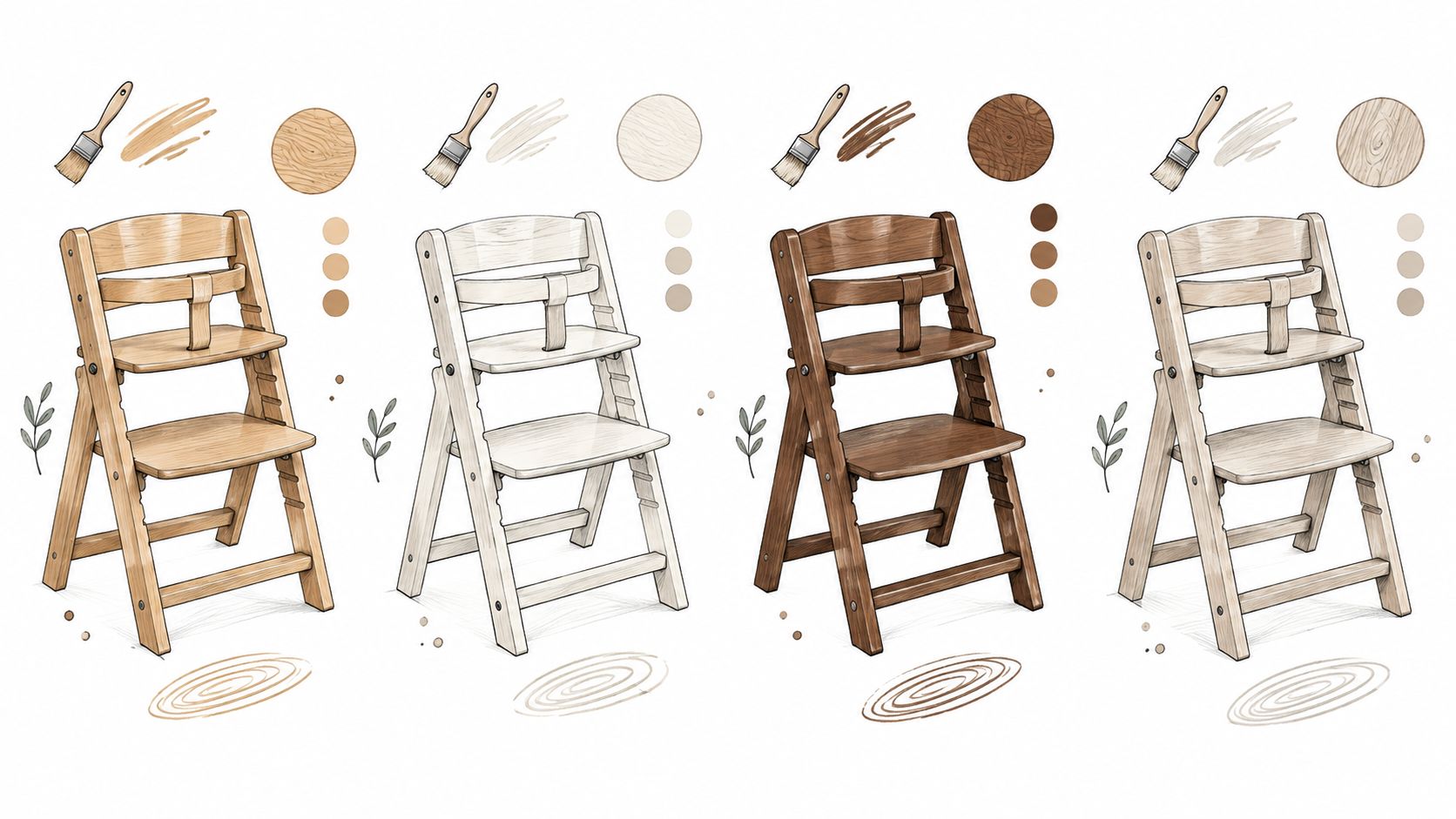
A natural clear coat usually shows the grain well and works nicely if you want the wood itself to be the visual feature. It can age gracefully, though scratches may catch light depending on sheen.
A painted finish gives the cleanest line if you want a bright crib or dresser. It's often the easiest way to fit traditional or soft modern nurseries. It can also show chips more clearly at corners if the piece takes repeated knocks.
Stained wood tends to hide small wear better than flat paint, especially in medium tones. It can also transition well into a child's room later. If you're deciding between stain and paint on a timber piece, this Painters North Shore timber advice offers a useful plain-language breakdown of how each choice changes appearance and maintenance.
Whitewashed and light natural finishes create an airy room, but they can vary a lot by material. A light tone in solid wood often looks different from a light printed or veneered finish over engineered board.
You don't need a matched set
Many parents think the crib, dresser, and changing table must come from one collection. They don't. A room usually looks more settled when the pieces relate rather than match exactly.
Try these combinations:
- Modern minimal: Simple crib lines, light or medium wood tone, small hardware, uncluttered dresser front.
- Warm Scandinavian: Pale wood, soft whites, rounded edges, minimal contrast.
- Classic traditional: Deeper stain, framed drawer fronts, more visible molding, slightly heavier silhouette.
- Natural reclaimed look: Textured grain, matte finish, black or aged metal hardware, mixed wood tones.
A nursery often looks more intentional when one piece leads and the others support it.
For example, a warm oak crib can pair well with a painted dresser if both share similar visual weight. A natural wood changing topper can tie them together. That approach also helps if you want the dresser to move into a guest room later, or the crib to convert and stay in the family longer.
Match the finish to the next room
If you think a piece may leave the nursery later, lean toward wood tones or quieter painted colors. A bright themed finish can be charming now and awkward later. Neutral natural finishes usually have the easiest second life in a toddler room, hallway, or spare bedroom.
Sizing and Room Layout for Comfort and Safety
Room planning is where good furniture choices can still go wrong. A crib may be safe and well built, but if it crowds the walkway, blocks a closet, or forces the changer into a tight corner, daily use gets harder than it needs to be.
Measure the room by movement, not just walls
Most parents start by measuring wall length. That's useful, but movement matters more. You need space to open drawers, walk while carrying a baby, and reach the crib without twisting around a glider or laundry basket.
A simple method works well:
- Mark fixed obstacles first. Note the door swing, closet reach, windows, floor vents, and any baseboard heater or cord concern.
- Choose the crib wall next. Pick the quietest, cleanest placement with good access on at least one long side.
- Test dresser use with tape. Painter's tape on the floor helps you visualize not just the footprint, but the drawer pull-out space.
- Add seating last. A glider is helpful, but it shouldn't control the whole room.
If you're shopping locally, one practical option is using room-planning help from a retailer such as Woodstock Furniture & Mattress Outlet, which offers Room Planner tools that can help visualize fit before purchase.
A few layout mistakes show up often
The first is overfilling the room. Parents understandably want the full setup, but nurseries function better when there's open floor around the crib and dresser.
The second is placing the changing surface where you can't comfortably stand. You'll use that zone many times a day. If the drawers can't open fully or your hip hits the crib corner every time, the arrangement isn't working.
Leave breathing room around the pieces you touch most. Empty floor space is part of the design, not wasted space.
Nursery Layout Decision Matrix by Room Shape
| Room Situation | Recommended Wooden Pieces | Layout Tip |
|---|---|---|
| Small square room | Crib, single dresser with changing top, one slim storage piece | Put the dresser on the wall nearest the door so diaper changes don't interrupt crib access |
| Narrow room | Crib on the long wall, tall dresser instead of wide dresser | Use vertical storage to preserve walking space down the center |
| Room with shallow closet | Crib plus medium dresser, skip extra cabinet pieces | Let the dresser do most of the storage work and keep the closet easy to reach |
| Shared nursery and guest room | Convertible crib, dresser that can outlive nursery use | Choose furniture that can stay when the room's function changes |
| Awkward window placement | Crib on a solid wall, low dresser under a noncritical window if appropriate | Keep sleep space away from cords and use lower pieces where sightlines matter |
| Future toddler conversion in mind | Convertible crib, sturdy dresser, flexible side table | Plan where the larger bed footprint will go before buying the crib |
Think one stage ahead
If a crib is convertible, don't judge it only by the infant setup. Ask where the longer toddler or full-size form will go later. A layout that works today may become cramped after conversion if the dresser is too deep or the traffic path is too narrow.
This is one reason fewer, better-chosen wooden pieces often outperform a packed room. The nursery needs to function at 2 a.m., not just in a photo.
Maintenance and Long Term Value Beyond the Nursery
The furniture decision doesn't end at delivery. Wood ages well when it's cared for consistently, and nursery conditions matter. Wipe-downs, humidity, drawer use, and small bumps all add up.
Everyday care that protects the piece
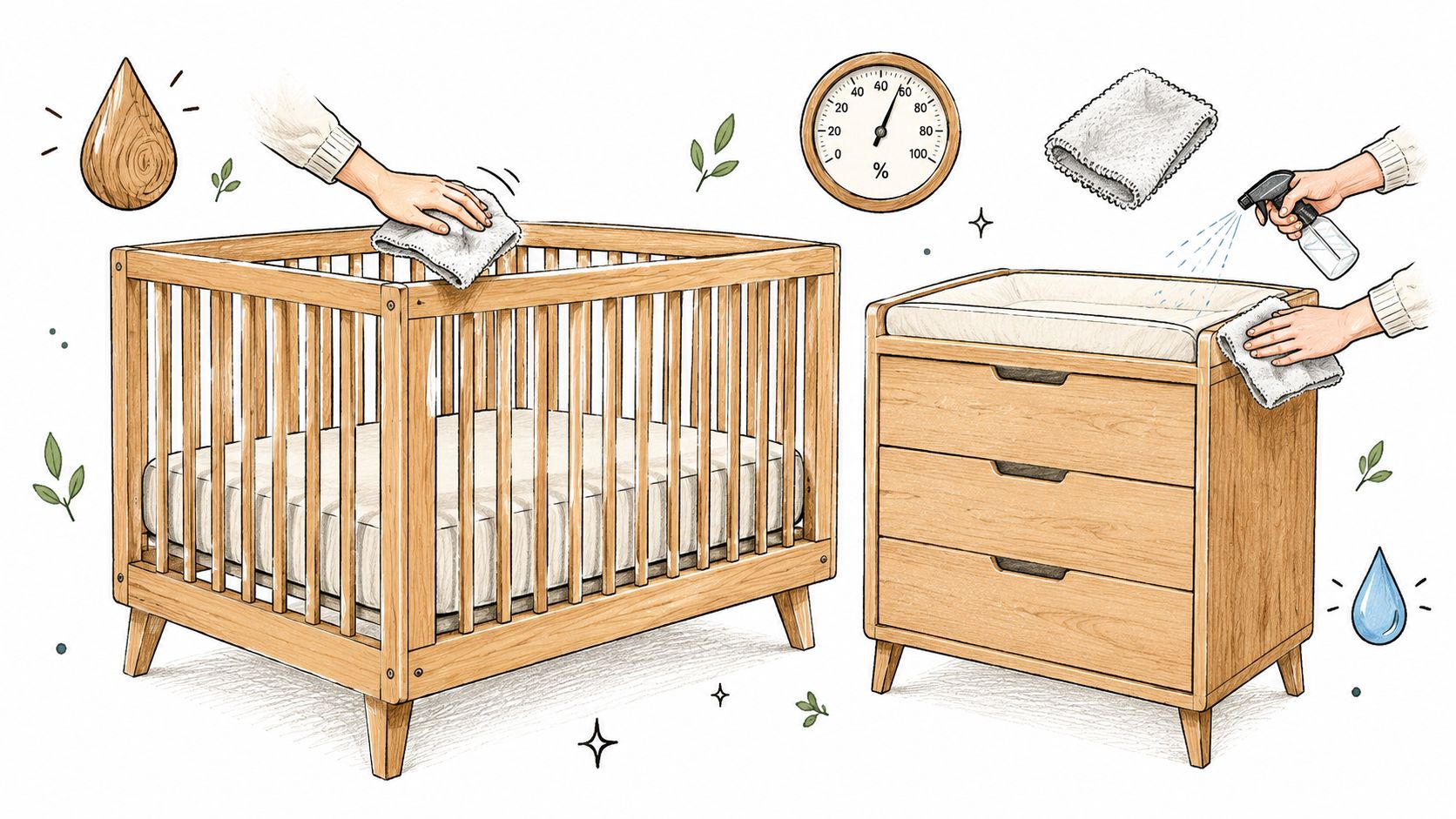
The simplest routine is often the best one. Use a soft cloth, clean spills promptly, and avoid soaking the surface. That matters especially around changing areas, where repeated moisture exposure can wear on lower-grade boards and loosen edges over time.
A few habits help:
- Wipe, don't drench: A damp cloth is usually enough for routine cleanup.
- Tighten hardware occasionally: Cribs, changing toppers, and drawer pulls all benefit from periodic checks.
- Watch the room climate: Wood and wood-based products respond to humidity swings.
- Handle dents early: Minor marks are easier to live with when the finish is maintained gently instead of scrubbed aggressively.
What tends to hold value in real life
Durability and value are linked, but not in a flashy way. The strongest value usually comes from pieces that stay useful after the nursery phase.
Market reporting projects the baby solid wood furniture segment to rise from $2.35 billion in 2025 to $3.92 billion by 2034, a 5.8% CAGR, according to DataIntelo market reporting. That projection is tied in part to demand for durable and sustainable materials, which fits what many parents already want. They'd rather buy a dresser that moves into a child's bedroom than replace a swollen one a few years later.
A crib is a good example of this tradeoff. A solid wood convertible crib may cost more upfront, but if it converts cleanly and the hardware remains sound, the value story improves. A dresser with deep drawers and a removable changing topper often has a better second life than a nursery-specific storage unit with a short useful window.
This short video can help you think about upkeep in a practical, visual way before the furniture starts seeing daily use.
Where to spend and where to save
If the budget is tight, spend more on the pieces that take structural stress and constant contact. Usually that means the crib and the main dresser. Decorative shelves, accent storage, or less-used pieces can be the place where a more economical material makes sense.
Long-term value usually comes from fewer replacements, steadier hardware, and furniture that still fits the home after the nursery is gone.
Bringing Your Wooden Nursery Together With Confidence
A good nursery rarely comes from picking the most expensive wood or the trendiest finish. It comes from making three clear decisions in the right order. First, choose the right material for the job. Second, confirm the safety and finish information that matters. Third, make sure the piece fits the room and the next stage of life.
That means solid wood often makes the most sense for a crib or other high-stress piece. High-grade plywood can be a sensible middle ground when construction is thoughtful. Certified composite can still have a place when the use is lighter, the emissions information is clear, and the budget needs flexibility.
When you shop, slow the process down. Touch the rails. Open the drawers. Read the construction details instead of only the color name. Measure the room twice, and think about how you'll move through it during a tired morning or a late-night diaper change.
If you already have related sizing or design questions, those are often best handled in separate room-planning or style guides rather than piling everything into one decision. For this purchase, the clearest path is usually the best one. Pick the safest practical construction for the crib, the most useful storage piece for daily life, and finishes you'll still like after the baby stage passes.
If you want to compare cribs, changing tables, and wood finishes in person, Woodstock Furniture & Mattress Outlet offers nursery furniture along with hands-on help for sorting construction, layout, and everyday use. It's a practical place to ask about material details, room fit, and which pieces make sense if you want the nursery to stay useful well beyond the first year.