You've wrestled the protector halfway over the mattress, one corner is already popping off, and the fabric has twisted so badly that you're wondering whether the size on the package can possibly be right. Take a breath. The problem usually isn't that you need more strength. It's that the protector style, mattress depth, and installation method don't match.
The right way to put on a mattress protector starts with identifying the product, measuring the bed, and then using the correct sequence. A fitted protector goes on like a fitted sheet, while a zippered encasement follows an entirely different process.
Why Protector Style Changes How You Put It On
Before you pull any fabric over the mattress, look at the edges. A fitted-sheet protector has elastic around its perimeter or elasticated corner straps, so it sits over the top and tucks around the mattress edges. A zippered encasement has panels that surround the entire mattress and a zipper that must be opened before the protector goes on. These two products may both be called mattress protectors, but they don't install the same way. Mattress protector styles explained confirms this basic distinction between fitted designs and full encasements.
If you try to stretch an encasement over the bed like a fitted sheet, the panels can bunch and the zipper can land in the wrong place. If you treat a fitted protector like an encasement, you'll waste time looking for an opening that isn't there. A quick inspection prevents both mistakes.
Start with the construction, not the corners. The style tells you which parts should move and which parts should stay aligned.
Waterproof and allergy-focused protectors can feel less intuitive than a simple quilted topper because they may include a protective membrane, multiple layers, or closer-fitting panels. If you're comparing options for a moisture-prone bedroom, a guide to waterproof bedding sets can help you understand how waterproof layers are used across bedding.
The rest of the process depends on this first decision. Fitted styles need careful corner sequencing. Encasements need complete opening, corner alignment, and controlled zipper movement.
Measure Your Mattress Before You Start
Most fitting problems happen before installation, when someone chooses a protector by bed name alone. Measure the mattress's length, width, and depth, then check those measurements against the protector's listed dimensions. Depth deserves special attention because a protector can match the mattress width and length yet still be too shallow to stay anchored.
Measure the mattress from one end to the other for length and across the widest point for width. For depth, measure from the bottom edge to the highest part of the sleeping surface. If you use a topper, include its height in the total bed-stack depth. Zippered-protector guidance also recommends accounting for the mattress, topper, protector, and sheet pocket depth before fitting, because an underestimated stack can make corners lift or straps slip. Read more about protector sizing.
A widely used UK and European sizing chart lists matched protector dimensions such as 90 x 190 x 30 cm for a single, 135 x 190 x 30 cm for a double, and 150 x 200 x 30 cm for a king. Common protectors cover depths of about 30 cm to 38 cm, while some markets list deeper fits up to 40 cm or more. Treat those figures as a reference, not a substitute for measuring your own mattress.
Bed Size
Protector Dimensions
Typical Depth Coverage
Single
90 x 190 x 30 cm
About 30 cm
Double
135 x 190 x 30 cm
About 30 cm
King
150 x 200 x 30 cm
About 30 cm
A thick memory-foam mattress, pillow-top mattress, or mattress with a topper may need a deeper pocket than a standard low-profile bed. If the protector feels impossibly tight before the first corner is attached, stop and recheck the depth rating instead of forcing it.
Fitting a Fitted-Style Protector
Place the protector on the bed before attaching anything. Find the face designed to touch the sleeper, especially if one side is softer or the other contains a waterproof membrane. Then orient the short sides of the protector toward the head and foot of the mattress. This gives the seams and corners the correct starting position. Fitted protector installation guidance recommends checking orientation first and attaching elasticated corners one at a time.
Use the corners in sequence
Center the protector so the surface has roughly even coverage on every side. Start at the head of the bed, pull the first corner down over the mattress corner, and make sure the elastic sits below the edge rather than halfway up the side.
Work around the mattress one corner at a time:
Attach the first head corner. Pull the protector down without twisting the seam.
Secure the opposite head corner. Keep the top panel centered as you work across.
Fit the first foot corner. Lift only the mattress corner if you're working alone.
Save the final corner. Pull it down in a controlled motion instead of yanking diagonally.
Leaving the last corner until the end gives you room to distribute the fabric. If that final corner won't reach, don't keep increasing the force. Check whether the protector is rotated, whether a seam is caught, or whether the mattress and any topper exceed the listed depth.
Finish with a surface check
Once all corners are anchored, smooth the protector from the center toward the edges. Run your hands along the seams and check that the elastic is tucked evenly beneath the mattress. Small wrinkles usually disappear under the fitted sheet, but deep diagonal folds indicate that a corner or seam is misaligned.
For shoppers comparing materials, low-chemical mattress protection may be a useful resource when the protector's fabric and construction matter as much as its fit. The installation principle remains the same: identify the correct side, align the seams, secure each corner, and smooth before adding sheets.
Installing a Zippered Encasement Protector
A zippered encasement needs to be opened completely before it touches the mattress. Lay the protector flat on a clean floor or bed base with the zipper open, then identify the top, bottom, head, and foot panels. The mattress should sit inside the protector rather than underneath it with the cover stretched only across the sleeping surface.
Align every corner before zipping
Place the mattress onto the open protector, or slide the protector over the mattress if the design allows it. Match all four mattress corners to the corresponding inside corners of the encasement. Don't start the zipper until the panels are sitting squarely and the fabric isn't pulled sharply toward one side.
A second person can help steady the mattress while you guide the protector around the corners. Specialist guidance also recommends standing the mattress vertically during placement when that makes the panels easier to stabilize and the zipper easier to access. See the encasement installation method.
Zip smoothly, never through resistance
Once the corners line up, bring the zipper together and close it gradually. If the zipper catches, stop and move the fabric away from the teeth. A misaligned panel can create resistance, and pulling harder may strain the zipper or its surrounding seam.
After the zipper is fully closed, place the mattress flat and smooth the top and sides. Pay attention to the area around the zipper, where extra fabric can remain folded if the mattress wasn't centered. Waterproof encasements may use a polyurethane membrane, a construction described as blocking liquids while allowing air and water vapor to pass through. Keeping the cover flat and correctly aligned helps preserve the way its layers are intended to work. Learn how breathable waterproof membranes function.
Troubleshooting Slipping Corners and Bunching Fabric
A protector that shifts usually gives you a clue about the underlying problem. Corners that pop off, diagonal wrinkles that return, and fabric that gathers under the sleeper don't all have the same cause.
When corners keep popping off
The protector may be too shallow for the mattress build. Recheck the mattress depth, then add the height of any topper before comparing the total with the protector's pocket-depth specification. A thick memory-foam mattress can need more side coverage than a standard fitted protector provides.
If the measurements match, reinstall from the head corners. Center the protector first, attach both head corners, and then work toward the foot. This gives the fabric a more stable base than starting randomly at whichever corner seems easiest.
When diagonal wrinkles return
Diagonal folds often mean the corners were attached while the top panel was rotated or pulled off-center. Remove the fitted sheet, release the protector's foot corners, and realign the seams with the mattress edges. Smooth outward from the center before securing the corners again.
A wrinkle that returns overnight is usually an alignment issue, not a surface issue.
When the protector bunches during sleep
Check whether the protector edge is tucked far enough under the mattress. Shallow tucking leaves the elastic or side panel exposed to movement, so the protector can migrate even when the corners initially look secure. Refit the protector, press the edge farther under the mattress, and then add the fitted sheet so the sheet holds the protector evenly.
For an encasement, bunching can point to incomplete corner alignment before zipping. Open it again, square the panels, and close the zipper without pulling against resistance.
Washing and Caring for Your Protector
Care instructions vary by product, so start with the label. Waterproof protectors need particular attention because excessive heat can weaken fibers and damage the protective membrane. One manufacturer guide specifies washing at no more than 120°F and drying with heat below 125°F. Review the manufacturer care guidance.
Use a low-heat setting or air dry when the care label permits it. High heat can also shorten the useful life of elastic, and stretched-out elastic is a common hidden reason fitted corners stop holding securely. Make sure the protector is fully dry before putting it back on the mattress, particularly around seams and waterproof layers.
Wash the protector whenever it's soiled and follow the product's household care instructions for regular use. Keep the protector flat while it dries so it doesn't develop avoidable twists or folds.
If you're unsure which pocket depth will suit a thick mattress or topper, the knowledgeable staff at the Sleep Center at Woodstock Furniture & Mattress Outlet can help you compare sizing and protector options in person.
Visit Woodstock Furniture & Mattress Outlet to compare mattresses, protectors, sheets, and adjustable sleep accessories with help from knowledgeable staff. Bring your mattress measurements, including total depth with any topper, so the team can help you choose an option that fits your actual bed.
When you're shopping for a new mattress, you might find yourself asking a simple question: "Do I really need a mattress protector?" From our experience, the answer is a firm and absolute "yes". Think of it less like an optional add-on and more like essential insurance for one of the most important investments in your home.
Why a Mattress Protector Is an Essential Investment
Let's put it this way: you wouldn't carry around a brand new smartphone without a protective case, right? The same logic applies to your mattress. A modern mattress is a marvel of comfort technology, packed with advanced foams, specialty fibers, and high-tech fabrics. But for all its complexity, it's incredibly vulnerable to things that are messy, expensive, and sometimes impossible to fix.
A quality mattress protector is your non-negotiable first line of defense. It's the shield that preserves the feel, cleanliness, and integrity of your mattress for years, standing between your brand-new bed and the realities of everyday life.
The Real Risks to Your Mattress
Without that crucial barrier, your mattress is wide open to all sorts of things that can diminish its materials and cut its lifespan short. The culprits usually include:
Accidental Spills: That morning coffee, glass of wine, or your child's juice box can seep deep into the foam layers. Once that happens, you're looking at permanent stains and a potential environment for mold and mildew to grow.
Sweat and Body Oils: It’s just a fact of life. Over time, the natural perspiration and oils from your body slowly break down the comfort foams in your mattress, causing them to lose their supportive feel sooner than expected.
Allergens and Dust Mites: A mattress can quickly become a haven for dust mites, pet dander, and other allergens. This can interfere with your sleep quality and even your respiratory health.
General Wear and Tear: Just the friction from sleeping and moving around can wear down the mattress cover. A protector takes the brunt of that impact, keeping your mattress looking and feeling newer for longer.
Protecting Your Warranty and Your Investment
Here’s a key reason, and it’s one that many people don't think about until it's too late: a mattress protector is critical for safeguarding your mattress warranty. Almost every single mattress warranty is immediately voided by even a single stain or sign of liquid damage. A small, accidental spill could easily cancel out a 10-year warranty, leaving you without recourse if a real manufacturing defect ever pops up.
A protector is a simple, low-cost way to make sure that never happens. It helps you get every last night out of the lifespan you paid for, turning a small purchase today into a valuable safeguard down the road. It’s no surprise that the global bedding protector market, valued at USD 3.46 billion in 2024, is expected to hit USD 5.5 billion by 2035. This growth shows that more and more people understand how vital protectors are, with many finding they can extend a mattress's life by up to 50%. You can see more data on the value of mattress protection on wiseguyreports.com.
By blocking spills, sweat, and allergens, a mattress protector doesn't just keep your bed clean—it preserves the advanced materials and technology you paid for, ensuring consistent comfort and support night after night.
Understanding the Different Types of Mattress Protectors
Picking the right mattress protector isn't about finding a single "best" option. It's really about matching the design to your own specific needs. Since not all protectors are built the same, their differences in construction are meant to solve very different, real-world problems. Getting a handle on these styles is the first step to finding a protector that fits seamlessly into your life.
The main types you'll run into are zippered encasements, fitted protectors, and simple anchored pads. Each one offers a different level of defense and convenience. Your daily routine, who's in your household (pets and kids included!), and your biggest concerns—like allergies versus simple spill protection—will point you to the right choice.
Zippered Encasement Protectors
Think of a zippered encasement as a complete, 360-degree fortress for your mattress. It fully encloses the entire mattress—top, bottom, and all four sides—and seals up with a zipper. This total coverage makes it the go-to solution for anyone needing the highest level of protection.
Because it leaves no part of the mattress exposed, an encasement creates an effective barrier against things that can hide deep inside your bed.
Maximum Allergen Defense: For those with serious allergies or asthma, this is often the most effective choice. It literally locks out dust mites, pet dander, and other microscopic irritants that build up over time.
Bed Bug Protection: A properly sealed encasement is important for preventing bed bugs from infesting a mattress or for trapping any that might already be there.
Total Liquid Barrier: Since all six sides are covered, it offers complete protection from spills or accidents, no matter where they happen.
The only real trade-off is convenience. Getting an encasement on and off can be a two-person job, so it’s not something you'll want to wash frequently. For this reason, many people layer an easier-to-remove fitted protector right over their encasement to handle daily messes.
Fitted Protectors
By far the most common style is the fitted protector, which goes on just like a fitted sheet. It covers the top and sides of the mattress and has an elasticized skirt that tucks underneath to hold it securely in place. This design strikes a great balance between solid protection and easy, everyday use.
For most households, the fitted style is the ideal everyday shield.
A fitted protector is designed to guard against the top 95% of common threats—spills, sweat, and surface-level allergens—without requiring the effort of a full encasement. It’s practical protection for modern life.
Its biggest advantage is how simple it is to remove and launder. When a spill happens, you can just strip it off and toss it in the wash with your sheets. This makes it a fantastic choice for kids' beds, guest rooms, and anyone who values no-fuss maintenance. While it doesn't protect the underside of the mattress, it guards the most vulnerable areas where accidents are most likely to happen.
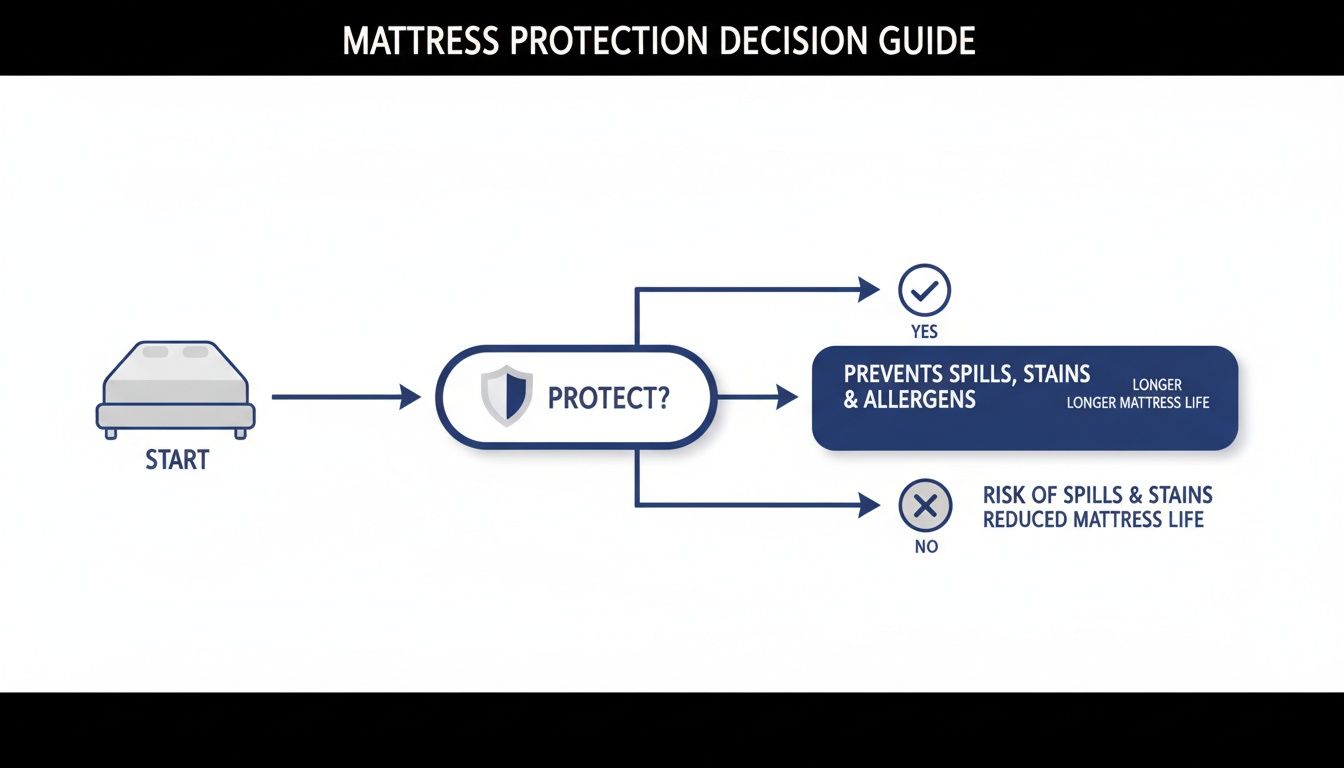
This simple decision guide can help you visualize which path is right for your home.
The key takeaway here is that deciding to protect your mattress is the most important step. The specific method you choose just depends on your individual needs.
To make things even clearer, let's break down these styles side-by-side.
Mattress Protector Styles at a Glance
Protector Type
Protection Level
Best For
Ease of Use
Zippered Encasement
Maximum (360°)
Severe allergies, bed bug prevention, ultimate liquid-proofing.
Low (Difficult to install/remove)
Fitted Protector
High (5-Sided)
Everyday spills, sweat, dust mites, and general wear.
High (As easy as a fitted sheet)
Anchored Pad
Basic (Top Surface)
Minimal, temporary protection; infrequently used guest beds.
Medium (Can shift or slip off)
Each style serves a purpose, from the comprehensive shield of an encasement to the practical, daily defense of a fitted protector.
Anchored or Strapped Pads
The most basic design is the anchored pad. This is essentially a flat pad that covers only the top surface of the mattress, held in place by elastic straps that loop around the corners. While these are often a budget-friendly option, they also offer the most minimal level of protection.
Because the sides are left completely exposed and the straps can sometimes shift or slip off, they are far less secure than fitted or encasement styles. They can be a reasonable option for a guest room that sees very little use or for situations where you only need a little temporary protection. However, for a primary bedroom, a fitted or encasement protector provides much more reliable, long-term peace of mind.
How to Choose the Right Material for Comfort and Protection
The material of your mattress protector does a whole lot more than just shield your bed—it directly shapes how you sleep every single night. While keeping your mattress safe is priority number one, the right fabric can also add a layer of comfort, help you sleep cooler, and just feel better against your skin. The secret is finding a protector that works with your mattress, not against it.
This really comes down to matching the material’s features to your own sleep habits. Do you tend to kick off the covers because you’re too hot? Is your skin easily irritated? Answering these kinds of questions will point you straight to the perfect material for your bed.
Natural and Synthetic Fabric Options
Every fabric used for the top layer of a mattress protector has its own unique feel and set of perks. A great way to start is by simply thinking about how you want your bed to feel.
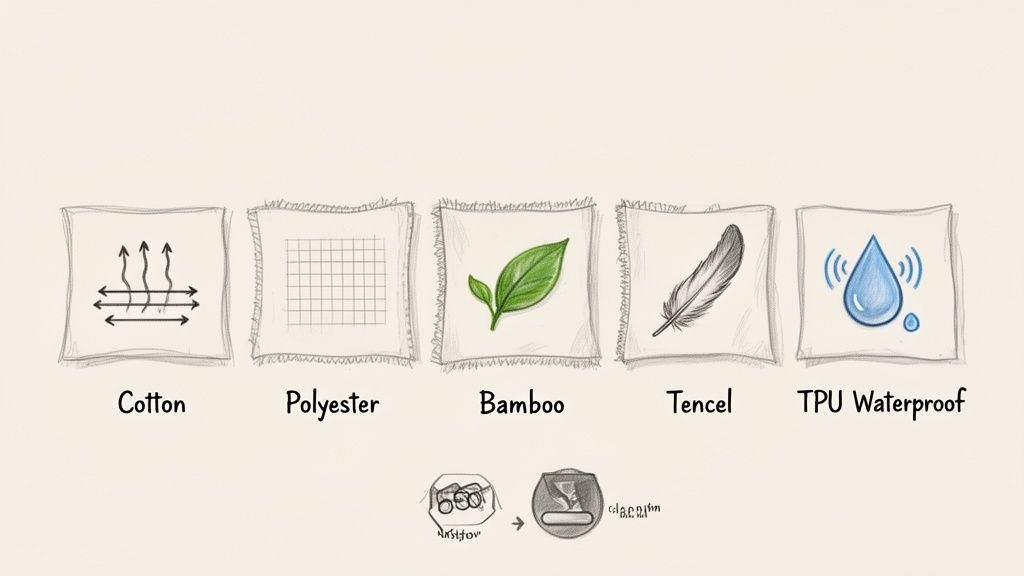
Cotton: Famous for its natural softness and breathability, cotton is a classic for a reason. It lets air move freely, which helps keep you from overheating. It’s a durable and familiar choice for anyone wanting a simple, comfy, and effective surface.
Polyester: This workhorse synthetic fabric is incredibly durable and stands up to frequent washing like a champ, making it a great choice for kids' beds or guest rooms. While it’s not as breathable as cotton by itself, it’s often blended with other fibers to boost comfort.
Bamboo: If you're a hot sleeper, bamboo-derived fabrics can be a game-changer. They are naturally moisture-wicking, pulling sweat away from your body to help it evaporate. The result is a much cooler, drier night's sleep.
Tencel™ (Lyocell): Known for its incredibly smooth, silky feel, Tencel is great for sensitive skin. It's also super absorbent and breathable, giving you the best of both worlds: luxurious comfort and excellent temperature regulation.
Beyond just the feel, it’s also smart to know what’s in your bedding. Getting familiar with textile safety standards like Oeko-Tex Standard 100 can give you extra peace of mind about the materials you and your family sleep on.
The Science Behind the Waterproof Barrier
The real magic of a mattress protector is in the part you can’t even see—the waterproof membrane. This is the invisible shield that stops spills and accidents from ever reaching your mattress. Years ago, this barrier was usually made of vinyl. It worked, but it was also noisy, crinkly, and infamous for trapping body heat and making you sweat.
Thankfully, we've come a long way since then.
Modern protectors have upgraded to a Thermoplastic Polyurethane (TPU) membrane. This high-tech material is engineered to be 100% waterproof but also microporous. Think of it like this: it has microscopic pores big enough to let air vapor escape but far too small for liquid molecules to get through. This gives you silent, breathable protection that doesn't feel like you're sleeping on a plastic sheet.
This innovation is a huge reason why the industry is growing. The bedding protectors market is projected to grow from USD 2.06 billion in 2024 to USD 3.32 billion by 2035, all thanks to these smarter materials. Today, 65% of protectors sold worldwide are waterproof yet breathable—a must-have feature for memory foam, hybrids, and adjustable bases that need good airflow to work their best.
At the end of the day, the right material is the one that solves your specific needs. Whether you need the cool touch of bamboo or the reliable durability of polyester, choosing the right fabric ensures your protector adds to your comfort while giving you total peace of mind.
Finding Protectors for Families, Pets, and Allergy Concerns
Let's be honest, most people don't start shopping for a mattress protector just for the fun of it. The search usually begins because life happens—a potty-training toddler has a nighttime accident, the dog decides the bed is his, or someone in the family can't stop sneezing.
A mattress protector isn't just a simple sheet; it's a specific tool for a specific job. Matching the right features to your family's unique needs is the only way to find a solution that actually works.
Whether you’re dealing with spills, shedding, or sniffles, the right protector can make a world of difference for your home’s hygiene and your family’s well-being.
Protectors for Homes with Young Children
When you have little ones, "oops" moments are just part of the deal. From sippy cup spills to nighttime accidents, a truly waterproof mattress protector isn't just nice to have—it's non-negotiable. But the trick is to find one that blocks liquids without making the bed feel like a plastic bag.
Look for protectors with a modern polyurethane (TPU) membrane. This material is a game-changer because it's both silent and breathable, so your child stays comfortable and doesn't wake up in a sweat. Of course, easy removal and machine washability are must-haves for those quick middle-of-the-night changes.
These everyday household needs are a huge part of the bedding protector industry. With reports showing that 70% of American households deal with bedding accidents each year, it’s easy to see why. Better protectors have been shown to cut down on damage claims by 40-50%, a huge relief for parents everywhere. You can read the full research on bedding protector trends to see the numbers for yourself.
Solutions for Pet Owners
Our pets are family, plain and simple. But they also bring their own brand of chaos to the bedroom—muddy paws, shedding, dander, and the occasional accident. For a pet-friendly home, a protector needs to be more than just waterproof; it has to be tough.
The ideal protector for pet owners acts as a multi-functional shield. It should be tough enough to resist claws, block dander and odors from penetrating the mattress, and be easy to clean, keeping your sleep environment fresh.
Look for protectors made from tightly woven fabrics like polyester or special performance blends. These materials are much less likely to snag on claws and are built to handle frequent washing. A good protector will trap pet dander right on the surface, making it easy to wash away and keeping your mattress free of allergens. For those with senior dogs or pets with medical issues, pairing a protector with the best dog diapers for incontinence can be an essential combo for keeping your bed clean.
Hypoallergenic Protectors for Allergy Sufferers
If you or someone in your family struggles with allergies or asthma, your mattress can become ground zero for triggers. Over time, it collects a mix of dust mites, pet dander, and other microscopic allergens that burrow deep inside. A protector designed for allergy relief puts an impenetrable barrier between you and those irritants.
For this job, a zippered encasement is your best bet, hands down. It completely seals the mattress on all six sides, locking allergens in and keeping new ones out. When you're shopping for one, here's what to look for:
Tightly Woven Fabric: This stops tiny allergen particles from passing through.
Secure Zipper Closure: Look for zippers with small teeth and a fabric flap that covers the zipper to create a perfect seal.
Hypoallergenic Materials: Fabrics like cotton or Tencel are naturally gentle and less likely to irritate sensitive skin.
By picking a protector that directly tackles your household’s biggest challenges, you’re not just buying another piece of bedding—you're investing in a cleaner, healthier, and more peaceful night's sleep for everyone.
Proper Care to Maximize Your Protector's Lifespan
A quality mattress protector is a durable, hardworking piece of bedding, but its special materials need the right kind of care to keep doing their job. If you wash it the wrong way, you can damage the waterproof membrane, turning your reliable shield into just another sheet. Fortunately, a few simple rules will make sure it protects your mattress for years to come.
The biggest mistake people often make is using high heat in the washer or dryer. That delicate polyurethane (TPU) layer that blocks liquids is sensitive to extreme temperatures, which can cause it to crack, melt, or peel away from the fabric. Once that happens, its waterproof powers are gone.
Think of it like caring for high-performance athletic gear; you have to be gentle to preserve the technical features you paid for. The good news is that proper maintenance is straightforward and doesn't take much extra effort, but it's absolutely essential for getting the most out of your investment.
Simple Washing and Drying Instructions
For most protectors, the process is pretty painless. Unless the manufacturer's tag says something different, you can follow these general steps to keep your protector clean and working properly without causing any damage.
Machine wash on a cool or warm cycle with a mild detergent. Stay away from hot water, as that’s the enemy of the waterproof backing.
Never use bleach or harsh chemical cleaners. Bleach will eat away at the waterproof membrane and can damage the fabric fibers over time.
Wash it with similar items, like your sheets. Avoid tossing it in with heavy stuff like towels or jeans that can cause a lot of friction and wear.
Consider running an extra rinse cycle to make sure all the detergent is washed out. Leftover soap residue can sometimes interfere with the fabric's breathability.
Drying it correctly is just as important as washing it. The goal is to get it completely dry without blasting that waterproof layer with high heat.
Tumble dry on low heat or use an air-dry setting. High heat is the single fastest way to destroy a protector's waterproof barrier. It might take a little longer, but your patience will pay off by keeping it in working order.
For even better results, you can toss in a few wool dryer balls or clean tennis balls. This helps the protector dry more evenly and keeps it from balling up. Just make absolutely sure it's completely dry before putting it back on the bed to avoid any chance of mildew.
How Often to Clean Your Protector
Getting into a regular cleaning routine helps keep your whole sleep setup hygienic and fresh. How often you should wash it really depends on your household and lifestyle.
For General Use: Washing your protector every one to two months is a good rule of thumb for most people.
For Allergy Sufferers: To keep allergens like dust mites and pet dander under control, you'll probably want to wash it more often, maybe every two to four weeks.
For Homes with Kids or Pets: After any spill, accident, or mess, it’s best to wash the protector immediately. This will prevent stains from setting in and keep everything clean.
By following these simple care instructions, you can be confident that your protector will remain a reliable guardian for your mattress, giving you peace of mind and a clean, healthy place to sleep.
Getting Hands-On Help at Woodstock Furniture & Mattress Outlet
While learning about mattress protectors online is a great way to get started, there's no substitute for seeing and feeling the real thing. A mattress protector is a very hands-on product. Its texture, its thickness, even how quiet it is — these are all things you really need to experience in person. That’s where a little personalized, expert guidance can make all the difference in finding the perfect fit for your sleep setup.
Making the right call is about more than just reading a product description; it's about making sure the protector you choose actually works with the mattress you have or are about to buy. A little friendly advice from someone with product knowledge can help you dodge common mistakes, like picking a protector that makes your sheets slide right off or one that isn't deep enough for your mattress.
Matching a Protector to Your Specific Mattress
Every mattress brand has its own feel and features, and the right protector should enhance them, not get in the way. Whether you’ve got a body-hugging Tempur-Pedic, a supportive Sealy hybrid, or a luxurious Stearns & Foster, our team knows which protectors work best with each design.
This is especially true for specialty mattresses. We can help you:
Find the perfect fit for extra-deep mattresses to make sure the protector’s pockets are generous enough to stay put without popping off at the corners.
Pick a protector with enough stretch and durability for an adjustable base, so it won’t bunch up or restrict the movement.
Pair a cooling protector with a temperature-regulating mattress to double down on its cooling benefits instead of accidentally trapping heat.
Take the Guesswork Out of Your Decision
Shopping in the store lets you ask all your questions and get straight answers right away. You can feel the difference between a silky Tencel top and a soft cotton one, or see for yourself how a protector’s elastic skirt is built to grip the mattress tightly. It completely removes the guesswork that comes with clicking "add to cart" online.
The whole idea is to build a complete sleep system where every single piece works together. Our experienced staff can help you connect the dots between your mattress, your lifestyle, and the ideal protector to keep your investment safe.
If you’re here in North Georgia, we’d love for you to stop by one of our showrooms in Woodstock/Acworth, Dallas/Hiram, or Rome. You can check out the options for yourself, feel the materials, and get honest advice from a team that’s here to help you make a great choice. Let us help you find that final piece to protect your mattress and lock in years of comfortable, healthy sleep.
Frequently Asked Questions About Mattress Protectors
When you're shopping for bedding, a bunch of practical questions can pop up. Especially with mattress protectors, you want clear, no-nonsense answers to help you feel good about your choice. Here are some of the most common questions we hear from shoppers, answered plain and simple to help you find the perfect fit for your home.
Getting these little details right is the key to making sure your protector not only guards your investment but actually makes your bed more comfortable from the very first night.
Will a Waterproof Mattress Protector Make Me Sleep Hot?
This is probably the number one concern we hear, and it's totally understandable. It usually comes from bad experiences with older, crinkly, vinyl-based protectors. Let's be honest, those things were notorious for trapping heat because they couldn't breathe at all.
Thankfully, technology has come a long way. Modern, high-quality protectors use a much smarter material—a breathable polyurethane (TPU) membrane. This stuff is specifically designed to let air and water vapor (a.k.a. sweat) pass right through, all while blocking liquids from seeping into your mattress. The result? A sleep surface that stays much cooler and way more comfortable all night long.
And if you're someone who is especially sensitive to heat, look for protectors with top fabrics made from naturally cool materials like Tencel™ or bamboo. They take the cooling and airflow to the next level.
Does Using a Mattress Protector Affect My Mattress Warranty?
It absolutely does—in a very beneficial way. Using a good mattress protector is one of the single most important things you can do to keep your mattress warranty valid.
Here's the deal: almost every single mattress warranty is instantly voided if there are any stains or signs of liquid damage. Since a protector's main job is to stop those things from ever happening, it’s basically insurance for your warranty. If a true manufacturing defect pops up down the road, your warranty claim won't be denied because you've kept the mattress itself perfectly clean.
Many mattress brands and retailers don't just recommend using a protector, some actually require it to keep the warranty active. It's a small, easy step that protects a much bigger investment.
How Do I Choose the Right Size for a Deep Mattress or Adjustable Base?
Fit is everything. If your protector is too loose or too tight, it's not just annoying—it won't give you the reliable protection you're paying for.
Here’s what to look for to get that perfect fit:
For Deep Mattresses: If your mattress is taller than 14 inches, you'll need a protector made with deep pockets. The product description will almost always tell you the maximum mattress depth it can handle, so just be sure to check that number.
For Adjustable Bases: A standard fitted-style protector is your best bet here. You'll want one with a strong, all-around elastic band and a fabric skirt with plenty of stretch. This combo ensures the protector hugs the corners and stays put, no matter how you adjust the bed. Zippered encasements usually aren't a great idea for adjustable beds because they can bunch up and restrict the base's movement.
How Often Should I Wash My Mattress Protector?
How often you should toss it in the wash really comes down to your own household. Sticking to a regular schedule is the best way to keep your sleep space fresh and hygienic.
Here are a few general rules of thumb:
For General Use: For most people, washing your protector every one to two months is plenty.
For Allergy Sufferers: To keep dust mites and other allergens at bay, you'll want to wash it more often, maybe every two to four weeks.
For Homes with Kids or Pets: After any spills or accidents, wash it right away. This will prevent stains from setting in and keep things smelling fresh.
No matter what, always check the care instructions on the tag. Following the manufacturer's directions is the best way to make sure that waterproof barrier stays effective for years to come.
At Woodstock Furniture & Mattress Outlet, our team is always here to walk you through these choices in person. We can help you find the protector that works for your new mattress and your lifestyle, ensuring you get years of great performance and a cleaner, healthier night's sleep.