
You're settling into bed with a book, but the wall behind you is cold and unforgiving. Or perhaps you're furnishing a guest room that looks almost finished, except the bed needs a stronger visual anchor. An upholstered wood headboard can solve both problems, but the fabric and silhouette are only part of the decision.
The wood frame affects stability, the padding affects comfort, and the upholstery affects cleaning and long-term appearance. Mounting hardware, composite-wood disclosures, and fire-safety labeling also deserve attention. A careful choice starts with understanding how the headboard is built and how it will work in your room.
Why the Right Headboard Changes Your Bedroom
A headboard becomes important at the moments when a bed does more than provide a place to sleep. If you read before bed, answer messages in the morning, or sit with a cup of coffee on a weekend, a padded surface gives your shoulders a more forgiving place to rest than bare wood or metal. The rigid wood structure still provides shape and support, while the upholstered face softens the contact point.
The choice also changes the room's visual balance. A tall, upholstered design can make a large bedroom feel more grounded, while a lower profile may suit a compact room with limited wall space. Texture matters, too. A woven neutral fabric creates a softer effect than a dark stained wood panel, and tufting or piping can shift the impression from relaxed to formal.
Practical rule: Choose the headboard for the way you use the bed, not only for the way it looks in a product photograph.
The wood-and-fabric combination has a long design history. Earlier headboards served practical purposes, including creating a barrier against cold drafts, while later European beds became associated with privacy, comfort, and status. Upholstered headboards became more popular in the 17th century, when padded surfaces offered a softer place to rest as fabric drapery on canopy beds declined, as described in this history of headboard design.
A useful evaluation therefore has three parts: comfort, compatibility, and serviceability. The right headboard should fit the bed frame, suit the room's proportions, and remain manageable when fabric gathers dust, a child touches the surface, or a pet brushes against the lower edge.
Here's a short visual reference before getting into construction details:
What Upholstered Wood Headboards Actually Are
An upholstered wood headboard is a hybrid piece. Behind the visible fabric is a wood frame, wood panel, or engineered-wood structure that gives the headboard its shape. Over that structure, the maker may add foam, fiber batting, or another resilient filling, followed by upholstery fabric and a finished backing.
Think of it as a layered assembly:
- Structural core: This may be solid wood, hardwood plywood, MDF, particleboard, or a combination of materials.
- Padding layer: Foam or batting determines how much softness you feel when leaning back.
- Cover fabric: Linen blends, polyester weaves, velvet, performance textiles, and other materials create different cleaning and wear requirements.
- Attachment system: Brackets, bolts, cleats, or mounting plates connect the headboard to the bed, wall, or both.
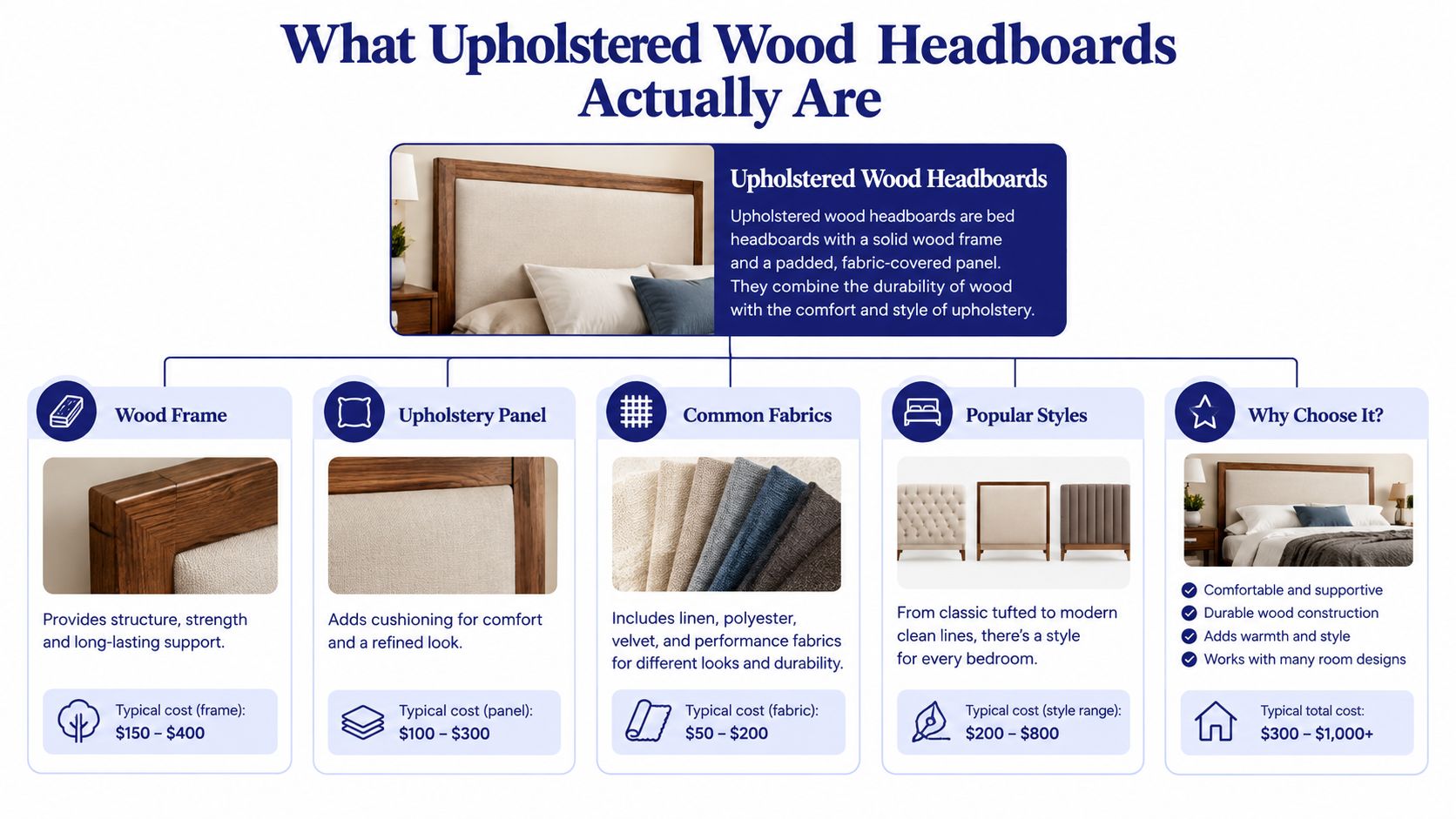
This construction differs from an all-wood headboard, where the surface is generally easier to dust and wipe but feels firm when you sit upright. It also differs from a metal headboard, which may be lighter visually and physically but doesn't provide the same padded backrest. A fully upholstered headboard can feel softer, yet it may expose more fabric and offer less visible wood character.
The wood portion doesn't automatically make the headboard more durable or safer. The quality of the joints, the panel thickness, the padding, the seams, and the attachment hardware all influence real-world performance. An online listing that says “wood” may refer to a solid frame, a veneer over a composite panel, or several materials used together.
Ask the seller for a material specification rather than relying on a broad label. You'll also want to know whether the upholstery pad is removable, because a removable panel can make future cleaning, repair, or fabric replacement more practical.
Construction, Materials, and Style Options
Material choices shape more than appearance. They affect the headboard's weight, the way it feels against your back, the effort required to keep it clean, and how easily a future owner can repair or re-cover it.
Fabric selection deserves an honest lifestyle assessment. A loosely woven natural-looking textile may create a relaxed bedroom, but it can require more careful spot treatment than a tightly woven performance fabric. Polyester blends often offer practical resistance to everyday handling, while velvet, chenille, and textured fabrics can bring depth but may show pressure marks or directional changes.
Padding also varies. A thin pad may feel supportive rather than plush, while thicker cushioning can make reading in bed more comfortable but may increase the headboard's depth and visual weight. If the headboard sits in a narrow room, that extra projection can affect nightstand clearance.
Wood substrates change the practical trade-offs
Solid wood can show natural grain and may support future repair, but a substantial frame can be heavy. Engineered wood can provide consistent panels and stable shapes, although shoppers should ask which type is used and whether the finished product has the required emissions documentation. Composite panels are not interchangeable, so “engineered wood” alone doesn't tell you enough about the construction.
| Material Category | Best For | Maintenance Note |
|---|---|---|
| Linen blend or natural-looking weave | Relaxed, layered bedrooms | Vacuum gently and follow the maker's cleaning code |
| Polyester or performance textile | Homes with children, pets, or frequent use | Confirm the approved cleaner before treating stains |
| Velvet or chenille | Formal or decorative rooms | Brush or vacuum carefully to avoid altering the pile |
| Solid wood frame | Buyers who value visible grain and a substantial structure | Dust with a soft cloth and avoid excess moisture |
| Engineered wood panel | Consistent shapes and varied furniture styles | Request the exact panel type and compliance details |
Style should follow the room rather than dictate it. A clean, low-profile frame works with modern bedding and compact layouts. A tufted or curved headboard can become the room's focal point, while a transitional design combines simple geometry with softer upholstery. Nailhead trim, contrast piping, and exposed wood feet add detail, but each extra feature can make coordination more specific.
Sizing and Compatibility With Bed Frames
The most frustrating headboard problem is often not the fabric or finish. It's discovering that the attachment points don't align with the bed frame you already own.
Start by measuring the bed frame's outside width, the distance between its mounting holes, and the height from the floor to the top of the mattress. Measure the mattress separately from the top of the foundation or platform. A headboard can technically fit the frame while still looking too low behind a tall mattress.
Check the mounting method first
A bed-attached headboard uses brackets or bolts that connect directly to the frame. This arrangement keeps the headboard aligned with the bed, but the frame must have compatible attachment points and enough structural strength for the headboard's weight.
A wall-mounted headboard uses a cleat, bracket, or other specified system. It can work with a wider range of bed frames, but the wall type, fasteners, and installation location matter. A freestanding headboard may require attachment to the wall even if the product appears stable on its own.
Adjustable bases need special attention. Movement can place stress on a headboard that was designed for a stationary platform or foundation. Ask whether the headboard is compatible with the specific adjustable-base design, and don't assume that a standard bolt pattern will solve the issue.
Use this measurement sequence
- Measure width: Record the bed frame width, then compare it with the headboard's stated size.
- Record hole spacing: Measure from the center of one mounting hole to the center of the other.
- Check vertical clearance: Note the distance from the floor, frame, and mattress top to understand the final proportions.
- Identify the bed system: Write down whether you have a platform bed, box spring, foundation, metal frame, or adjustable base.
- Confirm hardware: Ask which bolts, brackets, cleats, or wall anchors are included and which are not.
Mattress height changes the visible amount of upholstery. A thick mattress can cover the lower portion of a short headboard, while a tall headboard can dominate a room with low ceilings. Bring your measurements when shopping, and ask to see the connection points rather than judging fit from the front view alone.
Safety and Indoor Air Quality Considerations
“Safe” doesn't mean only “made with wood.” An upholstered wood headboard combines a rigid frame with exposed fabric, foam, batting, seams, and attachment hardware. Each part deserves a separate check.
In the United States, the Consumer Product Safety Commission says that most upholstered bed frames and upholstered headboards are outside the scope of 16 CFR Part 1640, so shoppers shouldn't assume that every headboard is regulated in the same way as a sofa or chair. For products covered by the rule, California Technical Bulletin 117-2013 methods evaluate the cover fabric, resilient filling, barrier material, and decking when present. The tests address char length, continued smoldering, and transition to open flame, and compliant products should carry the relevant permanent label. The CPSC upholstered furniture guidance explains why product classification and labeling matter.
A United Kingdom government review reported that upholstered items, including beds, mattresses, and furniture, were the first material or item ignited in 12% of domestic fire incidents and were associated with 29% of fatalities. Under another classification, upholstered furniture was first ignited in 1.5% of incidents and linked to 9% of fire fatalities. The review identifies headboards and footboards as products whose two faces are treated as visible fabric under the United Kingdom Furniture and Furnishings (Fire) (Safety) Regulations. These figures describe incident categories, not the likelihood that a particular headboard will ignite, but they show why fabric, foam, construction, and labeling deserve attention. Read the United Kingdom review of upholstered-product fire risks for the regulatory context.
Check materials and installation
Composite wood can emit formaldehyde from adhesive resins. Ask whether the headboard uses hardwood plywood, MDF, particleboard, or solid wood, and request TSCA Title VI documentation where applicable. CARB Phase 2 compliance may also be relevant to the product specification.
Keep the headboard away from candles, heaters, and electrical heat sources. For tall, heavy, freestanding, or storage-integrated designs, confirm whether the product attaches to the bed, wall, or both. Follow the manufacturer's instructions for anti-tip hardware, as advised by the CPSC's Anchor It furniture-stability guidance.
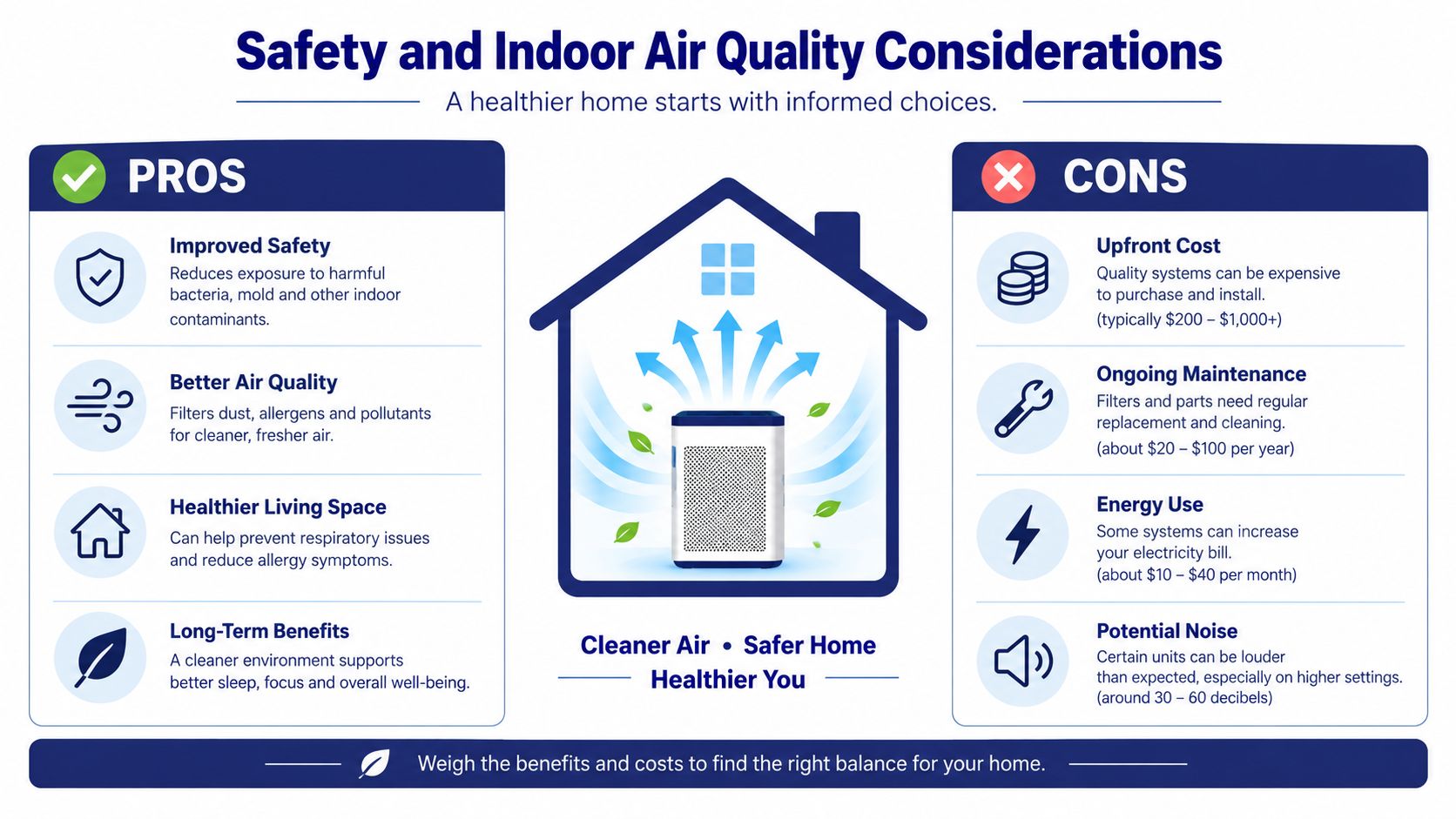
For broader bedroom air-quality planning, a resource about a home air purifier can help you consider ventilation and filtration as part of the room environment. An air purifier doesn't replace product disclosure, ventilation, or safe installation.
Care, Maintenance, and Longevity Tips
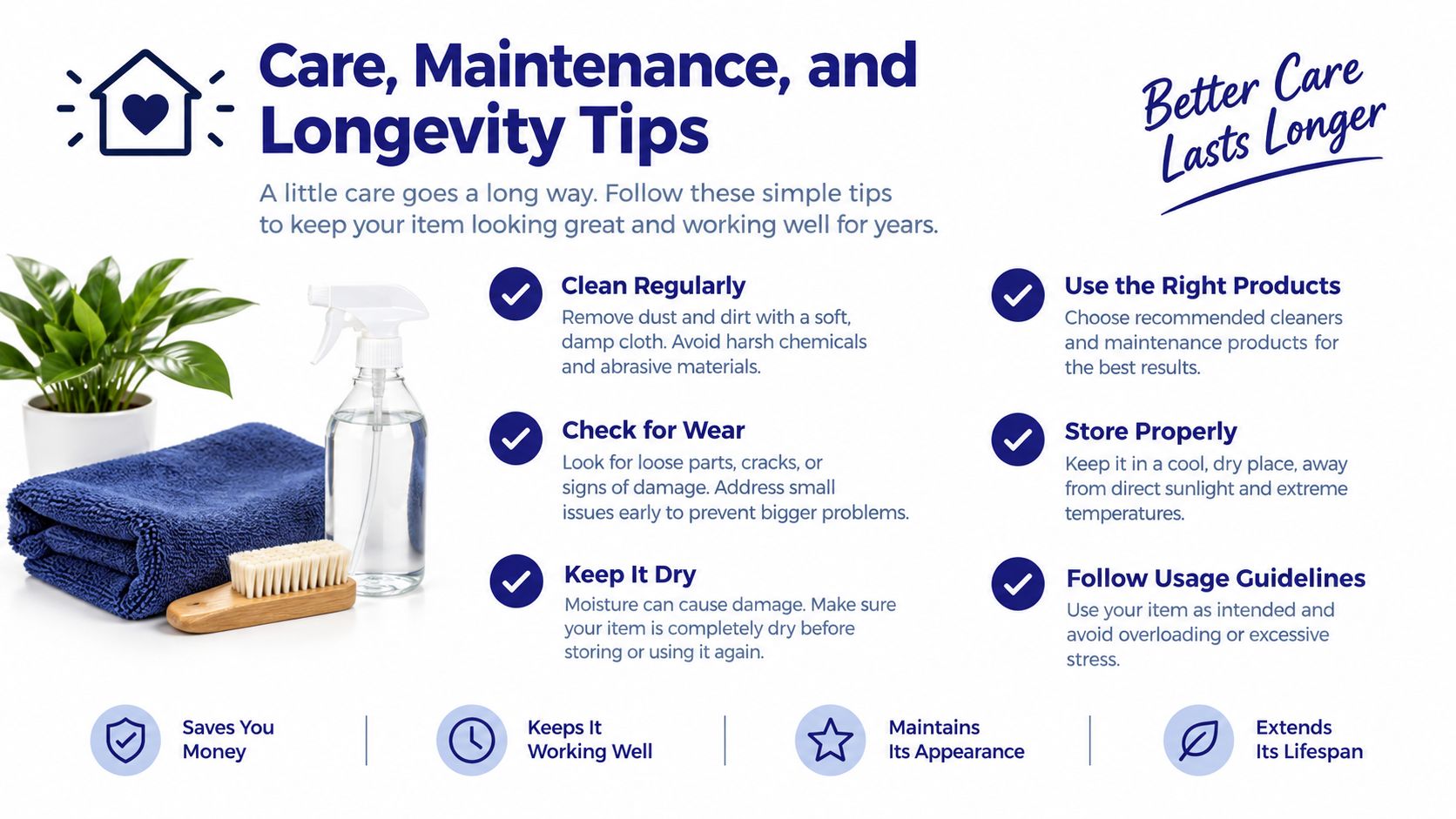
Fabric care works best when it becomes routine rather than a rescue project. Use a vacuum upholstery attachment to remove surface dust, especially along seams, piping, and the lower edge. Treat spills promptly by blotting instead of rubbing, and follow the manufacturer's cleaning code before applying water, detergent, or stain treatment.
Moisture is a particular concern for padded construction. Saturating the fabric can push liquid into the foam, batting, or wood substrate, where drying becomes slower and odors or distortion may develop. Steam cleaning isn't automatically suitable for every performance fabric, so use only an approved method.
Keep the structure dry and serviceable
Dust exposed wood with a soft, dry cloth. If the manufacturer allows a slightly damp cloth, wipe lightly and dry the surface immediately. Don't use abrasive pads, strong solvents, or excess water on finished wood, veneer, or composite panels.
A serviceable headboard is easier to keep in use. Before buying, ask whether the upholstery can be removed or replaced, whether replacement panels are available, and whether the hardware can be ordered separately. A durable, repairable design may remain useful longer than a product that is difficult to disassemble, even when another product makes broader recycled-content claims. This circular-design perspective is discussed in furniture repairability and circular design research.pdf).
The wood substrate also matters indoors. The EPA lists formaldehyde emission limits of 0.05 parts per million for hardwood plywood, 0.11 ppm for MDF, 0.13 ppm for thin MDF, and 0.09 ppm for particleboard under TSCA Title VI standards. Finished goods containing regulated composite wood manufactured or imported after March 22, 2019, must be certified as TSCA Title VI compliant by an appropriately approved third-party certifier, according to the EPA consumer guidance on composite wood products.
Unpack a new headboard in a well-ventilated room before placing it against the bed, and avoid sealing it tightly into a poorly ventilated alcove. If you're building a broader cleaning routine, guidance on cleaning uPVC window frames safely offers a useful reminder to match cleaning methods to the material instead of using one aggressive product everywhere.
Styling Ideas and Bedroom Integration
Start with proportion. A tall upholstered wood headboard can anchor a spacious bedroom and create a strong backdrop for layered bedding. In a smaller room, a lower profile may leave more visual breathing room and reduce the sense that the bed is pressing into the wall.
Color doesn't need to match exactly. Pair a warm wood tone with cream, clay, olive, or muted blue textiles, then repeat one element in the nightstands, rug, or artwork. If the upholstery is patterned, keep the bedding quieter. If the fabric is a solid neutral, texture from a quilt, woven throw, or upholstered bench can prevent the arrangement from feeling flat.
Build the room around the headboard
Place bedside lighting where it serves the way you use the bed. Wall-mounted sconces can preserve nightstand surface, while table lamps add height and a more traditional layer. Keep cords and electrical devices positioned away from fabric and padding, especially where the headboard sits close to a lamp or outlet.
Use the wood detail as a coordinating cue rather than a rule. Exposed legs, trim, or a wood frame can connect with a dresser without requiring an identical finish. Mixing wood tones can work when the shapes and undertones feel intentional, but too many competing finishes can make a compact bedroom look busy.
For children's rooms or low sleeping arrangements, the design question changes. A conventional tall headboard may not suit a floor-level setup, while a guide to Montessori floor bed headboards can help you compare proportions and safety considerations for that style. Whatever the room, keep climbing access, wall clearance, and attachment points in mind.
The most successful styling choice usually supports daily use. Select a fabric you can maintain, a height that works with your mattress, and a wood finish that fits the furniture you already own. That approach creates a bedroom that feels settled rather than dependent on a short-lived trend.
Woodstock Furniture & Mattress Outlet offers upholstered bedroom furniture, mattresses, adjustable bases, and bedroom planning support across its North Georgia locations. Visit Woodstock Furniture & Mattress Outlet to compare headboard materials in person, bring your measurements, and speak with staff about bed-frame compatibility, care, and installation.