You're probably here because you've seen a sofa described as an English arm sofa and thought, “I know I like it, but I'm not fully sure what makes it different.”
That's common. A lot of sofa styles sound similar online, and product listings don't always slow down enough to explain what your eyes are noticing. One style has a soft rolled arm, another has a square track arm, and then there's the English arm, which often looks familiar even if you don't know the name.
If you want a sofa that feels classic without looking fussy, this is one of the most useful styles to understand. It has a well-defined shape, a comfortable posture, and a look that fits more homes than many people expect. For North Georgia homeowners especially, it can work in everything from an updated traditional living room to a newer farmhouse-inspired space.
What Exactly Is an English Arm Sofa
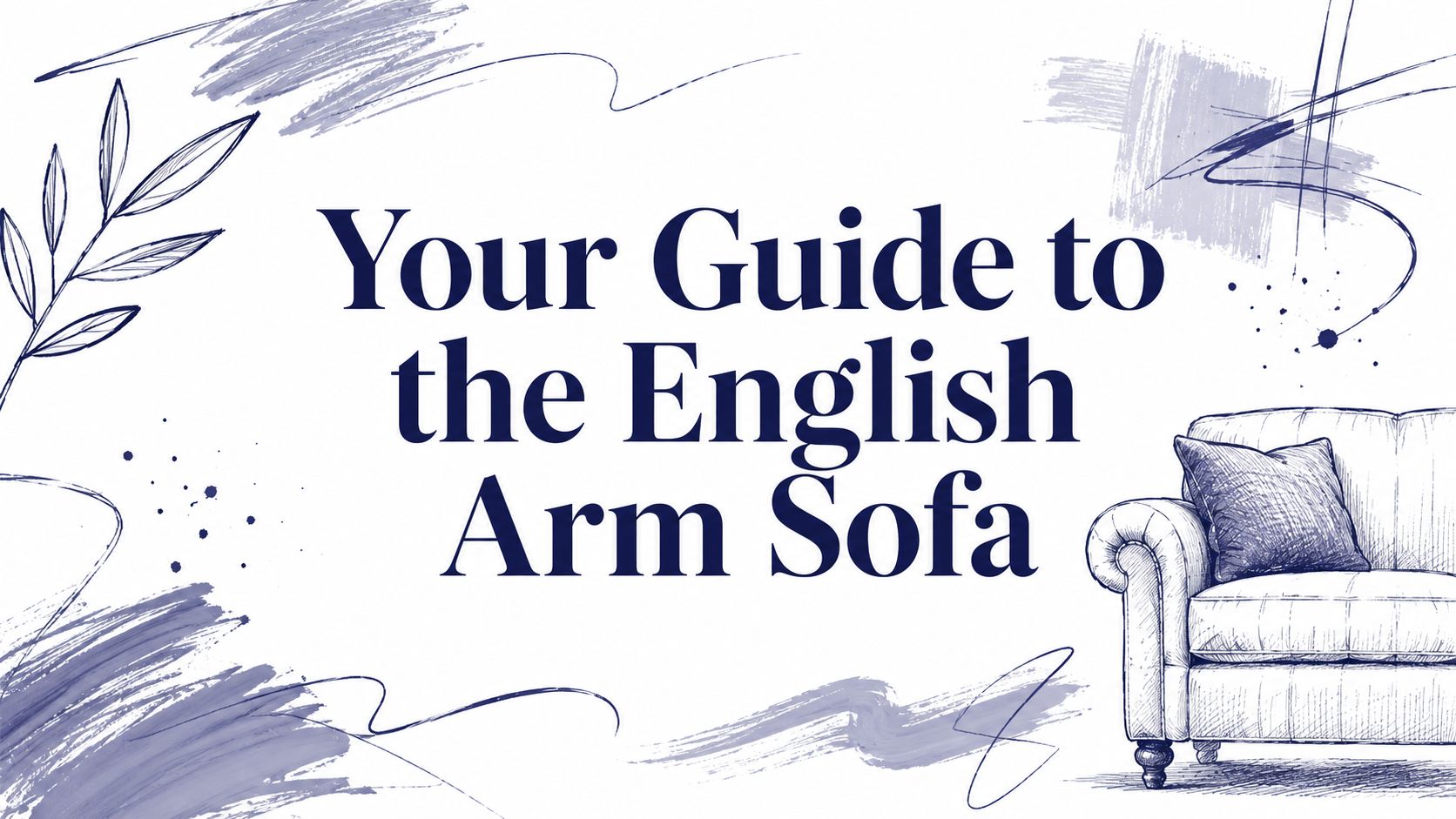
An English arm sofa is easiest to identify by looking at the arms first. They sit lower than the back, and they slope back instead of standing upright. That shape creates a softer outline than a boxy sofa, but it doesn't feel bulky or overly formal.
According to Pottery Barn's English arm style guide, the English arm sofa is defined by its arms featuring a specialized geometric slope, creating a distinct silhouette where the arm's front face is angled backward rather than standing upright. That shape is linked to reproductions of Georgian and Victorian antiques and creates a dramatic swoop that stands apart from more modern upholstery.

The three details most people notice first
Most English arm sofas share a few visual cues.
- Low recessed arms make the sofa look relaxed and approachable.
- A tight back often gives it a cleaner, neater profile than very pillow-heavy styles.
- Rounded lines soften the shape so it feels welcoming instead of stiff.
Those details matter because they change the mood of the whole piece. A track-arm sofa can look crisp and architectural. A classic rolled arm can look fuller and more traditional. The English arm usually lands in the middle.
Why people often confuse it with other styles
Part of the confusion comes from the fact that “English arm” and “English roll arm” get used interchangeably in casual conversation. Some versions look more structured. Others lean more plush. The shared idea is the same. The arm sits low, sweeps back, and helps the sofa feel elegant without looking uptight.
Practical rule: If the arms are lower than the back and seem to fall away from it in a gentle slope, you're likely looking at an English arm silhouette.
There's also an emotional reason this style stays popular. It looks established, but not intimidating. It suggests comfort before you even sit down.
That's why it appeals to people who want a living room that feels finished, not overly decorated. If your goal is “classic, but still livable,” the English arm sofa often checks that box.
Beyond the Arms Key Construction Features
Once you recognize the shape, the next question is what makes an English arm sofa feel good to live with. Construction matters more than styling photos.
One of the biggest design details is the T-cushion. On many English arm sofas, the seat cushion extends forward around the recessed arm instead of stopping in a straight rectangle. That wraparound shape helps the sofa look softer and more compact.

Why the T-cushion matters
The T-cushion isn't just decorative. It affects how the sofa reads in a room. According to this English roll-arm sofa construction guide, the recessed sloped arm profile often pairs with a T-cushion seat configuration, and that design can reduce the visual footprint by 2–3 inches compared with standard cushions. The same source notes that this style typically has a depth of 41 to 43 inches, which helps balance a lounge-friendly seat with a more compact appearance.
That's a useful detail if you've ever looked at deep sofas and worried they'd overwhelm your room. An English arm sofa can still offer a generous sit while looking a little less heavy than its measurements suggest.
What to inspect beyond the silhouette
A pretty frame shape doesn't tell you whether a sofa is built well. Look deeper.
| Feature | What to look for | Why it matters |
|---|---|---|
| Frame | Kiln-dried hardwood and reinforced joints | Helps the sofa stay stable over time |
| Back style | Tight back or attached back done neatly | Keeps the silhouette tailored |
| Seat cushions | T-cushion fit and even shape | Affects comfort and visual balance |
| Support system | Ask what supports the seat and arms | Influences feel and long-term consistency |
Some English arm sofas have a very polished, refined seat. Others feel more casual. Neither is automatically right or wrong. What matters is whether the proportions feel good to you and whether the sofa keeps its shape when you sit, shift, and stand up.
A well-made sofa should feel settled and steady. The arms shouldn't wobble, and the seat shouldn't collapse into an uneven dip the moment you sit down.
One point that trips people up is the back. A tight back looks clean and tidy, but it also means the frame does more of the visible work. If the construction underneath is weak, the sofa can show it sooner because there aren't loose back cushions disguising movement.
Comfort isn't only about softness
People sometimes test a sofa for five seconds and focus only on whether it feels plush. That's not enough. A better test is this:
- Sit upright and see where your lower back lands.
- Lean to one side and notice whether the arm feels usable.
- Shift your legs up slightly if that's how you relax at home.
- Stand up and look back. Does the cushion bounce back neatly, or does it already look messy?
That short routine tells you more than a quick bounce on the seat ever will.
English Arm vs Other Popular Sofa Styles
If you're torn between several classic silhouettes, the arm shape will tell you a lot about how each sofa will feel in your room. Not better or worse. Just different.
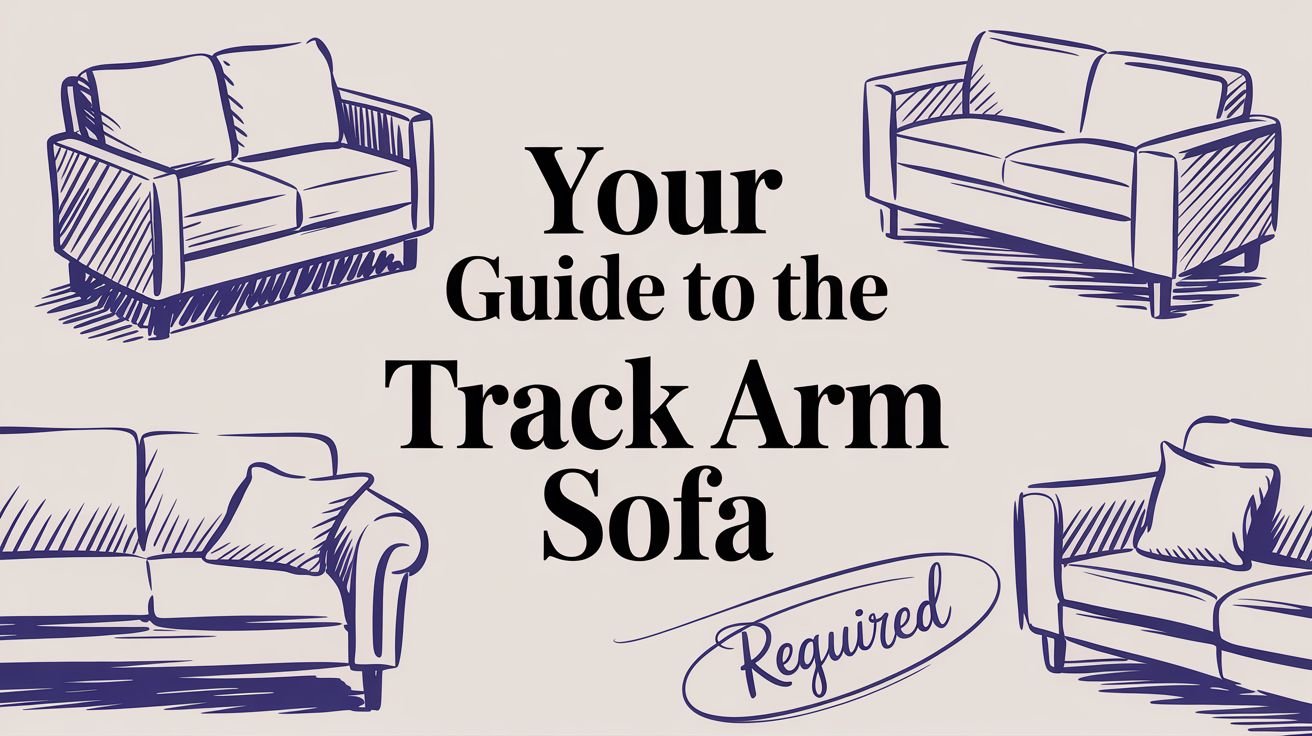
The English arm often works as the middle ground between a modern track arm and a fuller traditional rolled arm. It softens a room without making it feel overly formal.

A simple side by side comparison
| Style | Arm look | Overall feel | Often fits well in |
|---|---|---|---|
| English arm | Low, set back, softly sloped | Tailored but inviting | Transitional, updated traditional, cozy living spaces |
| Track arm | Straight and squared | Clean and structured | Modern, minimalist, urban rooms |
| Classic rolled arm | Fuller and more prominent | Traditional and substantial | Formal rooms, layered traditional homes |
The English arm is often the easiest choice for people who don't want extremes. If a track arm feels too sharp and a classic rolled arm feels too heavy, the English arm usually lands in a comfortable middle.
A quick visual example can help if you're comparing shapes online.
How the styles behave in real rooms
A track-arm sofa usually reads as cleaner and more contemporary. If your home has simple trim, open sightlines, and a lot of straight lines, that can be a great fit. It tends to look intentional and crisp.
A classic rolled arm sofa brings more presence. In the right room, that's a strength. It can anchor antique wood pieces, formal rugs, and more traditional architecture beautifully.
The English arm sofa bridges those worlds. It has enough curve to feel warm, and enough restraint to work with newer homes and lighter decorating styles.
If you like traditional furniture in theory but don't want your room to feel stiff, the English arm is often the style that makes the room feel more relaxed.
Which one is easier to live with
That depends on your habits.
- For upright sitting and a cleaner profile, many people prefer track arms.
- For a classic, substantial look, rolled arms make sense.
- For reading, conversation, and a softer everyday feel, English arms are often a strong match.
This is why arm style matters more than shoppers sometimes expect. It changes the look, but it also changes where your shoulders rest, how the sofa meets the room, and whether the piece feels formal or easygoing.
Styling an English Arm Sofa in North Georgia Homes
North Georgia homes often mix styles in a way that suits the English arm especially well. You'll see newer builds with farmhouse touches, older homes with traditional bones, and plenty of rooms that blend painted finishes with warm wood tones. The English arm sofa can handle that mix.
Its roots help explain why. As noted in this history of the English roll-arm sofa, the style emerged in the 19th century, and it helped move the sofa from a formal, hard-edged piece for the aristocracy into a comfortable household essential for the middle class. That change was accelerated by the Industrial Revolution, 1760–1840, which made furniture manufacturing more accessible.
Where it works locally
In a Roswell bungalow or older traditional home, an English arm sofa can echo the age of the architecture without looking overly decorated. Pair it with a wood coffee table, a patterned rug, and a lamp with a fabric shade, and the room feels settled.
In a newer Canton or Woodstock-area home, the same sofa can soften open-concept spaces that have hard flooring, painted cabinetry, and clean-lined built-ins. It keeps the room from feeling too sharp.
A few room-by-room ideas
- Family room: Use the sofa as the anchor piece, then add lighter accent chairs so the space doesn't feel too matched.
- Formal living room: Let the sofa bring the softness, then use a more structured cocktail table to balance it.
- Reading corner or keeping room: A compact English arm loveseat or smaller sofa can make the area feel finished without looking bulky.
This style also plays well with many North Georgia materials and finishes.
| If your room has | Try this with an English arm sofa |
|---|---|
| Warm wood floors | Textured neutral upholstery and a patterned pillow |
| Painted shiplap or trim | A sofa with tailored lines and subtle contrast piping |
| Stone fireplace | Softer fabric and rounded accessories to keep the room from feeling hard |
| Black metal accents | A classic silhouette to add warmth and visual balance |
The most successful rooms usually mix one classic piece with simpler supporting pieces. An English arm sofa often does that job well because it has character without demanding that everything around it match.
What not to overdo
People sometimes lean too far into “traditional” once they choose this silhouette. You don't need floral everything, dark wood everywhere, or a room full of antique-style accessories.
Instead, think in contrast. If the sofa has rounded lines, let a cleaner side table sit beside it. If the upholstery is quiet, bring in a patterned pillow or woven throw. That balance keeps the room current while respecting the sofa's history.
Your In-Store Shopping and Care Checklist
Shopping for an English arm sofa in person is worth the effort because this is a style where proportions matter. A sofa can look perfect in one photo and feel completely different when you sit on it.
That's especially true with arm height, seat depth, and fabric texture. Two sofas can both be labeled “English arm” and still feel nothing alike in daily use.

What to do in the showroom
Bring a short checklist and use it.
Sit the way you sit at home
Don't perch on the edge for three seconds. Sit back, rest an arm, and stay there long enough to notice whether the depth works for your height.Check the frame with your hands
Put one hand on the arm and one on the back. Give the piece a gentle wiggle. You're listening and feeling for stability, not trying to stress the furniture.Look at the cushions after you stand up
Some cushions recover neatly. Others look rumpled right away. That visual tells you a lot about the maintenance level you may be signing up for.Take fabric swatches home if they're available
Store lighting and home lighting are not the same. A fabric that looks creamy in the showroom may read cooler or darker in your living room.
Fabric matters more than many people expect
This is one of the most overlooked parts of sofa shopping. According to the Serena & Lily editorial on English roll-arm sofas, citing AFMA, 72% of U.S. consumers prioritize low-maintenance, durable fabrics. That's especially relevant for a traditional silhouette that may stay in your home for a long time.
If you have kids, pets, or a high-traffic family room, don't choose fabric based only on color. Ask how it handles regular use, spot cleaning, and everyday friction. If pet shedding is part of your decision, this guide to choosing pet hair resistant materials can help you think through texture and cleanup before you commit.
A beautiful sofa fabric that makes you nervous every day usually isn't the right fabric for your real life.
A simple care routine after delivery
Care doesn't need to be complicated, but it does need to be consistent.
- Vacuum gently: Use a soft brush attachment to remove dust and crumbs from seams and under cushions.
- Rotate loose cushions: If your sofa has reversible seat cushions, rotate them so wear happens more evenly.
- Blot spills quickly: Follow the manufacturer's care guidance instead of guessing.
- Watch sunlight: Long periods of direct sun can be hard on many upholstery fabrics.
One more practical note. Before you buy, measure not only the room but also the path into it. Doorways, stair turns, hall widths, and entry angles matter just as much as the final placement spot.
Experience the Timeless Comfort for Yourself
The appeal of an English arm sofa is simple once you strip away the jargon. It gives you a low, graceful arm shape, a well-defined look, and a comfortable presence that doesn't feel too formal or too modern. That balance is why so many people respond to it immediately, even if they don't know the style name.
It's also one of the easier classic silhouettes to use in real homes. In North Georgia, where many interiors blend traditional details with newer finishes, the English arm often feels natural instead of forced. It can live beside rustic wood, painted built-ins, soft neutrals, or more polished pieces without looking out of place.
What to remember before you choose
If you're narrowing down options, keep these points in mind:
- Focus on the arm shape first so you know you're looking at the right silhouette.
- Test the seat depth and support in person because comfort varies from one model to another.
- Treat fabric choice as a lifestyle decision, not just a decorating decision.
- Think about the room as a whole so the sofa supports your space instead of overpowering it.
A sofa like this rarely wins people over with flash. It wins because it keeps making sense. It looks good in a wide range of homes, and when the proportions are right, it tends to feel easy to live with day after day.
Why seeing it in person still matters
Photos help you narrow the field, but they can't tell you everything. They can't show whether the arm hits your elbow comfortably, whether the seat feels too deep for conversation, or whether the upholstery has the texture you want in your everyday space.
That's where a showroom visit helps. You can compare silhouettes side by side, test comfort for yourself, and ask practical questions without relying on guesswork.
If you'd like hands-on help sorting through sofa styles, visit Woodstock Furniture & Mattress Outlet. Their team can help you compare shapes, fabrics, and room fit in person so you can make a confident choice without pressure.