You're standing in front of a wall of sofa swatches, holding two samples that look almost identical. One feels soft and relaxed, the other feels smoother and more tightly woven. Then you notice a third option that looks beautiful but comes with care instructions you're not sure you can live with. Sofa material types can shape daily comfort, cleaning effort, durability, and the way a piece changes over years of use, yet shoppers often focus first on color, size, and shape.
The covering determines how a sofa responds to spilled coffee, a dog's claws, repeated sitting, or strong sunlight. Every material family involves trade-offs in breathability, stain response, texture, and aging, so choosing by appearance alone can lead to disappointment. The most useful question isn't “Which material is best?” It's “Which material fits the way I live?”
Why Sofa Material Choices Matter More Than You Think
A sofa may look perfect in the showroom and behave very differently at home. A pale linen blend can bring a relaxed, airy feel to a quiet sitting room, but the same surface may demand more attention in a snack-heavy family room. A smooth leather sofa can make pet hair easy to remove, while a cat's claws may still leave visible marks. A tightly woven synthetic fabric may tolerate everyday friction well, but its hand-feel won't be identical to a natural fiber.
That's why a material decision deserves the same attention as the sofa's frame size and cushion configuration. Upholstery became more specialized over time, moving from ancient upholstered furniture to a profession in 18th-century France and England, then toward mechanized tools and sewing machines during the Industrial Revolution, according to this history of upholstery materials and methods. Today's shopper is choosing among natural hides, plant-based fibers, manufactured textiles, and fabrics engineered for specific living conditions.
Start with the room, not the swatch
Before you fall for a color, ask where the sofa will sit and who will use it. A room with children, pets, or frequent visitors needs a surface that can handle repeated contact and practical cleaning. A formal room used occasionally gives you more freedom to prioritize a delicate texture, a visible weave, or a dramatic pile.
Sunlight matters, too. A sofa beside a bright window faces a different challenge from one in a shaded den. Fabric and leather can both change under prolonged direct light, although the way they change depends on the material, finish, color, and exposure.
A useful showroom question: “What will this sofa need to tolerate on an ordinary Tuesday?”
Appearance is only the beginning
The main categories in this guide include leather, bonded leather, performance fabrics, microfiber, velvet, cotton-linen blends, and outdoor fabrics. They don't all respond to spills, friction, warmth, or pet hair in the same way. Even within one category, construction and finish can change the result, so a material name alone shouldn't be treated as a complete performance guarantee.
A good choice is less about avoiding every mark. It's about deciding which signs of use you can accept. Leather may develop character, velvet may show directional shading, linen may crease, and synthetic fabric may offer simpler cleanup. Once you know what those changes look like, the swatch wall becomes much easier to read.
The Main Sofa Material Types Explained
The easiest way to understand upholstery is to separate what the material is made from from how it behaves on a sofa. Two fabrics can share a fiber but feel very different because one is tightly woven and the other has a loose, textured surface.
Leather and manufactured leather
Full-grain leather uses the hide's outer surface, so natural grain variation, wrinkles, and small marks may remain visible. Top-grain leather also comes from the outer hide, but it's generally refined or finished for a more uniform appearance. Both usually feel smooth, substantial, and slightly cool at first, then warm as you sit.
Bonded leather is a manufactured composite made with leather fibers and other materials. It can offer a leather-like appearance and smooth hand-feel, but it shouldn't be evaluated as though it were a full hide. Ask what parts of the sofa use the stated material and what care the manufacturer requires.
Performance fabrics and microfiber
Performance fabrics are usually tightly woven synthetic textiles engineered to improve resistance to staining, moisture, and everyday wear. The hand-feel ranges from smooth and matte to soft and textured. Modern options increasingly aim for a natural, tactile appearance rather than a shiny, plastic-like finish, a shift discussed in 2026 sofa design coverage from Elle Decor.
Microfiber uses extremely fine polyester filaments brushed into a suede-like nap. It feels soft and close to the hand, with a relatively smooth drape and low, even surface. Its dense structure can make it practical for active homes, especially where loose fur and small spills are part of daily life.
Velvet, natural blends, and outdoor upholstery
Velvet has a raised pile that creates its familiar plush feel and subtle light variation. It's visually rich and can feel wonderfully soft, but pressure and brushing can create visible changes in direction.
Cotton-linen blends combine breathable natural fibers in a woven surface that often shows slubs, creases, and gentle texture. They feel relaxed rather than slick, with a lighter visual weight that suits casual or formal rooms depending on the weave.
Outdoor fabrics commonly use solution-dyed acrylics or olefins designed to manage moisture and ultraviolet exposure. They can feel more substantial than indoor decorative fabrics, but construction varies, so confirm whether a specific fabric is intended for covered outdoor use or indoor upholstery.
For additional plain-language background on upholstery construction and selection, Indian River Furniture's material knowledge provides a useful companion resource.
| Material | How It's Made | Feel and Texture | Best For |
|---|---|---|---|
| Full-grain or top-grain leather | Natural hide with varying degrees of surface refinement | Smooth, substantial, and warmens with use | Buyers who value wipeable surfaces and visible aging |
| Bonded leather | Manufactured composite containing leather fibers | Smooth and leather-like | Shoppers seeking a uniform leather appearance |
| Performance fabric | Tightly woven, often synthetic fibers engineered for practical use | Ranges from matte and soft to lightly textured | Busy rooms needing easier spill management |
| Microfiber | Ultra-fine polyester filaments brushed into a short nap | Suede-like, soft, and even | Families and pet households |
| Velvet | Woven or knitted raised pile | Plush, soft, and light-reactive | Lower-traffic rooms where texture leads |
| Cotton-linen blend | Breathable natural fibers woven together | Textured, relaxed, and breathable | Light-use rooms and natural-looking interiors |
| Outdoor fabric | Solution-dyed acrylic or olefin fibers | Firm to soft, depending on construction | Covered outdoor spaces and moisture-conscious rooms |
Durability Ratings and What They Really Mean
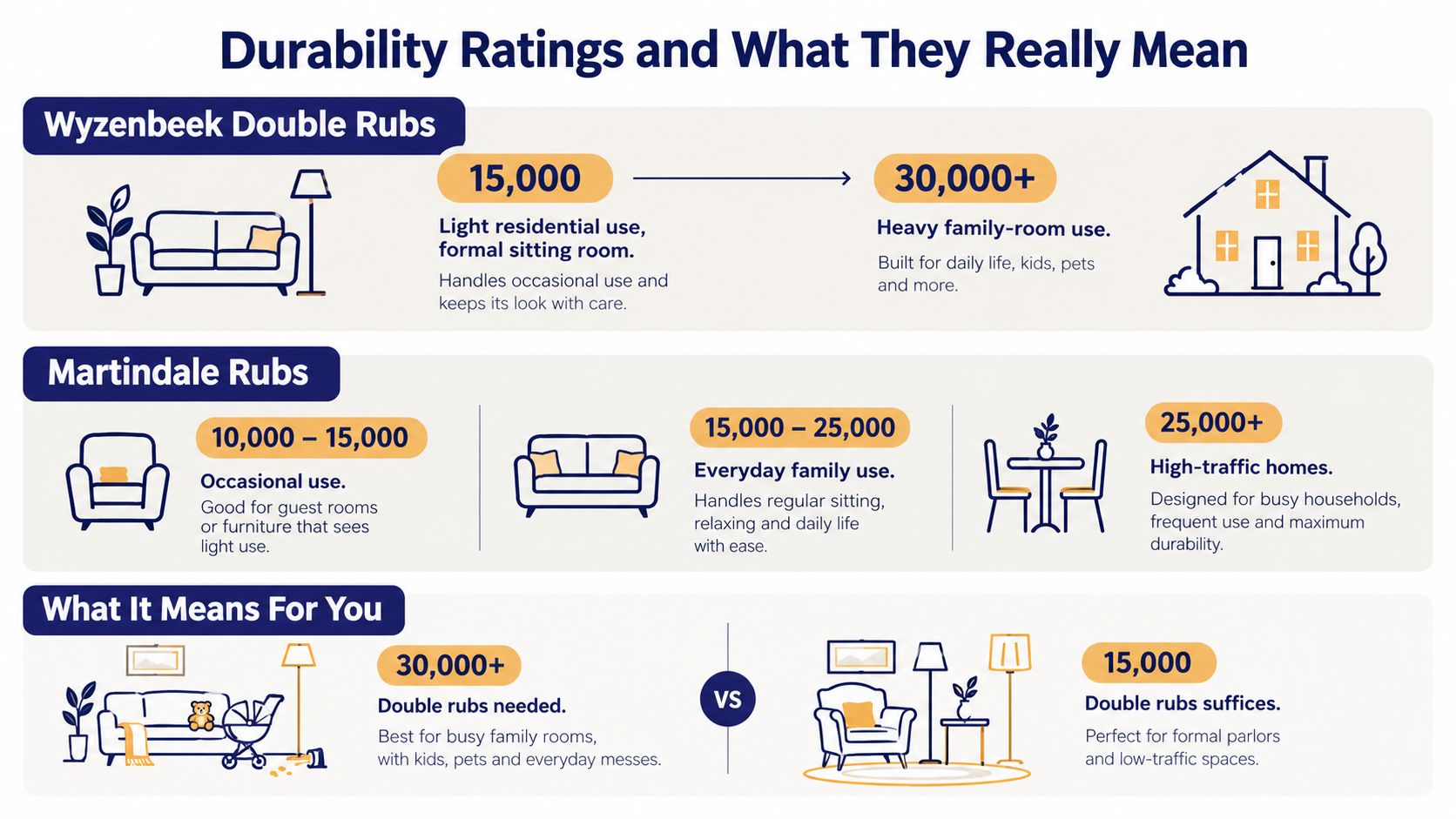
A durability rating shows how a textile responds to repeated rubbing in a controlled test. It does not promise that a sofa will look unchanged forever. Wyzenbeek usually reports double rubs in North America, while Martindale reports cycles in the UK and Europe. Because the methods are different, compare fabrics within the same system rather than treating the results as interchangeable.
For everyday selection, the Martindale ranges in this upholstery durability guide from Fersan Tekstil offer a practical starting point: below 15,000 cycles generally suits decorative or light domestic use, 15,000 to 25,000 cycles suits moderate domestic use, 25,000 to 40,000 cycles suits heavy domestic use, and above 40,000 cycles is commonly associated with commercial or contract upholstery.
Put the test into household terms
A formal sitting room used occasionally can work with a different abrasion specification than a family room where children climb over cushions and adults use the same seat every evening. For family-room or high-traffic residential use, practical specifications often begin around 15,000+ Wyzenbeek double rubs or 25,000+ Martindale cycles, according to American Leather's explanation of upholstery rub tests.
For more on matching abrasion numbers to real living rooms, see how to pick durable sofas. A higher abrasion result can help reduce premature thinning, yarn breakage, and surface sheen changes around seat fronts, armrests, and cushion edges. It cannot predict every part of sofa performance. A fabric may resist rubbing while still pilling, fading, or showing seam movement.
Check pilling separately
Pilling occurs when loose fibers gather and twist into small balls through friction. It is evaluated separately from abrasion, sometimes on a 1-to-5 scale, so a fabric can achieve a high abrasion result and still pill noticeably. This distinction matters with polyester-based upholstery, as explained in Bolia's upholstery fabric care guidance.
Ask for the abrasion method, pilling result, cleaning code, and colorfastness information together. Those details give a more useful picture of how a fabric may handle children, pets, repeated lounging, or strong sunlight than one impressive number on a product label.
Comparing Stain Resistance, Comfort, and Aging
A sofa earns its place in a home through ordinary use, not through a showroom touch. Think about four separate experiences: what happens when something spills, how much effort cleanup takes, how the surface feels during a long movie, and what kind of visual change you'll see with age.
Performance fabrics and microfiber usually offer strong practical resistance because dense structures can slow liquid penetration and support stain and moisture management. Microfiber's short nap also tends to give pet hair fewer deep, loose spaces to settle. The trade-off is that some synthetic fabrics can feel warmer or less naturally breathable against the skin than cotton or linen.
Leather offers high day-to-day cleanability because many spills can be wiped rather than absorbed into woven fibers. It still needs appropriate care, and scratches, color variation, and gradual softening may become part of its appearance. Leather isn't maintenance-free, but its aging can feel intentional when the household accepts patina as part of the material's character.
Velvet brings a soft, luxurious surface, yet its pile can show crush marks, directional shading, and contact patterns. Cotton and linen blends feel breathable and relaxed, but their woven surfaces may crease, fade, or show spills more readily than engineered performance textiles.
| Material | Stain Resistance | Cleanability | Comfort | Aging |
|---|---|---|---|---|
| Performance fabric | High to moderate, depending on construction and finish | Often practical, subject to the care code | Soft to textured, with varied breathability | May keep a matte, stable appearance when well maintained |
| Microfiber | High for many tightly made versions | Often manageable with approved methods | Soft, suede-like, and sometimes warmer | Can show nap direction or pressure changes |
| Leather | High for surface spills | Wipeable, but requires leather-specific products | Smooth, substantial, and temperature-responsive | May soften, develop patina, or show scratches |
| Velvet | Moderate, with pile affecting the response | Requires care suited to the fabric and finish | Plush and tactile | Can show pile shading, crush marks, and wear paths |
| Cotton-linen blend | Low to moderate, depending on weave and treatment | Varies widely by care instructions | Breathable and natural-feeling | May crease, fade, and relax with use |
| Outdoor fabric | Moderate to high, depending on construction | Usually designed for practical maintenance | Firm to comfortable, depending on weave | May still fade or show wear in demanding exposure |
A useful perspective from this upholstery lifecycle guide is to judge a material by lifespan, maintenance, repairability, and replacement frequency, not by an “eco-friendly” label alone. Recycled synthetics, natural fibers, and leather each involve different trade-offs, and the most responsible choice depends on how long the sofa remains useful and how well you can maintain it.
Matching Sofa Materials to Your Household
The right sofa material starts with your routine. A household that treats the sofa as a dining table, play surface, and pet bed needs a different covering from one that uses a sofa mainly for quiet reading.
Families with children
Look first at wipeable performance fabrics, microfiber, or leather. Dense, tightly made surfaces can simplify small spills, while leather keeps many messes on the surface instead of letting them soak into fibers. Confirm the manufacturer's cleaning instructions before using any product, because “performance” doesn't mean every fabric can take the same treatment.
Homes with cats or dogs
Prioritize short, tight textures over loose loops. Microfiber and tightly woven performance fabrics can make fur removal easier, while leather avoids woven pile but may show scratches. Chenille and other plush, open, or looped constructions can be more vulnerable to pilling or snagging in high-contact areas.
Formal rooms and renters
A pet-free formal room gives you more freedom to choose cotton-linen blends, velvet, or other tactile surfaces that emphasize atmosphere over quick cleanup. Renters may prefer a durable synthetic blend with a neutral color and flexible styling, especially if the sofa needs to move between homes or rooms. Choose a rating and care routine that match how long you expect to keep the piece, not an imagined level of caution.
Sun-heavy and covered outdoor spaces
For strong sunlight, ask about colorfastness, window exposure, and whether the upholstery has protection from direct rays. Covered outdoor spaces need moisture-tolerant construction, but “outdoor” doesn't mean indestructible. The roof, airflow, humidity, and amount of exposed weather still affect how the material ages.
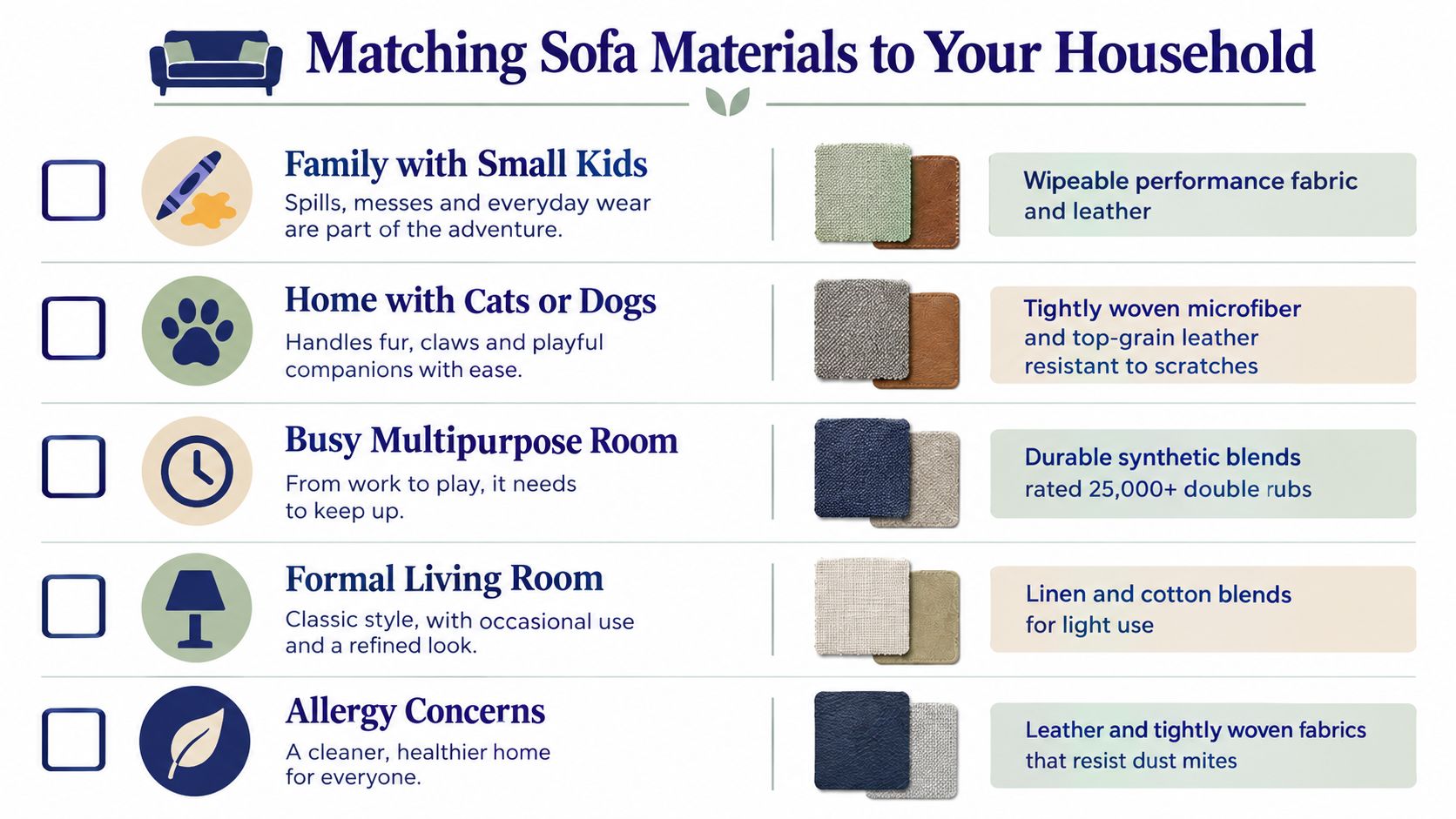
Use the chart as a starting point, then inspect the actual swatch. Run your hand across it, look closely at the weave, and ask what happens when the material is cleaned according to its care code. A recommendation is only useful when it fits both your household and your willingness to maintain it.
This short video offers another visual way to think about sofa materials and household fit:
Care Tips That Actually Extend a Sofa's Life
Good upholstery care is mostly about consistency and restraint. Remove crumbs before they become embedded, blot spills instead of spreading them, and follow the manufacturer's cleaning code rather than reaching for the nearest household spray.
Fabric and microfiber
Vacuum fabric and microfiber with the upholstery-brush attachment, paying attention to seams, cushion edges, and the area beneath removable cushions. Rotate cushions when the design allows it, so one seat doesn't receive every evening's pressure. For spills, blot with a clean cloth and use only an approved method for that fabric.
Leather
Dust leather with a dry microfiber cloth and use a conditioner made specifically for the leather finish. Avoid alcohol-based products, bleach, ammonia, acetone, window cleaner, detergents, and harsh solvents. Leather-care guidance also warns against direct heat, including a hair dryer, because heat can contribute to shrinking or cracking, as detailed in this leather maintenance document.
Performance and synthetic upholstery
Many performance fabrics and synthetic weaves are designed for practical spot cleaning, but the correct product depends on the care code and finish. Mild soap and water may be appropriate for some materials, while others require a solvent-based method or professional service. Don't soak the cushion, scrub aggressively, or assume a stain-resistant finish makes the fabric immune to damage.
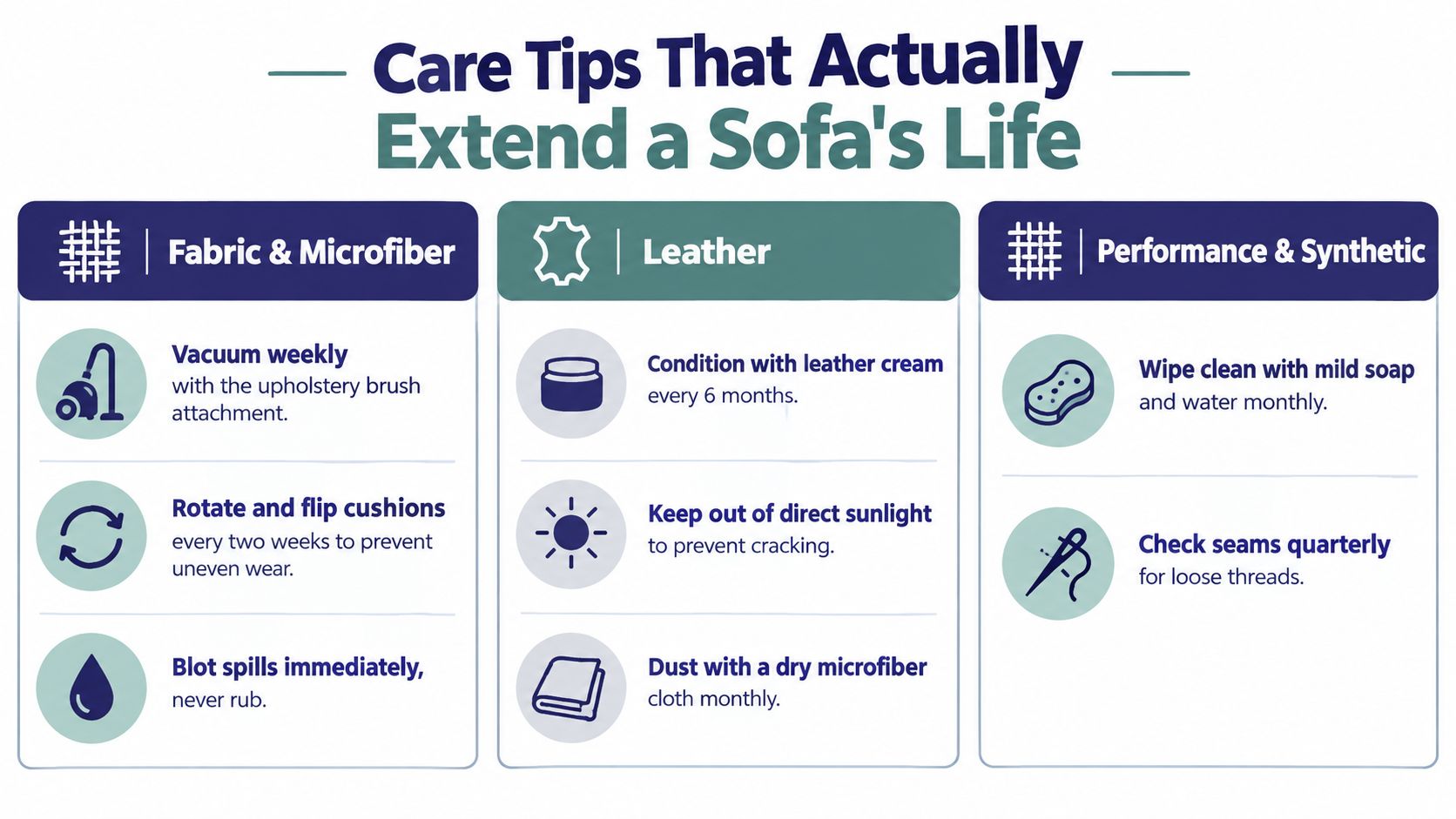
Keep any sofa away from direct heating vents and reduce prolonged direct sun where possible. Check seams and high-friction areas periodically for loose threads, flattening, or early surface change. Small corrections, such as repositioning a lamp or using a throw on a pet's favorite corner, can reduce concentrated wear without changing the room.
Bringing It All Together Before You Shop
The most reliable decision framework is simple: match the material to your traffic, match the care requirements to your habits, and match the investment to your expected ownership period. A family room may call for tightly woven performance fabric or microfiber, while a quiet formal room may justify the texture of velvet or a cotton-linen blend. A sunny space requires attention to exposure, and a covered outdoor area needs upholstery designed for moisture and ultraviolet conditions.
No single material wins for every household. Leather may be easier to wipe, but it can show scratches and needs specialized care. Natural blends may feel more breathable, but they can crease or fade. Performance fabrics may reduce cleanup stress, but their feel and aging depend on the specific construction.
Bring room photos, measurements, a list of household habits, and an honest idea of your maintenance tolerance when you shop. At the Woodstock Furniture & Mattress Outlet showroom, you can touch swatches and sit on fully dressed sofa samples side by side, which makes differences in texture, support, and visual scale easier to judge than a product photo alone.
Woodstock Furniture & Mattress Outlet offers sofas in upholstery categories that include fabric, leather, faux leather, and performance fabric, along with guidance for comparing materials in person. Visit Woodstock Furniture & Mattress Outlet with your room photos and household checklist, then test the swatches and seating before choosing the trade-offs you'll be happy to live with.