Tag: small space furniture

  • Couch for Small Living Room: Buyer’s Guide 2026

    Couch for Small Living Room: Buyer’s Guide 2026

    A small living room can make sofa shopping feel backwards. You start by looking for the tiniest couch you can find, then realize the actual problem isn't just size. It's traffic flow, sight lines, door swings, coffee-table spacing, and whether the room still works once the couch is in place.

    That's why the right couch for a small living room usually isn't the smallest one in the store. It's the one that supports how the room needs to function every day. In many homes, the sofa does a lot of heavy lifting. One consumer roundup notes that 30% of consumers eat on their couches and 81% rank quality as the top factor in furniture purchases in these furniture buying statistics. In a small room, that makes fit, comfort, and durability more important, not less.

    Finding the Right Couch Starts with Understanding Your Space

    A common tendency is to stand in the middle of the room, look at one wall, and think, 'That's where the couch goes.' Sometimes that works. Often, it's the reason the room ends up feeling cramped.

    A small living room usually has more than one job. It might be the TV room, the main hangout zone, a place to read, a path to another room, or the spot where people drop bags and shoes upon returning home. If you buy the sofa first and ask layout questions later, the couch starts dictating the room instead of supporting it.

    Start with the room's job

    Before you compare fabrics or arm styles, answer three practical questions:

    • Who uses this room most often and how do they sit in it?
    • What needs to stay easy to reach, such as windows, outlets, vents, or a hallway opening?
    • What causes frustration now, like blocked pathways, a coffee table that's too close, or seating that only works for one focal point?

    Those answers usually narrow the field faster than scrolling product pages.

    Practical rule: In a small living room, comfort and circulation matter more than theoretical seating capacity.

    Plan the room before you plan the sofa

    A good small-space layout creates a clear path through the room first. Then it places seating around that path. That might mean a loveseat instead of a full sofa. It might mean a compact sectional. It might even mean floating the couch slightly off the wall instead of pushing everything to the perimeter.

    Visual choices matter too. If you're refreshing the whole room, color can help a compact layout feel calmer and more open. A guide to 2026 living room paint colors can be useful if you're trying to coordinate wall color with upholstery and keep a small room from feeling visually heavy.

    The key shift is simple. Don't ask, “What small couch should I buy?” Ask, “What layout will make this room work better, and what couch fits that plan?”

    Measure Your Room Before You Measure Sofas

    If you only measure the wall, you're missing the part that determines whether the room will feel comfortable. A sofa doesn't live on a wall. It lives inside a moving pattern of people walking past it, sitting in front of it, and reaching around it.

    A standard three-seater often measures 83 to 90 inches long, which is one reason it can quickly dominate a compact room. The same furniture guidance also notes that small rooms often need 18 to 24 inches of walkway for comfortable circulation in tighter layouts, as explained in this couch size guide.

    The measurements that actually matter

    Treat this like a blueprint for comfort, not just a tape-measure exercise.

    A checklist illustrating six important measurements to take before purchasing a couch for a small living room.

    Measure these before you shop:

    • Full room length and width so you know the footprint you're working with.
    • Doorways, hallways, stairwells, and tight turns so the couch can fit into the home.
    • Window placement and radiator or vent locations so you don't block light or airflow.
    • Main walking paths between doors, hall openings, and adjacent furniture.
    • Current furniture footprints if you're keeping a chair, media console, or side table.
    • Outlet and switch locations so the final layout still works for lamps, chargers, and everyday use.

    Mark the room before you buy

    One of the simplest tricks is painter's tape. Tape out the exact width and depth of the sofa on the floor. Then walk through the room as if the couch is already there.

    You'll notice problems quickly. Maybe the entry path tightens too much. Maybe the sofa corner lands right where someone turns into the room. Maybe the room still fits the piece, but it no longer feels relaxed.

    A room can technically fit a couch and still function badly.

    Think in negative space

    Small rooms succeed because of the space around the furniture, not just the furniture itself. Leave room for knees, elbows, side-table access, and the path people naturally take when they aren't thinking about furniture at all.

    That's why measuring the route into the house matters just as much as measuring the room itself. Plenty of sofas fit the plan on paper and fail at the front door, stair landing, or hallway turn. It's an avoidable mistake, and it's much easier to prevent than to solve on delivery day.

    Exploring the Best Sofa Styles for Small Rooms

    After you tape out the footprint, sofa styles stop feeling abstract. You can see whether the room needs more open floor, more seating, or a shape that solves an awkward corner.

    For many small living rooms, a loveseat or compact sofa in the 48 to 78 inch width range is the practical starting point, while a typical full-size couch is about 84 inches long, as shown in this sofa dimensions reference. In a tight layout, that difference can decide whether the room feels usable or cramped.

    The key is to match the sofa style to the room's shape. A long narrow room asks for something different than a square room with one clear corner, and both behave differently from a small open-plan living area.

    A comparison chart outlining the characteristics, seating capacity, and advantages of loveseats, apartment-sized sofas, and modular sofas.

    Loveseat when the room needs space more than seats

    A loveseat earns its keep in rooms where circulation is the bigger problem than seating count. I usually recommend one when the main walkway runs close to the sofa or when the room already has another place for someone to sit.

    It tends to work well when:

    • The room is narrow and extra sofa width cuts into the path through the space.
    • You already have flexible seating, such as a small chair, ottoman, or dining chair nearby.
    • The sofa is sharing attention with a fireplace, media console, or large window.

    A loveseat works best when it looks intentional. If the room has a good rug size, one useful side table, and a chair that balances the layout, the smaller sofa reads as a smart choice instead of a compromise.

    Apartment-size sofa when you need a middle ground

    This is often the safest pick for everyday living. An apartment-size sofa gives you a fuller seating experience than a loveseat without forcing the room to behave like it is larger than it is.

    They're a strong fit when you want:

    Room need Why this style works
    Seating for daily use It offers more sitting room than a loveseat without the bulk of a standard sofa
    A balanced wall presence It anchors the room while still leaving breathing room for side tables or a lamp
    A familiar sofa look It reads like a full couch, just scaled with more discipline

    For many households, this is the point where comfort, scale, and layout finally line up.

    Compact modular or small sectional when shape matters more than length

    Sectionals are often dismissed too quickly in small rooms. In the right layout, a compact sectional can solve more problems than a straight sofa because it uses a corner, defines the seating zone, and can reduce the need for an extra chair.

    This style usually makes sense when:

    • The room is square, or close to it.
    • One corner is usable and not blocked by a doorway, radiator, or traffic path.
    • You want lounge seating without scattering several small pieces around the room.
    • The sofa needs to organize the room, especially in an open-plan space.

    The common failure point is scale, not category. A sectional with a long chaise, thick arms, or very deep seats can overwhelm a small room fast. A tighter version with restrained proportions often works much better than a standard sofa plus chair, because it keeps the seating zone compact and predictable.

    The best sofa style is the one that supports how the room needs to function. In a small living room, that usually means choosing the shape that protects the walkway first, then getting as much comfort and seating as the layout can handle.

    Look Beyond Size With Multifunction and Visual Lightness

    Two sofas can have similar measurements and feel completely different in the same room. That's because your eye reacts to more than width and depth. It reacts to how much floor it can see, how thick the arms look, and whether the silhouette blocks the room.

    That's where visual lightness comes in. In compact spaces, this matters almost as much as dimensions.

    Features that make a sofa feel easier in the room

    Small-space guidance often favors modular construction, visible legs, and narrower arms because those details reduce visual heaviness and help the room feel less crowded. In practice, some features consistently help:

    • Exposed legs show more floor, which makes the room read as more open.
    • Slim or track arms waste less width than oversized rolled arms.
    • Lower backs can preserve sight lines in open rooms or in front of windows.
    • Simple, straight lines often appear more subtle in a small layout than bulky silhouettes.

    If a sofa looks like one solid block from floor to seat cushion, it usually feels larger than its dimensions suggest.

    Multifunction matters more in smaller homes

    A small room usually asks furniture to do more than one job. That makes multifunction features worth considering, especially if you don't have a guest room, extra storage, or space for occasional furniture.

    A line drawing illustration showcasing a multifunctional sofa bed with hidden storage and pull-out design features.

    Useful options include:

    • Sleeper sofas if the living room sometimes becomes a guest room.
    • Storage sectionals or benches if blankets, games, or kids' items tend to collect in the room.
    • Modular pieces if you move often or like the option to rework the layout later.

    Multifunction only helps if the piece still fits the room comfortably. A sofa bed that dominates the floor plan solves one problem by creating three new ones.

    Choose the feature that supports daily life, not the feature list that sounds impressive in a showroom.

    Fabric and color choices that support the layout

    In a small room, upholstery affects how forgiving the piece feels to live with. Since many households use the sofa for eating, lounging, and everyday wear, durable, easy-to-clean fabrics usually make more sense than delicate ones.

    Lighter and mid-tone fabrics can help a room feel more open, but they're not mandatory. What matters most is whether the color works with the room's light and whether the material fits your household habits. If you have kids, pets, or frequent snack traffic, practical upholstery usually beats a high-maintenance fabric that causes constant worry.

    Arranging Your Couch for Maximum Flow and Function

    A good couch can still feel wrong if it lands in the wrong spot. In small rooms, placement controls whether the space feels calm or constantly interrupted.

    The most useful spacing rule is simple. Designers commonly recommend leaving 16 to 18 inches between a sofa and coffee table, and small-space guidance also points to 34 to 36 inch sofa depth, slim arms, and a leggy base as smart choices for tighter rooms, according to this small living room couch guide.

    To help you visualize spacing at a glance, use this quick reference:

    An infographic titled Optimal Sofa Arrangement Guide showing recommended distances from furniture to walls, tables, and walkways.

    Use the room's shape, not just its walls

    Small living rooms usually fall into a few familiar problem types.

    Long and narrow rooms

    In a narrow room, the mistake is often choosing a deep sofa and then adding a coffee table that crowds the passage. A shallower couch helps, but layout plays a significant role.

    Try these moves:

    • Keep the main walkway on one side instead of forcing people to squeeze around both sides.
    • Use a smaller coffee table or ottoman if a full table creates collision points.
    • Skip extra pieces that interrupt movement, especially bulky side chairs.

    Square rooms

    Square rooms often handle a compact sectional better than people expect. A small L-shape can define the seating zone neatly and avoid the awkwardness of one sofa plus one chair floating without purpose.

    If you use a standard sofa instead, think carefully about where the secondary seat goes. A chair that sticks too far into the room can create more clutter than value.

    Don't assume the wall is the right place

    Pushing every piece flat against the perimeter can make a room feel stiff and unresolved. Some layouts improve when the sofa floats slightly off the wall. Recent guidance on small-space sectionals notes that moving furniture 4 to 6 inches off the wall can make the room feel more intentional and balanced. The same source also highlights the value of short-chaise sectionals in compact rooms, as covered in the earlier video reference.

    Here's a helpful visual walkthrough of living room arrangement ideas:

    A little breathing room behind the couch can create visual depth. It also keeps the room from looking like every piece was pushed outward in defeat.

    Solve awkward layouts with orientation, not smaller furniture

    Some rooms don't just have one focal point. They have a TV and a fireplace. Or a window wall and an entry path. Or one odd angle that throws off everything.

    Design guidance for awkward living rooms shows that these spaces often improve with diagonal placement, zoning across the room's width, or a swivel chair that can serve two focal points, as discussed in these awkward living room layout ideas.

    That's a useful reminder. Not every small-room problem is a sofa-size problem.

    Sometimes the fix is turning the seating, not shrinking it.

    Common Mistakes to Avoid When Buying a Small Couch

    A small living room usually goes off track before the sofa even arrives. The purchase looks right in the showroom, then it lands at home and blocks a walkway, crowds the coffee table, or leaves the room feeling heavier than it should.

    That happens for a few predictable reasons.

    Buying for the wall instead of the room

    A lot of shoppers match the sofa to the longest wall and stop there. In a small room, that shortcut can create a layout that looks tidy on paper but feels awkward in daily use.

    Start with how people move through the space. If the couch pinches the path from the entry to the seat, crowds a window, or forces the coffee table too close, the room stops working. A slightly shorter sofa with better clearance often serves the room better than one that fills every inch of wall.

    Focusing on width and missing the real problem

    Width gets all the attention. Depth is often what causes trouble.

    I see this all the time with compact living rooms. A sofa can look appropriately sized from the front and still reach too far into the room once the table, lamp, and legroom are back in place. Deep lounge styles are comfortable, but they ask more from the layout. In tighter rooms, a shallower profile usually gives you more freedom to arrange everything else.

    Rejecting a sectional too early

    Some shoppers rule out sectionals on principle. That can be a mistake, especially in square rooms or corners that need to do more than one job.

    A well-proportioned sectional can replace the need for extra chairs and use the footprint more efficiently. The catch is proportion. If the chaise is too long or the arms are too thick, it will dominate the room fast. As noted earlier, some compact sectionals are designed for small spaces. The wrong one feels bulky. The right one can solve the layout cleanly.

    Choosing bulky features that waste usable space

    Oversized rolled arms, thick backs, and heavy bases take up room without improving how the sofa functions. In a small living room, those lost inches matter.

    Slim arms, a tighter back, and visible legs usually give you more seat space inside a similar footprint. The room also feels easier to move through, which is half the battle in a compact layout.

    Ignoring how the couch will age in real life

    The best small-room couch is not just the one that fits on day one. It is the one you will still like after pets claim a corner, kids spill on it, or everyone ends up eating takeout in front of the TV.

    Fabric choice matters here. So does maintenance. If you are considering a lighter upholstery or a texture that shows wear quickly, read up on the benefits of professional carpet and upholstery cleaning before you commit. A practical cleaning plan can make a beautiful fabric far more realistic for everyday use.

    Good small-space buying comes down to one question. Does this couch support the way the room needs to work? If the answer is yes, you are far less likely to regret it.

    How to Shop for Your Small Living Room Couch with Confidence

    At this point, the process is simpler than it first looked. You don't need perfect design instincts. You need a clear plan.

    Use this checklist when you shop:

    1. Measure the room first, including walkways, doorways, and anything that affects placement.
    2. Decide how the room needs to function, not just how you want it to look.
    3. Choose the sofa shape that supports the layout, whether that's a loveseat, apartment-size sofa, or compact sectional.
    4. Pay attention to visual weight, especially arms, legs, and depth.
    5. Test the arrangement mentally before buying, including where people walk, sit, reach, and turn.

    If you shop in person, bring your measurements, photos, and a rough floor plan. That makes it much easier to compare pieces accurately instead of guessing from memory. If you want extra help visualizing fit before buying, one practical option is to use a retailer with layout support tools. Woodstock Furniture & Mattress Outlet offers a Room Planner and in-store design support, which can be useful if you're trying to see how a sofa might work in a tighter living room.

    A small room doesn't need a compromise couch. It needs a well-chosen one. When the layout comes first, the right sofa usually becomes much easier to spot.


    If you're ready to narrow down options, Woodstock Furniture & Mattress Outlet is a practical place to compare sofas, sectionals, and small-space living room pieces in person. Their team can help you work from real measurements, think through layout trade-offs, and use planning tools before you make a decision.

  • Couch End Table with Storage: A Practical Buying Guide

    Couch End Table with Storage: A Practical Buying Guide

    A lot of living room problems show up at the end of the sofa first. The phone has no place to charge. A drink ends up on the window ledge. The remote disappears into the cushions again. Then a new table arrives, and the top sits too high to use comfortably, the drawer cannot open all the way, or the shelf looks useful online but is awkward once the table is tucked beside the couch.

    That mismatch causes most of the buyer's remorse I see with storage end tables.

    A couch end table with storage has to do more than hold a lamp and hide a few remotes. It needs to match the seat height of the sofa, leave enough room for people to walk past, and open easily in the space you have available. A table can be well made and still be wrong for the room if it is too deep for a narrow layout or if the storage access only works when you pull it away from the couch.

    Daily use matters more than the product photo. Drawers need clearance. Doors need swing room. Open shelves collect items fast, but they also keep clutter visible. Lift-top and basket styles can work well, though they are not always the easiest option when someone is seated with a blanket, a pet, or a child pressed against them.

    The goal is simple. Choose a table that fits the sofa, the traffic path, and the way your household uses that spot. That practical fit is what makes storage useful instead of frustrating.

    Why a Storage End Table Might Be Your Living Room's Missing Piece

    A plain end table gives you a landing spot. A storage end table solves a daily friction point.

    Most living rooms collect the same small messes. Remotes, chargers, reading glasses, mail, coasters, game controllers, kids' items, and the throw blanket that never quite has a home. When all of that sits out in the open, the room starts to feel busy even when it isn't dirty.

    A pencil sketch comparison showing a cluttered living room before and after adding a storage end table.

    It creates a working zone beside the sofa

    The best spot beside a couch should do three jobs at once:

    • Hold what you reach for often so drinks, phones, and lamps stay within easy reach
    • Hide what makes the room feel messy like cords, remotes, and small electronics
    • Support how you use the seat whether that means watching TV, reading, or answering a few emails

    That combination changes how the room feels. Instead of every item floating around the seating area, you get one controlled zone that supports the seat without taking over the room.

    It reduces clutter without adding bulk

    That's the reason storage matters so much in smaller homes and open-plan rooms. A basket on the floor can help, but it still takes visual space. A storage ottoman can work, but it often solves a different problem in the center of the room. A couch end table with storage keeps the function right where you need it, at arm's reach.

    Practical rule: If the items you use from the sofa don't have a dedicated place, they'll end up on cushions, coffee tables, or the floor.

    A good piece also helps the room look calmer. Not because it hides everything, but because it gives repeat-use items a predictable home. That's what makes it feel less like “one more piece of furniture” and more like a fix for an awkward corner that never worked quite right.

    Exploring Your Storage Options

    A storage end table only helps if the compartment works from the seat you use every day. I've seen plenty of good-looking tables create new annoyances because the drawer hits a knee, the cabinet door opens into a walkway, or the shelf sits so low that nobody wants to bend for it. Online listings rarely show that part.

    An infographic titled Storage Solutions at a Glance comparing drawer, cabinet, open shelving, and lift-top storage units.

    Drawers, cabinets, shelves, and lift tops

    Each storage style solves a different problem.

    • Drawers fit the items that create daily clutter fast. Remotes, reading glasses, chargers, coasters, pens, and notepads all disappear cleanly. They work best when the drawer can open fully without crowding the sofa arm or blocking a traffic path. The trade-off is simple. Drawers are great for small items, but they waste space if you need to store a throw blanket or anything tall.

    • Cabinet storage gives you more flexibility for bulky or awkward items. A small basket of cords, a folded blanket, magazines, or kids' toys all fit better behind a door than in a drawer. The catch is door clearance. A hinged door needs room to swing, and that matters a lot in tight layouts where the table sits between the sofa and a wall.

    • Open shelving is usually the easiest option to live with if you reach for the same things over and over. Books, a basket, or a device you use nightly stay visible and easy to grab. It also asks more of the homeowner. If you don't want to see the items, or if dust bothers you, an open shelf can feel messy even when it is technically organized.

    • Lift-top storage can be useful in small living rooms where one table has to do extra work. The hidden compartment keeps surface clutter out of sight, and the raised top can help with laptop use or a quick meal. Some designs feel heavy to operate, though, and they are less convenient if your main habit is setting down a drink and grabbing one item with one hand.

    Daily comfort usually comes down to motion. Can you reach the storage without leaning forward too far, twisting around the sofa arm, or clearing off the tabletop first?

    Match the compartment to the item

    The easiest way to choose is to start with what actually needs a home beside the couch.

    Storage type Best for Watch out for
    Drawer Remotes, cords, coasters, glasses Limited space for bulky items
    Cabinet Blankets, magazines, larger accessories Door clearance beside sofa
    Open shelf Books, baskets, decor Visual clutter and dust
    Lift-top Hidden catch-all storage, light work use Heavier operation

    That practical mix of storage and style is part of a larger trend in furniture buying, as noted earlier. Shoppers want pieces that earn their floor space, especially in living rooms where every inch beside the sofa has to work harder.

    If your whole room needs better organization, this guide to reclaiming your living room offers useful ideas for handling overflow beyond the table itself.

    Getting the Size and Scale Just Right

    A storage end table can solve clutter and still make the room harder to use if the proportions are wrong. I see that happen most often with online purchases. The finish looks right in the listing, but the top ends up too high for a coffee mug, too deep for the walkway, or built with storage you cannot reach comfortably from the seat.

    An infographic titled Perfect Fit illustrating four tips for choosing the right size end table for sofas.

    Start with the sofa arm, not the table photo

    Height drives daily comfort.

    The tabletop should sit within 1 to 2 inches of the sofa armrest height according to Eureka Ergonomic's sofa end table height guide. That range keeps a drink, remote, or lamp close to hand without forcing your wrist up or down every time you use it. A table that looks only slightly off on a product page can feel awkward by the end of the first night.

    Shelf spacing matters too. Eureka Ergonomic also notes that multi-tier tables need at least 10 inches of clearance below the top shelf. In practice, that helps with both access and comfort. Tight shelf spacing makes storage less useful, and anything that sticks out below the top can crowd knees or snag a blanket when someone stands up.

    For shoppers who want a visual example before measuring, this short video is helpful:

    Depth controls traffic flow

    Depth is the measurement shoppers skip, and it is often the one that causes buyer's remorse.

    A table can be the right height and still feel wrong if it projects too far into the room. In a tighter layout, extra depth steals walking space beside the sofa, especially near recliners, chaises, and room entries. Shallower tables usually work better in these spots because they keep the surface usable without turning the corner of the seating area into an obstacle.

    C-shaped tables can help in narrow rooms because part of the base slides under the sofa. Standard square tables usually offer more enclosed storage, but they need more breathing room around them. That is the kind of trade-off listings rarely explain clearly.

    A measuring routine that prevents mistakes

    Use painter's tape and test the footprint before you buy. It takes a few minutes and answers questions a product photo cannot.

    1. Measure sofa arm height from the floor to the top of the arm.
    2. Measure the open floor area where the table will sit, including nearby trim, vents, or recliner clearance.
    3. Tape the table depth on the floor and walk past it the way your family normally does.
    4. Mimic storage access while seated by reaching where a drawer, shelf, or cabinet door would be.

    If you have to lean forward, twist around the sofa arm, or stand up to get to the storage, the piece is the wrong fit for that seat. That is true even when the style looks perfect on screen.

    Matching Materials and Styles to Your Home

    A table can measure perfectly and still feel wrong once it lands in the room.

    I see that happen when shoppers choose a finish from a product photo without thinking about daily wear, how the piece visually sits beside the sofa, or whether the storage door and top surface will still look good after a year of real use. Materials affect all of that. So does style.

    Choose materials for the way the room gets used

    Solid wood works well for households that want a warmer, more grounded look and do not mind normal wear developing over time. Small scratches usually read as part of the surface instead of damage, especially on medium and darker stains. The catch is upkeep. Wet glasses, hot mugs, and direct sun can leave marks on some finishes, so solid wood is often better for families who will use coasters and wipe spills quickly.

    Engineered wood fits a lot of living rooms because it keeps cost under control and allows for more storage-focused designs. It is also common in painted tables and cleaner-lined transitional pieces. Quality varies a lot. Thick panels, stable joinery, and decent drawer slides hold up fine in everyday use. Thin laminate tops and lightweight hardware tend to show wear fast, especially if the drawer gets opened ten times a day from the same seat.

    Metal earns its place in tight layouts and more modern rooms because it keeps the table from looking heavy. That matters next to bulkier sectionals and overstuffed sofa arms. A metal frame can make a storage table feel less crowded, even when the footprint is similar to a wood version. The trade-off is feel. Some metal-and-glass or metal-and-thin-wood combinations can look sharp online but feel cold or insubstantial in a family room.

    Match the table to the sofa's visual weight

    Style goes beyond color.

    A storage end table should relate to the sofa beside it in scale and presence. If the sofa has wide rolled arms, turned legs, and a soft traditional shape, an ultra-thin black metal table can look underdressed. If the sofa is low, square, and modern, a chunky farmhouse table with distressed details can feel like it belongs to another room.

    A few practical pairings usually work well:

    • Warm wood tones suit traditional, farmhouse, and many transitional spaces, especially when the sofa has texture or classic detailing.
    • Black metal or mixed materials fit cleaner-lined rooms and help break up heavy upholstery.
    • Painted finishes often work well when you need the table to blend in rather than call attention to itself, particularly beside patterned fabric or a large sectional.

    Glass is the wildcard. It can visually lighten a crowded room, but it shows dust, fingerprints, and lamp cord clutter faster than almost any other surface. For a storage piece, that usually makes it a better fit for lower-traffic rooms than busy family seating areas.

    Storage details should look good closed

    Online listings usually focus on the front view. In a real room, people see the table from the side, from the entry, and while sitting down. That is why door style, handle size, shelf backing, and leg shape matter more than shoppers expect.

    Closed storage looks calmer in busy households. Open shelving feels lighter, but it also puts everything on display unless you use baskets or keep the contents edited. A drawer with a big gap line or a cabinet door that looks slightly off-center will bother you more in person than it does in a staged product image.

    The best-looking table is usually the one that disappears into the room when nothing is on it, then does its job when you need a charger, remote, or coaster within reach.

    As noted earlier, side tables have become standard furniture pieces rather than afterthoughts. That lines up with what I see in North Georgia homes. Buyers want one piece that fits the sofa, handles clutter, and still looks settled in the room a year later.

    Real-World Use Cases for Your End Table

    A good choice becomes clearer when you stop thinking in categories and start thinking in rooms.

    In a compact apartment

    A narrow or C-shaped storage table often makes the most sense when the sofa sits close to the walkway. Some designs measure as little as 17" W x 12" D, and that smaller footprint allows the base to slide under the sofa to preserve floor space, as shown in this compact table example from Aosom. In practice, that means you can keep a drink, charger, and book close without committing a big chunk of the room to one side table.

    In a family living room

    Families usually need concealment more than display. A drawer or cabinet helps because the room has too many loose objects in motion. Game controllers, coloring supplies, extra charging cords, and the TV remote all need a home, but nobody wants them spread across the seating area all evening.

    In these rooms, I'd lean toward sturdier silhouettes and simpler access. Open cubbies can work if you use baskets. Tiny decorative shelves often don't.

    In a reading corner or multi-use room

    This is where open shelving can shine. A lamp on top, a couple of books below, maybe a small tray for glasses or a mug. The table becomes part of the routine instead of just a place to hide things.

    If you're shopping locally, a showroom visit can help with these use-case decisions because you can sit beside the piece, open the storage, and see how far it projects into your space. Woodstock Furniture & Mattress Outlet is one example of a retailer that carries side and end tables, including storage-oriented options, so shoppers can compare shapes and access styles in person rather than relying only on listing photos.

    FAQ Choosing the Right Couch End Table

    Some questions only come up after you've looked at a few tables and realized the easy answers don't help much.

    A checklist for choosing a storage end table, outlining five essential factors for a smart purchase decision.

    What works with a low-arm or armless sofa

    This is one of the most overlooked sizing problems. General advice usually assumes a standard sofa arm, but that doesn't help much with low modern profiles or armless sectionals.

    Guidance from Guynn Furniture's couch end table advice suggests aiming for a table surface at or just below the seat cushion height for sofas with no arms or very low arms. That usually looks more connected and feels more functional than choosing a table based on standard arm-height rules.

    Should end tables match the coffee table

    Not necessarily.

    Matching can create a tidy, traditional look. Coordinating often feels more natural in real homes. If the coffee table is visually heavy, a lighter end table can keep the room from feeling overfurnished. Material, finish tone, or hardware style can tie the pieces together without making them identical.

    How do I buy on a tighter budget without regretting it

    Focus on the parts you touch and use most.

    • Check the top surface for a finish you can live with daily
    • Open every drawer or door because poor hardware is hard to ignore
    • Look at the base to see whether it feels stable on your floor
    • Choose simpler storage if the mechanism seems fussy

    A straightforward shelf or drawer often ages better than a complicated feature you only use occasionally.

    Can a storage table still look decorative

    Yes, if the storage doesn't dominate the silhouette. The most successful pieces usually balance closed storage with a shape that still feels like an end table first. If you like more character in a room, these unique home decor pieces can help spark ideas for mixing function with personality.

    What's the final check before I buy

    Ask yourself five things:

    • Will I reach this comfortably from the seat
    • Will it block the walkway
    • Can I access the storage one-handed
    • Does it hold the items I use there
    • Does the finish fit the room I already have

    If any one of those gets a clear no, keep looking. A couch end table with storage should make the room easier to live in, not just more furnished.


    If you want to compare sizes, storage styles, and finishes in person, Woodstock Furniture & Mattress Outlet is a practical place to do that. Seeing the scale next to real seating, opening the drawers yourself, and checking how a table feels from a seated position can remove a lot of the guesswork that comes with online shopping.

  • Home Office Furniture for Small Spaces: A Practical Guide

    Home Office Furniture for Small Spaces: A Practical Guide

    You’re probably reading this because your “office” is currently part bedroom, part dining area, or one end of the living room. That’s normal now. The challenge isn’t just finding home office furniture for small spaces. It’s finding pieces that fit your room, support your body, and don’t make the whole house feel like a workplace.

    Small offices go wrong in predictable ways. People buy a desk that technically fits the wall but blocks a drawer, crowds a walkway, or leaves no room for the chair to move. They choose a bulky chair because it looks comfortable online, then realize it can’t tuck under the desk. Or they solve storage with more floor furniture and wonder why the room feels tighter every week.

    The good news is that a compact office can work very well if you plan it in the right order. Start with measurements. Choose one desk that fits the way you work. Add a chair that supports you without wasting space. Then use walls and vertical storage to keep the floor open.

    Your Starting Point Measuring and Mapping Your Small Space

    The most common mistake is measuring only the desk footprint. That number matters, but it’s not enough. A desk can fit the wall and still fail the room.

    Small desks have become much more common, which makes careful planning even more important. Sales of desks under 40 inches wide surged over 200% between 2020 and 2023, and desks and tables are projected to hold 33.74% of the home office furniture market share in 2025, according to market data on home office solutions for small spaces. More compact options are available now, but compact doesn’t automatically mean functional.

    A hand holds a measuring tape across a room containing a small table, chair, and bed.

    Measure the room, not just the furniture

    Start with a simple sketch on paper. It doesn’t need to look polished. Mark the wall lengths, then add everything that affects placement:

    • Door swing: Trace how far the door opens. If a desk sits inside that arc, it’s in the wrong spot.
    • Window location: Note sill height and trim depth. A desk may fit under a window, but the chair back or monitor height may create problems.
    • Outlets and vents: If the only outlet is behind the desk, leave enough access for plugs and power strips.
    • Baseboards: They can push furniture farther into the room than expected.
    • Traffic path: Leave a clear route so you don’t have to sidestep around the chair every day.
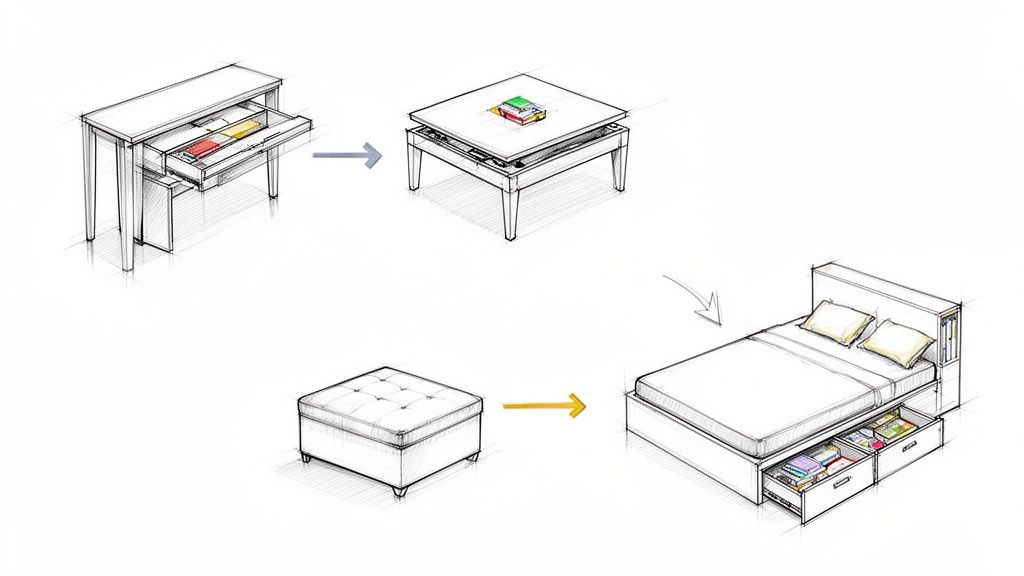
    A good small office feels easy to move through. If you have to twist, squeeze, or drag pieces around each time you sit down, the layout is already fighting you.

    Practical rule: Measure the working zone, not just the wall. The working zone includes the desk, the chair in use, and the space needed to get in and out comfortably.

    Map the active space

    The next step is what most online guides skip. You need to account for how furniture behaves when you use it.

    Ask these questions before you shop:

    1. Will drawers open fully? A desk with storage may need more front clearance than a simple writing desk.
    2. Can the chair roll back without hitting a bed, sofa, or dresser?
    3. If the chair tucks in, does it clear the desk apron or drawer?
    4. Will cords be pinned behind the desk once it’s pushed against the wall?

    If you want a fast way to test the layout, use painter’s tape on the floor. Tape the outline of the desk, then tape the pulled-out chair position too. That one step catches a lot of mistakes before money gets involved.

    Bring the right numbers with you

    When you shop in person or online, keep a short note in your phone with:

    What to bring Why it matters
    Wall width Confirms the desk can fit the target location
    Maximum depth Prevents the desk from blocking walkways
    Chair clearance Helps you avoid cramped seating
    Outlet location Affects cord routing and lamp placement
    Window and door notes Prevents layout conflicts

    That small checklist turns furniture shopping from guessing into decision-making. It also helps you filter out attractive pieces that cannot work in your room.

    Choosing Your Anchor Selecting the Right Desk

    The desk is the anchor. If you choose the wrong one, everything else has to compensate for it.

    A lot of shoppers start with style. That’s understandable, but function should come first in a small office. The better question is this: What kind of work happens here every day? Laptop-only work needs something very different from paperwork, dual monitors, crafting, or a space that has to disappear once work is done.

    A comparison chart showing four different space-saving desk styles for home offices in small living areas.

    Four desk types that solve different problems

    Here’s the simplest way I’d compare the main options for home office furniture for small spaces.

    Desk type Best for What works well Trade-off to watch
    Wall-mounted desk Very tight rooms and narrow walls Keeps floor area visually open Usually offers less built-in storage
    Secretary desk Shared rooms and hideaway setups Lets you close up work at the end of the day Work surface can feel limited
    Corner desk Underused corners and multi-monitor setups Uses awkward space efficiently Can dominate the room if too deep
    Slim console desk Hallways, bedrooms, and shallow walls Minimal footprint and clean look Often needs separate storage nearby

    Wall-mounted and fold-away desks

    A wall-mounted desk makes sense when floor openness matters more than storage. It’s especially useful in a bedroom or multi-use room where visual clutter makes the space feel smaller fast.

    This type works well for laptop users, occasional paperwork, and anyone who wants the room to feel less office-like. The downside is usually practical. You may get less drawer space, less cable hiding, and less tolerance for heavier equipment.

    If your workday ends and you want the office to disappear, a fold-away version can be a smart choice. It won’t suit everyone. If you leave reference papers, notebooks, or peripherals spread out all day, the routine of opening and closing it can become annoying instead of helpful.

    Secretary desks and hidden workspaces

    A secretary desk earns its keep in a guest room, living room, or bedroom where you don’t want work visible all the time. It creates a stronger visual boundary between work and home, and that matters more than many people expect.

    Some people love them because everything closes up neatly. Others get frustrated because the interior storage forces them to stay organized. That’s not a flaw in the desk. It just means the desk is better for lighter daily setups than for sprawling, paper-heavy work.

    If your office has to share a room with everyday life, a desk that can visually “turn off” after hours is often more useful than a larger open desk.

    Corner desks and slim console desks

    A corner desk is usually the right answer when the corner is the only real office zone in the room. It gives you more working surface without pushing straight into the space the way a wide rectangular desk can.

    What doesn’t work is choosing a corner model that’s too deep or heavy-looking for the room. In a small bedroom, that can make the office feel permanent and oversized. A clean-lined corner desk usually performs better than one with bulky storage attached on both sides.

    A slim console desk is the quiet overachiever. It works for laptop users, writers, students, and anyone with a shallow wall or hallway nook. It won’t replace a larger desk if you need printers, file storage, or multiple monitors, but it’s one of the easiest ways to create a work zone without changing how the whole room feels.

    Match the desk to the way you work

    Use these filters before choosing:

    • Laptop-first setup: A slim console or wall-mounted desk often works well.
    • Paper-heavy work: Look for a desk with at least some integrated storage or enough space for a nearby rolling cart.
    • Shared room: Secretary and fold-away styles help reduce visual spillover.
    • Corner-only location: A compact corner desk usually beats trying to force a straight desk into the space.
    • Need to style the room softly: Lighter finishes and open bases tend to feel less crowded than thick tops and enclosed pedestals.

    The right desk shouldn’t just fit the wall. It should fit your routine.

    The Ergonomic Equation A Compact Chair and Smart Storage

    A small office usually fails in one of two ways. It hurts to sit in, or it collects clutter faster than you can control it. Most often, it does both.

    Chair selection deserves more care than people give it. Storage deserves more creativity than people expect. If you solve those two well, even a compact setup starts to feel calm and usable.

    A line-art illustration showing a home office setup with wall-mounted shelves and convenient under-desk storage solutions.

    What to look for in a compact chair

    In a small room, a chair has to do two jobs. It has to support your body during work and disappear as much as possible when you’re done.

    That’s why adjustability matters so much. For compact chairs, features like 4 to 6 inch pneumatic lifts and tuck-friendly shapes make a real difference. According to ergonomic guidance for small office furniture, 40% of users select non-tuckable chairs, wasting 2 to 4 square feet, and a proper ergonomic selection process can lead to an 82% rate of achieving neutral spine alignment, compared to 45% with standard furniture.

    That lines up with what works in real rooms. In a tight space, an oversized executive-style chair often causes more problems than it solves.

    Look for these traits:

    • Armless or low-profile arms: Easier to slide under the desk.
    • Swivel base: Lets you move without scooting the whole chair backward.
    • Seat height adjustment: Helps your elbows line up better with the desk surface.
    • Moderate back profile: Enough support without visually dominating the room.

    What doesn’t work in small offices

    Some mistakes are common enough to call out directly.

    • Big padded chairs in shallow spaces: They look inviting online, then eat the room.
    • Dining chairs used full time: Fine for short stretches, rough for daily work.
    • Fixed-height chairs with fixed-height desks: If one is off, your whole posture compensates.
    • Wide chair arms: They often stop the chair before it tucks in fully.

    A compact chair shouldn’t feel like a compromise. It should feel appropriately scaled.

    A chair that tucks in cleanly can make the office feel larger even when nothing else changes.

    Use vertical storage before adding more furniture

    When people run out of office storage, they usually add a file cabinet or another small chest. In a small room, that’s often the wrong move. Floor storage multiplies quickly. The room starts to feel crowded long before it becomes organized.

    Vertical storage usually works better:

    • Wall-mounted shelves keep supplies above the desk line.
    • Narrow bookcases hold binders, baskets, and décor without spreading out.
    • Slim rolling carts store active supplies and can move when needed.
    • Under-desk organizers help use dead space without blocking legroom if chosen carefully.

    The key is not to overload the area above the desk. You want useful storage, not a wall of visual noise. A few shelves with defined jobs work better than trying to store everything in sight.

    A balanced setup

    A strong small-office setup usually follows this pattern:

    1. Desk for the primary task
    2. Chair that tucks and adjusts
    3. One vertical storage solution
    4. One hidden or mobile storage piece for overflow

    That amount is generally sufficient. Once you go beyond that, every added piece should solve a specific problem. If it doesn’t, it’s probably just taking up room.

    Bringing It All Together Layouts Lighting and Style

    Once the furniture is chosen, the room still needs a layout that feels natural. Many setups, however, become awkward. The pieces are individually right, but the arrangement creates glare, crowding, or a work zone that feels dropped into the room instead of integrated with it.

    Three types of home office furniture designs including corner, wall-mounted, and foldable desks on display.

    The corner workstation

    This layout works well for someone using an empty bedroom corner or one end of a living room. The desk sits into the corner, the chair tucks inward, and storage rises vertically on one or both walls.

    What’s good about it is containment. The office feels intentional. What can go wrong is overbuilding it. If you add heavy shelving on both sides, the corner can start to feel boxed in.

    A better version keeps one side visually lighter. Maybe one narrow shelf, one lamp, and one small plant. That keeps the corner functional without making it dense.

    The linear wall office

    This is one of the cleanest layouts for home office furniture for small spaces. Place a slim desk along a single wall, keep storage above or just beside it, and let the chair tuck fully underneath.

    This setup is ideal for bedrooms, hallways, and multipurpose living areas because it reads more like a furniture grouping than a separate office. It also gives you better flexibility with wall art, mirrors, or soft styling around the desk.

    If the desk is near a window, think carefully about glare and privacy. Good daylight helps, but direct light on a screen doesn’t. If you need help softening brightness without making the room feel heavy, these window treatment ideas for your home office offer useful direction on balancing light control and comfort.

    The fold-away shared room setup

    This layout suits guest rooms, dining areas, or bedrooms where work needs to disappear after hours. A wall-mounted or secretary-style desk keeps the footprint controlled, and surrounding décor helps the office blend into the room.

    The success of this layout depends on discipline. If papers, chargers, and notebooks spill beyond the desk every day, the “hideaway” advantage disappears. It works best for a lean setup with a small number of regularly used items.

    Lighting matters just as much as layout. Use one focused task light at the desk, then support the room with softer ambient lighting so the office doesn’t feel harsh at night.

    Here’s a helpful visual example of compact desk styles in action:

    Keep the style calm and simple

    Small offices look better when styling stays restrained. You don’t need much.

    Try this mix:

    • One plant: Adds life without cluttering the desk.
    • One task lamp: Useful and visually grounding.
    • A limited color palette: Helps the office feel tied to the rest of the room.
    • A small tray or organizer: Keeps daily items from spreading.

    A small office should feel edited, not empty. There’s a difference.

    If the room feels crowded, remove accessories before replacing furniture. Often the problem isn’t the desk. It’s everything gathering around it.

    Your Local Guide to Planning and Purchasing in Georgia

    Shopping for a small office typically involves two stages now. First they browse online, compare sizes, and narrow down styles. Then they need to confirm what the screen can’t tell them.

    That hybrid approach makes sense. The shift to remote work changed how people shop, and research on the home office furniture market notes that nearly 70% of U.S. furniture retailers ramped up e-commerce when in-store sales dropped nearly 60% in April 2020, while 27% of consumers prioritized desk purchases that year. The lasting lesson isn’t just that more shopping moved online. It’s that online planning and in-person validation work best together.

    What to do online first

    Use online tools to narrow choices, not to make the entire decision. A room planner can help you test width, depth, and general layout before you ever leave home. That’s valuable because it helps you eliminate obvious mismatches early.

    Before visiting a store, keep a short list with:

    • Your room measurements
    • Your maximum desk depth
    • The chair features you need
    • Whether you need hidden storage or open access
    • Photos of the room from two angles

    Those five things make showroom shopping faster and much more productive.

    What to test in person

    This is the part online-only guides often skip. You can’t judge every important detail from a product page.

    Sit in the chair. See whether your feet land comfortably and whether the back support feels right for your body. Pull the chair under the desk and check whether the arms, if any, interfere. Open drawers. Feel whether the desk edge is comfortable where your forearms rest. Look at surface texture and finish in real light.

    Small differences matter more in small spaces because you’ll notice them every day.
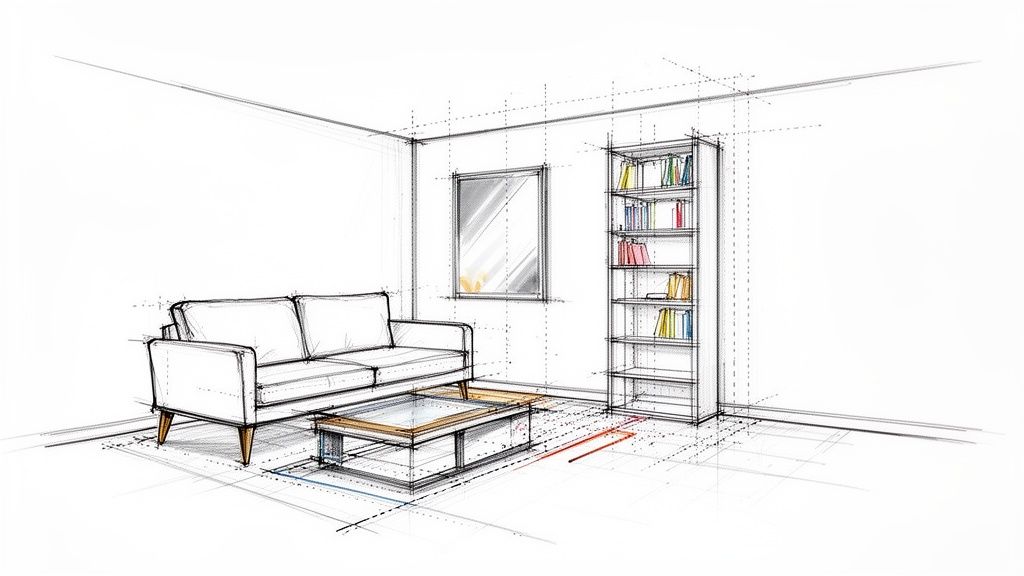
    If a piece is going into a tight room, test how it moves, not just how it looks.

    Think through delivery and setup

    Tight stairwells, apartment entries, narrow hallways, and upstairs bedrooms add one more layer to the buying decision. A desk that fits the room still has to get to the room.

    Professional delivery and setup can remove a lot of stress here, especially with heavier desks, corner units, or pieces that need assembly in a compact area. It also helps reduce the chance of scuffed walls, damaged floors, or a half-built desk sitting in the middle of your bedroom for a week.

    For shoppers in North Georgia, the smartest path is usually simple. Plan online, confirm in person, and make sure the final delivery process fits the space as carefully as the furniture does.

    Create a Small Office That Works for You

    A small office doesn’t need a dedicated room to work well. It needs clear measurements, a desk that matches your routine, a chair that supports you without taking over the room, and storage that uses the walls instead of the floor.

    That’s the part many people miss. The best home office furniture for small spaces isn’t the piece with the most features. It’s the piece that solves the right problem without creating two new ones.

    If you’re still comparing layouts or desk styles, it can help to browse a wide range of office furniture options, including desks and chairs just to see how different profiles, sizes, and functions change the feel of a setup. Even when you don’t buy from a single source, comparing categories side by side sharpens your eye.

    A good small office should support work, then let the rest of your home still feel like home. That balance is what you’re aiming for. If a piece helps you work comfortably and keeps the room easy to live in, it’s doing its job.


    If you’d like hands-on help planning a compact workspace, Woodstock Furniture & Mattress Outlet can help you compare desks, chairs, and storage in person, think through room measurements, and make more confident choices for your space.

  • Furniture for Your First Apartment: An Essential Guide

    Furniture for Your First Apartment: An Essential Guide

    So, you got the keys. Stepping into your very own apartment for the first time is an incredible feeling, a mix of pure excitement and the slightly terrifying reality of all those empty rooms. If you're staring at a blank slate wondering where to even begin, you're not alone. This is a huge milestone, one that millions of young adults experience every year.

    This guide isn't just a shopping list. We're here to walk you through the entire process, turning what feels like an overwhelming project into something you can actually get excited about. We'll take a room-by-room approach, focusing on what you need first, so you can build a home you love without the pressure.

    What's Happening in the Market Right Now?

    You’ve probably heard stories about how the housing and furniture markets have been. The good news is, things are looking up for first-time renters and buyers. After a rollercoaster few years, the furniture market is stabilizing, which can mean more predictable pricing and better stock for shoppers like you.

    For instance, after a major dip in demand post-pandemic, the market saw a strong recovery starting in mid-2025. With projections showing U.S. home sales on the rise, more people are setting up new homes. For you, that means more choices and a smoother shopping experience. You can dig into some of the nitty-gritty details in Piper Sandler's housing and furniture outlook for 2026.

    This flowchart breaks down what can feel like a massive undertaking into a simple, three-phase game plan.

    A flowchart showing the apartment furnishing process: Milestone (apartment secured), Plan (budgeting, layout, style), and Furnish (purchase, setup, decorate).

    Think of it this way: you've already hit the first milestone by getting the apartment. Now it's all about planning your attack and then, the fun part—bringing it all home.

    Your Furnishing Game Plan

    Our goal is to help you make smart choices you won't regret later. We’re not going to just throw a bunch of products at you; we’re going to help you solve the real problems you’ll face, from fitting a sofa through a tight doorway to making a small room feel bigger.

    The secret to furnishing a first apartment is to focus on function and comfort first. Style can evolve over time, but a good night's sleep and a comfortable place to sit are non-negotiable from day one.

    We’re going to cover all the essentials you need to get started. We'll explore:

    • How to create a realistic budget you can actually stick to.
    • Pinpointing the essential furniture you need for each room.
    • Making the most of your space with smart layout tricks.
    • How to handle the shopping, delivery, and setup process without losing your mind.

    By the time you're done here, you’ll have a clear roadmap. You'll be ready to create a space that’s not just functional, but feels like you. And if you're in the North Georgia area, stopping by a showroom like ours at Woodstock Furniture & Mattress Outlet is a helpful way to see your options up close and get some hands-on advice.

    Creating a Realistic First Apartment Furniture Budget

    Okay, you’ve got the keys to your first apartment. The excitement is real! But then you walk into those empty rooms, the echo of your footsteps bouncing off the walls, and a new feeling starts to creep in: a mix of excitement and maybe a little bit of panic. How are you going to fill this place?

    Before you even think about opening a single browser tab for furniture, let’s talk about the single most important tool in your arsenal: your budget. This isn't about limiting your fun; it’s about creating a smart game plan that lets you furnish your space without the stress of overspending. Think of it as your roadmap to a comfortable home you can actually afford.

    A happy young man holds a measuring tape in an empty room with moving boxes and a plant.

    Needs vs. Wants: The Golden Rule of First Apartments

    We see it all the time. First-time apartment dwellers blow half their budget on a cool rug, fancy throw pillows, and wall art before they even have a place to sit down. While all that stuff adds personality, it won't give you a place to sleep or eat a meal.

    Your first move should be listing your absolute, non-negotiable must-haves. For pretty much everyone, that list looks something like this:

    • A quality mattress and a bed frame to get it off the floor.
    • A comfortable sofa (or at least some primary seating).
    • A small table and a couple of chairs for meals.

    Everything else? That's a "want." You can add those pieces over time as you save up and get a better feel for your space. This approach guarantees you're comfortable from day one and can thoughtfully build the rest of your home without regret.

    The smartest way to budget for your first apartment is to allocate funds to your essential "zones" first—sleeping, sitting, and eating. Everything else can wait. This simple rule prevents overspending and buyer's remorse.

    How to Carve Up Your Budget Pie

    Once you have a total number in mind, you need to break it down. There's no single magic formula, but a good rule of thumb is to dedicate the biggest slices of your budget pie to the things you'll use every single day.

    Here's a typical breakdown we suggest to first-timers:

    • Bedroom (40-50%): Your mattress is one of the most important pieces of furniture you'll buy. It directly impacts your health and well-being. It is a good idea to prioritize this piece.
    • Living Room (30-40%): The sofa is the workhorse of your living space. It’s where you’ll relax, entertain, and spend a huge chunk of your time at home. Investing in a durable, comfortable piece can pay off for years.
    • Dining Area (10-20%): This is where you have the most flexibility. Depending on your lifestyle and the size of your apartment, a simple two-person dining set, or even just a pair of barstools at your kitchen counter, might be all you need to get started.

    To make this even easier, we've put together a simple worksheet. Use this as a starting point to map out your own spending plan.

    First Apartment Budget Allocation Worksheet

    This sample worksheet can help you prioritize spending and allocate your furniture budget across essential items for a typical one-bedroom apartment. Just adjust the priorities and percentages to fit your own needs and total budget.

    Item/Category Priority Level (High/Medium/Low) Estimated Budget % Notes (e.g., 'Must-have', 'Can wait', 'Look for multi-use')
    Mattress High 25% A key investment for your well-being. Don't compromise on sleep.
    Bed Frame/Platform High 10% Can be simple, but necessary.
    Sofa/Sectional High 25% The anchor of the living room. Look for durability.
    Dining Table & Chairs Medium 10% A small set works. Can be multi-purpose.
    Coffee Table Medium 5% Can double as storage or a work surface.
    Dresser/Clothing Storage High 10% Essential for staying organized.
    TV Stand/Media Console Low 5% Can be a simple, budget-friendly piece initially.
    Lighting (Lamps) Medium 5% Crucial for setting the mood. One floor lamp is a good start.
    Rugs & Decor Low 5% Add these last, as budget allows.

    Thinking through your budget this way gives you permission to spend confidently on the things that truly matter. It's about being strategic, not cheap.

    Finding the Sweet Spot Between Cost and Quality

    When you’re working with a tight budget, the temptation to buy the absolute cheapest everything is strong. But that's a choice that can cost you more in the long run.

    Think about how much use an item will get. Your mattress and sofa are used daily and take a lot of abuse. Opting for better construction here means you won't be replacing a saggy couch or lumpy mattress in a year. For things like side tables, lamps, or accent shelves, you can absolutely find stylish, budget-friendly options that do the job without breaking the bank.

    You're not alone in looking for this balance. In fact, research on market trends in U.S. furniture sales shows that value is key for first-time buyers. For instance, a large percentage of millennials choose pieces under $1,000, focusing on durability and easy assembly to match their lifestyles.

    Ultimately, a solid budget is what empowers you to fill your first place with things you love and that will last. Once you have your plan, the next step is often the most fun: seeing how that budget translates into real-world options by testing out pieces in person.

    First Things First: Nailing the Essentials, Room by Room

    Okay, you’ve got a budget. Now for the fun part—figuring out what you actually need to buy. It’s so easy to get swept up in the excitement and start grabbing cool decor and accent pieces, but that's a common mistake. Our goal here is to build a functional foundation first.

    Let’s walk through your new place, room by room, and pinpoint the pieces you’ll depend on every single day. Think less about filling every corner and more about creating zones for how you actually live. Where will you sleep? Where will you kick back and relax? Where will you eat? Answering those questions will make it crystal clear what you need right now versus what can wait.

    Bedroom Essentials: The Foundation of Your Home

    Your bedroom is more than just a place to crash; it's your personal sanctuary. This should be the very first room you tackle. Why? Because the investment you make here directly impacts your well-being. A good night's sleep changes everything.

    The absolute, non-negotiable starting point is your sleep setup.

    • A Quality Mattress: This is one of the most important purchases for your new home. Seriously, it's a good place to invest. A supportive mattress that fits how you sleep is a true investment in your health.
    • A Bed Frame or Platform: Getting your mattress off the floor is a must for hygiene and helps your mattress last longer. A simple, sturdy frame is all you need to get started.
    • A Dresser or Chest: Even if you have a closet, you'll need organized storage for folded clothes. A good dresser keeps your bedroom from turning into a laundry pile and helps you start each day feeling a little more put-together.

    A nightstand and a lamp are right up there on the priority list, too. A little table gives you a spot for your phone, a glass of water, or a book. And a lamp provides soft lighting for winding down, so you're not stuck with that harsh overhead light.

    Living Room Essentials: Creating a Hub for Relaxation

    Your living room is where life happens. It's your personal relaxation zone, your movie theater, and your spot for hanging out with friends. The main goal is simple: create a comfortable place to sit.

    For most people, a sofa is the anchor piece of the room. It’s where you’ll unwind after a long day, so choosing a durable and comfy option is key. A loveseat can be perfect for a smaller space, while a standard sofa works great if you’ve got the room.

    One of the most common mistakes people make is buying a sofa that's too big or small for their room. Before you even think about shopping, grab some painter's tape and mark the sofa's dimensions on your floor. It’s a simple trick that helps you visualize exactly how much space it will take up.

    Beyond the sofa, a coffee table is a must-have. It gives you a central surface for drinks, remotes, and whatever else you have. For a first apartment, a simple, sturdy table is a great starting point. A media console or TV stand is also essential for keeping your electronics organized and those messy cables out of sight.

    Dining Area Essentials: Making Space for Meals

    Not every apartment comes with a formal dining room, and that's totally fine. The real goal is just to create a dedicated spot for eating that isn't your sofa or, let's be honest, your bed. This one simple change can make your apartment feel much more like a proper home.

    Depending on your layout, you’ve got a few great options:

    • A Small Dining Set: A compact round or square table with two to four chairs is perfect for a little dining nook. It gives you a comfortable place for meals and can even double as a workspace.
    • A Counter-Height Table: These taller tables can make a space feel bigger and a bit less formal than a traditional set. They work beautifully in open-concept living areas.
    • Bar Stools: If you have a kitchen island or a breakfast bar, a few bar stools might be all you need. This is a fantastic space-saving move that can eliminate the need for a separate table.

    By focusing on these core pieces for sleeping, sitting, and eating, you'll have a comfortable, functional apartment from the minute you move in. It takes the pressure off. Once these essentials are in place, you can live in the space for a bit, get a feel for the flow, and then start thoughtfully adding the other pieces that will truly make it your own.

    Making Your Small Space Work: Why Multi-Functional Furniture Is Your Best Friend

    Let's be honest, first apartments and massive amounts of square footage don't usually go together. But a smaller footprint doesn't mean you have to feel like you're living in a closet. The real secret? Making every single piece of furniture pull double or even triple duty.

    With a little bit of planning and some smart choices, you can create a home that feels surprisingly open, stays organized, and just works for your lifestyle. It's all about choosing pieces that are more than just a pretty face.

    Three hand-drawn sketches illustrating essential furniture layouts for a bedroom, living room, and dining nook.

    This isn't just a clever decorating hack; it's a huge shift in how people furnish their homes. As more of us move into city apartments, the furniture world has had to keep up. While beds are always a top seller, pieces like modular sofas and convertible desks are seeing massive growth—some reports show 15-20% year over year. It's clear that compact living is shaping what we buy.

    Smart Pieces That Do More Than One Job

    So what exactly is "multi-functional furniture"? It's any piece that solves more than one problem. It’s not just a place to sit or a surface to hold your coffee. These are the workhorses of your home, designed to sneak in storage, create temporary zones, and adapt as your needs change.

    A few examples include:

    • Sleeper Sofas & Futons: This is the classic two-for-one. It’s your everyday couch that turns your living room into a guest suite in about 60 seconds flat. Perfect for when family or friends come to visit.
    • Storage Ottomans: Forget a standard coffee table. An ottoman with a hinged lid is a spot to put your feet up, a surface for a tray of drinks, and a secret hiding place for blankets, board games, and all that remote-control clutter.
    • Lift-Top Coffee Tables: These are absolute game-changers, especially if you ever work from the couch or eat in the living room. The top lifts up and towards you, creating a surprisingly comfortable desk or dining table without you having to hunch over.

    Getting creative is especially key in the bedroom, where space is often at a premium. If you're looking for ways to blend style with function, check out some creative apartment bedroom decorating ideas that really nail this balance.

    Plan Your Layout Before You Even Think About Buying

    I can't stress this enough: one of the biggest mistakes first-time apartment dwellers make is buying furniture without knowing exactly where it’s going to live. That gorgeous sectional that looked amazing in a giant showroom can absolutely swallow a small living room, making the whole space feel tight and chaotic.

    Before you fall in love with a piece of furniture, fall in love with your floor plan. Knowing your dimensions and picturing the layout will save you from so much delivery-day stress and buyer's remorse.

    Start by grabbing a tape measure. Get the length and width of every room, but don't stop there. Measure your doorways, hallways, and any tricky stairwells or corners. There is truly nothing worse than finding out your dream sofa is physically incapable of getting through your front door.

    Once you have your numbers, play around with a free online room planner. These tools are fantastic for testing different layouts to scale without having to lift a thing. It helps you answer all the important questions ahead of time:

    • Is there enough space to walk around the bed comfortably?
    • Can you still open the fridge door all the way if you put a bistro table there?
    • Does the sofa completely block the natural path from the kitchen to the living room?

    This planning phase is where you stop just filling a space and start actually designing your home.

    Essential Multi-Functional Furniture for Small Apartments

    Choosing the right pieces really comes down to your specific needs and the room you're working with. Some multi-use items are just built better for certain situations than others. To help you decide, here is a quick comparison of some popular options and where they truly shine.

    Furniture Piece Primary Use Space-Saving Function Best For…
    Sleeper Sofa Seating Converts into a guest bed Living rooms in apartments without a spare bedroom.
    Storage Ottoman Footrest/Seating Hidden storage for blankets, games, etc. Replacing a traditional coffee table to add comfort and reduce clutter.
    Lift-Top Coffee Table Surface for drinks Lifts to become a desk or dining table Small living rooms where a dedicated home office isn't possible.
    Nesting Tables Side/End tables Tables stack together when not in use Providing extra surface area for guests that can be tucked away easily.
    Bed with Drawers Sleeping Under-bed drawers replace a dresser Small bedrooms where a separate dresser would make the room feel cramped.

    By thinking strategically about every purchase, you’re not just buying furniture—you're investing in a smarter, more comfortable home. This approach ensures your first place feels spacious, genuinely useful, and ready for whatever life throws your way.

    Alright, you’ve got your priority list and budget ready to go. Now for the fun part—shopping! But with so many options, where do you even start? This is about more than just picking out stuff you like; it’s about making smart choices that will last you for years.

    Detailed architectural sketch showing a small living room with versatile, space-saving furniture design solutions.

    The road from browsing online to actually having that sofa in your living room has a few important stops. Knowing what to expect will help you feel confident that the pieces you choose are the right fit for your new place.

    The In-Store Advantage

    While browsing online is a fantastic way to get ideas and see what’s out there, nothing beats seeing furniture in person. Visiting a showroom lets you do something a computer screen can't: actually test things out. It’s your chance to really feel the quality and comfort for yourself.

    When you’re in the store, don't be shy. Get hands-on!

    • Sit on the sofas. Does the cushion feel supportive? Is it too mushy for you, or hard as a rock?
    • Touch the fabrics. Is the upholstery soft, or will it feel scratchy during a movie marathon? Does it seem like it can handle daily use?
    • Open and close drawers. Do they slide out smoothly, or do they catch and feel wobbly?
    • Check for stability. Give that coffee table or dining chair a little nudge. Does it feel solid, or does it wobble?

    This is how you find out the sofa you fell in love with online is actually super uncomfortable, or that the dresser you weren’t sure about is built like a tank.

    Understanding Delivery and Assembly

    Getting your new furniture home is a huge step. Before you swipe your card, you need to have a solid plan for the logistics. This is where you’ll weigh the pros and cons of professional services versus going the DIY route.

    Professional delivery often means the team will bring the items right into your apartment, place them in the room you want, and sometimes even handle assembly and haul away all the packaging. For big, bulky pieces like a sofa or a heavy media console, this service can be a lifesaver. It saves you time, a potential backache, and avoids scuffing up your new walls.

    If you choose to do it yourself, you’ve got to be prepared. Once your furniture arrives, you'll need to know how to move heavy furniture safely to prevent injuries or dings. Always read the assembly instructions all the way through before you start, and check that you have the right tools.

    Pro Tip: Before you finalize any purchase, measure your doorways, hallways, and stairwells again. There’s nothing more frustrating than getting a delivery only to find out your beautiful new sofa won’t fit through the door.

    Don’t Skip the Fine Print

    Last but not least, before you commit, take a minute to look over the policies that protect your purchase. We’re talking about warranties and return policies. Knowing these details up front can save you a massive headache down the line.

    A warranty is the manufacturer’s promise to back up their product. It usually covers defects in the materials or construction for a certain amount of time. Be sure to ask what’s covered and for how long—this is especially critical for big-ticket items like your mattress or sofa.

    The return policy is just as important. What happens if a piece arrives with damage, or you get it home and realize it just doesn’t work in your space? Find out the timeframe for returns, if there are any restocking fees, and what the process looks like. This is your safety net.

    Taking the time to visit a store, plan for delivery, and read the policies makes for a much smoother end to your furniture shopping. Here at our North Georgia showrooms, our team is always ready to walk you through these details so you can make your final choices with total confidence.

    Common Questions About Furnishing a First Apartment

    Setting up your very first apartment is exciting, but let's be real—it can also bring up a ton of questions. From figuring out what to buy first to making a tiny space feel huge, knowing the answers can make the whole process a lot less stressful. Don't worry, we get these questions all the time, and we've got you covered.

    What Should I Buy First?

    This is probably one of the most frequent questions we hear from first-time renters, and our answer is always the same: start with a quality mattress.

    Think about it—sleep impacts everything, from your energy at work to your mood. Investing in a comfortable, supportive mattress means you have a true sanctuary to recharge in from the very first night. You can live without a sofa for a week, but a bad night's sleep? That's a different story.

    Once your sleep situation is sorted, your next priority should be a comfortable place to sit. For most people, that means a sofa or maybe a pair of comfy armchairs. This is where you'll unwind, host friends, and spend most of your waking hours at home, so it’s another foundational piece worth putting some thought into.

    How Can I Make My Small Apartment Look Bigger with Furniture?

    Making a small space feel open and airy is a classic challenge, and your furniture choices are your secret weapon. The whole game is about creating visual space and tricking the eye into seeing a larger room.

    Here are a few strategies our design experts recommend:

    • Get leggy with it. Choose furniture with exposed legs, like a mid-century modern sofa or console. Lifting pieces off the ground lets you see more of the floor, which instantly creates an illusion of more space.
    • Go light and bright. When it comes to your biggest items, like a sectional or a large area rug, stick to lighter fabrics and neutral colors. They reflect more light and make the entire room feel less crowded.
    • Use mirrors strategically. A large mirror hung on a wall can visually double the space. It also bounces light around the room, which is a huge bonus for making it feel brighter and bigger.
    • Embrace the multi-taskers. Why have a separate coffee table and storage bins when a storage ottoman can do both jobs? Reducing the number of individual pieces is one of the quickest ways to cut clutter and open up the floor plan.

    The secret to making a small room feel bigger isn’t about having less furniture; it’s about having smarter furniture. Each piece should either serve multiple functions or have a light visual footprint.

    Should I Buy Everything at Once or Over Time?

    We almost always recommend furnishing your apartment over time. Trying to buy everything at once isn't just a massive hit to your wallet; it’s a recipe for rushed decisions you'll probably regret later. A phased approach is way more practical and leads to a home that actually feels like you.

    Start with the absolute essentials: a great mattress, a comfortable place to sit, and a surface for eating (even if it's just a small bistro table). Then, live in the space for a little while. You'll start to understand the natural flow, see where the light hits, and get a real feel for how you use each room day-to-day.

    This patient approach lets you save up for higher-quality pieces you truly love and helps you build a home that feels curated and personal, not like it came straight out of a catalog.

    What’s the Deal with Furniture Delivery and Assembly?

    Figuring out the logistics of getting furniture into your apartment is a step you can't afford to skip. It's a classic rookie mistake, and trust us, you don't want to be that person with a sofa stuck in a stairwell.

    Before you even think about hitting "purchase," grab a tape measure. Measure your doorways, hallways, and any tight corners or stairwells. Always double-check these against the furniture dimensions to make sure it will actually fit.

    When you're ready to buy, ask about the delivery options. Many stores offer services where a delivery team brings the item inside, puts it in the room you want, assembles it, and even hauls away all the packaging. For big, heavy pieces like a sofa or bed frame, this can be worth every penny.

    If you’re going the DIY assembly route, check online reviews to see if other people found it to be a nightmare. Finally—and this is critical—inspect every single item for damage the second it arrives. Make sure you know the store's return and damage policy before you're in a situation where you need it.


    At Woodstock Furniture & Mattress Outlet, our team is here to answer all your questions and help you find suitable furniture for your first apartment, no matter your budget or style. Explore our locations and plan your visit to one of our North Georgia showrooms to get started.

  • Affordable furniture for small spaces: stylish, budget-friendly solutions

    Affordable furniture for small spaces: stylish, budget-friendly solutions

    Furnishing a small home isn't about shrinking everything down; it’s about being clever and strategic. A common challenge is picking pieces that are both functional and stylish without making the room feel like the walls are closing in. This guide is built on real-world experience helping people solve this exact puzzle.

    Rethinking Your Approach to Small Space Furnishing

    First things first, let's shift your perspective. Stop seeing your home's square footage as a limitation and start seeing it as an opportunity for smart, creative design. When you view furniture as a versatile tool rather than just a static object, you can build a home that's comfortable and genuinely usable, no matter the size.

    This way of thinking is catching on as more people embrace compact living. The demand for furniture designed for small spaces is growing. The global market was valued at $6.68 billion in 2025 and is projected to grow to $10.17 billion by 2032. That surge shows just how many of us are living in apartments and studios where every single inch counts.

    The Foundation of Smart Furnishing

    So, what's the key? It all boils down to prioritizing pieces that do more than one job. When you think this way, you can furnish your home with fewer, more capable items. That saves you both space and, in the long run, money.

    Before you even start browsing, it helps to get a handle on the basic strategies of how to choose the perfect furniture for small spaces. Understanding this foundational knowledge can set you up for success right from the start.

    The most successful small spaces are not filled with tiny furniture. They are filled with smart furniture—pieces that are correctly scaled, serve multiple functions, and enhance the feeling of openness.

    Key Principles to Adopt

    To help you get started, here are a few core strategies that can make a significant difference. Think of these as your foundational rules before you buy anything.

    Here's a quick table to summarize these key ideas.

    Key Principles for Furnishing a Small Space

    Principle Why It Matters Example in Action
    Function First Every item must earn its spot. This avoids clutter and maximizes utility. An ottoman that offers hidden storage and doubles as a coffee table.
    Scale & Proportion The right size furniture prevents a room from feeling overwhelmed or empty. A sleek, armless loveseat instead of a bulky three-seater sofa.
    Visual Lightness Creates an illusion of more space by keeping sightlines open. A glass coffee table or a sofa with visible legs that let you see the floor underneath.

    Embracing these principles is the first step. You'll move from just filling a room with stuff to thoughtfully designing a space that truly works for you.

    Creating Your Small Space Blueprint to Avoid Mistakes

    A common mistake people make when furnishing a small space happens way before they ever step into a showroom. It’s skipping the prep work. Creating a room blueprint is your secret weapon against buyer’s remorse, making sure every single piece you bring home not only fits, but actually works for how you live.

    This isn't just about measuring from wall to wall. A solid plan takes into account all the little things that define how you use a room.

    Mapping Your Functional Layout

    Before you fall in love with a sofa online, it's helpful to get intimately familiar with your space. Grab a tape measure, a pen, and a notebook, and let's get to work documenting these critical details:

    • Traffic Flow: Where do people naturally walk through the room? You’ve got to keep the main pathways clear, especially from one doorway to another. Nothing makes a room feel smaller than having to shuffle around furniture.
    • Door and Window Clearance: Pay attention to which way your doors swing open and how high your window sills are. A console table you’re eyeing might be less useful if it blocks a window or keeps a door from opening all the way.
    • Outlet and Vent Locations: We’ve seen it many times—a customer buys a large bookcase only to realize it covers the room’s most convenient outlet. Mark all your power sources, light switches, and HVAC vents on your plan.

    Here's a tip we share with customers: use painter's tape on the floor. Mark out the dimensions of that sofa or dining table you're considering. This simple trick lets you feel the footprint of the furniture and see how much space it will really take up. It's a useful way to avoid that "it technically fits, but I can't move" feeling.

    Thinking Vertically and Virtually

    Once you have your floor plan down, it’s time to look up. Many small spaces have tons of unused vertical real estate. Think about it—tall, narrow bookcases or wall-mounted shelving can draw the eye upward, which creates a sense of height and openness. Plus, it gets things off your floor, freeing up that precious space for other essentials.

    This whole process can feel a bit overwhelming, but it can be broken down into three simple ideas. First, know your limits by measuring everything. Second, make smart, functional choices based on that layout. And finally, prioritize multi-use pieces.

    Flowchart illustrating the three-step process for furnishing small spaces: limit, smart, multi-use.

    Following this "Limit, Smart, Multi-Use" flow can turn a daunting task into a manageable, strategic game plan.

    To make this even easier, you can take your blueprint digital. Tools like our free Room Planner let you experiment with different layouts without any risk. It can take the guesswork out of the equation and help you sidestep costly mistakes. You can test different arrangements to find a suitable spot for every piece, ensuring your final choices are as practical as they are beautiful.

    Choosing Furniture That Works Harder

    Hand-drawn sketches of adaptable furniture for small spaces, featuring storage beds and convertible tables.

    When you're living in a compact home, every piece of furniture has to earn its keep. This is where multi-functional furniture becomes a helpful ally, and we're talking about more than just the classic sofa bed. Smart, versatile pieces let you furnish your home with fewer items, which can save you space and, just as importantly, money.

    The idea is to find affordable furniture for small spaces that solves more than one problem at a time. It's a simple approach that can declutter your home and makes sure every piece is pulling its weight. Once you start looking for furniture that works this hard, you'll be amazed at the clever solutions you can find. A great starting point is to browse a curated collection of the best furniture for small spaces just to see what’s possible.

    Solving Common Small-Space Problems

    Multi-functional furniture is really all about tackling the everyday headaches of living in a tight space. It’s less about a gimmick and more about real-world utility that just makes your daily life easier.

    Think about the usual pain points you might run into in a studio apartment or a cozy living room:

    • Nowhere for a home office? A lift-top coffee table can be a game-changer. It goes from a casual surface for your drinks to a desk in seconds. When work is done, it drops back down, and your living room is a living room again.
    • Can't fit a large dining table? Look for a dining table with a hidden butterfly leaf. It can sit against a wall for your daily meals, then expand when you have friends over.
    • Closet bursting at the seams? A platform bed with deep, built-in storage drawers can often replace a bulky dresser entirely. That move alone can free up a significant amount of floor space in a small bedroom.

    The most impressive pieces are the ones that blend their different uses so well you'd hardly know. You shouldn't have to give up style for function—well-designed furniture integrates its multiple purposes seamlessly.

    The Power of Modular and Adaptable Pieces

    Beyond single items that do double duty, modular furniture gives you another layer of flexibility. Modular sectionals, for example, are a fantastic solution for small or awkwardly shaped living rooms. You can rearrange the pieces to create one long sofa, a chaise for movie night, or even separate seating when you have a party.

    This kind of adaptability is exactly why multi-functional furniture isn't just a niche market anymore. People want versatility, and the demand for these smart designs is growing. Industry projections show that beds with built-in storage and convertible tables are leading the charge, with an estimated 200 million units expected by 2025 to meet this need for compact living.

    Ultimately, picking furniture that serves more than one purpose is a smart, strategic move. It helps you create a home that feels uncluttered, works for you, and seems much larger than it really is. By focusing on fewer, more capable pieces, you build a space that adapts to your life, not the other way around.

    Using Visual Design to Make Your Room Feel Bigger

    A hand-drawn sketch depicting a minimalist living room interior with a sofa, glass coffee table, tall mirror, and wall shelves.

    Once you've got your multi-functional pieces picked out, the next step is using a few clever design tricks to make your room feel more open and airy. It’s not just about the floor plan; it's about creating an illusion of space, and the right affordable furniture can do most of the heavy lifting for you.

    One of the easiest and most effective things you can do is choose furniture with visible legs. When a sofa, armchair, or media console is lifted off the ground, your eye can travel underneath it. This keeps sightlines open and gives a sense of spaciousness you just can’t get with heavy, floor-hugging furniture.

    Lighten the Visual Load

    Ever notice how some furniture just feels heavier than other pieces, even if they're the same size? That’s what designers call “visual weight,” and it has a huge impact on how a room feels. Dark, heavy wood can be great for anchoring a large room, but in a small space, it can become overwhelming.

    On the other hand, materials you can see through have almost zero visual weight.

    • An acrylic or glass coffee table gives you a functional surface but seems to almost disappear, keeping the space from feeling cluttered.
    • A metal-frame bookshelf with open sides feels way lighter and more modern than a solid, chunky bookcase.

    Color plays a huge part in this, too. Lighter-hued furniture—your whites, beiges, and soft grays—reflects more light. This naturally makes a room feel brighter and bigger.

    There's a reason a strategically placed mirror is one of the oldest tricks in the design book—it just works. Hang a large mirror on the wall opposite a window, and it will bounce natural light all over, instantly making the room feel more expansive.

    Add Personality Without the Clutter

    Just because your space is small doesn't mean it has to be boring. You can absolutely bring in your personality with patterns and textures, but the secret is to find the right balance. Instead of a huge, bold pattern on your main sofa, try adding interest through smaller, textural elements.

    For instance, you could bring in some warmth with:

    • Throw pillows that have a subtle, interesting weave.
    • A soft, textured area rug to define your seating area.
    • A cozy knit blanket casually draped over an armchair.

    These little touches add that much-needed visual interest and coziness without making the room feel busy or crowded. By combining these smart material and color strategies, you'll find furniture that not only fits perfectly but also makes your home feel more open, comfortable, and inviting.

    Smart Shopping Strategies for Lasting Value

    Finding affordable furniture for a small apartment or home shouldn't mean you have to settle for pieces that fall apart in a year. The approach isn't just about finding the lowest price tag; it's about being smart with your money to get lasting value. The key is knowing exactly where to invest your budget and where you can save.

    Think of it like this: your most-used furniture items are the workhorses of your home. It makes sense to put more of your budget toward the pieces that see daily action and have the biggest impact on your comfort.

    Prioritize High-Use, High-Impact Pieces

    If you're going to invest anywhere, your sofa and your mattress are two important places to consider. These are the items you'll be using every single day, and their quality has a direct line to your overall comfort and well-being.

    • Your Sofa: This is often the centerpiece of a living space. Spending a bit more for a sofa with a sturdy, kiln-dried hardwood frame and resilient cushions is an investment in years of comfort and durability. An inexpensive sofa might look good at first, but it can start sagging, creaking, and losing its shape surprisingly fast.

    • Your Mattress: We can't say it enough—quality sleep is the foundation of good health. Prioritizing a supportive, comfortable mattress is really an investment in yourself.

    Once you have those core pieces locked down, you can be much more frugal with the supporting cast. Things like accent tables, lamps, decorative shelving, and area rugs are suitable for finding great deals. Plus, they are much easier and less expensive to swap out later when you want to refresh your style.

    The convenience of online shopping is fantastic, but it can't replace the experience of seeing and touching furniture in person. Photos can be deceiving when it comes to the true color, texture, and especially the scale of a piece.

    Stopping by a showroom lets you actually sit on that sofa, open the drawers on that dresser, and get a real feel for how a dining table will fit in your space. This hands-on step is helpful for preventing buyer's remorse. It takes the guesswork out of the equation and makes sure that a piece doesn't just look good online, but feels right for your home.

    This practical approach is more important than ever as the furniture market continues to grow. With more people living in smaller urban spaces, the demand for smart, affordable furniture is high. Projections even show U.S. furniture e-commerce revenues could reach $125 billion by 2026, with a reported 62.3% of related searches being made by people ready to buy.

    For our customers right here in Georgia, we see this trend play out every day. There's a high demand for pieces that offer lasting value, like adjustable mattress bases for customized comfort, kids' storage beds that save space, and compact outdoor sectionals for a small patio. You can learn more about how e-commerce is changing the furniture world over on the Cylindo blog. By being a savvy shopper, you can navigate this large market to find pieces that offer both a good price and the quality to last for years to come.

    Your Small Space Furniture Questions, Answered

    When you're trying to furnish a compact home, apartment, or studio, a ton of questions pop up. Here at Woodstock Furniture & Mattress Outlet, our furniture experts have heard many of them from shoppers trying to make the most of their square footage.

    Based on our years of hands-on experience helping customers find a suitable fit, here are the answers to some of the questions we hear frequently.

    What Is the Most Important Piece for a Small Living Room?

    This is one of the most common questions we get, and while the "right" answer depends on how you live, the sofa is almost always the anchor piece that defines the whole room. We often point shoppers toward an "apartment-sized" sofa or a small-scale sectional that fits the layout without taking over.

    Look for pieces with clean lines, a tight back, and visible legs. These features make furniture look less bulky and create a much more open, airy feeling. And if you have friends or family stay over often, a quality sleeper sofa can be a multi-functional investment.

    Pro Tip from the Showroom Floor: Before you buy any sofa, grab some painter's tape and outline its dimensions on your floor. This simple trick helps you visualize its actual footprint and ensures it won’t eat up all your physical and visual space. You'll end up with a comfortable, durable centerpiece that fits.

    Is Dark-Colored Furniture a Bad Idea for Small Rooms?

    We hear this one all the time: "I can't use dark furniture in a small room, right?" That's a myth! While a room jam-packed with dark, heavy furniture will feel cramped, a single dark piece can be a fantastic, sophisticated anchor. Think a navy sofa or a rich espresso bookcase.

    The secret is balance. You just need to create plenty of contrast with lighter elements to make it work. Try pairing that dark anchor piece with:

    • Light-colored walls to reflect and bounce light around the room.
    • A light, airy area rug to define the space.
    • Reflective surfaces like mirrors, glass, or metallic accents.
    • Good, layered lighting from various sources like lamps and overhead fixtures.

    A dark piece adds depth and character when you use it strategically, so don't be afraid to go for it.

    How Can I Create a Dining Area in a Studio Apartment?

    Even in the tightest of spaces, you have some great options for carving out a dining spot. The drop-leaf table is a classic for a reason. You can keep it pushed against a wall with one leaf down for everyday meals and pull it out with both leaves up when you have company.

    Another solution is a counter-height or pub-style table with a couple of stools. This setup can easily pull double-duty as extra kitchen prep space or even a standing desk. For truly tiny apartments, a convertible coffee table that lifts up to dining height is a game-changer. And never underestimate a narrow console table paired with two small stools that can be tucked completely underneath when not in use.

    Where Should I Save and Where Should I Invest When Buying Furniture?

    Our advice is always the same: invest your money in the pieces that get the most daily use and have the biggest impact on your comfort. For most people, this means your sofa and your mattress.

    A well-made sofa with a solid frame and high-resiliency cushions will feel better and last so much longer, giving you far more value for your money. The same goes for your mattress—quality sleep is priceless.

    You can feel more comfortable saving money on the items that are more decorative or see less wear-and-tear. This often includes:

    • Accent tables and end tables
    • Lamps and other lighting
    • Decorative shelving units
    • Area rugs and home décor

    These pieces are much easier and more affordable to swap out later as your style evolves or your needs change. This strategy lets you build a foundation of quality where it really matters and fill in the gaps with budget-friendly finds.


    At Woodstock Furniture & Mattress Outlet, our team is here to help you answer these questions and many more. Visit one of our North Georgia showrooms to see these options in person and get practical advice on finding affordable furniture for small spaces that you'll love for years to come. You can also explore our selection online at https://woodstockoutlet.com.

  • A Practical Guide to Furnishing Small Spaces

    A Practical Guide to Furnishing Small Spaces

    When you’re trying to pick furniture for a small space, it's easy to get tunnel vision. But the secret isn't finding one single, magical piece of furniture—it’s about having the right strategy. The most successful rooms combine multifunctional pieces, the right scale, and a smart layout to create a space that feels open, not cramped.

    Thinking Beyond the Product: The Real Strategy for Small Spaces

    Furnishing a small apartment, condo, or home can feel like a high-stakes game of Tetris. The gut reaction is to start hunting for specific items, like a "small" sofa or a "narrow" table. But a more effective approach starts with a mindset shift. Stop hunting for products and start solving spatial problems.

    This is exactly what interior designers do to turn tight quarters into comfortable, livable homes. They don’t just find smaller furniture; they lean on a few core design principles to make the entire space work harder. Once you understand these concepts, you'll be able to make confident choices that you’ll be happy with for years.

    The Core Principles for Making Small Spaces Work

    At the heart of this strategy are a few key ideas that should guide every single choice you make. When you start thinking this way, you'll be able to look at a piece of furniture and judge it not just on its style, but on whether it truly belongs in your home.

    Here are the big three:

    • Scale and Proportion: This is all about how a piece of furniture’s size relates to the room itself and everything else in it. A well-scaled piece just feels right. On the other hand, an oversized sofa can make the whole room feel claustrophobic, even if there’s still plenty of floor space around it.
    • Multifunctional Design: In a small home, every piece of furniture should earn its keep. Ideally, it needs to do more than one job. Think of a storage ottoman that doubles as a footrest and extra seating, or a console table that can expand into a dining table when company comes over.
    • Visual Weight: This is a key designer concept. It’s not about how much something actually weighs, but how heavy it looks. A glass coffee table has far less visual weight than a solid oak one of the exact same dimensions. Choosing furniture that feels lighter—like pieces with raised legs that let you see the floor underneath—instantly creates an illusion of more space.

    To give you a quick reference, we've put these foundational ideas into a simple table.

    Core Principles for Small Space Furnishing

    Principle What It Means Why It Matters
    Scale & Proportion Ensuring furniture size is appropriate for the room's dimensions and other items. Prevents a single piece from overwhelming the space and making it feel cramped.
    Multifunctionality Choosing pieces that serve two or more purposes (e.g., storage bed, sleeper sofa). Maximizes utility in limited square footage, reducing the need for extra furniture.
    Visual Weight Selecting items that appear lighter and less bulky (e.g., glass, slender legs, light colors). Creates an illusion of openness and airiness, making the room feel larger than it is.

    Keep these three principles in mind as you shop, and you'll be well on your way to making smart, effective choices for your home.

    This problem-solving approach isn't just a design trend; it's becoming a necessity. As more people move to cities, the global market for small-space furniture is growing, projected to hit USD 4.84 billion by 2031.

    Ultimately, when you focus on these principles, you stop just filling a room and start thoughtfully designing it. For a deeper dive into making every square foot count, check out these expert tips for decorating a small apartment to maximize space. It's this mindset that helps ensure every piece you bring home works together to create a space that’s not just beautiful, but truly livable.

    Mastering the Art of Measurement and Scale

    One of the most common mistakes people make when furnishing a small space is buying furniture that’s just plain too big. A piece might look perfect in a large showroom, but once you get it home, it swallows the room whole. Your potential sanctuary suddenly becomes a cramped, frustrating obstacle course.

    To avoid this all-too-common headache, you need to get comfortable with a tape measure. This is about more than just the length and width of the floor. It's about thinking through how you actually live in the space—making sure there’s room to walk, open doors, and just… breathe.

    Thinking in Three Dimensions

    Picture your room like a puzzle. You’re not just fitting pieces flat on the floor; you’re considering how they interact with everything around them. Sure, that sofa might fit flush against the wall, but can you still get into the closet next to it? Will the drawers on that new dresser hit your bed frame when you pull them out?

    These are the practical, real-world measurements that make or break a layout. Always, always account for:

    • Traffic Flow: You need to leave at least 30 to 36 inches for your main walkways, like the path from the doorway to the sofa. Anything less and you'll be doing a constant side-shuffle.
    • Door Swing: Get out your tape measure and check the arc of every door in the room—entry doors, closet doors, even cabinet doors. Make sure they can open fully without smacking into your new furniture.
    • Breathing Room: Furniture shouldn't be crammed together or pushed right up against the walls. Leaving just a couple of inches between the back of a sofa and the wall can trick the eye and make the entire room feel bigger and less stuffy.

    Here's a helpful tip we often share: Aim for about 18 inches between your coffee table and your sofa. It’s a good distance—close enough to be useful, but with enough space to walk through without banging your shins.

    The Power of a Floor Plan

    You don't need to be an architect to map out your room. A simple sketch on graph paper can work wonders, but free online room planners are also a great option. These tools let you plug in your room's dimensions and drag-and-drop furniture to see exactly how things will fit before you spend a dime.

    This is where you can really visualize scale and proportion. You can test whether a comfy sectional works better than a sofa and two chairs, or see if that round dining table opens up the space more than a rectangular one. It’s a completely risk-free way to experiment and dodge those costly "oops" moments.

    This simple strategic process is something we recommend to everyone.

    Infographic showing a small space strategy: 1. Measure, 2. Plan using blueprints, and 3. Choose furniture.

    This flow is your roadmap to success: Measure your space accurately, create a solid plan, and then start looking for the right furniture.

    Scale Beyond Size

    Lastly, don't forget that scale is about more than just physical measurements—it's also about visual weight. Think about it: a delicate armchair on tall, skinny legs takes up the same physical footprint as a bulky, overstuffed one, but it feels infinitely lighter and smaller in the room.

    When you nail your measurements and keep visual scale in mind, you’re no longer guessing. You're making informed choices and can pick furniture for your small space with confidence, knowing every piece won't just fit—it will help create a home that feels comfortable, open, and totally functional.

    Choosing Furniture That Works Harder for You

    When you're working with a small home, every single piece of furniture needs to pull its weight. A simple table or chair that only does one thing can be a luxury you don't have the square footage for. The real heroes of compact living are the clever, hardworking pieces that do two, or even three, jobs at once. This isn't about making sacrifices; it's about making smarter choices that solve real, everyday problems.

    Think of it this way: instead of seeing a lack of space, see an opportunity for clever design.

    • Problem: You need a home office but don't have a spare room.

    • Solution: A slim console table tucked behind your sofa can easily double as a desk when you need it.

    • Problem: Your living room is drowning in clutter—blankets, remotes, magazines, you name it.

    • Solution: A storage ottoman gives you a place to prop up your feet, offers extra seating for guests, and provides a hidden spot to stash all that stuff.

    Adopting this problem-solving mindset completely changes how you shop for furniture. You start looking for pieces that not only fit your style but also actively make your home work better for you.

    Sketches illustrating convertible furniture: a console table becoming a coffee table, and an ottoman transforming into a bed with storage.

    Unlocking Potential with Multifunctional Pieces

    Multifunctional furniture has become so popular that it's now a huge focus in modern design. In fact, adaptable and convertible pieces now account for over 45% of the small-space furniture market. The folding furniture segment alone is a multi-billion dollar industry, which just goes to show how many people are on the hunt for these exact solutions.

    So, let’s get into some of the most effective types of hardworking furniture out there.

    Lift-Top Coffee Tables

    A lift-top coffee table is a game-changer for any small living room. When it's down, it’s a standard coffee table. But when you need a place to work or a comfortable spot for a casual meal, the top lifts up and forward. Suddenly, you have an elevated surface that's perfect for a laptop or a dinner plate.

    This one piece can take the place of a separate desk or clunky TV trays, saving you a ton of floor space while adding some serious practicality.

    Expandable Dining Tables

    Hosting a dinner party in a small apartment can feel like an impossible dream. An expandable dining table makes it happen. Day-to-day, it can be a compact table for two, maybe pushed against a wall. When guests come over, you can add leaves or unfold it to comfortably seat four, six, or even more.

    Look for drop-leaf, butterfly leaf, or refectory-style tables. They all have different ways of expanding, but the goal is the same: to give you the flexibility to match your dining area to the occasion.

    Choosing furniture that can adapt is the core principle. A piece that can shrink and grow with your needs helps ensure your home is always ready for both quiet nights in and lively gatherings with friends.

    Beds with Built-In Storage

    The bedroom is clutter's favorite hiding spot. A bed with built-in storage drawers underneath is one of the most brilliant ways to reclaim that space. Those drawers are perfect for storing off-season clothes, extra bedding, or shoes, keeping everything organized and out of sight without needing a separate, bulky dresser.

    If you have a guest room or studio apartment, a sleeper sofa or a Murphy bed that folds up into the wall offers the ultimate space-saving trick, turning a living area into a bedroom in just a few seconds.

    Making the Right Choice

    When you're picking out multifunctional furniture, you'll want to keep a few things in mind.

    • Mechanism Quality: Always test the moving parts. A lift-top table or sleeper sofa should move smoothly and feel solid. A flimsy mechanism will be a constant source of frustration and probably won't hold up to daily use.
    • Style Cohesion: Make sure the piece looks good in all its forms. Does that expandable table look just as nice when it's small as it does when it's fully extended?
    • True Utility: Be honest with yourself. Are you really going to use the storage in that ottoman, or is it just going to become a forgotten junk drawer? Pick pieces that solve a real, recurring problem in your life.

    By focusing on furniture that pulls double or even triple duty, you're not just filling your home—you're investing in smart solutions that make your space more organized, versatile, and just plain enjoyable. To make sure your choices are spot on, dig into some designer furniture for small spaces and style secrets to perfectly blend function with great looks.

    Layout Strategies That Make a Room Feel Bigger

    Once you’ve got the right furniture, how you arrange it is your secret weapon. A good layout can make a small room feel bigger, more organized, and way more functional. Honestly, sometimes the placement has a bigger impact than the furniture itself. It’s all about creating smart visual cues that trick the eye and improve the flow of your space.

    A lot of folks think the answer is to push everything against the walls to open up the middle of the floor. But that can backfire, creating a weird, long “bowling alley” effect. A truly well-designed layout uses every part of the room—walls and vertical space included—to build a real sense of balance and openness.

    Architectural sketch of a modern living room with a white sofa, coffee table, mirror, and bookshelf.

    Go Vertical and Draw the Eye Up

    One of the most powerful things you can do is make people look up. When you draw the eye upward, the room’s height becomes a key feature, making the whole space feel taller and grander. This is where tall, narrow furniture becomes your friend.

    • Tall Bookcases or Shelving Units: Instead of a low, wide media console that eats up horizontal space, think about a taller entertainment unit or an étagère-style bookshelf. These pieces pull the eye upward while giving you tons of storage on a smaller footprint.
    • High-Mounted Curtains: This one’s a classic for a reason. Hang your curtain rods several inches above the window frame and let them extend wider than the window itself. The window will look bigger and your ceilings will feel higher.
    • Vertical Art Arrangements: A gallery wall with smaller frames arranged in a column has the same lifting effect as one huge piece of art. It’s a great way to add personality while making the room feel more expansive.

    Create Distinct Zones for Different Activities

    Even in a tiny studio, you can create the illusion of multiple rooms by setting up distinct “zones.” This little trick helps organize the space and makes it feel more intentional—less like one big, cluttered area. The best part? You can do it all with furniture placement.

    An area rug, for instance, can anchor your living room zone, clearly marking it off from a dining or office nook. A strategically placed open-backed bookshelf can work as a room divider, creating separation without completely blocking light or sightlines. This simple act of zoning makes one room feel like it can do it all.

    A common mistake is thinking a small space must serve only one purpose. By creating a reading corner with a comfortable chair and a floor lamp, you add another layer of function and personality that makes the whole room feel more complete.

    Use Visual Tricks to Expand Your Space

    Beyond where you put the big pieces, certain decor choices can create a powerful illusion of depth and openness. Think of these as the finishing touches that tie your whole strategy together.

    Choose "Leggy" Furniture

    Furniture raised on slender legs—what we call "leggy" furniture"—is a game-changer for small spaces. When you can see the floor under your sofa, chairs, and tables, it creates an unbroken sightline that makes the room feel much larger and airier. In contrast, heavy, boxy furniture that sits flat on the floor can feel bulky and stop the eye in its tracks.

    The Strategic Placement of Mirrors

    Mirrors are the oldest trick in the book because they just flat-out work. A large mirror can visually double the size of your space. For the biggest impact:

    • Place a mirror directly opposite a window. It will reflect all that natural light and the view, making the room feel brighter and more connected to the outdoors.
    • Lean a large floor mirror against a wall. This not only creates a dramatic focal point but also adds a real sense of depth.

    By combining these layout strategies, you're doing more than just cramming furniture into a room. You’re actually shaping the space, turning its limitations into design opportunities. The end result is a home that feels comfortable, open, and perfectly you.

    Using Color and Light to Create an Open Feel

    Once you've got the right furniture and layout nailed down, it’s time to talk atmosphere. Two of the most powerful—and most underestimated—tools in your small-space toolkit are color and light. Working together, these elements can completely change how a room feels, turning a cramped space into one that feels open, airy, and inviting.

    This isn’t just about painting all your walls white. It’s a bit of visual trickery, really. Light, bright surfaces bounce light around, making a space feel bigger. Dark, matte surfaces do the opposite—they absorb light and can make a room feel a bit closed-in. This simple principle applies to everything, from your paint choices to your furniture.

    Building a Light and Airy Color Palette

    While it’s true that shades of white, cream, and pale gray are helpful for maximizing the sense of space, a totally colorless room can feel a little sterile. The real goal is to build a palette that’s light and bright but still has some personality.

    • Monochromatic Schemes: Sticking to different shades of a single light color (like various tones of beige or a soft blue) creates a seamless, uncluttered look. It helps the eye travel smoothly around the room without getting hung up on jarring transitions.
    • Strategic Pops of Color: This is where you bring in your personality. Use your favorite bold colors as accents—think vibrant throw pillows, a stunning piece of art, or a single statement chair. You get all the character without overwhelming the room.
    • Cool vs. Warm Tones: Here's a neat trick: colors with cool undertones, like soft blues and greens, tend to recede visually, which can make walls seem farther away than they actually are.

    Your largest pieces of furniture, like a sofa or bed frame, have a huge impact on the room's overall feel. Choosing these anchor pieces in lighter neutral fabrics can make a massive difference in preserving an open atmosphere.

    The Reflective Power of Materials

    Beyond just color, the materials you pick play a huge role in how light behaves in your room. Bringing in reflective and translucent surfaces is one of the easiest ways to crank up the brightness and create a sense of depth.

    Think about it this way: a dark, solid wood coffee table feels heavy and seems to suck the light out of its corner. But a glass or acrylic table? It lets light pass right through, allowing you to see the floor underneath and making the whole area feel more open.

    Consider working in some of these materials:

    • Glass and Acrylic: Perfect for coffee tables, console tables, or even a small dining table.
    • Mirrored Surfaces: A well-placed mirror or a mirrored closet door can visually double the space. It’s an old trick for a reason!
    • Light-Toned Woods: Woods like birch, maple, or ash have much less visual weight than dark walnut or espresso.
    • Polished Metals: A little bit of chrome, brushed nickel, or brass on table legs and light fixtures can catch the light and add a welcome touch of sparkle.

    Layering Light to Eliminate Shadows

    A single, harsh overhead light is a small room’s worst enemy. It flattens everything out and casts dark, gloomy shadows in the corners. The solution is to layer your lighting by combining three different types to create a warm, balanced glow that makes the space feel surprisingly spacious.

    1. Ambient Lighting: This is your main light source. Think of a flush-mount ceiling fixture or recessed lighting that provides general illumination.
    2. Task Lighting: This is your focused, functional light for specific activities. A floor lamp by a reading chair or under-cabinet lighting in the kitchen are perfect examples.
    3. Accent Lighting: This is the fun part. Accent lighting adds dimension and highlights features you love, like a small lamp on a bookshelf or a picture light over a piece of art.

    By combining these three layers, you chase away all those dark corners and create a bright, welcoming environment where the room's boundaries seem to just melt away. It’s the finishing touch that makes all your other choices—from the right furniture for small spaces to your color palette—truly shine.

    How to Confidently Plan and Purchase Your Furniture

    Alright, this is where the rubber meets the road. You’ve got a solid plan, a clear vision for your layout, and a style you’re excited about. Now it’s time to turn that well-thought-out strategy into reality by making smart, confident purchases that you’ll be happy with for years to come.

    First things first: set some practical priorities. It's rare to furnish an entire space all at once, so figure out where to put your money first. It's often wise to invest in the pieces you use the most. Think about your sofa, your mattress, or a dining table that also serves as your desk. These are the workhorses of your home, and investing in quality here really pays off in long-term comfort and durability.

    From Digital Plan to Physical Reality

    Online room planners are amazing tools for mapping out your vision, but they can't tell you the whole story. There is simply no substitute for getting out there and experiencing furniture in person. A photograph can’t convey how a fabric feels against your skin, how truly comfortable a chair is after you’ve sat in it for a minute, or how the sheer size of a piece feels in a real, three-dimensional room.

    Seeing your top contenders firsthand is a game-changer. It allows you to:

    • Judge True Scale: Get a real feel for a piece’s height, depth, and overall presence in a way that on-screen dimensions just can’t capture.
    • Test Comfort and Quality: Go ahead, sit on that sofa. Open and close the dresser drawers. Give that table a little nudge to check its sturdiness. This is the crucial step that prevents buyer’s remorse.
    • Confirm Colors and Textures: See how that upholstery fabric or wood finish looks under real-world lighting, which is often completely different from what you see in a polished studio photo.

    The Value of a Knowledgeable Guide

    Let's be honest, navigating the world of furniture can get complicated, especially when you’re dealing with the unique challenges of a small space. This is where leaning on the experience of a knowledgeable team becomes helpful. A seasoned furniture expert can often suggest a creative solution you hadn’t even thought of, or point you to a multifunctional piece that perfectly solves one of your biggest headaches.

    A great furniture professional doesn’t just sell you an item; they help you solve a puzzle. They listen to your needs, understand your space constraints, and help you find the right fit for both your home and your budget.

    This kind of collaborative approach takes so much of the pressure and guesswork out of the process. The U.S. furniture market is expected to hit USD 265.56 billion in 2026, which means more innovative, space-saving options are hitting the market every day. For our friends and neighbors in North Georgia, having an experienced guide can help you sift through the noise and find the gems. If you want to dive deeper, you can check out more about the U.S. furniture market trends on Statista.com.

    By zeroing in on your needs, setting a realistic budget, and taking the time to see your options in person, you can move forward with total confidence. The goal here isn't just to buy furniture; it's to make informed decisions that fill your home with pieces you’ll absolutely love for years to come.

    Common Questions About Furnishing Small Spaces

    Even after you’ve got a solid plan, a few nagging questions can pop up when you're dealing with a small space. Don’t worry, we get it. To help you move forward with total confidence, we’ve put together answers to a few of the most common concerns we hear from shoppers every single day.

    What Is the Biggest Mistake People Make When Furnishing a Small Space?

    Hands down, the number one issue we see is choosing furniture that’s totally out of scale with the room. This usually means picking pieces that are way too big or just look too visually heavy for the space. A single overstuffed sofa or a massive, dark wood media console can instantly make a room feel cramped and uncomfortable.

    The fix for this is all in the prep work. Before you even think about shopping, you have to measure your room, note the dimensions of any furniture you're considering, and sketch out a simple floor plan. Taking this one step will save you from that sinking feeling when a beautiful piece of furniture arrives and just completely swallows your home.

    Are Dark Colors a Bad Idea for Small Rooms?

    Not at all! But you do need to use them strategically. While a light, airy color palette is a safe bet for making a space feel bigger, dark colors can create a wonderfully cozy, dramatic, and sophisticated vibe. It’s all about balance.

    If you go for a deep, rich color on a wall, you’ll need to lighten things up elsewhere. Try pairing it with lighter-colored furniture, adding reflective surfaces like a big mirror or a metallic lamp, and making sure you have plenty of layered lighting. This combo keeps the space from feeling like a cave and turns it into an intentional, stylish retreat.

    Here's a helpful tip: a dark, moody accent wall behind a light-colored sofa can actually create an illusion of depth, making that wall seem farther away. It's a powerful designer trick that adds a ton of character without shrinking the room.

    How Can I Add Storage Without Adding Bulky Furniture?

    The trick here is to think vertically and look for pieces that pull double duty. Your walls and the hidden potential inside your furniture are your best friends when it comes to storage.

    • Go Vertical: Instead of a low, wide bookcase that eats up floor space, go for a tall, narrow one. Floating wall shelves are also brilliant because they use wall space without taking up any floor space. This move also draws the eye upward, which makes the whole room feel taller.
    • Embrace Multifunctionality: This is where you can get really creative with furniture for small spaces. Look for an ottoman that opens up to hide blankets, a coffee table with drawers, or a bed frame with built-in storage underneath. These pieces cleverly work storage into the furniture you already need.

    Should All My Furniture Match in a Small Room?

    Definitely not. In fact, buying a perfectly matched "room-in-a-box" set can sometimes make a small space feel a little dated and one-dimensional. A much more modern and effective approach is to create a cohesive look through a consistent color palette, similar materials, or a shared style (like mid-century modern or industrial).

    Mixing and matching adds personality and keeps the eye moving. It lets you build a space that feels collected over time and uniquely yours. As long as the scale and proportions of the pieces work well together, a thoughtfully curated room will always feel more spacious and interesting than one filled with a generic, cookie-cutter set.


    At Woodstock Furniture & Mattress Outlet, our team is here to help you work through these questions and find real, practical solutions for your home. Stop by one of our showrooms to see these ideas in action and explore a great selection of furniture that's well-suited for your space. Explore your options today at Woodstock Outlet.