Before you step into a showroom or browse online, let's talk about creating a plan for your new place. This is where the real work happens, long before you make a purchase.
We’re talking about creating a budget, taking stock of what you already have, and, most importantly, measuring your new space.
Building Your Foundation Before You Buy
The excitement of moving into a new home is a powerful thing. It can also lead to impulse buys that you might regret later. A common problem is rushing to fill empty rooms without a clear strategy. The result can be a collection of furniture that doesn't quite work together, pieces that are too big or too small, and a budget that’s been stretched too thin.
A little planning turns what feels like a massive, overwhelming project into a series of manageable—and even enjoyable—steps. By focusing on the prep work first, you can ensure every piece you bring home has a purpose and a place. This approach can save you from costly mistakes and delivery-day headaches.
This simple graphic breaks down an essential three-step process: Budget, Inventory, and Measure.

Following this flow from the get-go is a helpful way to make informed, confident decisions and set your project up for success.
Create a Realistic Budget
First things first: you need to know what you can comfortably spend. Furnishing a whole house is a significant financial step. To provide some perspective, the U.S. furniture market is projected to reach USD 130.24 billion by 2032, with a large portion driven by new homeowners. Exploring these furniture market trends can offer insight into the scale of the industry.
A good budget accomplishes two critical things:
- It provides a spending limit to keep your finances in check.
- It helps you decide which items get the most funds—like a high-quality mattress or a durable family room sofa.
Start by setting a total figure you're comfortable investing. From there, you can begin breaking it down, either room by room or by item priority. This is where you decide where to invest more and where you can save.
Key Takeaway: A helpful approach is to invest in the foundational pieces you'll use every day. Consider allocating more of your budget to the mattress and the sofa. You can always find savings on decorative accents or furniture for less-used rooms. Your budget is the roadmap that makes those trade-offs possible.
To help you get started, here's a sample framework. Think of it as a guide to help you allocate your funds based on what's most important right now.
Initial Furnishing Budget Framework
This sample breakdown can help you allocate funds effectively across different priority levels when furnishing a new home.
| Priority Level | Example Items | Suggested Budget Allocation | Key Consideration |
|---|---|---|---|
| High Priority | Master Bedroom Mattress, Main Sofa | 40-50% | These are daily-use items. Quality here directly impacts comfort and longevity. |
| Medium Priority | Dining Table & Chairs, Coffee Table, Dressers | 30-40% | Essential for function, but you may have more flexibility on style and material. |
| Low Priority | Guest Room Furniture, Accent Chairs, Décor | 10-20% | These rooms and items can be furnished over time as the budget allows. |
| Non-Essential | Art, Decorative Rugs, Side Tables | As funds are available | These are the finishing touches. You can add these last so you don’t compromise on essentials. |
Remember, this is just a starting point. Your personal needs and lifestyle will dictate your final budget breakdown.
Take Inventory of What You Own
It's a common mistake to think you’re starting completely from scratch. Before you buy anything new, open the notes app on your phone and do a walkthrough of your current place. Make a list of every piece of furniture you plan on keeping.
For each item on your "keep" list, ask yourself these questions:
- Does it fit the style and feel of my new home?
- Is it still in good condition?
- Will it serve a useful purpose in the new layout?
Creating this inventory is very helpful. It prevents you from accidentally buying duplicates and shows you exactly where the real gaps are. You might realize that an old guest bed would be perfect for the new home office, or your current entryway table could be repurposed as a small server in the dining room. It’s all about working with what you have before spending money on what you don’t.
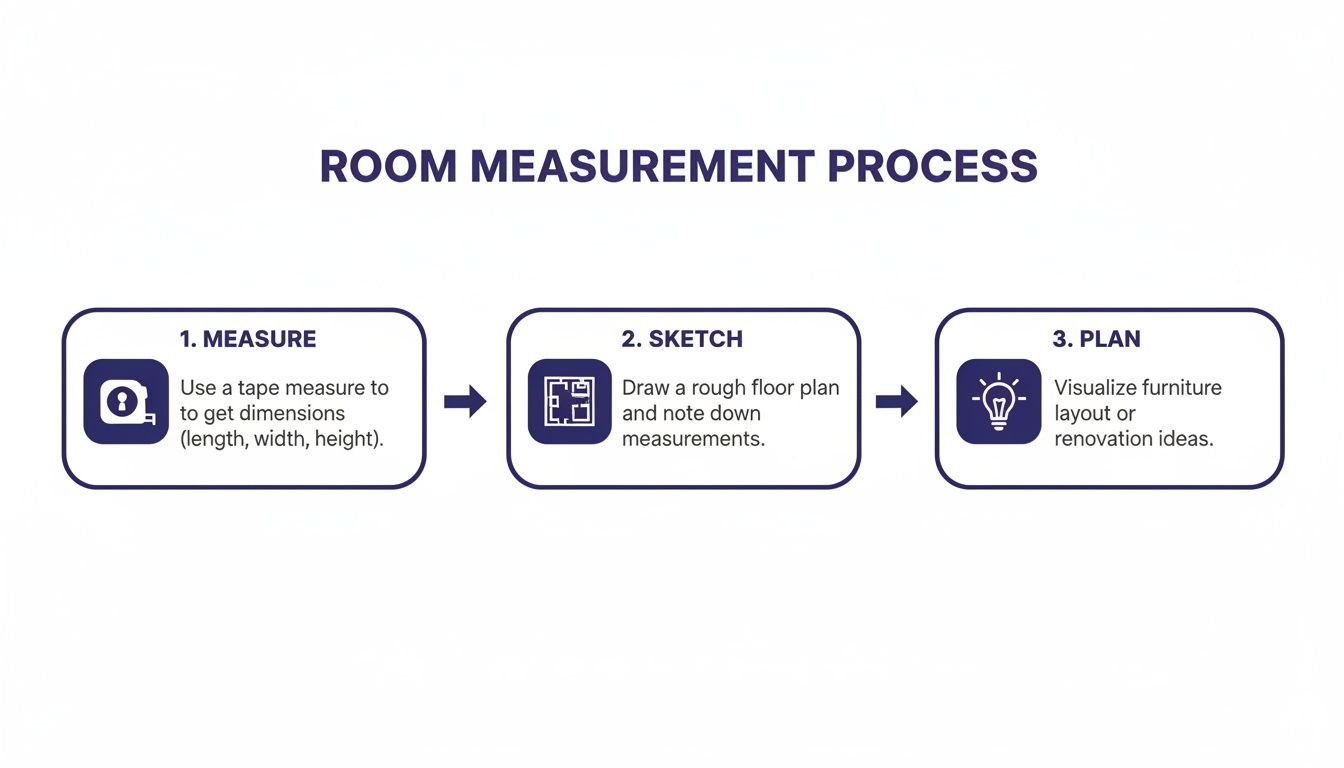
Measure Everything. Then Measure It Again.
If you only take one piece of advice from this entire guide, let it be this: measure everything. This is, without a doubt, the most critical step in your pre-shopping plan. A beautiful sofa that can’t make it through your front door isn't just an inconvenience; it can be a significant and costly headache involving return and restocking fees.
Your measuring checklist needs to be thorough. Don't skip a thing:
- Room Dimensions: Get the length, width, and ceiling height of every room you're furnishing.
- Entry Points: Measure the width and height of all doorways, tight hallways, and any stairwells the furniture needs to navigate.
- Obstructions: Make detailed notes on the locations of windows, electrical outlets, air vents, and light switches. These will dictate where furniture can (and can't) go.
Keep these measurements with you at all times when you're shopping—on your phone, in a small notebook, wherever. Having this data on hand takes the guesswork out of the equation. It helps ensure that the pieces you fall in love with in the store will actually fit into your home and, more importantly, your life. This simple bit of prep is the difference between a smooth, exciting delivery day and a completely stressful one.
Prioritizing Comfort: The Bedroom and Living Room

When you’re standing in a new, empty house, the urge to fill every single room at once is real. However, a more practical—and far less stressful—approach is to focus on the two rooms that make the biggest difference in your day-to-day life: the bedroom and the living room.
These spaces are the heart of your home's comfort. By getting them set up first, you immediately create places to rest and relax. This makes the entire process of settling in feel much more manageable. Think of it as building a comfortable home base you can then expand on over time.
Creating Your Personal Sanctuary: The Bedroom
Your bedroom is much more than just a place to sleep; it’s your private retreat from the world. Making it comfortable and functional should be a high priority on your furnishing a new home checklist. This isn't just an opinion; it's backed by how people actually spend their money.
Industry stats project that bedroom furniture will command a large 35.69% of the global furniture market share by 2026—the single largest segment. This demand is heavily driven by residential projects, which make up 61.34% of the market, as new homeowners wisely prioritize their sleep sanctuary first. You can explore the numbers yourself in the full furniture market analysis from Grand View Research.
So, let's break down the essentials for this important room:
The Mattress and Foundation: This is arguably the most important purchase you’ll make for your bedroom. A quality mattress directly affects your sleep and overall health. Don’t rush this decision. It can be helpful to visit a showroom and test different types—innerspring, memory foam, hybrid—to find what feels best for your body. A solid foundation or adjustable base is just as critical for proper support and helping your mattress last.
The Bed Frame: While the mattress provides the comfort, the bed frame adds the style and structure. It also gets your mattress off the floor, which helps with airflow and general cleanliness.
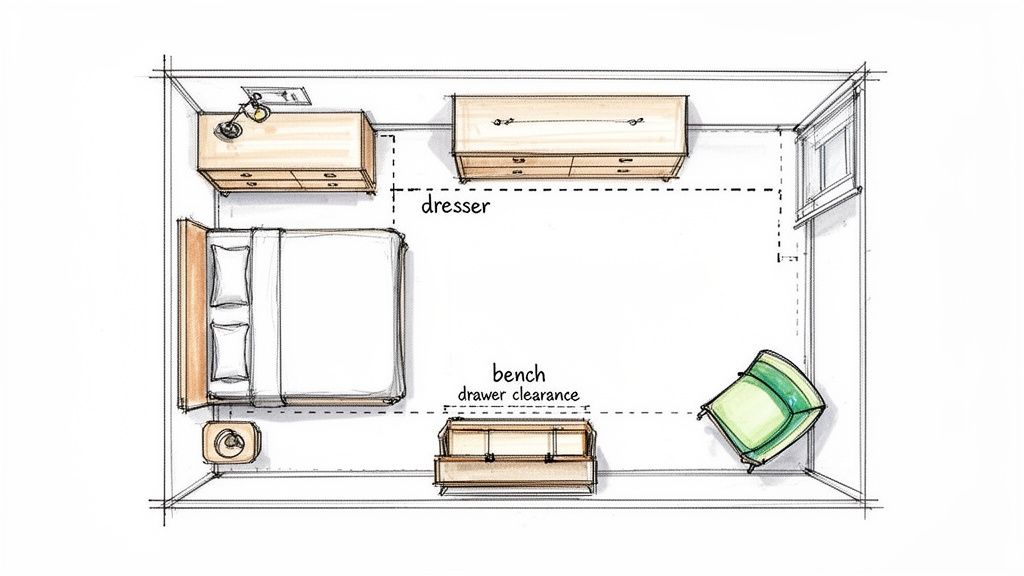
Essential Storage: You've got to have somewhere to put your clothes. A dresser or chest of drawers is a functional necessity. Think about how many drawers you’ll realistically need and measure to ensure the piece fits your space without feeling cramped.
Nightstands: These tables are the unsung heroes of the bedroom. They hold your lamp, phone, a glass of water, and your current book. Look for options with drawers or shelving to add a little extra storage.
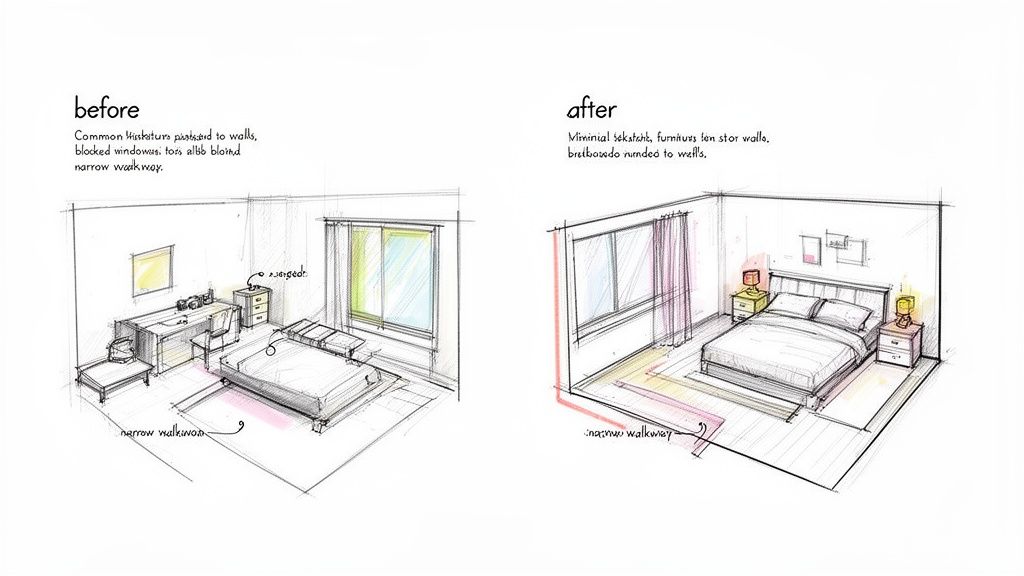
Expert Tip: Before you decide on any bedroom furniture, map out the flow of the room. Can you open all your dresser drawers and closet doors without hitting anything? Is there a clear walking path around the bed? Functionality is just as crucial as aesthetics.
Anchoring Your Home: The Living Room
The living room is where your home’s social life happens. It’s where you relax after a long day, gather with your family, and entertain friends. Furnishing this space in a way that works for you creates a welcoming atmosphere for everyone who walks through the door.
The key here is to pick foundational pieces that support how you actually live. Do you mostly use the room for watching movies? Hosting game nights? Or is it your quiet reading nook? Your answers will point you toward the right furniture.
Key Pieces for a Functional Living Room
To get the space usable from day one, focus on these core items first.
| Piece | Why It's Essential | What to Consider When Shopping |
|---|---|---|
| Sofa or Sectional | This is the largest, most-used piece in the room. It sets the tone for both comfort and style. | Size (measure your space!), upholstery (durable enough for kids/pets?), and comfort (deep seats or a firmer, upright feel?). |
| Coffee Table | It grounds the seating area and acts as a central hub for drinks, books, remotes, and decor. | Scale (aim for about 2/3 the sofa's length), shape (round/oval for tight spots), and material (wood, metal, glass). |
| Media Console | Even with a wall-mounted TV, a media unit provides critical storage for devices and helps hide cables. | Storage needs (open shelves vs. closed doors), ventilation for electronics, and height (your TV's center should be at eye-level when seated). |
| Area Rug | A rug defines the seating area. It also adds warmth, texture, and helps absorb sound. | The rug should be large enough for at least the front legs of your sofa and chairs to rest on it. This helps tie all the furniture together. |
Once you have these foundational pieces in place, your living room will feel much more complete. From there, you can take your time adding accent chairs, side tables, lighting, and décor as your style evolves and your budget allows. By tackling the bedroom and living room first, you quickly turn an empty house into a comfortable, livable home.
Expanding Your Home: Dining, Office & Outdoor Spaces

You've handled the essentials. Your bed is set up for a good night's sleep and your living room is ready for relaxation. Now, you can move on to fleshing out the rest of your home.
This is where your house really starts to reflect you and your lifestyle. We're talking about the dining room, home office, and outdoor areas. These are the spaces that can host family meals, support your workday, and let you enjoy your own outdoor space. This phase is less about immediate needs and more about truly making your house a home.
Let's dive into how to tackle these important secondary spaces.
Creating a Space for Connection: The Dining Room
Whether you have a formal dining room or a cozy eat-in kitchen, this area is a hub for connection. Choosing the right furniture here is all about finding a balance between your daily routine and how you picture yourself hosting friends and family. A common problem people face is buying a large table for a room that can't accommodate it, leaving the space feeling cramped and awkward.
Before you start shopping, get honest about your lifestyle:
- Daily Use: How many people are eating here on a typical Tuesday night?
- Hosting Style: Are you more of an intimate dinner party person or a "let's host the whole family for the holidays" person?
- Space & Flow: Can you leave at least 36 inches of clearance around the table? People need to be able to pull out chairs and walk around without bumping into walls or each other.
A table with a removable leaf is a flexible solution. It can stay compact for everyday meals but easily expands when you have company. If you're working with a tighter corner or just want to encourage conversation, round tables are an excellent choice. For longer, more narrow rooms, a classic rectangular table is usually a good fit.
Designing a Productive Home Office
With so many of us working from home, the home office has become a higher priority for many. Setting up a dedicated workspace is more than just tucking a desk in a spare corner; it’s about creating an environment that helps you focus and supports your well-being.
Your desk and chair are the two most critical investments for this room. The goal is to find pieces that are not only stylish but also ergonomic. A desk with some built-in storage can be a lifesaver for keeping your surface clear and your mind focused. As you plan your setup, check out these practical 9 Best Home Office Layout Ideas for Peak Productivity.
Real-World Tip: Don't underestimate your storage needs! A common pain point for home offices is a lack of space for files, supplies, and gear. Something as simple as a bookshelf or a small filing cabinet can be the difference between a chaotic desk and a productive sanctuary.
Embracing Outdoor Living
The desire to bring the indoors out is a major trend for new homeowners. Patios, decks, and porches are no longer afterthoughts; they're being designed as true extensions of the home for relaxing, dining, and entertaining. The market reflects this shift, with outdoor furniture sales in the U.S. having grown significantly in recent years.
When you're choosing outdoor furniture, durability is key. You need pieces that can withstand your local climate, whether that means intense sun, heavy rain, or wide temperature swings.
Look for materials known for their weather resistance:
- Teak and Acacia: These hardwoods naturally resist rot and insects.
- Powder-Coated Aluminum: This material is a workhorse—lightweight, rustproof, and incredibly durable.
- All-Weather Wicker (Resin Wicker): You get the classic wicker look without the risk of it cracking or fading in the sun.
Investing in quality outdoor furniture can transform an unused patio into a valuable living area. It adds to your property's appeal and, more importantly, to your family's day-to-day enjoyment of your new home. By thoughtfully furnishing your dining, office, and outdoor spaces, you add layers of function and personality that make your house work for you.
One of the biggest worries we hear from shoppers furnishing a new home is that nagging fear of the unknown. Will that sofa you’ve been eyeing actually fit through the door? Is that beautiful, chunky dining table going to overwhelm your breakfast nook? This kind of uncertainty can take the fun out of the process, but there are tools and real-world expertise available to remove that doubt.
Instead of just crossing your fingers and hoping for the best, you can build a digital model of your room. This lets you play around with different layouts, see how certain furniture sizes feel in the space, and figure out how it all works together before you make a purchase.
Bridge the Gap Between Idea and Reality
Let’s be honest, it’s tough to look at a piece of furniture in a massive showroom and picture how it will look in your own, much smaller, living room. This is exactly where digital room planners are so useful. These tools let you take those all-important measurements you gathered and transform them into a working floor plan.
By creating a 2D or 3D model of your room, you can virtually “place” furniture to check on a few critical things:
- Proper Scale: Is that armchair too bulky or is that coffee table undersized? Now you can see it for yourself.
- Traffic Flow: Make sure you can walk around your furniture comfortably without having to turn sideways.
- Functional Layout: Can you still open the closet door? Will that dresser block a window? These are the details that matter.
This screenshot from our own online Room Planner shows how easy it is to lay everything out. You can add your furniture, doors, windows, and all.
This kind of digital mock-up completely removes the guesswork. It lets you tweak and adjust the placement of every single item until you’ve got the ideal flow and function for your room.
When to Seek Professional Guidance
While online tools are incredibly powerful, sometimes they can’t quite replace human experience. You might run into a tricky layout—maybe you have an awkward corner, a unique room shape, or a wide-open floor plan that’s difficult to define. This is where getting some friendly, expert advice can be a game-changer.
Many people hesitate to ask for help because they think it’s only for large, expensive design projects. But a quick chat with a knowledgeable design professional can often solve a problem that’s been causing a headache for weeks.
For instance, the team at our Design Center is there to help you solve problems. They have seen hundreds, if not thousands, of floor plans and can come up with practical solutions you might never have thought of.
Working with experienced staff can help you:
- Solve Challenging Layouts: Get creative ideas for making the most out of small or unconventional spaces.
- Ensure Cohesion: Make sure all the different pieces you love actually look good together and create a unified style.
- Gain Confidence: Get a second opinion to validate your choices and feel more secure before you make a final purchase.
Combining the precision of digital tools with the practical wisdom of seasoned professionals is a powerful strategy. This approach helps you tackle your furnishing a new home checklist with confidence, ensuring the pieces you choose not only fit your space but also function beautifully within it. It’s all about making informed choices that turn your vision into a comfortable, livable reality.
Bringing It All Home: The Shopping, Delivery & Setup Process

You’ve done the hard work of planning, budgeting, and laying out your ideal space. Now for the exciting part—the final step in your furnishing a new home checklist: bringing those pieces home. This stage is about more than just buying; it’s about making confident choices in the showroom and ensuring everything gets from the store to your living room without a scratch.
Getting the logistics right—from payment to delivery—is what makes this final phase stress-free. A little prep work here will turn all your careful planning into a comfortable, beautiful reality.
What to Look for When Shopping in Person
Seeing furniture online is one thing, but there's no substitute for experiencing it in a showroom. This is your chance to go beyond pictures and truly get a feel for quality and comfort.
Before you make a final decision, take a moment to do a quick hands-on inspection:
- Frame Construction: Gently press on the arms and back of a sofa or chair. A well-built piece shouldn't wobble, creak, or feel flimsy. For case goods like dressers or chests, look for solid wood or quality veneers and check that the corners are joined securely.
- Drawer Function: Open and close the drawers on any dressers, nightstands, or chests. Do they glide smoothly and quietly? Quality pieces often feature dovetail joinery and operate on smooth mechanisms, not just wood-on-wood.
- Fabric and Upholstery: Run your hand over the fabric. If you have kids or pets, don't be shy about asking for its durability rating (often called "double rubs"). Also, check that patterns align neatly at the seams—it's a small detail that can signal quality craftsmanship.
Go ahead, take a seat! The most important test for any sofa, sectional, or chair is how it feels to you. Spend a few minutes sitting just as you would at home. This is the only way to get a real sense of its comfort and support.
Understanding Payment and Financing Options
Furnishing a home is a significant investment, but having flexible payment options can make a big difference. Most retailers offer ways to manage the cost so it doesn't derail your budget.
You'll typically find a couple of different approaches to payment:
- Paying in Full: This is the most straightforward method, whether by cash, check, or credit card.
- Financing Plans: Many stores, including ours, offer financing programs that let you spread the cost over several months or even years. This can be helpful for managing cash flow, especially with all the other expenses that come with a new home. Just be sure you understand the terms, interest rates, and any requirements before you apply.
The goal here is simply to find a payment method that fits comfortably within the budget you’ve already set.
Preparing for Delivery and Setup
A smooth delivery day always starts with a little bit of preparation. Once you’ve made your purchase, a few simple actions will ensure everything goes off without a hitch.
When you're trying to coordinate deliveries for your new space, understanding delivery timelines is a huge piece of the puzzle. Ask the retailer for an estimated delivery window and find out exactly what you should expect on the day of arrival.
Before the delivery truck arrives, make sure you:
- Clear the Path: Measure your doorways, hallways, and stairwells one last time. It’s also wise to move any existing furniture, area rugs, or wall art that could get in the way.
- Protect Your Home: If you're concerned about scratches or dirt, lay down some protective coverings on your floors. An old blanket or some cardboard can go a long way.
- Inspect Upon Arrival: When your new furniture arrives, give each piece a quick but thorough inspection for any damage that might have happened in transit. It's crucial to do this before you sign the delivery receipt.
Finally, always familiarize yourself with the store's warranty and return policies before you buy. Knowing the process for addressing any potential issues down the road provides peace of mind and is the final step in a successful home furnishing journey. Visiting a showroom like ours gives you the chance to see all these options in person and get hands-on help from our team.
Common Questions About Furnishing a New Home
Even with the most detailed plan, furnishing a brand new home is a huge project that always brings up a lot of questions. Over the years, we've heard just about every one from customers standing right where you are now.
To help clear things up and give you the confidence to move forward, we've gathered a few of the most frequent questions we get. Think of this as the FAQ section of your furnishing a new home checklist.
How Much Should I Budget for Furnishing a New Home?
This is, without a doubt, the question we hear most often. The honest answer? There's no magic number that works for everyone. You might see a common guideline floating around suggesting a budget of 10% to 20% of your home's value. For a $400,000 home, that would be between $40,000 to $80,000.
Let’s be realistic, though. Very few people furnish their entire home all at once with a budget like that. A much more practical approach is to break it down into phases and prioritize what you truly need right away.
Phase 1 – The Essentials: First, focus on the absolute must-haves for your primary bedroom and main living area. A realistic starting budget for these foundational pieces could be anywhere from $5,000 to $15,000, depending on your taste, the quality you choose, and how many items you need.
A Long-Term Investment: Your budget should ultimately be built around your personal financial situation, not an arbitrary percentage. It’s often more beneficial to invest in high-quality, durable pieces for the things you use every single day—like your mattress and your sofa—than to rush and fill the house with things that won't last.
A thoughtful budget isn't just a number; it's a plan. Allocate your funds to solve your most immediate needs first, then build out the rest of your home over time as your finances allow.
What Is the Best Order to Furnish a New House?
The most practical and least overwhelming way to tackle furnishing a new house is to follow a "hierarchy of needs." This simply means you focus on the rooms that will give you immediate comfort and function from day one.
Here’s a logical order that has worked for countless homeowners:
The Primary Bedroom: Start here. After a long day of moving and unpacking, having a private, comfortable space to rest is a high priority. Your mattress, bed frame, and some basic storage should be the very first things you sort out.
The Living Room: Next up, create the central hub where daily life will happen. A good sofa or sectional and a coffee table are all you need to establish a functional spot for the family to relax and connect.
The Dining Area: Once you have places to sleep and unwind, you'll want a dedicated spot to eat. This doesn't have to be a formal dining set right away; a simple table and chairs for an eat-in kitchen works perfectly.
The Home Office & Other Rooms: With the core areas set, you can then shift your focus to secondary spaces like a home office, guest rooms, and eventually, any outdoor living areas.
This phased approach prevents you from feeling totally overwhelmed and helps you avoid budget burnout. It gives you the breathing room to make more thoughtful decisions for each space instead of making rushed choices you might regret later.
Should I Buy All My Furniture from One Store?
You certainly don’t have to. Mixing and matching pieces from different places is a great way to create a unique, collected-over-time look. That said, there can be practical advantages to sourcing most of your foundational furniture from one knowledgeable retailer.
Consider these benefits:
A Cohesive Vision: When you shop at a store with a large, diverse selection, you can actually see how different styles, textures, and finishes work together in person. Trying to picture that while clicking between a dozen different websites can be very difficult.
Simplified Logistics: Coordinating one or two large deliveries is often much easier than trying to manage a flood of separate shipments from different companies. The last thing you need while juggling moving tasks is to be waiting around for ten different delivery trucks.
Holistic Guidance: When you work with an experienced team in one place, they can offer advice that considers your entire home, not just one piece. They can help you solve tricky layout challenges and make sure your selections flow together to create a unified feel from room to room.
At the end of the day, the goal is to find pieces you love that fit your budget and your life. Working with a retailer that has a great selection and a genuinely helpful staff can make that whole process a lot simpler and more enjoyable.
Furnishing a new home is a journey, not a sprint. By following a clear plan and asking the right questions along the way, you can create a space that feels comfortable, functional, and truly yours.
If you’re ready to see some of these options in person and get some hands-on advice, our team at Woodstock Furniture & Mattress Outlet would be happy to help you start checking items off your list. Find a showroom near you and start your journey today!