Tag: room planning

  • Your Guide to Dining Table Dimensions for a Perfect Fit

    Your Guide to Dining Table Dimensions for a Perfect Fit

    Picking out a new dining table isn't just about finding a style you love—it’s about making sure it actually works in your home. The right dining table dimensions are the secret ingredient to a room that feels just right, never cramped or oddly empty. It ensures you have plenty of space for everything from holiday feasts to homework sessions. This guide is here to take the guesswork out of the process and help you find a great fit.

    Why Getting Dining Table Dimensions Right Matters

    Have you ever been to a dinner party where you felt pinned against the wall, with no room to scoot your chair back? Or maybe you've tried to host a big family meal, only to realize your table is way too small for all your guests? We've all been there, and these common frustrations point to one simple truth: a dining room's success all comes down to the right proportions.

    A table that’s too big for the room can be a disaster. It swallows up the space, blocks walkways, and makes just pulling out a chair feel like a chore. On the other hand, a table that’s too small can look lost and out of place, failing to be the welcoming gathering spot you need it to be.

    Taking a few minutes to measure your room and think about how you'll use the table is easily the most important part of the entire shopping process. It's the one thing that will save you from the headache of bringing home a beautiful piece of furniture that just doesn't fit.

    The goal is to find that sweet spot between seating everyone you need to and still having room to move around comfortably. Your dining table should anchor the room, not dominate it. Think inviting centerpiece, not a cluttered obstacle course.

    We're going to walk through the practical side of things. We'll cover everything you need to know, from standard table measurements to the crucial clearance space you need to leave around it. Our goal is to take you from feeling overwhelmed by all the options to feeling confident that you can pick a table your family will love for years to come. After all, a great table doesn't just fit your room; it fits your life.

    Getting the dimensions right from the start takes care of so many potential problems. It ensures:

    • Comfortable Seating: Everyone has enough elbow room and can get in and out of their seat without a struggle.
    • Easy Traffic Flow: You and your guests can walk around the table without having to turn sideways and squeeze past.
    • A Visually Balanced Room: The table is the right scale for the room, creating a layout that looks and feels harmonious.

    Understanding Standard Dining Table Measurements

    To make sense of the dining table puzzle, let's start with the basic numbers. Getting a handle on standard dining table dimensions is the first real step toward finding a piece that fits both your room and how you live in it. These measurements are surprisingly consistent for one simple reason: they’re built for people.

    Most dining tables you'll find have a standard height between 28 and 30 inches from the floor to the tabletop. This isn't some random number; it's the industry-wide sweet spot that gives the average adult enough legroom and knee clearance when sitting in a normal dining chair.

    Table Width and Length

    Next up, let's talk about width. You'll want a table that's at least 36 inches wide to feel comfortable. This gives everyone enough space for their own place setting without bumping elbows, and it leaves a nice bit of room down the middle for serving bowls or a centerpiece. Anything narrower can start to feel cramped, especially when you've got a full house.

    While width is all about personal space, length is all about seating capacity. It’s pretty straightforward: the longer the table, the more friends and family you can gather around it. For instance, a 60-inch table is great for seating four to six people, but if you're hosting bigger holiday dinners, a 96-inch table can easily handle eight to ten guests.

    Getting this right is the difference between a frustrating, cramped dining room and a space that just works.

    Concept map shows choosing the right dining table size, progressing from a cramped room to a confident fit.

    These standard American dimensions have stood the test of time. A 30-inch height keeps your knees from knocking the table, and a 36-inch width makes passing the potatoes a breeze. Here in North Georgia, where we see everything from compact townhomes to sprawling family houses, round tables are a popular option for smaller spaces because they can improve the flow of a room. And with more families hosting regular get-togethers, flexible options like extendable tables have become a go-to solution.

    Dining Table Length and Seating Capacity

    Use this quick reference to understand the relationship between table length and the number of people it can comfortably seat. As a general rule, you should plan for about 24 inches of space for each person at the table.

    Table Length (Inches) Comfortably Seats
    48" 4 people
    60" – 72" 4-6 people
    80" – 87" 6-8 people
    92" – 108" 8-10 people
    120" 10-12 people

    With a solid understanding of height, width, and length, you’re much better prepared to look at different dining tables and know what will actually work for your home and your needs.

    The Most Important Measurement: The Clearance Zone

    Believe it or not, the most common mistake we see people make when choosing a dining table has nothing to do with the table itself. It’s forgetting about the space around it. This buffer, which we call the clearance zone, is the single most important part of creating a dining room that’s actually comfortable and functional.

    Without enough clearance, even the most beautiful table can turn your dining area into an obstacle course. Think of it like personal space, but for your furniture. You need to give your table room to breathe so you don't end up with that cramped, chaotic feeling where chairs scrape the wall and guests can't get up without a major shuffle.

    Overhead sketch of a dining room showing a table with chairs, 36-inch clearances, and a 48-inch high-traffic walkway.

    The Rule of Three Feet

    An easy-to-remember and very effective guideline is the "Rule of Three Feet". This simply means you should leave at least 36 inches (or 3 feet) of open space on all sides of your dining table. This isn't just for looks; it's a practical minimum for a room to work properly.

    This 36-inch buffer is non-negotiable for basic function. It provides just enough room for a person to pull out their chair and sit down, and for someone else to walk behind them without having to turn sideways.

    This measurement is designed to accommodate two key things happening at the same time:

    • Seated Guests: A person sitting at the table takes up a certain amount of space.
    • Walking Path: Another person needs a clear path to move through the room.

    When to Expand the Zone

    While 36 inches is the bare minimum, some room layouts need a bit more breathing room. If your dining table is placed along a major walkway—say, the main path from the living room to the kitchen—you’ll definitely want to increase that clearance.

    For these high-traffic areas, we recommend aiming for a clearance of 42 to 48 inches. This wider path lets people walk by comfortably without bumping into anyone seated at the table. This is also a key consideration if you plan to put other furniture, like a buffet or server, against the same wall. You have to add the depth of that piece to the 36-inch minimum to make sure your room stays functional and inviting.

    How to Measure Your Room for the Perfect Table Size

    Alright, now that we've covered the basics of table sizes and why clearance space is so important, it's time to bring it all home—literally. Measuring your dining space is the one step that takes all the guesswork out of shopping. It empowers you to walk into a showroom knowing exactly the maximum size table you can get, ensuring you find a piece that truly completes your room instead of cramping it.

    The first step couldn’t be simpler. Grab a tape measure and get the total length and width of your dining room or the area you’ve designated for dining. Go ahead and jot those two numbers down; they’re the foundation for everything that comes next.

    Calculating Your Maximum Table Size

    Once you have your room’s measurements, we can get to the most important calculation. To make sure everyone can move around comfortably, you have to subtract that clearance zone we talked about from your room's total dimensions. Remember, the magic number is 36 inches (or 3 feet) of clearance on all sides of the table.

    This means you’ll need to subtract a total of 72 inches (6 feet) from your room's overall length and another 72 inches from its width. What’s left over is the absolute largest table your space can comfortably handle.

    Let's walk through an example. Say your dining room measures 14 feet long by 12 feet wide.

    1. Length: 14 feet (168 inches) – 72 inches = 96 inches (your maximum table length)
    2. Width: 12 feet (144 inches) – 72 inches = 72 inches (your maximum table width)

    So, in this room, the biggest table you should consider would be 96 inches long and 72 inches wide.

    Making Adjustments for the Real World

    This simple math gives you a great starting point, but let’s be honest—most rooms aren't perfect, empty boxes. You’ll need to account for any real-world obstacles that jut out into your dining area.

    Keep an eye out for things like:

    • Doorways and the natural walking paths people use to get through them.
    • Bay windows that might look lovely but cut into your usable square footage.
    • Existing furniture you plan to keep, like a buffet, server, or china cabinet.

    For instance, if you have a beautiful server that’s 18 inches deep sitting against one wall, you must subtract that depth from your available space before you do the main calculation. Getting these little details right is just as critical as knowing how to measure for a perfect fit with window treatments—it’s the key to a flawless room layout.

    Considering the average American dining room is about 14×14 feet, it's no wonder rectangular tables are so popular. For these common spaces, understanding the relationship between your room's dimensions and your table's size is what turns a good dining area into a great one.

    Choosing the Right Shape for Your Room and Lifestyle

    Sketches illustrating different dining table shapes: rectangular, square, round, and oval, with their benefits.

    So you've measured your room and figured out the biggest table you can technically fit. That's a great start, but size is only half the battle. The table's shape is what really brings the space to life, defining its personality and how you’ll use it day-to-day.

    The right shape impacts everything from how easily people can walk around the room to the overall vibe you create for meals. It's a decision that works hand-in-hand with your measurements to make a dining room that’s both practical and genuinely inviting.

    Rectangular: The Classic Choice

    There’s a good reason rectangular dining tables are the most popular choice you’ll see. They're incredibly efficient, especially if you have a larger family or love to host big gatherings where you need to maximize every inch of seating space.

    Most dining rooms are longer than they are wide, and a rectangular table’s linear shape just naturally fits these spaces. This layout leaves clear, easy-to-navigate pathways around the table. If you're working with a long, narrow room, a rectangular table will complement the layout perfectly instead of looking awkward or out of place.

    Square: Fostering Intimacy

    Looking for a cozier, more connected dining experience? A square table might be your answer. They place every guest an equal distance from one another, which is perfect for sparking conversation and making sure everyone feels included.

    Because they’re symmetrical, square tables look best in square-shaped rooms where they create a wonderful sense of harmony and balance. They can feel a bit off in a long, rectangular room, but they’re a great choice for a dedicated breakfast nook or a smaller, squarish dining area.

    For many homeowners, a key goal is creating a space that encourages conversation. Round and square tables naturally draw people in, making everyone feel equally included in the discussion.

    Round and Oval: Improving Flow

    If your dining area is a bit tight or doubles as a major walkway in your home, round and oval tables are the undisputed champs of traffic flow. With no sharp corners to bump into, they make it much easier to move around the room. This is a huge plus in busy homes, especially those with active little ones running around.

    A round table is fantastic for making a small room feel bigger because it takes up less visual space. Oval tables, on the other hand, offer a brilliant compromise—you get the soft, flowing edges of a round table but with an extended length that can seat more people, much like a rectangle. Both shapes are masters at creating a cozy, communal feel where every seat feels like the best seat in the house.

    Practical Considerations for a Flawless Fit

    Okay, so you've got your tape measure out and have a good handle on the basic dimensions. But getting a table that truly works in your home goes beyond just the numbers on a page. A few final, practical details can be the difference between a table that just fits and one that feels absolutely perfect for years to come.

    Think about how you really use your dining space. Is it just for quiet family dinners, or do you love to host lively holiday gatherings? For many of us, the answer is both. That's where one of the most useful features in the dining world comes into play: an extendable table with leaves.

    The Value of Flexibility

    A table with leaves offers incredible flexibility, solving the classic dilemma of wanting a big table for guests without sacrificing precious floor space every other day of the year. For daily life, you keep it compact, making the room feel open and spacious. When company comes over, you simply pop in the leaves to make sure everyone has a comfortable spot at the feast.

    Think of it as a table that grows with your needs. It’s compact for Tuesday night homework sessions but expansive enough for a full Thanksgiving feast, giving you the best of both worlds in a single piece of furniture.

    Chair Compatibility and Final Checks

    The chairs you choose are just as critical as the table itself. There’s nothing worse than buying a beautiful set only to find out the chairs don't quite work. Here's what to check to ensure they're a perfect match:

    • Chair Height: You need enough legroom to be comfortable. A good rule of thumb is to have about 10-12 inches between the top of the chair seat and the bottom of the tabletop.
    • Chair Width: Measure the width of your chairs, especially at their widest point. This will tell you how many can actually fit along the side of your table—paying close attention to the space between the table legs.
    • Armrests: If you're eyeing chairs with armrests, do a quick check to make sure the arms are low enough to slide completely under the table's apron. This is a huge space-saver when the chairs aren't being used.

    Trying to picture all these pieces together can be tough. For the more visually-minded, learning some basic interior design sketching techniques can be a fantastic way to map out your space and see how different shapes and sizes will look.

    Ultimately, there’s no substitute for seeing it all in person. Sometimes the best way to know for sure is to experience the scale and feel of the furniture firsthand. We always invite you to come visit one of our showrooms. You can sit at different tables, try out the chairs, and get a real sense of how the dimensions feel. Our knowledgeable team at Woodstock Furniture & Mattress Outlet and our experts at the Design Center are always here to help you navigate these final choices, so you can walk away confident in your decision.

    Answering Your Top Dining Table Dimension Questions

    Even after you’ve measured your space and reviewed all the guidelines, it’s completely normal to have a few questions rattling around. We get it. Picking out a dining table is a big decision! To make sure you feel totally confident in your choice, we’ve put together a few of the most common questions we hear from shoppers just like you.

    What Is the Standard Height of a Dining Table?

    The industry standard height for just about any dining table you’ll find is between 28 to 30 inches high, measured from the floor to the tabletop. This isn't just a random number; it's designed to work perfectly with standard dining chairs, which usually have a seat height of around 18 to 19 inches. This combination gives the average adult plenty of comfortable legroom.

    Think of a table and its chairs like a well-fitted suit. You're aiming for that sweet spot of a 10 to 12-inch gap between the chair seat and the tabletop. This gives you enough room to be comfortable without feeling like you're sitting too high or too low.

    How Much Space Do I Need Between My Dining Table and the Wall?

    As a rule of thumb, you should always try to leave a minimum of 36 inches (or 3 feet) of space between the edge of your table and the nearest wall or piece of furniture. We call this the "clearance zone," and it's absolutely essential for making the room usable.

    This buffer zone ensures your family and guests can:

    • Easily slide their chairs in and out without bumping into anything.
    • Have a clear path to walk behind people who are already seated.

    If your dining area is also a major walkway through your home, it's an even better idea to expand that zone to 42 to 48 inches. This will help prevent traffic jams and keep the whole space feeling open and easy to move through.

    What Size Round Table Do I Need for 6 People?

    To comfortably seat six people at a round table, you’ll want to look for one with a diameter between 44 and 54 inches. If you like having the flexibility to squeeze in an extra guest or two for holidays or parties, a 60-inch round table can often seat up to eight people without feeling too crowded.

    Round tables are absolutely fantastic for creating a cozy, conversational vibe where everyone feels included. Plus, since they don't have any sharp corners, they're a great choice for improving the flow of traffic, especially in smaller or square-shaped dining rooms.


    Feeling ready to find your perfect fit? The best way to make the final call is to see your options in person. At Woodstock Furniture & Mattress Outlet, our knowledgeable staff would love to help you browse our great selection of dining tables and chairs to find the one that fits your home and your life.

    Visit one of our North Georgia showrooms to get started

  • 10 Practical Bedroom Furniture Arrangement Ideas

    10 Practical Bedroom Furniture Arrangement Ideas

    Arranging bedroom furniture is more than just deciding where the bed goes; it's about creating a space that feels balanced, functional, and genuinely restorative. A well-planned layout can transform a cluttered room into a peaceful sanctuary, improve traffic flow, and even contribute to better sleep. Many homeowners, however, face common challenges that generic advice fails to solve. How do you handle an awkward L-shaped room or a small bedroom where every square foot counts? How do you integrate a sitting area into a master suite without it feeling cramped?

    This guide provides actionable solutions to these real-world problems. We move beyond the basics to deliver ten distinct, problem-solving bedroom furniture arrangement ideas tailored to specific needs and room types. Each layout is designed to address a common pain point, from maximizing floor space in a kid's room to optimizing the flow in a bedroom with an ensuite bathroom.

    Inside, you will find practical rules, specific furniture sizing guidance, and clear traffic-flow tips to help you implement each concept effectively. We’ll explore proven layouts that work for various room shapes and sizes, helping you create a bedroom that not only looks thoughtfully designed but truly supports your daily lifestyle. Forget the guesswork and start building a functional, serene space today.

    1. The Centered Focal Point Layout

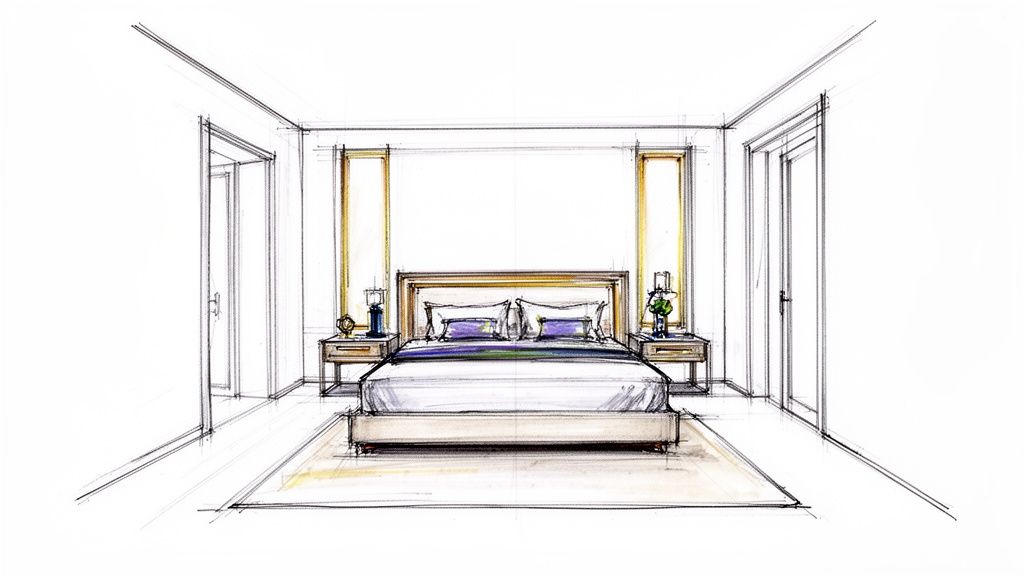
    The Centered Focal Point Layout is a timeless and popular approach to organizing a bedroom. This classic arrangement establishes the bed as the room's undisputed centerpiece by placing it against the longest, most prominent wall, usually the one you see first when entering. It's a foundational technique in interior design that creates a sense of order, calm, and deliberate composition, making it one of the most reliable bedroom furniture arrangement ideas.

    This layout is prized for its inherent symmetry and balance. By positioning the bed in the middle and framing it with matching nightstands, you create a visual anchor that the rest of the room revolves around. This approach not only looks intentional but also feels restorative, which is ideal for a space dedicated to rest. It is commonly seen in thoughtfully designed hotel rooms and master suites.

    A hand-drawn sketch of a contemporary bedroom layout featuring a bed, two nightstands, and two doors.

    How to Implement This Layout

    Successfully executing a centered layout depends on proportion and thoughtful placement. Your goal is to achieve harmony without making the space feel rigid or cluttered.

    • Establish the Anchor: Choose a substantial headboard to solidify the bed's role as the focal point. A well-chosen headboard can add texture, height, and style.
    • Balance with Nightstands: Select nightstands that are proportional to your bed. A large, king-sized bed looks well-balanced with wider nightstands, while a full or queen bed pairs well with more moderately sized tables. Ensure their height is level with or just slightly below the top of your mattress for easy access.
    • Maintain Clear Pathways: To ensure comfortable movement, leave at least 24 to 36 inches of clear walking space on both sides of the bed.
    • Create Symmetrical Storage: For complete visual balance, place a dresser or media console directly opposite the foot of the bed. This arrangement creates a satisfying sense of equilibrium.
    • Lighting and Finishing Touches: Mount matching wall sconces or place identical table lamps on each nightstand to reinforce the symmetry. To add softness and dimension, consider adding a bed skirt.

    2. The Corner Bed Placement Strategy

    The Corner Bed Placement Strategy is an innovative approach that tucks the bed into a corner, using two walls as an anchor. This arrangement creates a cozy, intimate sleeping nook and is one of the most effective bedroom furniture arrangement ideas for maximizing floor space. It is particularly useful in smaller bedrooms, studio apartments, or rooms with challenging layouts, like those often found in efficient Atlanta metro area homes or kids' bedrooms.

    This layout is a favorite in Scandinavian design because it challenges the traditional "bed against the center of a wall" rule. By pushing the bed into a corner, you open up a significant amount of central floor space, which can make a compact room feel surprisingly airy and spacious. This setup feels intentional and snug, transforming an underutilized corner into the room's most comfortable and functional zone. It's an ideal solution for guest rooms or multi-purpose spaces where flexibility is key.

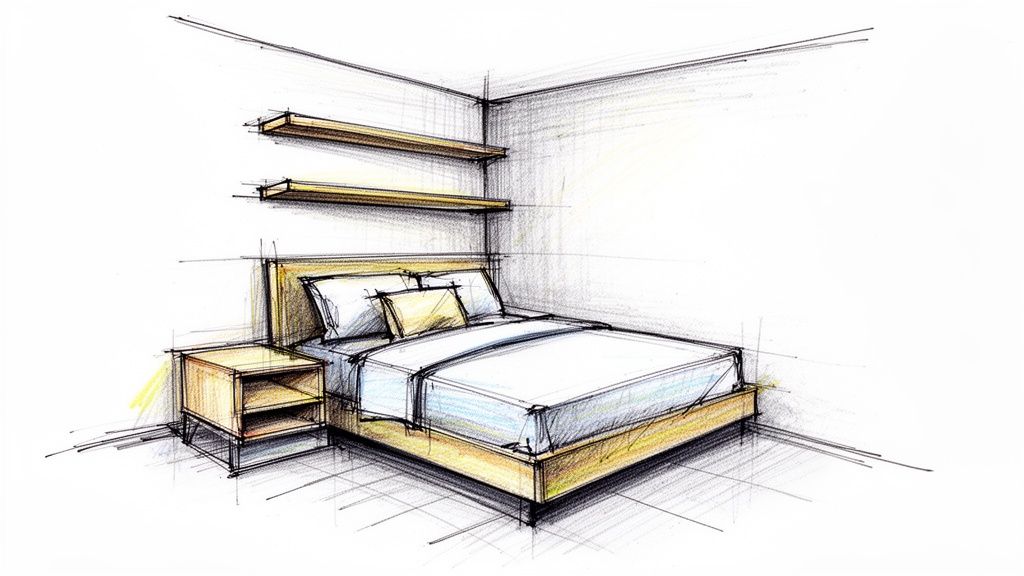
    A hand-drawn sketch of a minimalist bedroom interior with a bed, nightstand, and floating shelves.

    How to Implement This Layout

    Successfully creating a corner bed layout is about smart furniture choices and space-saving techniques. Your goal is to make the corner feel like a deliberate design feature, not an afterthought.

    • Choose the Right Bed Frame: Opt for a low-profile headboard or no headboard at all to avoid a cramped look. A frame without a bulky footboard is essential to keep sightlines open and maintain a feeling of spaciousness.
    • Utilize Vertical Space: Install floating shelves above the bed in the corner. This provides a perfect spot for books, decor, and a small lamp without taking up any floor space.
    • Streamline Your Nightstand: Place a single, compact nightstand on the accessible side of the bed. This keeps essentials within reach while maintaining a clean, uncluttered look.
    • Think About Lighting: Since one side is against a wall, traditional lamps may not work. Consider mounting a wall sconce or a plug-in pendant light in the corner to provide focused task lighting for reading.
    • Keep Colors Light: Use light, neutral paint colors on the walls within the corner. This prevents the sleeping nook from feeling dark or enclosed and helps reflect light throughout the room.

    3. The Floating Bed Island Layout

    The Floating Bed Island Layout is a contemporary and dramatic approach that positions the bed away from the walls, turning it into a sculptural centerpiece. This sophisticated arrangement creates a "floating" effect, making a bold statement in larger bedrooms. It is one of the more daring bedroom furniture arrangement ideas, ideal for open-concept lofts or spacious master suites where you want to create distinct functional zones.

    This layout transforms the bed from a simple piece of furniture into a destination within the room itself. By pulling it away from the walls, you establish a dynamic and luxurious atmosphere often seen in boutique hotels and architectural magazine features. This approach requires ample square footage but rewards you with a unique, high-design aesthetic that redefines the entire space.

    How to Implement This Layout

    Executing this layout successfully is about creating a deliberate, well-anchored composition rather than just placing a bed in the middle of a room. The goal is to make the arrangement feel intentional and integrated.

    • Anchor the Space: Use a large area rug (at least 8×10 feet) to define the sleeping zone and visually ground the bed. The front legs of the bed and nightstands should sit comfortably on the rug.
    • Choose a Statement Headboard: Since the back of the bed is exposed, a headboard with a finished back or a compelling design is crucial. A substantial, well-crafted headboard can serve as a stunning focal point.
    • Maintain Ample Clearance: Ensure at least 30 to 36 inches of clear pathway on all sides of the bed. This generous spacing is essential for the layout to feel open and luxurious, not cramped.
    • Create a Functional Backdrop: Place a low console table, bench, or a pair of chairs behind the headboard to create a functional and stylish backdrop. This adds visual weight and utility to the arrangement.
    • Rethink Your Lighting: Traditional table lamps may not work if power outlets aren't in the floor. Instead, consider pendant lights hung from the ceiling over each nightstand or elegant floor lamps to provide balanced, ambient light.

    4. The Dual-Purpose Master Suite Layout

    The Dual-Purpose Master Suite Layout transforms a large bedroom into a multifunctional sanctuary that accommodates both rest and daily activities. This sophisticated approach is ideal for modern living, where the primary bedroom often doubles as a home office, a reading nook, or a private lounge. It stands out among bedroom furniture arrangement ideas by thoughtfully zoning a single space to serve distinct purposes without feeling cluttered.

    This layout is perfect for spacious master bedrooms where homeowners want to maximize every square foot. By creating separate zones for sleeping and living, you craft a resort-style environment that feels both luxurious and highly functional. It’s a design seen in high-end properties, offering a practical solution for remote workers or anyone seeking a private retreat within their own home.

    How to Implement This Layout

    Successfully creating a dual-purpose layout hinges on clear visual separation and cohesive design. The goal is to define distinct areas while maintaining a harmonious flow throughout the room.

    • Define Zones with Rugs: Use area rugs to create visual boundaries. Place a large rug under your bed and a separate, complementary rug in your seating or work area to clearly delineate the two spaces.
    • Create Functional Areas: Position a seating area or workspace opposite or perpendicular to the bed. For a home office zone, ensure you have a comfortable desk chair and dedicated task lighting to prevent eye strain.
    • Balance Furniture and Storage: Choose furniture that works for both zones. A versatile dresser, for instance, can store clothing while also organizing office supplies. Maintain at least 30 to 36 inches of pathway between zones for easy movement.
    • Layer Your Lighting: Install different lighting for each function. Use soft, ambient lighting like table lamps near the bed and brighter, focused task lighting over a desk or reading chair.
    • Maintain Cohesion: Tie the zones together by using a consistent color palette and similar furniture finishes. A neutral backdrop allows you to add unique accents to each area, giving them personality while ensuring the entire room feels connected. Consider an open bookshelf as a gentle divider that adds storage without closing off the space.

    5. The Window-View Priority Layout

    The Window-View Priority Layout is an arrangement that elevates your bedroom's best architectural feature: its window. This approach positions the bed to either face or frame the window, making natural light and the outdoor scenery the room's main attraction. It’s one of the most refreshing bedroom furniture arrangement ideas, especially for rooms with scenic views.

    This layout is deeply rooted in biophilic design principles, which emphasize a connection to nature to improve well-being. By prioritizing the view, you create a dynamic and calming environment that changes with the time of day and seasons. It's an ideal choice for transforming a master suite into a resort-like retreat, where waking up to sunlight and nature becomes part of your daily routine.

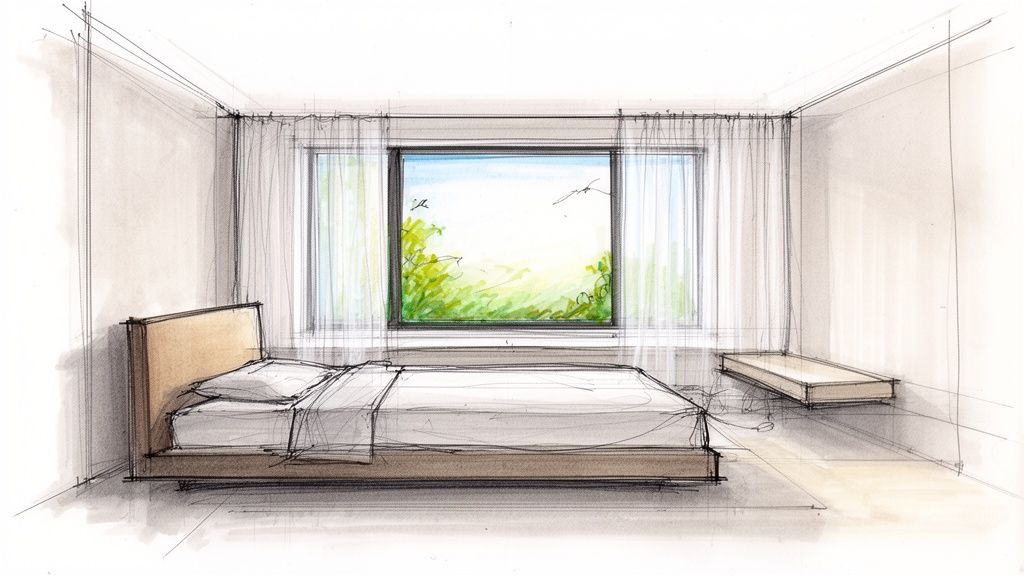
    Watercolor sketch of a serene bedroom with a bed, large window overlooking nature, and floating shelf.

    How to Implement This Layout

    Successfully creating a window-focused layout is about enhancing the view, not obstructing it, while maintaining functionality and comfort.

    • Orient the Bed: Place your bed directly facing the window for an immersive experience, or on the wall adjacent to it so the view is to your side. A bed with a low-profile headboard is an excellent choice to keep sightlines clear.
    • Control the Light: Invest in a layered window treatment. Combine sheer curtains for daytime privacy and light diffusion with blackout curtains to ensure you can control light levels for restful sleep.
    • Frame the Feature: Use decorative drapery panels on either side of the window to frame it like a piece of art. This adds softness and a touch of elegance to the focal point.
    • Create a Functional Zone: Enhance the window area by adding a comfortable armchair or a low bench beneath it. This creates a cozy reading nook and makes the space more intentional.
    • Balance the Room: Place a dresser or console table on the wall opposite the window. This provides necessary storage without competing for attention and helps balance the room's visual weight. Ensure pathways remain clear, with at least 24 to 30 inches for easy movement around the furniture.

    6. The L-Shaped Bedroom Configuration

    The L-Shaped Bedroom Configuration is a strategic approach designed to maximize the potential of rooms with unconventional layouts. This method embraces architectural quirks, such as alcoves or angled walls, by arranging furniture to create distinct, functional zones. It’s a smart solution for rooms that defy a simple, symmetrical setup, transforming awkward spaces into highly practical and organized bedrooms.

    This layout is particularly valuable in homes with unique architectural features. Instead of fighting against an irregular floor plan, this configuration works with the room's natural lines. By thoughtfully placing furniture within the two "legs" of the L-shape, you can establish separate areas for sleeping and other activities like dressing, working, or reading. This is one of the most effective bedroom furniture arrangement ideas for making an odd-shaped room feel intentional and cohesive.

    How to Implement This Layout

    Successfully arranging an L-shaped room depends on careful measurement and creating a sense of visual harmony across the different zones. The goal is to make the unconventional shape feel like a deliberate design choice rather than a limitation.

    • Anchor the Main Zone: Place the bed against the longest, most prominent wall in the main section of the L. This establishes a clear primary zone dedicated to rest and relaxation.
    • Utilize the Secondary Leg: Position secondary furniture, like a dresser, vanity, or small desk, in the shorter leg of the L. This creates a functional secondary zone that feels separate yet connected.
    • Choose Proportional Furniture: Select pieces that fit comfortably within each specific area. Avoid oversized furniture that can overwhelm one section and make the room feel unbalanced. Modular furniture can be an excellent choice for its adaptability.
    • Unify with a Rug: Use a large area rug to visually connect the two zones. Placing the rug so that it bridges both sections helps tie the entire room together and defines the space.
    • Create Visual Cohesion: Paint all walls the same color to minimize the irregularity of the room's shape and create a unified backdrop. You can also use mirrors strategically to reflect light and make the space feel larger and more open.
    • Plan Your Lighting: Install lighting that serves both zones effectively. Consider a central overhead fixture for general illumination, supplemented by task lighting like a desk lamp or reading sconce in the secondary area.

    7. The Bedroom with Ensuite Bathroom Flow Layout

    The Bedroom with Ensuite Bathroom Flow Layout is a modern approach that prioritizes a seamless connection between your sleeping area and a private bathroom. This arrangement strategically positions furniture to create an intuitive and unobstructed path to the ensuite, enhancing daily routines while preserving the bedroom's tranquil atmosphere. It's a crucial consideration in master suites where the integration of bedroom and spa-like bathroom is a key element of the home's design.

    This layout transforms a master bedroom into a cohesive personal retreat. By carefully planning the flow, you avoid creating an awkward or disjointed space, ensuring that frequent trips to the bathroom don't disrupt the room's primary purpose: rest. It is a hallmark of thoughtful residential architecture, commonly seen in new construction and luxury properties aiming for a resort-style living experience. This is one of the more functional bedroom furniture arrangement ideas for contemporary living.

    How to Implement This Layout

    Creating a successful ensuite flow is about balancing accessibility with privacy. The goal is to make the two spaces feel connected yet distinct, supporting both your morning and evening routines without compromise.

    • Prioritize Privacy: Position your bed so it is not in the direct line of sight from the bathroom door. This creates a sense of separation and comfort, especially in a shared space.
    • Define Zones with Rugs: Use area rugs to visually separate the main sleeping area from the path to the bathroom. A well-placed runner or a large rug under the bed can establish clear zones without physical barriers.
    • Coordinate Finishes: Create visual harmony by selecting a color palette and materials that complement both the bedroom and bathroom. This continuity makes the transition between spaces feel natural and intentional.
    • Create a Transition Area: Place a stylish bench at the foot of the bed or a small seating area with an accent chair just outside the bathroom. This creates a functional "buffer zone" for dressing or relaxing.
    • Choose Appropriate Furniture: If placing a dresser or chest near the bathroom entrance, consider materials with moisture-resistant finishes. Many brands feature durable options suitable for various home environments.
    • Manage Lighting: Ensure bathroom lighting doesn't spill into the bedroom and disturb a sleeping partner. Dimmers and targeted task lighting in the ensuite are essential for nighttime use.

    8. The Multi-Purpose Kids' Bedroom Layout

    The Multi-Purpose Kids' Bedroom Layout is a functional and adaptable approach designed to accommodate sleeping, studying, playing, and storage within a single room. This arrangement prioritizes durability, safety, and age-appropriate design, allowing the space to evolve with a child from toddler to teen. It’s an essential strategy for maximizing limited space and is one of the most practical bedroom furniture arrangement ideas for growing families.

    This layout excels at creating distinct "zones" for different activities, which helps maintain order and gives children a sense of ownership over their environment. By clearly defining areas for rest, work, and play, you can design a room that feels both organized and spacious, even when square footage is tight. This thoughtful approach helps select furniture that can serve multiple functions and support a child's development.

    How to Implement This Layout

    Creating a successful multi-purpose kids' room is about smart furniture choices and strategic zoning. The goal is to build a flexible environment that supports various needs without feeling chaotic.

    • Zone the Space: Use area rugs and furniture placement to create separate zones. For instance, place a desk and chair near a window for a dedicated study nook, and use a small rug and storage bins to define a play area.
    • Go Vertical: Maximize floor space with bunk beds or loft beds. This opens up valuable room below for a desk, a reading corner, or additional storage, making it ideal for shared sibling bedrooms.
    • Select Quality Bedding: Choose a durable twin or full mattress that provides proper support for growing bodies and ensures restorative sleep.
    • Prioritize Smart Storage: Incorporate modular furniture that can be reconfigured as your child grows. Use under-bed drawers, wall-mounted shelving, and storage ottomans to keep toys, clothes, and books organized and accessible.
    • Layer the Lighting: Use multiple light sources to suit different activities. A bright task lamp is essential for the desk, a soft, warm lamp works well for a reading corner, and an overhead light can illuminate the entire play space.
    • Plan for Durability: Choose furniture with resilient finishes and opt for washable paint on the walls. A child's room should be built to handle daily life, from homework sessions to creative messes.

    9. The Under-Window Bed Nook Layout

    The Under-Window Bed Nook Layout is a charming arrangement that positions the bed directly beneath a window or a series of windows. This design choice transforms the bed into a cozy, light-filled nook, creating an intimate and inviting sleeping environment. It’s an effective strategy for maximizing natural light and turning an architectural feature into the room's highlight, making it one of the most aesthetically pleasing bedroom furniture arrangement ideas.

    This layout is celebrated for its ability to make a room feel both airy and snug. Placing the bed under a window draws the eye upward, highlighting the room's height and the view outside. It is a hallmark of cottage, farmhouse, and Scandinavian design styles, which prioritize natural elements and a sense of warmth. This arrangement is particularly effective in smaller bedrooms, guest rooms, or historic homes with distinctive window frames, where it adds character and charm.

    How to Implement This Layout

    Creating a successful under-window nook requires balancing light control, functionality, and comfort. The goal is to craft a space that feels intentional, cozy, and practical for daily use.

    • Choose a Low-Profile Bed: Select a bed with a low headboard or no headboard at all to avoid obstructing the window and your view. This maintains clear sight lines and allows maximum sunlight to enter the room.
    • Prioritize Light Control: Install effective window treatments to manage light and privacy. Blackout curtains or cellular shades provide excellent control, allowing you to darken the room for sleep.
    • Create Functional Bedside Storage: Since traditional nightstands might block window access, consider using floating shelves on either side of the window. C-shaped tables that can slide over the mattress also work well as space-saving solutions.
    • Manage Thermal Comfort: Windows can be a source of drafts or heat. Invest in a mattress with temperature-regulating properties to ensure you stay comfortable regardless of the season.
    • Enhance the Nook Feeling: Add layers of texture with throw pillows and a plush blanket to make the space feel extra cozy. Wall-mounted reading lights on either side of the window frame can provide focused lighting for nighttime reading.

    10. The Adjacent Nightstand Storage Solution Layout

    The Adjacent Nightstand Storage Solution Layout is a highly functional approach that prioritizes organization and accessibility. This method treats storage furniture not as afterthoughts but as integral components of the bedroom's core design. By strategically placing dressers and nightstands adjacent to and around the bed, this layout creates an efficient, cohesive, and clutter-free environment perfect for modern living.

    This arrangement is particularly valuable for those who need to maximize every square inch for storage without sacrificing style. A thoughtful layout can showcase both aesthetic harmony and real-world functionality. It turns your bedroom into a well-organized sanctuary where everything has its place, making daily routines smoother and more peaceful.

    How to Implement This Layout

    Creating a storage-centric layout requires a focus on proportion and smart placement. The key is to integrate storage pieces seamlessly so they enhance the room's flow and feel intentional rather than crowded.

    • Select Smart Nightstands: Choose nightstands with multiple drawers or shelving. For optimal bedside convenience and storage, carefully consider the placement and style of nightstands to complement your bed arrangement. Many brands offer options with both style and ample storage.
    • Balance with a Dresser: Position a substantial dresser directly across from the foot of the bed or along an adjacent wall. This creates visual balance and consolidates clothing storage in one accessible zone.
    • Maintain Clear Pathways: To ensure the room remains easy to navigate, leave at least 24 to 36 inches of clearance around major furniture pieces like the bed and dresser.
    • Go Vertical with Storage: Install floating shelves above your dresser for displaying photos, books, or decorative items, freeing up the surface for daily-use items.
    • Coordinate for Cohesion: Opt for a matching bedroom set or pieces with coordinating finishes and hardware. This creates a unified look that makes the integrated storage feel deliberate and high-end. Use drawer dividers to maximize the efficiency of every inch of storage space.

    Top 10 Bedroom Layouts Comparison

    Layout Implementation complexity Resource requirements Expected outcomes Ideal use cases Key advantages
    The Centered Focal Point Layout Low — straightforward, symmetrical setup Moderate — bed, matching nightstands, clear wall space Balanced, organized visual focus Master bedrooms, hotels, most room sizes Strong symmetry, easy to style
    The Corner Bed Placement Strategy Low–Medium — simple placement, access trade-offs Low — compact frames, possible single nightstand Space-saving, cozy sleeping nook Small bedrooms, studios, rentals Maximizes floor area, intimate feel
    The Floating Bed Island Layout High — requires careful clearance and anchoring High — large room, area rug, bespoke lighting Dramatic, modern, clearly zoned space Large master suites, lofts, designer homes High-end aesthetic, 360° access
    The Dual-Purpose Master Suite Layout High — complex zoning and balance High — extra seating, desk, larger square footage Multifunctional, hotel-like retreat Remote workers, spacious master bedrooms Increases functionality and resale appeal
    The Window-View Priority Layout Medium — light and sightline management needed Moderate — quality window treatments, low headboard Enhanced natural light, outdoor connection Rooms with scenic windows, biophilic designs Better circadian alignment, strong views
    The L-Shaped Bedroom Configuration Medium–High — requires measurement and planning Moderate — scaled or custom/modular pieces Makes odd shapes functional; distinct zones L-shaped or angled rooms, attics, historic homes Turns awkward plans into usable space
    The Bedroom with Ensuite Bathroom Flow Layout Medium — traffic flow and visual coordination Moderate — coordinated finishes, humidity control Efficient routines, cohesive bedroom-bath flow Master suites with attached baths, luxury homes Convenience, improved daily workflow
    The Multi-Purpose Kids' Bedroom Layout Medium — flexible planning for multiple zones Moderate — durable furniture, storage solutions Organized, adaptable space for play/study/sleep Kids' and teen rooms, shared bedrooms Multi-functionality, grows with the child
    The Under-Window Bed Nook Layout Low–Medium — light control and headboard choices Low–Moderate — good window treatments, low bed Cozy, light-filled alcove Small to medium bedrooms, cottages, bay windows Charming aesthetic, preserves wall space
    The Adjacent Nightstand Storage Solution Layout Medium — balancing storage and circulation Moderate — coordinated nightstands, dressers Highly organized, accessible storage Families, practical master bedrooms, staged homes Maximizes storage and daily convenience

    Bringing Your Ideal Bedroom Layout to Life

    Choosing the right bedroom furniture arrangement is about more than just fitting pieces into a room; it’s about crafting an environment that supports your lifestyle, promotes tranquility, and reflects your personal taste. Throughout this guide, we've explored ten distinct layout strategies, from the classic Centered Focal Point that creates immediate balance to the clever Corner Bed Placement designed to maximize every square inch of a compact room. We’ve seen how a Floating Bed Island can add a touch of luxury to a spacious master suite and how a Dual-Purpose Layout can seamlessly integrate a home office or a relaxing reading nook into your personal sanctuary.

    Each of these bedroom furniture arrangement ideas serves as a blueprint, not a rigid rule. The true magic happens when you adapt these concepts to your unique space and needs. Remember the core principles we've discussed: establishing a clear focal point (usually the bed), ensuring unobstructed traffic flow with at least 30-36 inches for main pathways, and layering lighting to create both function and ambiance. Whether you're tackling an L-shaped room or optimizing flow around an ensuite bathroom, the goal remains the same: to build a cohesive, comfortable, and highly functional space.

    Key Takeaways for Your Design Journey

    As you move from planning to placement, keep these essential takeaways in mind:

    • Measure Everything: Before you move a single piece of furniture or make a new purchase, measure your room, your doorways, and your existing furniture. A detailed floor plan, even a simple sketch, is your most powerful tool for avoiding costly and frustrating mistakes.
    • Function First, Form Second: Ask yourself what you need your bedroom to do. Is it purely for sleep? Does it need to accommodate a workspace, a vanity area, or extensive storage? Prioritizing your functional needs will guide your layout decisions and ensure the final arrangement serves you well day in and day out.
    • Embrace Iteration: Your first attempt at a new layout might not be perfect, and that's okay. Live with an arrangement for a few days. Walk through the space at different times, notice any pinch points or awkward transitions, and don't be afraid to tweak the placement of a chair, a rug, or a lamp until it feels just right. Sometimes, the most effective solutions are discovered through trial and error.

    Expert Insight: The most successful bedroom designs are those that feel personal and intentional. Don't be afraid to break from convention if it means creating a layout that genuinely works for you. To move beyond traditional designs and truly personalize your space, explore some uncommon furniture arrangements that can work wonders in any room, including your bedroom.

    Ultimately, mastering these bedroom furniture arrangement ideas empowers you to transform your most personal space into a true haven. It's a skill that allows you to adapt to new homes, evolving needs, and changing tastes with confidence. By applying these principles, you can create a bedroom that is not only beautiful and organized but also a powerful tool for enhancing your daily well-being and ensuring restorative rest. Your perfect bedroom is waiting to be discovered, one well-placed piece of furniture at a time.


    Ready to find the perfect pieces for your new layout? Visiting a showroom allows you to see, touch, and experience furniture firsthand, making it easier to visualize how it will work in your space. At Woodstock Furniture & Mattress Outlet, our friendly, knowledgeable team can help you navigate our great selection and provide expert guidance to bring your ideal bedroom furniture arrangement ideas to life.

  • How Big is a Queen Size Bed? A Guide to Dimensions and Room Fit

    How Big is a Queen Size Bed? A Guide to Dimensions and Room Fit

    If you're wondering, "how big is a queen size bed?", the standard queen mattress measures 60 inches wide by 80 inches long. It’s the most popular mattress size in the United States, offering a good balance between spacious comfort and a manageable footprint that fits well in most bedrooms.

    The Standard Queen Bed Dimensions Explained

    Understanding the exact measurements of a queen bed is the first step in making sure it’s the right fit for your room and your lifestyle. For couples, singles who enjoy spreading out, or guest rooms, the queen has become a go-to choice because it offers ample space without making smaller rooms feel cramped.

    Introduced in the 1950s, the queen bed offered a welcome upgrade from the full size bed, which was the standard at the time. A queen mattress has a total surface area of 4,800 square inches. For couples, that provides about 30 inches of personal space for each person — a noticeable improvement over the 27 inches per person available on a full mattress.

    For those who need to see the numbers laid out, here's a quick reference table to make your bedroom planning a bit easier.

    Queen Bed Dimensions at a Glance

    This table breaks down the standard queen bed dimensions in both inches and centimeters, providing a clear reference for your planning.

    Measurement Inches Centimeters Total Surface Area
    Width 60 in. 152 cm
    Length 80 in. 203 cm
    Surface Area 4,800 sq. in. (3.09 sq. m.)

    With these exact numbers in hand, you can start measuring your space and determining how a new queen bed will fit with your other bedroom furniture.

    Comparing the Queen Bed to Other Mattress Sizes

    Knowing the exact dimensions of a queen bed is a great start, but those numbers can feel a bit abstract. To get a better feel for its scale, it helps to see how it compares to other common mattress sizes. This isn't about finding a "winner," but about helping you visualize the real-world trade-offs in space and comfort.

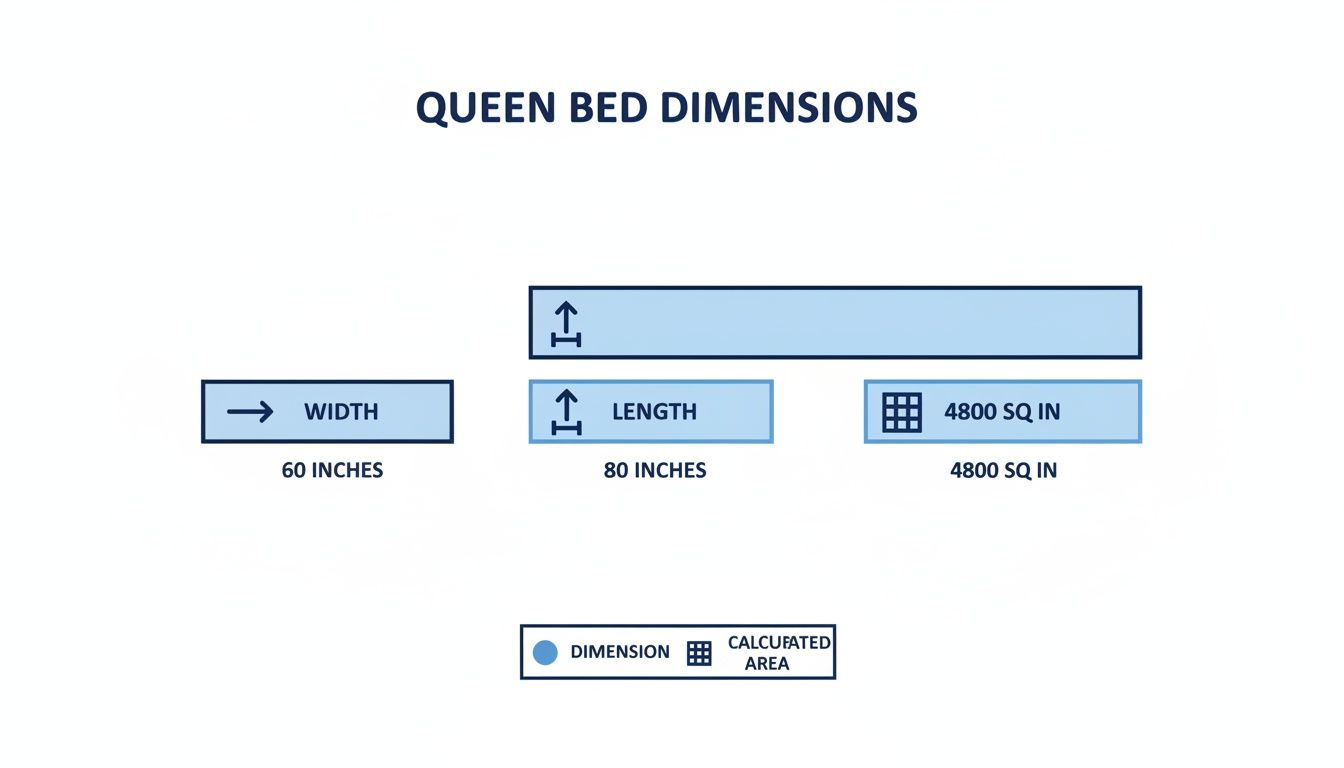
    This quick visual gives a clear breakdown of a standard queen bed’s width, length, and total sleeping surface.

    Infographic detailing queen bed dimensions, showing 60 inches width, 80 inches length, and 4800 square inches.

    Seeing the 60-inch width and 80-inch length helps put its 4,800 square inches of sleeping surface into perspective.

    Queen vs Full Bed

    One of the most common decisions shoppers face is choosing between a queen and a full size bed. A full mattress, also known as a double, measures 54 inches wide by 75 inches long. While a six-inch difference in width and five-inch difference in length might not sound like much, that extra space can be significant in practice.

    A full bed can feel comfortable for a single sleeper. For couples, however, those missing inches mean each person only gets 27 inches of personal space, which is the same width as a crib mattress. The queen’s slightly wider frame gives each person 30 inches, which can contribute to a more comfortable night's sleep without bumping elbows.

    A queen bed is 6 inches wider and 5 inches longer than a full bed. This extra space makes a considerable difference for couples or taller individuals seeking more room to stretch out without feeling cramped.

    Queen vs King Bed

    Going up in size, a standard king bed measures 76 inches wide by 80 inches long. It offers the same length as a queen but provides an additional 16 inches of width.

    A king is a suitable choice for couples who value personal space, often share their bed with children or pets, or simply prefer a more luxurious, sprawling feel. Each person gets 38 inches of width—the same as a twin mattress. The main trade-off is bedroom real estate. Choosing a king often means sacrificing floor space that could be used for a dresser, a chair, or walking room.

    Why the Queen Bed Became a Household Staple

    Have you ever wondered why the queen bed is so common in homes across America? The story behind it reflects major changes in how we live. Before the 1950s, the much smaller full bed was the primary choice for couples — a size that can feel quite snug by today’s standards.

    This began to change after World War II as American homes started getting larger. With more space available, people began to place a higher value on personal comfort and a good night's sleep. The queen bed emerged as an ideal solution, offering a significant upgrade in sleeping room without needing the massive footprint of a king mattress. It filled a gap in the market, giving couples more breathing room.

    A Shift in American Lifestyles

    This move toward more spacious living is a huge piece of the puzzle. It wasn't just about the dimensions; it was about the idea of a more comfortable life. Mattress marketers in the 1950s and 60s tapped into this by using regal names like "queen" and "king" to associate these larger beds with luxury and status.

    This marketing approach was effective. By 1999, the once-dominant full size bed saw its popularity decline, while the queen bed became the new standard for couples. Today, it remains the top-selling mattress size, making up a large portion of all mattress sales in North America. It’s a testament to its blend of comfort and practicality. You can get more information on the history of mattress sizes at The Bedding Mart.

    The queen bed solved a real problem for millions of people: it offered a more comfortable sleep experience for two without requiring an oversized master bedroom. Its rise in popularity mirrors the country's growing focus on personal wellness and comfort at home.

    Ultimately, understanding how big a queen size bed is goes beyond just its measurements. It’s about recognizing its role as a practical, comfortable centerpiece that fits the way many people live today.

    Planning Your Room Layout Around a Queen Bed

    Knowing the measurements of a queen bed is a good start, but the real test comes when you place it within your bedroom. A bed’s dimensions on paper can feel very different once it’s actually in the room. Thoughtful planning can help create a space that feels open and functional.

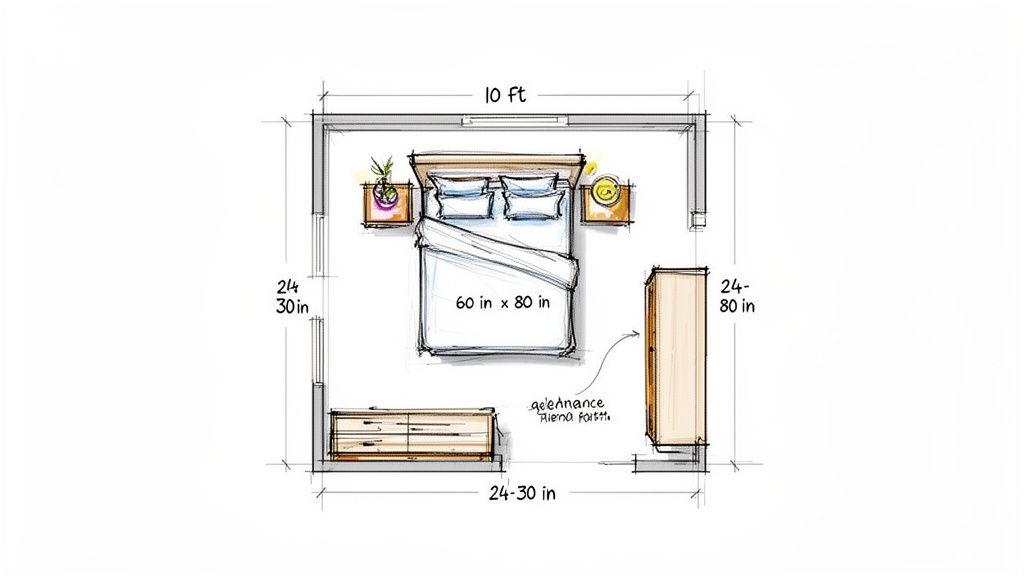
    Bedroom layout sketch with queen size bed, nightstands, dresser, wardrobe, and dimensions.

    Before committing to a bed frame or bedroom set, it’s always a good idea to use a tape measure. Once you have your queen bed’s dimensions, the next step is to figure out how to arrange your bedroom furniture for a space that feels both balanced and functional. This planning stage can help you avoid the common issue of buying furniture that is too large for your home.

    The Minimum Room Size for a Queen Bed

    So, how big of a room do you need? While every layout is different, a general guideline is that a queen bed fits most comfortably in a room that's at least 10 feet by 10 feet. This size provides enough space for the bed while leaving room for other essential pieces and for you to move around.

    For a room to feel comfortable, you need clear pathways. It is recommended to leave at least 24 to 30 inches of open space on two or three sides of the bed. This clearance allows you to walk around without difficulty, make the bed, and access your closet or dresser.

    Leaving at least two feet of clearance around your bed is more than just a design tip—it's a practical necessity. This space ensures you can navigate your room comfortably and prevents the layout from feeling crowded and stressful.

    Arranging Furniture for a Balanced Feel

    Smart furniture placement is key to a well-balanced bedroom. Placing the queen bed against the longest, uninterrupted wall usually creates a natural focal point and makes the entire room feel more spacious. This placement typically leaves enough room on either side for nightstands.

    When you start adding in other pieces, think about their function and footprint:

    • Nightstands: Try to find nightstands that are about the same height as the top of your mattress. This makes them easier and more comfortable to reach from bed.
    • Dressers: If you have the space, place your dresser on the wall opposite the bed. Be sure to account for the clearance needed to fully open all its drawers.
    • Walkways: Before you finalize the layout, do one last check. Is your main path—from the door to the bed and over to the closet—clear and easy to walk?

    By thinking through these layout details ahead of time, you can ensure your new queen bed not only fits but also enhances your bedroom’s overall comfort and style.

    Exploring Queen Bed Variations You Should Know

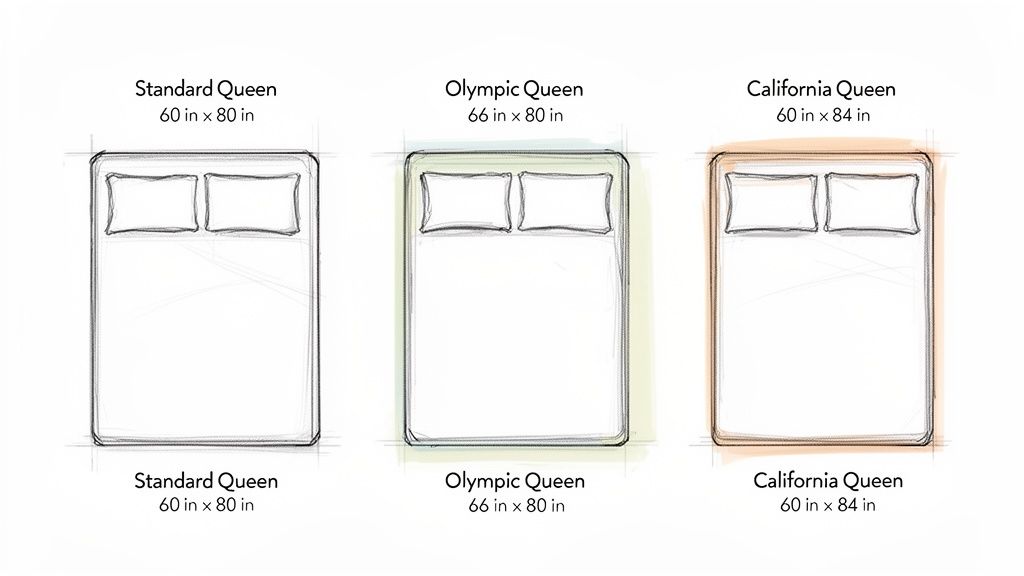
    While the standard 60-inch by 80-inch queen is the most common mattress size, it's not the only option. A few less-common variations were created to solve specific problems, such as needing more width or preventing feet from hanging off the end. Knowing about these alternatives can help you find the right mattress for your home.

    Illustration comparing standard, Olympic, and California queen bed sizes with their dimensions.

    The standard queen remains a versatile choice, fitting a wide range of accessories and accounting for a significant portion of mattress purchases in the U.S. You can learn more about how mattress sizes became standardized in this article on the evolution of mattress sizes on gottasleep.com. But if the standard queen doesn't quite meet your needs, one of these unique sizes might be a better fit.

    Olympic Queen

    The Olympic Queen mattress adds six inches of width to the standard queen, measuring 66 inches wide by 80 inches long. For couples who feel a bit cramped on a regular queen but don’t have space for a king, that extra space can be a useful alternative.

    It’s an interesting "in-between" solution, but be aware that finding sheets and bed frames that fit this non-standard size can be more challenging.

    California Queen

    If you or your partner are tall and find your feet dangling off the end of the bed, the California Queen might be a solution. It keeps the standard 60-inch width but adds four inches of length, making it 60 inches by 84 inches. For taller sleepers, those extra inches can make a significant difference.

    Much like its more famous counterpart, the California King, the California Queen is built with one thing in mind: extra length for a more comfortable night's sleep for taller individuals.

    Split Queen

    A Split Queen is a unique setup. Instead of one mattress, it consists of two separate mattresses, each measuring 30 inches by 80 inches. When placed side-by-side on a bed frame, they have the exact footprint of a standard queen.

    This design is often used with an adjustable bed base. It allows each person to raise or lower their head and feet independently, accommodating different sleeping preferences.

    Choosing the Right Frame for Your Queen Mattress

    The mattress is only half of the equation. The bed frame you choose sets the style and determines the final footprint of your bed in the room. While a queen mattress will always be 60 inches wide by 80 inches long, the frame can add anywhere from a couple of inches to over a foot in both directions.

    This is a detail that is often overlooked when planning a room layout. A simple metal frame or a sleek, modern platform bed will keep the overall size close to the mattress dimensions, making them a good fit for smaller spaces. On the other hand, a large sleigh bed or a frame with a thick, upholstered headboard can dramatically increase how much floor space the bed occupies.

    Measuring for Your New Bed Frame

    When browsing different styles, it's important to think beyond the mattress size. Always ask for the frame's total dimensions—including the headboard and footboard—to ensure it won’t overwhelm your bedroom or block walkways.

    Always measure the full dimensions of the bed frame—not just the mattress. A larger frame with a decorative headboard can easily add several inches to the length and width, impacting your room's available space and layout.

    Don't forget to consider vertical height. If you’re pairing a thick mattress with a new, taller frame, your bedding might suddenly look too short. For instance, a king-size comforter often drapes better and looks more balanced on a high-profile queen bed than a standard queen comforter would. Keeping these details in mind helps ensure your entire setup looks cohesive and functions well in your room.

    Common Questions About Queen Size Beds

    Choosing a new bed is a significant decision, and it’s natural to have questions. Here are answers to some of the most common questions we hear from shoppers.

    Can Two Adults Sleep Comfortably on a Queen Bed?

    Yes, a standard queen bed was designed to accommodate two adults. It provides each sleeper with 30 inches of personal space, which is enough room for most couples to sleep soundly without feeling cramped. This balance of individual space and a manageable footprint is why the queen is the most popular mattress size in America for couples.

    What Is the Real Difference Between a Full and Queen Bed?

    A queen bed is 6 inches wider and 5 inches longer than a full-size bed. A queen measures 60” x 80”, while a full is 54” x 75”. While those numbers might not seem like a huge jump, the difference is often noticeable. That extra room is beneficial for couples who want more personal space or for taller individuals who find their feet hang off the end of a full bed.

    Do I Need Special Sheets for a Thick Queen Mattress?

    It is very likely. If your new queen mattress is particularly thick—especially if it’s over 14 inches tall—you will likely need to buy deep-pocket sheets. Standard sheets may not have enough fabric to wrap all the way around and under, which can cause the corners to pop off during the night.

    Before shopping for new bedding, measure your mattress’s height. Then, check the sheet packaging for its "pocket depth" to ensure it can accommodate your mattress.

    Quick tip: Don't forget to include your mattress topper when you measure! A plush topper can easily add another 2 to 4 inches, making deep-pocket sheets a necessity for a snug, secure fit.

    Is an Olympic Queen the Same as a Standard Queen?

    No, they are two different sizes. An Olympic Queen is a non-standard mattress that measures 66" x 80", making it 6 inches wider than a standard queen. While that extra width can be nice, be prepared for a challenge when it comes to finding frames and bedding that fit correctly, as they may need to be special-ordered.


    Still have questions? The team at Woodstock Furniture & Mattress Outlet has extensive experience and is here to help you find the right mattress and bedroom furniture for your home. Visit us in person to explore our great selection and see these options for yourself!