Tag: performance fabric

  • Choosing Couch Fabric: A Complete Buyer’s Guide

    Choosing Couch Fabric: A Complete Buyer’s Guide

    You're standing in front of a wall of swatches, and suddenly every fabric starts sounding the same. One feels soft. One looks durable. One has a label with a technical number you don't recognize. Another is called “performance,” which sounds promising but doesn't tell you much on its own.

    That confusion is normal. Since shopping for a sofa occurs only a few times in a decade, not every weekend, there's no reason you'd already know how couch fabric works.

    The good news is that couch fabric isn't random. Once you understand a few basics, the choices get much easier. You can stop guessing based on color alone and start choosing based on how your home functions, whether that means kids with markers, a dog that claims one cushion as its own, or a sunny North Georgia living room that gets strong afternoon light.

    Why Your Couch Fabric Choice Matters More Than You Think

    A sofa's fabric does much more than change its look. It affects how the couch feels against your skin, how quickly it shows wear, how hard it is to clean, and whether it still looks good after years of movie nights and afternoon naps.

    An interior designer reviewing a variety of textured fabric swatches on a large mood board wall.

    Fabric changes the day-to-day experience

    Think of the frame and cushions as the structure of a couch. The fabric is the part you live with every single day. It's what your hand touches first. It's what catches crumbs, pet hair, and sunscreen from a quick sit-down after being outside. It's also the first thing people notice when a sofa starts looking tired.

    That's why couch fabric shouldn't be an afterthought. A beautiful color can still be the wrong choice if the weave snags easily or the cleaning method doesn't match your household.

    Practical rule: If two sofas feel equally comfortable in the showroom, the fabric often becomes the deciding factor in how happy you'll be a year from now.

    It affects cost over time, not just at checkout

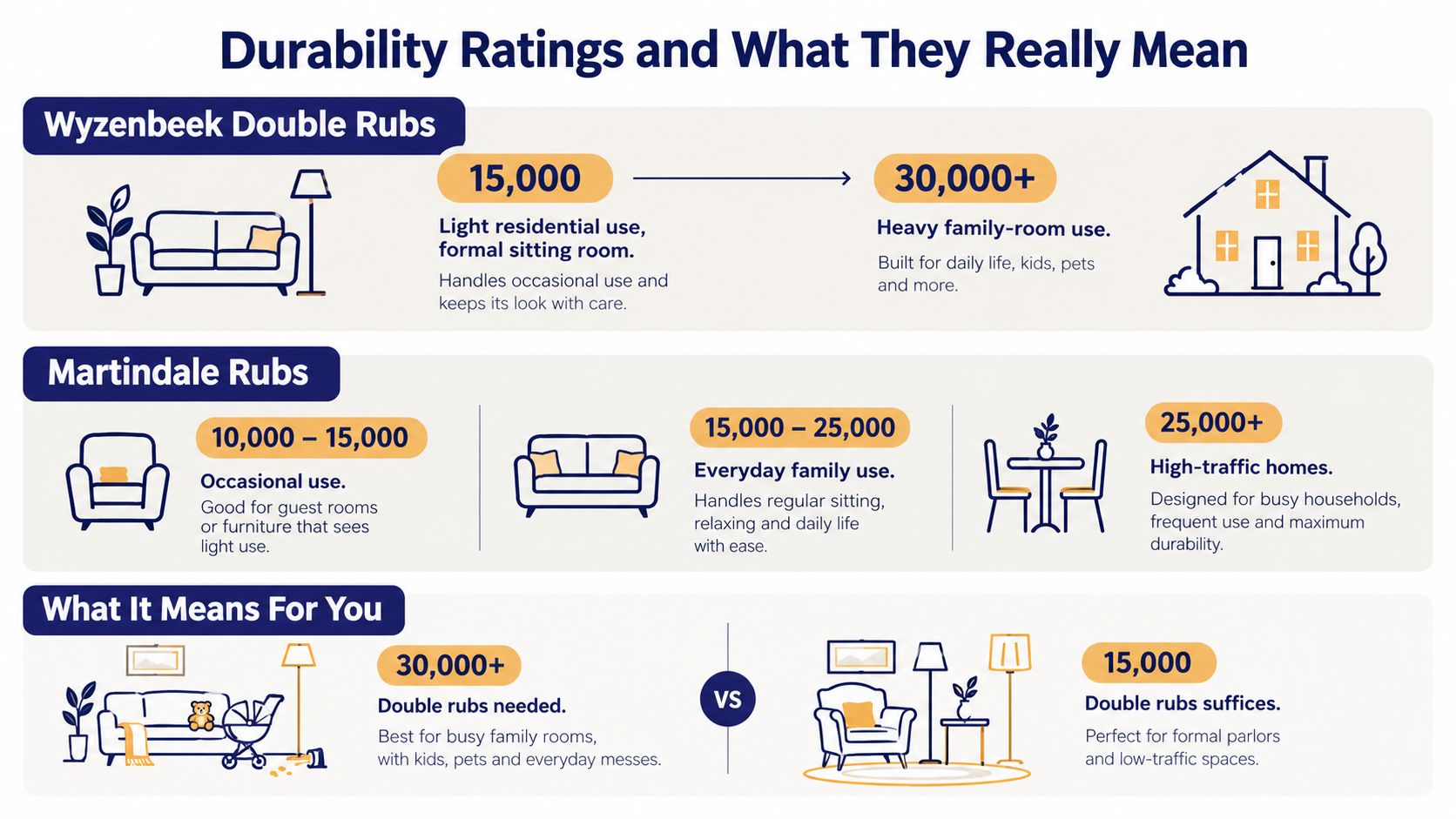
    A couch that looks good on day one but wears badly on the seat cushions can end up feeling expensive later. Fabric durability is measurable, not just a matter of opinion. Industry guidance commonly treats 15,000 double rubs as a practical benchmark for residential upholstery, while 30,000+ is typically recommended for commercial use. The same guidance groups 9,000 to 11,000 as light use, 12,000 to 15,000 as medium use, and over 15,000 as heavy use. One industry source also notes that 15,000 rubs can translate to over 10 years of use in a specific daily-use scenario, which helps explain why abrasion ratings matter in real homes, not just in testing labs (double-rub durability guidance).

    Most shoppers start with color, but the smarter starting point is lifestyle

    Before you fall in love with ivory linen or deep blue velvet, ask a simpler question. What does your sofa need to survive?

    • Busy family room: You'll care more about cleanability, wear, and snag resistance.
    • Quiet formal room: Texture and visual richness may matter more than heavy-duty performance.
    • Sunny space: Fade resistance becomes part of the decision.
    • Pet home: Tight weaves usually matter more than trendiness.

    That's where fabric shopping gets easier. Instead of asking, “What's the prettiest swatch?” you start asking, “What will still work in my house six years from now?”

    Upholstery Fibers 101 Natural vs Synthetic

    The first layer of couch fabric knowledge is fiber type. Most upholstery fabrics are built from either natural fibers, synthetic fibers, or a blend of both. That doesn't tell you everything about performance, but it gives you a strong starting point.

    Fabric sofas are still a mainstream choice. One market summary reports that 58% of consumers prefer fabric sofas over leather, and it also states the global sofa market reached $128.5 billion in 2022 (fabric sofa market summary). That broad demand is one reason shoppers see so many fabric options today.

    Natural fibers tend to feel familiar and breathable

    Natural fibers include cotton, linen, and wool. People often like them because they feel comfortable, relaxed, and less slick than some synthetics. They can work beautifully in casual, airy spaces and in homes where texture matters as much as color.

    But natural fibers often come with tradeoffs. Linen can wrinkle and stain more easily. Some looser natural weaves may show wear faster in high-contact spots. If you want an easygoing, organic look, they can be a strong fit. If you want low-maintenance seating for a busy den, you may need to be more selective.

    Synthetic fibers often do the hard work

    Synthetic upholstery fibers include polyester, nylon, acrylic, and microfiber constructions. They're common because they usually bring practical strengths to everyday furniture. Depending on the fabric construction, they may resist staining better, hold color more reliably, and stand up well to repeated friction.

    That doesn't mean synthetic always feels cold or plastic-like. Many modern upholstery fabrics have a soft hand and can mimic the look of natural textiles while behaving more predictably in active homes.

    Fiber Type Common Examples Typical Feel General Durability Stain/Fade Resistance
    Natural Cotton, linen, wool Soft, breathable, textured Varies by weave and blend Often more dependent on treatment and care
    Synthetic Polyester, nylon, acrylic, microfiber Smooth to plush, depending on finish Often strong for everyday use Often better suited to stain and fade resistance
    Blended Cotton-poly blends, linen blends Balanced feel Often designed to combine comfort and durability Often more practical than pure naturals

    A fiber tells you what the yarn is made from. It doesn't tell you, by itself, how the finished sofa will wear. The weave, finish, and cleanability matter too.

    The easiest way to think about it

    Natural fibers are a bit like hardwood floors. People love the character, warmth, and look. Synthetic fibers are more like durable luxury vinyl. They're often chosen because they handle daily life with less fuss.

    That analogy isn't perfect, but it helps. If your priority is softness with fewer maintenance headaches, synthetic-heavy upholstery often deserves a close look. If your priority is a specific lived-in texture or classic look, a natural or blended fabric may be worth the extra care.

    Decoding Durability Weaves and Rub Counts

    Fiber is only part of the story. Two sofas made with similar fibers can wear very differently because of weave and abrasion rating.

    A simple way to think about weave is this. Fiber is the ingredient. Weave is the recipe. The same ingredient can produce a different result depending on how it's put together.

    An infographic explaining fabric weave types and rub count durability scales for furniture upholstery.

    Why weave matters

    A tight, structured weave often holds up better to repeated friction than a loose, open one. That's especially important on seat cushions, front rails, and arm panels, where people slide in, lean, and rest their hands every day.

    Here's a plain-language way to read a few common weave types:

    Weave Type What It Usually Feels Like What to Watch For
    Plain weave Clean, even, straightforward Can be durable when tightly woven
    Twill Slight diagonal texture, often flexible Often hides wear well
    Velvet or pile fabrics Soft, rich surface Can look luxurious but should be checked for cleanability and wear behavior

    What rub count actually means

    Double rub count measures abrasion resistance. In testing, a machine rubs the fabric back and forth to estimate how well it resists surface wear. It's not a promise of exact lifespan, but it's one of the most useful durability clues you can get.

    For upholstered seating, 10,000+ Martindale rubs is considered the minimum for domestic upholstered seats, 15,000 to 25,000 is a practical home-use range, 25,000 to 30,000 suits higher-wear homes with children or pets, and 30,000+ is generally treated as commercial-grade abrasion resistance (Martindale upholstery guidance).

    How to use the number in real life

    If you're shopping for a sofa that will sit in a formal room and get occasional use, you don't necessarily need the highest number available. If you're buying the main family couch, durability numbers deserve more attention.

    Use this quick filter:

    • For lighter use: Lower-end domestic ratings may be acceptable if the room is rarely used.
    • For everyday living rooms: Look for upholstery that lands comfortably in the practical home-use range.
    • For kids, pets, and heavy daily use: Higher abrasion ratings are usually worth seeking out.
    • For very demanding households: Commercial-grade numbers can make sense, especially on sectionals or frequently used sofas.

    Don't compare rub counts in isolation. A high number is helpful, but it works best when paired with a weave and cleaning code that make sense for your home.

    One more point that helps shoppers avoid confusion. A soft fabric isn't automatically delicate, and a rougher fabric isn't automatically stronger. Some very soft upholstery fabrics perform well because they're engineered for abrasion resistance. That's why swatch labels and spec tags matter more than first touch alone.

    Performance Fabrics for Real Life Messes and Sunlight

    A spilled sports drink at noon and a bright stripe of afternoon sun by 4 p.m. can test a sofa in two completely different ways. One problem is cleanability. The other is color loss. In many North Georgia homes with open layouts, big windows, and active family rooms, both show up fast.

    “Performance fabric” is the label you'll hear most often for upholstery built for this kind of real life use. The term is broad, so it helps to translate it into household problems. A good performance fabric is usually chosen because it slows down spills, cleans with less drama, stands up better to repeated rubbing, or keeps its color longer in brighter rooms.

    A little girl drawing with crayons on a couch next to a dog with messy paw prints.

    What performance usually means at home

    The easiest way to judge performance fabric is to ask, “What headache is this fabric supposed to reduce?”

    For example, a tightly woven fabric often gives crumbs, pet hair, and dust fewer places to settle deep into the surface. Some synthetic blends are also treated or engineered so spills bead up for a short window instead of soaking in right away. Fabric care guidance from The Fabric Mill notes that tighter weaves and easier-clean materials often suit homes dealing with allergens, pets, and frequent spot cleaning better than looser, more absorbent options such as linen (upholstery cleaning and allergy guidance).

    That does not mean every performance fabric feels stiff or looks overly technical. Some are soft and cozy. Some mimic linen or velvet. The point is function under stress, not one specific look.

    Cleaning code matters more than the buzzword

    Shoppers often get confused at this point. “Performance” is a broad promise. The cleaning code is the operating manual.

    A couch can resist stains better than average and still require a cleaning method that does not fit your household. If you have kids with markers, a dog that claims one cushion, or pollen season that leaves dust everywhere, ask specific questions before you order:

    • What cleaner does the manufacturer recommend?
    • Can you use water for spot cleaning, or should you avoid it?
    • Does the fabric release pet hair easily with vacuuming or a lint roller?
    • Will body oils show up over time on headrests or arm tops?

    That last question gets overlooked. Some fabrics survive spills well but still show darkened areas where hands, hair, and skin oils make repeated contact.

    If you want a practical comparison point outside the living room, boat owners deal with many of the same issues: moisture, mess, sun, and cleaning mistakes. This guide on how to maintain your boat's upholstery is useful because the lesson carries over directly to sofas. The right cleaning method matters as much as the material.

    Sunlight is its own performance test

    Stain resistance and fade resistance are not the same thing. A sofa can clean up nicely after spills and still lose color in a sunny room.

    That matters in North Georgia, where afternoon light can pour through large front windows or open-concept living spaces for hours at a time. If your sofa will live near that kind of exposure, ask about lightfastness along with wear specs. Lightfastness is a measure of how well a fabric holds its color when exposed to light over time.

    Here's a useful example of what high-end technical specs can look like in practice:

    Industry testing organizations such as ACT, the Association for Contract Textiles, describe lightfastness as a separate upholstery performance category from abrasion and note that light exposure can cause visible color change over time (ACT performance guidelines). In plain English, rub count answers, “How does it handle friction?” Lightfastness answers, “How does it handle sun?”

    If your sofa sits in a bright room, ask about both abrasion and lightfastness. They address different problems.

    Matching a Fabric to Your Lifestyle and Home

    Saturday afternoon in North Georgia. Sun is hitting the front windows, the dog has claimed one cushion, and someone is eating chips on the other end of the sofa. In that moment, fabric choice stops being a style decision and becomes a daily-use decision.

    An infographic titled Match Your Fabric to Your Lifestyle, featuring four categories for choosing furniture fabric.

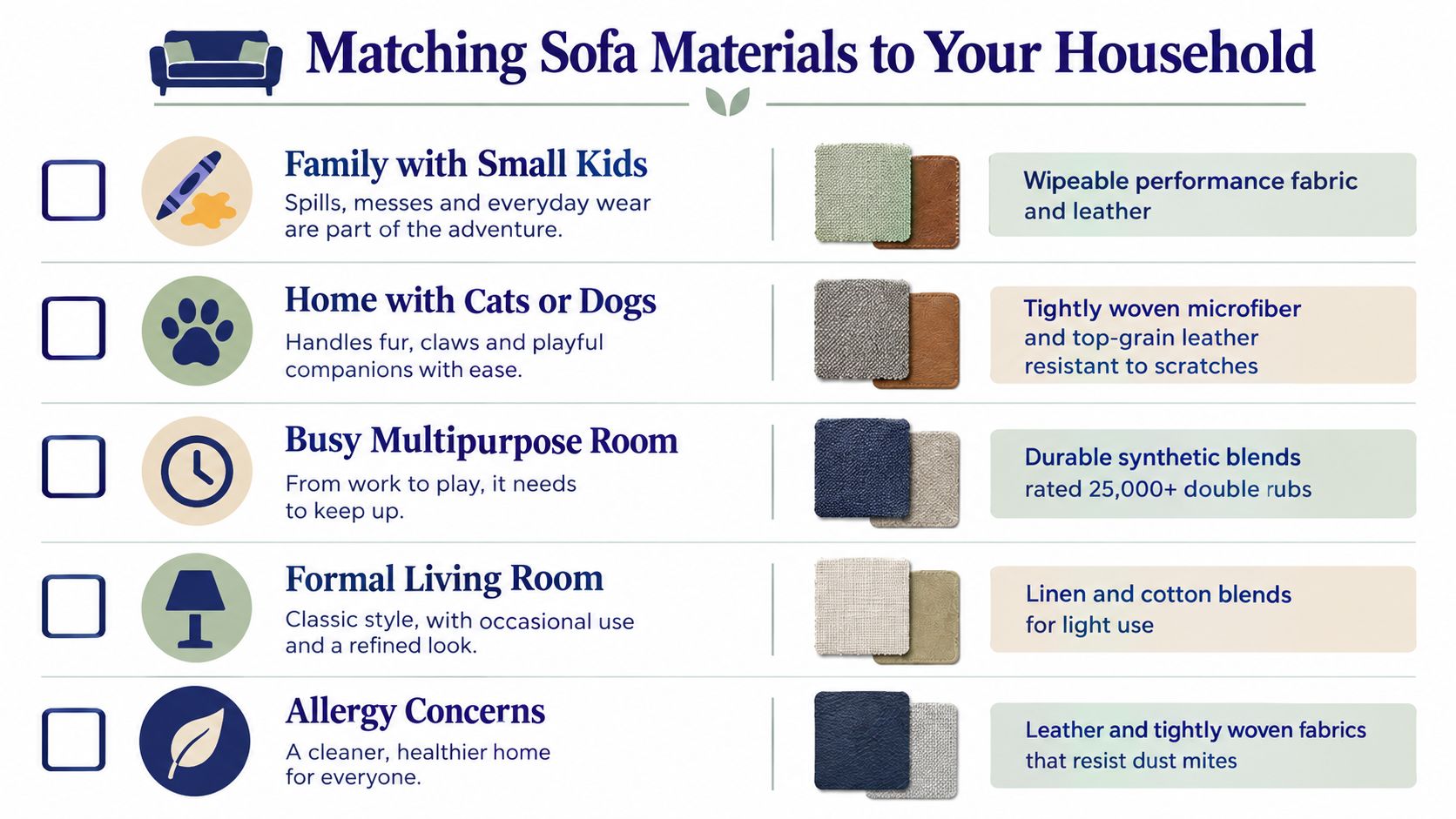
    A good match starts with one simple question. What problem will this sofa need to handle most often? Pet nails, snack spills, bright light, or low-use entertaining all push you toward different fabrics. The goal is not to find the single "best" upholstery fabric. The goal is to choose one that fits your real house.

    For the family with a dog, snacks, and constant traffic

    A busy family room puts fabric through a very specific test. It gets rubbed, climbed on, vacuumed, spotted with spills, and brushed against by paws, jeans, backpacks, and blankets.

    For that kind of room, tightly woven microfiber or performance polyester is often a practical choice. Those fabrics usually have fewer open gaps for crumbs, pet hair, and dirt to settle into. They also tend to resist snagging better than loose, nubby weaves that look relaxed in the showroom but can start looking worn faster in daily life.

    If you have pets, pay attention to surface texture as much as fiber content. A fabric can be technically durable and still be annoying if it grabs every claw or holds onto every strand of fur.

    For the bright living room with strong afternoon sun

    Many North Georgia homes have open layouts and large windows, which make rooms feel bright and welcoming. They also create one of the most overlooked upholstery problems. A sofa can wear fine from sitting and still lose color unevenly if it spends years in direct daylight.

    In a room like that, look for a fabric that balances everyday durability with good resistance to fading. As noted earlier, abrasion and light exposure measure different kinds of wear. If the sofa will be both heavily used and strongly lit, ask about both before you decide.

    Color also matters here. Mid-tones, heathered patterns, and fabrics with visual texture often hide gradual fading better than very dark solids or very crisp, flat colors.

    For the calmer, more formal space

    A lower-use sitting room gives you more freedom. If the sofa is mainly for guests or occasional evenings, you can put more weight on texture, shape, and the mood you want the room to have.

    That opens the door to options like velvet, textured woven blends, or softer natural-looking upholstery. These fabrics can bring warmth and character, but they may ask for a little more care and a little more patience. A formal room can support that tradeoff because the sofa is not absorbing the same daily friction as the main family-room sectional.

    A helpful way to judge this is to treat fabric like flooring. Tile makes sense in a muddy entry. Plush carpet makes more sense in a quiet bedroom. Upholstery works the same way.

    For the allergy-aware household

    If someone in the home is sensitive to dust or dander, an open, casual weave may create more work than charm. Fabrics with tighter surfaces are often easier to vacuum thoroughly, and they give hair and debris fewer places to hide.

    This is one area where touch matters. Some fabrics look smooth but have enough texture to trap lint. Others look plain but release hair much more easily with a quick vacuum pass.

    A useful in-person step is to compare several upholstery options side by side. At places like Woodstock Furniture & Mattress Outlet, you can usually touch different textures, look at swatches under store lighting, and ask how a specific fabric is meant to be cleaned before making a decision.

    The right couch fabric should solve the problems your room already has, not create new ones after delivery.

    Using Swatches and Understanding Warranties

    Fabric swatches are where a smart choice becomes a confident one. A swatch may look small, but it can answer questions the showroom can't.

    How to test a swatch at home

    Take the swatch into the room where the sofa will live. Set it on the floor. Put it against the wall color. Lay it next to your rug and wood tones. Then look at it in morning light and again later in the day.

    Use your hands too. Rub it firmly. Brush it in different directions. If you have a pet, hold the swatch near fur and see whether hair clings or releases easily.

    Try this simple checklist:

    • Check color shift: Some fabrics look cooler or warmer depending on daylight.
    • Feel the texture repeatedly: A fabric that feels nice for two seconds may feel scratchy after longer contact.
    • Notice weave openness: Open texture can be beautiful, but it may also catch debris more easily.
    • Test visual forgiveness: Heavily uniform fabrics may show every mark, while textured ones can hide minor use better.

    Ask practical warranty questions

    Fabric warranties are worth reading, but they're often misunderstood. They may cover specific manufacturing defects while excluding ordinary wear, accidental spills, improper cleaning, pet damage, or fading from room conditions.

    Ask the salesperson or retailer to walk you through the plain-English version:

    Question to Ask Why It Matters
    What does the fabric warranty actually cover? Coverage varies and may be narrower than expected
    Is pilling covered? Some pilling may be treated as normal wear
    Is fading covered? Sun exposure often falls into exclusions
    Are stains or accidents covered? Many standard warranties do not cover household mishaps
    Are there required cleaning methods? Using the wrong cleaner can affect coverage

    Read the exclusions first. That's usually where the real expectations live.

    A warranty can be helpful, but it shouldn't replace good fabric selection. Pick a couch fabric that suits your home first. Then treat any warranty coverage as backup, not the main plan.

    See and Feel the Difference in North Georgia

    Online research helps you narrow the field. It does not let you feel the scratchiness of a weave, notice how velvet changes tone when brushed, or compare two shades of beige under real light.

    That's why in-person shopping still matters with couch fabric. A screen can show color families. Your hands tell you whether a fabric feels dry, slick, plush, dense, or too delicate for the way you live.

    For North Georgia households, that matters even more because local homes vary a lot. Some have bright sunrooms and open-concept family spaces. Others have cabins, basements, or formal rooms that get occasional use. The right fabric for a busy home in Acworth may not be the right fabric for a quieter space in Canton, Dallas, Hiram, or Rome.

    A good showroom visit should feel less like a sales pitch and more like a hands-on test. Bring photos of your room. Bring paint names if you have them. Ask to compare fabrics that solve a specific problem, like pet hair, fading, or easy cleanup.

    If you do that, the fabric wall stops being overwhelming. It becomes useful. You're no longer staring at random swatches. You're narrowing down materials that fit your real house, your real habits, and the way your sofa will be used.


    If you'd like to compare couch fabric options in person, Woodstock Furniture & Mattress Outlet gives North Georgia shoppers a place to see textures up close, ask practical questions about upholstery care, and match fabric choices to their lifestyle.

  • Your Guide to Reliapel Fabric for Modern Homes

    Your Guide to Reliapel Fabric for Modern Homes

    If you've been shopping for a new sofa lately, you've probably run into some unfamiliar terms. One you might have heard our furniture experts mention is Reliapel fabric. So, what exactly is it? The simplest way to think about it is like modern athletic wear, but for your furniture—it's a performance fabric built to handle the spills and chaos of everyday life.

    What Is Reliapel Fabric and Why Does It Matter?

    When you start looking for a new sofa or armchair, you’re suddenly swimming in a sea of fabric options. You know the basics like polyester, cotton, and microfiber. But then you run into brand-specific names like Reliapel, and things can get confusing. That’s because these are often proprietary names for a manufacturer's unique version of a performance fabric.

    A sketch of a modern sofa covered with water-resistant "Reliapel fabric" and water droplets.

    Unpacking the Term

    At its core, Reliapel is a high-performance upholstery material created to solve common furniture headaches. While the exact synthetic blend can differ from one product to another, it's specially treated to be more resilient than many standard textiles.

    The whole idea behind a fabric like Reliapel is to take the worry out of your day-to-day. Instead of holding your breath every time your kid brings a juice box near the couch or the dog hops up after a walk, this material is engineered to make cleanup simpler and help prevent stains before they set in.

    Why Is It Hard to Find Information?

    One of the hurdles shoppers face is that names like Reliapel are often coined by furniture makers or textile mills for their own product lines. This means you probably won't find it in the dictionary or on a Wikipedia page. In fact, it’s quite common across the furniture world for brands to have their own names for performance fabrics, but it can be difficult to find detailed information about them online. You can find a broad overview of the textile and fabric market, but you’re unlikely to see these individual brand names called out.

    This is where understanding the idea behind the name is more important than the name itself. Don't get hung up on the term "Reliapel." Focus on what it delivers.

    A "performance fabric" is simply any textile engineered for durability, stain resistance, and cleanability. Reliapel is just one example of a fabric developed to meet these specific standards.

    Ultimately, our goal with this guide is to give you clear, straightforward information you need to buy with confidence. By understanding what Reliapel is—a durable, easy-to-clean fabric solution—you can decide if it’s the right choice for your home and lifestyle. Here at Woodstock Furniture & Mattress Outlet, our knowledgeable team is always ready to walk you through the specifics of any fabric on our showroom floor, so you know exactly what you’re bringing home.

    Understanding the Key Benefits of Reliapel Fabric

    So, what really separates a material like Reliapel fabric from the upholstery you might be used to? The key is in its “performance” features, which are specifically designed to tackle common household headaches. Instead of just looking great, Reliapel is built to make your life at home a little less stressful by delivering on practical, real-world benefits.

    Three sketches illustrating durability (shield), spill resistance (water drop), and easy cleaning (brush, cloth).

    We can boil down these advantages into three key areas that directly address the worries many of our customers have when buying new furniture: durability, spill resistance, and cleanability.

    Built for Everyday Wear and Tear

    First up is its durability. Just think about the friction and stress your sofa or favorite chair goes through every single day—kids climbing, pets jumping, and people just sitting down and getting up. Over time, that constant activity can cause regular fabrics to fray, pill, or wear thin.

    Reliapel fabric, on the other hand, is built to handle the daily grind. Its tightly woven fibers are more resistant to abrasion, which means it can keep its appearance for longer, even in the busiest rooms of your home. This solves that frustrating problem of furniture looking worn out before its time.

    Resists Spills and Stains

    Let's face it, accidents are an unavoidable part of life in a busy home. A tipped-over glass of wine, a splash of coffee, or a rogue juice box can spell disaster for many fabrics, seeping into the fibers and leaving a permanent reminder.

    This is where Reliapel fabric proves its worth. It’s treated with a protective finish that causes liquids to bead up on the surface instead of soaking in right away.

    This beading action gives you a crucial window of time to grab a cloth and blot the spill away before it has a chance to sink into the material and become a stubborn stain.

    This one feature offers peace of mind, turning a potential furniture catastrophe into a minor, easy-to-manage cleanup. It’s a huge reason why performance fabrics have become so popular with families.

    Simplifies the Cleaning Process

    The final perk ties right back into the first two: Reliapel fabric is remarkably easy to clean. Since it’s designed to resist both wear and stains, routine maintenance is straightforward. For most everyday spills, a simple blot with a clean, dry cloth is all you’ll need.

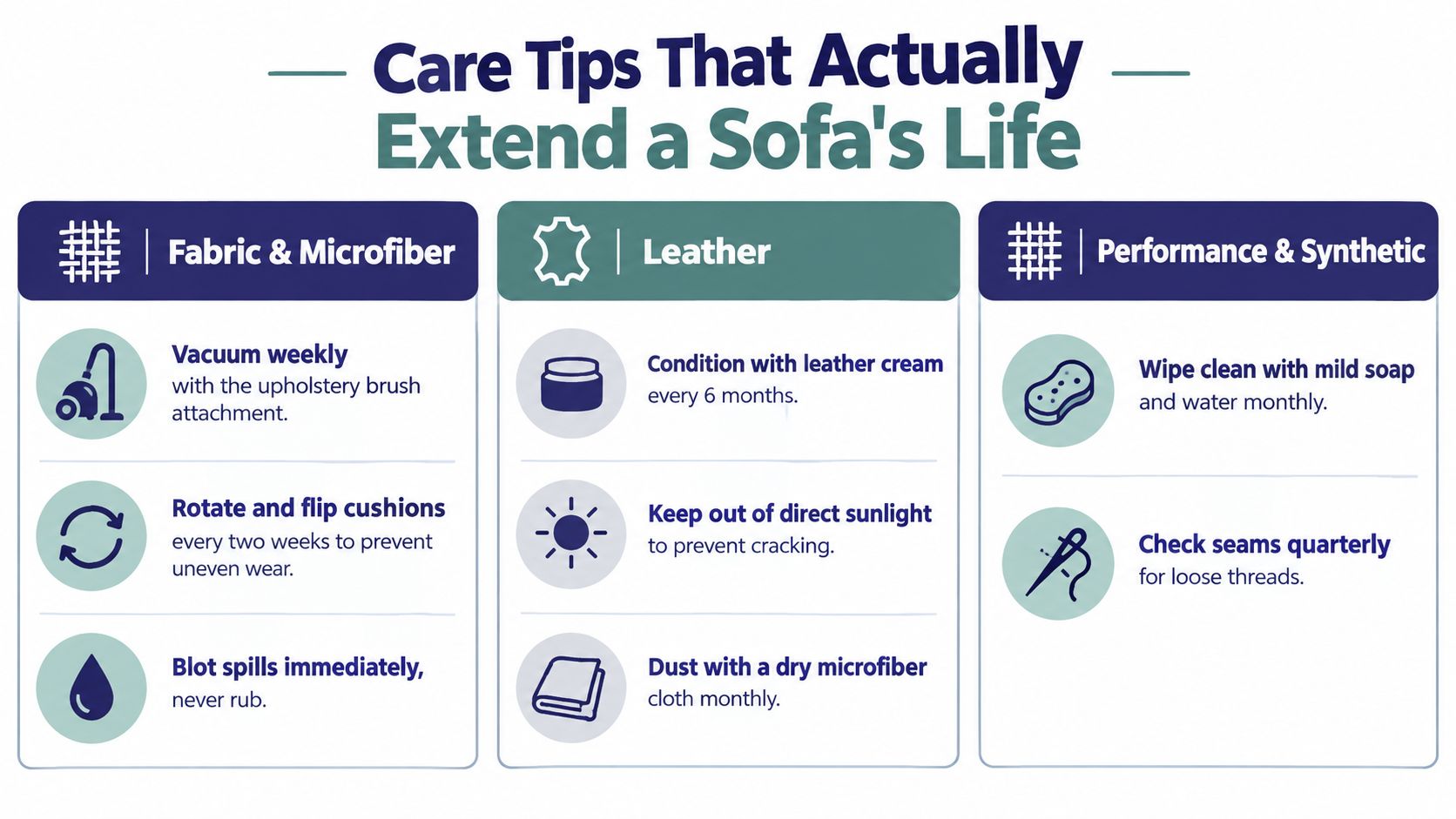
    For messes that are a little more stubborn, a gentle mixture of mild soap and water is usually enough to lift the spot without harming the fabric. This simple cleanability means you can spend less time worrying about keeping your furniture looking pristine and more time actually enjoying it.

    Here’s a quick rundown of what these benefits mean for you:

    • Problem: Furniture looks old and frayed too quickly.
      • Solution: Reliapel’s durable construction resists the pilling and abrasion from daily use.
    • Problem: Accidental spills ruin the upholstery for good.
      • Solution: Liquids bead on the surface, giving you time to blot them up before a stain can set in.
    • Problem: Cleaning is a hassle that requires special products or professional help.
      • Solution: Most messes come right out with just a cloth and water, making upkeep simple.

    Once you understand these practical benefits, it's easy to see how Reliapel fabric is more than just another upholstery option—it’s a functional solution made for the realities of modern life.

    Where Should I Put My Reliapel Furniture? Ideal Placements in Your Home

    So, you’re convinced of the practical benefits of Reliapel fabric, but now you’re asking the big question: "Where does it actually make sense to put this in my home?" It's a great question. While you can use it just about anywhere, its features shine in those high-traffic, spill-prone areas that see the most action.

    Think of it like this: you wouldn't wear your finest dress shoes to go hiking. In the same way, you want to put your most resilient fabrics in the busiest parts of your house. It’s all about matching the fabric's strengths to your lifestyle to get the most out of your new furniture.

    The Living Room & Family Room

    For most of us, the living room or family room is the command center of the home. It's where life happens. That makes sofas and sectionals in these rooms prime candidates for Reliapel fabric. These pieces take on a lot of use every single day from family, friends, and pets.

    With a Reliapel sofa, you get peace of mind built right in. Forget panicking over movie-night popcorn spills or a guest who gets a little too animated with a glass of red wine. What used to be a potential disaster becomes a minor cleanup. The fabric's durability also stands up to the constant friction of sitting, lounging, and kids climbing, helping to keep your sofa from looking worn out before its time.

    Dining Room Chairs

    We all love the look of upholstered dining chairs. They add a real touch of comfort and class to the dining room. The problem? They are sitting in the direct line of fire for every food and drink spill imaginable. From a toddler’s dropped spaghetti to a splash of morning coffee, dining chairs have seen it all.

    Choosing Reliapel for your dining chairs is a smart, forward-thinking move. Instead of hovering over your guests or worrying about every little accident, you can actually enjoy your meals. It’s an especially great choice for households that entertain often or have kids still mastering their table manners.

    High-Activity Zones: Playrooms & Basements

    Any room dedicated to high-energy fun is the perfect spot for furniture covered in Reliapel. We’re talking about playrooms, finished basements, or bonus rooms where kids and teens gather. These are spaces that demand materials that can handle way more than just sitting.

    The real benefit here is pure resilience. In a playroom, a sofa isn't just a sofa—it's a fort, a trampoline, or a canvas for a stray crayon. Reliapel's tough construction and easy-clean surface give you the durability you need for these active zones, making sure the furniture holds up through years of play.

    At the end of the day, placing Reliapel fabric furniture in these key spots helps you build a home that's both beautiful and truly livable. It takes the stress out of constantly policing your furniture, letting you and your family actually relax and use your space. If you’re wondering how this fabric might fit into your own home, visiting one of our showrooms to see and feel it for yourself is often a great next step.

    Reliapel Compared to Other Upholstery Fabrics

    Choosing the right upholstery fabric for your new furniture is always a balancing act. There’s no single material that’s perfect for every single home. What works wonders for one family might be a disaster waiting to happen for another.

    The real key is understanding what each fabric brings to the table—its strengths, its weaknesses, and its personality. That way, you can pick a material that truly fits your household's daily life. Let’s dive in and see how Reliapel stacks up against the other common options you’ll find on our showroom floors.

    Reliapel vs Natural Fibers like Cotton and Linen

    Everyone loves the classic, comfortable feel of natural fibers. Cotton is known for its softness, and linen has that signature crisp texture that gets even better with age. They just look and feel timeless. However, that natural makeup also means they are incredibly absorbent.

    • Reliapel Fabric: Its biggest win here is its stain resistance. Spills from juice, coffee, or wine tend to bead up on the surface, giving you precious time to grab a cloth and blot them away before they can soak in. It’s also built to stand up to heavy use and resist fading from sunlight.
    • Cotton & Linen: These materials act like a sponge with liquids, which can make stains a constant battle unless they’ve been specially treated. While they feel great, they're also more likely to wrinkle, fade, and show wear and tear in high-traffic spots.

    For a busy family room sofa that sees daily movie nights and snack sessions, the easy-clean nature of Reliapel brings some much-needed peace of mind. But for a formal accent chair that’s used less often, the unique, breezy texture of linen might be exactly what you’re looking for.

    Reliapel vs Traditional Leather

    Leather is a true classic, prized for its rugged durability and the beautiful patina it develops over years of use. It has a sophisticated look and is naturally pretty tough, making it a go-to choice for furniture that’s meant to last.

    • Reliapel Fabric: This fabric gives you a consistent look and a much softer, warmer feel right out of the gate. You get that stain resistance without ever needing to apply conditioners, and it’s usually available at a different price point than genuine leather.
    • Leather: To keep it from cracking or drying out, leather needs a bit of upkeep with regular conditioning. It can also be vulnerable to scratches from pet claws, and some people find it feels cold in the winter or a little sticky in the summer heat.

    Reliapel vs Standard Polyester or Microfiber

    Polyester and microfiber are workhorse synthetic fabrics. They’re already known for being quite durable and good at resisting fading and water-based spills. They are extremely popular, budget-friendly choices that hold up well in most homes.

    • Reliapel Fabric: The easiest way to think about it is to see Reliapel as an upgraded version of these materials. It takes the inherent strengths of synthetics—like durability and fade resistance—and kicks them up a notch with advanced moisture-repellent treatments. The whole point is to deliver a higher, more reliable level of performance.
    • Standard Polyester/Microfiber: While they are strong, they might not have the same liquid-beading technology you’ll find in a true performance fabric. Some lower-quality versions can also build up static or become magnets for pet hair.

    This quick visual guide shows some of the best places to put a high-performance fabric like Reliapel to work in your home.

    Reliapel fabric placements guide showing usage for living room, dining, and playroom furniture.

    As you can see, its durability is a perfect match for the main gathering spots—from the living room sofa where everyone piles on, to the dining chairs that see their fair share of messes.

    Fabric Characteristics at a Glance

    Still weighing your options? This table breaks down the typical characteristics of Reliapel and other common upholstery fabrics. It's a great way to see, at a glance, which material best fits your lifestyle and needs.

    Fabric Type Typical Durability Stain Resistance Feel & Comfort Best For
    Reliapel Very High Excellent Soft, fabric feel Active families, pets, high-use areas
    Cotton/Linen Moderate Low (untreated) Very soft, breathable Low-traffic rooms, decorative pieces
    Leather Very High Good Smooth, can be cool or warm Long-term investment, classic style
    Polyester High Good Varies, can be very soft Everyday use, budget-conscious homes
    Microfiber High Good Very soft, suede-like Homes with kids and pets, easy cleaning

    Remember, there's no right or wrong answer—only what's right for you. By understanding these key differences, you're now much better equipped to choose a fabric you'll be happy with for years to come.

    How to Care for Your Reliapel Fabric Furniture

    Let's be honest, one of the best things about performance upholstery like Reliapel fabric is how simple it is to keep clean. It’s designed to handle the messes of everyday life, so you can spend less time stressing and more time enjoying your new furniture. With a few easy tricks, you can keep your pieces looking great for the long haul.

    Visual guide for Reliapel Furniture fabric care: vacuuming, blotting spills, and cleaning with mild soap.

    Routine Upkeep Made Easy

    Consistent, gentle care is the secret to keeping your Reliapel fabric looking its best.

    • Vacuum Regularly: Once a week or so, use the soft brush attachment on your vacuum to whisk away dust, crumbs, and pet hair. This simple pass-over stops everyday grime from getting cozy in the fabric fibers.
    • Fluff and Rotate Cushions: If your sofa or chair has loose cushions, give them a good flip and rotation weekly. This ensures they wear evenly and prevents one spot from becoming the designated "sit spot," which really helps extend the life of your furniture.

    Most of the time, these two quick habits are all you'll need for weekly maintenance.

    How to Spot-Treat Spills

    Accidents are a fact of life, but Reliapel’s construction gives you a head start. Spills tend to bead up on the surface, which buys you precious time to grab a cloth before a stain can even think about setting in.

    For Fresh Spills:

    1. Blot, Don’t Rub: This is the golden rule! Immediately grab a clean, dry cloth or paper towel and gently blot the spill. If you rub, you risk pushing the liquid deeper into the fibers and making the spot bigger.
    2. Work from the Outside In: Start blotting at the edge of the spill and move toward the middle. This helps contain the mess and stops it from spreading.
    3. Use Water for Lingering Spots: If a little residue is left behind, just dampen a fresh, clean cloth with plain water and continue blotting. For most water-based spills like soda or juice, this is all it takes.

    For tougher spots, you might need a little extra help, but a simple soap-and-water mix usually does the trick.

    Always Check the Cleaning Code First: Before you use any cleaning solution—even something as gentle as mild soap and water—find your furniture’s tag and check its cleaning code. This is the single most important rule for cleaning upholstery safely and effectively.

    Understanding Cleaning Codes

    Your furniture’s cleaning code is a simple letter that tells you exactly what’s safe to use on the fabric. Think of it as the care instructions on your favorite shirt.

    • W: "Water-based" cleaner is A-OK. You can safely use a solution of mild soap and water.
    • S: "Solvent-based" cleaner only. This means you should not use water.
    • W/S: You've got options! You can use either a water-based or a solvent-based cleaner.
    • X: Vacuum only. Do not use any kind of liquid or solvent cleaners on this fabric.

    The good news is that most performance fabrics, including Reliapel, are coded "W" or "W/S", which makes cleanup incredibly user-friendly. When you're trying to figure out where Reliapel stands in the world of high-performance materials, learning about other options like Crypton fabric can give you a better sense of its features. By following these straightforward care steps, you'll ensure your investment stays beautiful for years to come.

    Common Questions About Reliapel Fabric

    By now, you've learned a lot about what makes Reliapel a great choice for so many homes. Even so, it's natural to have a few more questions pop up before making a final decision. In our showrooms, we hear these questions all the time, so let's tackle them head-on.

    Is Reliapel Fabric Soft and Comfortable?

    Yes. If you’re picturing the stiff, plastic-feeling synthetics from years ago, you can put that thought right out of your mind. Modern performance fabrics like Reliapel are a whole different ballgame—they’re specifically made to feel soft and inviting while still being tough.

    That said, "soft" can mean different things to different people. The exact feel will change a bit depending on the fabric's specific weave and finish. The best way to know for sure? Come in and give it a try. There's nothing like sitting on a sofa or running your hand across a swatch to tell you if it’s the right kind of comfortable for you.

    Is Reliapel a Good Choice for Homes With Pets?

    We’d say it’s an excellent choice for homes with furry family members. When it comes to pets, the two biggest headaches are usually shedding and accidents. Reliapel fabric is built to stand up to both.

    • Stain Resistance: Spills and pet messes happen. Reliapel’s moisture-repellent surface keeps liquids from soaking in immediately, giving you a crucial window of time to clean them up before they become a real problem.
    • Durability: The tight weave of the fabric is a huge plus. It’s more resistant to snags from claws than fabrics with big, loose loops, like a traditional chenille or tweed.
    • Easy Cleaning: Pet hair tends to sit right on top of the fabric instead of weaving its way into the fibers. A quick once-over with a lint roller or vacuum attachment is usually all it takes to get it looking fresh again.

    Does Reliapel Fabric Feel Hot or Sticky?

    This is a great question, especially for anyone who remembers old-school faux leathers or vinyl that felt clammy in the summer. Thankfully, modern performance fabrics are designed with breathability in mind. Reliapel feels comfortable in all seasons and won't give you that unpleasant "sticky" feeling.

    This focus on comfort is a huge reason performance fabrics have taken the furniture world by storm. You get all the easy-care, worry-free benefits of a synthetic material without giving up that cozy, welcoming feel you want in your living room. As manufacturers continue to innovate, they're getting even better at balancing rugged durability with everyday comfort. You can actually read more about the latest trends in the performance fabric industry to see how these materials are constantly improving.

    At its core, Reliapel is designed to solve problems for real families. It combines a soft, comfortable feel with the rugged resilience needed for a busy, lived-in home.

    Ultimately, the fabric you choose is a very personal decision. By getting straightforward answers to these common questions, you can feel much more confident about whether Reliapel fabric is the right fit for your home, your family, and your lifestyle.


    Ready to see how Reliapel feels for yourself? The knowledgeable team at Woodstock Furniture & Mattress Outlet is here to help you explore all our fabric options in person. Visit one of our North Georgia showrooms today to find the perfect furniture for your home. Learn more at https://woodstockoutlet.com.

  • What is Reliapel Fabric? Why Homestretch Uses It

    What is Reliapel Fabric? Why Homestretch Uses It

    When you hear the term “performance fabric,” what’s the first thing you think of? For a lot of people, it brings to mind stiff, plastic-feeling upholstery that sacrifices comfort for spill protection. It used to be a trade-off.

    Reliapel is an advanced fabric designed to put that old trade-off to rest. It delivers serious water and stain repellency without that unpleasant, crunchy feel of older performance materials. It’s one of the key reasons why brands like Homestretch choose it for their popular reclining furniture.

    What Exactly Is Reliapel Fabric?

    At its heart, Reliapel is a performance fabric engineered to stand up to the rigors of a busy home. The key is that its protective qualities aren't just a temporary, spray-on treatment that wears off over time. Instead, the protection is built directly into the very fibers of the fabric during the manufacturing process. This integrated, from-the-ground-up approach is what makes it so effective against everyday messes.

    The science behind it is quite interesting. The fabric has microscopic particles woven into its structure that create a hydrophobic—or water-repelling—barrier. This causes liquids to bead up and sit on the surface instead of immediately soaking in. The result? Spills from things like water, coffee, or even wine can often be blotted away clean in seconds, never getting the chance to penetrate the fibers and become a permanent stain. It's this kind of built-in protection that helps ease the common worries of any active household.

    Key Features of Reliapel

    So, what really sets this fabric apart from the standard upholstery you might find on other furniture? It all boils down to three key areas: durability, stain management, and overall feel.

    • Durability: Reliapel is built to handle daily wear and tear. It’s designed to resist the pilling and abrasion that often pop up on furniture in high-traffic family rooms.
    • Stain Repellency: This is its star feature. The fabric’s ability to stop liquids from absorbing makes cleanup much simpler.
    • Breathability & Feel: This is a major differentiator. Despite all its protective qualities, the fabric stays soft and breathable, so it’s comfortable for lounging.

    The infographic below does a great job of showing two of its most important functions in action: repelling liquids and resisting stains.

    Reliapel fabric advantages infographic showing 95% water-repellent liquid runoff and 100% stain resistance.

    As you can see, Reliapel’s technology provides a two-part defense against the most common spills you’ll face at home.

    To make the difference even clearer, let's compare Reliapel side-by-side with the kind of fabric you might find on typical furniture.

    Reliapel Fabric vs Standard Upholstery at a Glance

    Feature Reliapel Fabric Standard Upholstery Fabric
    Spill Resistance Liquids bead up on the surface for easy cleanup Liquids absorb quickly, often leading to stains
    Stain Removal Most stains can be blotted away without cleaners Often requires specialized cleaners; stains can be permanent
    Durability High resistance to pilling, fraying, and fading Varies widely; often pills or shows wear in high-use areas
    Feel & Comfort Soft, breathable, and comfortable for lounging Can be soft, but lacks protective features
    Protection Method Protection is engineered into the fabric fibers May have a topical treatment that can wear off over time
    Long-Term Look Stays looking new for longer due to high durability Prone to showing age, stains, and wear more quickly

    This table really highlights the "why" behind choosing a performance fabric. While standard upholstery can be perfectly suitable, Reliapel is designed from the start for longevity and peace of mind in a busy home.

    The Takeaway: The best way to think of Reliapel is not as a coated fabric, but as a smarter fabric. It’s designed from the fiber up to provide lasting protection while keeping the cozy, comfortable feel you want from your living room furniture. This makes it an appealing choice for furniture makers focused on giving their customers long-term value.

    How Reliapel's Spill Protection Actually Works

    Diagram showing a fabric with water droplets on fibers, a 'Finkr Barrier', and a magnified fiber.

    We’ve all been there. That heart-stopping moment when a cup of coffee, a glass of wine, or a kid's juice box tips over and heads straight for the sofa cushion. With most fabrics, that’s a likely stain. But with Reliapel, the story is a little different.

    So, how does it work? It’s not a magic trick, and it's definitely not just another temporary spray-on coating. The secret is built into the fabric’s structure, changing how it interacts with liquids on a microscopic level.

    The Science Behind the Spills

    Have you ever seen how water beads up and rolls off a freshly waxed car? Reliapel works on a similar principle. The fibers themselves are engineered to create an incredibly high surface tension.

    What this means in plain English is that when liquid hits the fabric, it’s more attracted to itself than it is to the upholstery. So instead of soaking in, the liquid pulls together and forms little beads that just sit on the surface.

    This gives you a critical window of time. That potential stain is now just a minor cleanup job. You can simply grab a paper towel or a dry cloth and blot the spill away, and it's like it never even happened. The liquid never gets a chance to penetrate the fibers.

    From Fiber to Furniture

    Here’s where Reliapel really separates itself from many other options. Many so-called "performance fabrics" rely on a topical treatment that’s applied after the fact. The problem? Those treatments can wear off with cleaning and everyday use. Reliapel’s protection is different because it’s permanent.

    The protective properties are locked into the fibers during the manufacturing process, long before the fabric is ever stretched over a HomeStretch frame. It’s a fundamental part of the material itself.

    To put it another way:

    • Topical Treatments: These are like waxing your car. The protection is great at first, but it sits on the surface and can wear off over time.
    • Reliapel Fabric: This is more like stainless steel. The rust-resistant properties are part of the metal’s composition. They don't wash off or wear away.

    This built-in approach is exactly why the spill protection you get on day one is the same spill protection you'll have years down the road. It’s a huge reason why manufacturers like HomeStretch choose it for their furniture—it delivers real, practical benefits that last.

    The Difference is in the Design: Reliapel's lasting spill protection comes from engineering the fibers themselves, not from applying a temporary chemical coating. This ensures that the fabric retains its soft feel and protective qualities through years of use and cleaning, providing peace of mind for any active household.

    Why Homestretch Chooses Reliapel for Its Furniture

    When a furniture brand picks a fabric, they aren't just choosing a color or texture. They're making a statement about their priorities. For Homestretch, a company that has built its name on comfortable and long-lasting reclining furniture, using Reliapel sends a very clear message. They focus on performance in the real world, for real families.

    This was not a random choice. Homestretch saw the data and knew it was a solid fit. After its launch in 2012, Reliapel went through significant testing. The results? It repelled 100% of water-based stains and 92% of oil-based ones.

    On top of that, it survived over 50,000 double rubs on the Wyzenbeek test, which is a massive leap beyond the typical industry standard for durability. If you want to see how that stacks up, you can explore more about these recliner fabric durability stats for yourself. It’s this kind of toughness that allows Homestretch to address common furniture owner concerns—spills, premature wear and tear, and furniture that just doesn’t look new for long.

    A Partnership Built on Practical Value

    Let's be honest, you're not buying a recliner to put it in a museum. You're buying it for movie nights with buttery popcorn, for kids who are experts at spilling juice, and for pets who think the best seat in the house is your seat. Homestretch understands that, and choosing Reliapel is their way of acknowledging those real-life scenarios.

    Here’s why this fabric and this furniture brand are such a great match:

    • Less Worrying, More Living: With a fabric this effective at fending off stains, you can relax. That fear of "ruining" the new sofa fades away, letting you and your family actually enjoy it.
    • Built to Last: Furniture is a significant purchase. The abrasion resistance of Reliapel means your Homestretch recliner is designed to resist pilling and fraying, keeping it looking great for years, not just months.
    • Simple Cleaning: In a busy home, nobody has time for complicated cleaning rituals. Reliapel’s simple, blot-and-clean approach makes maintenance straightforward. It's a practical benefit you'll appreciate over time.
    • Building Trust: When your furniture holds up as expected, it builds trust. By picking a powerhouse material like Reliapel, Homestretch shows they’re serious about building quality furniture that provides long-term value.

    A Manufacturer's Perspective: For Homestretch, this isn't just about listing another feature on a tag. It's about delivering on their core promise. They build furniture for you to kick back and relax in, and that feeling is so much better when you don't have to stress about every little accident. This choice shows they've thought about what it’s like to own their furniture, from day one to year five and beyond.

    Real-World Benefits of Reliapel in Your Home

    A hand blots a red stain from a white sofa with a cloth, a golden retriever sits nearby. Insets show "Blot" and "No stain" results.

    The technical specs are one thing, but what you really want to know is how your new sofa or recliner will handle real life. You know, the spilled drinks, the muddy paws, the everyday wear and tear. This is exactly where the smart design behind Reliapel really shines, giving you peace of mind.

    Let's set the scene: it’s movie night. Someone gets a little too excited and knocks over a glass of soda, or maybe a bit of red wine splashes onto the armrest. With many fabrics, that can be a panic-inducing moment. But with Reliapel, it’s a more manageable situation.

    Thanks to its liquid-repellent surface, the spill just beads up instead of soaking in. This gives you plenty of time to grab a cloth and blot it away, often without leaving a trace. It turns a potential furniture catastrophe into a minor cleanup task.

    Effortless Daily Maintenance

    Beyond those heart-stopping spills, Reliapel makes the day-to-day upkeep of your furniture so much simpler. It’s a huge plus for any busy home, as its construction resists the daily grime that can make a piece look old before its time.

    • Pilling and Abrasion Resistance: This fabric is built for heavy use. You are less likely to see fuzzy pills or worn-out patches on the cushions and armrests, even with constant use.
    • Color Fastness: Reliapel holds its color well over time. It’s made to resist the fading that can happen from sunlight or repeated cleanings, so your furniture looks new for much longer.
    • Easy Pet Hair Cleanup: For those of us with furry family members, this is a game-changer. The properties of Reliapel fabric make it easier to remove pet hair from furniture, cutting down your daily tidying time.

    Picture This: The kids just ran inside with sticky hands, or the dog with muddy paws decided your sofa was the perfect place for a nap. With a typical sofa, you’d be bracing for a deep-cleaning project. On Reliapel, a quick wipe with a damp cloth is usually all it takes to handle the mess, letting you get back to your life without the stress.

    Comfort Without Compromise

    A common worry with performance fabrics is that they’ll feel stiff, scratchy, or have that plastic-like feel. This is a critical point where Reliapel really sets itself apart. It was specifically engineered to provide all its protective features without giving up the soft, inviting feel you want in your living room furniture.

    You get the stain resistance and toughness you need for a house full of kids and pets, but you also get a cozy spot for an afternoon nap or a relaxing evening. This blend of durability and comfort is what makes the answer to "what is Reliapel fabric" so compelling. It's a material that works with your life, not against it.

    Who Is Reliapel Fabric Best For?

    Choosing the right fabric is a huge part of picking out new furniture. While a performance fabric like Reliapel has some serious perks, its real magic shines through in certain homes and for specific lifestyles. Figuring out who it helps the most is the key to deciding if it's the right choice for you.

    Simply put, Reliapel was designed to solve the everyday problems that come with an active, busy household. If your living room is command central for family life, this fabric is an absolutely fantastic match.

    Lifestyles That Benefit Most

    Reliapel is a practical answer for anyone who wants their furniture to be lived in, not just looked at. Think of it as a safety net for all the unpredictable messes that come with a bustling home.

    You should definitely consider furniture with Reliapel fabric if you fall into one of these groups:

    • Households with Young Children: From spilled juice to sticky fingers, kids can test the limits of any sofa. Reliapel’s easy-to-clean surface takes the stress out of constantly policing snacks and drinks in the living room.
    • Pet Owners: Fur, dander, and the occasional muddy paw print are just part of the deal when you have pets. This fabric’s durable, non-absorbent nature makes cleanup a breeze, helping your furniture stay fresh.
    • Frequent Entertainers: If you love hosting, you already know that spills are practically inevitable. Reliapel lets you focus on your guests instead of worrying about someone accidentally dripping wine or coffee.
    • Anyone Seeking Low-Maintenance Furniture: If you value durability and want to spend less time deep-cleaning and more time actually enjoying your home, this fabric was made for you.

    The move towards fabrics like Reliapel is part of a much bigger trend. The global upholstery fabric market was valued at $44.5 billion in 2023 and is projected to nearly double by 2031. Performance fabrics are a massive driver of this growth because they meet real needs for today's families. Its stain resistance can slash cleaning costs, while its breathability is a huge comfort factor, especially in our humid Georgia climate. You can read more about the growing upholstery fabric market trends here.

    A common myth is that performance fabrics feel stiff or have a plastic-like texture. On the contrary, Reliapel is engineered to be soft, comfortable, and breathable, combining all its practical benefits with that cozy feel you want from your living room furniture.

    When Might It Be Overkill?

    While Reliapel's features are impressive, they aren’t necessary for every single situation.

    For instance, in a formal, rarely-used living room or a home without kids or pets, the advanced stain protection might be more than you really need. In those cases, a beautiful standard upholstery fabric may suit your purposes just fine.

    Ultimately, the decision really comes down to how you live. If your furniture is a high-traffic hub for family, friends, and pets, the peace of mind that comes with Reliapel is a clear and worthwhile advantage.

    Caring for Your Homestretch Reliapel Furniture

    Fabric care instructions showing to blot spills, use mild soap and water, and no bleach.

    Okay, so you’ve got this high-performance fabric. Now what? One of the best things about choosing Homestretch furniture with Reliapel is just how simple it is to keep it looking fresh. Since the protective qualities are literally part of the fabric’s DNA, you don’t need any fancy cleaners or complicated routines.

    The moment a spill happens, your first instinct might be to grab a cloth and scrub for dear life. Don’t do it! Aggressive rubbing can actually force the liquid deeper into the fibers, pushing it past the protective barrier. Instead, grab a clean, dry cloth or paper towel and gently blot the spill. Your goal is to lift the liquid off the surface, not grind it in.

    Routine Cleaning and Maintenance

    For day-to-day upkeep, keeping your Reliapel furniture clean is a breeze. Just give it a quick vacuum every now and then with a soft brush attachment. This will pick up any dust, crumbs, or pet hair that’s settled on the surface, stopping everyday dirt from working its way into the fabric’s weave.

    What about those more stubborn spots that blotting alone can’t handle? A mild cleaning solution is your best friend here. Just mix a tiny bit of gentle, clear soap with some lukewarm water. Dampen a clean cloth with your solution—don’t soak it—and gently blot the spot. Work from the outside of the stain toward the center to keep it from spreading.

    Proper Care Preserves Performance: Following these simple tips is the secret to getting the most out of your Reliapel fabric for years to come. Gentle, straightforward cleaning is all it takes to protect the fibers, keeping the fabric soft to the touch and ready to fend off the next spill.

    Reliapel Care Dos and Don'ts

    To keep your Reliapel fabric in top-top shape, just stick to these simple rules. They'll help you protect all those advanced features and make sure your furniture lasts.

    • DO blot spills right away with a clean, dry cloth.
    • DO vacuum regularly using a soft brush attachment.
    • DO use a mild soap and water mix for tougher spots.
    • DON’T use harsh chemical cleaners, bleach, or solvents. Ever.
    • DON’T scrub the fabric aggressively.
    • DON’T drench the fabric with water or cleaning solutions.

    By following these easy steps, you can relax and enjoy your furniture, knowing it's built to handle real life while staying comfortable and looking great.

    Frequently Asked Questions About Reliapel Fabric

    We understand. When you're investing in new furniture, you want to be sure you’re making the right call. To help you feel completely confident in your choice, we’ve put together answers to a few of the questions we hear most often about Reliapel fabric and why Homestretch chooses it.

    Is Reliapel Fabric Safe for Children and Pets?

    Absolutely. Reliapel was designed from the ground up with busy families in mind. Its protective qualities are built directly into the fabric's fibers.

    This means it's not a chemical spray-on treatment that can wear off or expose your loved ones to loose particles. The material is produced to meet strict industry safety standards, making it a reliable choice for any household with kids and pets running around.

    Does Reliapel Fabric Feel Stiff or Uncomfortable?

    Not at all, and that’s one of its biggest advantages. A lot of people hear "performance fabric" and immediately picture something stiff, plasticky, or scratchy. Fortunately, those days are long gone.

    Modern materials like Reliapel have completely solved that old trade-off. You get all the durability and stain-fighting power without sacrificing that soft, cozy, and breathable feel you want in a sofa or recliner.

    How Does Reliapel Compare to Leather for Durability?

    Reliapel is a heavyweight when it comes to durability. It often boasts high abrasion scores—frequently exceeding 50,000 double rubs on the Wyzenbeek test—which is the industry's way of proving it can handle tough, everyday use. This makes it a serious contender against other famously durable materials.

    While leather is also known for its longevity, Reliapel offers a soft, fabric feel with similar stain resistance for most common household spills. It simply gives you a different texture and look while still delivering the robust performance a busy home demands.

    Will the Stain Resistance Wear Off Over Time?

    No, it won’t. Because Reliapel’s protective shield is engineered into the fibers themselves, rather than just being a coating on top, its performance is designed to last. It doesn't wash out during cleaning or rub off from daily friction.

    As long as you follow the simple care guidelines, the stain and water repellency will stay effective for the normal lifespan of your furniture. This ensures your investment keeps looking great for years to come.


    At Woodstock Furniture & Mattress Outlet, our goal is to help you find furniture that truly fits your life. To see and feel the difference of Reliapel fabric for yourself, we invite you to visit one of our North Georgia showrooms and explore our great selection of Homestretch reclining furniture. Find a location near you today!