
You've straightened the patio, but the cushions are still leaning against the door, a throw is draped over the railing, and the children's outdoor toys have claimed the one clear walkway. That's the everyday reason many North Georgia homeowners start looking at an outdoor sectional with storage. The appeal isn't having another compartment. It's keeping the patio usable without making every evening end with a trip to the garage.
Integrated storage can hold cushions, pillows, blankets, games, and smaller outdoor accessories. It can also create a new problem if wet textiles go into an enclosed compartment and stay there. The right decision depends on what you need to store, how often you'll access it, how much room your patio has, and whether the unit can move air and drain water.
This guide focuses on those practical questions. You'll learn how lift-top chaises, ottomans, benches, and drawers differ; why powder-coated aluminum and synthetic wicker are common frame choices; how to plan an L-shaped or U-shaped layout; and when a separate deck box remains the more useful solution. It's also worth seeing storage mechanisms, cushion thickness, colors, and textures in person, because photographs rarely show how much effort a lid takes to open or how easily a drawer clears a coffee table.
Introduction Why Storage Changes How You Use Your Patio
An outdoor sectional changes a patio from a pass-through area into a place where people can sit, eat, talk, and relax. Yet the experience breaks down quickly when the soft pieces have nowhere to go. Cushions get rained on, pillows fade in direct sun, and blankets or toys collect in corners because bringing them indoors every night feels like too much work.
That's where built-in storage helps. A compartment beneath a chaise or bench can give frequently used items a nearby home, so the patio looks ready without a freestanding box taking up another section of floor. The benefit is especially noticeable on a smaller deck or balcony, where every separate piece affects walking space.
Practical rule: Storage solves clutter first. It only solves moisture when the compartment is designed and used for airflow, drainage, and dry contents.
This distinction matters in North Georgia, where warm, humid weather and sudden rain can leave cushions damp even when the sky clears. A hidden compartment may reduce trips to the garage, but it isn't automatically a safe year-round home for wet fabric. The construction of the base, the ventilation, and your care routine matter as much as the advertised capacity.
Outdoor furniture has also grown beyond simple chairs and tables. Industry estimates place the global outdoor furniture market at about USD 50.89 billion in 2024, with a projection of USD 86.65 billion by 2033 at a 6.3% CAGR according to Grand View Research's outdoor furniture market overview. Another estimate places the category at USD 56.00 billion in 2025 and projects USD 92.08 billion by 2034, reflecting continued interest in lounge seating, modular sectionals, and multifunctional patio pieces.
Those figures don't tell you which sectional belongs on your patio. They do show why storage has become part of the conversation about outdoor living rather than an unusual extra. The useful question is more personal: Will integrated storage make your routine easier without creating a damp place for cushions?
How Storage Works in Outdoor Sectionals
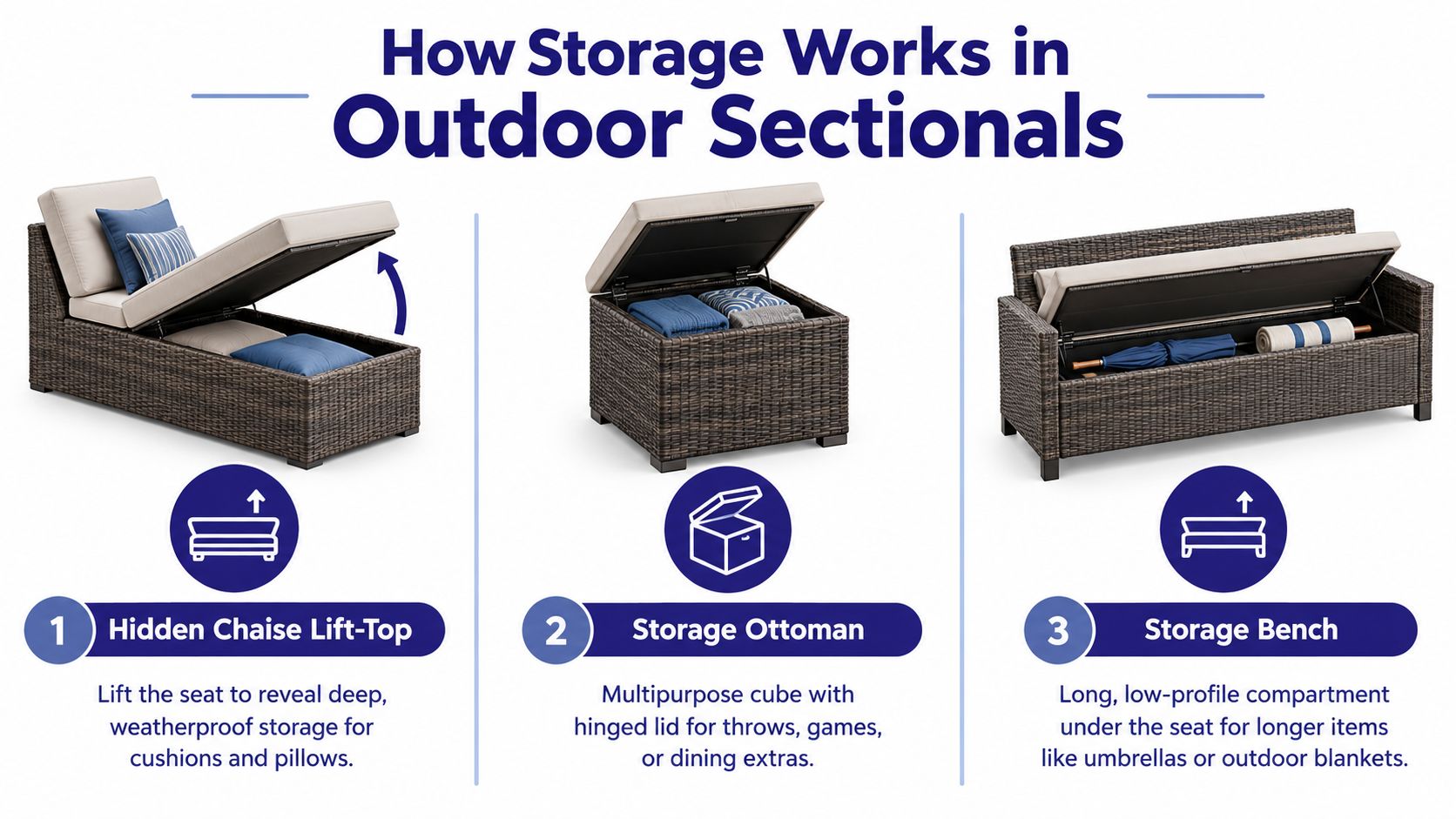
Outdoor sectionals generally use one of three storage approaches. Each works well for a different routine, and none should be judged by volume alone. A compartment that's easy to open and ventilated may be more useful than a larger space that stays closed and humid.
Hidden chaise compartments
A lift-top chaise usually stores items beneath the seat. You raise the cushion or seat panel, place in pillows or folded throws, and close the lid. This arrangement keeps storage visually integrated and often makes good use of the chaise depth.
The tradeoff is access. If the chaise sits against a wall, a railing, or another chair, you may not have enough room to lift the panel comfortably. You'll also need to remove or move anything sitting on top before opening it. This type is most practical for items you use regularly but don't need during every conversation, such as spare pillows or lightweight blankets.
Storage ottomans and benches
A storage ottoman has a hinged top and can serve as a footrest, extra seat, or small table when paired with a tray. It's convenient for throws, games, and dining accessories, but its shape may limit what fits inside. A cushion that fills the ottoman can also reduce the remaining usable space.
A storage bench offers a longer, lower compartment beneath the seat. It can accommodate flatter or longer items, such as outdoor blankets or an umbrella, depending on the interior dimensions. Because the top opens upward, check whether the sectional arrangement leaves enough clearance to raise it without moving the coffee table.
Under-seat drawers
Drawers open horizontally instead of upward. That can make them easier to reach when a tabletop or cushion is above the compartment, but the drawer needs a clear path across the floor. Leaves, gravel, rugs, and uneven pavers can interfere with smooth operation.
Drawers also tend to favor smaller, organized items rather than bulky cushions. Ask whether the drawer has stops, drainage, and corrosion-resistant hardware. A drawer that sits close to the ground may face more splash and debris than a lift-top compartment.
A separate deck box remains useful when you need substantial capacity. One patio-furniture guide gives 120 to 150 gallons as a common benchmark for cushion storage for a typical six-piece set, as described in Aosom's patio furniture selection guide. Integrated storage may replace that box when you're storing a modest number of dry accessories. It's more likely to be a convenience feature when the cushions themselves fill the compartment.
Materials Weatherproofing and What Lasts Outdoors
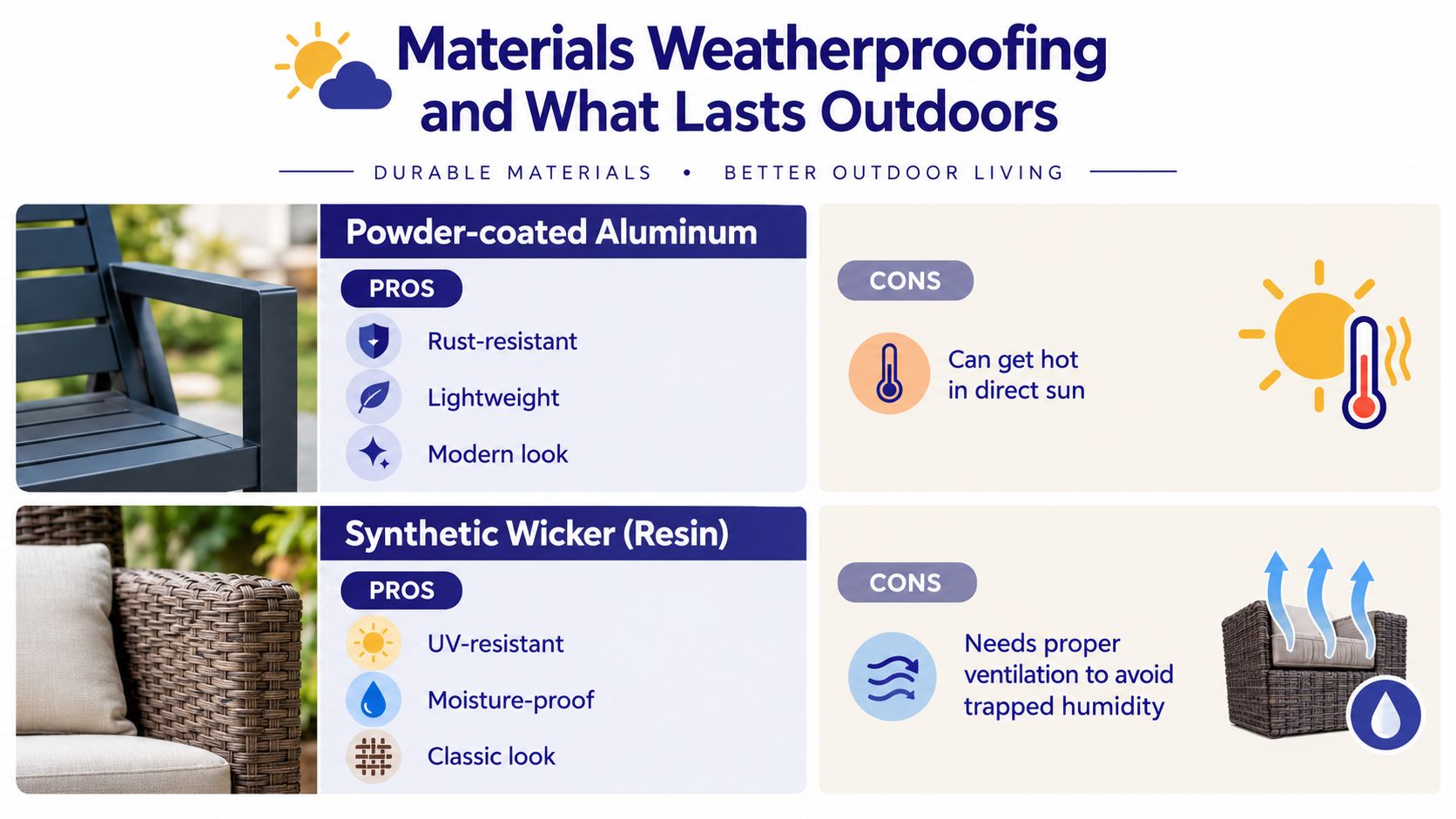
The frame has to support people, hold the storage mechanism, and tolerate sun, rain, humidity, and repeated movement. For many patios, powder-coated aluminum is a practical choice because it resists rust and remains relatively easy to move for seasonal rearranging or storage. High-quality synthetic wicker, also called resin wicker, can suit shoppers who prefer a traditional woven appearance and need a material that performs in hot, humid, or coastal conditions. The material comparison in this all-weather patio furniture guide explains why those two options are common in outdoor settings.
Frame and hardware details
Steel and wrought iron can offer a substantial feel, but they carry more corrosion risk in rain, freeze-thaw conditions, and salt-exposed environments. Hidden hardware deserves special attention because a sectional can look clean from the outside while screws, brackets, or hinges collect moisture inside the storage base.
Look for aluminum or other non-ferrous metal in the frame and fasteners where possible. If steel hardware is used, ask whether it has a durable protective coating and whether replacement parts are available. Check the hinge movement in person. A lid that scrapes, drops suddenly, or requires awkward lifting will become frustrating regardless of the frame material.
The finish also matters. Powder coating can protect aluminum, but scratches should still be addressed because exposed areas may collect dirt and moisture. Synthetic wicker needs sound underlying construction, not only attractive strands. Inspect the weave around corners, seat edges, and storage openings, where repeated contact can create wear.
Cushions and airflow
Cushion fabric and foam usually have a shorter practical life than the frame. Independent material guidance places typical lifespans at about 15 to 25 or more years for recycled HDPE or aluminum, 25 or more years for teak or hardwoods, and about 5 to 15 years for cushions and fabrics, as outlined by Lumens' outdoor furniture materials guide. These are broad ranges, not promises. Sun exposure, cleaning, water, use, and storage habits can change the outcome.
Quick-dry cushions help, but they still need time to dry. Storage compartments should have ventilation and a way for water to escape. In a humid climate, prioritize airflow and drainage over maximum volume. A smaller dry compartment protects fabric better than a deep, sealed cavity that holds moisture after a storm.
Sizing Your Sectional and Planning Patio Layout
Start with the patio, not the furniture listing. Measure the usable surface after accounting for railings, steps, doors, grills, planters, and any roof supports. Then identify where people enter, where they sit, and where a storage lid or drawer needs to operate.
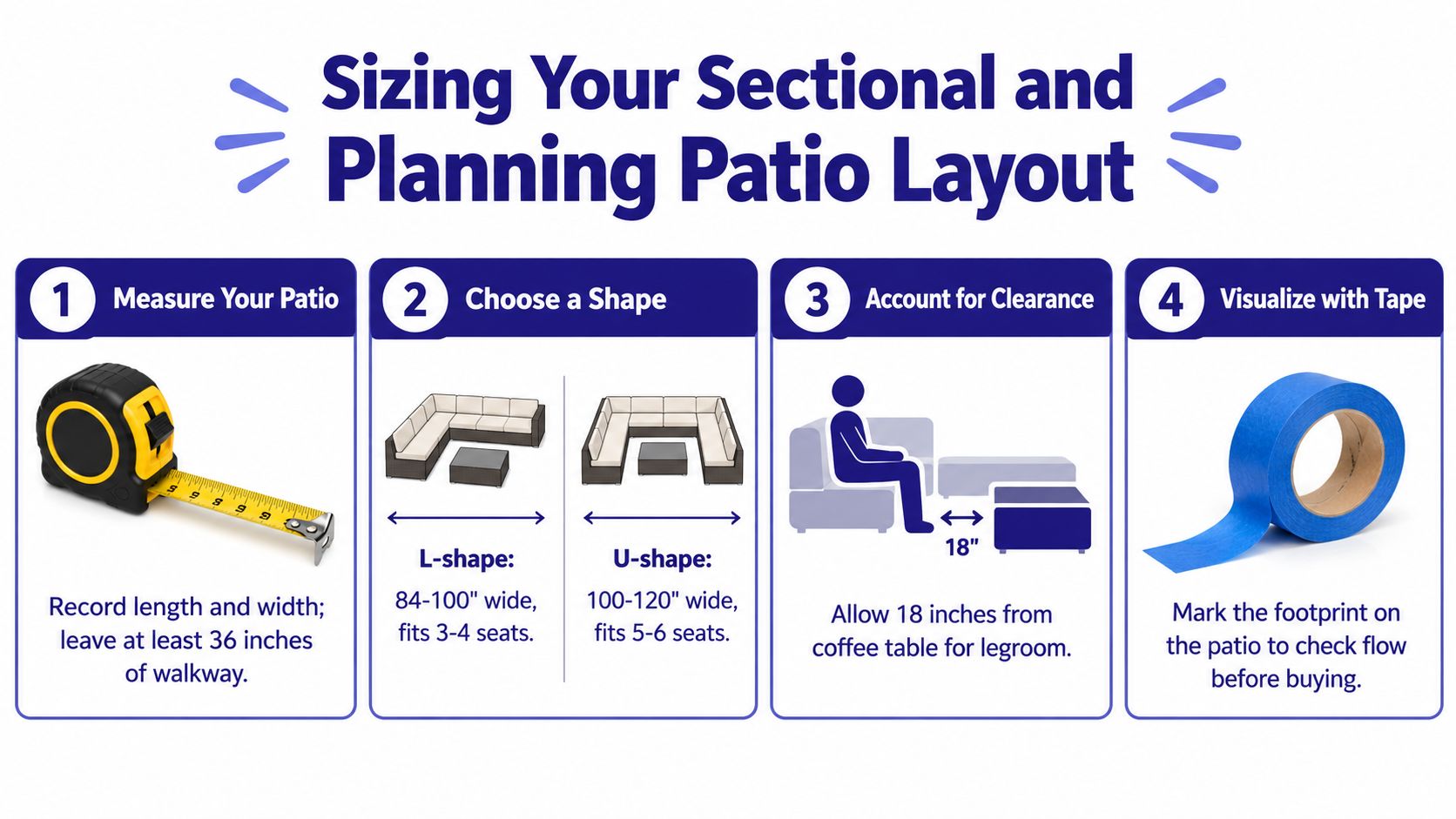
Typical dimensions provide a starting point. A small L-shaped sectional seating four to five people often measures about 90 to 120 by 60 to 80 inches, while a large U-shaped sectional seating six to eight people can measure about 120 to 180 by 80 to 100 inches, according to The Size's outdoor furniture dimensions guide. The same guidance recommends 36 to 48 inches of circulation space around the sectional.
Pick the shape that fits the movement
An L-shape usually works better on a narrow deck because it concentrates seating along two sides and leaves one direction open. A U-shape creates a more enclosed conversation area, but it needs more floor space and can make a modest patio feel blocked.
Keep the traffic route in mind. A walkway may technically exist on paper, yet still feel uncomfortable if guests must turn sideways around a table or pass directly behind someone's chair. For additional ideas on balancing furniture and movement, review these patio design ideas from NorCal Construction. The examples can help you think about zones before you choose a sectional footprint.
Map every moving part
Use painter's tape to mark the sectional's outer dimensions on the patio. Add the coffee table, side tables, grill, and the path to the door. Sit inside the taped outline and check whether the arrangement feels open enough for conversation.
Then mark the storage action, not just the furniture body. For a lift-top, draw the area above the lid and make sure a table or chair won't block it. For a drawer, mark the pull-out distance and check whether the drawer meets a rug edge or a paver seam.
The 18-inch space from a coffee table to the seat edge shown in the assigned planning visual can help preserve legroom, while the broader circulation recommendation calls for 36 to 48 inches around the sectional. Treat those measurements as planning guides, then adjust for the people and activities in your home.
If the sectional leaves no comfortable place for a separate deck box, integrated storage may be worthwhile. If the built-in compartment can't hold the cushions and you still need a box, compare the combined footprint before deciding.
Keeping Cushions Dry and Preventing Mildew
A storage compartment can protect cushions from clutter and direct exposure, but it can't dry them after rain. Putting a damp cushion into a closed base traps moisture against the fabric and foam, which can lead to odor, mildew, and fabric breakdown.
Use a simple drying routine
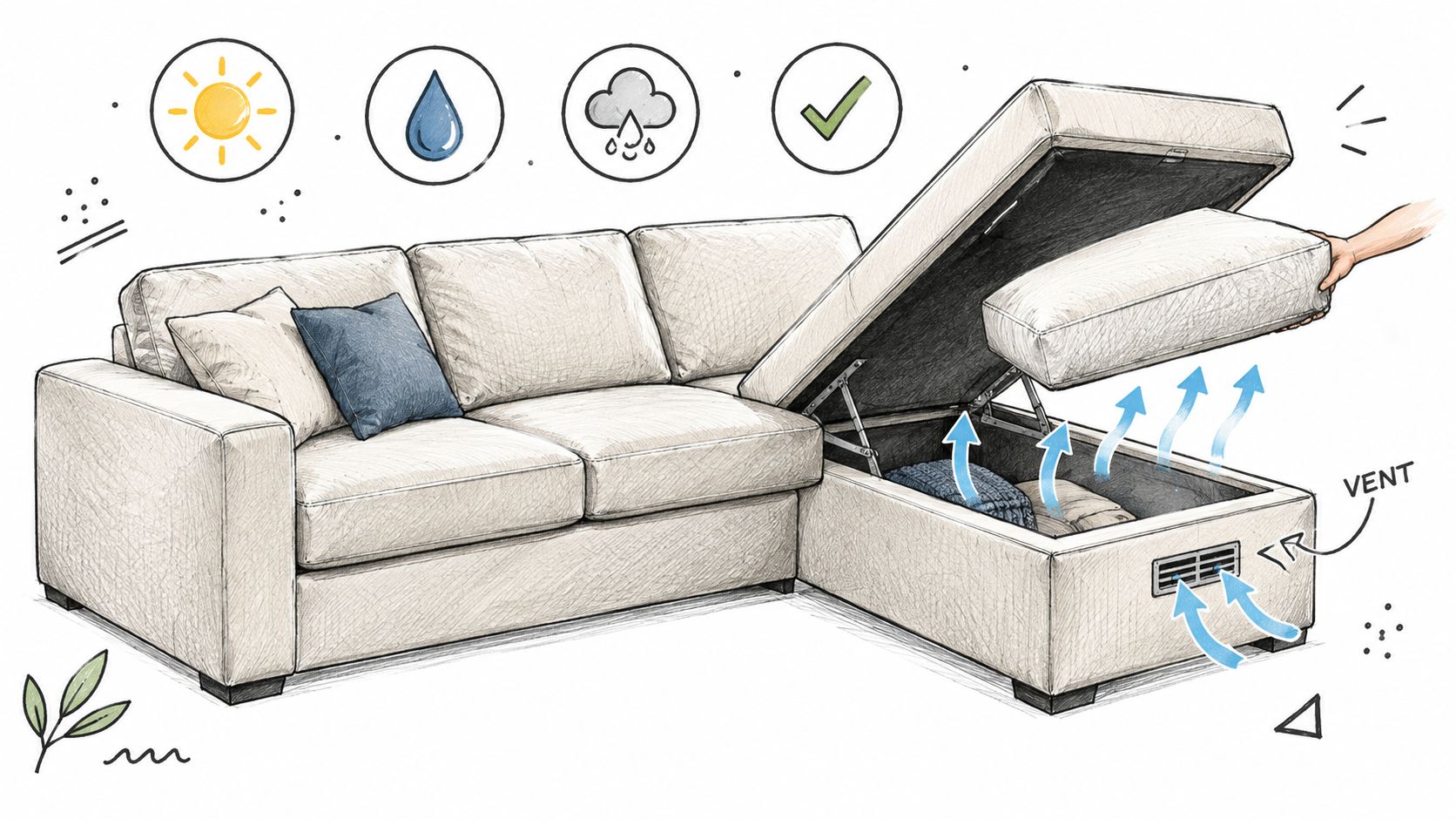
After rain, remove cushions from the sectional and stand them on edge in a breezy, covered location. Open the storage compartment so both the cushions and the base can release moisture. Don't close the lid until the interior is dry.
For everyday storage, use the compartment for dry pillows, throws, toys, and hard accessories when possible. Cushions can remain inside during stable, dry weather if the manufacturer permits it and the compartment has airflow. During extended rain, winter storage, or periods of high humidity, move textiles to a clean, dry, ventilated indoor area such as a garage, shed, or basement.
A cover keeps rain away. It doesn't remove humidity from a cushion that went into storage wet.
Use breathable, waterproof furniture covers rather than plastic tarps, which can hold condensation against the frame and fabric. Patio-care guidance also recommends elevating pieces at least 4 inches off the ground to reduce contact with standing moisture, as described in this outdoor furniture storage guide.
Ventilation is part of the design
Look for vents, drainage openings, raised bases, and cushions that don't seal the compartment completely. A sealed container can be useful for fully dry hard goods, but it's a poor place for damp textiles. The same principle applies to a covered patio. A roof reduces direct rain, yet a covered, unsealed area can still be humid.
Use the sectional's storage as a nearby staging area, not an excuse to ignore drying. This outdoor sectional weather-resistance guide also emphasizes drying components before covering and using clean, dry, ventilated storage during longer wet periods.
Styling Your Storage Sectional for Everyday Living
A storage sectional feels more natural outdoors when it supports the way your household already uses the patio. Arrange the seats so people can face one another rather than pointing every chair toward the television or yard. Keep the most frequently used entrance clear, then place the coffee table where everyone can reach it without stepping through the seating area.
An outdoor rug can define the conversation zone, but choose one that allows water to pass through or dry quickly. Pillows add comfort and color, while a few washable throws make the space more useful on cool evenings. Store those soft accessories in the sectional only after they're dry. If children use the patio, reserve a compartment or ottoman for games and toys so cleanup becomes a short routine rather than a full reset.
Let storage support the layout
The chaise can face the view, the ottoman can serve as flexible seating, and a storage bench can separate the lounge area from a dining or grilling zone. That arrangement gives each piece more than one job, which is especially helpful when the patio has limited floor space.
Don't fill every visible surface with accessories. A clear tabletop and an open walkway make the sectional easier to use, while concealed storage keeps the items you need nearby. For ideas on selecting practical pieces for meals and gatherings, this guide to outdoor entertaining accessories offers useful context.
Color and texture are easier to judge in person. A gray cushion can look cool or warm depending on the frame, rug, and surrounding siding. Wicker patterns also vary in scale, and a storage lid may be more noticeable when the weave changes across the top. Bring a photo of your patio, or compare fabric samples near the kind of light the furniture will receive.
The finished space doesn't need to look staged. It needs to make it easy to sit down, put away a blanket, find a game, and keep the route to the house open.
Smart Buying Checklist and Showroom Questions
Before comparing styles, decide what the storage must do. If the main problem is scattered pillows and throws, a chaise compartment or ottoman may be sufficient. If you need to store an entire cushion set, toys, dining accessories, and seasonal items, measure those objects and compare their real folded size with the compartment opening.
Ask these questions before choosing an outdoor sectional with storage:
- Frame: Is the frame powder-coated aluminum, synthetic wicker over aluminum, steel, wood, recycled HDPE, or a combination?
- Hardware: What are the hinges, screws, brackets, and drawer tracks made from, and how are they protected?
- Ventilation: Does air move through the storage compartment, or does the lid create a sealed cavity?
- Drainage: Where does rainwater go if it enters through the lid or seams?
- Cushions: Are the cushions quick-dry, and can the covers be removed for cleaning?
- Access: Can you lift the chaise or bench top without moving the coffee table?
- Clearance: Does a drawer have a fully open path, and can guests still use the main walkway?
- Care: What cleaning products, covers, and seasonal storage conditions does the manufacturer recommend?
- Support: What warranty, returns, delivery, and setup assistance apply to the frame, cushions, and moving parts?
Test the mechanism yourself. Lift the lid, open the drawer, sit on the cushion, and check whether the storage opening is large enough for the things you plan to put away. If the compartment feels cramped or difficult to reach, a separate storage bench or deck box may be more practical even if it occupies additional floor space.
Woodstock Furniture & Mattress Outlet carries outdoor options that include sectionals, seating, tables, fire pits, and umbrellas, and its staff can help compare dimensions, materials, and layout needs across a patio plan. Visit Woodstock Furniture & Mattress Outlet with your measurements and a list of the items you want to store, then evaluate whether integrated storage or a separate piece fits your routine better.