You're standing on a patio that looked great in April. It's June in North Georgia now. Pollen has left a yellow film on the table, a thunderstorm soaked everything yesterday afternoon, and someone has tracked red clay across the concrete in a perfect shoe print. A blue green outdoor rug could pull the seating together and make that slab feel like a room. It could also become the thing you're hosing, lifting, and worrying about every weekend.
That's why color isn't just a style choice here. It's a maintenance choice. A saturated teal, a mottled blue-green, and a pale pattern will each hide and reveal different things. One will show fading first. Another will look cleaner between washings. The prettiest rug in a photo isn't automatically the easiest one to live with on your porch, deck, or patio.
Start with the spot, not the swatch. How much sun hits it, where water goes after rain, and what surface sits underneath will decide how long any color looks presentable. Then narrow the material, test the shade in real daylight, and tape the size on the floor before you spend money.
Choosing the Right Material for Your Blue-Green Rug
For an uncovered patio or sunny deck, I'd start with polypropylene made for outdoor use and UV-stabilized. It's the most common fiber in this category for a reason, and it gives you the clearest starting point before you compare shades.
That short answer comes with a label check. The materials comparison and guidance summarized in this journal article identifies polypropylene as a leading outdoor-rug fiber because it's solution-dyed, doesn't readily absorb liquid or stains, and resists mold and mildew when constructed as a 100% polypropylene rug. It also reports an estimated service life of 3 to 7 years for polypropylene rugs in full-sun exposure, compared with 2 to 4 years for polyester under similar conditions. Treat those as planning ranges, not promises. Climate, cleaning, drainage, traffic, and construction change results from one yard to the next.
Blue-Green Outdoor Rug Materials at a Glance
| Material | Moisture behavior | Sun and fading | Planning life in full sun | Best fit |
|---|---|---|---|---|
| Polypropylene (100%, outdoor-rated) | Resists absorbing water; surface dries quickly | UV-stabilized versions resist fading; check the label | 3 to 7 years | Uncovered patios and sunny decks |
| Polyester | Construction and backing affect drying; check both | Fades more readily than UV-stabilized polypropylene | 2 to 4 years | Partly covered spaces with good drainage |
| Recycled plastic (PET or polyethylene blends) | Low absorption in most flat weaves; confirm backing | No rating without a stated UV treatment | No rating without a stated UV treatment | Confirm base polymer and UV rating before buying |
| Natural fibers (jute, sisal, hemp, bamboo) | Absorbs more water | Generally less durable outdoors | No full-sun outdoor rating; keep covered | Fully covered porches with a dry-out routine |
Look for a clear statement of 100% polypropylene and outdoor-use construction, not just the word outdoor. Solution-dyed fiber integrates pigment into the fiber rather than relying only on surface coloration, which matters when a saturated blue-green sits in direct sun. A pale neutral can lose some color and still look like itself. A deep teal that lightens unevenly is harder to ignore.
Label rule: If the spec sheet won't tell you the fiber percentage, backing type, and UV treatment in plain language, don't fill in the blanks with optimism.
Recycled plastic isn't one material, so don't buy it as a category. Confirm whether you're getting PET, polyethylene, or a blend, then look for a UV rating on that specific product. The recycled content tells you about sourcing. It doesn't tell you how the backing handles a wet slab.
Natural fibers such as jute, sisal, hemp, and bamboo generally absorb more water and can be less durable outdoors. They're a covered-porch conversation, not an uncovered-patio one, and only if you'll lift and dry them after blowing rain. Households that won't do that routine should cross them off early and save themselves the disappointment.
Classify your spot first. Fully exposed, partly covered, or fully covered. Then narrow the material. Only after that should you argue about teal versus sage.
Pairing Blue-Green Shades With Patio Furniture
After a summer in direct sun, a deep teal rug can show a lighter outline where the coffee table shaded its center. Color choice affects not only how the patio looks, but how clearly fading, pollen, clay, and mildew show between cleanings. A bibliometric review summary links color preferences with associations such as blue's connection to sky and sea, which helps explain why blue-green feels at home outdoors.
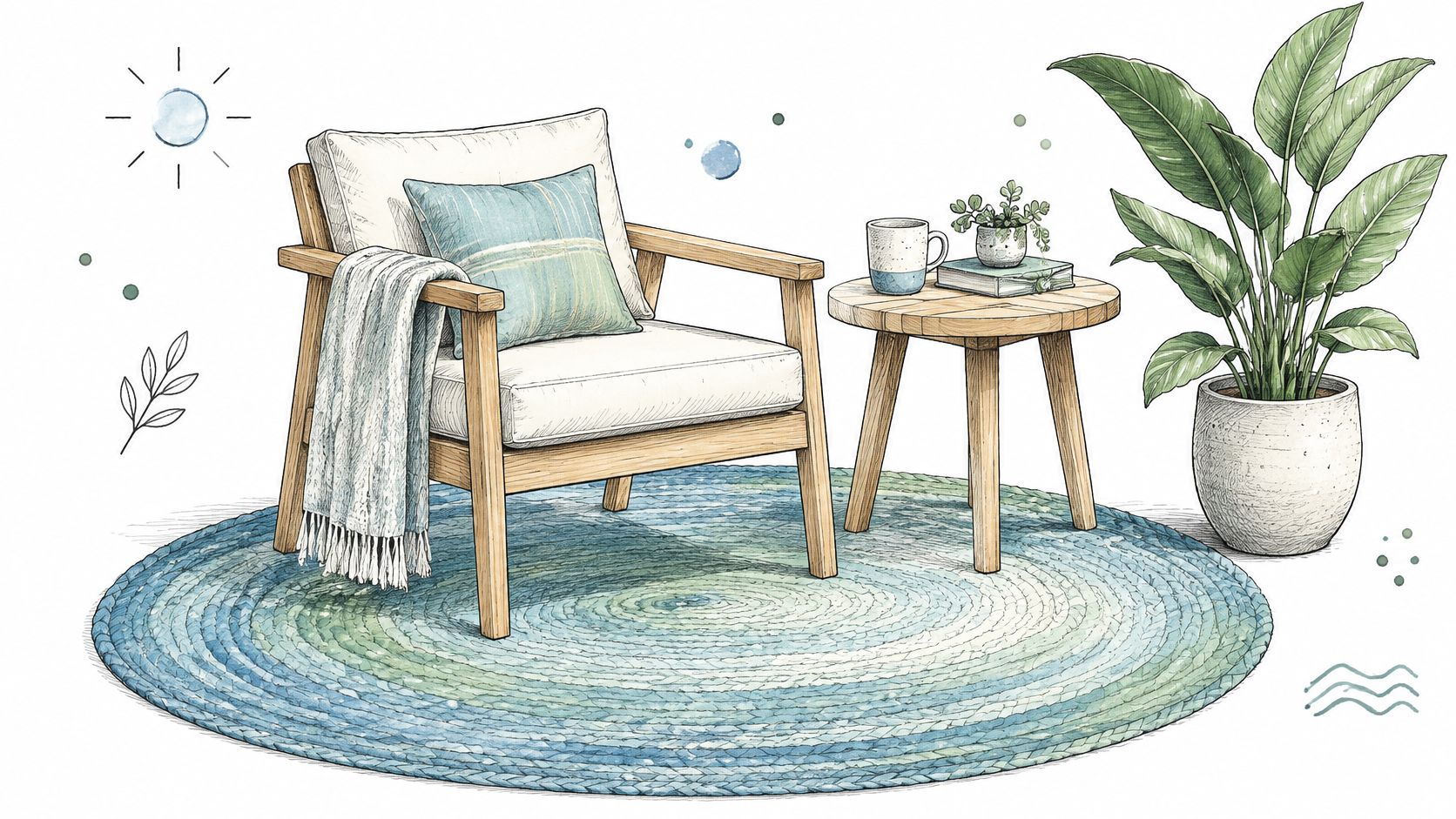
This lounge uses a round blue-green rug to soften the wood tones and connect the chair's blue cushion to the patio.
Three Shade Families, Three Different Jobs
- Deep teal with teak, warm wood, or white resin: Warm wood balances teal's cooler cast, while white frames help a dark rug feel less heavy. Saturated color makes uneven fading more noticeable, particularly where furniture shades one area.
- Mottled blue-green with gray metal or aluminum: Heathered color sits comfortably beside cool frames and concrete. Its variation also breaks up the look of leaf debris, pollen, and soil between cleanings.
- Sage-leaning green with wicker and terracotta: This softer pairing works near planters and brick without requiring matching cushions. Patterns with some color variation can make clay less conspicuous than it is on a pale, solid rug.
The pattern changes how much routine dirt stands out. Spring pollen can leave a light film, while red clay tracked in on shoes or dog paws can mark a patio rug. A mottled surface breaks up both; a flat, solid field makes each easier to see. That trade-off matters if you want the rug to look tidy between washes.
Pale or solid areas make dark mildew spots and light-colored spills easier to spot. That visibility can help you catch marks early, but it also means the rug may look less clean day to day. A sage-leaning pattern offers a middle ground: it tends to show clay less dramatically than deep teal and pollen less than a near-white design.
Before choosing, hold swatches against your actual furniture outdoors. Compare them in sun and shade. Blue-green can look flat gray on a shaded porch or bright turquoise in direct noon light, so judge the color where the rug will sit. A balanced match to the frame and cushions is only part of the decision; consider how the rug's shade and pattern will look as fading and ordinary patio debris accumulate.
Sizing a Blue-Green Rug to Your Patio Layout
Two placement rules handle most layouts. For a seating group, the front legs of every piece should sit on the rug. For a dining set, the rug should stay under the chairs even when they're pulled out. A rug that fails either test looks like it's floating in the middle of the furniture instead of holding it together.
Outdoor Rug Size by Patio Layout
| Furniture setup | Typical rug size | Placement rule |
|---|---|---|
| Bistro set (two chairs, small table) | 4 x 6 ft or 5 x 5 ft round | Chair legs on rug when pulled back |
| Loveseat with two chairs | 5 x 8 ft | Front legs of all pieces on rug |
| Sofa, two chairs and coffee table | 8 x 10 ft | Front legs of all pieces on rug |
| Dining table for six | 8 x 10 ft | Chairs remain on rug when pulled out |
| Dining table for eight | 9 x 12 ft | Chairs remain on rug when pulled out |
| Large L-shaped sectional | 9 x 12 ft or larger | Confirm with a taped floor outline |
To measure, start with the footprint of the furniture arrangement as you'll use it, chairs pushed back and people able to walk around. At a dining table, add roughly 24 inches beyond the table edge for chair pull-back. That extra two feet is where most undersized dining rugs fail, because the back chair legs drop off the edge every time someone sits down.
Shape follows the furniture, not the other way around. Round and square rugs suit bistro sets and small round tables. Rectangles work for conversation groups and most dining sets. If you're still sketching the broader layout, including where shade falls across the seating, these patio shade and layout inspiration ideas from NorCal Construction can help you place the group before you size the rug under it.
Clearance and Awkward Spaces
Leave a visible border of roughly 12 to 18 inches of deck, patio, or concrete around the rug. A rug pushed against a railing, planter, or wall collects water and debris along that edge, and that edge stays dirty and damp longest. The border also keeps the pattern from looking like wall-to-wall carpet that wandered outside.
Narrow decks and balconies sometimes need a runner or a smaller rug with the furniture reduced to match. Don't solve a tight space by buying a big rug and letting it curl against the railing. And a rug placed directly on grass or soil will stay damp underneath, which makes it a poor match for most patterns regardless of size.
Sketch the layout on the floor with painter's tape before you buy. Sit in every chair, pull them out, and walk the traffic path. Then compare your taped outline with the chart and buy the size your tape proved, not the size that was in stock.
Matching the Rug to Your Patio Surface
Before choosing a blue-green pattern, check how the patio handles water. Concrete slab, composite decking, grass or soil, and a covered porch each affect how quickly a rug dries. That changes not only the material choice, but also how much fading, pollen, clay, and mildew will show. Saturated teal can make fading easier to spot, while mottled blue-green patterns disguise everyday debris better; pale patterns can reveal clay and mildew sooner.
Concrete can stay damp beneath a rug after the surface looks dry. After rain, lift the rug and wait until the slab no longer feels cool or looks dark before laying it back down. The contact layer dries slowly, so a pattern that hides dirt does not solve the moisture problem.
Open boards on composite decking let water pass through, but the gap beneath a raised board affects airflow and drying time. A rug may dry faster when air can move underneath; leaves caught between boards can still hold moisture against its underside. A composite decking supplier can explain board construction, while your rug choice should account for drainage and the space beneath the boards.
Grass or soil keeps a rug's underside damp, making it a poor choice for a permanent seating area. For an event or garden setup, use a raised, drained platform. Otherwise, trapped moisture can leave the rug smelling musty.
A covered porch blocks direct rain but can remain humid, especially after storms blow in sideways. Jute and sisal may suit a covered setting only if you can dry them thoroughly. Coverage alone does not prevent mildew in humid weather.
Watch the patio during and after rain before settling on a rug. Notice where water pools, which areas stay shaded, and whether red clay or pollen collects on the surface. Choose a blue-green pattern with that cleanup in mind: mottling can disguise residue, while a pale design makes buildup easier to see. On a shaded spot that stays muddy, prioritize a material you can lift and dry rather than relying on color to hide the problem.
Caring for a Blue-Green Outdoor Rug Step by Step
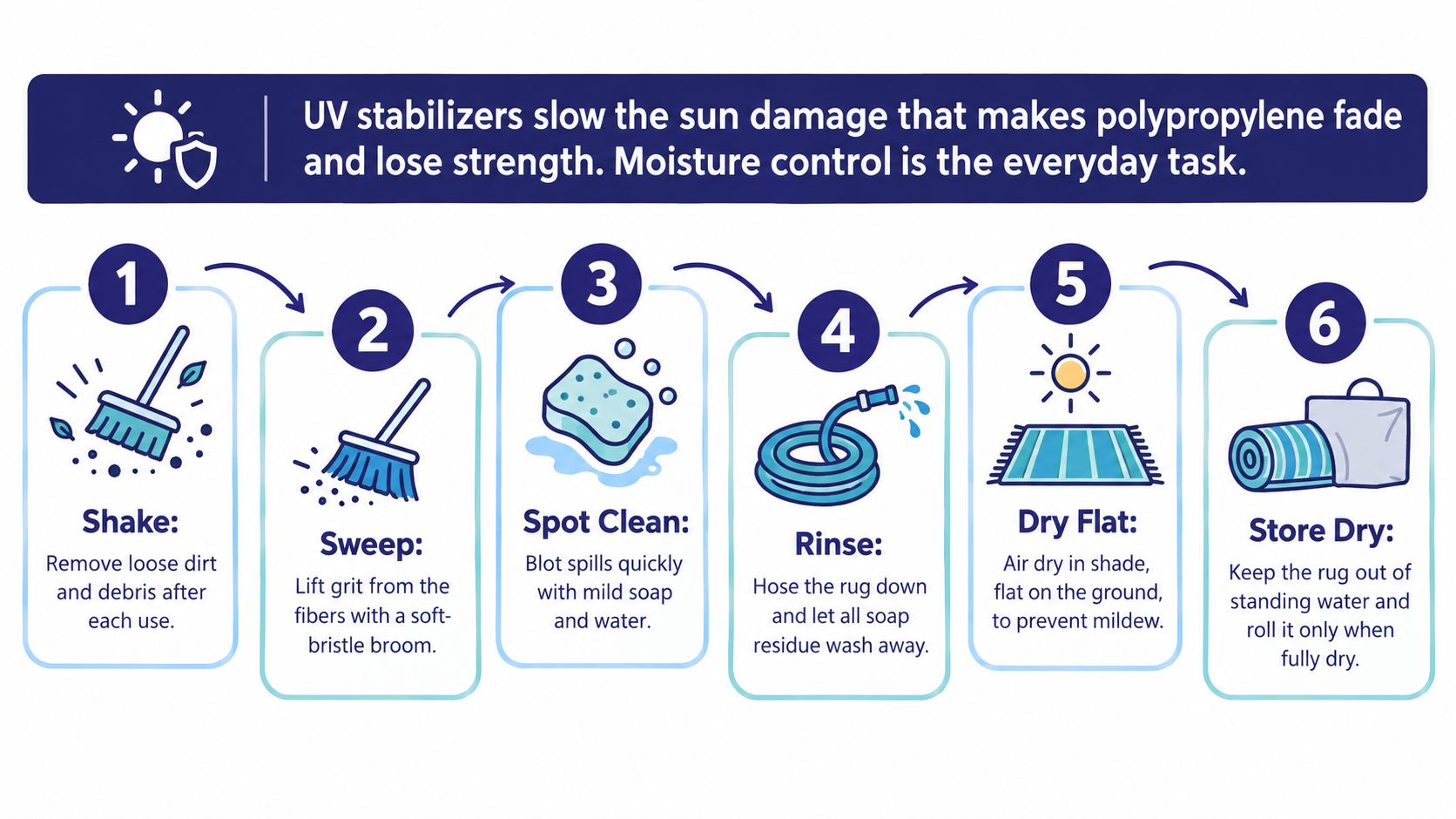
Sunlight and moisture are the main threats to an outdoor rug. In polypropylene, sunlight can trigger photo-oxidation, gradually fading color and weakening the fiber. The Solmax technical note on polypropylene durability explains that UV stabilizers, including carbon-black or other light-resistant additives, slow embrittlement and strength loss. A steady cleaning and drying routine helps limit moisture-related problems.
This visual guide summarizes the routine in six steps.
The Routine That Prevents Problems
- Shake and sweep weekly, and after storms. Leaves and grit hold moisture against the fibers and grind into the surface under chair legs. A quick sweep clears debris before it settles.
- Rotate every few months. This spreads sun exposure across the rug, reducing the chance that one exposed corner fades more than the area beneath the sofa.
- Spot clean with mild soap, water, and a soft brush. Check the manufacturer's instructions first. Cleaning products that suit one rug may damage another rug's backing.
- Rinse with a garden hose on a moderate setting. High pressure can fray the surface or force water into layers that take longer to dry.
- Lift the rug after heavy rain and let it drain. Wait until water is no longer running off the underside before putting it back.
- Dry both sides in open air. Drape the rug over a railing or lay it backing-up on a clean surface. Don't fold or roll it while damp.
- Check the underside monthly. Dampness, dark spots, or a sour odor are early signs that moisture is lingering. Address them before they spread.
- Store it dry and rolled during long wet or freezing spells. Choose a sheltered garage corner rather than leaving the rug beneath a dripping gutter.
Blue-green color affects how visible wear looks. Saturated teal can make pale pollen and dust stand out, while red clay may show clearly against lighter areas. Mottled blue-green patterns can disguise scattered debris, but they won't prevent fading or mildew. Pale patterns may reveal pollen and clay sooner. Choose a shade with the cleaning routine you can maintain in mind, not color alone.
If you want to follow the washing and drying sequence before cleaning your rug, this walkthrough demonstrates the basic approach.
An unstabilized indoor polypropylene carpet is not patio-grade, even though it uses the same fiber. Follow the care and exposure guidance for your specific rug.
With regular care, a rug may show honest wear while keeping its color more even, its underside free of lingering odor, and its edges flat. Those are practical signs to look for, not guarantees of how long it will last.
Common Problems and How to Fix Them
After rain, a musty smell is often the first sign that moisture remains under the rug. Synthetic fibers may resist water at the surface while the backing and inner layers stay damp. Mildew can begin out of sight, so check underneath if the top develops an odor.
The U.S. Environmental Protection Agency mold and moisture guidance identifies moisture control as the central method for preventing mold and recommends drying water-damaged materials within 24 to 48 hours. For an outdoor rug, lift it, let it drain, and dry both sides rather than masking an odor with scented cleaner.
Blue-Green Outdoor Rug Symptoms, Causes and Fixes
| Symptom | Likely cause | Fix |
|---|---|---|
| Musty smell after rain | Moisture trapped in backing or beneath rug | Lift, drain and dry per care steps 5 and 6 |
| Dark spots on underside | Mildew from damp concrete contact | Clean mildly, dry fully, lift off concrete |
| Pale stripe or uneven color | Concentrated sun in one area | Rotate per care step 2 and confirm UV rating |
| Film of pollen or red clay | Soil on a flat, solid surface | Rinse and brush; compare mottled shades in the pairing section above |
| Stain that remains after rinsing | Spill absorbed into surface | Test cleaner on a hidden corner, then follow manufacturer instructions |
| Backing separating or fibers matting | Long-term moisture or wear | Stop outdoor use until assessed, then consider replacement |
A saturated teal can make pale pollen and light fading easier to spot. Mottled blue-green patterns tend to break up the look of pollen and red-clay marks, while pale patterns can reveal dirt and mildew discoloration sooner. Choose with upkeep in mind as well as appearance.
A rug can retain its blue-green color and still trap moisture underneath. Color retention and moisture handling depend on different parts of the construction. Concrete and a drained composite deck can also leave the same rug with different drying conditions, so check the surface beneath it when dampness lingers.
Covered porches need an underside check after wet weather, too. A dry-looking top does not rule out dampness below, especially when humidity or wind-blown rain reaches the backing.
For a stain that remains after rinsing, test cleaner on a hidden corner and follow the manufacturer's directions. Harsh scrubbing or an unsuitable cleaner can damage a patterned surface, so start gently.
Stop cleaning and assess the rug if the backing separates, fibers stay permanently matted, or the underside still smells sour after a full dry-out. Those signs point to wear or persistent moisture that another wash may not fix.
Checking Specs and Shopping With Confidence
Check construction and exposure fit before choosing between similar blue-green shades. A clear spec sheet, UV-stabilized 100% polypropylene, and a drainable backing affect how a rug performs in its intended spot.
Read label terms as separate claims. The Consumer Reports outdoor rug buying guide explains that no rug is weatherproof, while UV-treated polypropylene yarns can resist fading. Those terms describe color retention, not how a rug handles standing water. Moisture can also remain in inner layers even when the surface resists it.
What to Confirm Before You Buy
- Online: Check exact dimensions, read the full fiber and backing description, compare daylight photos with studio images, and review the return terms.
- In store: View the color in daylight beside a photo of your furniture. Feel the pile and backing, and ask about exposure ratings and care instructions for that specific rug.
At Woodstock Furniture & Mattress Outlet, you can view swatches side by side in the showroom. Bring a daylight photo of your furniture and describe the rug's sun exposure and drainage conditions to help compare options.
Compare two or three finalists by their specifications and the conditions where they'll sit, not price alone. Keep the manufacturer's care sheet with the rug so you can check which cleaner is approved when needed.
Bring your patio dimensions and a photo of your furniture when shopping at a North Georgia location. Seeing blue-green shades in real light helps you compare them with your existing frames and choose a color, material, and size suited to the spot.