
Tag: outdoor furniture guide

  • Outdoor Sectional with Storage Buying Guide for Patios

    Outdoor Sectional with Storage Buying Guide for Patios

    You've straightened the patio, but the cushions are still leaning against the door, a throw is draped over the railing, and the children's outdoor toys have claimed the one clear walkway. That's the everyday reason many North Georgia homeowners start looking at an outdoor sectional with storage. The appeal isn't having another compartment. It's keeping the patio usable without making every evening end with a trip to the garage.

    Integrated storage can hold cushions, pillows, blankets, games, and smaller outdoor accessories. It can also create a new problem if wet textiles go into an enclosed compartment and stay there. The right decision depends on what you need to store, how often you'll access it, how much room your patio has, and whether the unit can move air and drain water.

    This guide focuses on those practical questions. You'll learn how lift-top chaises, ottomans, benches, and drawers differ; why powder-coated aluminum and synthetic wicker are common frame choices; how to plan an L-shaped or U-shaped layout; and when a separate deck box remains the more useful solution. It's also worth seeing storage mechanisms, cushion thickness, colors, and textures in person, because photographs rarely show how much effort a lid takes to open or how easily a drawer clears a coffee table.

    Introduction Why Storage Changes How You Use Your Patio

    An outdoor sectional changes a patio from a pass-through area into a place where people can sit, eat, talk, and relax. Yet the experience breaks down quickly when the soft pieces have nowhere to go. Cushions get rained on, pillows fade in direct sun, and blankets or toys collect in corners because bringing them indoors every night feels like too much work.

    That's where built-in storage helps. A compartment beneath a chaise or bench can give frequently used items a nearby home, so the patio looks ready without a freestanding box taking up another section of floor. The benefit is especially noticeable on a smaller deck or balcony, where every separate piece affects walking space.

    Practical rule: Storage solves clutter first. It only solves moisture when the compartment is designed and used for airflow, drainage, and dry contents.

    This distinction matters in North Georgia, where warm, humid weather and sudden rain can leave cushions damp even when the sky clears. A hidden compartment may reduce trips to the garage, but it isn't automatically a safe year-round home for wet fabric. The construction of the base, the ventilation, and your care routine matter as much as the advertised capacity.

    Outdoor furniture has also grown beyond simple chairs and tables. Industry estimates place the global outdoor furniture market at about USD 50.89 billion in 2024, with a projection of USD 86.65 billion by 2033 at a 6.3% CAGR according to Grand View Research's outdoor furniture market overview. Another estimate places the category at USD 56.00 billion in 2025 and projects USD 92.08 billion by 2034, reflecting continued interest in lounge seating, modular sectionals, and multifunctional patio pieces.

    Those figures don't tell you which sectional belongs on your patio. They do show why storage has become part of the conversation about outdoor living rather than an unusual extra. The useful question is more personal: Will integrated storage make your routine easier without creating a damp place for cushions?

    How Storage Works in Outdoor Sectionals

    Outdoor sectionals generally use one of three storage approaches. Each works well for a different routine, and none should be judged by volume alone. A compartment that's easy to open and ventilated may be more useful than a larger space that stays closed and humid.
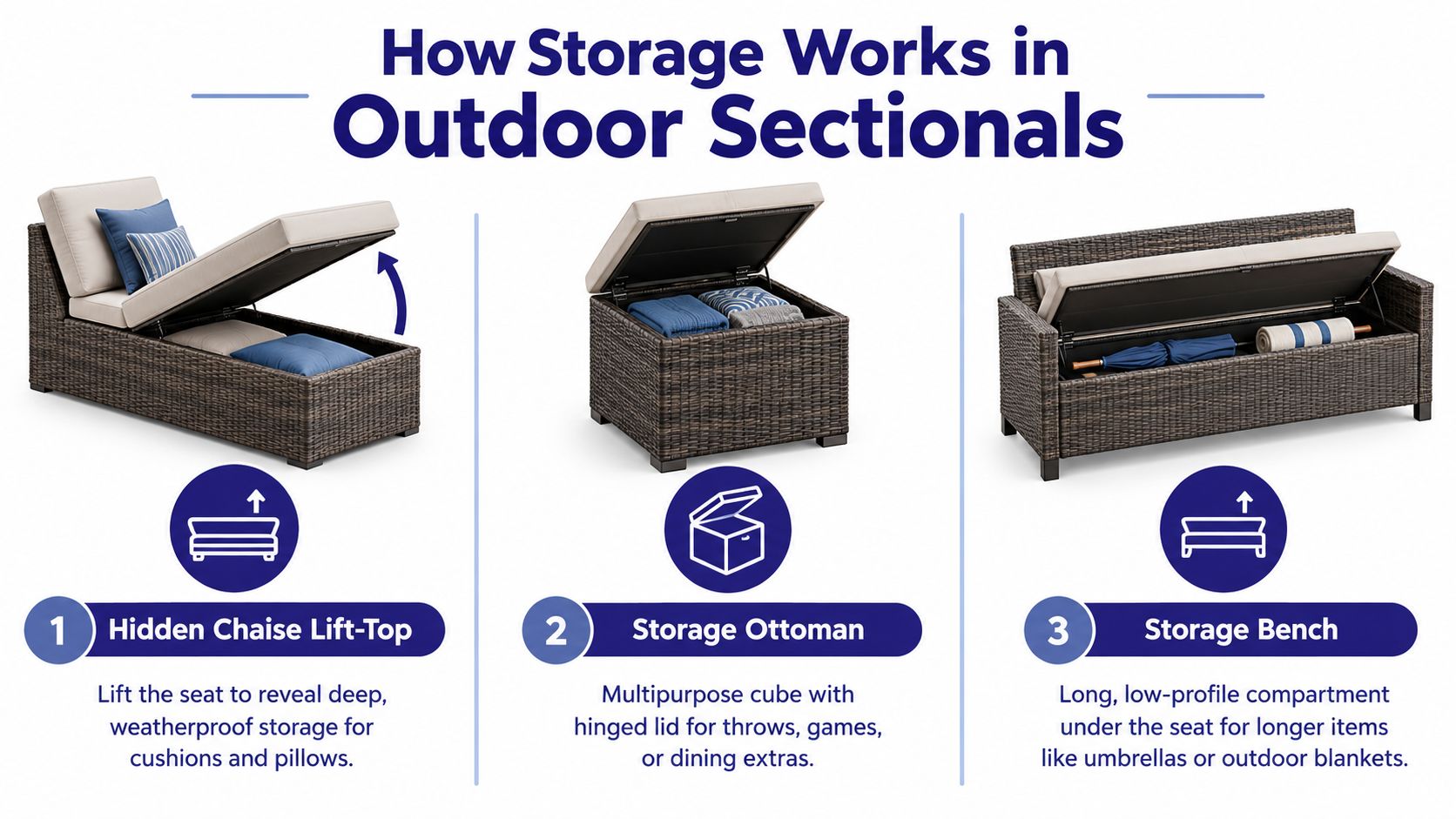
    A diagram illustrating three different types of outdoor sectional furniture with built-in hidden storage compartments.

    Hidden chaise compartments

    A lift-top chaise usually stores items beneath the seat. You raise the cushion or seat panel, place in pillows or folded throws, and close the lid. This arrangement keeps storage visually integrated and often makes good use of the chaise depth.

    The tradeoff is access. If the chaise sits against a wall, a railing, or another chair, you may not have enough room to lift the panel comfortably. You'll also need to remove or move anything sitting on top before opening it. This type is most practical for items you use regularly but don't need during every conversation, such as spare pillows or lightweight blankets.

    Storage ottomans and benches

    A storage ottoman has a hinged top and can serve as a footrest, extra seat, or small table when paired with a tray. It's convenient for throws, games, and dining accessories, but its shape may limit what fits inside. A cushion that fills the ottoman can also reduce the remaining usable space.

    A storage bench offers a longer, lower compartment beneath the seat. It can accommodate flatter or longer items, such as outdoor blankets or an umbrella, depending on the interior dimensions. Because the top opens upward, check whether the sectional arrangement leaves enough clearance to raise it without moving the coffee table.

    Under-seat drawers

    Drawers open horizontally instead of upward. That can make them easier to reach when a tabletop or cushion is above the compartment, but the drawer needs a clear path across the floor. Leaves, gravel, rugs, and uneven pavers can interfere with smooth operation.

    Drawers also tend to favor smaller, organized items rather than bulky cushions. Ask whether the drawer has stops, drainage, and corrosion-resistant hardware. A drawer that sits close to the ground may face more splash and debris than a lift-top compartment.

    A separate deck box remains useful when you need substantial capacity. One patio-furniture guide gives 120 to 150 gallons as a common benchmark for cushion storage for a typical six-piece set, as described in Aosom's patio furniture selection guide. Integrated storage may replace that box when you're storing a modest number of dry accessories. It's more likely to be a convenience feature when the cushions themselves fill the compartment.

    Materials Weatherproofing and What Lasts Outdoors

    The frame has to support people, hold the storage mechanism, and tolerate sun, rain, humidity, and repeated movement. For many patios, powder-coated aluminum is a practical choice because it resists rust and remains relatively easy to move for seasonal rearranging or storage. High-quality synthetic wicker, also called resin wicker, can suit shoppers who prefer a traditional woven appearance and need a material that performs in hot, humid, or coastal conditions. The material comparison in this all-weather patio furniture guide explains why those two options are common in outdoor settings.
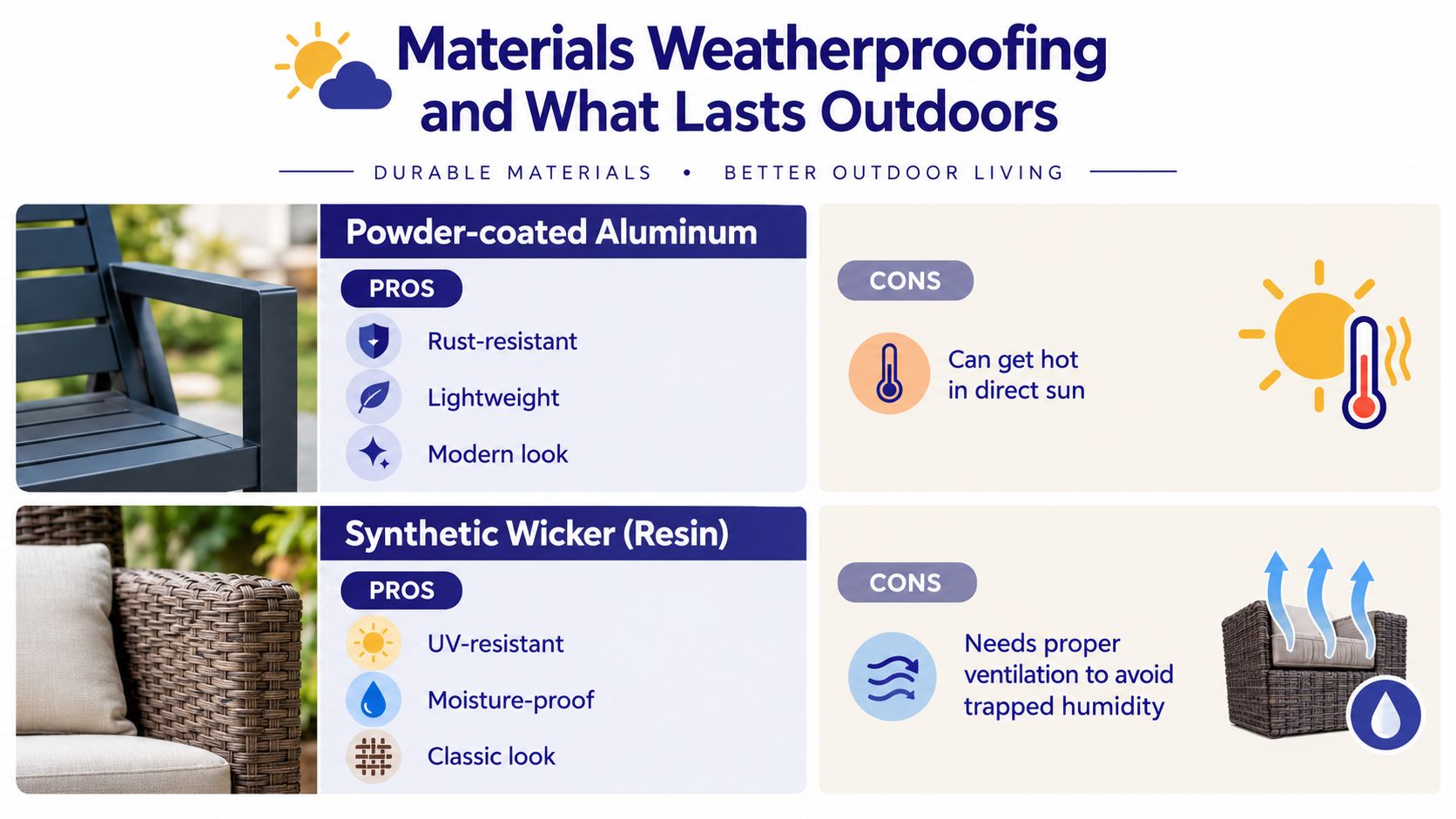
    A comparison chart showing the pros and cons of powder-coated aluminum and synthetic wicker for outdoor furniture.

    Frame and hardware details

    Steel and wrought iron can offer a substantial feel, but they carry more corrosion risk in rain, freeze-thaw conditions, and salt-exposed environments. Hidden hardware deserves special attention because a sectional can look clean from the outside while screws, brackets, or hinges collect moisture inside the storage base.

    Look for aluminum or other non-ferrous metal in the frame and fasteners where possible. If steel hardware is used, ask whether it has a durable protective coating and whether replacement parts are available. Check the hinge movement in person. A lid that scrapes, drops suddenly, or requires awkward lifting will become frustrating regardless of the frame material.

    The finish also matters. Powder coating can protect aluminum, but scratches should still be addressed because exposed areas may collect dirt and moisture. Synthetic wicker needs sound underlying construction, not only attractive strands. Inspect the weave around corners, seat edges, and storage openings, where repeated contact can create wear.

    Cushions and airflow

    Cushion fabric and foam usually have a shorter practical life than the frame. Independent material guidance places typical lifespans at about 15 to 25 or more years for recycled HDPE or aluminum, 25 or more years for teak or hardwoods, and about 5 to 15 years for cushions and fabrics, as outlined by Lumens' outdoor furniture materials guide. These are broad ranges, not promises. Sun exposure, cleaning, water, use, and storage habits can change the outcome.

    Quick-dry cushions help, but they still need time to dry. Storage compartments should have ventilation and a way for water to escape. In a humid climate, prioritize airflow and drainage over maximum volume. A smaller dry compartment protects fabric better than a deep, sealed cavity that holds moisture after a storm.

    Sizing Your Sectional and Planning Patio Layout

    Start with the patio, not the furniture listing. Measure the usable surface after accounting for railings, steps, doors, grills, planters, and any roof supports. Then identify where people enter, where they sit, and where a storage lid or drawer needs to operate.

    Typical dimensions provide a starting point. A small L-shaped sectional seating four to five people often measures about 90 to 120 by 60 to 80 inches, while a large U-shaped sectional seating six to eight people can measure about 120 to 180 by 80 to 100 inches, according to The Size's outdoor furniture dimensions guide. The same guidance recommends 36 to 48 inches of circulation space around the sectional.
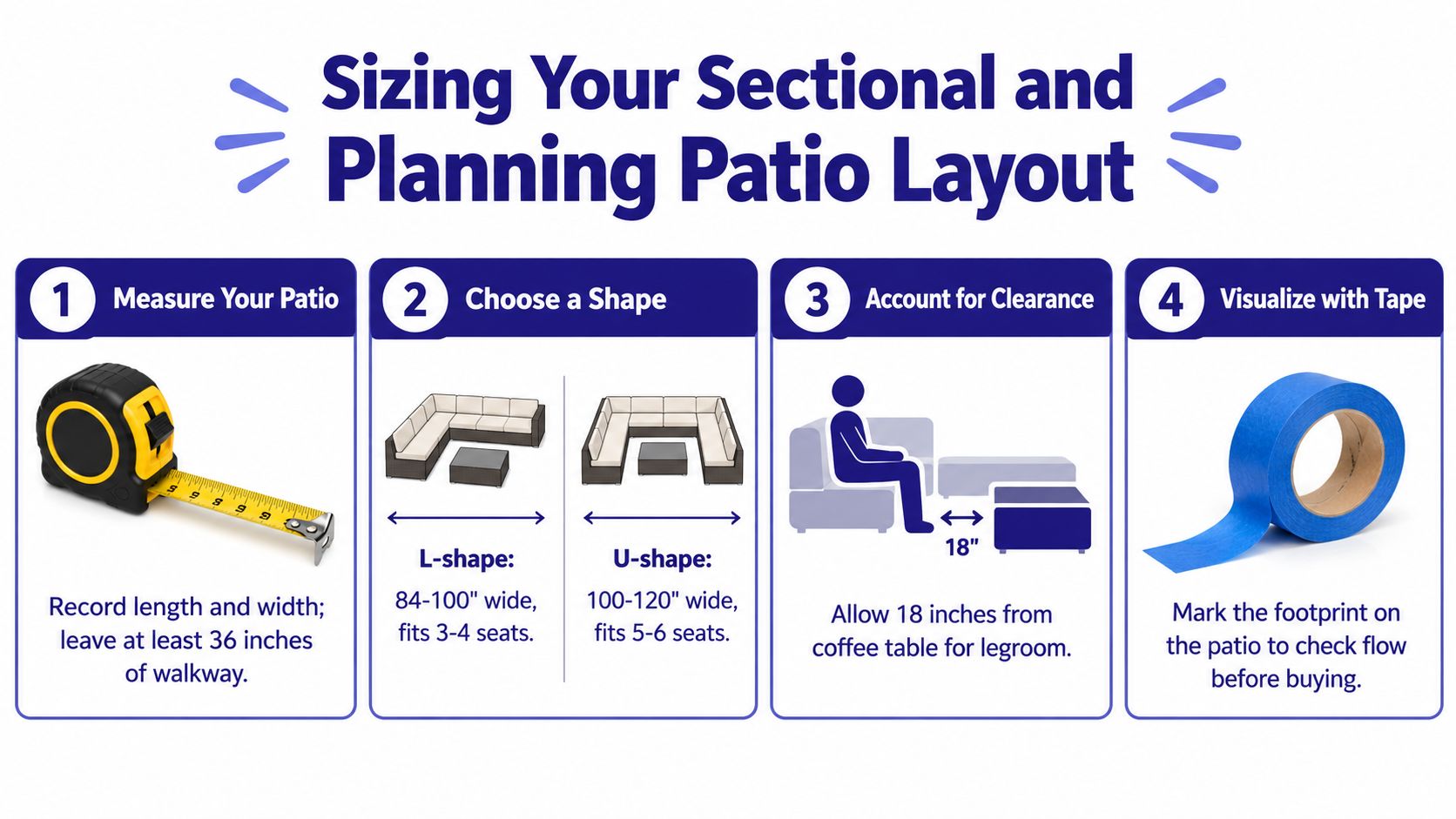
    An infographic detailing four simple steps for measuring, selecting, and planning a patio sectional layout.

    Pick the shape that fits the movement

    An L-shape usually works better on a narrow deck because it concentrates seating along two sides and leaves one direction open. A U-shape creates a more enclosed conversation area, but it needs more floor space and can make a modest patio feel blocked.

    Keep the traffic route in mind. A walkway may technically exist on paper, yet still feel uncomfortable if guests must turn sideways around a table or pass directly behind someone's chair. For additional ideas on balancing furniture and movement, review these patio design ideas from NorCal Construction. The examples can help you think about zones before you choose a sectional footprint.

    Map every moving part

    Use painter's tape to mark the sectional's outer dimensions on the patio. Add the coffee table, side tables, grill, and the path to the door. Sit inside the taped outline and check whether the arrangement feels open enough for conversation.

    Then mark the storage action, not just the furniture body. For a lift-top, draw the area above the lid and make sure a table or chair won't block it. For a drawer, mark the pull-out distance and check whether the drawer meets a rug edge or a paver seam.

    The 18-inch space from a coffee table to the seat edge shown in the assigned planning visual can help preserve legroom, while the broader circulation recommendation calls for 36 to 48 inches around the sectional. Treat those measurements as planning guides, then adjust for the people and activities in your home.

    If the sectional leaves no comfortable place for a separate deck box, integrated storage may be worthwhile. If the built-in compartment can't hold the cushions and you still need a box, compare the combined footprint before deciding.

    Keeping Cushions Dry and Preventing Mildew

    A storage compartment can protect cushions from clutter and direct exposure, but it can't dry them after rain. Putting a damp cushion into a closed base traps moisture against the fabric and foam, which can lead to odor, mildew, and fabric breakdown.
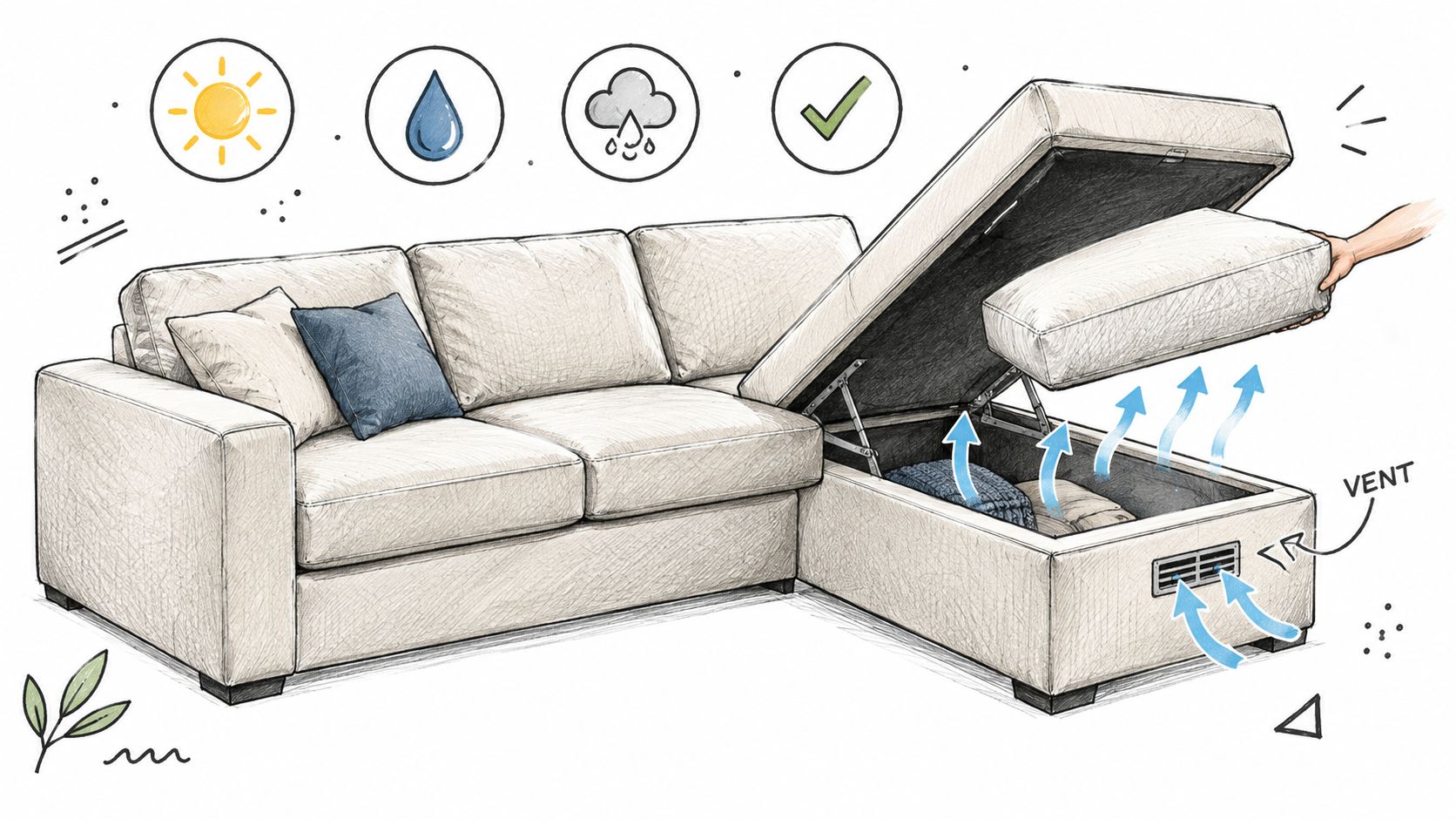
    A beige outdoor sectional sofa with a hidden lift-up storage compartment and integrated ventilation for airflow.

    Use a simple drying routine

    After rain, remove cushions from the sectional and stand them on edge in a breezy, covered location. Open the storage compartment so both the cushions and the base can release moisture. Don't close the lid until the interior is dry.

    For everyday storage, use the compartment for dry pillows, throws, toys, and hard accessories when possible. Cushions can remain inside during stable, dry weather if the manufacturer permits it and the compartment has airflow. During extended rain, winter storage, or periods of high humidity, move textiles to a clean, dry, ventilated indoor area such as a garage, shed, or basement.

    A cover keeps rain away. It doesn't remove humidity from a cushion that went into storage wet.

    Use breathable, waterproof furniture covers rather than plastic tarps, which can hold condensation against the frame and fabric. Patio-care guidance also recommends elevating pieces at least 4 inches off the ground to reduce contact with standing moisture, as described in this outdoor furniture storage guide.

    Ventilation is part of the design

    Look for vents, drainage openings, raised bases, and cushions that don't seal the compartment completely. A sealed container can be useful for fully dry hard goods, but it's a poor place for damp textiles. The same principle applies to a covered patio. A roof reduces direct rain, yet a covered, unsealed area can still be humid.

    Use the sectional's storage as a nearby staging area, not an excuse to ignore drying. This outdoor sectional weather-resistance guide also emphasizes drying components before covering and using clean, dry, ventilated storage during longer wet periods.

    Styling Your Storage Sectional for Everyday Living

    A storage sectional feels more natural outdoors when it supports the way your household already uses the patio. Arrange the seats so people can face one another rather than pointing every chair toward the television or yard. Keep the most frequently used entrance clear, then place the coffee table where everyone can reach it without stepping through the seating area.

    An outdoor rug can define the conversation zone, but choose one that allows water to pass through or dry quickly. Pillows add comfort and color, while a few washable throws make the space more useful on cool evenings. Store those soft accessories in the sectional only after they're dry. If children use the patio, reserve a compartment or ottoman for games and toys so cleanup becomes a short routine rather than a full reset.

    Let storage support the layout

    The chaise can face the view, the ottoman can serve as flexible seating, and a storage bench can separate the lounge area from a dining or grilling zone. That arrangement gives each piece more than one job, which is especially helpful when the patio has limited floor space.

    Don't fill every visible surface with accessories. A clear tabletop and an open walkway make the sectional easier to use, while concealed storage keeps the items you need nearby. For ideas on selecting practical pieces for meals and gatherings, this guide to outdoor entertaining accessories offers useful context.

    Color and texture are easier to judge in person. A gray cushion can look cool or warm depending on the frame, rug, and surrounding siding. Wicker patterns also vary in scale, and a storage lid may be more noticeable when the weave changes across the top. Bring a photo of your patio, or compare fabric samples near the kind of light the furniture will receive.

    The finished space doesn't need to look staged. It needs to make it easy to sit down, put away a blanket, find a game, and keep the route to the house open.

    Smart Buying Checklist and Showroom Questions

    Before comparing styles, decide what the storage must do. If the main problem is scattered pillows and throws, a chaise compartment or ottoman may be sufficient. If you need to store an entire cushion set, toys, dining accessories, and seasonal items, measure those objects and compare their real folded size with the compartment opening.

    Ask these questions before choosing an outdoor sectional with storage:

    • Frame: Is the frame powder-coated aluminum, synthetic wicker over aluminum, steel, wood, recycled HDPE, or a combination?
    • Hardware: What are the hinges, screws, brackets, and drawer tracks made from, and how are they protected?
    • Ventilation: Does air move through the storage compartment, or does the lid create a sealed cavity?
    • Drainage: Where does rainwater go if it enters through the lid or seams?
    • Cushions: Are the cushions quick-dry, and can the covers be removed for cleaning?
    • Access: Can you lift the chaise or bench top without moving the coffee table?
    • Clearance: Does a drawer have a fully open path, and can guests still use the main walkway?
    • Care: What cleaning products, covers, and seasonal storage conditions does the manufacturer recommend?
    • Support: What warranty, returns, delivery, and setup assistance apply to the frame, cushions, and moving parts?

    Test the mechanism yourself. Lift the lid, open the drawer, sit on the cushion, and check whether the storage opening is large enough for the things you plan to put away. If the compartment feels cramped or difficult to reach, a separate storage bench or deck box may be more practical even if it occupies additional floor space.

    Woodstock Furniture & Mattress Outlet carries outdoor options that include sectionals, seating, tables, fire pits, and umbrellas, and its staff can help compare dimensions, materials, and layout needs across a patio plan. Visit Woodstock Furniture & Mattress Outlet with your measurements and a list of the items you want to store, then evaluate whether integrated storage or a separate piece fits your routine better.
  • How to Choose Multifunctional Outdoor Furniture

    How to Choose Multifunctional Outdoor Furniture

    You've arranged the patio for morning coffee, but the same space also needs to handle dinner, children's activities, and weekend guests. The table is useful, yet it occupies most of the deck. The bench provides seating, but cushions and outdoor accessories have nowhere to go. By evening, every change of activity requires moving several pieces.

    Multifunctional outdoor furniture can reduce that friction, but only when its second or third function works as well as its first. A storage bench should be comfortable to sit on and practical to open. A convertible table should reach the right height for its chairs. A modular sectional should be easy enough to rearrange that you'll use its flexibility.

    The category has grown alongside the broader outdoor-living market. One industry estimate values the global outdoor furniture market at USD 56.00 billion in 2025, with a projection of USD 92.08 billion by 2034 and a 5.74% CAGR from 2026 to 2034. Another estimate places the market at USD 50.89 billion in 2024, projecting USD 86.65 billion by 2033 with 6.3% annual growth from 2025 to 2033. These estimates cover outdoor furniture generally, but they help explain why more products are designed to support several activities in one outdoor room. (Fortune Business Insights outdoor furniture market data)

    What Multifunctional Outdoor Furniture Really Means

    Start with the patio moment, not the product label. In the morning, a compact table might hold coffee and a laptop. At dinner, it needs enough usable surface for plates and serving dishes. When friends arrive, the surrounding seating may need to open into a conversation area without sending half the furniture into the garage.

    That's the practical meaning of multifunctionality. It isn't a small item or a piece with an extra feature. It's furniture designed to change roles with limited effort, such as a bench that stores cushions, an ottoman that works as a footrest and table, or a table that expands for dining and contracts for everyday use.

    A diagram illustrating multifunctional outdoor furniture for various activities like coffee, dining, and hosting guests.

    Compact is not the same as multifunctional

    A compact bistro table saves floor space, but it may only serve one role. That can still be the right choice if your patio is mainly for quiet breakfasts. Multifunctional furniture earns its footprint by doing more than one job without becoming awkward at either.

    Consider a storage bench at the edge of a porch. It provides seating, keeps cushions or garden accessories contained, and can help define the boundary of the space. A modular sofa offers a different kind of flexibility. Its value comes from movable components that can form a lounge, a corner arrangement, or separate seats for guests.

    The broader market is also geographically broad. Asia Pacific held 45.49% of the global outdoor furniture market in 2025, according to the same market estimate, a concentration that helps illustrate why compact balconies, urban outdoor rooms, and flexible layouts matter to many shoppers. (Fortune Business Insights regional market information)

    Practical rule: Count the roles you'll use regularly, then test whether the furniture can switch between them without tools, excessive lifting, or a new storage problem.

    Think in routines

    A useful test is to describe a normal day on the patio. If the piece supports coffee, meals, relaxing, and hosting while staying comfortable and visually appropriate, it's doing meaningful work. If its extra feature requires complicated assembly or makes the main function less pleasant, its flexibility may be more theoretical than useful.

    The Most Common Types Worth Knowing

    Showrooms usually organize multifunctional outdoor furniture by form, but shoppers get better results by organizing it around a problem. Start with what isn't working on your patio today, then match that problem to the furniture type.

    Storage benches

    A storage bench combines a seat with a concealed compartment. It can sit along a wall, at the foot of a deck, or beneath a window where a freestanding storage box might look bulky. The tradeoff is access. A bench with a heavy lid, limited opening clearance, or poor ventilation may become frustrating if you need the contents often.

    For more ideas about integrating storage into a deck without making it look like an added container, explore these hidden storage deck bench ideas from Guelph Deck Builders. Use the visual examples to think about placement, lid access, and how the bench relates to the deck structure.

    Convertible and extendable tables

    A convertible table changes its usable surface or height. Some expand for dinner and contract for daily use, while others shift from a coffee-table arrangement toward dining. They're useful when the patio needs to support different activities but lacks room for separate tables.

    Check the mechanism before judging the concept. The extension should store somewhere practical, the moving parts should operate smoothly, and the table should remain stable in every position. A clever table that wobbles when extended won't solve the problem.

    Modular seating

    Modular seating uses separate sections that can be rearranged. A corner configuration may work for everyday lounging, while separated pieces can create more seats when guests arrive. This flexibility suits patios that change frequently, but it can also create visual disorder if the pieces drift apart or require constant alignment.

    Look for components that feel complete on their own. A movable corner or armless section should still look intentional when the arrangement changes.

    Ottomans with hidden storage

    A storage ottoman can serve as a footrest, extra seat, tray surface, or place to keep smaller accessories. Its scale makes it easier to move than a bench, but that also means it may shift during use. Check the top surface, weight, grip points, and interior capacity.

    Built-in coolers and fire features

    Cooler tables and fire-feature tables combine a central function with entertaining. They can reduce the number of separate items on a patio, especially when drinks, warmth, or a visual centerpiece are part of the plan.

    They demand careful placement and maintenance. Heat, moisture, fuel connections, drainage, and clearance requirements matter more than appearance alone. Treat the feature as a working appliance or system, not merely as decoration.

    Materials and Durability That Hold Up

    A patio piece can look durable while one small mechanism limits its useful life. A storage bench combines a frame, hinges, lid hardware, seals, and fabric. A convertible table may add extension tracks, locking points, and adjustable supports. The frame can remain sound while a hinge sticks or a support no longer locks securely.

    Match each exposed component to your climate and routine. A covered patio, a damp coastal setting, and a deck exposed to freezing weather place different demands on the same design.

    Read the material as a system

    Aluminum is often used for outdoor frames because it is relatively light and does not rust like ferrous steel. Powder-coated steel feels substantial, yet scratches and poorly protected joints can expose it to corrosion. Teak and eucalyptus add natural warmth, while their color and maintenance needs change as the wood weathers.

    All-weather wicker is a woven covering, not a complete durability specification. Check the frame beneath it and inspect how the weave is secured around corners, hinges, and other moving sections. Marine-grade polymer can suit wet environments. Outdoor fabrics need review for UV exposure, moisture management, cleaning, and drying.

    The weakest point may be easy to overlook. Humidity, strong sunlight, and freeze-thaw conditions can affect hinges, fasteners, fabric seams, and drainage points sooner than a thick tabletop.

    Ask for component-level evidence

    The Business and Institutional Furniture Manufacturers Association's outdoor furniture framework describes testing that includes UV weathering for plastics, corrosion testing for metal components, and inspection after testing. It identifies ASTM D4329 for fluorescent UV exposure of plastics. (BIFMA outdoor furniture white paper)

    A label such as “weather resistant” does not explain how each material was evaluated. Ask whether the testing covers the plastic, metal finish, fabric, hardware, and mechanism you will use. Also request care instructions, since a finish may depend on regular cleaning or prompt drying.

    “Weather resistant” describes an expectation. Test evidence and care instructions explain how the product was evaluated.

    Load and fatigue performance matter for furniture that changes configuration. EN-style outdoor furniture testing uses seat-strength loads of around 1,600 N for domestic furniture and 2,000 N for contract-grade furniture, along with repeated cycling and stability checks on the same sample. (EN-style outdoor furniture test document)

    Those figures do not guarantee identical performance in your home. They show why a year-round furniture system should be assessed for both static strength and repeated use, especially at folding joints, storage lids, and convertible supports. A finish may protect the frame, but dependable daily use also requires accessible hardware, secure locks, and drainage that works after rain.

    Getting the Size and Height Right

    A multifunctional piece can fit within the patio's footprint and still fail in daily use. Height controls posture, reach, and whether chairs can slide into place. Measure the furniture you already own, then compare the intended positions rather than relying on a product photograph.

    For a conventional outdoor dining setup, the table height is typically 28 to 30 inches. Counter-height tables usually measure 34 to 36 inches, while bar-height tables are commonly 40 to 42 inches. (Patio Living table and chair height guide)

    Outdoor chair seat height commonly falls around 16 to 18 inches, though cushion thickness changes the actual sitting position. (HomeStyler outdoor table and bench guidance)

    Standard outdoor heights at a glance

    Furniture Type Standard Height Why It Matters
    Dining table 28 to 30 inches Matches conventional dining chairs and supports meals
    Counter-height table 34 to 36 inches Requires taller counter seating
    Bar-height table 40 to 42 inches Works with bar stools, not standard dining chairs
    Outdoor chair seat 16 to 18 inches Establishes leg position and reach to the tabletop

    Match the pieces as a group

    A convertible dining table should be evaluated with the chairs, stools, or benches you plan to use. A table that changes from lounge height to dining height may sound versatile, but the result depends on whether the seating supports both positions comfortably.

    For dining, practical spacing between the seat and tabletop is about 10 to 12 inches, with the table above the seat height. Side tables should sit about 1 to 2 inches below the chair armrests so drinks and books remain easy to reach without lifting your shoulder. (Aosom patio table height guidance)

    Measure before browsing: record the patio's usable length, width, door swing, railing position, and the height of nearby arms or ledges. Then measure the furniture in every configuration, not just when folded.

    Maintenance and Care Across the Seasons

    Outdoor-rated doesn't mean maintenance-free. Multifunctional furniture needs a care routine that protects the part most likely to struggle first, whether that's a hinge, cushion, finish, seam, or drainage opening.

    Spring is the right time to inspect every moving section. Open storage lids, extend tables, reposition modular pieces, and check fasteners for looseness or corrosion. Remove debris from hinges and tracks before applying only the lubricant recommended by the manufacturer.

    A realistic seasonal rhythm

    Spring: Check hardware, locks, glides, hinges, and leveling feet. Look for water trapped inside hollow frames or storage compartments.

    Summer: Clean dust, pollen, food residue, and spills before they harden. Use shade where practical, and follow the fabric manufacturer's instructions instead of assuming every cushion can tolerate the same cleaner.

    Fall: Wash and dry removable components before covering or storing them. Empty storage compartments, clear drainage paths, and don't trap damp cushions under a cover.

    Winter: Decide which pieces can remain outdoors and which should be moved to a dry, ventilated space. Covers help with exposure, but they shouldn't seal moisture against fabric, wood, hardware, or unfinished surfaces.

    Protect the moving parts

    A table extension can collect grit where the top appears clean. A bench lid can take on water if its seal or drainage design isn't maintained. An ottoman may look dry on the outside while its cushion insert remains damp inside.

    Avoid pressure-washing cushions unless the care instructions specifically permit it. Don't leave cushions on a convertible table during heavy rain if the table's surface or storage design allows water to collect. These simple mistakes can affect the components that make multifunctionality possible.

    Maintenance priority: Clean and inspect the joints, closures, fabrics, and drainage points before spending time polishing the frame. The strongest material doesn't compensate for a neglected mechanism.

    Layout and Styling for Real Patios and Decks

    A patio becomes easier to use when every piece has a home in both its everyday and hosting arrangement. Start with the activity that happens most often, not the occasion that sounds most impressive. If the space mainly supports coffee and reading, a lounge chair and compact table may deserve the focal position. If family meals are regular, build around the dining surface and keep a clear route between the door and the seating.

    Create zones without crowding the route

    On a small deck, a storage bench can sit against the least active edge. Modular seating can define a lounge zone while leaving the central path open. A movable ottoman can provide a surface when needed, then tuck beneath a table or beside the seating when the floor needs to clear.

    The design challenge is flexibility versus visual calm. Too many movable pieces can make the patio look temporary, while a fixed, sculptural piece may create a stronger sense of place even if it has fewer functions. Recent outdoor design coverage describes a shift toward curved silhouettes, woven textures, stone-and-wood combinations, and standalone architectural pieces, while storage benches, stools, and stackable furniture remain useful in compact spaces. (Homes & Gardens outdoor furniture trends)

    An infographic showing tips for layout and styling on patios and decks with a featured outdoor furniture photo.

    Hide flexibility or display it

    Choose hidden multifunctionality when the patio connects closely to the house or when you prefer a clean, coordinated view. A bench with an uninterrupted silhouette can provide storage without making the space look like a utility area.

    Choose a more expressive piece when the furniture itself should anchor the room. A sculptural table, curved sectional, or distinctive woven ottoman can add personality, provided its practical use still matches your routine. The goal isn't to hide every function. It's to decide which functions deserve visual attention.

    For additional guidance on proportions, circulation, materials, and outdoor-room planning, these expert layout and material tips from Modern Yard can help you assess the whole setting rather than a single item.

    A simple styling checklist keeps the decision focused:

    • Anchor piece: Choose the item that defines the main use, such as dining, lounging, or conversation.
    • Flexible zone: Add the piece that changes roles, such as modular seating or a storage ottoman.
    • Finishing layer: Use lighting, an outdoor rug, planters, or textiles to make the arrangement feel deliberate.
    • Clear movement: Check the path from the house, stairs, gate, and grill before filling leftover space.

    A visual guide can help translate these decisions into a workable arrangement.

    Budgeting and Buying With Confidence

    Budgeting for multifunctional outdoor furniture works better as a comparison of ownership demands than as a hunt for the lowest purchase price. A piece that costs more may be reasonable if its mechanism, finish, fabric, and hardware suit your climate and if you expect to use its extra function often. A simpler piece may be the wiser choice when the added feature solves a problem you rarely have.

    Separate useful upgrades from decorative extras. Pay closer attention to strong hinges, stable extension supports, replaceable glides, breathable storage, removable covers, and clear care instructions. Be more cautious about features that add complexity without addressing a real patio routine.

    Test the furniture in person

    If you're shopping in North Georgia, bring measurements and use the showroom visit as a practical test rather than a visual inspection. Sit in the seating, check whether your feet rest comfortably, open and close storage lids, operate table mechanisms, and see whether the furniture remains stable in each position.

    Bring a short checklist:

    • Patio measurements: Include doors, railings, steps, and the space needed to move around the furniture.
    • Seating measurements: Note the seat height, arm height, and cushion thickness of existing chairs.
    • Use schedule: Identify whether the piece will support daily lounging, regular meals, occasional hosting, or storage.
    • Climate questions: Ask about sun, humidity, rain exposure, winter storage, and manufacturer care requirements.
    • Mechanism check: Operate every hinge, latch, extension, fold, and locking point yourself.

    Woodstock Furniture & Mattress Outlet offers outdoor seating, dining pieces, sectionals, stools, porch swings, and fire-pit-related options that can be compared as part of a larger patio layout. Its Design Center and Room Planner tools can also support planning before you visit, while in-person testing helps you judge comfort, scale, and ease of use.


    Visit Woodstock Furniture & Mattress Outlet with your patio measurements and use plan to compare outdoor seating, dining, storage, and flexible layout options in person. The store's knowledgeable team can help you evaluate how each piece fits your space, routine, and seasonal care expectations without turning the decision into a rushed purchase.