Tag: nursery furniture guide

  • Nursery Furniture Wooden Guide to Safe Stylish Choices

    Nursery Furniture Wooden Guide to Safe Stylish Choices

    You're probably looking at a crib, a dresser, and a changing setup all at once, and every product page seems to say some version of “wooden,” “safe,” or “built to last.” That sounds simple until you realize those words can describe very different things. One crib may be solid wood. Another may be mostly composite with a wood-look finish. Both can fit the room. They won't behave the same over time.

    That's the nursery problem for most first-time parents. You're not just picking a look. You're choosing material health, structural longevity, and room fit at the same time. If one of those gets missed, the room can become frustrating fast. A dresser swells after repeated wipe-downs. A crib looks beautiful online but feels bulky in person. A painted finish seems clean and bright, but you're left wondering what's under the coating.

    Wood remains the default material in this category for a reason. A 2026 industry report says wood accounts for 59.45% of the kids and nursery furniture market in 2025, and another market study places wood at 61.4% of global baby nursery furniture revenues in 2025, according to Mordor Intelligence market coverage. Parents still tend to trust wood for cribs, storage, and long-use pieces because it feels familiar, sturdy, and easier to live with over time.

    If you're still building your checklist, this complete nursery guide is a helpful companion for sorting the full room, not just the furniture.

    Introduction to Wooden Nursery Furniture That Lasts

    A couple comes into a furniture store with screenshots on their phone. They've picked out a warm oak crib, a white dresser, and a glider. Then the questions start. Is all wooden nursery furniture equally safe? Does painted wood mean solid wood underneath? Will this dresser still work when the baby becomes a toddler? Those are the right questions.

    Most confusion comes from one label doing too much work. Wooden nursery furniture can mean solid hardwood, plywood, veneer over engineered board, or a mix of several materials in one piece. That matters because a crib handles repeated movement, pressure, and hardware stress differently than a decorative shelf. A changing topper gets wiped down often. A dresser may be opened and closed many times a day. The material choice changes how each piece performs.

    Practical rule: Don't shop nursery furniture as one style decision. Shop each piece by the job it has to do.

    A crib has the strictest role. It needs stable construction, reliable hardware, and surfaces you feel comfortable keeping near a sleeping baby. A dresser has a different role. It needs drawer function, storage depth, and enough durability to stay useful after the nursery stage. The changing setup sits in between, because it takes moisture, movement, and daily cleaning.

    That's why chasing trends usually doesn't help much. A room can look calm and coordinated without every item matching, and it can function well without every piece being top-tier solid hardwood. The better approach is to decide where material quality matters most, where a lower-cost construction can still make sense, and how the layout supports daily use.

    Understanding Wood Types for Nursery Furniture

    The word “wood” sounds straightforward. In furniture, it rarely is. If you want to compare pieces calmly, it helps to think about nursery furniture wooden options as a short ladder of materials rather than one category.
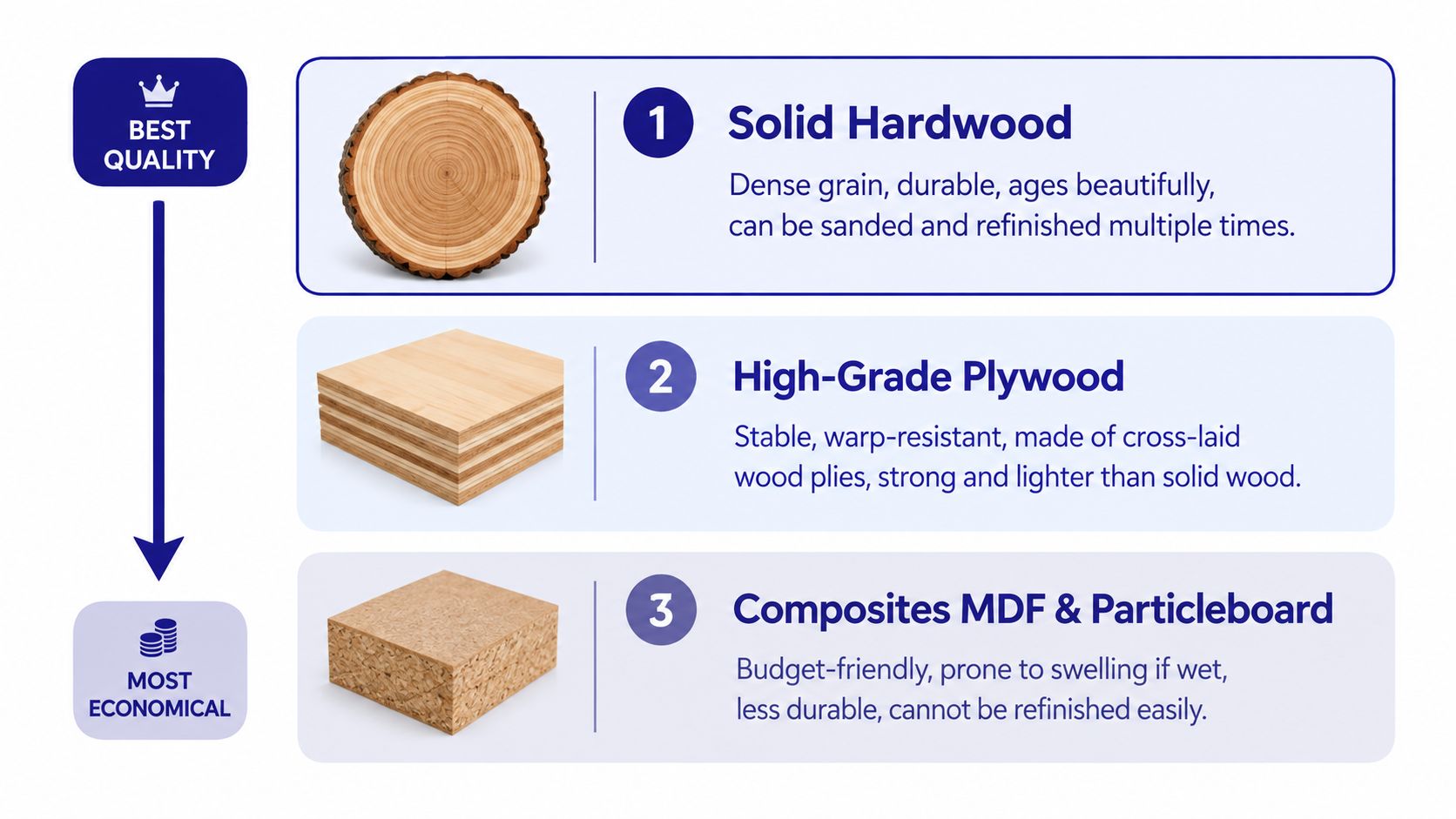
    A diagram illustrating the hierarchy of furniture materials from high-quality solid hardwood to economical composite boards.

    Solid wood and why it matters most in cribs

    Solid wood is the closest thing to what you might picture when they hear “wood furniture.” Think of a single board cut from a tree, shaped into rails, legs, drawer fronts, or side panels. It tends to be more hard-wearing and generally holds fasteners better under repeated loading and relocation, according to Nursery World engineering commentary.

    That fastener point matters more than it sounds. A crib gets assembled, leaned on, adjusted, and sometimes moved from room to room. If screws and bolts stay secure in the material, the piece is more likely to feel steady over time. That's one reason many parents prioritize solid wood for the crib first, even if other pieces in the room use different construction.

    Plywood and when it's a sensible middle ground

    Plywood is made of thin layers of wood bonded together with the grain running in alternating directions. A simple way to picture it is a stack of playing cards glued crosswise for stability. Good plywood can perform well because those layers resist warping better than some single boards.

    The same engineering source notes that plywood can be a viable option when it's built with many layers, with nine-ply birch cited as a useful benchmark in higher-quality construction, as noted in the same Nursery World engineering commentary. For side panels, drawer boxes, and some non-critical structural parts, quality plywood can be a smart compromise between cost, weight, and durability.

    MDF and particleboard and where caution helps

    Composite boards such as MDF and particleboard are made from wood fibers or particles bound together with adhesives. They can look smooth and consistent, especially under paint or veneer. They also tend to be more vulnerable to moisture absorption, swelling, and long-term joint loosening, according to the same Nursery World engineering commentary.

    That doesn't mean every composite piece should be ruled out. It means you should place it carefully in your budget. A low-stress bookcase may be one thing. A heavily used changing dresser is another.

    Solid wood usually earns its price in the pieces that get opened, wiped, leaned on, and moved the most.

    How to tell what you're really buying

    In store or online, use these clues:

    • Check the product description: Look for exact terms like solid wood, plywood, MDF, particleboard, veneer, or engineered wood.
    • Look at edges and backs: Exposed layered edges often indicate plywood. A very smooth painted panel may be MDF.
    • Ask where the hardware goes: Drawer slides and bed bolts perform differently depending on the core material.
    • Read beyond the headline: “Wooden” may describe the appearance, not the full construction.

    One practical example. A convertible crib in solid wood or high-grade plywood usually makes more sense than a composite-heavy crib. A painted nursery dresser can still be a reasonable choice if the structure is sound, the finish is appropriate, and the top will handle changing-pad use.

    Safety Standards and Healthy Finishes to Look For

    Parents often get told to “check safety standards,” but that advice is too vague to help in a store aisle. What helps is knowing which parts of the label matter and why.
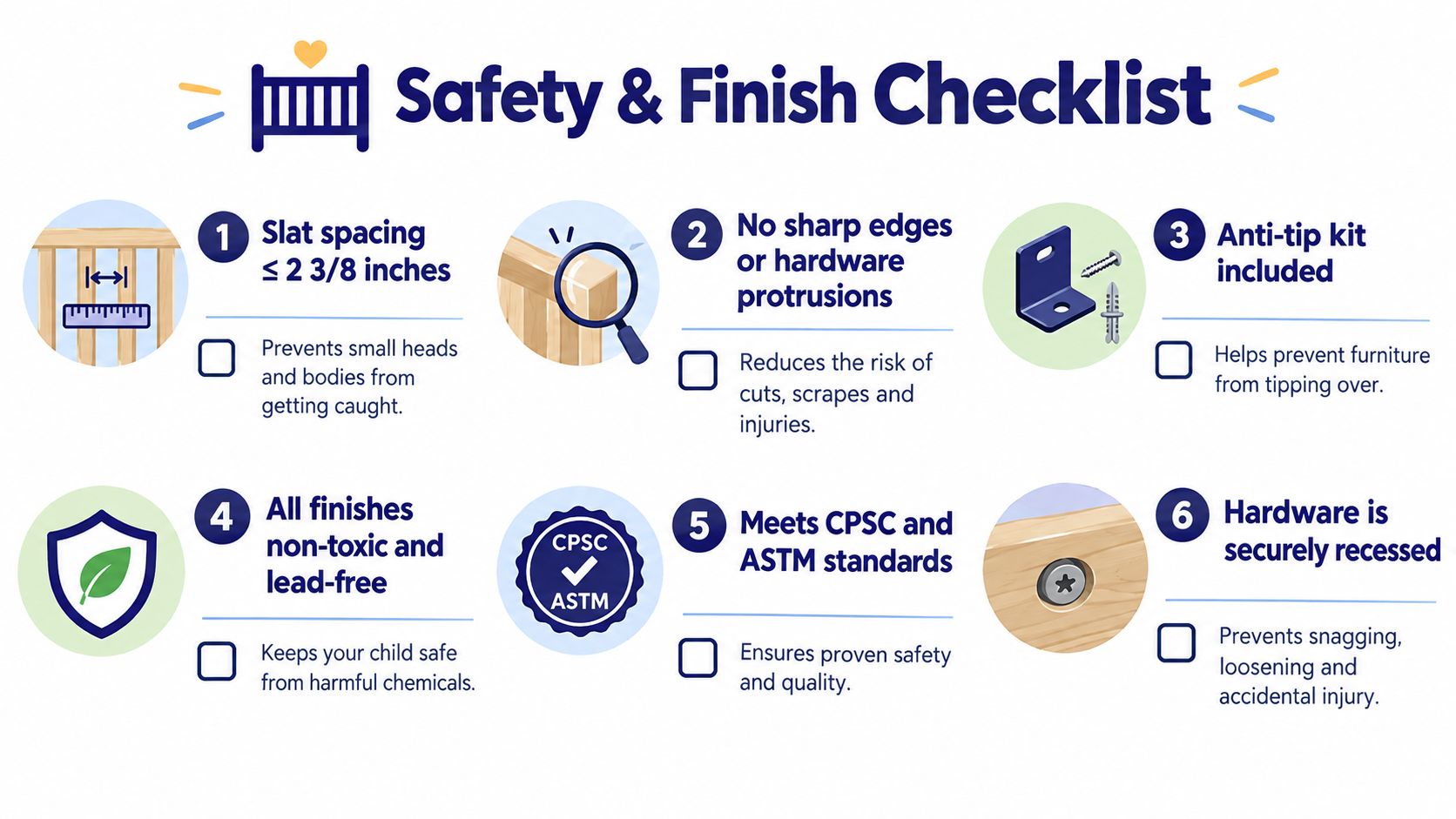
    A safety and finish checklist infographic for nursery furniture highlighting essential child-proofing features like slat spacing and materials.

    Start with the category specific rule

    Nursery furniture isn't governed by one blanket rule. The Consumer Product Safety Commission ties different product types to different standards. Toddler beds must comply with ASTM F1821, full-size baby cribs are tied to ASTM F1169, and non-full-size cribs are tied to ASTM F406, according to the CPSC guide to U.S. furniture requirements.

    That matters because a crib label should tell you what the piece is meant to be. If a product is sold as a crib, look for crib compliance. If it converts later, ask whether the conversion kit keeps it within the intended use for the next stage.

    The U.S. also formalized nursery safety rules through federal regulations including 16 CFR Part 1219 for full-size baby cribs, 16 CFR Part 1220 for non-full-size baby cribs, and 16 CFR Part 1217 for toddler beds, as summarized in the CPSC furniture requirements highlights.

    What to physically inspect

    A standards label is important. A physical check still matters.

    • Slat spacing: Federal crib safety guidance has long used a maximum spacing of 2 3/8 inches between components such as slats and spindles to reduce entrapment risk, according to the federal crib guidance archive.
    • Hardware fit: Check that bolts, brackets, and screws sit flush and feel secure.
    • Edge condition: Run your hand along rails, top edges, and drawer fronts. You're checking for rough spots, chips, or exposed corners.
    • Stability: A dresser should feel grounded, and it should come with anchoring hardware for wall attachment.

    If a piece looks fine but feels shaky in the joints, keep walking. Finish color won't fix weak construction.

    Lead limits and coated surfaces

    Painted wood can be a completely reasonable nursery choice, but the finish has to meet children's product rules. The CPSC specifies a 90 ppm (0.009%) lead limit in paint and similar surface coatings on furniture, according to the CPSC furniture requirements highlights. CPSIA Section 101 also sets a 100 ppm limit for lead in accessible parts of children's products, and it reduced allowable lead in paint and surface coatings on household furniture from 600 ppm to 90 ppm, according to the American Home Furnishings Alliance summary of CPSIA.

    For parents, the practical takeaway is simple. Painted doesn't automatically mean unsafe. You just want confidence that the piece meets current children's product requirements.

    The indoor air quality question many guides skip

    Many nursery furniture wooden guides stop too early. Air-quality issue usually isn't the word wood. It's composite wood emissions and the adhesives or finishes used in those products.

    For composite or engineered wood, U.S. rules under TSCA Title VI and CARB Phase 2 cap formaldehyde emissions at 0.05 ppm for hardwood plywood veneer core, 0.09 ppm for particleboard, and 0.11 ppm for MDF. GREENGUARD Gold is stricter, with a total VOC ceiling of 220 µg/m3 and a formaldehyde limit of 7.3 ppb, according to LeafScore's crib regulations and certifications overview.

    Canada's guidance also applies formaldehyde limits to hardwood plywood, MDF, thin MDF, particleboard, and laminated products used in furniture, with emission caps as low as 0.04 to 0.11 ppm depending on product type, according to Health Canada's formaldehyde emissions guidance.

    So the better question isn't “Is wood safe?” It's “Is this solid wood, plywood, or composite, and what certification or compliance label goes with it?”

    Finishes and Design Styles That Fit Your Home

    A safe nursery still has to live well. That's where finish choice matters. Not just for looks, but for fingerprints, wipe-downs, future scratches, and whether the piece still feels at home outside the nursery.
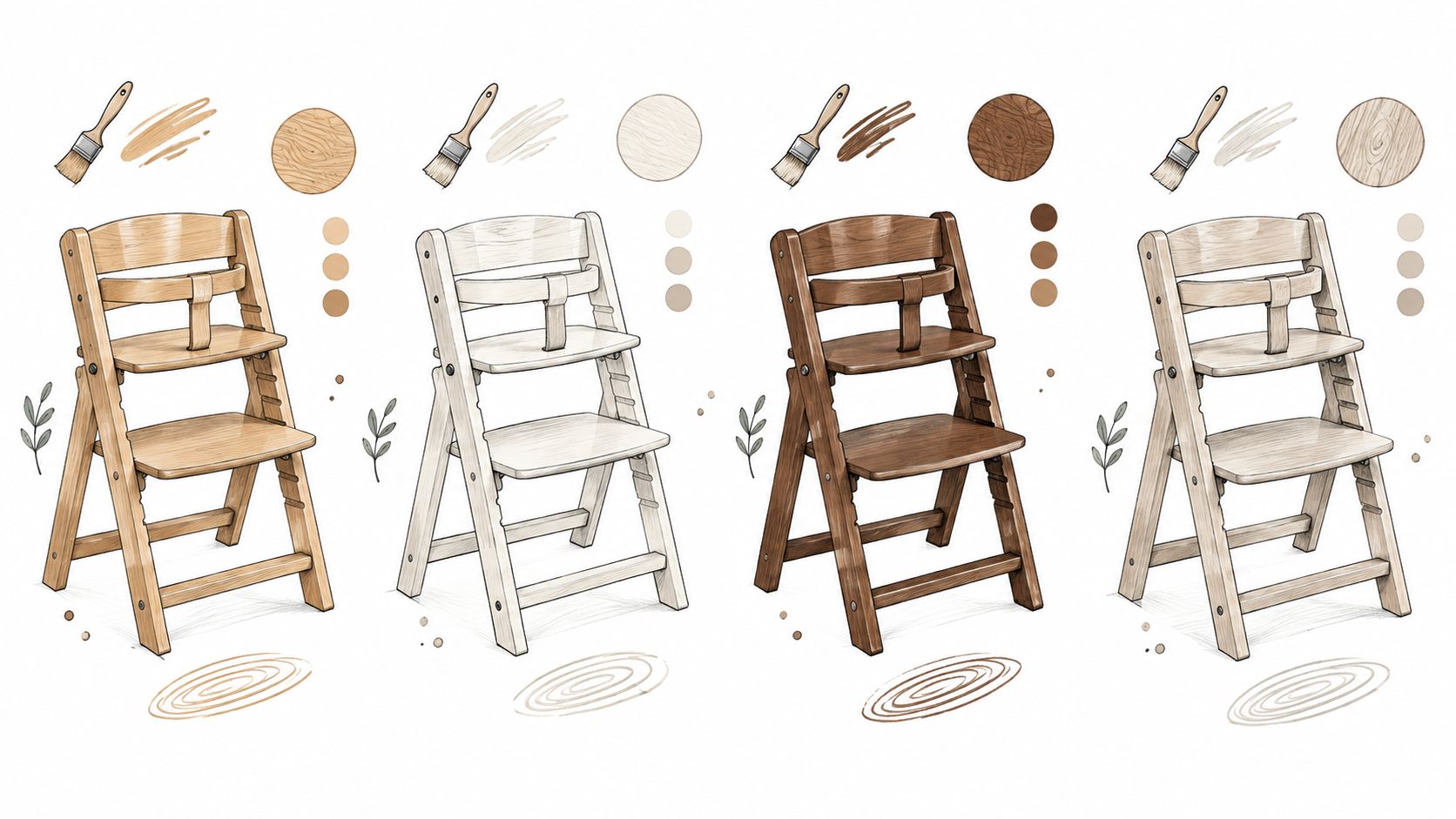
    Four different wooden high chair designs in various natural wood stain colors displayed on a white background.

    How common finishes behave day to day

    A natural clear coat usually shows the grain well and works nicely if you want the wood itself to be the visual feature. It can age gracefully, though scratches may catch light depending on sheen.

    A painted finish gives the cleanest line if you want a bright crib or dresser. It's often the easiest way to fit traditional or soft modern nurseries. It can also show chips more clearly at corners if the piece takes repeated knocks.

    Stained wood tends to hide small wear better than flat paint, especially in medium tones. It can also transition well into a child's room later. If you're deciding between stain and paint on a timber piece, this Painters North Shore timber advice offers a useful plain-language breakdown of how each choice changes appearance and maintenance.

    Whitewashed and light natural finishes create an airy room, but they can vary a lot by material. A light tone in solid wood often looks different from a light printed or veneered finish over engineered board.

    You don't need a matched set

    Many parents think the crib, dresser, and changing table must come from one collection. They don't. A room usually looks more settled when the pieces relate rather than match exactly.

    Try these combinations:

    • Modern minimal: Simple crib lines, light or medium wood tone, small hardware, uncluttered dresser front.
    • Warm Scandinavian: Pale wood, soft whites, rounded edges, minimal contrast.
    • Classic traditional: Deeper stain, framed drawer fronts, more visible molding, slightly heavier silhouette.
    • Natural reclaimed look: Textured grain, matte finish, black or aged metal hardware, mixed wood tones.

    A nursery often looks more intentional when one piece leads and the others support it.

    For example, a warm oak crib can pair well with a painted dresser if both share similar visual weight. A natural wood changing topper can tie them together. That approach also helps if you want the dresser to move into a guest room later, or the crib to convert and stay in the family longer.

    Match the finish to the next room

    If you think a piece may leave the nursery later, lean toward wood tones or quieter painted colors. A bright themed finish can be charming now and awkward later. Neutral natural finishes usually have the easiest second life in a toddler room, hallway, or spare bedroom.

    Sizing and Room Layout for Comfort and Safety

    Room planning is where good furniture choices can still go wrong. A crib may be safe and well built, but if it crowds the walkway, blocks a closet, or forces the changer into a tight corner, daily use gets harder than it needs to be.

    Measure the room by movement, not just walls

    Most parents start by measuring wall length. That's useful, but movement matters more. You need space to open drawers, walk while carrying a baby, and reach the crib without twisting around a glider or laundry basket.

    A simple method works well:

    1. Mark fixed obstacles first. Note the door swing, closet reach, windows, floor vents, and any baseboard heater or cord concern.
    2. Choose the crib wall next. Pick the quietest, cleanest placement with good access on at least one long side.
    3. Test dresser use with tape. Painter's tape on the floor helps you visualize not just the footprint, but the drawer pull-out space.
    4. Add seating last. A glider is helpful, but it shouldn't control the whole room.

    If you're shopping locally, one practical option is using room-planning help from a retailer such as Woodstock Furniture & Mattress Outlet, which offers Room Planner tools that can help visualize fit before purchase.

    A few layout mistakes show up often

    The first is overfilling the room. Parents understandably want the full setup, but nurseries function better when there's open floor around the crib and dresser.

    The second is placing the changing surface where you can't comfortably stand. You'll use that zone many times a day. If the drawers can't open fully or your hip hits the crib corner every time, the arrangement isn't working.

    Leave breathing room around the pieces you touch most. Empty floor space is part of the design, not wasted space.

    Nursery Layout Decision Matrix by Room Shape

    Room Situation Recommended Wooden Pieces Layout Tip
    Small square room Crib, single dresser with changing top, one slim storage piece Put the dresser on the wall nearest the door so diaper changes don't interrupt crib access
    Narrow room Crib on the long wall, tall dresser instead of wide dresser Use vertical storage to preserve walking space down the center
    Room with shallow closet Crib plus medium dresser, skip extra cabinet pieces Let the dresser do most of the storage work and keep the closet easy to reach
    Shared nursery and guest room Convertible crib, dresser that can outlive nursery use Choose furniture that can stay when the room's function changes
    Awkward window placement Crib on a solid wall, low dresser under a noncritical window if appropriate Keep sleep space away from cords and use lower pieces where sightlines matter
    Future toddler conversion in mind Convertible crib, sturdy dresser, flexible side table Plan where the larger bed footprint will go before buying the crib

    Think one stage ahead

    If a crib is convertible, don't judge it only by the infant setup. Ask where the longer toddler or full-size form will go later. A layout that works today may become cramped after conversion if the dresser is too deep or the traffic path is too narrow.

    This is one reason fewer, better-chosen wooden pieces often outperform a packed room. The nursery needs to function at 2 a.m., not just in a photo.

    Maintenance and Long Term Value Beyond the Nursery

    The furniture decision doesn't end at delivery. Wood ages well when it's cared for consistently, and nursery conditions matter. Wipe-downs, humidity, drawer use, and small bumps all add up.
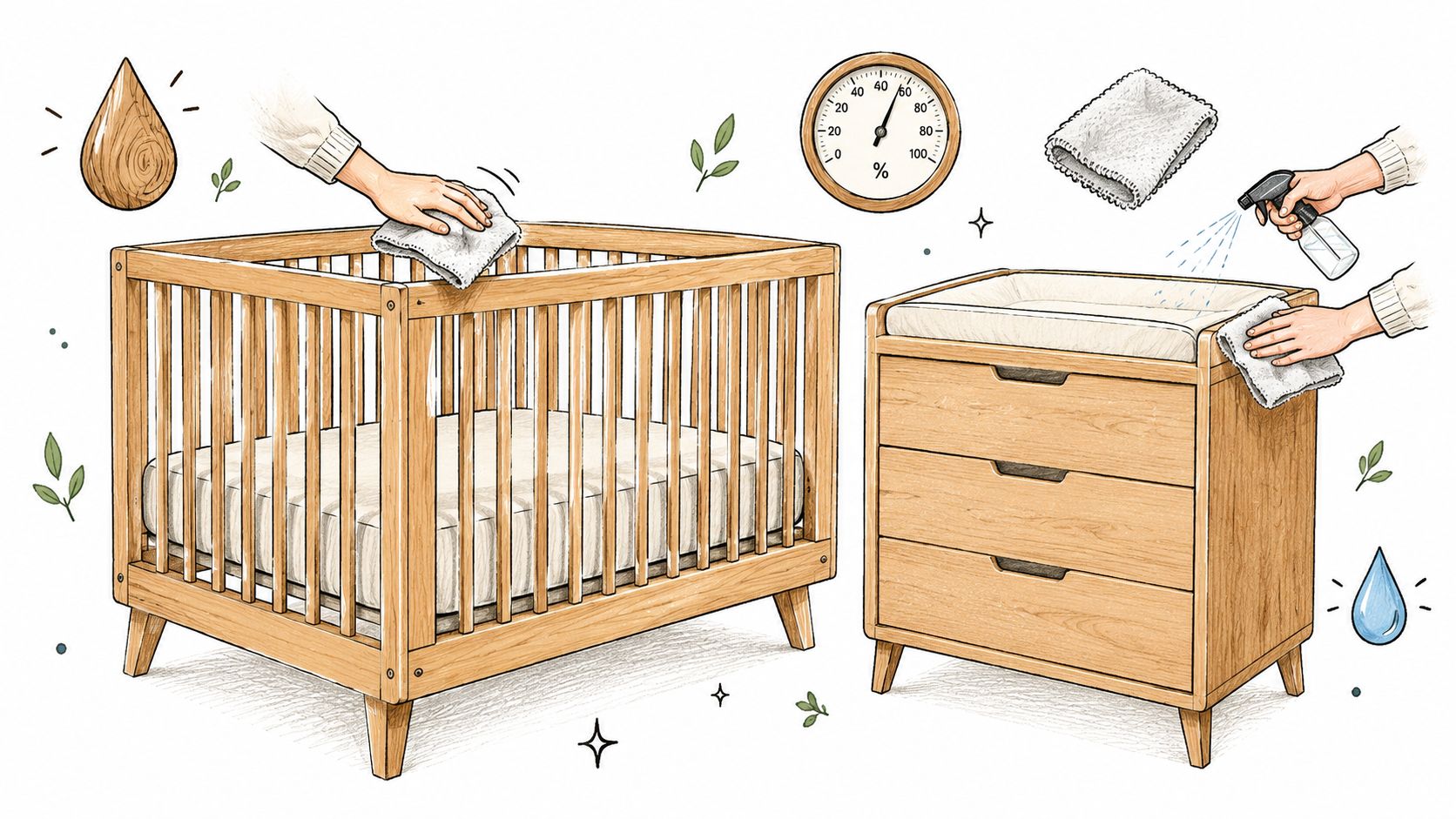
    A hand wiping a wooden nursery crib and a changing table with a cloth and spray bottle.

    Everyday care that protects the piece

    The simplest routine is often the best one. Use a soft cloth, clean spills promptly, and avoid soaking the surface. That matters especially around changing areas, where repeated moisture exposure can wear on lower-grade boards and loosen edges over time.

    A few habits help:

    • Wipe, don't drench: A damp cloth is usually enough for routine cleanup.
    • Tighten hardware occasionally: Cribs, changing toppers, and drawer pulls all benefit from periodic checks.
    • Watch the room climate: Wood and wood-based products respond to humidity swings.
    • Handle dents early: Minor marks are easier to live with when the finish is maintained gently instead of scrubbed aggressively.

    What tends to hold value in real life

    Durability and value are linked, but not in a flashy way. The strongest value usually comes from pieces that stay useful after the nursery phase.

    Market reporting projects the baby solid wood furniture segment to rise from $2.35 billion in 2025 to $3.92 billion by 2034, a 5.8% CAGR, according to DataIntelo market reporting. That projection is tied in part to demand for durable and sustainable materials, which fits what many parents already want. They'd rather buy a dresser that moves into a child's bedroom than replace a swollen one a few years later.

    A crib is a good example of this tradeoff. A solid wood convertible crib may cost more upfront, but if it converts cleanly and the hardware remains sound, the value story improves. A dresser with deep drawers and a removable changing topper often has a better second life than a nursery-specific storage unit with a short useful window.

    This short video can help you think about upkeep in a practical, visual way before the furniture starts seeing daily use.

    Where to spend and where to save

    If the budget is tight, spend more on the pieces that take structural stress and constant contact. Usually that means the crib and the main dresser. Decorative shelves, accent storage, or less-used pieces can be the place where a more economical material makes sense.

    Long-term value usually comes from fewer replacements, steadier hardware, and furniture that still fits the home after the nursery is gone.

    Bringing Your Wooden Nursery Together With Confidence

    A good nursery rarely comes from picking the most expensive wood or the trendiest finish. It comes from making three clear decisions in the right order. First, choose the right material for the job. Second, confirm the safety and finish information that matters. Third, make sure the piece fits the room and the next stage of life.

    That means solid wood often makes the most sense for a crib or other high-stress piece. High-grade plywood can be a sensible middle ground when construction is thoughtful. Certified composite can still have a place when the use is lighter, the emissions information is clear, and the budget needs flexibility.

    When you shop, slow the process down. Touch the rails. Open the drawers. Read the construction details instead of only the color name. Measure the room twice, and think about how you'll move through it during a tired morning or a late-night diaper change.

    If you already have related sizing or design questions, those are often best handled in separate room-planning or style guides rather than piling everything into one decision. For this purchase, the clearest path is usually the best one. Pick the safest practical construction for the crib, the most useful storage piece for daily life, and finishes you'll still like after the baby stage passes.


    If you want to compare cribs, changing tables, and wood finishes in person, Woodstock Furniture & Mattress Outlet offers nursery furniture along with hands-on help for sorting construction, layout, and everyday use. It's a practical place to ask about material details, room fit, and which pieces make sense if you want the nursery to stay useful well beyond the first year.
  • How to Design a Nursery That Grows With Your Child

    How to Design a Nursery That Grows With Your Child

    When it comes to designing a nursery, it often comes down to three things: safety, function, and longevity. If you can create a practical layout, choose furniture that can grow with your child, and make the whole space a safe environment, you’ll build a beautiful room that serves your family way beyond the baby years.

    Your Nursery Design Journey Starts Here

    Putting together your baby’s room is one of the most exciting projects you'll tackle as a new parent. It's easy to get swept up in the latest trends on Pinterest or just feel overwhelmed by all the choices out there. But the goal is to create a space that feels right for your family and makes your day-to-day life a little bit easier.

    This guide is meant to help you look past the temporary themes and focus on what truly matters. We’ll walk through the whole process, step by step, to help you build a nursery that’s practical, calming, and truly built to last.

    Setting the Foundation for Success

    The key is to think of the nursery not just as a room for a baby, but as a space that will evolve over time. A great design creates a soothing atmosphere that helps with sleep (for everyone!) and makes those 2 a.m. wake-up calls just a little more manageable. Think of this as a conversation with an experienced friend who’s here to help you build a functional, beautiful room with confidence.

    A well-designed nursery balances today's needs with tomorrow's possibilities. By focusing on multi-functional pieces and a flexible layout, you create a room that grows with your child, saving you time and effort down the road.

    To get your planning started, a comprehensive guide on how to set up a nursery can be a huge help. It lays out a solid framework for those initial steps, making sure you’ve got all the essentials covered from the get-go. From there, we'll dive deeper into creating a layout and picking out furniture that will stand the test of time.

    Building a Smart Nursery Layout

    Before you fall in love with a particular crib or start picking out paint chips, the very first step—the most practical one—is to get to know the room itself. A nursery that feels right and works for your family is built on a smart, safe layout. It's the foundation that makes daily life easier, ensuring the space works for you, not against you. And it all starts with a simple tape measure and a sketch pad.

    Taking a few minutes to measure your space and map out a basic floor plan can save you from a ton of frustration later. It prevents those all-too-common headaches, like finding out a dresser drawer can't open all the way or realizing a walkway is just a bit too tight for navigating in the dark. A clear plan makes sure every piece has a home and you have enough room for those 2 AM check-ins without stubbing a toe.

    The Power of Nursery Zones

    A helpful way to organize your floor plan is to think in "zones." This isn't about putting up walls, of course. It's about grouping activities and the furniture for them in a way that makes sense. A well-zoned nursery keeps everything you need within arm's reach, which is a lifesaver when you've got a fussy baby in one arm.

    Most nurseries can be broken down into three main zones:

    • The Sleep Zone: This is your crib's territory, and it should be the calmest, most peaceful part of the room. Try to place it away from direct drafts, any windows with cords, and busy doorways. The whole idea is to create a quiet, protected little haven dedicated purely to rest.
    • The Changing Zone: Centered around the changing table or a dresser with a changing pad, this spot is your command center for all things diaper-related. You'll want your diapers, wipes, creams, and a diaper pail all right there. An organized changing zone makes the whole process faster and less chaotic.
    • The Comfort Zone: This is where your glider, rocker, or a cozy armchair will live. It's the spot for feeding, story time, and all the snuggles. Place it near a small side table where you can set down a bottle or a book, and think about having a lamp with soft, dimmable light nearby.

    This simple flow chart can help drive home how to prioritize your design decisions. You start with the non-negotiables like safety and function before getting to the fun stuff like style.

    Flowchart illustrating the three key focus areas for nursery design: safety, function, and longevity.

    It’s a great visual reminder that a truly successful nursery is built on a practical foundation, not just pretty things.

    Mapping Out Your Room's Reality

    Once you have your zones in mind, it's time to map them onto the room you have. Pay close attention to the things you can't change—the architectural details that will dictate your layout more than anything else.

    Don’t just measure the room’s dimensions; measure the "usable" space. A good floor plan has to account for door swings, window locations, closets, and electrical outlets to prevent those day-one layout problems.

    Think about these non-negotiables:

    • Windows and Doors: Make a note of which way doors swing and how much wall space they take up when open. As a rule, the crib should not be placed directly under a window because of the safety risks from drafts and blind cords.
    • Electrical Outlets: Find every outlet before you do anything else. You're going to need them for the baby monitor, a nightlight, a sound machine—you name it. Knowing where they are helps you place furniture without blocking your power sources.
    • Flooring and Vents: If you have floor vents, double-check that they won’t be covered up by a rug or a heavy piece of furniture, as that can mess with the room's airflow. Your flooring might also influence your layout. For instance, you’ll probably want to put that comfy glider on a soft area rug instead of a cold, hard floor.

    By figuring out these practical details from the get-go, you're setting yourself up for a nursery that not only looks beautiful but is also genuinely a joy to be in. This foundational planning is truly the most important step in designing a nursery that works.

    Choosing Your Foundational Nursery Furniture

    Once you have a solid layout in mind, it’s time for the fun part—picking out the furniture. These foundational pieces are an investment, not just in your nursery's style, but in your family’s comfort and your child’s safety. Many parents focus on items that are beautiful, yes, but also durable, safe, and versatile enough to grow with your baby. The three pillars of a functional nursery are often the crib, the changing station, and a comfy chair for you.

    Sketches of essential baby nursery furniture including a crib, changing dresser, and a glider chair.

    The Heart of the Room: The Crib

    The crib is much more than just another piece of furniture. It's the safe haven where your little one will spend a significant amount of their time sleeping and growing. When it comes to choosing a crib, safety is priority number one.

    Look for a crib certified by the Consumer Product Safety Commission (CPSC) and JPMA (Juvenile Products Manufacturers Association). These certifications are your assurance that the crib meets strict standards for slat spacing, hardware, and structural integrity. A crucial tip: avoid drop-side cribs. They've been banned from sale in the U.S. since 2011 because they are no longer considered safe.

    Beyond safety, think about longevity. A convertible crib is an incredibly practical choice that can offer great long-term value. These clever designs transform from a crib to a toddler bed, then a daybed, and some even become a full-size headboard. This adaptability means you won't be buying a whole new bedroom set every few years, which makes it a sound investment.

    Creating a Smart and Lasting Changing Station

    Next up is a dedicated changing station. While you can certainly buy standalone changing tables, a far more practical and lasting solution is to use a sturdy, timeless dresser with a secure changing pad on top.

    This approach gives you two major advantages:

    1. More Storage: Dressers have ample drawer space for diapers, wipes, clothes, and all the other essentials, keeping everything organized and right where you need it.
    2. Extended Usefulness: Once your child is out of diapers, just remove the changing pad. You're left with a quality dresser that can be used for years, from their toddler phase right through their teen years.

    When picking a dresser for this double duty, make sure it’s at a comfortable height for you—a sore back from stooping over is something you'll want to avoid. And please, don't forget to securely anchor the dresser to the wall. It’s a simple step that prevents any risk of tipping.

    The trend toward multi-functional furniture isn't just a fad; it makes practical sense. In North America, where about 92% of parents set up the nursery before the baby arrives, the demand for smart, adaptable pieces has soared. This push has also brought a bigger focus on healthy materials. For instance, data shows that around 65% of parents are now opting for furniture made from GREENGUARD-certified woods, which can slash volatile organic compounds (VOCs) by up to 90% and promote healthier indoor air. You can explore the full insights on baby furniture from Fortune Business Insights to see more on these market trends.

    Finding the Perfect Spot for Comfort and Bonding

    Late-night feedings, soothing a fussy baby, and quiet story times all demand a comfortable place to sit. Whether you choose a glider or a rocker often comes down to personal preference and the space you're working with. Knowing how they move can help you decide.

    A rocker has that classic, more pronounced arcing motion that many people find incredibly soothing. The trade-off is that the rocking motion needs more floor space, and the runners can become a pinch hazard for tiny fingers or curious pets once your child starts crawling.

    A glider, on the other hand, moves forward and backward on a fixed track, giving you a smoother, gentler motion. This mechanism takes up less space, making it a fantastic choice for smaller nurseries. Many gliders also have a swivel feature, which is a nice added convenience.

    When you visit a showroom, take the time to actually sit in different chairs. Consider the armrest height—is it comfortable for holding a baby? Does the back offer good support? This is a piece of furniture you'll spend many hours in, so its comfort is just as important as its looks.

    To help you sort through the options, here's a quick look at the most popular types of nursery seating.

    Nursery Seating Options: A Quick Comparison

    Seating Type Key Feature Best For Space Consideration
    Glider Smooth forward and backward motion on a stationary base. Smaller rooms and parents who prefer a gentle, quiet movement. Generally more space-efficient; many can be placed closer to a wall.
    Rocker Moves in a classic, arcing motion on two curved legs. Parents who enjoy a traditional rocking sensation and have ample room. Needs clearance in front and back to avoid hitting walls or furniture.
    Recliner Offers gliding or rocking motion with an added recline function. Great comfort for tired parents; helpful for napping during overnight shifts. Typically the largest option and requires significant space to fully recline.

    Ultimately, choosing the right seating comes down to how you picture yourself using the space. Will it be mainly for feeding, or do you see yourself dozing off in it, too? Testing out different styles in person can give you the clarity you need to pick a chair you’ll love for years. By focusing on these three foundational pieces—the crib, dresser, and chair—you create a nursery that is safe, truly functional, and ready to grow right along with your family.

    Designing a Safe and Soothing Environment

    A beautiful nursery is wonderful, but a safe and soothing nursery is the real priority. This is where we shift from the fun of decorating to the non-negotiables that create a truly peaceful space for both you and your baby. It’s all about building a room that not only looks calming but feels secure.

    Everything from where you put the furniture to how you set it up needs to be viewed through a safety-first lens. Thinking this way from the start helps prevent common household accidents and creates an environment where your little one can rest, and eventually explore, without unnecessary risks.

    Critical Safety Practices for Your Nursery

    Physical safety in a nursery is something you do proactively, not reactively. This means securing the room's core elements long before your baby even thinks about crawling.

    One of the most important first steps is to anchor all heavy furniture to the wall. This includes dressers, bookcases, and changing tables—anything a curious toddler might try to climb. As they grow, they instinctively pull up on furniture, and an unsecured piece is a serious tipping hazard. Anti-tip kits are simple to install and provide immense peace of mind.

    Next up is crib placement. To create the safest possible sleep area, you’ll want to position the crib away from a few key things:

    • Windows: Placing a crib near a window is a double-whammy of risk. It can expose your baby to drafts and, more seriously, the danger of blind cords, which are a strangulation hazard.
    • Vents: Try not to place the crib directly over or under a heating or cooling vent. That constant airflow can easily make your baby too hot or too cold, which is a recipe for disrupted sleep.
    • Cords: Keep the crib well away from any electrical cords, including those for baby monitors, lamps, or sound machines.

    The best nursery layouts prioritize clear, safe zones. By keeping the area immediately around the crib totally free of other furniture, cords, and even heavy wall decor, you create a protected space that's dedicated solely to rest.

    Creating a Safe Sleep Space

    Once your furniture is securely in place, the focus narrows to the crib itself. As you plan your nursery, remember that ensuring a safe sleep environment for infants is absolutely paramount. The American Academy of Pediatrics (AAP) has very clear guidelines to reduce the risk of Sudden Infant Death Syndrome (SIDS), and they're easy to follow.

    The core principle is simple: bare is best. The crib should contain nothing more than a firm, flat mattress that fits snugly inside the crib frame, covered only with a fitted sheet. That means you need to avoid adding any soft bedding, such as:

    • Blankets
    • Pillows
    • Bumpers
    • Stuffed animals or toys

    While these items might look cozy and cute in photos, they pose a real suffocation risk. A firm crib mattress provides all the support a baby needs, and for warmth, a simple sleep sack or wearable blanket is a much safer alternative.

    Crafting a Calm and Serene Atmosphere

    Beyond just physical safety, the nursery’s overall atmosphere plays a huge role in promoting restful sleep and a sense of calm. The right environmental touches can be a game-changer during those late-night feedings and early-morning wakeups.

    Thoughtful lighting is one of your most effective tools. Instead of relying on a single, bright overhead light, think in layers. A dimmer switch is invaluable, letting you lower the lights for a diaper change without jolting your baby wide awake. A small, soft-wattage lamp on a dresser can also provide just enough gentle light to see what you're doing.

    Another powerful tool for managing the nursery environment? Blackout curtains. They are incredibly effective at blocking out sunlight for daytime naps and keeping the room dark during those long summer evenings. By creating a dark, sleep-conducive space, you can help regulate your baby’s sleep cycles and encourage longer, more restorative rest.

    The color palette you choose also contributes to the room's overall vibe. While there are no hard-and-fast rules, soft, muted colors are often used to create a tranquil environment. Shades of soft blue, gentle green, warm gray, or creamy white can make the space feel serene and uncluttered. You can always introduce pops of brighter color through artwork or a mobile, which adds visual interest without overstimulating the space. Ultimately, the goal is a room that feels restful to you, because your sense of calm will absolutely transfer to your baby.

    Smart Storage for a Clutter-Free Nursery

    It’s one of the great mysteries of parenting: how can someone so small come with so much stuff? From diapers and wipes to clothes in six different sizes, the gear can quickly take over a room. That’s why effective storage isn't just about being tidy; it's the secret to creating a calm, functional space where everything has its place.

    An organized nursery makes it so much easier to find what you need, even when you're fumbling around half-asleep for a 3 AM feeding.

    A line drawing of an organized nursery with a crib, labeled storage bins, a dresser, and a storage ottoman.

    The key is to build an intuitive system from the get-go. This means thinking beyond just a dresser and a closet and looking for clever ways to maximize every square foot, no matter how small your space is.

    Think Vertically and Use Hidden Spaces

    When floor space is limited, the best direction to go is up. Using vertical space is a smart strategy in any room, but it’s a total game-changer in a nursery where you need to keep certain items out of a future toddler's reach.

    • Wall Shelves: Floating shelves or narrow bookcases are perfect for displaying books, cute decor, and baskets of smaller supplies. Placing them above the dresser or in an unused corner draws the eye upward and keeps essentials accessible but off the floor.
    • Under-Crib Storage: Don't forget about that prime real estate under the crib! Low-profile, rolling bins are ideal for stashing things you don’t need every day, like extra bedding, bulk diaper packages, or clothes your baby hasn't grown into yet.

    Learning how to design a nursery that feels open and airy, even when it’s full of baby gear, really comes down to these kinds of clever space-saving tricks.

    Make Your Furniture Work Harder

    Choosing multi-functional furniture is one of the most effective ways to stay ahead of the clutter. Every piece in the room should serve a purpose—and ideally, more than one.

    A dresser that doubles as a changing station is a classic for a reason; it combines clothing storage with a practical surface you’ll use constantly. Another fantastic option is a storage ottoman. It can serve as a footrest for your glider, extra seating for a visiting grandparent, and a hidden spot for blankets or toys. This approach not only saves precious space but also delivers excellent value in the long run.

    This trend toward multi-functional design is a big deal in the growing kids and nursery furniture market, which is projected to hit USD 47.27 billion by 2031. Families are increasingly looking for modular furniture that adapts as a child grows. You can dig into the numbers yourself in the full kids and nursery furniture market analysis from Mordor Intelligence.

    The best storage solutions are the ones that blend seamlessly into your daily routine. Think about what you reach for most often and create 'stations'—a diaper caddy on the dresser, a basket of books by the glider—to keep your essentials organized and always at hand.

    Organize from the Inside Out

    A room can look tidy on the surface but still feel chaotic if you can’t find anything. True, lasting organization happens inside the drawers and closets.

    Simple drawer dividers are an absolute must for dressers. They can separate tiny onesies from socks and sleepers, turning a jumbled mess into a neat, visible system. In the closet, use labeled bins on shelves for items sorted by size, season, or type. This makes it a breeze to grab what you need and see at a glance when it's time to cycle out clothes that no longer fit.

    It's these small internal systems that keep a nursery genuinely clutter-free, day in and day out.

    Common Questions We Hear About Designing a Nursery

    Even with a detailed plan, you might still have a few lingering questions. It's a brand new experience for most parents, and you want to get every detail right for your little one. That's totally normal.

    Let's walk through some of the most common questions we get from parents-to-be, along with some practical advice to help you move forward with confidence.

    When Should I Start Working on the Nursery?

    A great time to get started is usually sometime in your second trimester. This gives you plenty of time to browse for furniture, establish a budget, and place orders without a last-minute scramble.

    Remember, some furniture can take several weeks to arrive, so building in that buffer is a smart move.

    Ideally, you'll want the big stuff—like the crib and dresser—assembled and the room set up about four to six weeks before your due date. This isn't just to save you from late-night stress; it also gives any fresh paint or new furniture time to properly air out. Good ventilation helps get rid of VOCs (volatile organic compounds), which means a healthier space for your newborn from day one.

    What Should I Prioritize on a Tight Budget?

    If you're keeping a close eye on the budget, consider putting your resources into the pieces that directly impact safety and your day-to-day life. The cute decor is fun, but function and safety come first.

    Here’s where your money can be well spent:

    • A new, safety-certified crib and mattress. This is one place you shouldn't cut corners. Buying new ensures it meets all current CPSC safety standards.
    • A comfortable chair for feeding and soothing. You're going to log many hours in this chair. Comfort is non-negotiable for both you and the baby.
    • A sturdy dresser that can double as a changing station. This kind of multi-tasking furniture provides fantastic long-term value and the storage you need.

    All the other stuff—the decorative accents, specialty gadgets, or extra themed bedding—can be added over time. When you invest in quality essentials first, you’re building a solid foundation that will serve your family for years.

    How Can My Nursery Design Evolve with My Child?

    To create a room with some real staying power, it all comes down to making versatile choices right from the start. To make sure your nursery can easily transition as your child grows, pick foundational furniture that doesn't scream "baby."

    A convertible crib that turns into a toddler bed and later a daybed is a brilliant investment. Pair it with a classic dresser in a neutral finish instead of a dedicated changing table.

    Keep the wall color adaptable, too. You can inject personality with things that are easy and affordable to swap out later, like artwork, rugs, bedding, and curtains. This approach lets the room grow with your child's personality without you having to do a complete, expensive overhaul every few years.

    A timeless nursery design focuses on a flexible backdrop. By keeping the big-ticket items classic and neutral, you give yourself the freedom to update the room’s personality with simple, affordable decor changes as your child develops their own unique style.

    What Are the Biggest Nursery Design Mistakes to Avoid?

    Sometimes, knowing what not to do is just as helpful. One of the most common pitfalls is choosing looks over function. A nursery might look like it’s straight out of a magazine, but if it’s a pain to use for daily tasks like 3 a.m. diaper changes, it’ll become a source of frustration fast.

    Another classic mistake is just cramming too much furniture into the room. It’s tempting to get every cute piece you see, but you need that open floor space for tummy time and, eventually, for play.

    A few other things to watch out for: never place the crib right next to a window with blind cords or in a direct draft. And please, don't forget this critical safety step: anchor all heavy furniture, like dressers and bookcases, securely to the wall. It’s a simple step that prevents tipping accidents.


    Creating a nursery is one of the most special parts of getting ready for your new arrival, and our team is here to help you every step of the way. From choosing a safe, convertible crib to finding a comfortable glider, Woodstock Furniture & Mattress Outlet has a great selection of nursery furniture to help you build a beautiful, functional space. Visit one of our North Georgia showrooms to see these options in person and get friendly, knowledgeable advice.

    Explore Nursery Furniture at Woodstock Furniture & Mattress Outlet