Plan on about two weeks of regular use before judging a new mattress, treating the first five to seven nights as an adaptation phase rather than a final verdict. That's a practical evaluation window, not a promise that every mattress will feel right by then.
You've unpacked the bed, put on clean sheets, and settled in expecting relief. Instead, it feels firmer than the showroom model, your shoulder is more noticeable, and you're wondering whether you chose incorrectly. The useful distinction is between an unfamiliar surface that's becoming comfortable, a mattress that doesn't suit you, and a possible defect.
Break-In Timelines by Mattress Type
If you're deciding how long to break in a new mattress, start with a consistent home trial, not a material-specific countdown. A field study published in Sleep explicitly allowed two weeks of adjustment before evaluating the new mattress more fully.
That supports a review window, but it doesn't establish separate scientific deadlines for memory foam, latex, springs, or air chambers. The construction tells you what to watch; your sleep and comfort tell you whether the mattress suits you.
Break-in windows by mattress type
The windows below are practical guidance, not proven completion dates for each construction.
| Mattress type | What usually changes | Practical evaluation window |
|---|---|---|
| Memory foam | Surface softens and contours to body heat and weight | About 2 weeks, sometimes longer |
| Latex foam | Feel loosens slightly as layers settle | About 2 weeks |
| Innerspring | Comfort layers and coils settle, and support feel evens out | About 1 to 2 weeks |
| Hybrid (coils with foam or latex) | Foam softens while coils settle, so both layers adjust together | About 2 weeks |
| Adjustable air | Feel changes with each firmness setting, so tune in small steps first | About 2 weeks after the final setting |
| Any type | First night or two only | Not a reliable verdict on comfort |
With foam, pay attention to how the surface feels after you've been lying down, not just when you first sit on it. With an innerspring or hybrid, distinguish the cushioning above the coils from the support underneath. For adjustable air, constant setting changes make it harder to recognize a settled preference.
A brief showroom test can help you identify obvious pressure or an unsuitable feel. It can't reproduce a full night of body heat, sustained weight, position changes, and sleep alongside a partner.
For another plain-language introduction to the process, Gates Home Furnishings mattress break-in advice is a useful companion when preparing for home use.
Fair-trial rule: Sleep on the mattress consistently, keep the base and pillow stable, and judge a pattern rather than an isolated night.
Don't treat the table as permission to endure worsening symptoms. Its purpose is to prevent an unfamiliar first impression from becoming an unnecessarily quick decision.
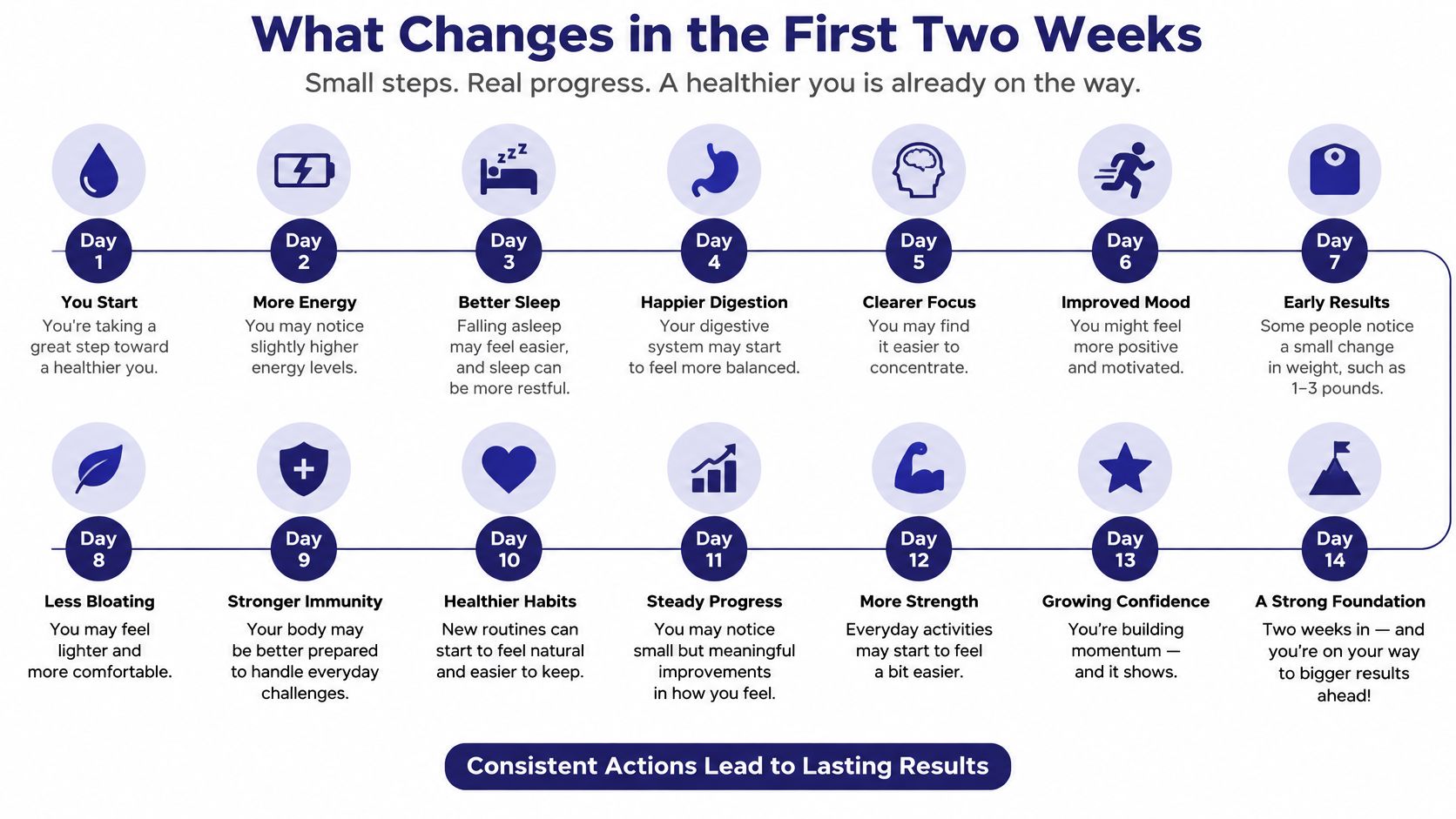
What Changes in the First Two Weeks
A side sleeper switching from a worn, cushioned mattress to a flatter one may notice shoulder pressure on the first night. That new sensation could come from a different pressure distribution, but one night is too little evidence to judge the overall fit.
A bed-firmness study published in 2000 found that participants needed several days to adjust to a different sleeping surface. Published estimates of adjustment time vary, so treat the first several nights as an adjustment period rather than a verdict.
From unfamiliar to more predictable
Early on, you may notice a firmer feel, a different position for your hips, or a warmer or cooler sleep surface. A new-material smell may also linger after unpacking. Follow the manufacturer's instructions for ventilation rather than covering the mattress with extra layers to hide it.
With regular use, foam may feel different after warming beneath you. Your shoulder might settle more comfortably, or turning over may feel less awkward. These changes can reflect getting used to the surface, not a shift into a different firmness category.
This timeline organizes observations; it does not promise health improvements.
Later in the trial, cushioning may feel more predictable, and you may pay less attention to the surface. Your body can adapt to a different sleeping posture while the comfort layers settle. Those processes do not necessarily finish at the same time.
A new pair of leather shoes may soften with wear, but pinching from the wrong shape will not disappear just because you keep wearing them. A mattress can feel less unfamiliar without becoming a good fit.
Separate change from trouble
- Likely adaptation: The feel changes gradually, mild pressure awareness eases, and getting comfortable becomes easier.
- Needs a closer look: Pain stays the same or worsens, numbness appears, or discomfort interferes with daytime activities.
- Needs a setup check: You notice an uneven area or instability, or find that the base does not match the mattress instructions.
If excessive firmness is your main concern, the guide to sleep softer with Guynn Furniture & Mattress offers additional context. First identify whether you need gentler surface cushioning or different underlying support. Those are different issues to address.
Why Your Body and Mattress Type Change the Timeline
A mattress can feel different after several nights and still be the wrong fit. The surface may soften slightly, for example, while your shoulders still feel pressure or your pelvis sinks too far. A longer break-in cannot correct an unsuitable firmness or support profile.
Comfort and measurable sleep improvement are also different things. In a 2025 adaptive-mattress study published in Sleep, participants rated their comfort higher, but objective sleep measures did not improve significantly. The finding is a reason to track how you feel, not to assume that a more comfortable sensation guarantees better sleep.
Match your observations to your sleep needs
Your body affects how the same mattress feels. Someone who compresses the upper layers more may notice the support beneath them, while a lighter sleeper may find the surface less yielding. A firmness label describes a general feel, not how every body will experience it.
Sleep position helps identify where to pay attention. Side sleepers can notice whether their shoulders and hips settle without concentrated pressure. Back and stomach sleepers can watch for uncomfortable sinking at the pelvis or strain in the lower back.
Other factors can clarify what you're feeling:
- Hot sleepers: Track temperature separately from softness. Comfortable cushioning may not solve repeated overheating.
- Couples: Note whether a partner's movements disturb your sleep, rather than attributing every awakening to discomfort.
- People replacing a worn mattress: A flatter surface may feel unfamiliar. That feeling alone doesn't show whether the new mattress offers better support.
Keep comfort and symptoms separate. “The surface feels softer” and “my hip still hurts” can both be true.
When a problem persists, record where and when it occurs. “Left shoulder pressure while lying on my side” gives you a clearer basis for judging fit than “bad mattress.”
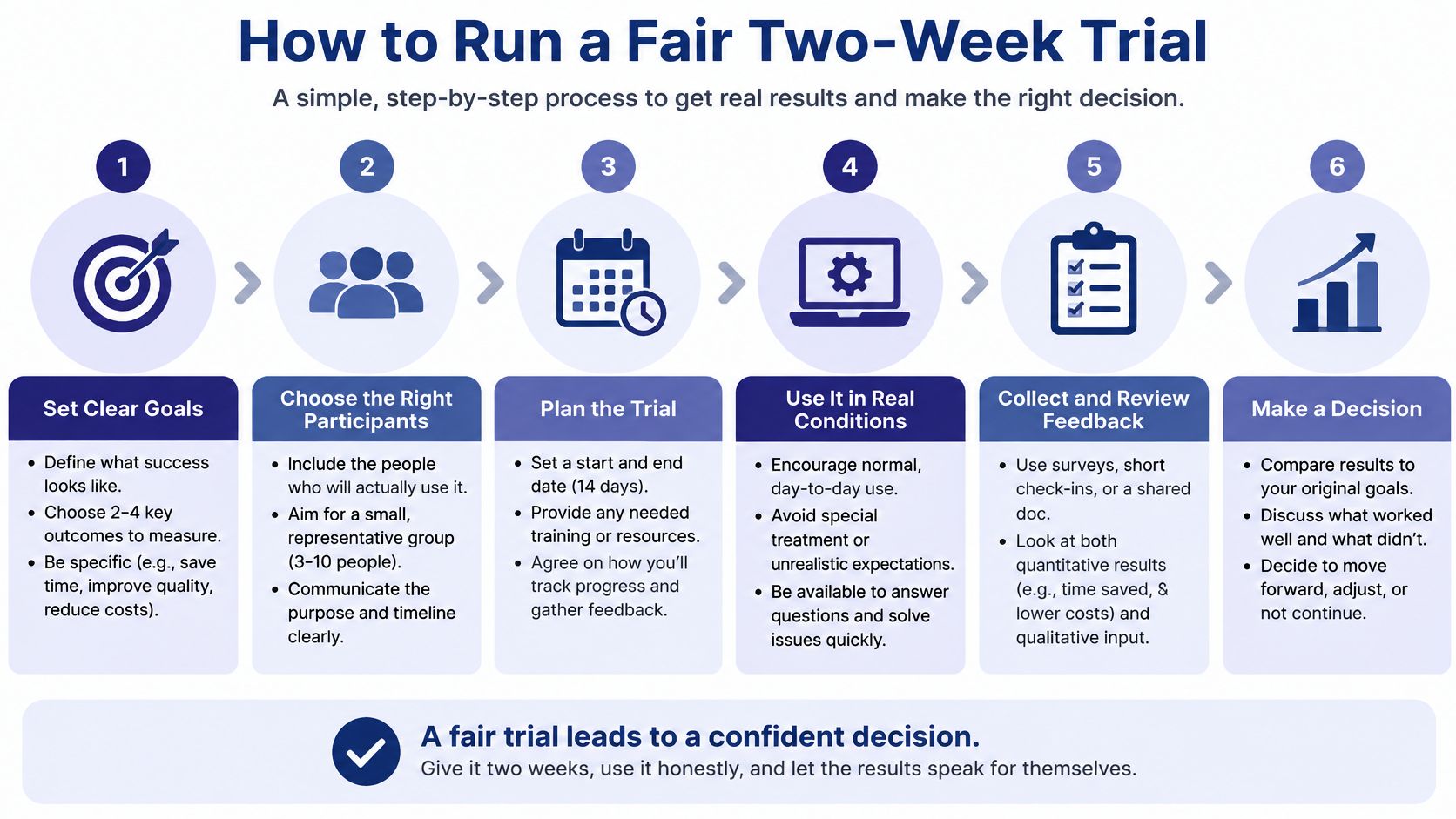
How to Run a Fair Two-Week Trial
A useful home trial limits avoidable changes. If you switch pillows, add a topper, change the base, and adjust firmness together, you won't know which change helped.
Start by reading the setup instructions and written trial terms. A personal review date isn't necessarily an exchange-eligibility date, and comfort concerns aren't automatically warranty claims.
Set up conditions you can compare
Confirm the foundation before sleeping on the mattress. Check the permitted base type, center support, and slat requirements in the manufacturer's instructions. An NBC DFW explanation of mattress warranties describes a 10-year limited warranty covering certain defects, including visible indentations of at least three-quarters of an inch, while excluding problems caused by normal wear or an unsupportive base.
Choose your pillow and bedding at the outset. Use a pillow height that lets your head rest comfortably in your usual sleep position, without forcing your neck upward or downward. Then keep the pillow, sheets, protector, and bedroom conditions as consistent as practical.
Use the mattress nightly once it's ready for use. Follow any unpacking and expansion directions before the first sleep, and avoid alternating with the old bed to compare sensations. Consistency makes your observations easier to interpret, but severe symptoms are a reason to stop and seek advice, not persevere.
The process is straightforward when you keep the setup stable and record what changes.
Record the experience before changing it
Write a short morning note. Include how easily you fell asleep, remembered awakenings, morning stiffness, pressure locations, and temperature. A note such as “fell asleep comfortably, woke hot, shoulder fine” separates issues that might otherwise blend into general dissatisfaction.
Use gentle care, not forced softening. Air the mattress before the first sleep when the maker allows, and rotate or flip it only as instructed. Don't jump on it, apply extra heat, or bend it to accelerate settling.
Keep adjustments small and identifiable. For adjustable air, remain at a setting for several nights before making a small change, and record that change. Leave toppers off until your planned review so you're evaluating the mattress itself rather than an added comfort layer.
Compare the middle and end of your trial. At the day-seven check, note direction rather than demanding a final result; at the day-fourteen review, decide whether to keep the setup, make a targeted pillow or firmness adjustment, or contact the retailer. Stable conditions give you something more useful than a memory of the worst night: comparable notes from both weeks.
Signs the Break-In Is Finished
A mattress is ready to judge when its feel becomes reasonably stable, not because a date arrives. That can mean it now feels comfortable, or that you can clearly identify a persistent mismatch.
A bedding-adjustment summary from Willis Furniture describes the largest changes in a 28-day bedding evaluation as occurring roughly between days 7 and 21. That supports checking the direction of change rather than expecting the final experience immediately.
Check your morning notes in order
Firmness feels consistent. You're no longer noticing a noticeably different surface every morning. Distinguish normal temperature-related sensations from an ongoing change in how much you settle.
Pressure is manageable or absent. Your shoulder, hip, or lower back isn't repeatedly uncomfortable after you get up. Persistent pain matters even if the surface now feels pleasantly soft to your hand.
The new-material smell has faded. Airing has made the room comfortable to use, and odor no longer distracts you at bedtime. A strong lingering smell is an unresolved concern, not proof that more sleeping will solve it.
Sleep becomes more predictable. Compare whether settling down and staying asleep are steady or improving across your notes. Don't attribute every difficult night to the bed if stress, illness, or unusual room conditions were also present.
You stop monitoring the mattress constantly. You lie down and get comfortable without repeatedly checking what feels different. This is a useful everyday sign, though it doesn't replace attention to symptoms.
Stable doesn't always mean suitable
A summary of mattress adaptation literature describes published estimates ranging from one night to about 15 nights. Such a wide range makes a single guaranteed finish date misleading.
A settled feel answers “Has it stopped changing?” Your symptoms answer “Does it work for me?”
If most of the signs are present and you're comfortable, break-in has served its practical purpose. If the feel has stabilized but still conflicts with your sleeping position, discuss fit rather than waiting indefinitely for a different mattress to emerge.
Normal Settling Versus a Warranty Issue
A shallow impression where you sleep isn't automatically a defect. Comfort materials can settle with use, and a visible contour may still fall outside warranty coverage. What matters is whether the dip meets the measurement standard in your written warranty.
The Sleep Foundation guide to mattresses that resist sagging gives approximately 1 inch as an example indentation threshold, while noting that manufacturers set their own requirements. Measure the mattress with nobody and no other weight on it, following the method in your warranty.
Common observations and the next step
| Observation | Usually normal break-in | Worth checking warranty or contacting retailer |
|---|---|---|
| Odor in the first few days | New-material odor that fades with airing | Strong odor still present after a week or more of airing |
| Shallow dip where you sleep | Comfort-layer settling to your body | Depth reaches the indentation threshold in your warranty, measured with no weight on the mattress |
| Pressure at hips or shoulders | Discomfort that eases as you adjust | Pain or numbness continues through the day-14 review |
| Mattress on a base not named in the warranty | The base may change how the mattress feels | Check the specified base before making an indentation claim |
| Sagging edge or visible seam or coil damage | Ordinary settling does not explain visible damage | Contact the retailer or manufacturer promptly |
These are reasons to ask questions, not automatic approvals for warranty coverage. A lingering odor calls for advice about care and next steps. Ongoing discomfort may point to a fit issue rather than a defect.
Gather evidence before contacting support
- Photograph the bare mattress: Lay a straightedge across the dip without pressing down, and use the warranty's measurement method.
- Document the support: Photograph the foundation, frame, slats, and center support so the setup can be checked.
- Collect purchase details: Have the receipt, purchase and delivery dates, model name, and mattress label available.
- Include your morning log: Note where you feel symptoms and any pillow or air-setting changes you've tried.
Contact support promptly about visible damage. Severe pain or numbness also warrants attention; if it persists into the day, discuss it with a health professional rather than assuming the mattress is the cause.
A comfort exchange and a warranty claim answer different questions. Read the return and exchange conditions in writing, including any required use period and exclusions. A showroom visit can help you compare firmness options, but your notes from home provide a clearer record of how the mattress feels during sleep.
Woodstock Furniture & Mattress Outlet offers mattresses, sleep accessories, and delivery options. Bring your morning notes and foundation details when you visit Woodstock Furniture & Mattress Outlet to discuss what you're feeling and compare options without relying on a first-night impression alone.