When you start shopping for a memory foam mattress, you’ll quickly discover that the “right” choice really boils down to your own sleep needs, whether that’s pressure relief, motion isolation, or something else entirely. Well-known brands like Tempur-Pedic have a reputation for deep, contouring support, while others like Nectar aim to strike a balance between comfort and value. The key is knowing how modern foam technology has evolved to solve common sleep problems.
Why Has Modern Memory Foam Become So Popular?
Before comparing brands, it helps to understand why memory foam has gained such traction. This material was originally developed for NASA, but it’s come a long, long way from its early days. Today’s memory foam is an advanced sleep surface engineered to solve the specific issues that can disrupt a good night’s rest.
And people are definitely taking notice. The memory foam mattress market is expected to reach $8.58 billion by 2029, growing at a solid 8.3% each year. This growth shows a significant shift toward better sleep solutions as more people realize just how critical good sleep is for their health.
The Core Benefits That Address Common Sleep Issues
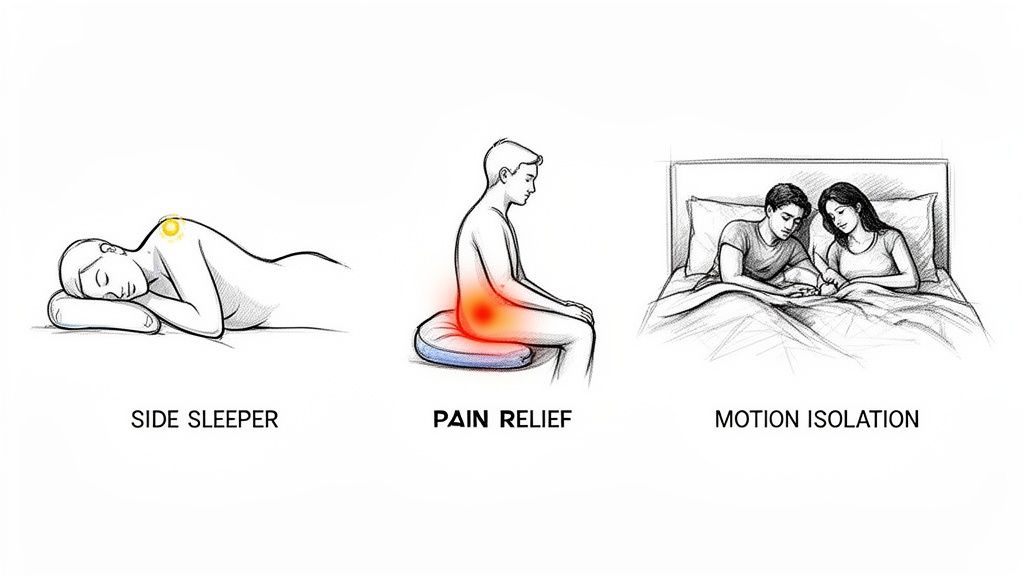
At its heart, memory foam delivers three key advantages that many traditional mattresses don't offer:
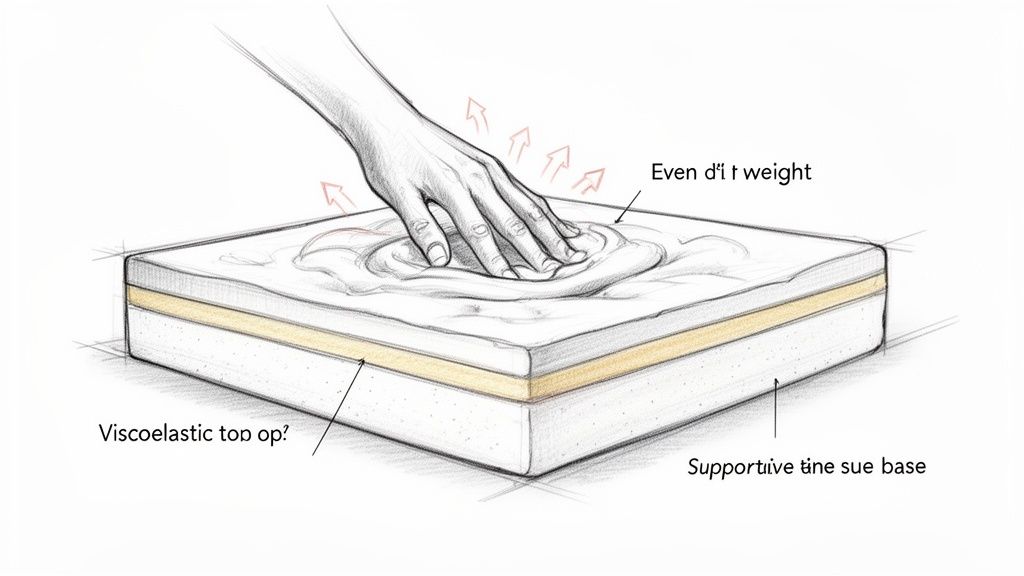
- Significant Pressure Relief: Memory foam is viscoelastic. In plain English, that means it softens and molds to your body using your own heat and weight. This allows it to contour to your shape, distributing your weight out and easing pressure on sensitive spots like your hips, shoulders, and lower back.
- Effective Motion Isolation: If you share a bed, you know the challenge. A partner's tossing and turning can interrupt your sleep. Memory foam is a game-changer here because it absorbs movement right where it happens. When one person moves, that motion doesn't travel across the mattress, letting light sleepers get more consistent rest.
- Body-Hugging Support: By conforming to your body’s natural curves, memory foam helps keep your spine in proper alignment. Instead of your body fighting against a stiff, unyielding surface, the mattress works with you, providing support exactly where you need it.
Getting Past the Old "Sleeping Hot" Concern
We've all heard it: early memory foam mattresses had a reputation for trapping heat. It’s a fair point based on past technology, but today’s leading brands have engineered this problem away.
Modern foams are built from the ground up with breathability in mind. Innovations like open-cell structures, which create tiny airways inside the foam, and cooling gel infusions actively pull heat away from your body. The result is a much more temperature-neutral sleep experience.
These advancements mean you get all the pressure-relieving benefits without the overheating issues of the past. To really get a handle on how far the technology has come, checking out a good memory foam mattress guide covering comfort, types, and tips can be a huge help.
Understanding these basics is the first step toward finding a mattress that truly fits your life, instead of just responding to marketing hype. By focusing on the problems you’re trying to solve—whether it’s achy joints or a restless partner—you can make a much more informed decision about which brand is the right long-term choice for your well-being.
Comparing Leading Memory Foam Mattress Brands
Trying to navigate the world of memory foam can feel a little overwhelming. Let's be honest, every brand promises a great night's sleep. The real key is to look past the marketing and focus on how a brand’s design, materials, and overall feel match up with what you actually need. It's less about finding a single "best" brand and more about finding the one that solves your specific sleep problems.
A big part of that process is just understanding how memory foam stacks up against other popular choices. If you're still weighing your options, our guide on Latex vs. Memory Foam vs. Hybrid: Which Mattress is Actually Right for You is a great place to get a clearer picture of the whole landscape.
For many shoppers, the decision really boils down to one question. This infographic can help you figure out if memory foam's signature benefits are what you're looking for.
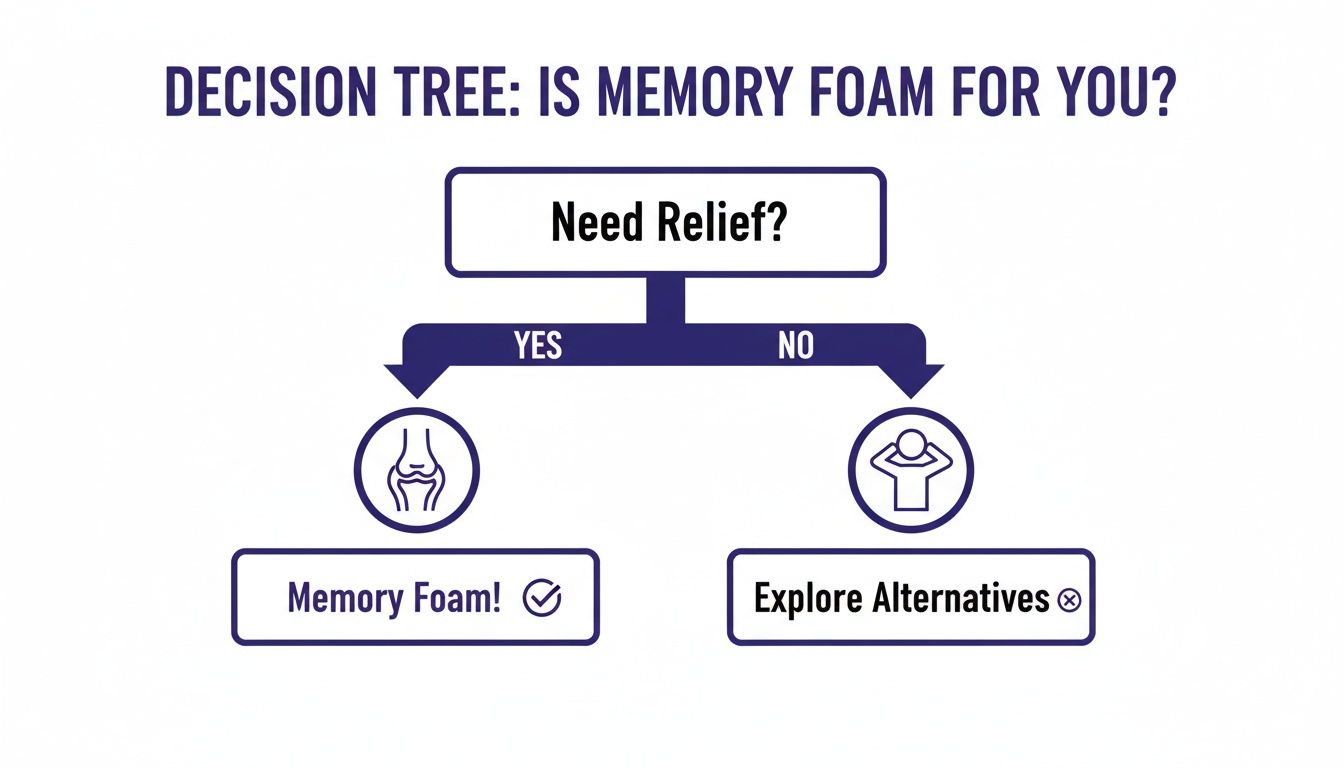
As you can see, if pressure relief is at the top of your list, memory foam is an excellent place to start your search. But not all foams are created equal. Let’s take a look at a few of the top brands to see how they each approach that core benefit.
At-a-Glance Comparison of Well-Known Memory Foam Brands
Here's a quick side-by-side look at some of the key features that set these popular brands apart. This should help you get a feel for their distinct approaches and who they're really built for.
| Brand | Primary Feel and Response | Key Cooling Technology | A Good Fit for Sleepers Who… | General Price Point |
|---|---|---|---|---|
| Tempur-Pedic | Deep, slow-sinking contouring; a classic "hug" | Phase Change Material (PCM) in covers, open-cell structure | Prioritize maximum pressure relief, have chronic pain, and are looking for a long-term investment. | Premium |
| Nectar | Balanced, medium-firm hug; moderate response | Gel-infused memory foam, breathable cover | Want a versatile feel, value a long trial period, and seek a balance of quality and cost. | Mid-Range |
| DreamCloud | Gentle contouring with responsive support from coils | Gel-infused foam paired with airflow from the coil base | Prefer a bit of bounce, worry about sleeping hot, or need strong edge support. | Mid-to-Upper |
| Sierra Sleep | Traditional memory foam feel; straightforward comfort | Varies by model, often relies on basic gel infusions or ventilated foam | Are budget-conscious, furnishing a guest room, or need a reliable, no-frills option. | Entry-Level |
Think of this table as your starting point. Now, let’s dig a little deeper into what makes each of these brands tick.
Tempur-Pedic: The Pioneer in Deep Contouring
Tempur-Pedic is a name most people recognize, and for good reason—they helped define the category. Their proprietary TEMPUR-Material™ delivers a very distinct, slow-sinking feel that provides a deep level of body-contouring. This is that signature "hug" that's designed to relieve as much pressure as possible.
This brand is a good fit for sleepers who trust proven material science and are looking for a mattress that will last. The dense, high-quality foam is engineered to hold up for years without significant sagging or loss of support. That investment in R&D and durable materials means it comes with a higher price tag.
Who is Tempur-Pedic a good fit for? Sleepers dealing with chronic pain or joint discomfort who need a high degree of pressure relief and are looking for a long-term mattress investment.
The brand's market influence is significant. Tempur Sealy is a major player, and the regional mattress sector is growing at a 7% CAGR through 2030. What started as research at NASA has evolved into Tempur-Pedic's material, which now accounts for over 20% of premium sales in the $14.7 billion U.S. foam mattress market as of 2024.
Nectar: Balancing Comfort and Value
Nectar has carved out a space for itself by offering a quality memory foam experience that’s more accessible. Their mattresses usually feature several layers of gel-infused memory foam, aiming for that sweet spot of contouring support and effective temperature regulation.
The feel is often described as a medium-firm, balanced hug. It contours to your body but doesn't have that super deep, slow-sinking sensation you get from some other brands. This makes it a really versatile choice that works well for a lot of different sleep positions and preferences.
- Generous Trial Period: One of Nectar's notable features is its year-long home trial. That gives you more than enough time to be absolutely sure it's the right mattress for you.
- Motion Isolation: Like most memory foam, Nectar is great at absorbing movement, making it a solid choice if you share the bed with a partner.
Who is Nectar a good fit for? Shoppers who want the pressure-relieving benefits of memory foam, a generous trial period to reduce purchase risk, and a strong balance of quality and affordability.
DreamCloud: A Hybrid Approach with Foam on Top
While we often group it with foam mattresses, DreamCloud is technically a hybrid. It combines memory foam comfort layers on top of an innerspring coil base. This construction gives it a unique feel that blends the benefits of both worlds—you get the pressure relief of foam with the responsive support and airflow from the coils.
This design makes it a great pick for anyone who’s new to memory foam or worries about feeling "stuck." The pocketed coils provide a subtle bounce and much sturdier edge support, which makes it easier to move around and get in and out of bed. The foam layers up top still deliver that body-contouring comfort you need for pressure relief.
Who is DreamCloud a good fit for? Sleepers who want the pressure-relieving benefits of foam but prefer a more responsive feel with enhanced airflow and stronger edge support.
Sierra Sleep by Ashley: An Accessible Entry Point
Sierra Sleep by Ashley offers a straightforward and very accessible entry into the world of memory foam. These mattresses are designed with simplicity and value in mind, making them a very practical choice for guest rooms, kids' rooms, or anyone on a tighter budget.
They might not have the complex, multi-layer designs or advanced cooling technologies of the premium brands, but they deliver the core benefits of memory foam—pressure relief and motion isolation—in a reliable package. This makes them a good starting point if you're curious about memory foam but don't want to make a large initial investment.
Who is Sierra Sleep by Ashley a good fit for? Budget-conscious shoppers, individuals furnishing a first home or guest room, and those looking for a dependable memory foam mattress without premium features.
At the end of the day, the most suitable brand is the one that lines up with your priorities, whether that’s premium materials, a balanced feel, hybrid responsiveness, or accessible value. There's no substitute for trying them out, so stopping by a showroom to feel the differences in person can be the most valuable step you take in making a confident decision.
How to Match a Mattress to Your Sleep Style
Finding the right mattress isn't about chasing the "best" one on the market. It's about finding the one that actually solves your unique sleep problems. How you sleep—whether you're a side, back, or stomach sleeper—completely changes what your body needs from a memory foam mattress. A surface that feels like a dream for a back sleeper might lead to aches and pains for someone who sleeps on their side.
This is the key to investing in your rest with confidence. It’s less about the brand name and more about how the foam is built and how it interacts with your body. Once you figure out your sleep style and your main complaints, you can zero in on mattresses designed to give you the right kind of support and relief, night after night.
For the Side Sleeper, Pressure Relief Is Paramount
Most people are side sleepers, but that position also puts your entire body weight squarely on your shoulders and hips. If a mattress is too firm, it’ll push right back against those joints, leading to soreness, numbness, and a crooked spine.
This is where memory foam really shines for side sleepers. Its signature contouring allows those pressure points to sink in just the right amount. That cradling effect helps keep your spine straight all the way from your neck to your pelvis, which is the secret to avoiding lower back pain.
If you’re a side sleeper looking at memory foam, here’s what to look for:
- Medium-Soft to Medium Firmness: This range usually gives you the right balance of cushion and support, without letting your hips sag out of alignment.
- Thicker Comfort Layers: You want a mattress with at least 3 to 4 inches of memory foam up top. That’s what provides the deep, effective pressure relief you need.
For the Back Sleeper, It's All About Spinal Alignment
Back sleepers already have a head start, since it's the easiest position for maintaining a neutral spine. The wrong mattress, however, can disrupt that in a hurry. If your memory foam bed is too soft, your hips will sink lower than your shoulders, creating a hammock effect that leads to a stiff, painful back.
On the flip side, a mattress that’s too firm won’t support the natural curve of your lower back, leaving a gap that strains your muscles. You’re looking for a surface that molds just enough to fill that gap while keeping your spine level.
A medium-firm to firm memory foam mattress is almost always a good choice for back sleepers. It gives you just enough contouring for lumbar support while being sturdy enough to keep your hips elevated and aligned.
For the Stomach Sleeper, Firm Support Prevents Strain
Sleeping on your stomach can be tough on your spine. It can force your neck into an awkward position and cause your midsection to sink, arching your back unnaturally. Because of this, stomach sleepers need a firmer sleep surface than anyone else.
A firm memory foam mattress is critical here. It stops the hips from dipping too low, which is the main culprit behind lower back pain for stomach sleepers. While memory foam is known for that "sinking" feeling, firmer, higher-density foams provide support with just a hint of contouring, keeping the spine as neutral as possible.
You’ll want to look for mattresses specifically labeled as "firm" or those with a thinner comfort layer on top of a very dense support core. This design gives you a solid, supportive surface that won't let you sink in too deep.
Solving Other Common Sleep Problems
Beyond your go-to sleep position, memory foam has features that can tackle other common issues:
- If you struggle with back pain: Look for zoned support systems. Some mattresses are engineered with firmer foam in the center third to give your lumbar and hip areas extra lift, promoting better alignment.
- If you share the bed: This is an easy one. All memory foam excels at motion isolation. If your partner’s tossing and turning constantly wakes you up, pretty much any quality memory foam mattress will be a massive improvement over a bouncy innerspring.
- If you sleep hot: Make cooling technologies your top priority. Look for open-cell foams that improve airflow, gel or copper infusions that pull heat away from your body, and breathable covers made from phase-change materials.
At the end of the day, there's no substitute for trying a mattress out in person. Visiting a showroom lets you feel the subtle differences between foam densities and firmness levels firsthand, making sure you find the perfect match for your sleep style.
What's Actually Inside Your Mattress? A Look at Materials & Certifications
Knowing what’s inside your mattress goes way beyond just comfort—it’s about peace of mind. As shoppers get savvier, we're seeing more and more questions about materials, safety, and where everything comes from. It's a good thing. Understanding a few key certifications and material choices helps you cut through the marketing fluff and pick a mattress from a brand that actually values quality and transparency.
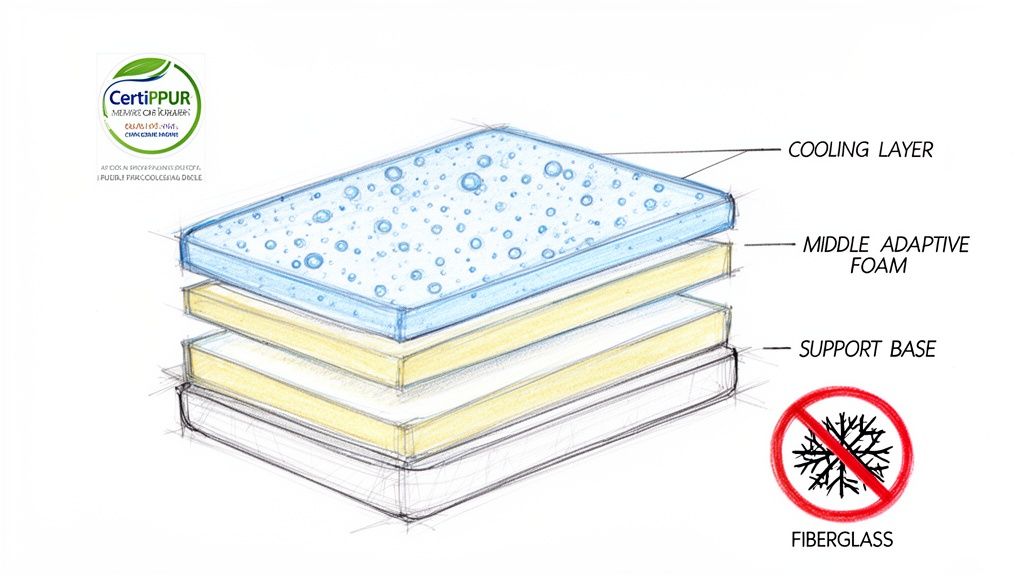
When you see a memory foam mattress with a CertiPUR-US® certification, it means the foam has passed rigorous, independent tests for content, emissions, and durability. This isn't a marketing gimmick; it's a not-for-profit program that ensures the foam is made without a list of specific harmful chemicals.
So, What Does CertiPUR-US Certification Really Mean?
Think of this certification as a clear checklist of what is—and isn't—in your mattress foam. It’s a straightforward way to confirm that the materials were made with your health and the environment in mind.
A CertiPUR-US seal confirms the foam is:
- Made without ozone depleters
- Made without PBDEs, TDCPP, or TCEP flame retardants
- Made without mercury, lead, and other heavy metals
- Made without formaldehyde
- Made without phthalates regulated by the Consumer Product Safety Commission
- Low in Volatile Organic Compound (VOC) emissions for better indoor air quality (less than 0.5 parts per million)
Basically, this seal helps you trust that the foam you’re sleeping on every night is contributing to a healthier home.
The Big Shift Away from Fiberglass
Another important consideration is the fire retardant used in a mattress. For years, some manufacturers used fiberglass—an inexpensive and effective flame barrier woven into the inner cover of the mattress. The problem? If that outer cover gets removed or damaged, those tiny glass fibers can escape and contaminate your home, leading to skin irritation and respiratory issues.
Thanks to growing consumer awareness and real safety concerns, shoppers are now actively looking for fiberglass-free mattresses. Reputable brands have listened and are switching to alternative fire-retardant solutions that don't carry the same risks.
This shift has reshaped the market. The demand for fiberglass-free memory foam has pushed brands like Nectar and DreamCloud to innovate with safer options like wool or specially woven fabric barriers.
Nectar, which launched back in 2016, has sold over 1 million mattresses by 2025 and holds a 4.7/5 star rating from over 365,000 reviews. A huge part of that success comes from their commitment to CertiPUR-US certified foams that are free of harmful chemicals. You can dig deeper into how the market is changing in a 2025 mattress market analysis on nextmsc.com.
Choosing a brand that is open about its materials and proud of its certifications is one of the most reliable signs of quality. It shows they’re committed not just to your comfort, but to your long-term health. When you're shopping, don't ever hesitate to ask about these details—it’s one of the most important things you can do to make a purchase you feel great about.
The Value of Trying a Mattress In Person
Online reviews and detailed brand comparisons are a fantastic starting point for your research, but they can only take you so far. Comfort is deeply personal, and the subtle differences between memory foam mattress brands are nearly impossible to grasp through a screen.
What feels like a supportive "hug" to one person might feel way too firm to another. This is exactly why trying a mattress in person remains an invaluable step in the process. A product description can tell you all about foam density and cooling technologies, but it can't tell you how a mattress will actually feel under the unique pressure points of your body.
What an In-Person Test Can Truly Reveal
Spending just 10 to 15 minutes lying on a mattress in your favorite sleeping position can provide more clarity than hours of scrolling online. This quick test helps you assess several key factors that are purely subjective and can't be measured by specs alone.
During an in-store test, you can:
- Feel the Response Time: How quickly or slowly does the foam adapt when you move? Do you prefer that classic, slow-sinking contour, or a more responsive surface that makes it easier to change positions in the middle of the night?
- Evaluate the Real Firmness: A "medium-firm" rating can feel drastically different from one brand to the next. Lying down is the only way to know if a manufacturer's firmness level truly matches your body's need for both support and pressure relief.
- Check the Edge Support: Sit on the edge of the bed. Does it hold up well, or does it collapse? Strong edge support is critical for stability when you're getting in and out of bed and for making sure you can use the entire mattress surface without feeling like you'll roll off.
The Advantage of Expert Guidance
Another benefit of visiting a showroom is getting access to knowledgeable, experienced professionals. Instead of navigating endless product pages and marketing claims by yourself, you can have a real conversation with someone who understands the nuances between different models and brands.
An experienced sleep expert can act as your personal guide, helping connect your specific sleep challenges—like nagging back pain or sleeping hot—to the exact mattress features designed to solve them. This personalized guidance helps ensure you're not just buying a popular mattress, but the right mattress for you.
They can help you compare different models side-by-side in real time, answering your questions on the spot and pointing out differences you might not have noticed on your own. This interactive experience takes a ton of the guesswork and uncertainty out of the buying process.
Making a confident, long-term investment in your sleep quality is just plain easier when you've had the chance to feel the difference firsthand. We invite you to visit one of our North Georgia showrooms to lie down on these options for yourself. Feeling how each mattress supports you is the best way to ensure your final choice is a perfect match for years of restful sleep.
Still Have Questions About Memory Foam?
Even after digging into the specifics of different brands, you might have a few questions rattling around. That's perfectly normal. To clear things up, we've put together some straightforward answers to the questions we hear most often from shoppers. Our goal is to give you the practical info you need to feel great about your choice.
How Long Does a Quality Memory Foam Mattress Typically Last?
A well-made memory foam mattress is an investment in your sleep, and you can expect it to last anywhere from 7 to 15 years. The actual lifespan really comes down to a few things: the density of the foam, the quality of all the materials, and how you take care of it.
Higher-density foams, like the kind you'll find in brands such as Tempur-Pedic, are engineered from the ground up for durability. They’re designed to resist sagging and keep their supportive feel for years, which is why you’ll often see them backed by long-term warranties.
To get the most life out of any foam mattress, though, you've got to use a proper foundation. A solid, supportive base is non-negotiable—it prevents premature wear and helps the mattress do its job. Also, one of the easiest and most effective things you can do is use a mattress protector to shield it from spills and allergens.
Do Modern Memory Foam Mattresses Sleep Hot?
This is probably one of the biggest myths we have to bust, and it's a reputation that comes from the old, first-generation memory foams. While it's true that early versions of the material had a tendency to trap body heat, today's mattress technology has largely solved that problem.
The top brands now build in all sorts of advanced cooling features to keep you from overheating. These aren't just gimmicks; they really work. Look for things like:
- Open-Cell Foam Structures: Unlike the dense foams of the past, modern open-cell designs have millions of tiny, interconnected air pockets. This lets air actually circulate through the mattress instead of getting trapped.
- Gel Infusions: You'll often see swirls or little beads of cooling gel mixed right into the foam layers. This gel actively absorbs heat and pulls it away from your body.
- Breathable Covers: Many mattress covers are now made with high-tech fabrics, some with phase-change materials woven in, that feel cool when you touch them and help wick away moisture.
If you know you're a hot sleeper, just make a point to look for these specific technologies when you shop. They make a huge difference in keeping you comfortable all night.
Can I Use a Memory Foam Mattress on an Adjustable Base?
Absolutely. In fact, most modern memory foam mattresses are well-suited for adjustable bed bases. Their flexible construction lets them bend and contour along with the base's movements without causing damage to the foam or the support core.
This pairing is an amazing way to dial in your comfort and even tackle specific issues like snoring or acid reflux by elevating your head. Raising your feet can also do wonders for circulation and easing lower back pressure.
It never hurts to double-check the manufacturer's recommendations just to be sure, but you’ll find that the vast majority of today's memory foam models are a great match for an adjustable frame.
Is There a Break-In Period for a New Memory Foam Mattress?
Yes, you should definitely expect a break-in period for a new memory foam mattress. It's a completely normal part of the process and can take anywhere from 30 to 90 days. During this time, the foam cells, which have been compressed in a box for shipping, need a little time to fully open up and start adapting to your body's weight and shape.
Your new mattress might feel a bit firmer at first than the one you tested in the showroom. Just give it time. Sleeping on it consistently is the key to helping it soften and reach its intended comfort level. This is exactly why so many brands and retailers offer long in-home sleep trials—they want you to have plenty of time for the mattress and your body to get properly acquainted.
At Woodstock Furniture & Mattress Outlet, our sleep experts are here to answer any other questions you have and let you feel the differences between these brands for yourself. Swing by one of our North Georgia showrooms to find the memory foam mattress that’s the right fit for your sleep style. Or, explore our full mattress collection online to get started.