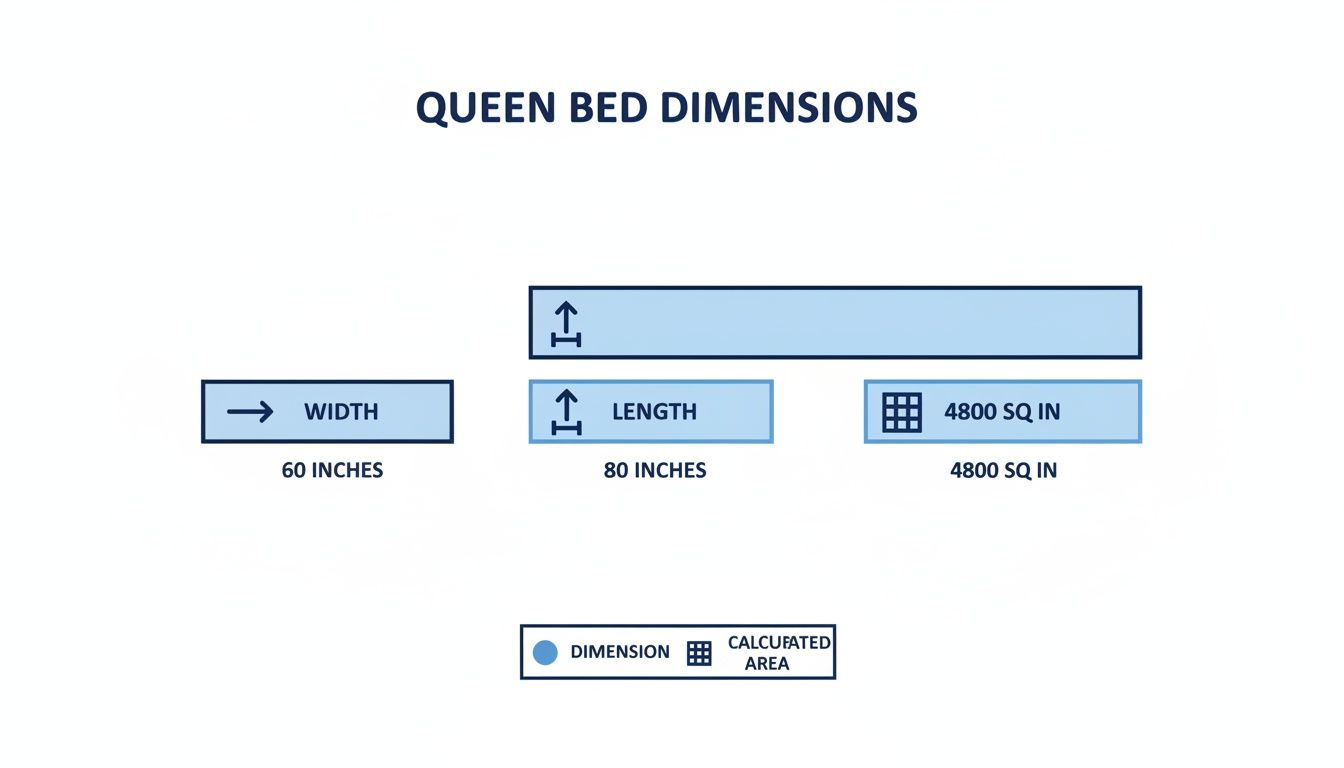
If you're trying to figure out the width of a queen bed, the simple answer is 60 inches. This has become a very popular mattress size across the country, and for good reason. It’s a comfortable upgrade from a full bed without taking up the massive footprint of a king.
The Official Width of a Queen Bed
A standard queen mattress measures 60 inches wide by 80 inches long. These dimensions became more common after World War II as homes grew larger and people sought more room to stretch out. Today, it’s a leading choice, making up a significant portion of mattress sales in North America. If you're curious about the history, you can learn more about how mattress standards have evolved over time.
To really get a feel for what that 60-inch width means, it helps to see how it stacks up against other common sizes you might have slept on.
How Queen Width Compares to Other Sizes
Moving up from a full-size bed (sometimes called a double) to a queen gets you an extra six inches of width. That might not seem like a huge number on paper, but it can make a real difference in sleep quality—especially for couples. Those extra inches mean more personal space and can reduce accidental wake-up calls from a partner who likes to toss and turn.
For couples, a queen mattress provides 30 inches of personal space for each person. Many people find this is a comfortable amount of space for two adults to sleep without feeling like they're on top of each other. It's a noticeable upgrade from the 27 inches per person a full bed offers.
Sometimes it helps to have a quick reference when you're trying to visualize these differences.
Standard Mattress Widths at a Glance
| Mattress Size | Standard Width (Inches) | Width Per Person (For Couples) |
|---|---|---|
| Full | 54 inches | 27 inches |
| Queen | 60 inches | 30 inches |
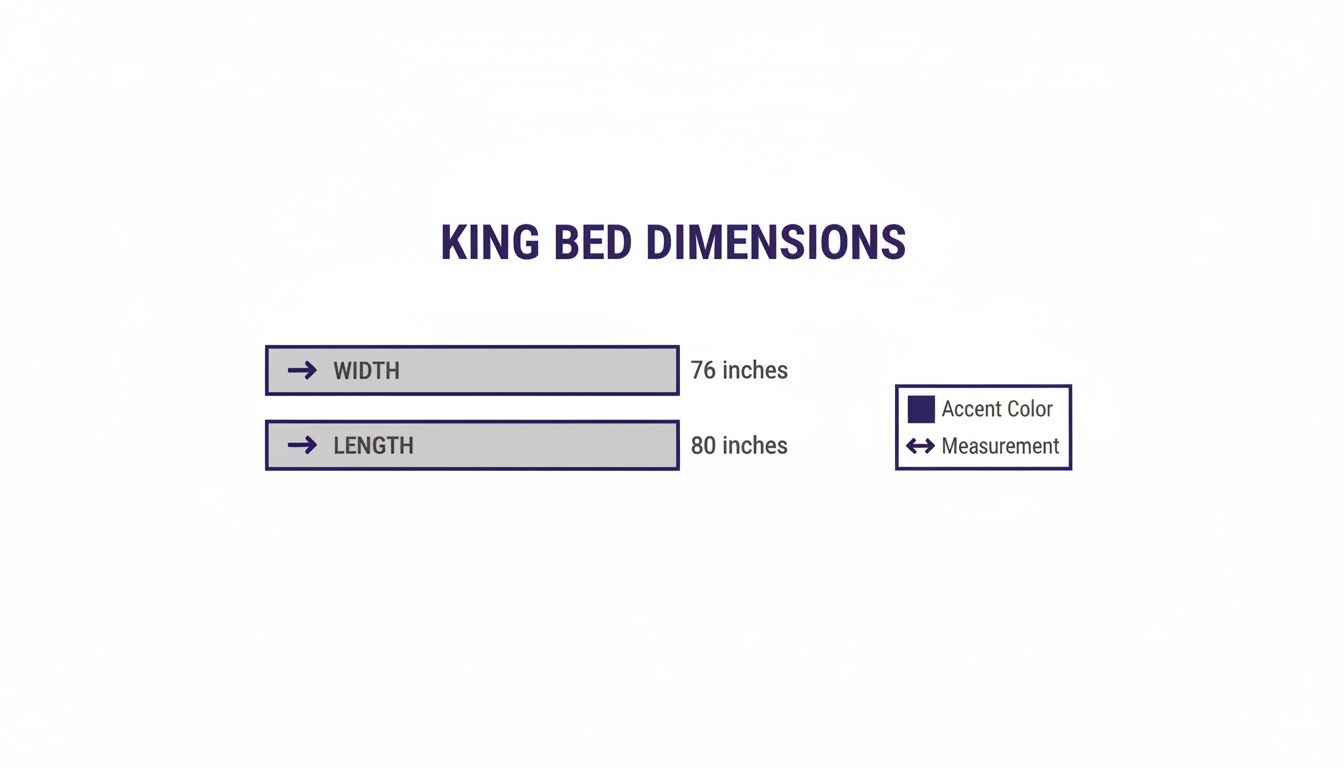
| King | 76 inches | 38 inches |
As you can see, the queen occupies a middle ground between the cozier full and the expansive king.
This chart below gives you a clear visual of how these mattress widths compare side-by-side.

It’s understandable why the queen has become a frequent choice for master bedrooms. It offers ample room for most single sleepers and couples, all while fitting comfortably into many average-sized rooms.
Why 60 Inches Became a Popular Choice for Sleep
The queen bed didn’t become a leading mattress size by chance. It effectively solved a common problem that couples had experienced for years: the "double" or full-size bed often felt too small.
While a full bed was a step up from a twin, it only gave each person 27 inches of space. To put that in perspective, that’s about the same width as a baby’s crib. For many couples, this was a recipe for a restless night filled with tossing, turning, and bumping into a partner.

A Balance of Comfort and Space
This is where the queen bed’s 60-inch width provides a solution. Those extra six inches compared to a full bed were a significant change. Suddenly, each partner had a more comfortable 30 inches of personal space, which helped cut down on nighttime disturbances and led to better sleep for many. It’s no wonder this specific width is a main reason for the queen's popularity.
Over the decades, the queen bed's market share has grown, now accounting for a majority of mattress sales. This is largely driven by couples, as studies suggest that a queen can improve sleep satisfaction and reduce disruptions from a bed-sharing partner. You can explore the full data and research on how bed size impacts sleep quality.
This trend also went hand-in-hand with changes in home construction. As master bedrooms in new homes started getting bigger in the second half of the 20th century, people had room for something larger than a full-size bed without making the space feel cramped.
The queen mattress offered a practical compromise: more personal space than a full, but without the room-dominating footprint of a 76-inch king. It became a go-to choice for millions of American homes.
The “Just Right” Solution for Modern Bedrooms
Ultimately, the 60-inch width became an industry standard because it’s a practical solution for a wide range of sleepers and homes. It’s a versatile size that works well in many situations.
Consider its uses. A queen is suitable for:
- Couples who need enough personal space to sleep without waking each other up.
- Single sleepers who enjoy having plenty of room to stretch out.
- Guest rooms, providing a comfortable stay for either single guests or couples.
- Most master bedrooms, because it fits comfortably without overwhelming the layout.
This combination of comfort, practicality, and versatile sizing is why the 60-inch queen bed is more than just a mattress—it's the foundation of a good night's sleep in many homes today.
Understanding Variations of the Queen Size
While the standard queen mattress is a solid 60 inches wide, it’s not the only queen size available. The mattress world has a couple of specialized variations built to solve specific problems. Think of these not as replacements for the standard queen, but as custom solutions for sleepers who need a bit more room in one direction or another.
Knowing about these less-common sizes can help you make a more informed decision and avoid the frustration of buying a bed that almost works. They offer some unique benefits, but they also have a few practical trade-offs you should know about before making a choice.
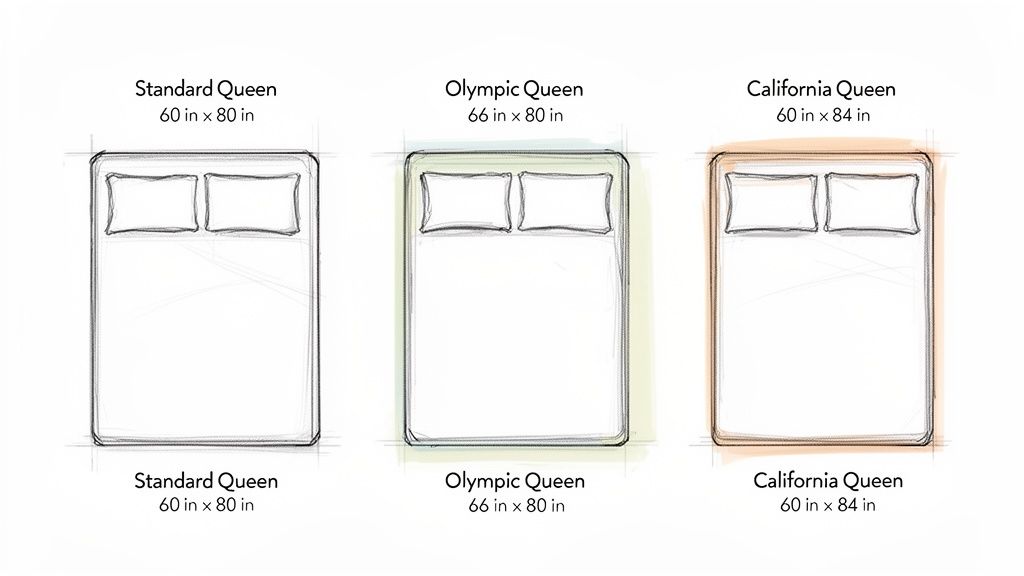
Olympic Queen
The Olympic Queen, sometimes called an Expanded Queen, is the most common queen variation you're likely to find. It addresses the desire for a little more elbow room.
- Dimensions: An Olympic Queen mattress measures 66 inches wide by 80 inches long.
- Best For: This can be a great option for couples who feel just a tad cramped in a standard queen. Those extra six inches of width give each sleeper three more inches of personal space, which can make a real difference if one or both of you tend to toss and turn.
It’s a middle ground for folks who don’t quite have the floor space for a king but still crave more room to themselves.
The biggest hurdle with an Olympic Queen is finding accessories that fit. Since it's a non-standard size, you'll have a more difficult time finding bed frames, sheets, and mattress protectors designed for its unique 66-inch width.
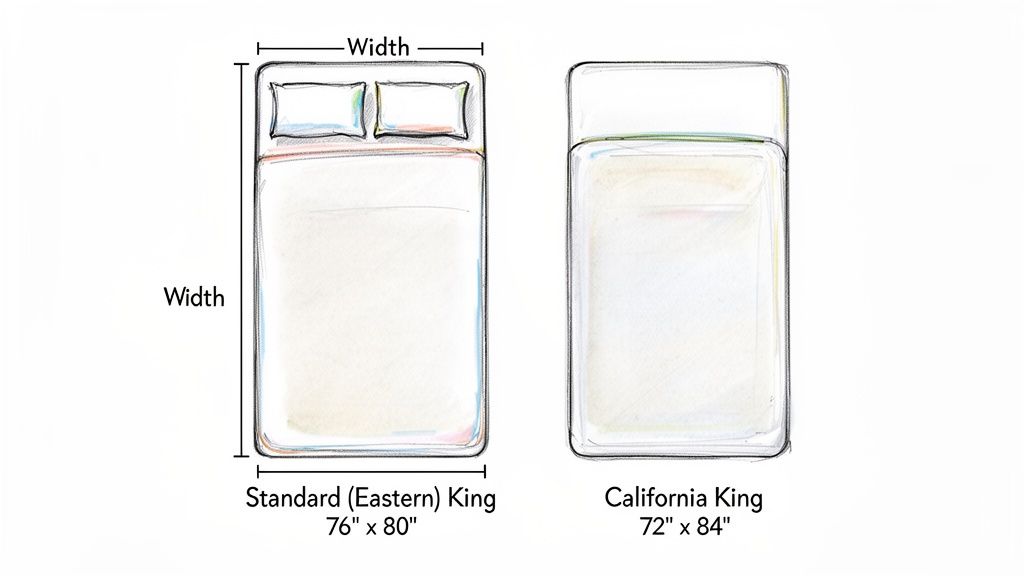
California Queen
Another specialty size you might see is the California Queen. Unlike its Olympic cousin, this one isn’t about adding width; it’s all about adding length for taller sleepers.
- Dimensions: A California Queen mattress comes in at 60 inches wide by 84 inches long.
- Best For: This bed was made for anyone over six feet tall who is tired of their feet dangling off the edge of a typical 80-inch mattress. It gives you the same four inches of extra legroom you'd find in a California King, but keeps the more manageable 60-inch width of a standard queen.
Ultimately, variations like the Olympic and California Queen serve a specific slice of the market. While these specialty sizes have their place, the 60×80-inch standard queen remains the most practical choice for the vast majority of bedrooms. It simply fits better in most rooms and is a top seller for a reason. If you're curious about the market dynamics, you can learn more about how different bed sizes compare in sales and bedroom fit.
How to Know if a Queen Bed Will Fit Your Room
Knowing a queen mattress is 60 inches wide is one thing, but making sure it actually fits and feels right in your bedroom is another. It's a common experience where a bed can technically squeeze into a space but leave the room feeling cramped and unusable.
The secret isn't just about fitting the bed itself. The real key is to plan for comfortable movement around the bed.
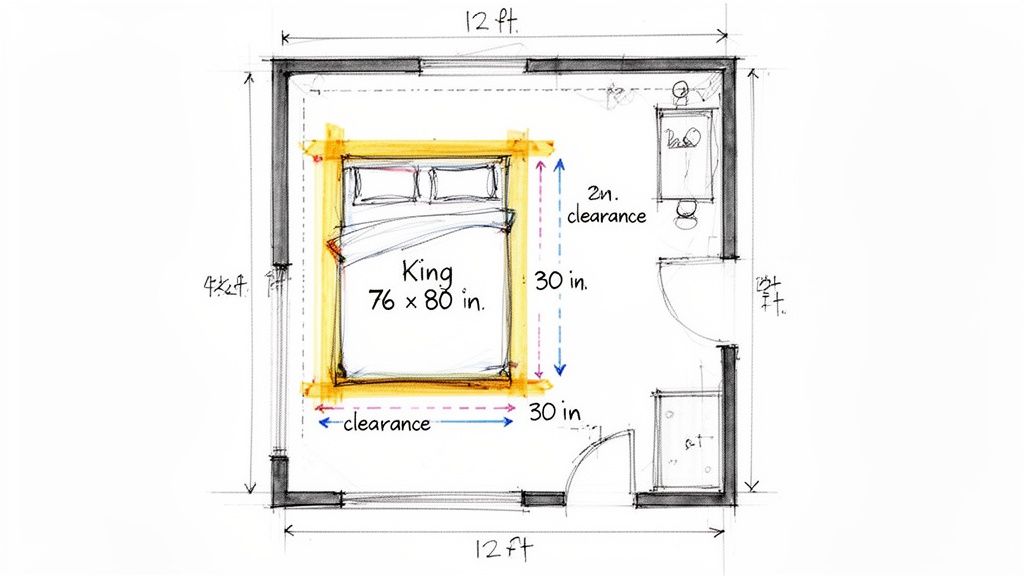
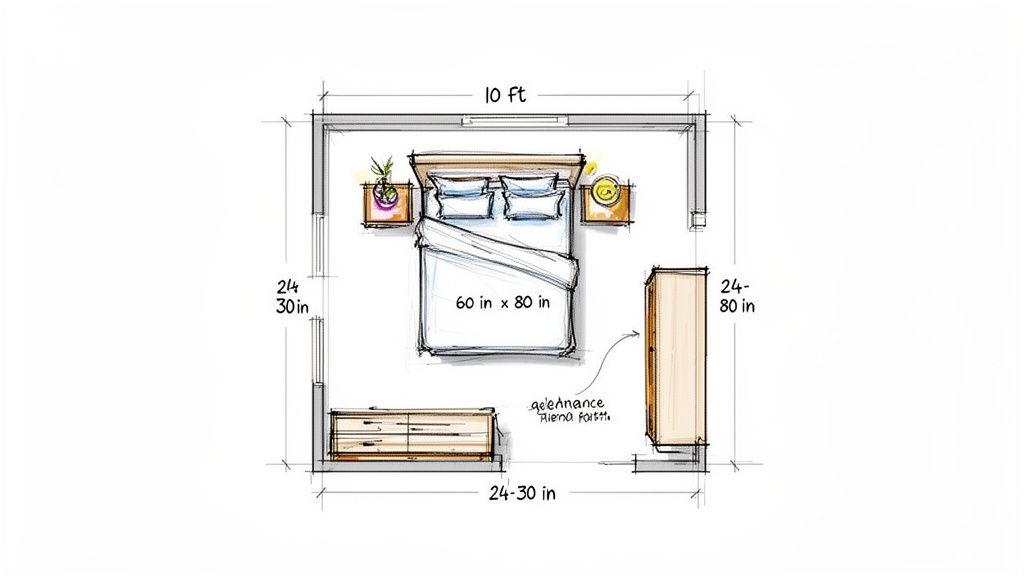
A good rule of thumb is to leave at least 24 to 30 inches of walking space on the three open sides of the bed (the left, right, and foot). This clearance gives you enough room to walk without turning sideways, make the bed without scraping your knuckles, and fully open dresser drawers or closet doors without them bumping into the frame.
For a queen bed, this means your room should ideally be at least 10 feet by 10 feet. This size gives you just enough space for the 60-inch-wide bed, two average nightstands (around 20-24 inches each), and still keeps that critical walking path clear.
While a 10×10 room is a great starting point, many people find a slightly larger space, like 12 feet by 12 feet, to be ideal. That little bit of extra square footage offers more breathing room and flexibility for other furniture, like a dresser, a bench at the foot of the bed, or a cozy reading chair.
Measure Your Room Like a Pro
Before you decide on a new bed set, it's time to grab a tape measure and get the true lay of the land. And don't just measure from wall to wall; you need to map out all the real-world obstacles that can affect your layout plans.
Here’s a simple checklist our experienced team recommends:
- Measure Wall to Wall: First, get the total length and width of the room. This gives you your maximum canvas to work with.
- Map Out Obstacles: Take note of where your windows (especially low ones), radiators, air vents, and electrical outlets are. You don’t want your headboard blocking your only usable outlet or sitting awkwardly in front of a window.
- Check Door Swings: This is a big one people forget! Measure how far your bedroom and closet doors swing into the room. A new bed won't feel so great if it keeps a door from opening all the way.
- Account for Other Furniture: Finally, measure the depth and width of your existing dressers, nightstands, and any other pieces you plan on keeping in the room.
Once you have these numbers jotted down, you can sketch out a quick floor plan. For a helpful visual, use painter's tape to mark out the 60-inch by 80-inch footprint of a queen mattress right on your floor. This simple trick lets you see and feel exactly how much space the bed will take up and how your walking paths will be affected. This small step can save you from the headache of buying a bed that’s just too big for your space.
Accounting for Your Bed Frame's Total Width

It’s one of the most common things shoppers can overlook. They focus so much on the mattress itself that they forget a bed is more than just a mattress. While a standard queen mattress has a firm width of 60 inches, the bed frame you put it on can add anywhere from a couple of inches to a foot or more to the bed's total footprint.
This is a critical detail, because it directly impacts how the bed will actually fit in your room. If you only plan for the mattress, you might end up with a bed that overwhelms your space, blocks walkways, or even keeps you from opening your dresser drawers. The style of the frame is the single biggest factor here.
How Frame Style Impacts Total Bed Width
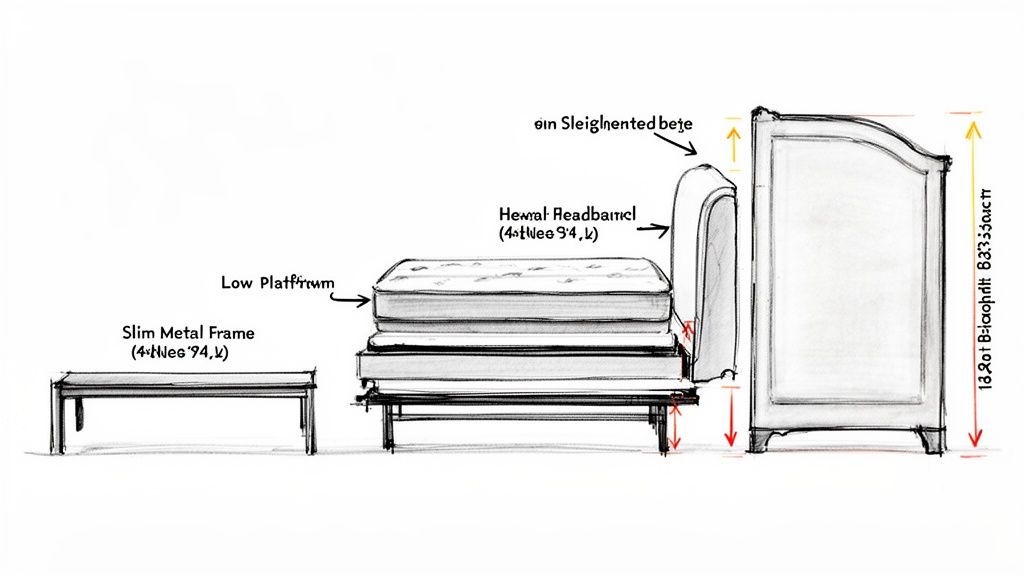
Different bed frame designs have widely different profiles. For instance, a sleek, modern platform bed is built for minimalism and might only add 2 to 3 inches to the total width. These are good choices for smaller bedrooms where every inch of floor space is precious.
On the flip side, a substantial sleigh bed with wide, curved side rails or a bed with a bulky, decorative headboard could easily add 8 to 12 inches — or even more! These are beautiful statement pieces, but they demand a more spacious room to avoid feeling cramped.
Always check the product specifications for the bed frame's exact dimensions, not just the mattress size it’s made for. This ensures you're planning your room layout with the bed's true, fully-assembled footprint in mind.
To give you a better idea of what we mean, here’s a quick look at how different frame styles can change the final width of your new queen bed.
Estimated Total Bed Width by Frame Style
The table below breaks down some common bed frame styles and how much width they typically add to a standard 60-inch queen mattress.
| Bed Frame Style | Estimated Added Width (Inches) | Total Estimated Bed Width (Inches) |
|---|---|---|
| Metal Frame | 1 to 2 inches | 61 to 62 inches |
| Platform Bed | 2 to 4 inches | 62 to 64 inches |
| Upholstered Bed | 4 to 8 inches | 64 to 68 inches |
| Sleigh Bed | 8 to 12+ inches | 68 to 72+ inches |
While these numbers are a helpful guide, seeing these options in person can help you understand their scale. Visiting a showroom lets you compare how a simple platform frame feels in a space versus a more commanding sleigh bed. This hands-on experience can help you confidently choose a style that complements your room's layout without overpowering it.
Choosing the Right Bedding for a 60-Inch Bed

You’ve picked out the perfect queen bed and frame. Now for the fun part — dressing it up! Since the standard queen mattress’s 60-inch width is the most popular size in the country, finding bedding is usually a breeze. Sheets, comforters, and duvets labeled "queen" are all made to fit that classic 60×80 inch mattress surface.
Most of the time, that is. While standard queen bedding works great for most people, there are a couple of common situations where you might need to think about a different approach. A few simple adjustments can make a real difference between a bed that just looks good and one that gives you a truly comfortable night’s sleep.
Practical Tips for a Polished Look
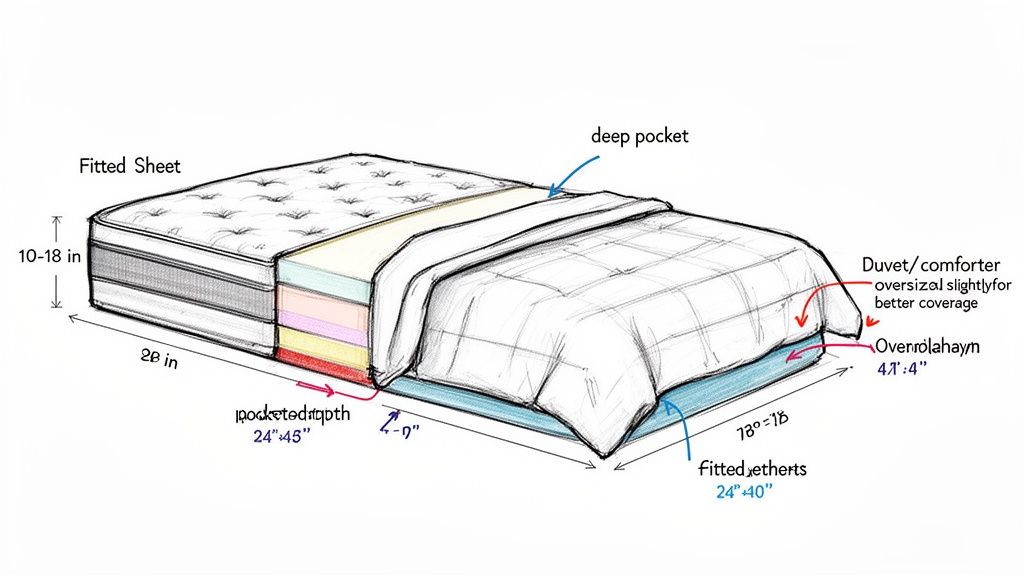
Ever found yourself in a nightly tug-of-war over the blankets? It's one of the most common complaints we hear from couples. If you or your partner tend to pull the covers, or if you have a pillow-top or extra-deep mattress (anything over 14 inches tall), here's a helpful tip: consider sizing up to a king-sized comforter or duvet.
That extra fabric provides more overhang on both sides of the bed, ending the midnight cover-stealing and keeping everyone cozy. For more on getting the dimensions just right, it can be helpful to check out a guide on what size is a queen flat sheet.
Just remember that while a bigger blanket is a great fix, you must stick with a queen fitted sheet. A king fitted sheet will be far too big for a 60-inch mattress, leaving you with a bunched-up, uncomfortable mess.
Finally, let’s talk pillows. The 60-inch width of a queen bed is the ideal canvas for two standard or queen-sized pillows. They’ll sit perfectly side-by-side without looking cramped or leaving a large gap in the middle. This simple setup creates a sleep space that’s as inviting and comfortable as it is visually pleasing. With these little tricks up your sleeve, your new bed will be well-outfitted for years of great sleep.
Got a Few More Questions About Queen Bed Width?
We've covered the main specs, but you probably still have a few "what if" questions. That's completely normal. When you're making a decision like buying a new bed, the details matter. Our knowledgeable staff gets these kinds of questions all the time, so let's clear up a few of the most common ones.
Is a Double Bed the Same Width as a Queen Bed?
No, they are two different sizes. A "double bed" is just another name for a full-size mattress, which comes in at 54 inches wide. A standard queen, on the other hand, is 60 inches wide.
Those extra six inches can make a significant difference, especially for couples. That bit of extra elbow room means less bumping into your partner and can lead to a more restful night's sleep.
Can I Use Queen Sheets on a Full Mattress?
You might be tempted to make it work, but we would advise against it—at least for the fitted sheet. While you could probably get away with using a queen flat sheet or comforter on a full bed, the fitted sheet is another story.
A queen fitted sheet is built for a 60 x 80-inch mattress. Trying to put it on a 54 x 75-inch full mattress will leave you with loose, baggy fabric that's likely to slip off the corners. For that snug, crisp feeling, you should always match your bedding to your exact mattress size.
Speaking of bedding, figuring out the right blanket or comforter size is key to getting that perfectly draped look. For a detailed guide on exactly what size blanket for a queen bed, this is a helpful resource to check out.
How Wide Does My Doorway Need to Be for a Queen Mattress?
Here's some good news. Most modern queen mattresses are flexible and can be squeezed, angled, or gently bent to get through standard doorways, which are usually about 30 to 32 inches wide. The real challenge often isn't the doorway itself, but navigating tight hallways, sharp corners, and tricky stairwells.
If you're worried about getting a solid, rigid box spring through a difficult delivery path, a split queen box spring is an excellent solution. It’s delivered in two smaller, more manageable pieces, making it much easier to get into just about any room.
Is the Queen Bed Width the Same in Other Countries?
Not always, and this is a great question if you're shopping for international brands. While the standard queen in the US is 60 inches wide (or about 152 cm), the sizes and names can vary once you go abroad.
- United Kingdom: What they call a "King" is 150 cm wide, which is almost identical to a US Queen.
- Australia: An Aussie "Queen" is also 152 cm wide, matching the US standard perfectly.
Because of these regional quirks, it’s always a smart move to double-check the exact measurements in both inches and centimeters before buying a bed frame or bedding from an overseas company. It saves a lot of headaches and ensures a proper fit.
At Woodstock Furniture & Mattress Outlet, our team is passionate about this stuff. We're here to answer your questions and help guide you to the right sleep setup for your home. Come visit one of our North Georgia locations to see our great selection of mattresses and bed frames for yourself. You can find us online at https://woodstockoutlet.com.