You're in the aisle with a phone full of reviews and a tag that already feels like a commitment. One comment reads like a quiet hotel night. The next says the middle gave up, the sleeper ran warm, or the plush feel faded sooner than expected. You can hold both stories at once. They often aren't describing the same model, the same body, or the same base.
Stearns & Foster mattresses sit in a premium hybrid category, which means the logo doesn't lock in one sensation. Foam thickness, firmness, sleep position, body weight, and whatever is under the mattress all push the result around. What follows stays with grounded expectations. There's no verdict that one bed wins for every sleeper, and no promise that a higher tag buys a set number of comfortable years.
Why Stearns & Foster Mattresses Confuse Shoppers
The name already sounds expensive, so people arrive with a story half-written. Hotel-style praise says the bed feels finished. Complaint threads mention sag, heat, or a comfort drop after a few years. Those reactions can all be partly true, because this isn't one mattress with one personality. It's a premium hybrid line, and the feel moves when the build and the sleeper change.
A thicker comfort layer lets a shoulder sink. A firmer build holds a stomach sleeper's middle up. A lighter person may barely dent a surface that a heavier back sleeper finds too soft. Put that same model on a frame with wide gaps and it can feel uneven, which is how a base problem gets blamed on the brand.
Decisions the reviews won't make for you
Online arguments collapse a lot of variables into a thumbs-up or a thumbs-down. On the floor, we narrow it to a few calls you can make:
- Sleep position: Which posture needs the most help, especially if you roll from side to back.
- How deep you want to settle: A slow contour is a different job from a surface you can turn on without a struggle.
- Heat versus hug: Air paths in a hybrid matter more if you sleep warm. A thick foam top can still hold warmth.
- The base: The mattress can't do its job on a support system that flexes.
- The seller's paperwork: Trial length and fees follow the store you buy from, not the stitching on the border.
On the floor: When we ask someone to lie in the position they actually sleep in, the review war usually shrinks. They're no longer judging the brand. They're judging one foam depth under one set of hips.
That is the buying problem, not a product tour. The premium label still needs a paper trail, and that trail is not a comfort claim. If you want a second plain-language pass before you treat the comment section as a verdict, premium mattress guidance for Columbus homeowners walks through the same tension between a luxury name and a body-specific choice.
How Stearns & Foster Became a Luxury Mattress Brand
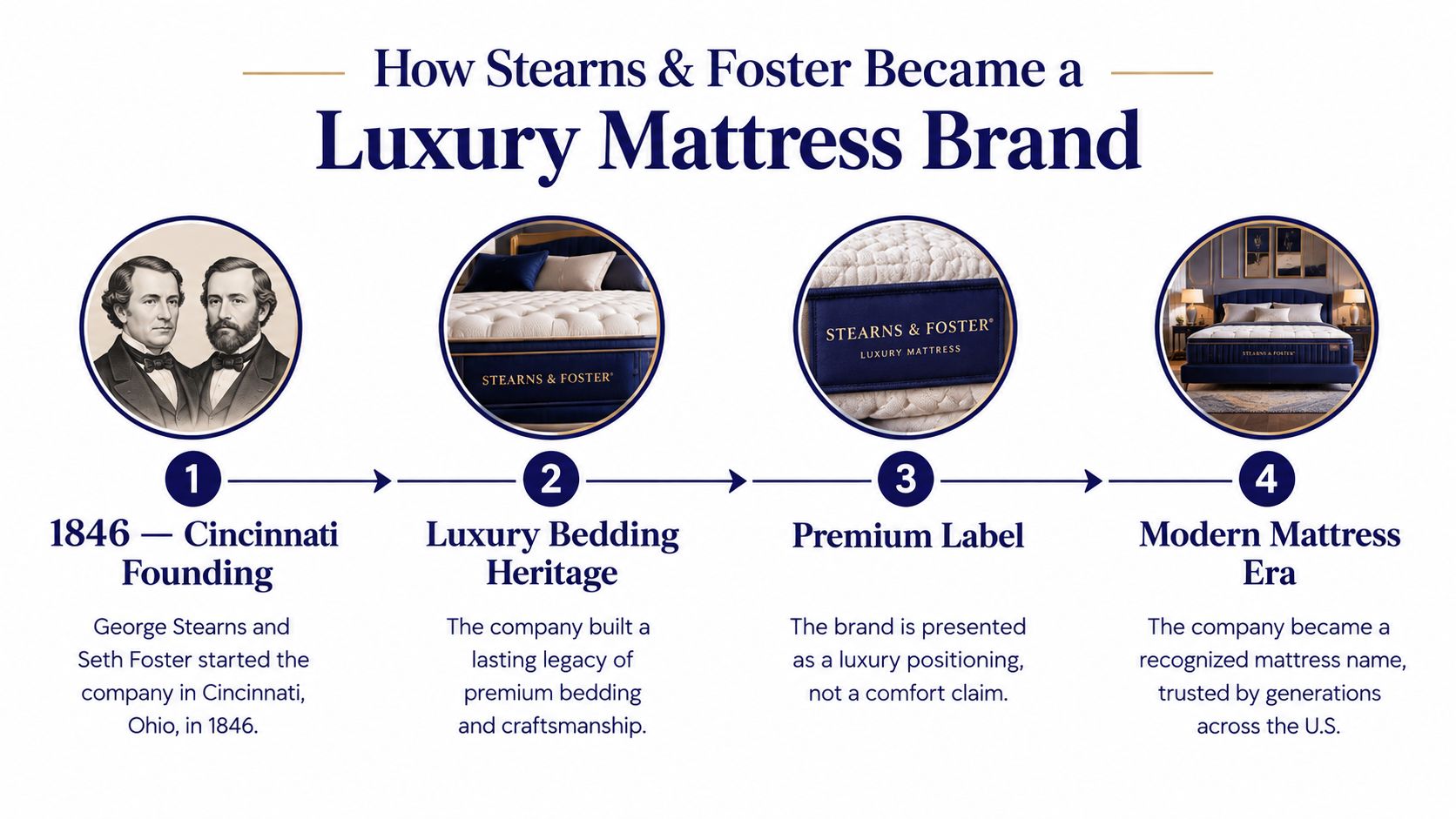
The premium label didn't start as a mattress slogan. It started as a textile shop.
From carriage goods to a distinct line
In 1846 George Sullivan Stearns and Seth Cutter Foster founded the company in Cincinnati, the first goods were cotton wadding and upholstery for horse-drawn carriages, the work later moved into mattresses for high-end hotels, Sealy acquired the company in December 1983 after more than 135 years in textiles and bedding, a hand-stitched look was relaunched in 2009 to stand apart in the premium segment, and the span from 1846 to 2026 is about 180 years, which is the path told in the Stearns & Foster company history. Picture a workshop that learned cloth by dressing carriages, then specialized until that craft showed up in a bedroom.
Stearns & Foster now sits inside the broader Tempur Sealy corporate family and still operates as its own luxury line. That note explains a corporate chart. It doesn't mean every current mattress shares one feel, one foam stack, or one lifespan.
What heritage does not prove
Hand stitching, hotel supply, and a long textile past are reasons the brand presents itself as luxury. They aren't a lab result for pressure relief, and they aren't a calendar for how many years your hips will stay happy.
A long company story can explain a price tier. It can't stand in for a lie-down in your usual sleep position.
The carriage-to-bedroom path is specialization, not a comfort guarantee. A shop that once padded seats learned bedding, then kept a separate luxury identity after it joined a larger family. The dates can stop there. The useful next question is what's stacked inside the mattress.
What Is Inside a Stearns & Foster Mattress
Open the hybrid as two jobs sharing one tick. TEMPUR-Indulge memory foam is described as an exclusive comfort material that conforms and can ease localized pressure, while ventilated coils and AirVents are meant to supply elastic support and routes for warm air to move, which is how the Reserve collection construction is framed.
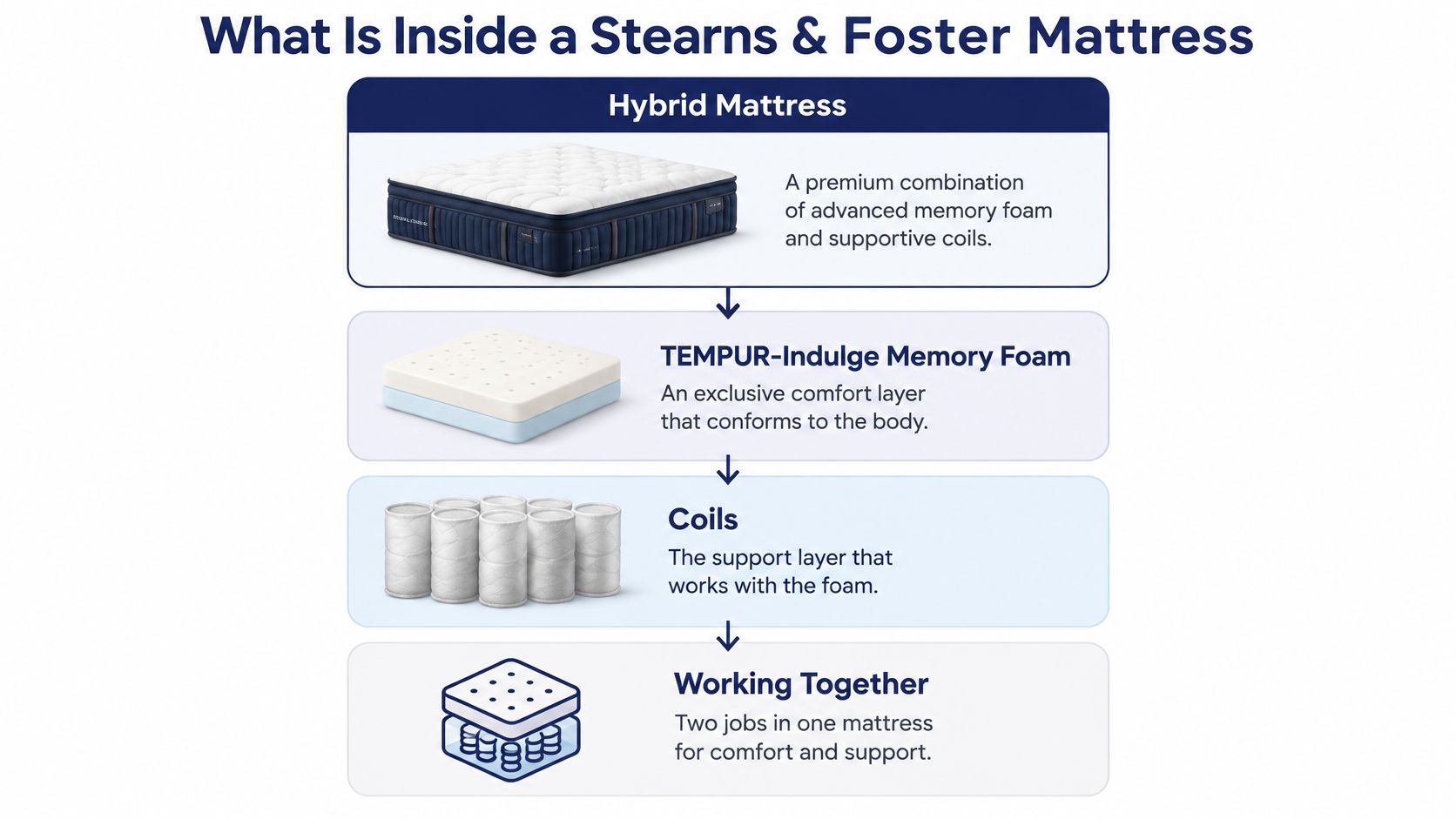
Foam does the hugging. Coils do the pushing back. If you only shop the top layer, you'll miss why turning feels different from an all-foam bed. If you only shop the coils, you'll miss why a shoulder either gets relief or fights the surface.
Coil inside a coil
IntelliCoil is the brand's patented coil-in-coil design, a smaller coil inside a larger one so the support unit can respond differently across the mattress, and the same production story says more than 400 certified master craftspeople take part, with each mattress personally inspected and signed, as described in the 2026 luxury collections announcement. The brand positions that coil response as adaptable support for back, side, and stomach sleeping.
That signature is a labor-intensive check. It isn't a forecast of how the bed will feel in year eight.
Picture a seat with a soft top over a springy frame. The top follows your outline. The springs push back so turning isn't like climbing out of a foam pit. Foam still conforms, which is the point of pressure relief, and coils still have to rebound. Neither layer cancels the other.
What to judge besides the logo
Firmness and foam thickness change how far you sink in and how readily heat stays near the body. Two mattresses can share a border style and sleep nothing alike if one carries a thicker, slower foam top.
- Foam's job: Contour and localized pressure relief. A deep layer can also hold warmth.
- Coils and vents' job: Push back and give warm air a path. They don't make every sleeper feel cool.
- The inspection's job: A person checks and signs the build. That doesn't set a comfort expiration date.
Shop the model, not the family name alone. Once the parts have names, the next step is matching them to a body.
Feel Profiles and the Sleepers They Suit
Side sleepers usually need room at the shoulder and hip. Back sleepers usually need the waist supported without the hips dropping into a hammock. Stomach sleepers generally need a surface that doesn't let the midsection collapse. Those three jobs can live in one hybrid family and still require different firmness.
The drawing below is a simple picture of that idea, contour changing with position and weight, before any collection name gets involved.
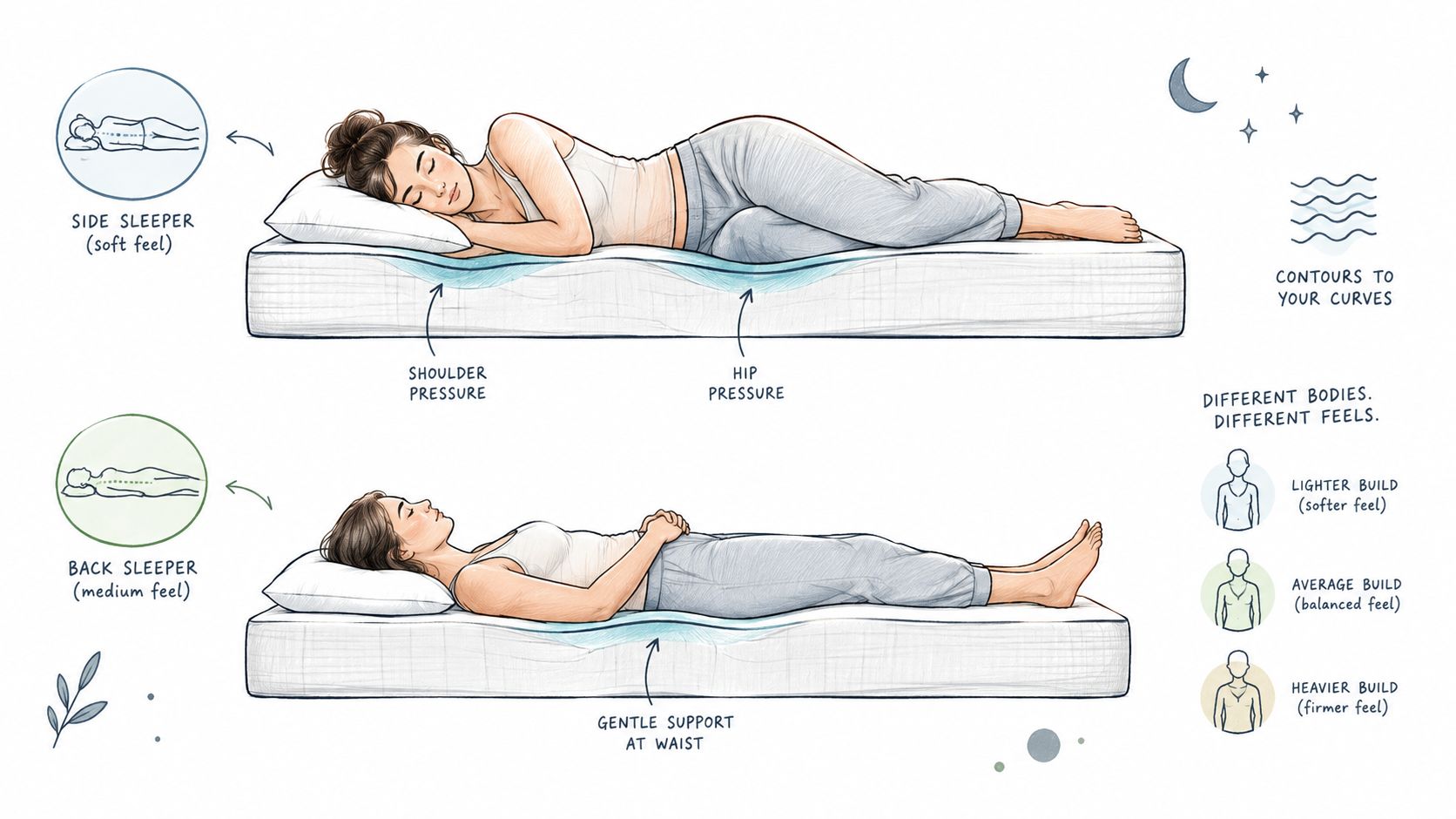
The hybrid aim is contour plus easier repositioning and more airflow than a typical all-foam bed. Foam thickness and firmness still decide how deep someone settles and how much warmth they notice. A premium cover doesn't do that math for you.
Who tends to like this feel
Someone who sleeps hot should ask how the vents and coils are supposed to move air, then lie still long enough to notice whether warmth builds. Someone who turns often will care more about rebound than about a plush first impression. Someone who wants a deep, slow hug may be happier on a more foam-forward bed, even when this line is carefully made.
Collections differ, so a model name isn't a feel. Studio, Estate, Lux Estate, Lux Hybrid, and Reserve aren't interchangeable labels. You have to feel the specific stack.
There's no public price list in this comparison. Treat the line as a premium choice and ask a plainer question. Does that spend match the years you expect to keep the mattress, the position you actually sleep in, and the budget you'll have when it's time to replace it?
Who should keep looking
If you want to sink and stay sunk, a hybrid's push-back can feel like the bed is arguing with you. If you need a very firm plane for stomach sleeping, don't accept the plushest pillow-top as the default. A well-made mattress can still be the wrong shape for your body.
The short video below shows how a hybrid is meant to respond when someone changes position. Treat it as a picture of the idea, then test it with your own shoulder and hip.
A model name is a family nickname. Firmness and foam depth are the actual personality.
Comfort shopping often stops at that nickname. The base and the paperwork are what decide whether a later problem is even covered.
Warranty Support Rules and Trial Expectations
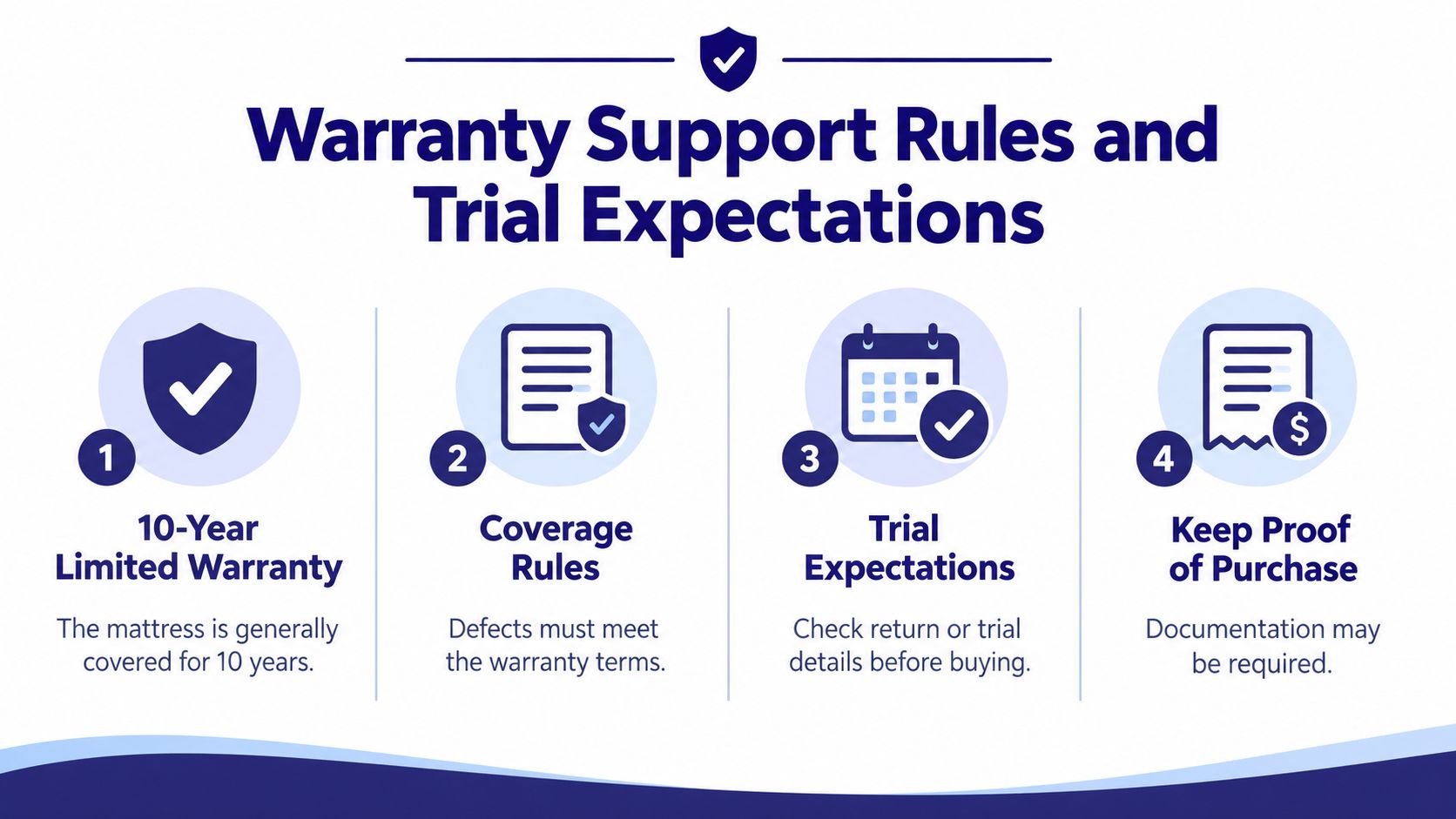
A trial answers whether you like the feel. A warranty answers whether the product failed in a covered way. Mixing those two is how a comfort change gets mistaken for a replacement.
Trial length follows the seller
Mattresses purchased directly from Stearns & Foster are described with a 90-night sleep trial, with guidance to keep the bed at least 30 days so materials can adjust, while other sellers and collections can differ and fees for returns, exchanges, pickup, or shipping may apply, which is the split laid out in Stearns & Foster trial terms by seller. A model name alone doesn't set your return window. Read the policy from the store that will take the mattress back.
The base can void the claim
The standard mattress and non-adjustable foundation coverage is a 10-year limited warranty for manufacturing defects under proper handling and normal use, and queen or king setups need continuous support from a rigid bridge bar with at least five support legs or five hardwood cross-slats each at least 3 inches wide and no more than 4 inches apart, plus center support, as spelled out in the mattress and flat foundation warranty. Excessive spacing or a weak center can let the foundation flex, distort the load, and put coverage at risk. Comfort preference isn't what that warranty is for.
An unsuitable base can void coverage, and a claim may require proof of purchase, the law tag, and photographs, which is why foundation and documentation rules belong in the buying conversation. Before delivery, measure slat width and spacing, confirm the center leg meets the floor, and check that an adjustable base is rated for the mattress plus the sleeper.
A dip you notice may be too shallow
Common mattress warranties exclude sagging unless it reaches at least 1.5 inches, generally measured with nobody on the bed, the threshold described in mattress warranty sag guidance and tied there to how Consumer Reports explains these claims. A visible impression can still be too shallow to qualify. Photograph it, follow the written measurement, and don't assume a dip you feel at night meets the test.
Keep three ideas apart. A structural defect is a covered failure only when it meets the written test. Normal compression is foam and coils settling with use. Comfort decline is "I don't love this anymore," which a trial might address and a warranty often won't. Rotate or support the mattress the way its care instructions say. That won't freeze the feel. It does keep you inside the conditions the warranty assumes.
How Stearns & Foster Compares with Other In-Store Brands
Rules for one brand don't rank a showroom. The useful comparison is which sleeper job each line is built to do.
On the floor, Stearns & Foster is the premium hybrid in the Tempur Sealy family, with TEMPUR-Indulge foam, ventilated coils, and a hand-checked build. Tempur-Pedic is the related premium line people cross-shop when they want more of a foam hug and less coil rebound. Sealy is the broader sister brand when the luxury tier is more mattress than the sleeper needs. That isn't a quality ranking. It's a fit note.
What to learn by lying down
Helix, Nectar, DreamCloud, Sierra Sleep by Ashley, and Jamison are on the same floor, along with adjustable bases and foundations. There's no reason to invent their foam stacks or prices here. The differences you can learn in person show up in a quiet ten minutes:
- First lie-down: The surface feels slow, springy, or somewhere between.
- Turning: You can roll without bracing an elbow, or you can't.
- Heat: Warmth builds while you stay still, or it doesn't.
- Edge: You can sit to tie a shoe without the side collapsing.
- Adjustable base: A head-up position is part of the plan, and the base is rated for the load.
A higher upfront price is a bet on expected years of use, your position, and your replacement budget. It isn't a scoreboard. Independent review aggregators report an estimated average lifespan of about 11.9 years for Stearns & Foster mattresses, while individual owner reports describe substantial sagging or lost comfort after roughly three to seven years, which GoodBed's Stearns & Foster review summary presents without calling that a failure rate. Durability still varies by model, body weight, sleep position, foundation, temperature, and how much of a body impression you're willing to see.
The maker highlights premium foam and pocketed coils. CertiPUR-US addresses emissions, chemical restrictions, and foam performance standards, not a promise that the whole mattress stays comfortable for a set number of years. Don't treat that certification, or the 10-year warranty already discussed, as predictable longevity.
If you're sorting other coil brands with the same neutral lens, a clear look at differences between Serta and Beautyrest is a useful companion. Neither name has to lose for Stearns & Foster to make sense for a specific sleeper, and neither has to win.
Ask which body the mattress is built to carry, not which logo should take home a trophy.
How to Choose a Stearns & Foster Mattress
You don't need another layer diagram. You need a sequence you can finish in one visit.
- Name the position that needs the most help. If you sleep on your side for most of the night, shop the shoulder and hip first, even if you start the night on your back.
- Pick rebound or sink. Easier turning points toward this coil-and-vent hybrid. A deeper, slower settle may point you toward a foam-forward neighbor on the same row, and that's a fine outcome.
- Match the base to the warranty's idea of support. If the frame, platform, or adjustable base can't carry the mattress properly, the feel you liked in the showroom won't be the feel at home, and coverage can disappear.
- Read the seller's trial in writing. Don't assume a figure from the brand's own site applies until that seller's page says so, including any fees.
After you stand back up
Lie down in your usual position for more than a quick sit. If two models feel close, choose the one that still feels right when you roll, not the one that impressed you in the first ten seconds. Bring the person who shares the bed if you can. Their hip width and heat tolerance aren't a footnote.
Ask whoever is walking the row to point out firmness and foam differences across the models, not just the collection name. A practical model-by-model pass such as compare Stearns & Foster mattress models can prep the questions, then the lie-down still has to happen.
Woodstock Furniture & Mattress Outlet is one place to do that comparison, at its North Georgia Sleep Centers, where Stearns & Foster sits with Tempur-Pedic, Sealy, Helix, Nectar, DreamCloud, Sierra Sleep by Ashley, and Jamison. Staff can talk through delivery, setup, and warranty paperwork without turning the visit into a countdown. A clear-eyed choice is the point, even when another brand fits your body better.
Woodstock Furniture & Mattress Outlet carries Stearns & Foster alongside other hybrid and foam lines in its North Georgia Sleep Centers, so you can compare feel, bases, and warranty paperwork in one visit. The team can walk through setup and the questions a spec sheet leaves open. When you're ready to lie down in your usual sleep position, visit Woodstock Furniture & Mattress Outlet.