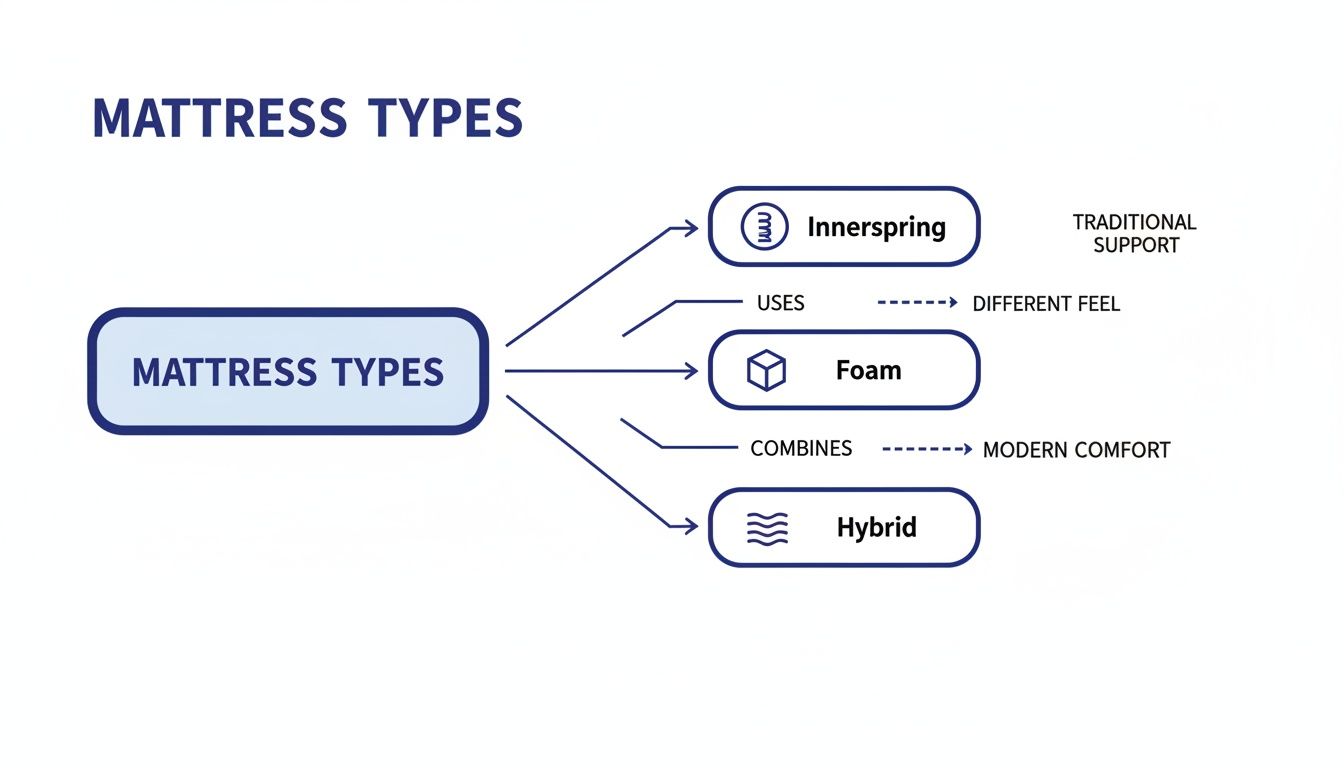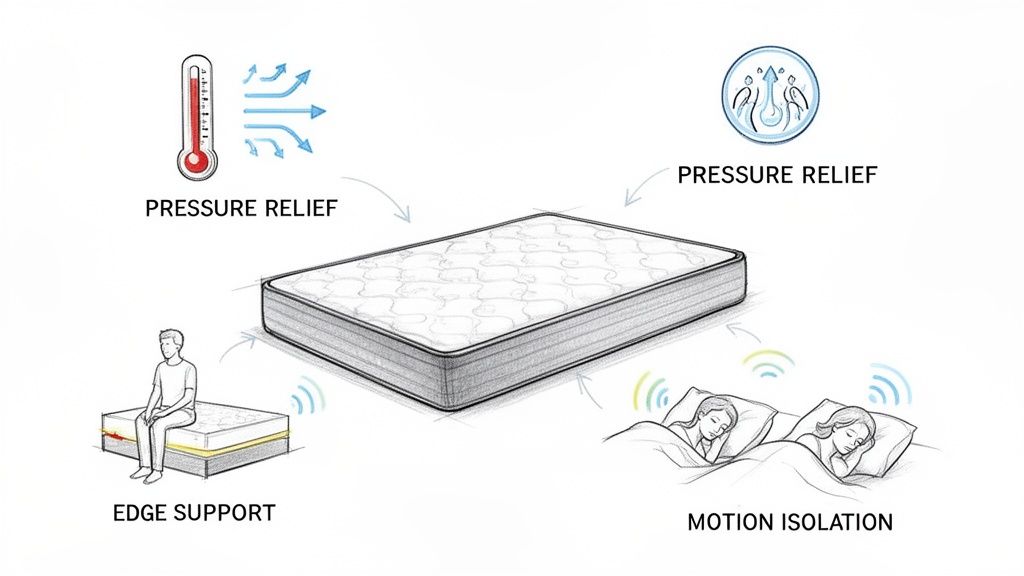
When you’re comparing Sealy and Stearns & Foster, you’re looking at two established brands with very different missions. Sealy focuses on delivering reliable, accessible comfort built on its Posturepedic Technology for targeted support. On the other hand, Stearns & Foster is a luxury brand, defined by handcrafted details, premium materials, and a more substantial, indulgent feel.
An Initial Look at Sealy and Stearns & Foster
Even though both brands fall under the same parent company, they serve different shoppers. Think of it this way: Sealy is engineered to provide trusted support and comfort that fits a wide range of sleepers and budgets. It's a common choice for families, guest rooms, and anyone looking for a dependable mattress backed by proven technology.
Stearns & Foster, however, is crafted for those who see their mattress as a long-term investment in sleep quality. Every mattress is built by certified master craftsmen. They use higher-end materials and more intricate construction techniques to create an elevated sleep experience.
Key Takeaway: Ultimately, your choice between Sealy and Stearns & Foster comes down to what you value most. Are you looking for proven, accessible performance, or are you ready to invest in handcrafted, luxurious detail?

Key Differences at a Glance
Getting a handle on each brand's core mission is a helpful first step to finding your fit. This quick table gives you a side-by-side look at where they differ the most.
| Attribute | Sealy | Stearns & Foster |
|---|---|---|
| Brand Focus | Dependable support & accessible comfort | Handcrafted luxury & premium materials |
| Core Technology | Posturepedic Technology for targeted back and core support | IntelliCoil System for adaptive, personalized support |
| Primary Price Point | Accessible to Mid-Range | Premium to Luxury |
| Intended Sleeper | Those seeking proven performance and value | Those investing in a high-end, durable sleep system |
| Construction Style | Engineered for consistent, reliable performance | Assembled by certified master craftsmen |
This high-level overview helps frame the Sealy vs. Stearns & Foster decision. Sealy offers a straightforward path to familiar comfort and good value, while Stearns & Foster provides a more indulgent journey. In the sections ahead, we’ll dive deeper into what these differences mean for comfort, durability, and your own sleep quality.
Comparing Mattress Construction and Materials

To understand the difference between Sealy and Stearns & Foster, you have to look inside. The internal components—the coils, foams, and other materials—are what determine how a mattress feels, how it supports you, and ultimately, how long it will last.
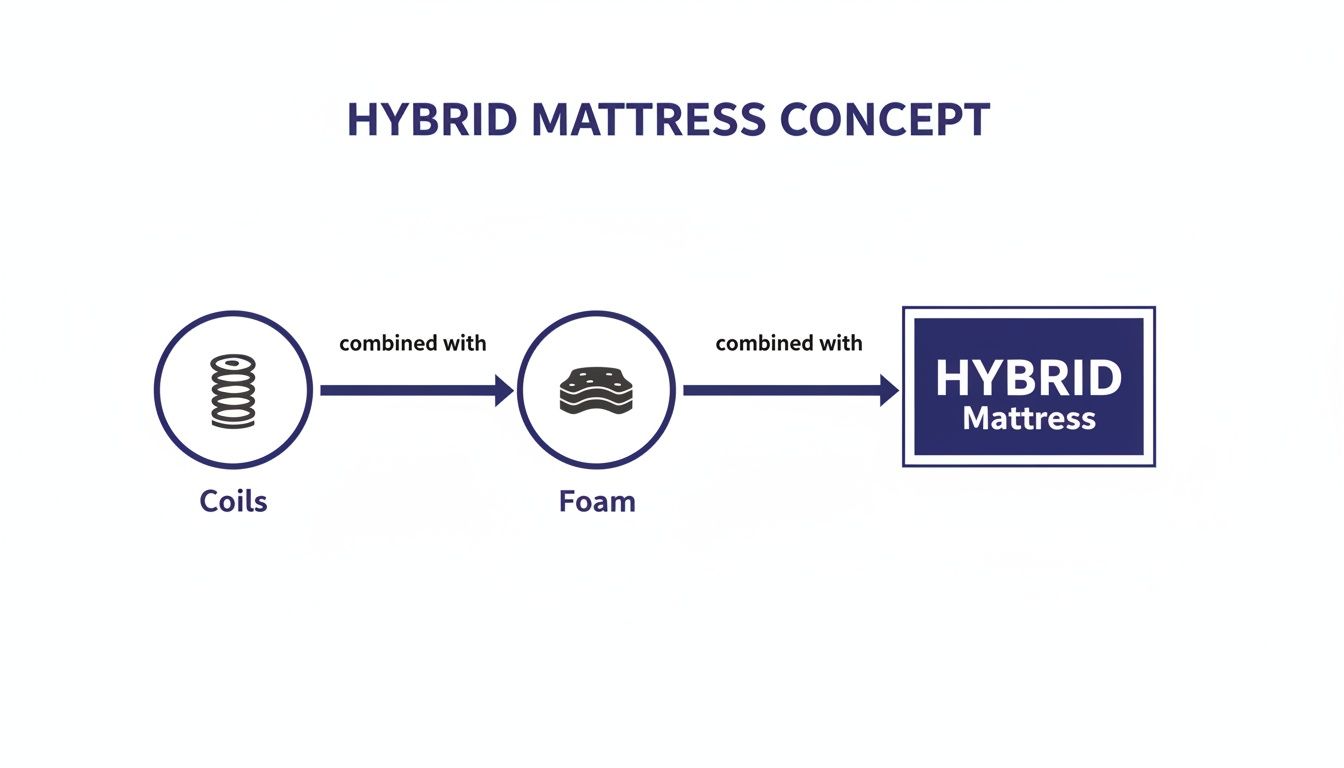
Sealy’s philosophy is to deliver proven, targeted support where your body needs it the most. They build their mattresses by blending reliable coil technologies with modern comfort foams to find a balance of comfort and support.
Stearns & Foster, on the other hand, focuses on luxury, craftsmanship, and using premium, long-lasting materials. Their construction is more complex, often involving hand-layering and exclusive technologies.
Sealy's Core Technologies
At the heart of Sealy's design is their Posturepedic Technology. The goal is to provide reinforced support where you carry the most weight—your back and core. They achieve this using a specific combination of coils and foams.
- Response Pro Encased Coils: Found in many Sealy mattresses, these are individually wrapped coils that can move independently, letting the mattress contour to your body. This is also beneficial for couples because it helps reduce motion transfer.
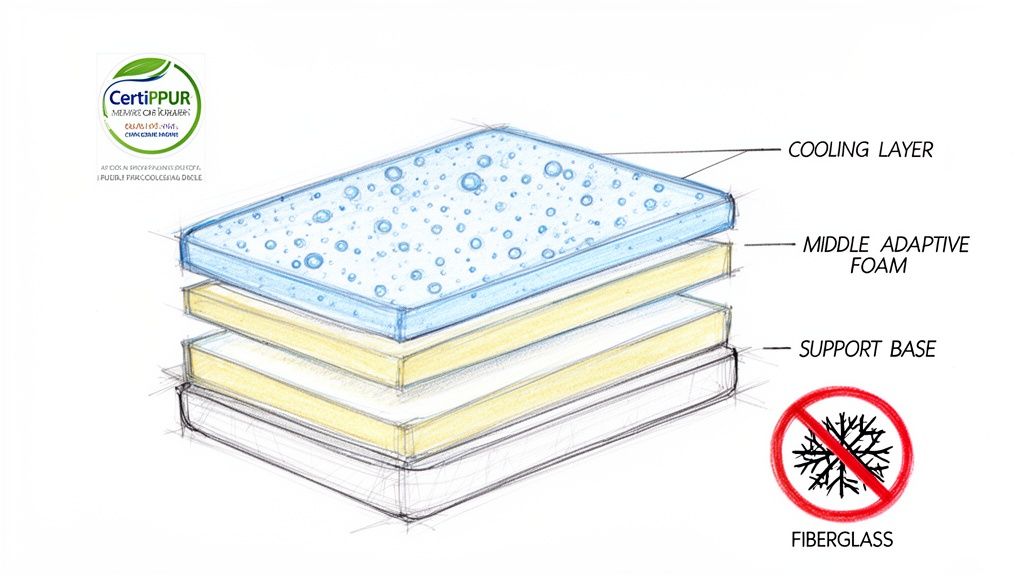
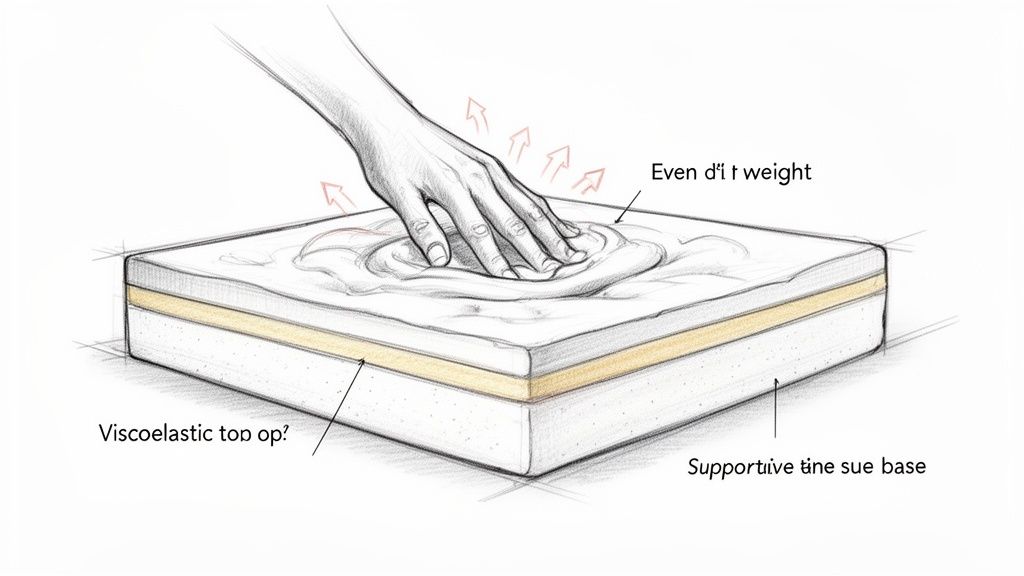
- ComfortSense Gel Memory Foam: This foam is designed to react to your body’s unique shape and temperature, providing that classic memory foam contouring that can relieve pressure points. The gel infusion is intended to help draw heat away from the body.
What you get with Sealy is a familiar, dependable innerspring feel, enhanced with the pressure-relieving benefits of modern memory foams.
Stearns & Foster's Handcrafted Construction
Stearns & Foster takes a different route, treating mattress building as a craft. Every mattress is put together by certified master craftsmen, and that dedication is reflected in the quality of the materials and their patented support systems.
Their IntelliCoil system is a notable feature. It’s a coil-within-a-coil design. A taller, flexible outer coil provides gentle, initial support, while a shorter, firmer inner coil engages to support the heaviest parts of your body. The result is a more adaptive and personalized feel that adjusts to you.
Stearns & Foster mattresses also feature materials like TEMPUR-Indulge Memory Foam. This is a high-density foam developed by the sleep scientists at Tempur-Pedic, and it delivers a more substantial, deeply-contouring feel that adapts to your weight and curves.
When you combine a sophisticated coil system with higher-end foams, you get a mattress that feels both responsive and deeply comfortable. The focus here is on creating a durable, luxurious sleep surface that will provide consistent support for many years.
Of course, what you put your mattress on matters, too. The foundation is a critical part of the sleep system and has a huge impact on both performance and longevity. For a breakdown of this topic, you can check out this definitive guide to mattress support. A good base works together with the mattress's internal parts to give you the feel and durability the manufacturer intended. At the end of the day, just remember: Sealy focuses on reliable, targeted support, while Stearns & Foster is all about handcrafted, adaptive luxury.
Understanding Feel and Firmness Options

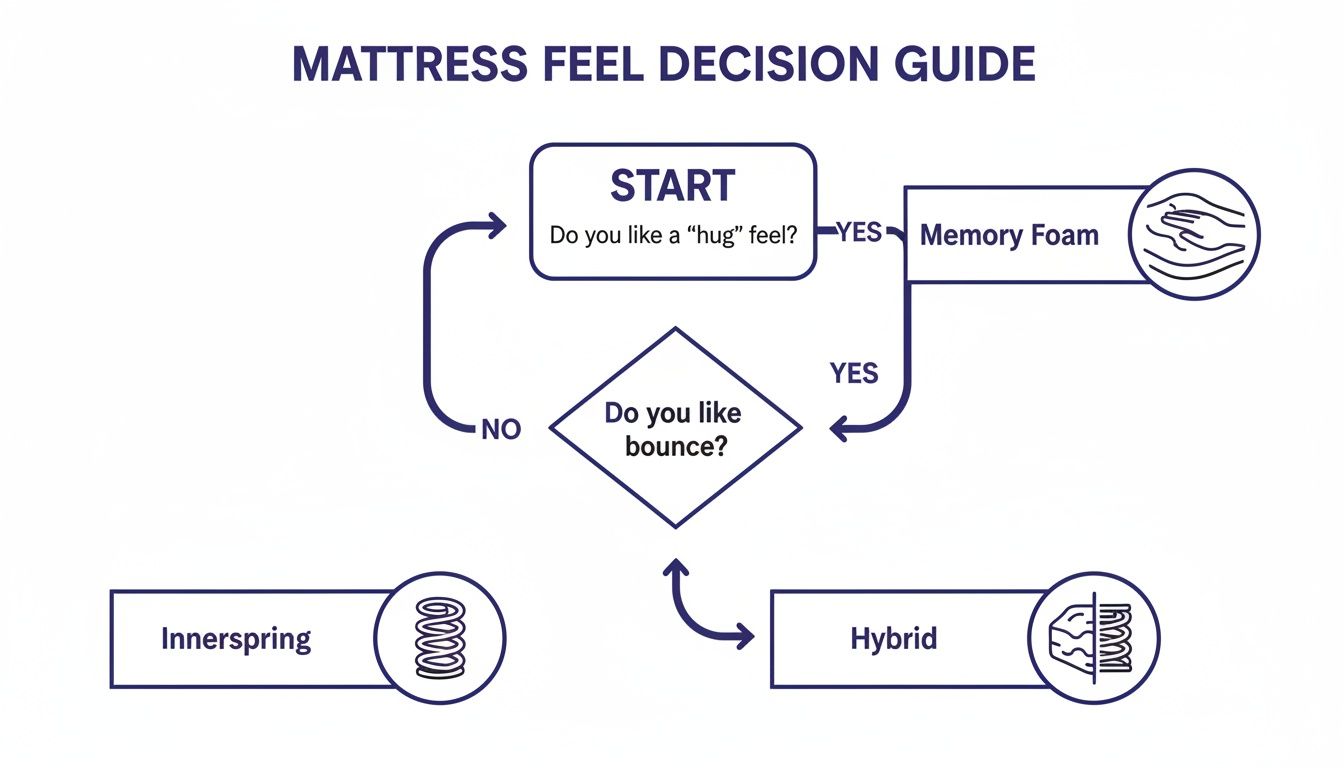
While construction and materials tell you what's inside a mattress, the "feel" is what matters for your sleep. Both Sealy and Stearns & Foster offer a full menu of firmness levels, from soft to firm. But the way they achieve those feels is different, creating two distinct sleep experiences.
Sealy’s approach is to provide a wide variety of familiar feels. From plush pillow tops to extra-firm models, they make it easy for shoppers to find a comfort level they recognize. They often pair responsive foams over supportive coils, creating a balanced sensation that appeals to a wide range of sleepers.
Stearns & Foster also offers a complete firmness range, but their signature feel is more substantial and contouring. Thanks to their denser foams and more robust coil systems, even their softer mattresses tend to provide a deep, supportive hug rather than a light, airy feel. This creates a sensation of being cradled and supported from head to toe.
The Sealy Firmness Spectrum
Sealy designs its collections with a simple goal: to have something for many different people. Their range is intentionally broad to ensure there's a match for various preferences.
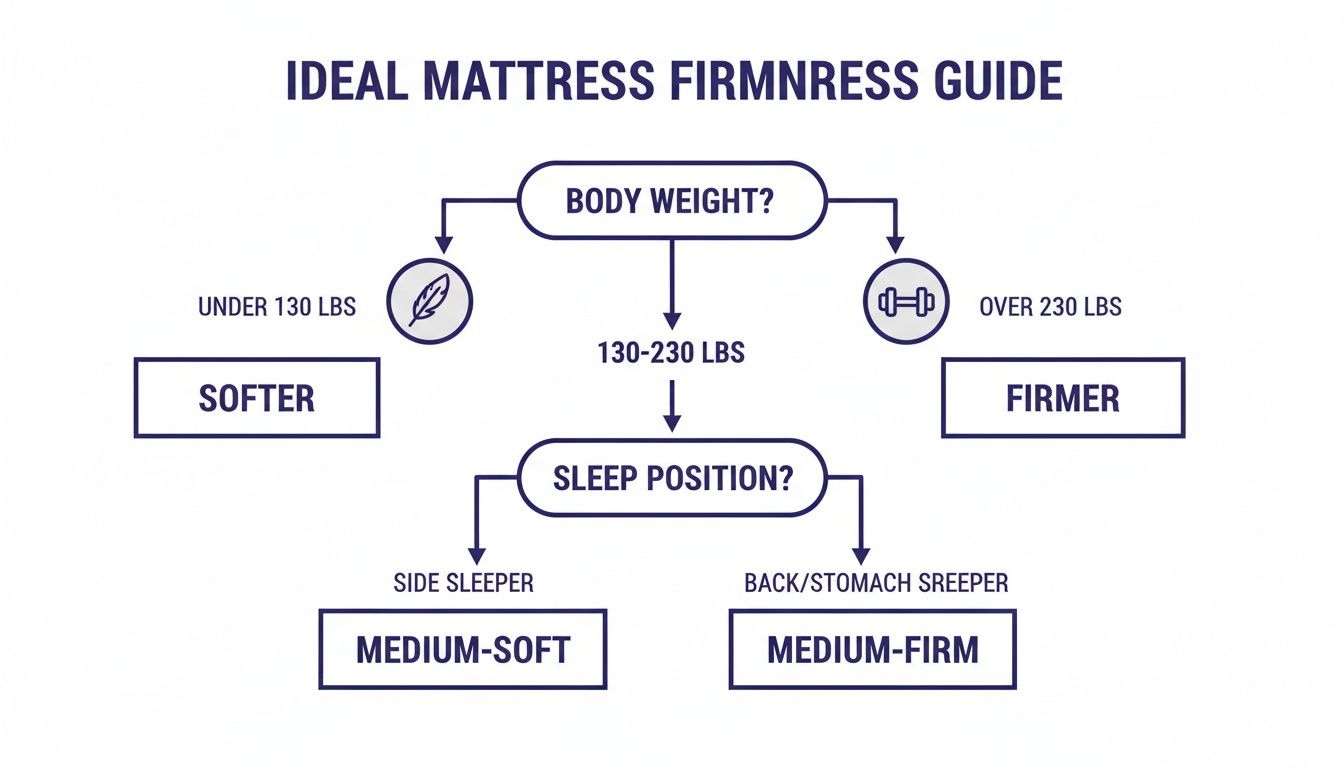
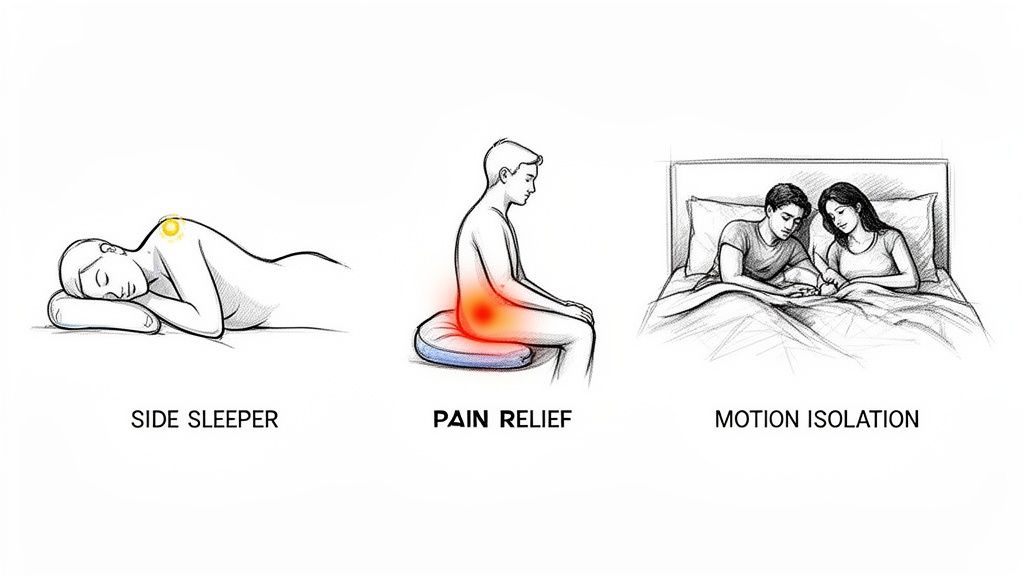
- Plush & Pillow Top: These can be ideal for strict side sleepers. If you need significant pressure relief for your shoulders and hips, the extra cushioning lets you sink in just enough to prevent pressure points.
- Medium: Sealy's medium mattresses are their most popular. They hit a balance between contouring comfort and solid support, making them a good fit for many back sleepers and combination sleepers.
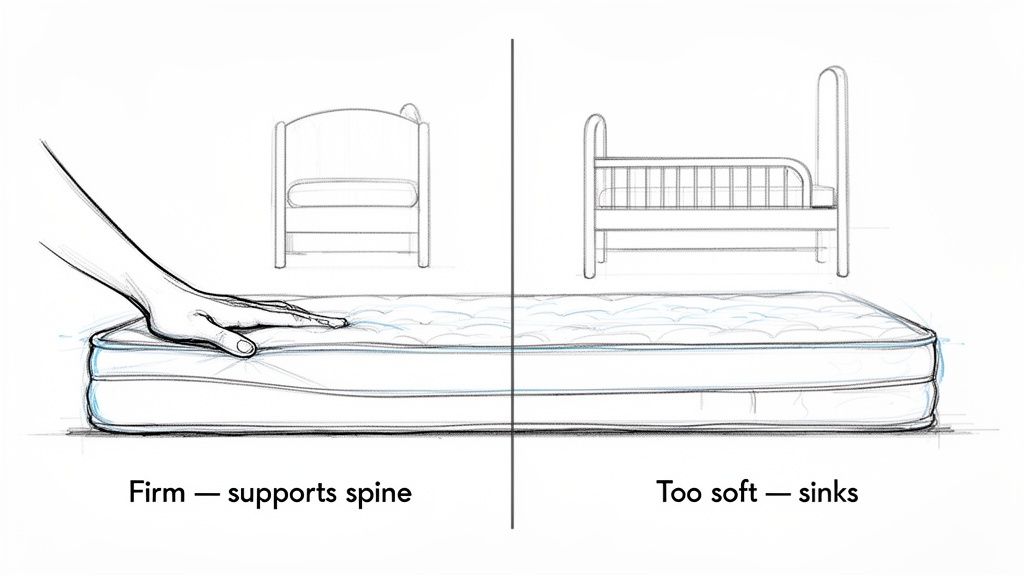
- Firm & Extra Firm: Built for those who want to sleep "on" their mattress rather than "in" it. These are often preferred by stomach sleepers who need a flat surface to keep their spine aligned, and for back sleepers who simply prefer a sturdier feel.
The Stearns & Foster Feel
A Stearns & Foster mattress delivers a more luxurious, structured feel, regardless of the firmness level. Their IntelliCoil system and high-density foams result in a mattress that feels deeply supportive and durable right from the start.
The key difference in feel often boils down to the quality and density of the materials. Stearns & Foster uses premium components like their exclusive TEMPUR-Indulge memory foam, which gives a more profound, contouring sensation by adapting closely to your body's unique curves.
Even if you choose a "plush" Stearns & Foster, you may notice it feels more substantive and less "sinking" than a comparable Sealy. This can be great for sleepers who want pressure relief but dislike the feeling of being stuck. Their firm models are especially impressive, offering an unyielding yet comfortable surface that’s often a solid option for heavier individuals or those needing the highest level of spinal support.
In the Sealy vs Stearns & Foster discussion, your choice often comes down to this core difference: do you prefer a traditional, balanced feel or a substantial, deeply contouring one?
Analyzing Price and Long-Term Value
Let's talk about the bottom line. For most of us, budget is a practical part of any mattress decision. When you're looking at Sealy vs Stearns & Foster, it's clear each brand is positioned in a different price league. Understanding what you're paying for is key to making a smart investment for your home.
Sealy is known for being accessible. They deliver reliable comfort and features like their Posturepedic Technology without a luxury price tag. This makes Sealy a strong contender if you're focused on getting good value for your dollar.
Stearns & Foster, on the other hand, resides in the premium-to-luxury end of the mattress market. That higher price tag reflects a commitment to top-tier materials and craftsmanship, which adds up to a different kind of long-term value.
What Drives the Price Difference?
So, why the jump in price? A mattress's cost comes down to what’s inside it and the time it takes to assemble it. Sealy uses smart engineering and trusted materials to build a quality mattress while keeping costs reasonable.
Stearns & Foster’s pricing is a direct result of a few key factors:
- Hand-Layering: Every Stearns & Foster mattress is built and hand-layered by certified master craftsmen. It’s a meticulous, time-consuming process not found in most mass-market mattresses.
- Premium Materials: They use higher-density foams like TEMPUR-Indulge™ Memory Foam and patented coil-in-coil systems like the IntelliCoil®. These materials cost more but are designed to enhance both comfort and durability.
- Intricate Details: Small features add up. Ventilated coils for airflow, hand-tufting on certain models to prevent shifting, and high-end fabrics all contribute to the luxurious feel and the final price.
A higher price doesn't just mean "luxury for luxury's sake." With Stearns & Foster, you are investing in materials and craftsmanship designed for enhanced durability and a more substantial, supportive feel that lasts for many years.
Thinking About Long-Term Value
When you’re looking at the price tag, it helps to think past the initial purchase and consider the long-term picture. A Sealy mattress offers excellent value by providing dependable comfort and support at a price that works for many people. For a lot of shoppers, it’s a solution that checks all the boxes without a large financial commitment.
A Stearns & Foster mattress offers a different kind of value—one centered on longevity and an elevated sleep experience. The robust construction and premium materials are specifically engineered to resist sagging and hold their supportive, comfortable feel for a longer period. If you see your mattress as a long-term investment in your well-being and sleep quality, the higher upfront cost can be justified by its extended lifespan and enduring comfort.
Ultimately, what counts as "better" value depends on your personal priorities and budget.
Who Sealy Mattresses Are Generally Best For
When trying to decide between Sealy vs Stearns & Foster, it's less about which one is "better" and more about which brand is the right fit for you—for your budget, sleep preferences, and priorities. We've found that Sealy mattresses are an excellent choice for shoppers who want proven, reliable comfort and technology without a premium price tag.
Sealy has built its reputation on dependable performance. Their mattresses are engineered to give you consistent support and a familiar, balanced feel that a large number of people enjoy, without requiring a massive financial leap.
Shoppers Prioritizing Value and Accessibility
A Sealy mattress is often a great option for anyone who wants a quality night's sleep but isn't looking for a luxury-tier price. They pack in valuable features, like their zoned Posturepedic Technology and modern comfort foams, at a cost that makes sense for many. This makes them a good match for a few common situations:
- First-Time Homebuyers: When furnishing a new house, the budget can get tight. Sealy provides a durable, comfortable mattress that doesn’t skimp on the support your body needs.
- Guest Rooms: You want guests to be comfortable, but the guest bed doesn't need to be the most expensive mattress in the house. Sealy provides a welcoming and supportive feel that works for many different sleepers.
- Growing Families: Whether for a child's first "big kid" bed or a teenager's room, Sealy offers the durability and support that growing bodies need, at a price point that works for many families.
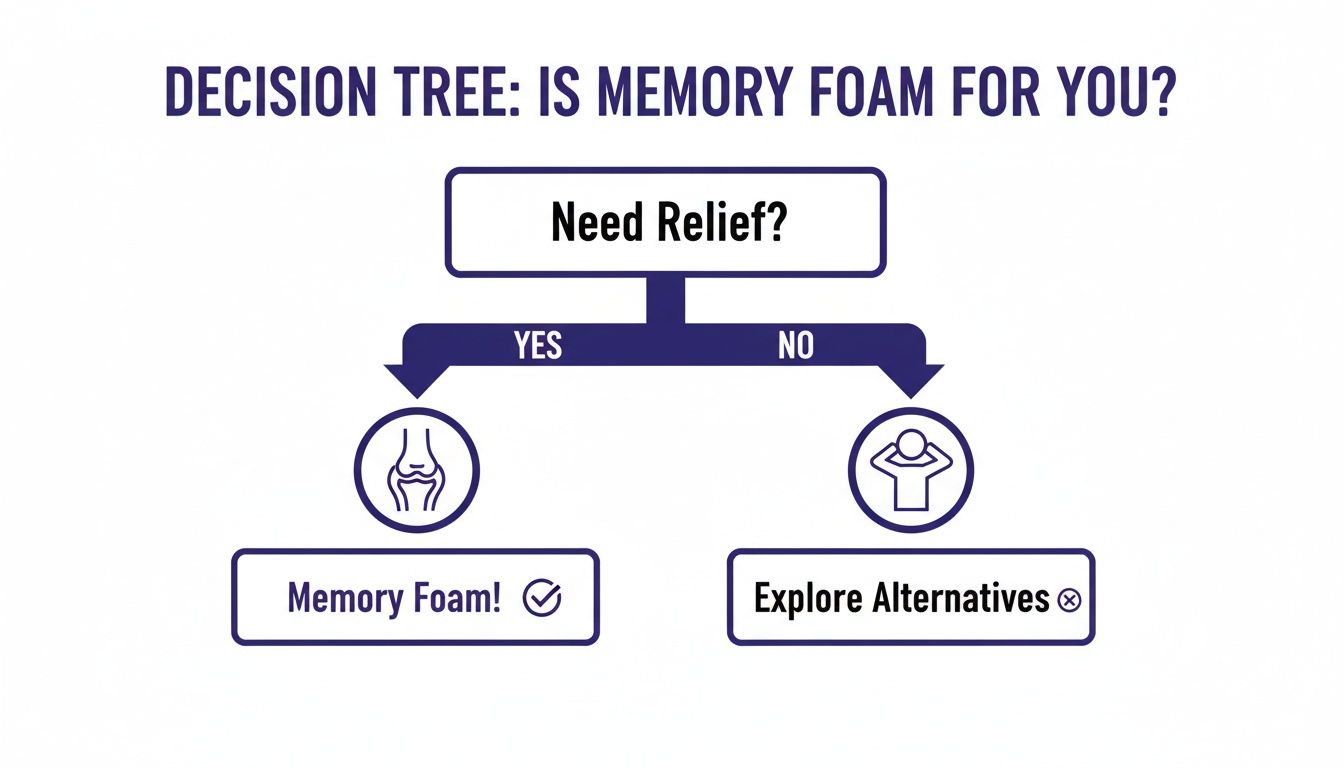
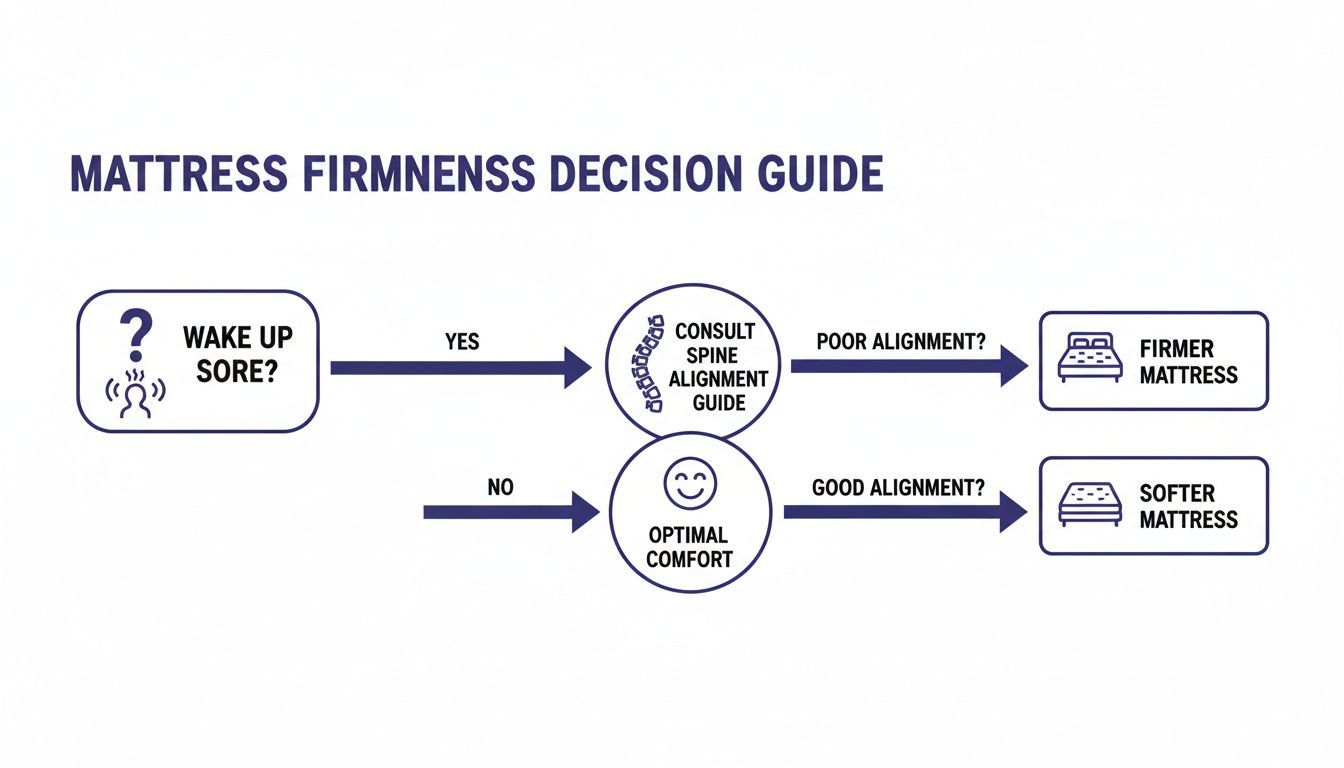
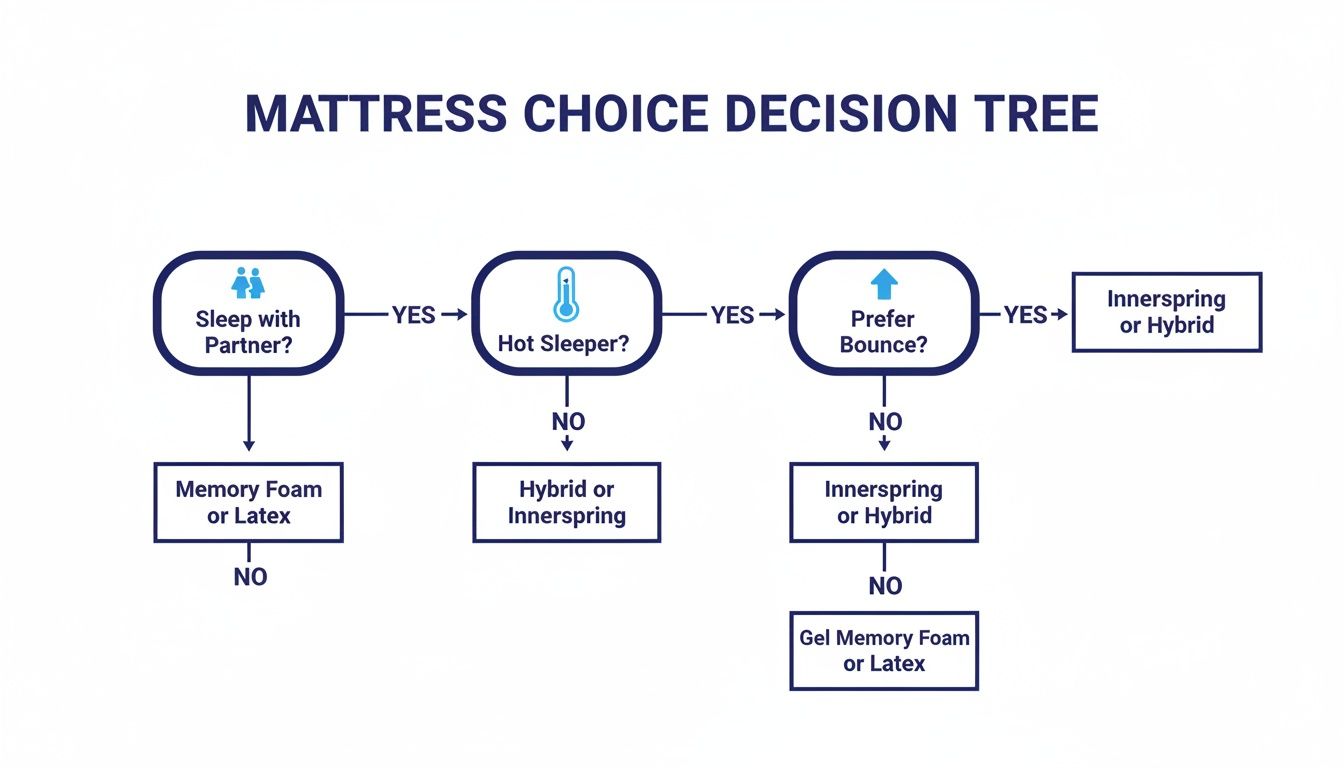
This simple decision tree gets to the heart of how budget often steers the conversation between Sealy and Stearns & Foster.

As you can see, Sealy is positioned for the value-conscious shopper, while Stearns & Foster is there for those ready to invest in a premium, handcrafted product.
Sleepers Who Prefer a Traditional Feel
Price isn't the whole story, though. From a comfort standpoint, Sealy is a great fit for people who prefer a more traditional, supportive mattress feel. They offer a full range of firmness levels, from plush to firm, but the core experience is almost always one of balanced support, not the deep, sinking-in feeling some other mattresses have.
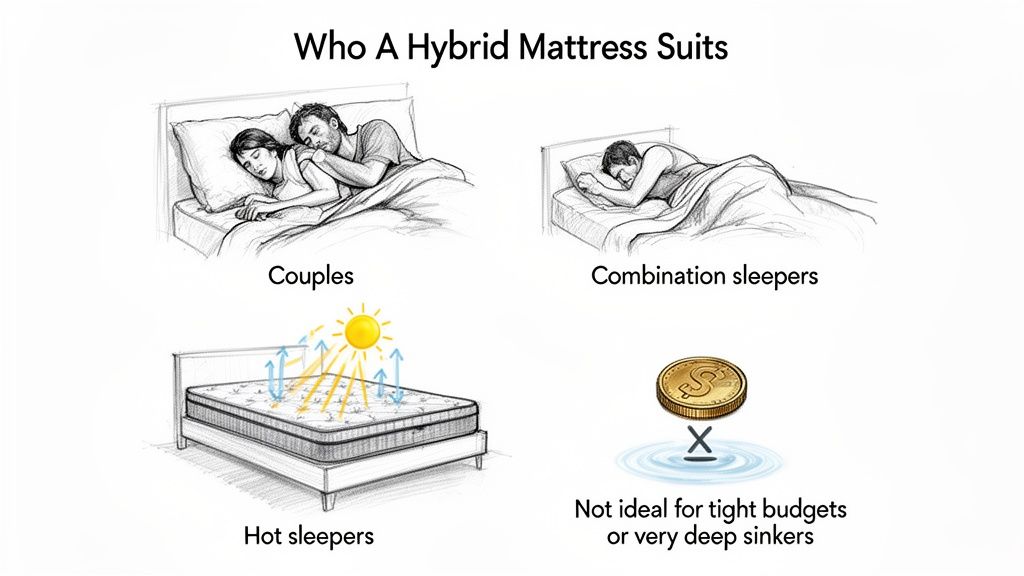
If you're someone who likes sleeping "on" your mattress more than "in" it, a Sealy will probably feel right. The way they combine responsive coils with quality foams creates a familiar comfort that feels supportive and reliable. This makes it a great choice for many back and combination sleepers.
At the end of the day, a Sealy mattress is a solid solution when your goal is simple: find a well-made, comfortable, and supportive mattress from a trusted brand, and get a good night's sleep. It's a straightforward path to better rest, backed by decades of engineering and a reputation for performance and value.
Who Stearns & Foster Mattresses Are Generally Best For
While Sealy is a master of trusted, accessible comfort, Stearns & Foster plays in a different ballpark. A Stearns & Foster mattress is for the person who sees their bed as more than just furniture. It’s a long-term investment in their sleep and well-being.
This is the brand for shoppers seeking true luxury craftsmanship and premium materials. If you’ve ever slept in a high-end hotel and wished you could take that supportive, indulgent feeling home, Stearns & Foster is built to deliver that experience, night after night.
Sleepers Who Put Durability and Support First
Stearns & Foster mattresses are engineered for the long haul. They use high-density foams, robust edge support, and the patented IntelliCoil system to build a mattress that feels substantial and is designed to resist sagging and body impressions for years. This makes them a strong match for a few specific types of sleepers.
These mattresses are an excellent choice for:
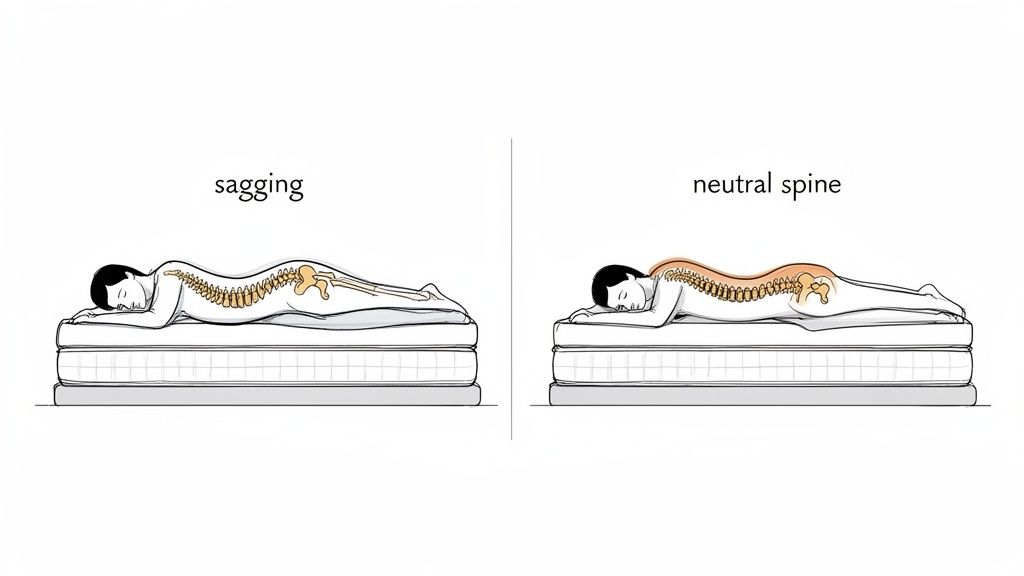
- Sleepers Needing Serious Support: The IntelliCoil’s coil-within-a-coil design is unique. The outer coil gently contours to your body while the inner coil provides deep, foundational support. This is helpful for anyone who needs unwavering spinal alignment.
- Couples: The combination of dense foams and individually pocketed coils is exceptional at isolating motion. If your partner is a restless sleeper, you’re far less likely to feel their movements.
- Anyone Wanting a "Substantial" Feel: If you dislike a "sinking-in" feeling, you may appreciate the "on top of the bed" sensation that Stearns & Foster delivers, even in its plusher models.
Those Looking For Top-Tier Pressure Relief and Contouring
Don't mistake all that support for a lack of comfort, though. These mattresses are loaded with premium materials like TEMPUR-Indulge™ Memory Foam, which means you get incredible body-contouring pressure relief that adapts to your shoulders, hips, and lower back.
A huge difference when comparing Sealy vs Stearns & Foster is the level of handcrafted detail. Each mattress is assembled by certified master craftsmen, ensuring every layer works in harmony to provide both robust support and indulgent comfort.
Ultimately, when you choose a Stearns & Foster, you’re putting your money on a mattress that is meticulously built to last. It’s for the shopper who is ready to invest in a premium sleep system and understands that the higher price tag is backed by years of durable performance, advanced engineering, and a luxury feel. If that sounds like what you're looking for, a Stearns & Foster may be the right mattress for you.
A Few Final Questions About Sealy & Stearns & Foster
We've covered a lot of ground comparing these two mattress brands, but experience shows that a few key questions almost always pop up when shoppers are making their final decision. Let's tackle those common questions head-on.
What Is the Expected Lifespan of Each Brand?
This is a great question, because a mattress is an investment in your long-term health. The lifespan of any mattress depends on many factors, from how you use it to the quality of the materials inside.
- Sealy mattresses are designed for reliable comfort and durability. You can generally expect them to perform well for the industry-average lifespan of 7 to 10 years, which is typical for a well-built innerspring or hybrid.
- Stearns & Foster mattresses, on the other hand, are constructed with premium, higher-density foams and more substantial coil systems. With proper care, these mattresses are engineered to provide consistent support for 10 years or more.
Do These Mattresses Need a Specific Foundation?
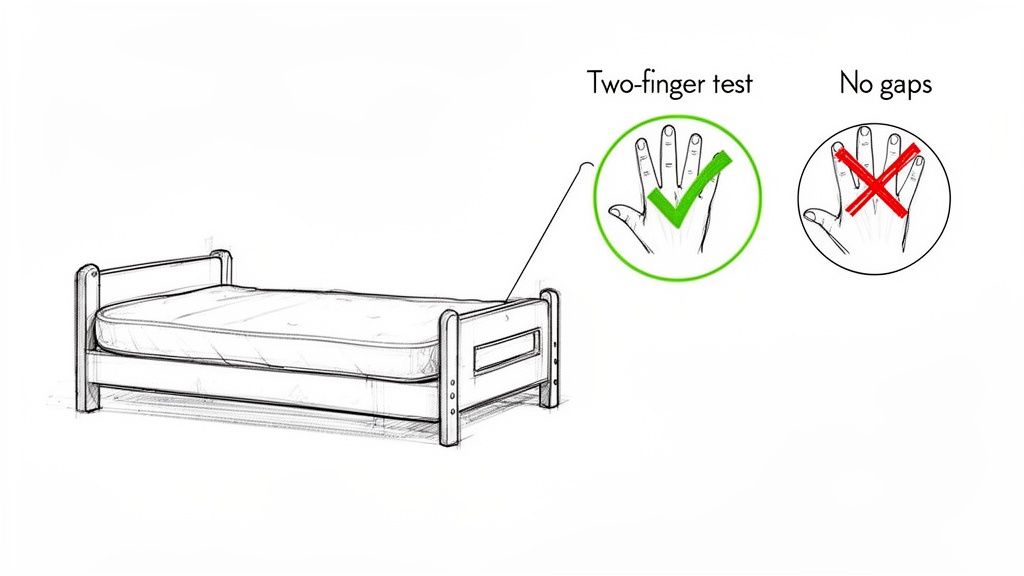
Yes. The right foundation isn't just for support—it's also critical for keeping your warranty valid. Both brands require a solid, supportive base to perform properly.
This could be a modern platform bed with slats that are close together, or it could be a matching box spring or foundation sold with the mattress. Whatever you do, don't put a new mattress on an old, sagging box spring. It can cause the mattress to wear out faster and could void your manufacturer's warranty.
Which Brand Is Better for Heavier Individuals?
While both Sealy and Stearns & Foster make firm mattresses, our mattress experts often point heavier sleepers toward Stearns & Foster for superior long-term support.
Their patented IntelliCoil system is the key feature here. It uses a unique coil-within-a-coil design that delivers a more adaptable and robust level of support. The softer outer coil gently cradles your body, while the firmer inner coil provides the deep-down support needed to maintain proper spinal alignment, especially under more weight. It's an advanced design that makes it a very reliable choice for sleepers over 230 lbs.
The Bottom Line for Heavier Sleepers: If you're a heavier person, you'll likely find that Stearns & Foster’s combination of the IntelliCoil system and high-density foams provides more durable and consistent support over the life of the mattress. It’s specifically designed to handle more weight without compromising on comfort.
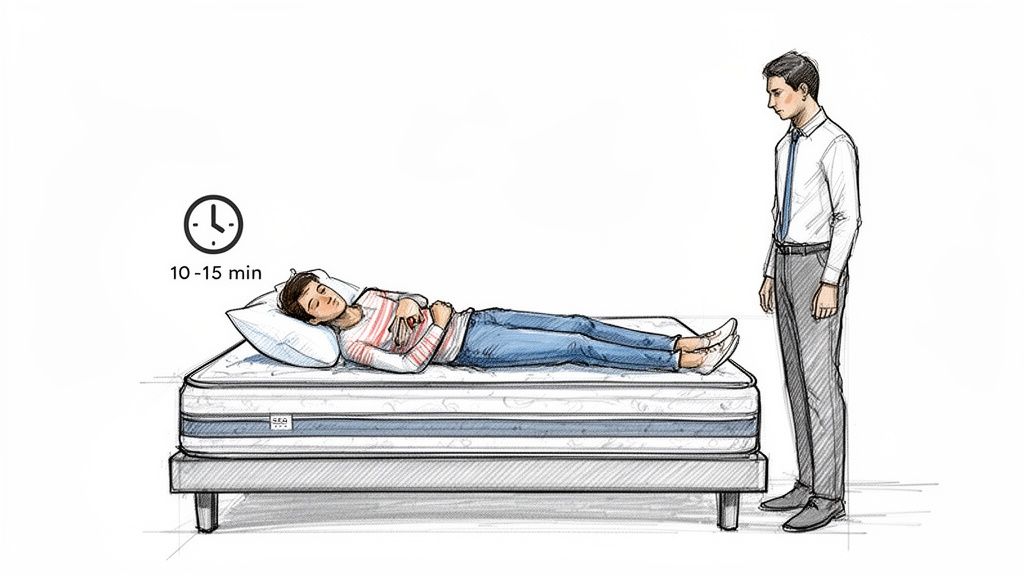
Deciding between these two iconic brands is so much easier when you can feel the difference for yourself. To lie down on a Sealy and a Stearns & Foster side-by-side, we invite you to visit one of our North Georgia showrooms.
Our knowledgeable, no-pressure team at Woodstock Furniture & Mattress Outlet is here to listen to your needs and help you find the right fit for your sleep style and budget.
Find your nearest location and come see us, or explore our full mattress collection at https://woodstockoutlet.com.