Tag: living room furniture

  • Your Guide to the English Arm Sofa

    Your Guide to the English Arm Sofa

    You're probably here because you've seen a sofa described as an English arm sofa and thought, “I know I like it, but I'm not fully sure what makes it different.”

    That's common. A lot of sofa styles sound similar online, and product listings don't always slow down enough to explain what your eyes are noticing. One style has a soft rolled arm, another has a square track arm, and then there's the English arm, which often looks familiar even if you don't know the name.

    If you want a sofa that feels classic without looking fussy, this is one of the most useful styles to understand. It has a well-defined shape, a comfortable posture, and a look that fits more homes than many people expect. For North Georgia homeowners especially, it can work in everything from an updated traditional living room to a newer farmhouse-inspired space.

    What Exactly Is an English Arm Sofa

    An English arm sofa is easiest to identify by looking at the arms first. They sit lower than the back, and they slope back instead of standing upright. That shape creates a softer outline than a boxy sofa, but it doesn't feel bulky or overly formal.

    According to Pottery Barn's English arm style guide, the English arm sofa is defined by its arms featuring a specialized geometric slope, creating a distinct silhouette where the arm's front face is angled backward rather than standing upright. That shape is linked to reproductions of Georgian and Victorian antiques and creates a dramatic swoop that stands apart from more modern upholstery.

    A pencil sketch of a classic English arm sofa with plush cushions, turned wooden legs, and decorative doodles.

    The three details most people notice first

    Most English arm sofas share a few visual cues.

    • Low recessed arms make the sofa look relaxed and approachable.
    • A tight back often gives it a cleaner, neater profile than very pillow-heavy styles.
    • Rounded lines soften the shape so it feels welcoming instead of stiff.

    Those details matter because they change the mood of the whole piece. A track-arm sofa can look crisp and architectural. A classic rolled arm can look fuller and more traditional. The English arm usually lands in the middle.

    Why people often confuse it with other styles

    Part of the confusion comes from the fact that “English arm” and “English roll arm” get used interchangeably in casual conversation. Some versions look more structured. Others lean more plush. The shared idea is the same. The arm sits low, sweeps back, and helps the sofa feel elegant without looking uptight.

    Practical rule: If the arms are lower than the back and seem to fall away from it in a gentle slope, you're likely looking at an English arm silhouette.

    There's also an emotional reason this style stays popular. It looks established, but not intimidating. It suggests comfort before you even sit down.

    That's why it appeals to people who want a living room that feels finished, not overly decorated. If your goal is “classic, but still livable,” the English arm sofa often checks that box.

    Beyond the Arms Key Construction Features

    Once you recognize the shape, the next question is what makes an English arm sofa feel good to live with. Construction matters more than styling photos.

    One of the biggest design details is the T-cushion. On many English arm sofas, the seat cushion extends forward around the recessed arm instead of stopping in a straight rectangle. That wraparound shape helps the sofa look softer and more compact.

    A diagram outlining the key construction features of an English arm sofa including frame, springs, cushions, upholstery, and legs.

    Why the T-cushion matters

    The T-cushion isn't just decorative. It affects how the sofa reads in a room. According to this English roll-arm sofa construction guide, the recessed sloped arm profile often pairs with a T-cushion seat configuration, and that design can reduce the visual footprint by 2–3 inches compared with standard cushions. The same source notes that this style typically has a depth of 41 to 43 inches, which helps balance a lounge-friendly seat with a more compact appearance.

    That's a useful detail if you've ever looked at deep sofas and worried they'd overwhelm your room. An English arm sofa can still offer a generous sit while looking a little less heavy than its measurements suggest.

    What to inspect beyond the silhouette

    A pretty frame shape doesn't tell you whether a sofa is built well. Look deeper.

    Feature What to look for Why it matters
    Frame Kiln-dried hardwood and reinforced joints Helps the sofa stay stable over time
    Back style Tight back or attached back done neatly Keeps the silhouette tailored
    Seat cushions T-cushion fit and even shape Affects comfort and visual balance
    Support system Ask what supports the seat and arms Influences feel and long-term consistency

    Some English arm sofas have a very polished, refined seat. Others feel more casual. Neither is automatically right or wrong. What matters is whether the proportions feel good to you and whether the sofa keeps its shape when you sit, shift, and stand up.

    A well-made sofa should feel settled and steady. The arms shouldn't wobble, and the seat shouldn't collapse into an uneven dip the moment you sit down.

    One point that trips people up is the back. A tight back looks clean and tidy, but it also means the frame does more of the visible work. If the construction underneath is weak, the sofa can show it sooner because there aren't loose back cushions disguising movement.

    Comfort isn't only about softness

    People sometimes test a sofa for five seconds and focus only on whether it feels plush. That's not enough. A better test is this:

    1. Sit upright and see where your lower back lands.
    2. Lean to one side and notice whether the arm feels usable.
    3. Shift your legs up slightly if that's how you relax at home.
    4. Stand up and look back. Does the cushion bounce back neatly, or does it already look messy?

    That short routine tells you more than a quick bounce on the seat ever will.

    English Arm vs Other Popular Sofa Styles

    If you're torn between several classic silhouettes, the arm shape will tell you a lot about how each sofa will feel in your room. Not better or worse. Just different.

    The English arm often works as the middle ground between a modern track arm and a fuller traditional rolled arm. It softens a room without making it feel overly formal.

    A comparison chart showing English Arm, Track Arm, and Classic Rolled Arm sofa styles with detailed features.

    A simple side by side comparison

    Style Arm look Overall feel Often fits well in
    English arm Low, set back, softly sloped Tailored but inviting Transitional, updated traditional, cozy living spaces
    Track arm Straight and squared Clean and structured Modern, minimalist, urban rooms
    Classic rolled arm Fuller and more prominent Traditional and substantial Formal rooms, layered traditional homes

    The English arm is often the easiest choice for people who don't want extremes. If a track arm feels too sharp and a classic rolled arm feels too heavy, the English arm usually lands in a comfortable middle.

    A quick visual example can help if you're comparing shapes online.

    How the styles behave in real rooms

    A track-arm sofa usually reads as cleaner and more contemporary. If your home has simple trim, open sightlines, and a lot of straight lines, that can be a great fit. It tends to look intentional and crisp.

    A classic rolled arm sofa brings more presence. In the right room, that's a strength. It can anchor antique wood pieces, formal rugs, and more traditional architecture beautifully.

    The English arm sofa bridges those worlds. It has enough curve to feel warm, and enough restraint to work with newer homes and lighter decorating styles.

    If you like traditional furniture in theory but don't want your room to feel stiff, the English arm is often the style that makes the room feel more relaxed.

    Which one is easier to live with

    That depends on your habits.

    • For upright sitting and a cleaner profile, many people prefer track arms.
    • For a classic, substantial look, rolled arms make sense.
    • For reading, conversation, and a softer everyday feel, English arms are often a strong match.

    This is why arm style matters more than shoppers sometimes expect. It changes the look, but it also changes where your shoulders rest, how the sofa meets the room, and whether the piece feels formal or easygoing.

    Styling an English Arm Sofa in North Georgia Homes

    North Georgia homes often mix styles in a way that suits the English arm especially well. You'll see newer builds with farmhouse touches, older homes with traditional bones, and plenty of rooms that blend painted finishes with warm wood tones. The English arm sofa can handle that mix.

    Its roots help explain why. As noted in this history of the English roll-arm sofa, the style emerged in the 19th century, and it helped move the sofa from a formal, hard-edged piece for the aristocracy into a comfortable household essential for the middle class. That change was accelerated by the Industrial Revolution, 1760–1840, which made furniture manufacturing more accessible.

    Where it works locally

    In a Roswell bungalow or older traditional home, an English arm sofa can echo the age of the architecture without looking overly decorated. Pair it with a wood coffee table, a patterned rug, and a lamp with a fabric shade, and the room feels settled.

    In a newer Canton or Woodstock-area home, the same sofa can soften open-concept spaces that have hard flooring, painted cabinetry, and clean-lined built-ins. It keeps the room from feeling too sharp.

    A few room-by-room ideas

    • Family room: Use the sofa as the anchor piece, then add lighter accent chairs so the space doesn't feel too matched.
    • Formal living room: Let the sofa bring the softness, then use a more structured cocktail table to balance it.
    • Reading corner or keeping room: A compact English arm loveseat or smaller sofa can make the area feel finished without looking bulky.

    This style also plays well with many North Georgia materials and finishes.

    If your room has Try this with an English arm sofa
    Warm wood floors Textured neutral upholstery and a patterned pillow
    Painted shiplap or trim A sofa with tailored lines and subtle contrast piping
    Stone fireplace Softer fabric and rounded accessories to keep the room from feeling hard
    Black metal accents A classic silhouette to add warmth and visual balance

    The most successful rooms usually mix one classic piece with simpler supporting pieces. An English arm sofa often does that job well because it has character without demanding that everything around it match.

    What not to overdo

    People sometimes lean too far into “traditional” once they choose this silhouette. You don't need floral everything, dark wood everywhere, or a room full of antique-style accessories.

    Instead, think in contrast. If the sofa has rounded lines, let a cleaner side table sit beside it. If the upholstery is quiet, bring in a patterned pillow or woven throw. That balance keeps the room current while respecting the sofa's history.

    Your In-Store Shopping and Care Checklist

    Shopping for an English arm sofa in person is worth the effort because this is a style where proportions matter. A sofa can look perfect in one photo and feel completely different when you sit on it.

    That's especially true with arm height, seat depth, and fabric texture. Two sofas can both be labeled “English arm” and still feel nothing alike in daily use.

    An infographic checklist for shopping for and maintaining an English arm sofa in a home.

    What to do in the showroom

    Bring a short checklist and use it.

    1. Sit the way you sit at home
      Don't perch on the edge for three seconds. Sit back, rest an arm, and stay there long enough to notice whether the depth works for your height.

    2. Check the frame with your hands
      Put one hand on the arm and one on the back. Give the piece a gentle wiggle. You're listening and feeling for stability, not trying to stress the furniture.

    3. Look at the cushions after you stand up
      Some cushions recover neatly. Others look rumpled right away. That visual tells you a lot about the maintenance level you may be signing up for.

    4. Take fabric swatches home if they're available
      Store lighting and home lighting are not the same. A fabric that looks creamy in the showroom may read cooler or darker in your living room.

    Fabric matters more than many people expect

    This is one of the most overlooked parts of sofa shopping. According to the Serena & Lily editorial on English roll-arm sofas, citing AFMA, 72% of U.S. consumers prioritize low-maintenance, durable fabrics. That's especially relevant for a traditional silhouette that may stay in your home for a long time.

    If you have kids, pets, or a high-traffic family room, don't choose fabric based only on color. Ask how it handles regular use, spot cleaning, and everyday friction. If pet shedding is part of your decision, this guide to choosing pet hair resistant materials can help you think through texture and cleanup before you commit.

    A beautiful sofa fabric that makes you nervous every day usually isn't the right fabric for your real life.

    A simple care routine after delivery

    Care doesn't need to be complicated, but it does need to be consistent.

    • Vacuum gently: Use a soft brush attachment to remove dust and crumbs from seams and under cushions.
    • Rotate loose cushions: If your sofa has reversible seat cushions, rotate them so wear happens more evenly.
    • Blot spills quickly: Follow the manufacturer's care guidance instead of guessing.
    • Watch sunlight: Long periods of direct sun can be hard on many upholstery fabrics.

    One more practical note. Before you buy, measure not only the room but also the path into it. Doorways, stair turns, hall widths, and entry angles matter just as much as the final placement spot.

    Experience the Timeless Comfort for Yourself

    The appeal of an English arm sofa is simple once you strip away the jargon. It gives you a low, graceful arm shape, a well-defined look, and a comfortable presence that doesn't feel too formal or too modern. That balance is why so many people respond to it immediately, even if they don't know the style name.

    It's also one of the easier classic silhouettes to use in real homes. In North Georgia, where many interiors blend traditional details with newer finishes, the English arm often feels natural instead of forced. It can live beside rustic wood, painted built-ins, soft neutrals, or more polished pieces without looking out of place.

    What to remember before you choose

    If you're narrowing down options, keep these points in mind:

    • Focus on the arm shape first so you know you're looking at the right silhouette.
    • Test the seat depth and support in person because comfort varies from one model to another.
    • Treat fabric choice as a lifestyle decision, not just a decorating decision.
    • Think about the room as a whole so the sofa supports your space instead of overpowering it.

    A sofa like this rarely wins people over with flash. It wins because it keeps making sense. It looks good in a wide range of homes, and when the proportions are right, it tends to feel easy to live with day after day.

    Why seeing it in person still matters

    Photos help you narrow the field, but they can't tell you everything. They can't show whether the arm hits your elbow comfortably, whether the seat feels too deep for conversation, or whether the upholstery has the texture you want in your everyday space.

    That's where a showroom visit helps. You can compare silhouettes side by side, test comfort for yourself, and ask practical questions without relying on guesswork.


    If you'd like hands-on help sorting through sofa styles, visit Woodstock Furniture & Mattress Outlet. Their team can help you compare shapes, fabrics, and room fit in person so you can make a confident choice without pressure.

  • Best Sectional Sofas: A Buyer’s Guide for 2026

    Best Sectional Sofas: A Buyer’s Guide for 2026

    You're in the living room, tape measure on the coffee table, trying to picture a sectional along one wall. In your head, it looks great. In the room, the questions start piling up fast. Will the chaise block the walkway? Will the corner seat end up in front of the window? Will the sofa feel solid after a year of daily use, or just look good in photos?

    That's the point where shopping gets confusing.

    A sectional can solve real problems that a standard sofa often cannot. It can use a corner more efficiently, define a seating zone in an open room, and give a family one place to gather instead of scattering chairs around the edges. But "best" only means something if the piece fits your room, your routine, and the way people move through the space.

    A good sectional works like a floor plan tool as much as a place to sit. The right one opens up the room and gives everyone a clear place to land. The wrong one can crowd a doorway, steal space from a side table, or make the room feel harder to use every day.

    That's why this guide focuses on how to choose, not just which models get the most attention. The goal is to help you make a smart decision for a narrow apartment, an awkward family room, a busy household with pets, or a space that has to handle movie night, homework, and guests all in the same week.

    The process gets much easier once you break it into a few practical decisions. First, figure out the shape that fits the room. Then confirm the size, including the path through doors and stairs. After that, look at the frame, suspension, and cushions, because what's inside matters just as much as the silhouette. Finally, match the upholstery and configuration to the way you live.

    That approach gives you something better than a trend list. It gives you a way to choose a sectional with confidence.

    Your Guide to Finding the Perfect Sectional Sofa

    A sectional often sounds like the answer before you've even chosen one. You need more seating. You want a place to stretch out. You'd like the room to feel finished instead of scattered. So you start searching, and suddenly every model is described as comfortable, stylish, family-friendly, modular, or perfect for entertaining.

    That language doesn't help much when your real questions are simpler.

    Will it fit the corner by the window? Can people still walk through the room without bumping into the chaise? Will the cushions still feel supportive after daily use? If you rent, can it come apart easily enough to handle stairs and future moves?

    The right sectional should solve a room problem first and a style problem second.

    That's why it helps to shop like you're walking a showroom floor with a checklist instead of scrolling for the most flattering photo. A sectional for a basement movie room won't be the same as one for an apartment living room. A household with kids, pets, and constant daily use should judge a sofa differently than someone furnishing a formal sitting area.

    There's also a hidden source of frustration in this category. A lot of content tells you which models are “best,” but not how to choose for awkward layouts, apartment entries, traffic paths, or rooms that have to do several jobs at once. Recent small-space coverage does acknowledge those issues, including low-profile silhouettes and adjustable support, but much of it still reads like a product roundup instead of a room-planning guide as seen in this Elle Decor feature on sectionals for small spaces.

    So treat this process like fitting a kitchen table or planning a rug. The room comes first. The seating shape comes next. The construction details decide how long the piece is likely to feel good. Once you look at sectionals in that order, the category gets much less confusing.

    First Find Your Shape Sectional Configurations Explained

    Most buying mistakes happen before anyone talks about fabric or price. They happen when the shape is wrong for the room.

    A diagram illustrating five different styles of sectional sofas including L-shape, U-shape, curved, modular, and chaise models.

    L-shape for corners and everyday rooms

    The L-shaped sectional is the standard starting point because it fits the way many living rooms are already organized. One side anchors the main wall. The other side turns the corner and creates a natural seating zone.

    This shape usually works well when you want to:

    • Use a corner efficiently: It can define the room without needing extra chairs.
    • Face a TV or fireplace: The angle often supports a clear focal point.
    • Seat several people without a bulky feel: It gives wraparound seating without taking over all four sides of the room.

    The detail that trips people up is orientation. Right-arm facing and left-arm facing matter. If you choose the wrong side, the sectional can block a walkway or point the lounge side into dead space.

    Chaise sectionals for smaller footprints

    A chaise sectional is often the easiest bridge between a regular sofa and a full sectional. You get one extended seat for stretching out, but the piece usually reads lighter than a larger corner build.

    This option makes sense when:

    • the room is narrow
    • you want one main lounging spot
    • you don't need seating wrapping around both sides

    If you live in an apartment or a tighter home layout, a chaise can deliver the “sectional feel” without crowding the room.

    Practical rule: If only one person lounges most of the time, a chaise often does the job better than a larger sectional shape.

    U-shape and modular for bigger or changing spaces

    A U-shaped sectional is built for rooms where seating is the priority. It works well in larger family rooms, open layouts, or homes where people gather and talk facing each other. It can feel cozy in a big space, but too dominant in a modest one.

    A modular sectional is the flexible option. The pieces connect, separate, and sometimes rearrange as your needs change. That's useful for renters, families whose layout changes often, or anyone who wants more freedom than a fixed frame offers.

    Curved sectionals also exist, and they can soften a room with lots of hard angles, but they usually need more intentional placement. For most homes, the shortest path to a good decision is still this: L-shape for balanced everyday use, chaise for compact lounging, U-shape for bigger gathering spaces, modular for adaptability.

    Measure Twice Buy Once Sizing for Any Room

    A sectional can be the right style and still be the wrong fit. That's why measuring isn't just about whether the sofa fits against a wall. It's about whether the room still works after the sofa arrives.

    A hand-drawn architectural floor plan of a living room with a measuring tape placed across the sofa.

    Start with the room, not the product page

    Measure the room's length and width first. Then mark windows, doors, vents, floor outlets, radiators, and anything else the sectional can't block. If the room opens into a hallway or kitchen, note where people naturally walk.

    A simple way to test fit is to outline the sectional footprint on the floor with painter's tape. That shows you something online listings can't. You'll see whether the chaise cuts into a walking path or whether the room still has enough open floor space to feel comfortable.

    If you're working with a compact room, ideas from this guide to creating inviting small spaces can help you think beyond raw dimensions and focus on flow, openness, and visual weight.

    Check the measurement people forget

    Seat depth affects both comfort and footprint. Expert buying guides point to about 22 to 25 inches as the most versatile seat depth because it balances upright support with lounging comfort according to Povison's sectional buying guide.

    That matters more than many shoppers realize.

    • Near the shallower end: Better for conversation, posture, and smaller rooms
    • Near the deeper end: Better for movie nights, sprawling out, and more casual family spaces
    • Outside that feel zone: A very shallow seat can feel stiff, while a very deep seat can make shorter users feel like they can't sit back comfortably

    A deep sectional can look inviting in a showroom and still feel oversized once it lands in a smaller living room. In practical terms, seat depth changes how much breathing room the rest of the room gets.

    To see how this plays out in real room planning, this quick walkthrough is useful:

    Don't forget the delivery path

    Some sectionals fit the room but never make it into the room.

    Before you buy, measure:

    1. Entry doors: Width, height, and any tight turns right inside the door
    2. Hallways: Especially narrow apartment corridors
    3. Staircases: Including landings where large pieces must pivot
    4. Elevators: If the building has one, measure the interior and the door opening

    If a sectional is modular, delivery is often simpler because the piece comes in smaller sections. If it's fixed and bulky, the room may not be the hardest part of the move.

    If you want one practical takeaway from this whole section, it's this: don't judge a sectional by wall length alone. Judge it by footprint, path, and daily movement.

    Whats Inside Matters A Guide to Sectional Construction

    Two sectionals can look almost identical on the sales floor and wear very differently at home. The difference usually comes from the parts you don't see.

    A detailed technical drawing showing the internal construction and layers of a comfortable sectional sofa.

    Frame first, cushions second

    For long-term durability, one of the strongest construction combinations is a kiln-dried hardwood frame paired with high-density foam cushions around 1.8 lb/ft³ or higher as explained in this sectional construction overview. Kiln drying reduces moisture-related warping or cracking in the frame. Higher-density foam is better at resisting sagging and deep body impressions.

    That sounds technical, but its actual meaning is simple. The frame decides whether the sectional stays stable. The foam decides whether the seats keep their shape.

    If you sit on a sofa that feels plush on day one, that doesn't automatically mean it will age well. A softer initial feel can still come from weaker cushioning materials. That's why the spec sheet matters.

    What to ask in the showroom

    If a product listing doesn't clearly state frame material and foam density, its durability story is incomplete. That doesn't automatically mean it's poor quality. It means you don't have the information needed to judge it confidently.

    Ask questions like these:

    • What is the frame made of? Look for clear wording, not vague phrases.
    • Has the wood been kiln-dried? That's a useful sign of a more stability-focused build.
    • What foam density is used in the seat cushions? This helps you compare support over time, not just softness in the moment.
    • How do the sections connect? A strong interlocking system helps modular and multi-piece sectionals stay aligned.

    The support system underneath

    Suspension matters too. It sits between the frame and the cushions and affects how the seat feels when you drop into it and how it rebounds after repeated use.

    Here's a simple comparison:

    Construction part What it affects What to watch for
    Frame Stability and long-term structure Hardwood is generally a stronger sign than vague engineered descriptions
    Suspension Bounce, support, seat consistency Ask how the seats are supported and whether the feel is firm or more flexible
    Foam Shape retention and comfort over time Density matters more than showroom softness
    Connectors Whether pieces shift apart Important on modular and multi-piece sectionals

    A sectional doesn't wear out all at once. First it starts creaking, then the seat loses shape, then one favorite spot becomes the spot everyone avoids.

    If you're shopping in person, sit on the corner seat, the center seat, and the chaise or return side. The weak spots often show up there first. And if you're comparing stores, including places such as Woodstock Furniture & Mattress Outlet, bring the same construction questions with you each time. That keeps the comparison fair.

    The Finishing Touch Choosing Cushions and Upholstery

    You sit down in the showroom and two sectionals look almost identical. Ten minutes later, one feels like a spot you could use every evening, and the other already feels like work. That difference usually comes from the cushions and the cover, because those are the parts your body and your daily routine notice first.

    A good way to choose here is to stop asking which option feels nicest for thirty seconds. Ask which option will still make sense on a long Sunday, during a spill, or after a year of everybody claiming the same seat.

    Cushion feel should match how you sit

    “Soft” and “firm” are useful labels, but they do not tell the whole story. What matters more is posture.

    If you sit upright to read, chat, or use a laptop, a firmer seat usually keeps you from slowly sliding backward. If your sectional is the room's landing pad for movies and naps, a softer seat or blended fill can feel more relaxed and inviting. Plush cushions often create that sink-in look people love in photos, but they usually ask for more fluffing and reshaping in real life.

    A mattress comparison helps here. The right choice depends on how you spend time on it, not on whether the first touch feels impressive.

    Also test the back cushions, not just the seat. Some sectionals have supportive seats but overly soft backs, which can leave you slouched after half an hour. In your living room, that means a sofa that looked comfortable can turn into one that never feels quite right.

    Fabric, leather, and performance upholstery each solve a different problem

    No upholstery type wins in every home. Each one handles wear, spills, texture, and temperature a little differently.

    • Fabric: Usually gives you the most choice in color, weave, and softness. It often feels warmer and more casual.
    • Leather: Often wipes clean more easily from surface messes and can age with character, but it can also show scratches, stretching, or color change over time.
    • Performance upholstery: Usually aims for easier cleanup and better resistance to everyday wear, which can be helpful in hard-working family rooms.

    If you see abrasion ratings while shopping, treat them as a durability clue, not a test you need to study. Higher ratings generally mean the fabric is better suited to regular use. What this means for your living room is simple. The sectional is more likely to keep looking decent after repeated sitting, shifting, and weekend sprawl.

    Match the cover to the life your room handles

    This is the part shoppers skip, and it is often where the best decision gets made.

    Choose upholstery for the messes you have, not the lifestyle photo you wish you had.

    A smooth leather may be easy to wipe, but it can feel sticky to some people in warm rooms. A textured woven fabric may hide daily wear better, but it can hold onto pet hair. A pale, soft fabric can be beautiful in a formal sitting room and frustrating in the room where kids eat crackers during cartoons.

    Use these real-world filters:

    • Kids and frequent snacks: Look for easier-clean surfaces and fabrics made for steady daily use.
    • Pets on the sectional: Check whether claws may catch, whether fur sticks, and how easy spot cleaning will be.
    • Lighter-use rooms: You can give more weight to texture, hand feel, and appearance.
    • Busy homes or rentals: Removable cushions or easier-care covers can save time and stress.

    If you want a better sense of what maintenance looks like after the purchase, this article on upholstery cleaning in Reno shows how cushion cleaning plays out in real homes.

    The goal is not to find the most luxurious fabric on the tag. It is to find the cover and cushion combination that still feels like a smart choice once the sectional becomes part of everyday life.

    Finding Your Perfect Match Lifestyle and Budget

    The best sectional sofas make more sense when you stop asking “Which one is best?” and start asking “Best for what kind of life?”

    If your home is active and full

    For the family room that handles homework, movie nights, guests, and everyday sprawl, durability usually matters more than delicate styling. That points you toward practical upholstery, a configuration with enough real seating, and a structure that can handle repeated use without quickly losing shape.

    A chaise can work if one corner is the main lounging zone. An L-shape or U-shape often works better if several people use the room at once. In this setting, easy cleaning and stable construction usually matter more than trend-driven details.

    If your room is small or awkward

    A lot of shoppers assume a sectional is too much for a smaller home. Sometimes it is. Sometimes it's the neatest solution.

    In a compact room, a modular build or a cleaner chaise layout can be easier to place than a sofa plus extra chairs. You can often create one efficient seating zone instead of several pieces competing for floor space. This matters even more in apartments, rooms with odd corners, or layouts where the front door, TV, and windows all pull the room in different directions.

    A low-profile silhouette can also help the room feel less crowded, even when the seating itself is generous.

    If appearance matters as much as function

    Some living rooms don't need maximum lounging. They need structure, polish, and a shape that supports conversation. In those rooms, you may prefer a more structured sectional with a tidier silhouette, a supportive sit, and upholstery chosen more for look and feel than for rough daily treatment.

    That doesn't mean ignoring comfort. It means defining it differently. For some buyers, comfort means sinking in. For others, it means feeling supported and composed while guests visit.

    Budget is really a value question

    Price matters, but it isn't the whole story. A lower initial cost can still become the more expensive choice if the sectional loses support early or has to be replaced sooner than expected.

    That's where repairability and modularity deserve attention. Sustainability-focused coverage shows growing consumer interest in sectionals designed around repairability, modularity, and replaceable components because these features can reduce long-term replacement cost compared with fixed-frame sofas that may need full replacement when one area wears out as discussed in this modular and sustainable sectional roundup.

    A simple way to think about budget:

    • Short-term budget: What you can spend now
    • Use budget: How heavily the sectional will be used
    • Replacement budget: Whether you'd rather replace the whole piece or maintain parts over time

    That last point is where many shoppers become more strategic. A sectional isn't just a purchase. It's a household workhorse.

    Your Sectional Buying Checklist and Next Steps

    If you've ever walked into a showroom and forgotten every question you meant to ask, a checklist helps.

    A checklist for buying a sectional sofa covering room size, configuration, construction, fabric, budget, and delivery.

    Bring these questions with you

    • Does the shape fit your room plan? Decide whether you need an L-shape, chaise, U-shape, or modular setup before you fall in love with a fabric.
    • Have you tested the footprint on the floor? Tape it out so you can see traffic flow, not just dimensions on paper.
    • Will it make it through the delivery path? Doors, stairs, hallways, and corners matter.
    • What is the frame made of? Ask for clear construction details.
    • What kind of seat support and cushion material does it use? Don't judge comfort by softness alone.
    • Does the upholstery match your real life? Pets, kids, entertaining, and cleaning habits should shape this choice.
    • Can it adapt over time? Modular or repair-friendly designs may suit changing homes better.

    A final practical step

    If you're buying a larger furniture piece, it also helps to think about setup and access before delivery day. Even though it focuses on beds, this guide to professional bed assembly in Sydney is a useful reminder that large furnishings often involve tight corners, hardware, and room-by-room logistics that look simpler online than they do in person.

    Sit in the sectional the way you'll actually use it. Don't perch on the edge for ten seconds and call that a test.

    Try the corner seat. Lean back naturally. Put your feet up if the design allows it. If more than one person will use it daily, bring them along. The best choice usually becomes clearer once the sofa is no longer an abstract spec sheet and starts acting like part of your home.


    If you'd like to test seat depth, compare fabrics, and ask construction questions in person, Woodstock Furniture & Mattress Outlet is one place where you can see sectional options up close and work through the fit for your room with a knowledgeable team.

  • Butcher Block Coffee Table: A Practical Guide

    Butcher Block Coffee Table: A Practical Guide

    You're probably looking at the same tradeoff most living rooms run into. You want a coffee table that looks warm and intentional, but you also need it to survive real life. That means snack bowls during movie night, backpacks dropped after school, a pet jumping up to investigate, and somebody eventually setting down a cold drink without a coaster.

    A lot of tables lean too far in one direction. Some look polished but feel delicate. Others are sturdy enough for family life but don't add much personality to the room. A butcher block coffee table sits in the middle in a way many shoppers overlook.

    It has a practical backbone. The style comes from a construction method known for durability, and that matters when your coffee table is one of the hardest-working surfaces in the house. It's not just there to hold décor. It becomes a landing spot for daily living.

    For North Georgia households, that practical side matters even more. Muddy paws, humid seasons, frequent hosting, and open-concept living rooms all put a table through more wear than a staged showroom ever will. A piece can look great online and still be a poor fit once it's in your home.

    The good news is that butcher block is one of the easier furniture categories to understand once you know what to look for. You don't need to memorize woodworking jargon. You just need to know how the top is built, how the finish works, and what signs separate a solid piece from a lookalike.

    The Search for a Coffee Table That Can Do It All

    A common living room story goes like this. You buy the sleek table because it fits the style you want. A few months later, it has visible scratches, a water mark, or a wobble that shows up every time someone puts their feet up.

    Then the pendulum swings the other way. You start looking for something tough enough to handle everyday use, but the options feel bulky, overly rustic, or plain. That's where many people first notice butcher block tables.

    They tend to make sense for homes that are used, not just decorated. A family might need one surface for puzzles, takeout, coffee mugs, and board games all in the same week. A renter may want a table that can move from apartment to apartment without feeling temporary. A pet owner may want something that won't look ruined after a little contact.

    A good coffee table doesn't just match the sofa. It matches the way your household actually lives.

    That's why butcher block keeps coming up in practical furniture conversations. It usually offers visual warmth without being fragile, and it often feels more substantial than lighter, thinner-top styles. If you've been stuck between “pretty but delicate” and “durable but boring,” this category is worth a closer look.

    There are tradeoffs, of course. Weight, finish type, and maintenance all matter. Not every butcher block coffee table is built the same way, and some pieces only imitate the look.

    A smart decision starts with understanding the construction first. Once that part is clear, the rest gets much easier.

    What Exactly Defines Butcher Block Construction

    The phrase butcher block confuses a lot of shoppers because it sounds like a wood species. It isn't. It describes a construction method.

    Butcher block is made by joining smaller wood pieces into a thicker, durable surface. One published DIY build used 12 pine pieces measuring 2 in x 2 in x 4 ft and glued them into larger assemblies before joining them into a tabletop, while another project calculated that seven boards were needed for a butcher block around 30 in x 30 in. Those examples from this butcher block coffee table build guide show how standardized and scalable the format has become.

    Historically, butcher block tops were valued as heavy-duty work surfaces. Furniture makers borrowed that same logic for coffee tables, which is why the style often has a dense top, squared edges, and a substantial look.

    An infographic explaining the definition, construction methods, and different wood grain styles of butcher block surfaces.

    The simple way to picture it

    Think of butcher block like assembling many smaller wood parts into one larger working surface.

    Here are the grain terms that trip people up most often:

    • Edge grain means boards are turned so the long edges become the visible top surface. It often looks linear and orderly.
    • End grain means short blocks are arranged so the ends face upward. You see more of the growth-ring pattern.
    • Face grain means the wider face of the board shows on top. This can resemble a more traditional plank look.

    If that still feels abstract, use this mental picture:

    Grain style Easy analogy What you usually notice
    Edge grain Books standing upright on a shelf Long, consistent lines
    End grain A bundle of straws viewed from the top Block pattern with visible wood ends
    Face grain Boards laid flat side by side Broader grain pattern

    Why shoppers mix these up

    Online listings often use “butcher block” loosely. Some pieces are true butcher block construction. Others only borrow the visual language with a thick-looking top or a patchwork finish.

    That matters because construction affects both appearance and performance. End grain is generally associated with the most durable working surface, but it's also usually heavier and more expensive. Edge grain is more common in furniture because it gives you the butcher block look with a cleaner, more furniture-friendly appearance.

    Practical rule: If a listing says “butcher block style,” slow down and find out whether the top is actually solid wood and how it's assembled.

    Once you know butcher block is a method, not a species, the shopping process gets less intimidating. Maple butcher block will feel different from walnut butcher block, but both can still be butcher block.

    Is a Butcher Block Coffee Table Right for Your Home

    A butcher block coffee table makes a lot of sense for some homes and very little sense for others. The right answer depends less on trends and more on how your living room functions day to day.

    If your coffee table gets used hard, butcher block has real appeal. Retail demand for butcher-block surfaces is broad enough to show up in customer reviews. A Home Depot butcher block article noted that more than 3,000 customers gave one butcher block product a 5-star rating, and another product in the category had 85% customer recommendation, as summarized in this article on customer response to butcher block surfaces. That doesn't prove every coffee table is great, but it does show that many shoppers respond well to the material itself.

    An infographic showing the pros and cons of purchasing a butcher block coffee table for your home.

    Where it shines

    For families, one of the biggest advantages is that a solid wood top usually feels forgiving over time. Small scratches often read as normal wear instead of disaster. If the top is solid wood, surface issues are often more manageable than they are on thin veneers.

    It also brings warmth into a room quickly. A butcher block surface can soften spaces that have a lot of upholstery, painted walls, and synthetic finishes. In open living areas, that natural wood presence often helps the room feel less flat.

    Another plus is substance. One retail listing for a mass-market coffee table reports a product weight of 49.27 lb and a package weight of 54.1 lb, which gives you a sense of the heavier feel buyers often expect from this style. Many people like that because the table feels planted rather than flimsy.

    Where people get frustrated

    Weight is also one of the biggest drawbacks. If you move furniture often to clean, rearrange, or make room for guests, a heavy top can become annoying fast.

    Spills are the other reality check. Coffee tables are high-touch, high-spill pieces. If the finish isn't appropriate for your household, you may end up worrying too much about drink rings, sticky hands, or pet water drips. Families with young children usually do better with a more protective finish rather than a finish that requires frequent upkeep.

    A butcher block coffee table may also feel visually heavy in a small room. That doesn't mean it won't work. It means the base design, top thickness, and leg shape matter more than people expect.

    A quick fit check

    A butcher block coffee table is often a good match if:

    • You want repairability and don't mind some routine care
    • You prefer real wood character over perfectly uniform surfaces
    • Your living room needs a grounded focal point with visual weight

    It may be a poor fit if:

    • You need something easy to move on a regular basis
    • You dislike any maintenance at all
    • Your room already feels crowded and heavy furniture makes it feel tighter

    If you want a coffee table you can live with, not tiptoe around, butcher block is worth serious consideration. If you want a surface that asks nothing of you, be more selective about finish and construction.

    What to Look for in a Quality Butcher Block Table

    Not every butcher block coffee table deserves the name in the same way. Some are solid and long-lasting. Others use the look without delivering the same structure.

    Start with the top. That's where the biggest quality differences usually show up.

    A detailed technical sketch showing a wooden butcher block coffee table with close-up quality detail views.

    Check the top before you admire the style

    Load-bearing stability is one of the clearest separators between a durable table and a weak imitation. A commercial example advertises an extra-thick 2-inch tabletop, while another lists a 4-inch solid hardwood top on a 2-foot by 3-foot coffee table. As noted in this product example discussing top thickness and stability, thickness matters because it improves bending stiffness and reduces deflection under load.

    In plain terms, a thicker real-wood top is less likely to feel flimsy when someone leans on it or places weight near the edge.

    When you're evaluating a table, look for:

    • Real solid-wood construction rather than a thin decorative layer over composite material
    • Visible thickness that appears honest, not just visually bulked up by trim
    • Consistent joinery lines instead of sloppy gaps or filler-heavy seams

    Base design matters just as much

    A beautiful top can still sit on a weak base. The leg connection is often the point where cheaper tables start to fail first.

    Here's what to inspect:

    1. Leg attachment
      If the legs feel decorative rather than structural, be cautious. Good tables use hardware or well-engineered joinery that supports the weight.

    2. Resistance to wobble
      Push gently from different sides. A stable table shouldn't rack easily.

    3. Base proportion
      Heavy tops need enough support underneath. Spindly legs can look elegant, but they have to match the load they're carrying.

    For a quick visual walkthrough of butcher block table construction, this short video is useful:

    Wood species and finish choices

    Species affects color and character more than many shoppers realize.

    • Maple often reads cleaner and lighter.
    • Oak usually shows stronger grain.
    • Walnut brings a darker, richer tone.

    You'll also want to ask about the finish. That answer changes the ownership experience.

    What to compare What it affects
    Wood species Color, grain pattern, overall style
    Finish type Spill resistance, maintenance, sheen
    Top thickness Stability and visual weight
    Leg joinery Long-term sturdiness

    Don't judge quality by the photo alone. Judge it by the top thickness, the joinery, and whether the base feels built for the load.

    A Practical Guide to Sizing and Placement

    Even a well-made butcher block coffee table can feel wrong if the size is off. In most living rooms, sizing mistakes show up in two ways. The table either crowds the seating area, or it looks undersized and disconnected.

    The easiest place to start is with your sofa. Your coffee table should relate to it in both height and length.

    Four sizing rules that prevent most mistakes

    An infographic checklist illustrating four key rules for selecting the proper coffee table size and placement.

    Use these rules of thumb:

    • Height rule. Keep the table within 1 to 2 inches of your sofa seat height.
    • Length guideline. Aim for a table around two-thirds the length of your sofa.
    • Reach comfort. Leave about 18 inches between the sofa and table.
    • Walkway space. Keep at least 30 inches clear around the table in main traffic paths.

    These aren't hard laws. They're practical targets that keep a room comfortable.

    How this works in real rooms

    If your sofa is deep and plush, a coffee table that's too low can make everyday use awkward. Reaching down for a drink or laptop starts to feel annoying. If the table is too high, it interrupts the sightline and can feel more like a bench than a coffee table.

    Length matters for balance. A very short table in front of a long sofa can look like an afterthought, especially with a visually heavy butcher block top. A longer piece usually feels more intentional and gives more usable surface area.

    Shape also plays a role:

    Room condition Shape that often works well
    Tight seating area Round or softened-corner table
    Long sofa Rectangular table
    Sectional layout Large square or rectangle, depending on reach
    Busy walkways Narrower top with lighter-looking base

    One butcher block-specific caution

    Because butcher block tops often look substantial, they can read larger than their measurements suggest. A thick square top in a small room may feel heavier than a thinner glass or veneer table with the same footprint.

    If you're unsure, mark the dimensions on the floor with painter's tape before buying. That simple step catches a lot of sizing regrets.

    In a small living room, visual weight matters almost as much as actual size.

    Long-Term Care and Simple Refinishing Tips

    Owning a butcher block coffee table is easier than many people think, but it helps to know what finish you're dealing with. Most care problems happen when people treat all wood finishes the same.

    A sealed top and an oiled top don't ask for the same routine. If you're not sure which one you have, ask before you buy.

    Daily care that prevents most damage

    For regular cleaning, use a soft cloth and a cleaner that won't leave the wood overly wet. The goal is simple. Remove dust, crumbs, and residue without soaking the surface.

    A few habits make a big difference:

    • Use coasters consistently for cold drinks and mugs
    • Wipe spills promptly instead of letting moisture sit
    • Avoid harsh cleaners that can dull or damage the finish
    • Lift objects when moving them rather than dragging them across the top

    If you already care for hardwood in your home, the mindset is similar. A good hardwood floor maintenance guide can be helpful for understanding how moisture, abrasion, and cleaning products affect finished wood surfaces in everyday use.

    Oiled finishes and sealed finishes

    An oiled finish usually gives a more natural feel and appearance. Many people love that look, but it often needs more owner involvement. The surface may need periodic re-oiling to keep the wood from drying out or looking tired.
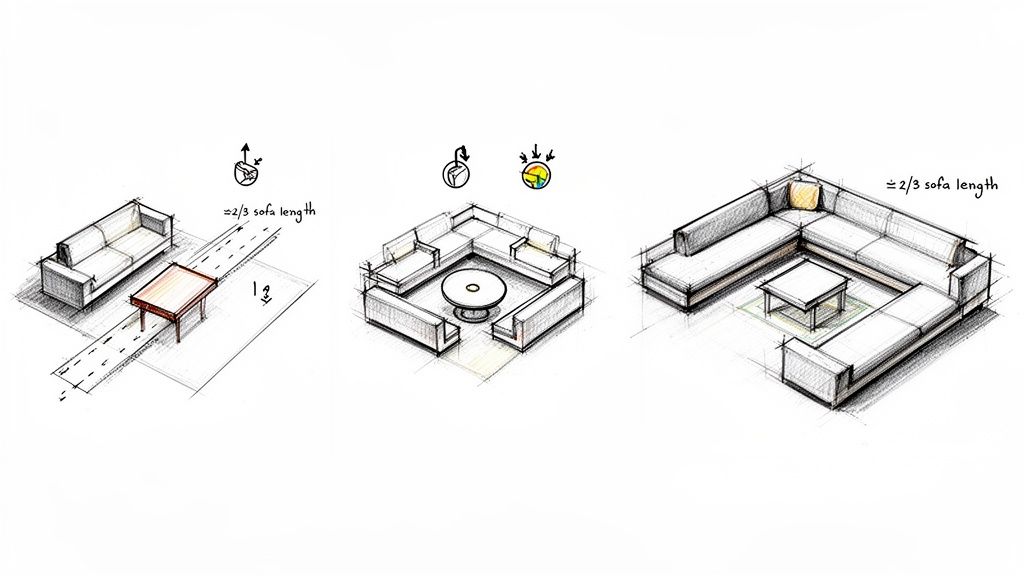
    A sealed finish, such as a film-forming protective coat, generally offers better day-to-day spill resistance. That's often the safer choice for families, frequent entertainers, or anyone who doesn't want to think much about maintenance.

    Here's the practical difference:

    Finish type What ownership feels like
    Oiled More natural look, more routine upkeep
    Sealed More protection, less day-to-day attention

    Minor scratches usually aren't the end

    One advantage of a solid butcher block coffee table is that wear doesn't always mean permanent damage. Light surface scratches can often be improved with careful sanding and refinishing, depending on the finish type.

    A simple approach looks like this:

    1. Clean the area and make sure the mark is surface-level.
    2. Lightly sand only as much as needed.
    3. Reapply the appropriate finish for that tabletop.
    4. Let it cure fully before regular use.

    Deep stains, major gouges, or uncertain finish matching may be better handled by a furniture repair professional. But for ordinary life marks, solid wood gives you options that many manufactured surfaces don't.

    Why Seeing Butcher Block Furniture in Person Matters

    A butcher block coffee table is one of those products that loses information in a screen. Photos can show shape and color direction, but they often hide the details that tell you whether the piece feels worth owning.

    Texture is a big one. Some tops feel smooth and substantial. Others look good in a listing but feel dry, rough, or plasticky when you touch them. Color can shift too. A wood tone that reads warm brown online may lean yellow, gray, or red in person depending on lighting and finish.

    What to do in the showroom

    If you're shopping in person, don't just stand back and look. Interact with the piece.

    Try this checklist:

    • Run your hand across the top and edges. It should feel even and intentional.
    • Look across the surface at an angle to spot waviness, dull patches, or uneven sheen.
    • Test for wobble by applying light pressure from more than one side.
    • Check the leg connections underneath if the design allows it.
    • Notice the scale next to seating, not in isolation.

    These are small actions, but they tell you a lot. A table may look solid in a photo and still feel unstable the moment you touch it.

    Why local shopping helps North Georgia buyers

    For North Georgia shoppers, seeing furniture locally can be especially useful because your home conditions matter. Humidity, active households, and mixed-use living spaces all affect what kind of finish and build quality will hold up well.

    A local showroom also gives you a better read on visual weight. Butcher block can be beautiful, but in some rooms it will feel grounding, while in others it will feel too heavy. That judgment is much easier to make when you can compare it to real sofas, rugs, and room setups instead of isolated product photos.

    If a coffee table needs to be sturdy, attractive, and comfortable to live with, touching it before you buy is time well spent.

    Knowledgeable store staff can also answer the questions that online listings often skip. Is the top solid wood or just styled to look that way? What finish is on it? How should you care for it? Those answers matter more than a polished product description.


    If you're comparing butcher block coffee tables and want to judge the weight, finish, and construction in person, Woodstock Furniture & Mattress Outlet is a helpful place to explore options hands-on. Their team can help you think through room size, daily use, and what kind of table makes sense for your home, without turning the process into a hard sell.

  • Your Guide to the Track Arm Sofa

    Your Guide to the Track Arm Sofa

    You're probably here because you keep seeing the phrase track arm sofa while shopping, and every listing seems to assume you already know what that means. Shoppers often don't. They just know they like one sofa and not another, then get stuck on the language.

    That confusion is normal. A sofa arm changes how a piece looks, how it fits in a room, how much space you can sit on, and even whether it feels good for a nap or better for upright conversation.

    A track arm sofa is one of those styles that seems simple until you start comparing it in real life. The shape looks clean and easy to understand. Living with it is where practical questions begin. Is it comfortable enough for long evenings? Does it work with kids or pets? Will those squared edges hold up well? And does it really save space, or just look like it does?

    This guide is for that moment. The goal isn't to push you toward one style. It's to help you recognize what a track arm sofa is, what trade-offs come with it, and how to decide whether it fits the way you live.
    What Exactly Is a Track Arm Sofa?

    You're scrolling through sofas, and two styles look almost the same until you notice the arms. One has big rounded sides. The other has a straighter, more defined shape. That second one is usually the track arm sofa.

    A track arm sofa has straight, squared-off arms that run in a clean line from the front of the sofa toward the back. The top is often flat or nearly flat, which gives the whole piece a crisp outline. If rolled arms feel soft and traditional, track arms feel more structured and architectural.

    That's why shoppers often describe them with words like “modern,” “clean,” or “sleek,” even if they don't know the style name. The arm shape does a lot of visual work. It can make a sofa feel less bulky, especially in a room where rounded arms might look heavier.

    Why this style catches people off guard

    The term sounds technical, but the idea is simple. You're not buying a special type of cushion or frame system. You're mostly looking at an arm shape that changes the silhouette and the usable layout of the sofa.

    That matters because arm style isn't just decoration. It affects:

    • How the sofa reads visually in the room
    • How much side support you feel when sitting
    • How easy it is to lean or lounge
    • How compact or boxy the sofa appears

    A lot of shoppers think they're choosing between “modern” and “traditional” sofas. In practice, they're often reacting first to the arm shape.

    If you've liked a sofa that looked neat, squared, and less puffy than a classic living room sofa, there's a good chance you were drawn to a track arm.

    Defining the Track Arm and How It Compares

    A good way to understand a track arm sofa is to compare it with arm styles that are commonly recognized. Once you see the difference, it becomes much easier to shop confidently.

    A track arm is defined by a straight profile and a boxier outline. It doesn't curl outward like a rolled arm. It doesn't sweep out gently like a flared arm. It keeps a cleaner edge.

    Track arm sofas emerged as a distinctly modern furniture form in the early 20th century, when designers such as Le Corbusier and Mies van der Rohe promoted furniture with less ornament and stronger focus on function, as described in this overview of rolled, track, and slope sofa arms. By the mid-20th century, that compact, architectural look had become common in urban apartments and suburban homes where efficient use of space mattered.

    A comparison chart highlighting the differences between modern track arm sofas and traditional rolled arm sofas.

    Track arm versus rolled arm

    A rolled arm curves outward and usually has more visual softness. It often feels classic, familiar, and a little more formal or traditional depending on the fabric and cushion style.

    A track arm looks leaner. The lines are tighter. The whole sofa often appears more structured, even when the cushions are plush.

    Here's the simplest distinction:

    Arm style What it looks like What it tends to communicate
    Track arm Straight, squared, flat-topped Modern, tailored, compact
    Rolled arm Rounded, padded, curved outward Traditional, softer, more decorative

    Rolled arms often look more padded at the edges. Track arms put the structure in plain view. If you like furniture that feels visually edited, track arms usually make sense.

    Track arm versus flared arm

    A flared arm angles outward as it rises. It can soften the look of a sofa without going fully traditional. Many transitional sofas use this shape because it lands between formal and casual.

    Track arms don't flare. They stay straighter, which gives them a more architectural line.

    That difference affects placement, too:

    • Track arms usually look sharper against a wall or in a corner
    • Flared arms can feel a little wider visually, even when the sofa isn't much larger
    • Rolled arms often create the fullest silhouette of the three

    Why shoppers often choose track arms

    People usually choose a track arm sofa for one of three reasons:

    • Cleaner shape: It works easily with modern, mid-century inspired, and transitional rooms.
    • Space-conscious look: The straight edges can make a room feel less crowded.
    • Versatility: It can dress up or down depending on the upholstery and legs.

    Design takeaway: If you want the sofa to read as simple and current without feeling cold, a track arm is often the middle ground.

    That said, the shape alone doesn't tell you whether it will feel comfortable for your household. That's where the practical trade-offs start.

    Real-World Benefits and Practical Trade-offs

    A track arm sofa can look like the easy answer in the showroom. It's neat, easy to place, and usually fits a wide range of interiors. The harder question is what it's like after a few months of movie nights, sideways sitting, and kids climbing onto it.

    That's where this style deserves a more honest conversation.

    A conceptual sketch showing a person sitting on a sofa highlighting features like seating and support.

    Where track arms shine

    Track arms do a few things really well. The first is visual control. They give a sofa a sharper outline, so the piece often feels less bulky than a sofa with heavily padded arms.

    They're also practical in tighter rooms. Because the profile is squared, the sofa tends to sit neatly against walls, in corners, or in layouts where every inch counts.

    For some households, the flat top can also be useful. It creates a more stable place to rest an arm, set down a book for a moment, or lean against when sitting upright.

    Where people get disappointed

    The most common disappointment isn't the look. It's lounging comfort.

    Retail pages often focus on the clean silhouette, but they skip the ergonomics. As noted in this roundup of track arm sofa listings, buyers often ask whether a track arm sofa is comfortable for lounging. The issue is simple. Track arms are straight and architectural, but they usually offer less padded leaning area than rolled or pillow arms, and the usable seat width can feel narrower for the same exterior footprint.

    That matters if your household uses the sofa in relaxed ways:

    • You sit sideways a lot
    • You like to curl up with your feet tucked in
    • Kids share the sofa with you
    • Pets claim the arm or seat edge
    • Someone in the house naps on the sofa regularly

    A track arm sofa can be comfortable. It just may not feel comfortable in the same way a softer, more padded arm style does.

    The trade-off in plain language

    If you want a sofa that looks crisp and stays visually tidy, track arms are often a strong choice.

    If you want a sofa that invites sprawling, head-on-the-arm napping, and casual flopping from every angle, you need to check more than the arm style. You'll want to pay close attention to cushion feel, seat depth, and how firm that arm feels when you lean on it.

    A lot of shoppers assume the arm style tells them everything. It doesn't. A track arm sofa can be upright and structured, or it can be deep and loungey. But the arm itself usually offers less forgiveness than a rounded, heavily padded alternative.

    How to Measure for a Track Arm Sofa

    This is the part many people skip, and it's where expensive mistakes happen. A sofa can fit through the door, fit along the wall, and still feel wrong every time you sit on it.

    With a track arm sofa, the key is to measure for usable comfort, not just footprint.

    A diagram illustrating the key dimensions of a track arm sofa including seat depth and armrest height.

    Start with inside seating width

    The outside width tells you how much room the sofa takes up in your home. The inside seating width tells you how much room you get to sit on.

    That distinction matters with track arms because the shape can look slim while still taking up meaningful interior space. According to the product details for the Bassett Allure Track Arm Sofa, the sofa is 92" wide, with a 26" seating depth, 4.75" arm width, and 25" arm height. That's a good reminder that even a clean-lined arm still uses real inches.

    What to compare on the spec sheet

    Don't stop at overall width. Check these dimensions together:

    • Inside seat width: This is your real sitting zone.
    • Arm width: Wider arms can reduce usable space.
    • Seat depth: This changes whether the sofa feels upright or lounge-oriented.
    • Arm height: This affects how natural it feels to lean or rest against the arm.

    Ethan Allen's Spencer Track-Arm Sofa offers multiple lengths while keeping a 26" seat depth and 25" arm height, according to the same Bassett comparison source above. That's helpful because it shows how one style can come in different overall sizes while keeping a similar comfort profile.

    Practical rule: When you're comparing two sofas, don't ask only, “Which one is longer?” Ask, “Which one gives me more room between the arms?”

    Seat depth and seat height matter together

    This is the dimension pair that changes everything. Deep-seating designs commonly pair a 24" to 27" seat depth with seat heights around 18" to 20", and that combination usually creates a more lounge-oriented posture, as outlined in the Bassett source above.

    Kincaid's Comfort Select Track Arm Sofa offers another useful reference point. In the same verified comparison set, it's described with a 42" overall depth, 24" inside seating depth, and 18" seat height, producing a lounging feel while still keeping support.

    Use this simple guide:

    If you want this feel What to look for
    More upright sitting Moderate depth, supportive back cushions, easier seat height
    More lounging Deeper seat, lower-feeling posture, room for pillows
    Mixed household use Middle-ground depth and cushions that can be adjusted

    A short video can help you picture how these dimensions work together in a real room:

    Measure your body, not just your room

    Before you decide, sit the way you naturally live. Don't perch on the edge for ten seconds and call it done.

    Try these quick tests:

    1. Sit back fully: Can your back rest comfortably without forcing your legs straight out?
    2. Stand up naturally: Does the seat height make getting up easy, or do you feel stuck low?
    3. Lean on the arm: Does the arm height work for reading or watching TV?
    4. Shift sideways: If you sit casually, do you still have enough room?

    If your household includes different heights and sitting habits, moderate depth and removable or loose cushions usually make life easier because you can adjust support more easily over time.

    Materials Construction and Long-Term Durability

    Once you know the size works, the next question is whether the sofa will age well. Track arm sofas deserve more scrutiny than they usually get for this exact reason.

    The straight shape looks simple, but it creates very specific stress points. The seams at the arm edges are more visible. The right-angle corners can collect dust and show wear differently than rounded arms. The join where the arm meets the seat rail also deserves attention because that's a high-contact area in daily use.

    A detailed technical drawing showing the internal construction layers of a modern track arm sofa.

    Where wear tends to show first

    Shoppers often focus on color and cushion feel first. Long-term performance comes from asking where a sofa will get touched, leaned on, dragged across by pets, or rubbed every day.

    A track arm sofa often shows wear in these places:

    • Arm seams and corners: The clean lines make irregular wear easier to notice.
    • Top edge of the arm: Hands, elbows, and pet paws frequently land here.
    • Arm-to-seat connection: Frequent leaning and pushing off can stress this area.
    • Inside corners near cushions: Crumbs, lint, and dust like to settle here.

    As noted in this look at track arm durability and material concerns, shoppers are increasingly comparing fabric, leather, slipcover, and custom upholstery options, while many listings still don't explain wear at arm seams, cleaning around right-angle edges, or long-term stress where the arm joins the seat rail.

    Which upholstery fits your household

    There isn't one perfect cover for every home. The better question is what kind of mess and wear your household creates.

    For high-traffic homes, many people look for practical fabrics that are easier to maintain and less fussy about everyday contact. Leather can give a track arm sofa a crisp, clean-lined look, but it also makes the straight edges and natural surface changes more visible over time. Slipcovered versions can make maintenance easier for some households, especially when a softer, more relaxed look is acceptable.

    One useful way to view it is:

    Material type Often works well for Trade-off to think about
    Fabric upholstery Everyday family use, softer feel Seams and corners still need regular attention
    Leather upholstery Tailored look, wipeable surface Surface character changes show clearly on squared forms
    Slipcover styles Casual living, easier refresh The look is usually less crisp than tight upholstery

    If you're also coordinating light control and privacy in the same room, it helps to compare roller and cellular shade options so the sofa fabric and the window treatments support the same level of practicality.

    When a sofa has a simple shape, the material does more of the heavy lifting. On a track arm sofa, upholstery choice affects not just the look, but how quickly the piece starts to show daily life.

    Construction questions worth asking

    Even if you love the silhouette, ask a few direct questions before buying:

    • What kind of frame does it use? You want to understand how the structure supports the squared arms.
    • How are the cushions built? Cushion architecture changes comfort and how often the sofa needs reshaping.
    • Are the back cushions removable or loose? That can make maintenance easier.
    • How easy is it to clean around the arm corners and seams? This matters more than people expect.

    A track arm sofa can be a smart long-term choice. Just don't judge durability by shape alone. The clean lines make construction quality and upholstery choice more visible, not less.

    Styling and Placing a Track Arm Sofa

    A track arm sofa is one of the easiest sofa shapes to decorate around because it doesn't force the room in one strong stylistic direction. It has enough structure for modern rooms, but it can still work in transitional spaces depending on the fabric, leg style, and surrounding pieces.

    That clean outline gives you a stable starting point. You can warm it up with texture, soften it with pillows, or keep everything crisp and minimal.

    Where it works best in a room

    Because the back and arms are usually straight, a track arm sofa often sits neatly:

    • Against a wall in a smaller living room
    • In a corner layout where bulky curves would waste space
    • Floating in an open room where you want the silhouette to stay clean from every angle

    If your room is tight, the squared shape can help the sofa feel orderly instead of overstuffed. If the room is open, the same shape can act as a quiet anchor without stealing attention from a rug, art, or windows.

    How to make it feel less rigid

    Some shoppers worry that a track arm sofa will look too stiff. Usually that comes down to styling, not the arm shape itself.

    Try balancing the clean lines with a few softer choices:

    • Textured pillows: Linen, boucle, or woven fabrics can relax the outline.
    • Rounded accents: A round coffee table or curved accent chair offsets the boxy shape.
    • Layered rugs: A softer rug helps the sofa feel more inviting.
    • Warm woods or mixed materials: These keep the room from feeling too sharp.

    If the sofa feels too formal, don't assume the shape is wrong. Often the room just needs more softness around it.

    Styles that pair well

    Track arm sofas usually fit comfortably into:

    Style direction Why it works
    Modern The straight lines feel natural
    Mid-century inspired The tailored form pairs well with cleaner silhouettes
    Transitional It balances traditional and current elements
    Contemporary farmhouse Neutral upholstery and warm texture can soften the geometry

    The key is to let the sofa be the framework, not the whole personality of the room.

    Your Buying Checklist and the In-Store Experience

    You're at the point where a lot of track arm sofas start to look similar online. This is usually where a simple checklist helps more than another hour of scrolling.

    A good track arm sofa should make sense for the way your household lives. The clean shape may look great in a photo, but day-to-day comfort comes down to a few practical details that retailers often gloss over.

    Start with these questions:

    • Does the seat width between the arms feel generous enough, or do the arms eat into your sitting space?
    • Can you sit the way you usually sit, upright, curled up, or stretched across the cushions?
    • Is the arm height comfortable for resting an elbow, or does it feel too hard or too low?
    • Will the fabric hold up to kids, pets, spills, and repeated use?
    • Are the cushion edges and arm corners likely to stay neat, or will they show wear quickly in a busy room?
    • Do you want a sofa that looks crisp and structured every day, even if that means it may feel a little firmer than a pillowy rolled arm style?

    Those answers tend to narrow your options faster than color or trend alone.

    Why seeing it in person still matters

    A track arm sofa is a little like buying shoes from a photo. The outline tells you something, but not enough. Two sofas can have nearly the same measurements on paper and feel completely different once you sit down.

    That matters even more with track arms because the style has clearer edges and a more defined profile. One model may feel supportive and polished. Another may feel stiff if the seat cushions are too firm or the arm padding is too thin.

    Test it in a few positions, not just one. Sit upright with your feet on the floor. Lean into the arm the way you would during a movie. Shift sideways. Stand up and sit back down a few times. If you have children, picture how they'll climb on it. If you have pets, look closely at the fabric texture and the sharpness of the corners.

    Bring your room measurements with you. Bring a short list of must-haves, too. That keeps the in-store visit focused on fit, comfort, and durability instead of getting distracted by whatever color catches your eye first.

    For shoppers in Georgia, Woodstock Furniture & Mattress Outlet is one place where you can compare living room seating in person and ask practical questions about dimensions, cushion feel, fabric options, and whether a track arm sofa makes sense for a busy household.

    A useful showroom visit helps you notice the small things that decide whether you'll still like the sofa a year from now.

    Online research helps you narrow the list. Sitting on the sofa helps you choose with confidence.


    If you're comparing sofa styles and want to see how a track arm sofa feels in real life, Woodstock Furniture & Mattress Outlet offers a practical way to continue your research. You can explore sofas in person, ask about dimensions, materials, and room fit, and use that hands-on visit to decide what works for your space and the way your household lives.

  • Side table height for sofa: Finding the right fit for your space

    Side table height for sofa: Finding the right fit for your space

    When you're putting a living room together, the height of your side table is one of those small details that makes a big difference. Get it right, and your room isn't just stylish, it's truly livable. The goal is to create a space that feels balanced and is effortless to use every single day.

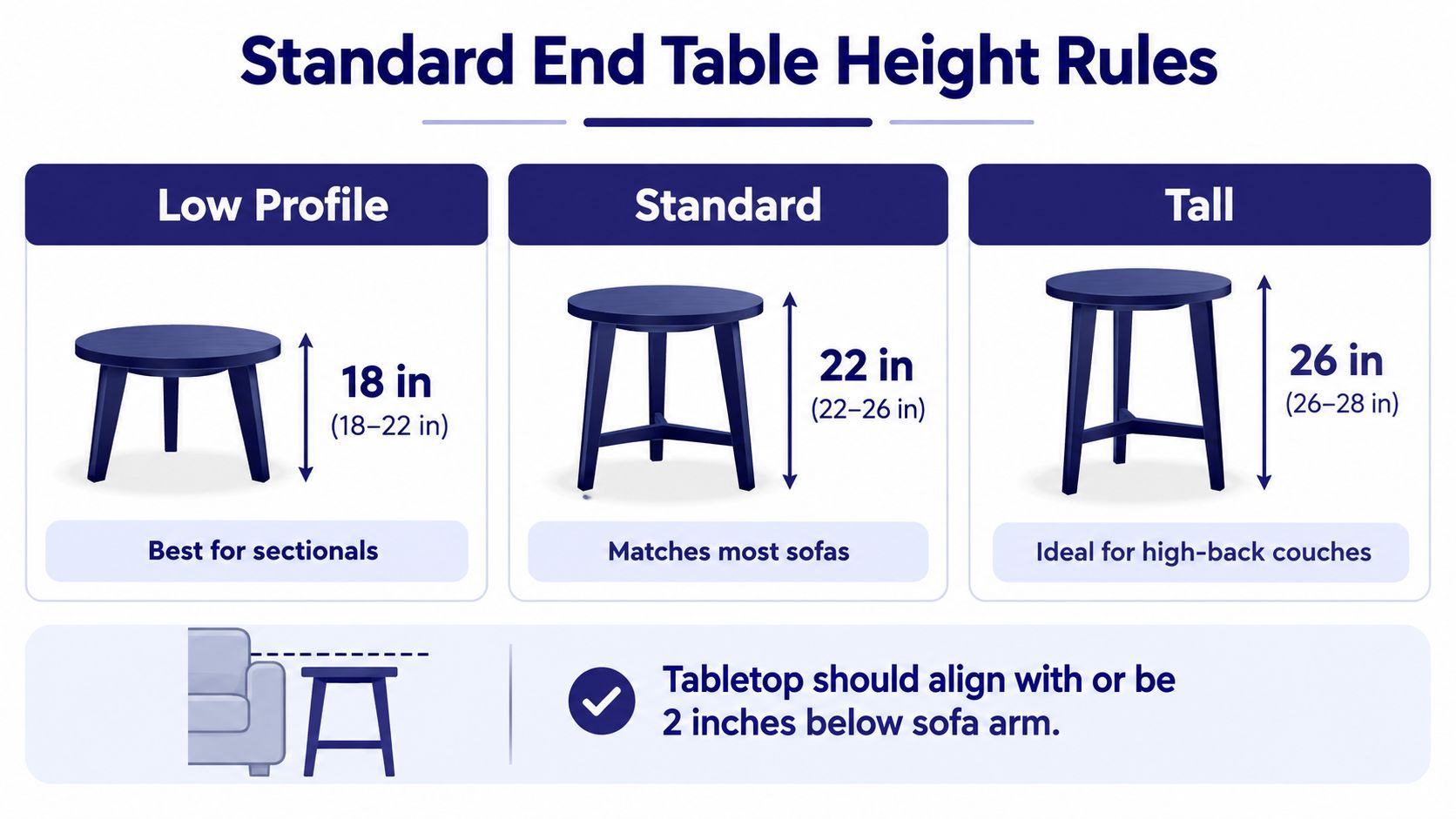
    A common rule of thumb we share with shoppers is pretty simple: your side table should be equal to or just a hair shorter than the arm of your sofa. This creates a clean visual line from one piece to the other and, more importantly, makes everything on the table easy to reach. Think of it like a comfortable handshake between your furniture—it just feels right.

    The Golden Rule for Side Table Height

    So, what's the magic number? While every sofa is a little different, there's a simple principle that takes the guesswork out of the equation.

    The core idea is to aim for a side table that is within two inches (higher or lower) of your sofa's armrest. This small window is the sweet spot for achieving both ergonomic comfort and visual harmony in your living space.

    Why This Rule Works

    This isn't just an arbitrary decorator's decree; it's all about practicality. A table at the right height means you can set down your coffee or grab the remote without having to do an awkward reach up or a clumsy lean down.

    Visually, it creates an uninterrupted line that makes the whole seating area feel more cohesive and put-together. It’s a subtle trick that makes the room look like it was designed with intention. This simple visual guide shows exactly what we mean.

    Diagram showing optimal side table height should be equal to the sofa height for perfect alignment.

    As you can see, when the side table and sofa arm are aligned, it creates a layout that’s clean, functional, and just plain easy on the eyes.

    A Guideline with History

    This focus on alignment isn't a new trend. In fact, standard side table heights have hovered between 18 and 24 inches for decades, specifically designed to match the average sofa arm of the time.

    Modern research backs this up, too. One recent survey noted that a significant number of homeowners were much happier with their living room setup when their side tables were within that two-inch range of their sofa arms, noting it made daily life just a little bit easier. If you want to dive deeper, you can learn more about these findings on side table ergonomics.

    To make it even simpler, here's a quick reference table. Just measure your sofa's arm height and find the range that works best for you.

    Side Table Height Quick Reference Guide

    Sofa Arm Height Recommended Side Table Height Why It Works
    20 inches 18 to 22 inches Keeps low-profile sofas looking sleek and uncluttered.
    22 inches 20 to 24 inches A common range that offers lots of versatile table options.
    24 inches 22 to 26 inches Complements traditional sofas and ensures easy reach.
    26+ inches 24 to 28 inches Matches taller, more stately sofa designs perfectly.

    Ultimately, sticking to this "golden rule" is a dependable way to pick a side table that both looks great and works well. It removes the doubt and helps you build a living space that truly fits your life.

    How to Measure Your Sofa for the Perfect Fit

    Alright, so you know the rules of thumb for picking the right side table height. But all that knowledge is only as good as the measurements you're working with. Don't worry, though. Getting this number is incredibly simple and takes just a few seconds.

    Grab a tape measure, and let’s get you ready to shop with confidence.

    Illustration showing a comfortable sofa next to a modern side table with an orange dish.

    The Step-By-Step Measuring Process

    To nail this down, all you really need is a rigid or semi-rigid tape measure. The kind that doesn’t flop around will give you the most accurate reading.

    1. Start from the Floor: Plant the end of your tape measure firmly on the floor, right next to your sofa's arm. If you have a plush area rug, be sure to measure from the top of the rug itself, since that's where your table will actually sit.
    2. Measure to the Top of the Arm: Pull the tape straight up to the very top of the sofa arm. We’re talking about the highest point where you’d naturally rest your arm.
    3. Read the Measurement: That number you see is your sofa arm height. This is the key number you'll take with you when you go shopping.

    What if you have one of those super comfy, overstuffed pillow-top arms? Just give the cushion a gentle press until you feel the solid structure underneath. You want your measurement to reflect the arm’s true height, not the fluffiest part of the pillow.

    Tips for Shopping and Showroom Visits

    Once you’ve got your measurement jotted down, you're set for success, whether you’re browsing online from your couch or walking through a showroom.

    Key Takeaway: When you’re looking at tables online, scroll down to the product details and find the "Height" dimension. You're looking for a side table that is either the same height as your sofa arm or no more than two inches shorter or taller.

    If you’re planning a store visit, bring that tape measure and your sofa's arm height! This is the best way to get a real-world feel for how a table will look and function next to different seating options. And please, don't be shy—the team at Woodstock Furniture & Mattress Outlet is always here to help you find pieces that fit your space and your measurements.

    Why the Right Height Matters for Comfort and Style

    Getting the side table height right isn't just some fussy designer rule; it's one of those little details that makes a huge difference in how your living room looks and feels. It's about turning a simple seating area into a space that’s comfortable, functional, and just plain looks right. This all comes down to two key things that affect you every day: how the room looks (aesthetics) and how it feels to use (ergonomics).

    A sketch illustration showing a hand measuring the height of a sofa with a tape measure.

    Creating Visual Balance and Flow

    Let's talk looks first. When your side table lines up with your sofa's arm, it creates a clean, unbroken line across your furniture. Think of it like a visual horizon in your living room—it’s calming and makes everything feel orderly.

    A table that’s too tall or too short can disrupt that flow. It can make the space feel cluttered or like something is just "off." But when the proportions are correct, the table and sofa look like they were made for each other, giving your room a polished, intentional feel. It’s a subtle trick that has a big impact.

    By creating this strong horizontal axis, you help ground the room and give it a sense of order. This visual continuity makes other pieces, like your lamps or decor, feel connected and purposeful instead of just randomly placed.

    Designing for Everyday Comfort and Ergonomics

    Beyond just looking good, the right side table height is a game-changer for your comfort. A properly sized table makes all those little actions completely effortless. You should be able to set down your coffee mug, grab the remote, or put your book down without even thinking about it.

    If a table is too low, you're constantly doing that awkward forward lean. If it’s too high, you’re reaching up and over in a weird, unnatural way. These may seem like small movements, but doing them over and over can lead to real strain on your arm, shoulder, and back.

    Ergonomic data backs this up. Some studies even show that having a surface at the correct height can significantly reduce shoulder strain during regular use. With so many of us here in North Georgia now working from home, making our living spaces as comfortable as possible has never been more important. You can explore more insights on end table dimensions and comfort if you'd like to dig deeper.
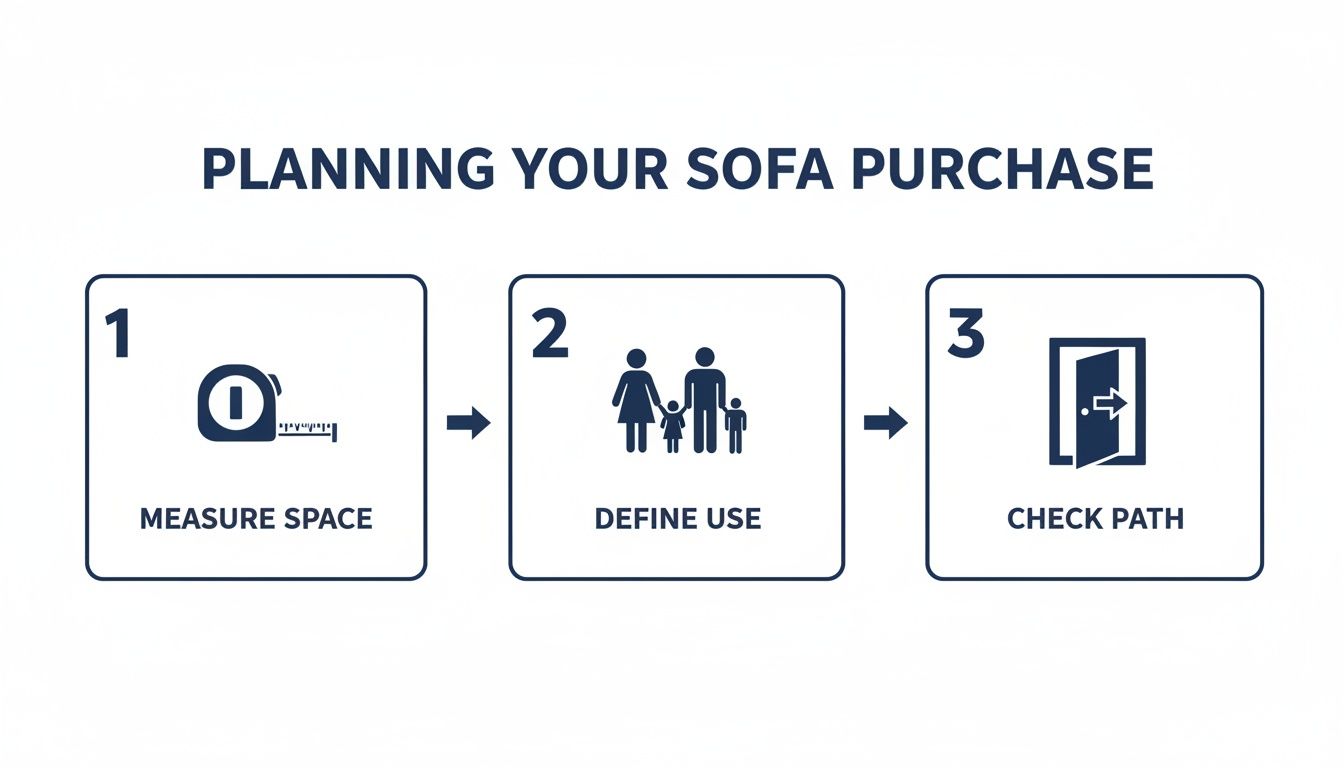
    Ultimately, the goal is to make your living room a place where you can truly relax. Choosing a side table that lines up with your sofa’s arm helps you do just that by:

    • Minimizing Physical Strain: It stops you from awkwardly reaching and bending, which helps your posture even when you're just lounging.
    • Improving Accessibility: Everything you need is right there, within easy arm's reach. It just makes life easier.
    • Enhancing Relaxation: When you're not dealing with those minor physical annoyances, you can fully unwind. A comfortable space is a truly relaxing one.

    Understanding Standard Heights in Furniture Stores

    When you start shopping for a new side table, you might notice something interesting. You’re not sorting through hundreds of random sizes. Instead, most tables seem to cluster within a pretty specific height range. This isn't an accident, and knowing why can make your search a whole lot simpler.

    Most furniture makers build side tables to be between 22 and 26 inches tall. This "sweet spot" was chosen for one simple reason: it’s designed to work well with the arm heights of the vast majority of sofas out there. This gives you a great starting point for finding a good match.

    The Logic Behind Standard Sizing

    Think about it from a manufacturer's perspective. Their goal is to create pieces that work well together right off the bat. Since the average sofa arm height falls somewhere between 23 and 25 inches, it just makes sense to build tables that align with those measurements. This makes the shopping process more efficient for you.
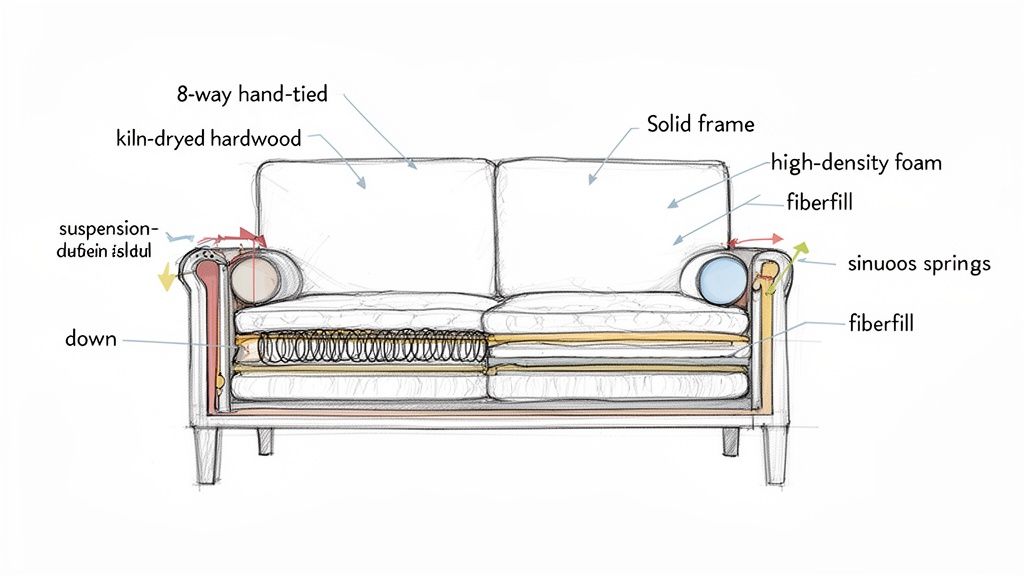
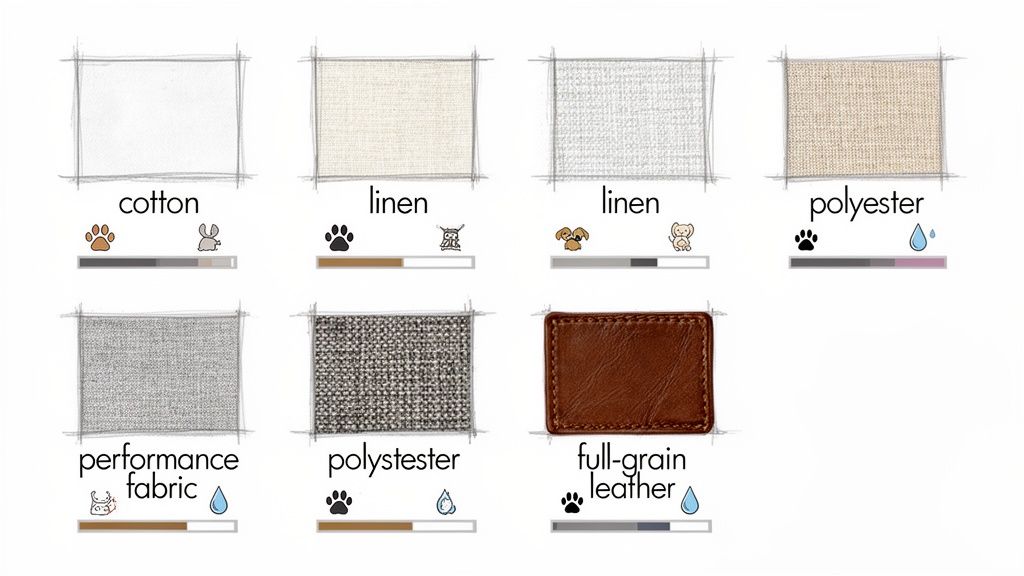
    Rather than feeling limited, think of this standard as a helpful filter. It automatically weeds out poorly proportioned options, leaving you with a pool of good candidates that are already pre-vetted for most living rooms. It’s why when you walk into a showroom, the pieces already feel like they belong together.

    The market backs this up, too. According to some market reports, side tables between 21 and 24 inches tall make up a large percentage of all sales. Their popularity comes directly from how well they sync up with typical sofa arms, creating that balanced and useful setup everyone wants. You can discover more insights about these furniture trends and see how they influence what's available in stores.

    This industry standard isn’t meant to box you in. It’s designed to ensure that almost any table you pick within that range will be a functional and beautiful companion for a standard-sized sofa.

    Your job is simply to take the "Golden Rule" measurement of your own sofa’s arm and then find a table within this common range that fits your style. It’s the perfect way to combine industry know-how with your personal measurements for a great result.

    Solutions for Unique Sofas and Special Cases

    While that “arm height rule” is a fantastic starting point, what happens when your sofa doesn’t play by the rules? We see it all the time here in our showrooms – sofas with super low-profile arms, dramatic high arms, graceful curves, or no arms at all.

    Don’t worry, these unique pieces don’t require you to throw the rulebook out the window. It’s more about knowing how to adapt the rules for your specific sofa. The end goal is always the same: finding a table height that’s easy to use and looks great.

    Low-Profile and Modern Sofas

    Modern sofas that sit low to the ground or have very low arms are a perfect example. If you strictly followed the arm height rule here, you’d end up with a side table that’s too short to be useful. You'd have to awkwardly bend way down just to set down your drink.

    Instead, for these low-slung styles, we recommend matching the table to the seat height.

    • The Guideline: Look for a side table that’s about the same height as the sofa’s seat cushions, or maybe a couple of inches taller.
    • Why It Works: This lifts the tabletop to a much more natural and comfortable height for anyone sitting down. It’s a simple switch that prioritizes function without looking out of place.

    Sofas with High or Curved Arms

    On the flip side, you have sofas with big, statement-making arms, like a traditional chesterfield, or seats with elegant, swooping armrests. Trying to match the highest point of these arms would give you a side table that feels like a towering skyscraper next to you.

    For these sofas, you don't need to match the arm's peak. A better approach is to find a table that lands somewhere between the top of the seat cushion and where your forearm would naturally rest on the arm.

    This sweet spot makes the table perfectly accessible without overwhelming your seating arrangement. It's all about comfortable reach.

    Armless Sofas and Sectional Pieces

    What about sofas that are completely armless? Well, in that case, the main rule doesn't apply at all! The answer here is simple and intuitive: just use the seat height as your guide. A side table that lines up with the seat cushions provides a clean visual stopping point and keeps everything within easy reach.

    This same logic is perfect for those armless pieces you often find in the middle of a sectional sofa. If you’ve got an armless chair wedged between two other pieces, a table that matches the seat height will look and feel just right.

    Reclining Sofas and Chairs

    Finally, we get to recliners, which bring a whole new challenge to the table: making sure there's enough clearance for the footrest to operate. If your side table is too close, too big, or too low, it can get in the way and stop your recliner from, well, reclining.

    When picking a side table height for a reclining sofa, make sure it won’t obstruct the mechanism. A C-shaped table can be a real problem-solver here. The base slides right under the sofa, letting you pull the tabletop over your lap when you need it and push it safely out of the way when it’s time to kick back and relax.

    Finding Your Perfect Match In Person

    Reading about the rules for side table height is one thing, but seeing how they actually play out in a real room? That's the best way to feel truly confident in your choice. While all the measurements and guidelines we’ve talked about will get you incredibly close, nothing beats seeing the furniture for yourself.

    Sketches showing an armchair, a recliner, and a sofa, each accompanied by a matching side table.

    This is exactly where visiting a showroom becomes so important. It’s your chance to go from theory to reality and get a real feel for how a 24-inch table sits next to a 25-inch sofa arm.

    Why an In-Person Visit Makes All the Difference

    Seeing furniture in person takes all the guesswork out of the equation and helps you sidestep those common “if only I’d known” moments. Online pictures are a great start, but they just can’t capture the true scale and feel of a piece.

    • Feel the Scale: You can physically see the height difference and judge for yourself if a table feels right next to a sofa. Is it towering over the arm, or does it look awkwardly short?
    • Test the Reach: Go ahead, sit on a sofa and practice reaching for the table. Does it feel natural to set down your drink? Is it a comfortable height for your book or a lamp?
    • Compare Finishes & Fabrics: See how that rich walnut finish really looks next to a linen-blend sofa, or how a metal table interacts with a leather sectional. This is something photos just can't replicate.

    At the end of the day, the goal is to create a space that’s not just beautiful, but that actually works for how you live. Taking a little time to test-drive your options in a real-world setting is the best way to make sure you get both.

    Get Hands-On Guidance from the Experts

    Shopping for furniture should be fun and creative, not a head-scratcher. When you visit our Woodstock Furniture & Mattress Outlet showrooms, our team is here to help you put everything you've learned into practice. Because our furniture experts are non-commissioned, their only goal is to give you honest advice and help you find a great fit for your home.

    We always encourage shoppers to bring their measurements and a few photos of their living room. From there, we can walk you through our selection of side tables, letting you mix and match different heights with all sorts of sofa styles. This hands-on approach is the secret to building confidence so you can finalize your decision, knowing the pieces you bring home will look like they were made for each other.

    Ready to find your perfect match? Swing by one of our North Georgia furniture stores and let's get started.

    Common Questions About Side Table Height

    Even after you've got the rules down pat, real-life furniture can throw you a curveball. That's perfectly normal! To help you tackle any lingering design dilemmas, we've put together a few of the most common head-scratchers we hear from shoppers on our showroom floor.

    Think of this as your quick-reference guide to give you that last little boost of confidence.

    What if My Sectional has Different Arm Heights?

    This is a frequent question, and for good reason! Many sectionals have a standard arm on one side and a low-profile chaise or even an armless corner piece on the other. It can feel like a puzzle.

    Don't overthink it. The easiest way to handle this is to treat each end of the sectional as its own little zone.

    On the side with a regular arm, just follow our golden rule: pick a table that’s about the same height as the arm. For the chaise or armless end, your new reference point is the seat cushion. A table that’s level with the seat height works beautifully there. This way, both ends look balanced and are just as easy to use.

    Should a Side Table Ever Be Taller Than the Sofa Arm?

    Generally speaking, you want to avoid side tables that are a lot taller than your sofa’s arm. When a table looms over the arm, it can make the whole setup feel top-heavy and off-balance. It breaks up that nice, clean horizontal line you're aiming for and can be awkward to reach across.

    That said, there's a little wiggle room. A table that’s just an inch or two taller is usually no big deal, especially if it’s a slender table that doesn’t feel bulky.

    The most important thing is comfortable access. If a slightly taller table is what you need for a lamp to cast light perfectly, or just to keep you from straining to grab your drink, it can absolutely work. Just be careful it doesn't tower over your sofa.

    What’s the Best Height for an Armless Sofa Table?

    When you’ve got a sofa with no arms at all, our main rule of thumb goes right out the window. So, what’s the new reference point? Simple: the sofa's seat height.

    • Look for a table that’s either the same height as the seat cushions or just a few inches taller. This puts everything at a natural, easy-to-reach level for anyone sitting down.
    • The one thing you really want to avoid is a table that’s shorter than the seat. This forces you to lean down uncomfortably every time you use it.

    By using the seat as your guide, you’ll get a surface that’s not only practical but also creates a clean, intentional look that fits perfectly with the sleek style of an armless sofa.


    Finding the perfect pieces to finish your living room is all about understanding these simple guidelines and then trusting your gut when you see them in person. Here at Woodstock Furniture & Mattress Outlet, our friendly, knowledgeable team loves helping customers test out different heights and styles to find that "just right" side table.

    Explore our great selection online or come visit us at one of our showrooms to find your perfect match. Find the ideal furniture for your home by visiting woodstockoutlet.com.

  • How to Choose a Coffee table for Your Living Room

    How to Choose a Coffee table for Your Living Room

    Choosing the right coffee table starts with understanding your living space and how you use it every day. The key is to grab a tape measure long before you start browsing a showroom. You’ll want to measure your seating area, make sure the table’s height works with your sofa, and leave plenty of room to walk around.

    A well-chosen coffee table should feel like a natural part of the room, not an obstacle.

    Start With Your Space, Not the Showroom

    It's a common experience: you fall in love with a piece of furniture on its own, without thinking about how it’s going to fit—literally and stylistically—into your home. This is one of the most frequent challenges we see shoppers face.

    A table that looks great in a large, open showroom can completely overwhelm a cozy living room. On the flip side, a smaller table can get lost in a large, open-concept space. The most helpful tool here is a simple tape measure, not a glossy catalog.

    Doing this bit of prep work takes the guesswork out of the equation. Before you even start thinking about interesting designs or rustic finishes, you need to nail down the ideal dimensions for your new centerpiece. This approach helps ensure your final choice will look great and function well in your room.

    Define Your Table's Footprint

    First, let’s talk scale. A reliable rule of thumb is that your coffee table should be about two-thirds the length of your sofa. This simple ratio creates a satisfying visual balance. If the table is much longer, it can start to dominate the conversation area; if it's much shorter, it can feel like an afterthought.

    Next up is height. For a comfortable setup, find a table that is either the same height as your sofa cushions or just one to two inches lower. This keeps the sightlines across your room open, and more importantly, it makes it easy to reach for your drink or the remote without straining. A table that’s too high or too low can feel awkward to use.

    A diagram outlining three steps to choosing the perfect table size: measure space, check height, and tape floor.

    These core measurement rules are your foundation. To make it even easier, here’s a quick-glance table to keep handy.

    Essential Coffee Table Measurements at a Glance

    This quick reference guide breaks down the standard rules for sizing and placing a coffee table to ensure it fits your living room well.

    Measurement Rule Recommended Distance/Height Why It Matters
    Clearance From Sofa 14 to 18 inches Provides enough legroom while keeping items within easy reach.
    Table Length vs. Sofa Two-thirds the length of your sofa Creates visual balance and prevents the table from overpowering or underwhelming the seating area.
    Table Height vs. Sofa Same height as sofa cushions or 1-2 inches lower Ensures a comfortable reach from a seated position and maintains an open, uncluttered sightline.
    Clearance From Other Furniture At least 30 inches Allows for clear, comfortable walkways and keeps the room from feeling cramped.

    Following these guidelines will help you find a coffee table that not only looks great but also works seamlessly with your lifestyle and existing furniture.

    Visualize It in Your Room

    Got your ideal measurements? Great. Now, go grab a roll of painter’s tape. Mark out the length and width of your potential coffee table right there on the floor. Don’t just look at it—live with that taped-off rectangle for a day or two. It’s a simple trick, but it gives you a real-world feel for the table’s footprint.

    Pro Tip: Walk around the taped area just like you normally would. Do you find yourself having to squeeze by to get to the couch? Does it block a main path through the room? This is a useful way to test your layout and make sure your new table enhances your space instead of getting in the way.

    The global coffee table market is growing—expected to hit $4.85 billion in 2025—which means homeowners have more choices than ever. For shoppers here in North Georgia, that translates to a wide variety of sizes, styles, and materials to fit any home. You can read more about this market growth on Archive Market Research. With so many options available, taking the time to measure your own space first is the most important step you can take to narrow the field and find a good fit.

    Finding the Right Shape for Your Room's Layout

    Top-down sketch of a living room layout showing sofa, rug, coffee table, and furniture dimensions.

    Once you've nailed down the ideal size for your coffee table, the next big question is shape. This is about more than just looks—it’s about how your family and guests move through the room. The right shape guides traffic and works with your seating, making the space feel intuitive. The wrong one can turn your living room into an obstacle course.

    Think about a common living room setup: a standard sofa facing a TV or fireplace. For this kind of straight, linear arrangement, a rectangular or oval coffee table is almost always a good fit. It echoes the long lines of the sofa and gives everyone sitting on it a place to set their drink. An elongated shape also keeps the pathways on either side clear, so nobody's tripping on their way out of the room.

    Matching Shape to Seating

    Your seating arrangement is your best clue for choosing the right table shape. Different layouts just feel better with certain shapes anchoring them.

    • For Traditional Sofas: Stick with a rectangular or oval table. It keeps the proportions right and ensures the surface area is useful for everyone.
    • For Sectionals and U-Shaped Seating: This is where a square or round coffee table really shines. It nestles nicely into the L-shape of a sectional, creating a central hub that’s easy to reach from any seat.
    • For Conversational Layouts: If you have two sofas facing each other or a sofa with a pair of chairs, a large round or square table can be a great choice. It fills that central space and visually ties all the separate pieces together into one cozy gathering spot.

    A quick but important tip for those with little ones: safety and flow are huge. Round and oval tables don't have sharp corners, making them a more forgiving choice for homes with toddlers running around.

    You're really looking to create a nice visual conversation between your sofa and your coffee table. A structured rectangular sofa, for instance, can be beautifully softened by the gentle curves of an oval table. On the other hand, a big, cozy sectional often feels more grounded and complete with a solid square table at its center.

    Creating Visual Balance and Flow

    Take a minute to think about how people actually walk through your living room. Is there a main path that cuts right through the middle of everything? If so, a table with softer edges, like a round or oval one, can make a huge difference. These shapes encourage movement around them instead of creating a hard stop.

    For example, in a long, narrow room where people are always walking past the sofa to get to another part of the house, an oval table gives you the surface area you need but with rounded ends that are much easier to navigate around. It’s a subtle detail, but one that makes the room feel less cramped day in and day out.

    At the end of the day, the shape you pick helps set the tone for the whole room. The sharp, clean lines of a square or rectangular table tend to give off a more formal, structured vibe. In contrast, the soft curves of a round or oval table almost always create a more relaxed, casual, and inviting atmosphere. There's no substitute for seeing it in person, which is why a trip to a showroom can be so helpful to really get a feel for how different shapes and styles interact.

    Choosing Materials That Match Your Lifestyle

    Diagrams showing optimal coffee table placement and sofa arrangements for living spaces.

    A coffee table's material is really its personality. It sets the tone for the room's look and feel, but maybe more importantly, it dictates how much you'll have to fuss over it. The goal is to find a material that fits your real life, not one that just adds another chore to your list.

    Let's be honest for a second. Is your living room a strict "no-drinks-without-a-coaster" zone, or is it more of a relaxed, kick-your-feet-up kind of space? Answering that question will point you toward the right choice faster than any design trend.

    Wood: The Classic for a Reason

    Solid wood is a timeless choice, and for good reason. It brings a natural warmth and texture to a room, grounding the space with an organic feel you just can't fake. Woods like oak, walnut, and maple are incredibly durable and can stick around for decades with a little TLC.

    But, you do have to be mindful. Wood is vulnerable to those dreaded water rings from a sweating glass of iced tea and can get scratched by keys or laptops. While most modern wood tables have protective finishes, they’ll still thank you for using coasters and wiping them down gently. If you're open to pre-loved pieces, knowing how to choose second-hand furniture can open up a world of unique, character-rich wood tables.

    Here's a Pro Tip: If you have an active household with kids or pets, a rustic or reclaimed wood table is your friend. The existing imperfections and distressed finish are brilliant at hiding new dings and scratches. In fact, a little extra wear and tear often just adds to its character.

    Metal and Glass for a Lighter Touch

    If your style leans more modern or industrial, metal and glass are great options. They help create a sense of openness and light, which is a huge plus in smaller living rooms. A glass top lets you see the beautiful rug underneath, making the whole room feel bigger.

    The trade-off, of course, is the upkeep. Glass shows every single fingerprint, smudge, and speck of dust, so it needs frequent cleaning to look its best. Metal frames are tough but can be scratched, and some finishes might show wear over time.

    Upholstered Ottomans and Statement Stone

    Upholstered ottomans are an amazing, family-friendly alternative to a hard-surfaced table. They're soft, have no sharp corners (a win for homes with little ones), and can easily double as extra seating or a comfy footrest. We always recommend looking for one in a performance fabric to make clean-up a breeze.

    For a truly bold and sophisticated look, you can't beat stone. Materials like marble, travertine, or concrete make a powerful statement. They're incredibly durable when it comes to scratches, but they can be porous and stain easily from spills like red wine or coffee. You'll likely need to seal the surface regularly to protect your investment.

    Lately, sustainability has also become a huge factor for shoppers. Data shows that over 70% of consumers are making sustainability a priority when buying home furnishings. This shift means that here in North Georgia, we're seeing a wonderful variety of tables made from reclaimed wood, recycled metals, and other eco-friendly materials. To learn more about this trend, you can discover more insights about coffee table trends on JMDI Furniture's blog.

    Thinking Beyond the Surface With Smart Features

    While it’s easy to get caught up in style, shape, and material, the real magic of a modern coffee table is how it solves everyday problems. These days, a coffee table can be one of the hardest-working pieces in your living room, going way beyond just a spot to set your drink.

    To find the right one, you have to get honest about how you really use your space. Is it command central for family game nights? Your quiet corner for morning coffee and the newspaper? Does it have to double as a home office a few days a week? The answers to those questions will point you toward features that genuinely make your life easier.

    Do You Need a Place for Everything?

    Let's face it, clutter happens. Remote controls, magazines, charging cables, and the kids' latest favorite toys can stage a takeover of any living room. If that sounds painfully familiar, a coffee table with built-in storage is less of a want and more of a need.

    • Tables with Drawers: These are perfect for hiding away all those small odds and ends you need close by but don't want to look at—think remotes, coasters, pens, and charging cords.
    • Tables with Open Shelving: A lower shelf is a great spot to stack a few of your favorite art books, place a decorative basket for magazines, or keep a cozy throw blanket within arm's reach.
    • Ottomans with Hidden Storage: For the ultimate clutter-busting solution, you can't beat a storage ottoman. Just lift the top, and you've got a spacious compartment ready to swallow up board games, extra pillows, or toys in an instant.

    Choosing a table with the right kind of storage transforms it from a piece of furniture you just have to an active tool that helps you stay organized. It’s a simple change that makes a huge difference in keeping your living space tidy and relaxing with almost zero extra effort.

    Tables That Work Harder for You

    Your living room probably wears a lot of different hats, and your coffee table should be able to keep up. Innovative, functional designs can be a total game-changer, especially for busy households. Some people are even taking this a step further by looking into the best smart home devices to see how technology can add even more convenience to their living spaces.

    A lift-top coffee table is a perfect example of this in action. Do you ever find yourself eating dinner on the couch or trying to work on your laptop? These tables are incredible. The top lifts up and pulls toward you, creating an elevated surface at a comfortable height, saving you from hunching over. In just a few seconds, your sofa area becomes a more usable desk or dining spot.

    If you're working with a smaller room or just need your space to be more flexible, nesting tables are a brilliant choice. You get two or more tables of varying sizes that tuck neatly together to save floor space. Then, when guests come over, you can pull them apart and give everyone their own spot for a drink and a plate of appetizers.

    To help you decide which features might be right for your home, here’s a quick comparison of the most popular functional coffee table types.

    Comparing Coffee Table Features for Your Needs

    Feature Type Best For Key Considerations
    Lift-Top Working from home, dining on the sofa, or crafting. The mechanism should be smooth and sturdy. Make sure the height is comfortable for you when seated.
    Hidden Storage Families with kids, anyone who hates clutter, storing blankets and games. Consider drawers vs. an open cavity. Drawers are better for small items; open storage is great for bulkier things.
    Nesting Tables Small spaces, frequent entertainers, and flexible layouts. Look for a stable design when nested and separated. Ensure the smaller tables are easy to pull out and move around.
    Open Shelving Displaying books or decor, easy access to frequently used items. Can look cluttered if not styled intentionally. Might require more frequent dusting than enclosed storage.

    Ultimately, the key is to look past the aesthetics for a moment and really think about how a coffee table can support your daily life. When you match these smart features to your family’s specific needs, you’ll end up with a piece that doesn't just look amazing—it makes your home function better, too.

    Making a Confident Choice in North Georgia

    Four sketch illustrations demonstrate various functional coffee table designs, including lift-top, storage, nesting, and ottoman with storage.

    You’ve done the homework—you measured your space, considered your family's daily grind, and maybe even bookmarked a few favorites online. So, what’s the final step in how to choose a coffee table? Seeing your top contenders in person.

    Online photos are a great starting point, but they can’t always capture the true color, texture, and sheer presence of a piece of furniture. Visiting a showroom is where you move from theory to reality. It lets you get a real feel for the coffee table’s quality and scale in a way a screen just can’t replicate. You can double-check the height, test the stability, and see how the finish really looks under normal lighting.

    What to Look For in a Showroom

    When you’re on the floor, it’s your chance to play detective and spot the signs of quality craftsmanship. Don’t be shy about it! This is your opportunity to make sure the piece is built to last.

    Here are a few things our own furniture experts always check:

    • Give it a nudge. Gently push on the table to see if it wobbles or feels flimsy. A well-built table should feel solid and grounded.
    • Inspect the details. If it’s a wood table, ask if it’s solid wood or a veneer. Look closely at the joints and connections for any gaps or sloppy construction.
    • Work the features. If the table has drawers, slide them open and shut. Do they glide smoothly? For a lift-top, test the mechanism to make sure it operates easily and feels secure when raised.

    This is also the perfect time to ask questions. Our staff can give you the lowdown on the materials, the durability of the finish, and the best way to care for your new table so it looks great for years.

    Visiting a showroom bridges that critical gap between your research and your final decision. It’s where you can confirm that the table you like online is the table you’ll love in your home.

    Bringing Your Vision Home

    This final, hands-on step is what helps you make a confident investment. By combining your careful planning with the real-world experience of seeing and touching the furniture, you all but eliminate any future surprises or buyer's remorse.

    So, take your time in the showroom. Find a nearby sofa and sit down to see how the table feels from a natural vantage point. Try to visualize it with your rug, your decor, and your family gathered around it. This thoughtful approach ensures the coffee table you bring home is more than just a piece of furniture—it’s a great fit for your North Georgia lifestyle.

    Common Questions About Choosing a Coffee Table

    Even after doing all your homework, a few last-minute questions always seem to surface right when you think you've found the right one. Don't worry, it happens to everyone. Think of this as your final check, where we give straight answers to the most common questions we hear on our showroom floors every single day.

    Should My Coffee Table Match My End Tables?

    This is easily one of the questions we get asked the most. The short answer? No, they absolutely don’t have to match. In fact, your room will probably look a lot more interesting and professionally designed if they don't. The goal is coordination, not a carbon copy.

    Instead of matching, look for a common thread that ties the pieces together. For example:

    • Material: Try pairing a solid oak coffee table with end tables that have oak legs but maybe a different top, like metal or stone.
    • Finish: A dark wood coffee table can look great with black metal end tables. The shared dark tones create a connected, intentional feel.
    • Shape: You could use a round coffee table to soften the lines of two square end tables. This contrast adds visual balance to the room.

    Ultimately, you want a space that feels curated and collected over time, not like you bought everything from a single page in a catalog.

    What’s the Best Coffee Table for a Home With Kids or Pets?

    When your living room doubles as a playground or a dog park, durability and safety are the name of the game. For homes with toddlers, an upholstered ottoman is a fantastic choice. No sharp corners for little heads to bump, and it provides a soft surface for them to play on.

    Another great option is a round or oval wood table. Again, no sharp corners means more peace of mind for you. If you go this route, look for a rustic or distressed wood finish. It's incredibly forgiving and will hide the inevitable scratches from toys or pet claws—in fact, a few dings and scrapes often just add to its character.

    Our Recommendation: Always look for tables with a tough, protective finish that can handle spills and daily use. When in doubt, a solid, heavy piece will always hold up better in a busy home than something more delicate.

    How Do I Know if a Coffee Table Is Good Quality?

    It's easy to get distracted by a table's looks, but a few simple checks can tell you if it’s built to last. When you're in the showroom, don't be afraid to get a little hands-on.

    First, give the table a little shove. A quality piece should feel solid and stable and shouldn't wobble or creak. Next, check out the moving parts. If it has drawers, pull them out and push them back in. Do they glide smoothly, or do they stick and rattle?

    For any wood table, ask if it's made from solid wood or a veneer. Solid wood is almost always more durable and has the huge advantage of being able to be refinished years down the road. Lastly, run your hand over the finish. It should feel even and smooth, with no rough spots or drips. These small details are the biggest clues to good craftsmanship and tell you a lot about how that table will stand up to time.


    Ready to see how the right coffee table can complete your living room? The knowledgeable team at Woodstock Furniture & Mattress Outlet is here to help you explore a great selection of styles, materials, and functional options in person. Visit one of our North Georgia showrooms today!

  • How to Choose a Sofa That Fits Your Life and Your Living Room

    How to Choose a Sofa That Fits Your Life and Your Living Room

    Here’s a simple truth learned after years in this business: good sofa choices come from a simple formula. Plan your space, get honest about your lifestyle needs, and know what real quality looks like.

    You need to start by measuring your room and all the doorways first. Then, think hard about how you and your family will actually use the sofa every single day. Only then should you start looking at fabrics and styles. This practical-first approach is your best defense against buyer's remorse and helps you end up with a sofa you'll love for years.

    Starting Your Sofa Search With a Plan

    A new sofa isn't just another piece of furniture. It’s often the heart of the home. It’s where you crash after a long day, where the family piles up for movie night, and where you catch up with friends. Because it plays such a huge role in your daily life, starting with a solid plan is the key to choosing a sofa that truly fits your life, not just your living room.

    Before you let yourself fall for a specific style or a trendy color, you have to do the foundational work. This is the stuff that grounds your search in the reality of your home and your habits. Getting this right transforms the whole process from overwhelming to empowering.

    Assess Your Lifestyle Needs First

    How are you really going to use this sofa?

    Answering that question with total honesty is one of the most important things you'll do. A sofa destined for a formal, rarely-used living room is a completely different piece of furniture than one that’s the command center for a busy family.

    Ask yourself these key questions to figure out what you need:

    • Who is using this sofa? Is it just for you and a partner? Or does it need to stand up to kids, pets, and a steady stream of guests? This single question will steer everything from the size you pick to the upholstery you choose.
    • What happens here? Is this your go-to napping spot? The binge-watching throne? Or is it more for upright, formal conversations? A deep, plush sofa is a lounger's dream, but a shallower, firmer one offers much better support for sitting and chatting.
    • Got kids or pets? If the answer is yes, then durability and easy cleaning just shot to the top of your list. You'll want to look at performance fabrics or certain types of leather that can handle spills and claws, rather than delicate materials like silk or linen.

    Measure Everything. Twice.

    One of the most common problems people face is buying a sofa that’s too big for their space. Even worse? Buying one that won't even fit through the front door. You can completely avoid that delivery-day disaster by taking detailed measurements before you even start shopping.

    A tape measure is your most important tool in this process. Seriously. Ten minutes of measuring now will save you from a massive headache and the disappointment of having to return a sofa you’ve already fallen in love with.

    Grab a tape measure and get the numbers for these three critical areas:

    1. Your Room: Measure the length and width of the room, especially the wall where the sofa will go. A helpful pro tip is to use painter's tape to outline the sofa's footprint on the floor. This simple trick helps you visualize exactly how much space it will take up and makes sure you have plenty of room to walk around it.
    2. Your Entry Points: Measure the height and width of every doorway, hallway, and staircase the sofa needs to navigate. Don't forget to account for tricky corners or low-hanging light fixtures.
    3. The Sofa Itself: When you're shopping, always find the sofa's official dimensions—length, depth, and height. The diagonal depth is often the most critical number; it determines if the piece can be tipped and angled through a tight doorway.

    Finding the Right Sofa Shape for Your Space

    Once you’ve got your measurements, it’s time for the fun part: finding a sofa shape that actually works with your room's flow and how you live in it. This isn't just about looks; it's about function. The right shape can anchor a conversation area, make a small room feel bigger, or create that perfect cozy corner you've been dreaming of.

    You'll see everything from standard three-seaters to large sectionals and clever sleeper sofas. Each one solves a different problem and fits a different kind of home.

    Matching Sofa Configurations to Your Home

    The right sofa shape doesn't just fit—it enhances your living space. A classic three-seat sofa, for instance, is a go-to for a reason. It’s versatile enough for most traditional living rooms, offering ample seating without totally dominating the space. It’s a reliable choice for apartments and mid-sized homes alike.

    A loveseat, which is really just a cozy two-seater, is well-suited for smaller dens, home offices, or as a partner to a larger sofa. You get comfortable seating without eating up a ton of floor space.

    Then you have the sectional sofa, a practical solution for big families or anyone who loves to entertain. An L-shaped sectional can tuck neatly into the corner of an open-concept living area—something we see a lot in North Georgia homes—carving out an inviting spot for everyone to gather. U-shaped sectionals offer even more room, making them ideal for media rooms where everyone can have a spot.

    • Standard Sofas (Three-Seaters): Suited for defined living rooms where you need a straightforward, versatile seating solution.
    • Loveseats (Two-Seaters): Excellent for smaller spaces, entryways, or paired with a larger sofa to create a full conversation set.
    • Sectional Sofas (L-Shape or U-Shape): Ideal for large or open-concept rooms, maximizing seating and helping to define specific zones within the space.
    • Sleeper Sofas: A practical choice for homes without a guest room, offering a place for visitors to stay overnight without sacrificing style.

    The graphic below breaks down a simple way to think about your sofa purchase, from measuring the room to thinking about its purpose.

    A three-step guide for planning a sofa purchase: measure space, define use, and check path.

    This just drives home the point: understanding your space and your needs before you start shopping is the key to choosing with confidence.

    Visualizing the Sofa in Your Room

    Even with all the right numbers, it can be tough to truly picture how a large piece of furniture will feel once it's actually in your room. One of the most helpful tricks is to use painter's tape to outline the sofa's dimensions right on your floor.

    This simple move gives you a real-world sense of scale. You can see exactly how much real estate the sofa will take up and make sure you still have room to walk around. Try walking around the taped-off area. Does it feel natural, or are you bumping into things? Does it block a doorway? Is there enough room for a coffee table? A great next step is to consult a detailed guide to sofa dimensions to make sure your choice fits comfortably.

    By mapping it out first, you take all the guesswork out of the equation. You can test different spots and layouts without having to move a single heavy object, making sure the final choice is one you'll love.

    Peek Under the Hood: What Makes a Sofa Last

    The fabric and style of a sofa are what you fall in love with, but what’s hidden inside is what makes it last. It all comes down to the frame, the suspension system, and the cushion construction. These are the core components that dictate how well a sofa will stand up to movie nights, energetic kids, and years of daily life.

    Knowing a little about these elements helps you look past the pretty upholstery and ask the right questions. It’s how you choose a sofa that’s built to be the lasting centerpiece of your home, not just a temporary placeholder.

    Detailed diagram illustrating the internal components and construction of a sofa, showing frame, springs, foam, and filling materials.

    Think of it this way: a beautiful sofa with a weak frame or sagging cushions won't be comfortable or satisfying for very long. Let's break down what truly matters.

    The Foundation: A Sturdy Frame

    The frame is the skeleton of your sofa. It provides all the structural integrity. You’ll want a frame made from materials that resist warping, twisting, and breaking over time. A frame built from kiln-dried hardwood is known for its durability.

    Kiln-drying is a process that removes moisture from the wood, which is critical for preventing it from bending or cracking as the humidity levels in your home change. Strong, dense hardwoods like oak, maple, or ash are considered some of the best materials for the job.

    On the other hand, frames made from softer woods like pine are more common in budget-friendly options but can be more susceptible to damage. It's also smart to be wary of frames made mostly of particleboard, MDF, or plastic, as they simply lack the long-term resilience of solid wood.

    The way the frame is joined together is just as important as the wood itself. Quality construction uses techniques like:

    • Dowels and corner blocks: These reinforce the joints, keeping the frame square and stable through years of use.
    • Screws and glue: This combination creates a much stronger bond than staples alone, which can easily loosen over time.

    When you're shopping, don't be shy about asking how the frame is built. A knowledgeable salesperson should be able to tell you about a well-built piece, and it’s a key sign of the furniture's overall quality.

    The frame truly is the backbone of your sofa. To help you understand the differences in durability and value, here's a quick comparison of common materials.

    A Quick Look at Sofa Frame Materials

    Frame Material Durability Typical Cost Best For
    Kiln-Dried Hardwood Excellent $$$ Long-term investment, high-traffic areas.
    Solid Hardwood Very Good $$ Everyday use, offers great value and longevity.
    Softwood (e.g., Pine) Fair $ Light use, budget-conscious buyers.
    MDF/Particleboard Poor $ Temporary or very low-use furniture.

    Ultimately, a solid, well-constructed frame is the first thing you should confirm before falling in love with a sofa's style. It's the difference between a piece that lasts for three years and one that lasts for decades.

    The Support System: Springs and Suspension

    Underneath the cushions lies the suspension system. Its job is to provide support and keep you from sinking straight to the frame. The type of suspension has a massive impact on both comfort and durability.

    One of the most traditional and durable systems is 8-way hand-tied springs. In this method, individual springs are tied together by hand from front to back, side to side, and diagonally. This creates an interconnected web that distributes weight evenly, offering long-lasting support. It is considered a gold standard in the industry.

    A more common and still very reliable option is sinuous spring suspension, sometimes called "S-springs." These are S-shaped steel wires that run from the front of the frame to the back. When installed correctly with high-quality steel, sinuous springs provide a comfortable and durable foundation. You'll find them in many well-made sofas today.

    Be more cautious with webbing suspension, which uses fabric or elastic straps stretched across the frame. It's generally a lower-cost alternative that can be prone to stretching and sagging over the years.

    The Comfort Layer: Cushion Construction

    Finally, the cushions are what you actually feel—they determine the immediate comfort of your sofa. Cushion filling is a balancing act between comfort, maintenance, and longevity, with each type offering different benefits.

    High-density foam is a very popular choice for seat cushions because it provides firm support and holds its shape well. The density rating tells you about its durability; a higher number means the foam is heavier and will last longer before compressing. Often, this foam core is wrapped in softer materials like polyester fiber (Dacron) or a down-and-feather blend to create a plusher top layer.

    • Down-blend cushions: These offer that luxurious, sink-in feeling but require regular fluffing to maintain their shape. They create a relaxed, lived-in look that's incredibly inviting.
    • High-density foam cushions: These provide a firmer, more supportive seat and a crisper, more tailored appearance. They bounce back quickly and require less maintenance than down.
    • Fiberfill cushions: Usually made from polyester, these are a cost-effective option that can feel soft, but they tend to compress more quickly over time and may need replacing sooner.

    The best way to know what you prefer is to sit on a few different types. The "right" cushion is a personal choice, but understanding what's inside helps you predict how it will feel—and wear—in the long run.

    Choosing Upholstery for Real Life

    The upholstery you choose is the single most visible part of your sofa. It's the fabric or leather that sets the style, determines how it feels, and—most importantly—dictates how it will stand up to your actual, day-to-day life.

    Get this choice right, and you'll have a sofa that can handle spilled juice, muddy paws, and years of Sunday afternoon naps. Get it wrong, and you might face a world of frustration. This decision is about so much more than color; it's about picking a material that fits the reality of your household.

    Guide to sofa fabrics: cotton, linen, polyester, performance fabric, leather, showing pet and water resistance.

    Fabric Sofas: From Natural to Synthetic

    Fabric upholstery opens up a massive world of colors, textures, and patterns, making it a super versatile choice for any home. The fibers used are either natural, synthetic, or a blend of both, and each brings something different to the table.

    Natural fibers like cotton and linen feel fantastic. They're breathable and have a soft, comfortable hand. Cotton is a solid, durable choice but can be a magnet for stains and wrinkles unless it’s blended with something else. Linen gives off that beautiful, relaxed vibe but isn't the toughest, making it better for a formal living room than a family den.

    On the other hand, synthetic fibers are engineered for pure durability. Materials like polyester and microfiber are incredibly popular because they resist fading, stains, and general wear and tear. Microfiber, with its super-tightly woven threads, is especially great at repelling liquids, making it a go-to option for families with kids.

    Performance Fabrics for Busy Households

    If your home is a hub of activity with kids, pets, or just a lot of people coming and going, performance fabrics are a game-changer. These aren't just regular fabrics; they're textiles treated on a molecular level to repel stains, moisture, and even odors.

    Spills often just bead up on the surface instead of soaking in, which gives you a precious few moments to blot them away before they become a permanent part of the sofa's story.

    Brands like Crypton and Sunbrella have become known for producing fabrics that are unbelievably durable but don't sacrifice a soft feel or stylish look. They offer some serious peace of mind.

    Before you commit, it's always a smart move to check the fabric's cleaning requirements. Taking a minute for understanding upholstery cleaning codes will tell you exactly how to care for the material, which is critical for keeping it looking great for years.

    The Timeless Appeal of Leather

    Leather is a classic for a reason. It's known for its incredible durability and the way it develops a rich, unique character over time. A good leather sofa can last for decades with the right care, but not all leather is created equal. Understanding the different grades is key.

    • Full-Grain Leather: This is the top tier, coming from the outermost layer of the hide and keeping all the natural markings. It’s tough and breathes beautifully.
    • Top-Grain Leather: The next grade down, top-grain leather has its surface sanded just enough to remove imperfections for a more uniform look. It's still very durable, just a little less breathable than full-grain.
    • Split-Grain Leather: This comes from the lower layers of the hide. You’ll often find it on the sides and back of sofas as a cost-saving measure. It’s not as durable as the top layers.
    • Bonded Leather: This is a lower-cost option, made from leather scraps shredded and bonded together with adhesive. It gives you the look of leather but doesn't have the durability or longevity of a genuine hide.

    For families, a protected or semi-aniline leather is a fantastic option. It has a protective topcoat that makes it more resistant to spills and scratches, giving you the classic durability of leather with much easier maintenance.

    The Final Checks Before You Commit

    Okay, you're in the home stretch. You’ve pinpointed the style, picked the right upholstery, and you're confident in the frame's construction. But before you make a final decision, a few last-minute checks can be the difference between a pretty good purchase and one you'll love for years.

    This is where you make sure everything adds up—from how it feels to sit on, to the total cost, to how it will actually get into your house. Taking a moment now saves you from any nasty surprises later.

    Take It for a Test Drive: The In-Person Comfort Test

    Reading reviews online is a great starting point, but there’s simply no substitute for parking yourself on a sofa in person. Comfort is incredibly subjective, and a quick "sit test" in the showroom reveals more than any spec sheet ever could.

    When you get to the store, don't just politely perch on the edge. Sit on it like you would at home.

    • Lounge for real. Lean back, kick your feet up if you can, and see how the sofa actually supports you when you're relaxing. Does the back hit you in a weird spot? Is it too low?
    • Check the seat depth. When your back is against the cushions, can your feet rest flat on the floor? If they're dangling, the seat is probably too deep for you. If your knees are pointing up toward the ceiling, it's likely too shallow.
    • Feel out the armrests. Are they a comfortable height for resting an arm or even your head during a nap? An armrest that's too high, too low, or rock-hard can become a major source of irritation over time.

    Helpful advice: If you can, bring the other key decision-makers (or sitters!) with you. A sofa that feels like a dream to someone who's 5'4" might feel all wrong to a person who is over six feet tall. Getting everyone's input ensures the sofa works for the whole household.

    Budgeting Beyond the Sticker Price

    That price tag you see is just the beginning. To get a true sense of your total investment, you have to account for the extra costs that often pop up at the end. Getting a clear, all-in price before you commit is critical.

    Be on the lookout for these common add-ons:

    • Delivery Fees: Always ask what delivery costs and what it includes. Some services are "white glove," meaning they bring it inside, set it up, and haul away the packaging. Others are just a curbside drop-off, leaving the rest to you.
    • Fabric Protection Plans: Retailers will often offer an optional plan to cover accidental stains and damage. Think hard about your lifestyle here—if you have kids or pets, the extra peace of mind might be worth the cost.
    • Old Furniture Removal: Need your old sofa hauled away? See if the store offers this service and what the fee is. It can save you a huge headache.

    Getting clarity on these details up front means no sticker shock when the final bill comes.

    Understanding the Fine Print: Delivery and Policies

    Last but not least, get the full scoop on the logistics and policies that kick in after you've paid. Knowing what to expect makes the entire process way less stressful.

    Chat with your salesperson about how the delivery actually works. Will they call you to schedule a specific time? Do you need to clear a path or measure doorways again for the delivery team?

    Just as important are the store's official policies. Take a minute to look over the warranty information—what exactly does it cover, and for how long? And make absolutely sure you understand the return policy. Knowing the timeframe and any conditions for a return gives you a safety net in case the sofa just doesn't work in your space the way you imagined.

    Even after you’ve done all the homework, there are always a few last-minute questions that pop up right before you’re ready to buy. It’s completely normal. Making a purchase like a sofa is a huge commitment, and you want to get it right.

    To help you cross the finish line with confidence, we’ve put together answers to some of the questions we hear most often from shoppers in our showrooms.

    How Long Should a Good Sofa Last?

    A well-built sofa is an investment that should be a fixture in your home for years to come. If you choose a piece with a solid, kiln-dried hardwood frame and a quality suspension system, you can reasonably expect it to last anywhere from 7 to 15 years. Sometimes even longer with the right care.

    Of course, its lifespan really depends on how you use it. A sofa in a busy family room is going to see a lot more action and wear than one sitting pretty in a formal living room. The upholstery and cushion quality are also massive factors. For instance, high-density foam cushions will keep their shape and support way longer than a basic, low-density fiberfill.

    Are Attached Cushions a Bad Idea?

    Attached cushions have some drawbacks to consider. While they might seem convenient because they stay put, they're often a sign that a manufacturer is reducing costs. Why? Because they don't have to fully upholster every side of the cushion, which saves them time and money.

    But the biggest issue is maintenance. Attached cushions rob you of the ability to flip and rotate them.

    Being able to rotate your cushions is one of the best things you can do to make them wear evenly. It prevents those dreaded "butt divots" from forming in your favorite spot and seriously extends the life and look of your entire sofa.

    Plus, if an attached cushion gets a nasty stain or a tear, cleaning and repairing it becomes a much bigger headache. Detachable cushions just give you more flexibility for keeping your sofa looking great for the long haul.

    Is a Deeper Sofa More Comfortable?

    Not for everyone. Comfort is incredibly personal, and the right seat depth for you comes down to your height and how you prefer to sit.

    A deep-seated sofa can feel incredibly luxurious for lounging, napping, or curling up with a good book. But for sitting upright during a conversation, it can actually be awkward, especially if you're on the shorter side and your feet can't touch the floor. A typical seat depth is somewhere between 21 and 24 inches.

    • If you're an upright sitter: Look for a depth around 21-22 inches. This lets you sit back against the cushions for support while keeping your feet flat on the floor.
    • If you're a lounger: A depth of 23-25 inches gives you that extra room to tuck your feet up or really recline.

    Anything deeper than 26 inches starts to feel more like a daybed, and you'll probably need a small army of throw pillows just to get enough back support to chat with guests. The only real way to know for sure is to try them out.

    How Do I Know If a Sofa Will Fit My Style Later?

    Trends will always come and go, but a classic, well-proportioned sofa will almost never look dated. If you want your sofa to have real staying power, focus on timeless silhouettes—like a simple track arm or a classic roll arm—in a versatile, neutral fabric.

    Think of your sofa as the canvas, not the entire painting. You can easily refresh your living room's entire vibe over the years with new throw pillows, blankets, and a different area rug. These accent pieces are where you can play with trendy colors and patterns without committing to a big-ticket item. A sofa with clean lines and a simple form gives you a foundation that can adapt to your changing tastes for a decade or more.


    At Woodstock Furniture & Mattress Outlet, our team has heard every question in the book, and we're here to help you find a sofa that fits your home, lifestyle, and budget. The best way to find "the one" is to come see the options for yourself. Visit one of our North Georgia showrooms to test-drive a selection of styles and feel the quality in person.

    Explore our collection of sofas and sectionals online to get started.