Shopping for a new mattress should be simple, right? At its core, it is. The secret is matching the right mattress construction to your unique body type and the way you sleep.
It's easy to get lost in marketing buzzwords, but once you understand the real differences between innerspring, foam, and hybrid mattresses—and know how to actually test them for yourself—you can make a choice you’ll be happy with for years. This guide is here to give you those practical, no-nonsense mattress shopping tips and cut through the confusion.
Your Foundational Guide to Successful Mattress Shopping
Let's be honest, staring at a showroom full of mattresses can feel a little overwhelming. This guide is your step-by-step path to finding a suitable mattress, leaving the sales jargon behind and focusing on what truly matters for a great night's sleep.
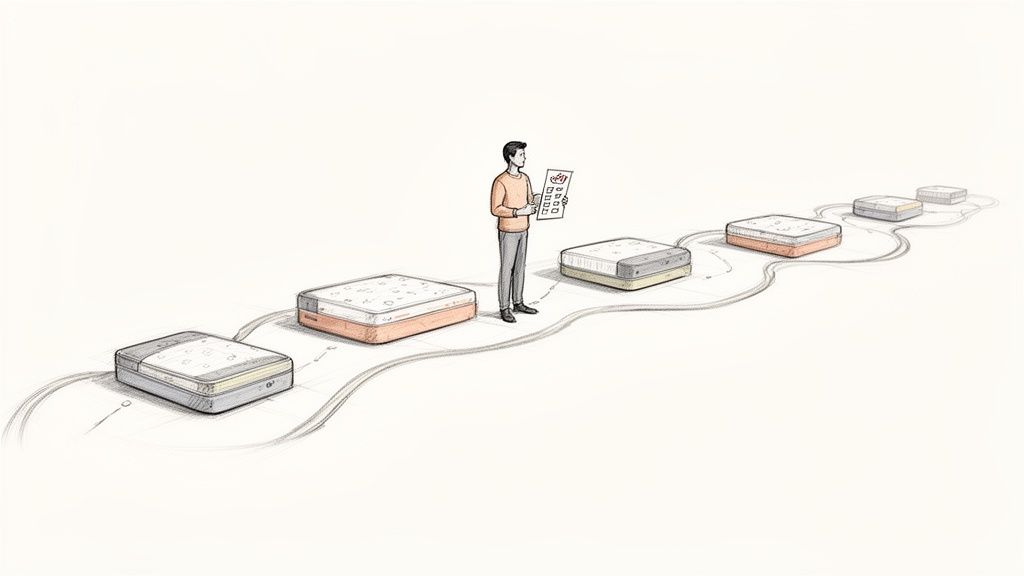
Think of this as your educational roadmap. Our only goal here is to give you the confidence to invest in your own health and well-being, taking the guesswork and anxiety out of the entire process.
Setting Expectations for Your Search
More than ever, people are prioritizing quality sleep, and the mattress industry has taken notice. The global market is expected to hit USD 67.5 billion by 2030, which is great news for you. It means more innovation and better options, especially in foam and hybrid mattresses known for their pressure relief.
With studies showing that poor support contributes to sleep problems for 55% of adults, it's no wonder that well-designed mattresses are in high demand. If you want to dive deeper, you can find out more about the evolving mattress market and what it means for shoppers.
Instead of just listing features, we're going to help you solve real problems. We'll tackle the key questions that lead to better sleep:
- What mattress type is suitable for how I sleep?
- How does my weight impact how a mattress feels and how long it lasts?
- When I'm in the store, what should I actually be doing to test a mattress?
- What's the real story with warranties and sleep trials?
The most important thing to remember is this: there's no single "best" mattress for everybody. The right choice is deeply personal, and it all comes down to what you find comfortable and supportive.
Your Path to a Better Night's Sleep
We’ll kick things off by breaking down the core differences between the major mattress types—from the familiar bounce of an innerspring to the body-hugging feel of memory foam. From there, we’ll connect those materials directly to your sleep habits, explaining why a side sleeper and a back sleeper usually need completely different mattresses.
By the time you finish this guide, you’ll have a clear plan. You'll be ready to walk into a showroom, test out your options, and pick a mattress that will give you restorative sleep for years to come.
Decoding Mattress Types From Innerspring to Hybrids
The first step in any successful mattress shopping trip is knowing what’s actually inside the mattress. Instead of just rattling off definitions, let's talk about the real-world feel and function of each major type. This will help you picture how each one might actually perform for you, night after night.
On the highest level, mattresses are made using either coils (a.k.a. springs), foam, or a mix of both. Each material creates a totally different sleep experience and solves different problems for different people.
The Familiar Feel of Innerspring Mattresses
Innerspring mattresses are the classic, traditional option built around a core of steel coils. These beds provide that familiar, responsive feel with a noticeable bounce. If you prefer sleeping "on top" of your bed rather than sinking down into it, an innerspring is a solid choice.
One of their biggest perks is airflow. The wide-open structure of the coil system lets air move freely, which is a huge bonus for anyone who tends to sleep hot. The support comes from that network of coils, and their shape, size, and number all affect the mattress’s overall firmness and how long it will last.
On the flip side, a pure innerspring mattress can sometimes create pressure points, especially for side sleepers, because it doesn’t have the deep contouring you get from foam. You’re also more likely to feel your partner tossing and turning, since motion can travel more easily across the connected springs.
The Contouring Comfort of Memory Foam
Memory foam mattresses are famous for their unique ability to mold to your body’s exact shape. This material, originally developed for NASA, reacts to your body heat and pressure, creating that signature “hugging” sensation that cradles your joints.
This body-conforming quality provides excellent pressure relief, which is why it’s a go-to for people with joint pain or side sleepers who need extra cushioning for their hips and shoulders. Memory foam is also fantastic at isolating motion—if your partner is moving in their sleep, you’re far less likely to feel it.
A key thing to know about memory foam is its slow response time. When you press into it, it holds the shape for a moment before returning. This is the source of its deep, pressure-relieving hug.
Now, you may have heard that older memory foams had a reputation for trapping heat. The good news is that modern foams have come a long way, with cooling features like gel infusions, open-cell structures, and even infusions of copper or graphite to pull heat away from your body.
The Responsive Lift of Latex Mattresses
Latex foam feels very different from memory foam. While it also contours to your body, it has a much quicker response time, giving you more of a buoyant, lifting sensation instead of a slow sink. Think of it as a gentle “push-back” that provides support without that deep, enveloping hug.
This responsiveness makes it much easier to roll over and change positions during the night, so you never feel “stuck” in the mattress. Latex is also incredibly durable and naturally resistant to dust mites and other allergens.
There are two main kinds of latex you’ll run into:
- Dunlop: This process creates a denser, often firmer foam that’s usually used in the support layers of a mattress.
- Talalay: This method produces a lighter, more consistent foam that’s typically found in the top comfort layers for a softer feel.
Hybrid Mattresses: Balancing Features
Just like the name says, hybrid mattresses combine different layers of materials to strike a balance. The typical recipe is a supportive innerspring coil system on the bottom with thick comfort layers of memory foam, latex, or other foams stacked on top.
The whole point of a hybrid is to give you the benefits of multiple mattress types in a single bed. You get the sturdy support and breathability from the coils, plus the pressure relief and contouring comfort from the foam layers. It’s a design that aims to cancel out the downsides of each individual material.
For instance, a hybrid can give you the responsive bounce of an innerspring, but the foam layers on top will absorb motion and keep you from feeling your partner’s every move. This makes hybrids an incredibly versatile option that works for a huge range of sleepers—they’re a good middle ground between the "on the bed" feel of springs and the "in the bed" feel of foam.
How Your Sleep Style and Body Type Influence Your Choice
Now that you know the basic ingredients inside a mattress, it's time to get personal. If there's one piece of advice that matters most, it's this: the right mattress is the one that properly supports your unique body and the way you sleep. What feels like a cloud to your friend might feel like a rock to you, and it all boils down to your sleep position and body type.
A mattress really only has one critical job: to keep your spine in a neutral, straight line from your head to your hips, no matter how you're positioned. When your spine is properly aligned, your muscles can finally relax completely, leading to truly restorative sleep.
Matching Firmness to Your Sleep Position
The way you sleep puts pressure on different parts of your body. To maintain that crucial spinal alignment all night long, your mattress needs to offer just the right mix of cushioning and support for your go-to sleep style.
Here's a quick guide to help you find that balance:
Matching Mattress Firmness to Your Sleep Position
Use this table to pinpoint the right firmness level based on your primary sleeping position. The goal is always to keep your spine properly aligned.
| Sleep Position | Recommended Firmness | Why It Helps Spinal Alignment |
|---|---|---|
| Side Sleeper | Soft to Medium-Firm | Cushions the shoulders and hips, allowing them to sink in just enough to relieve pressure and keep the spine straight. |
| Back Sleeper | Medium-Firm to Firm | Prevents the lower back from sinking too deeply, keeping the hips elevated and aligned with the shoulders for even support. |
| Stomach Sleeper | Firm | Keeps the hips from dropping and causing an unnatural arch in the lower back, maintaining a flat, neutral spine. |
As you can see, each position has different needs. A side sleeper on a firm mattress would feel their shoulder and hip pushing back at them, knocking their spine out of alignment. On the other hand, a stomach sleeper on a soft bed would find their hips sinking way too far, causing a painful arch in their lower back.
Key Takeaway: Think of mattress firmness as a tool for alignment. You aren't just choosing what feels "soft" or "hard" in the first five seconds—you're choosing the right surface to support your body's natural curves for eight hours a night.
This simple decision tree can also help you figure out which mattress feel you might lean towards right from the start.
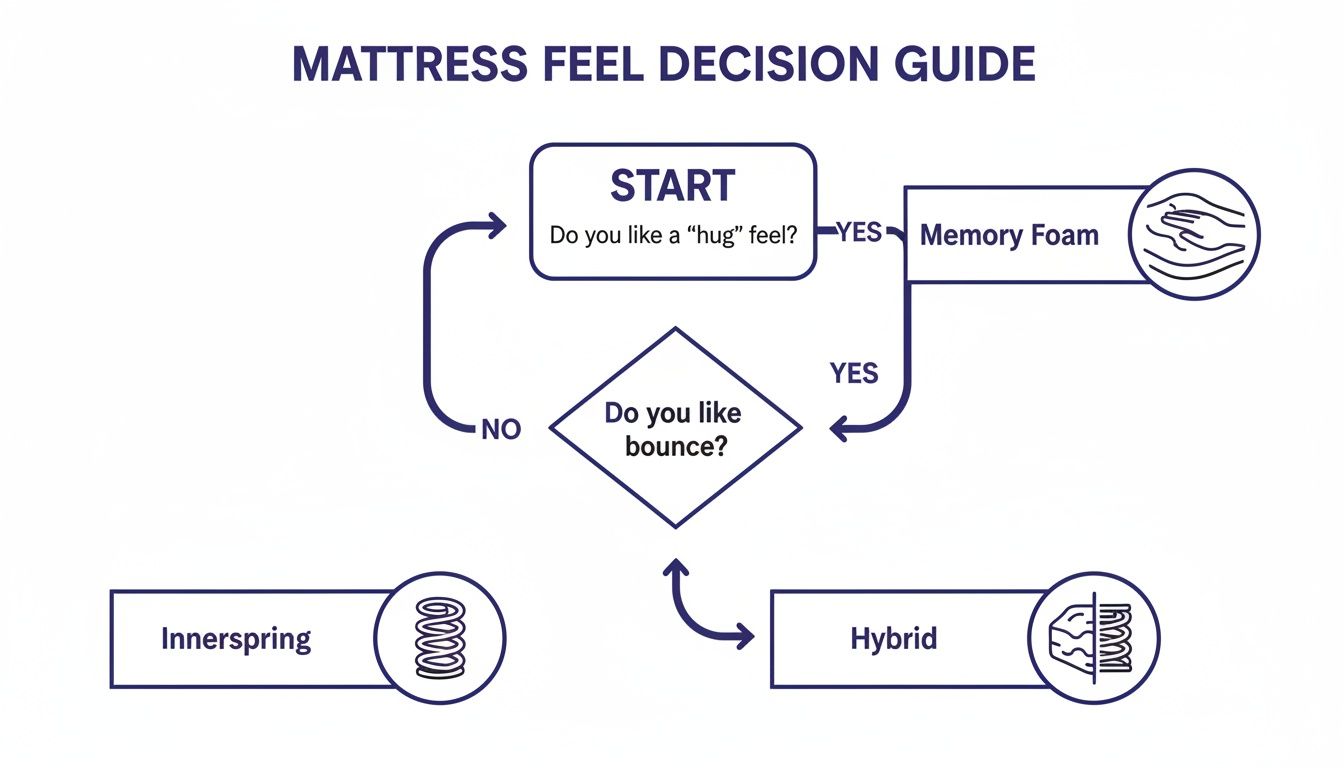
As the chart shows, whether you prefer a contouring "hug" or a responsive "bounce" can quickly point you toward memory foam, innerspring, or a hybrid that gives you a combination of both.
How Your Body Type Changes Everything
Just as important as how you sleep is your body weight, which directly impacts how a mattress feels and holds up over time. It's simple physics—a mattress that feels medium-firm to a lighter person might feel quite soft to a heavier person, because they sink deeper into the comfort layers.
Here’s a general guide to keep in mind:
-
Lighter Individuals (Under 130 lbs): Lighter sleepers often don't sink into a very firm mattress enough to get proper pressure relief. Softer mattresses tend to feel more comfortable and provide better contouring for their frame.
-
Average Weight Individuals (130-230 lbs): If you fall into this range, the manufacturer's suggested firmness level is usually a great place to start. A medium-firm mattress typically provides a balance of support and comfort.
-
Heavier Individuals (Over 230 lbs): For heavier sleepers, support and long-term durability are the top priorities. A firmer mattress with a strong support core (like thicker coils or high-density foam) is essential to prevent sagging and ensure the mattress lasts.
Remember, a good mattress is a long-term investment in your well-being, and it should last you 7 to 10 years. For sleepers over 230 lbs, features like reinforced edge support become incredibly important. In fact, some data shows that 15% of mattress sagging complaints are linked to poor edge construction, which really drives home the importance of choosing a mattress built for your specific needs. If you want to dive deeper into mattress durability, you can explore market reports on mattress components and consumer needs.
The In-Store Experience: What to Actually Do
Walking into a showroom packed with mattresses can feel a little overwhelming. But it doesn't have to be. With a simple plan, you can turn that visit into a hands-on research session that will help you make a choice you feel truly great about. The goal here is to gather real-world info that no online review could ever give you.
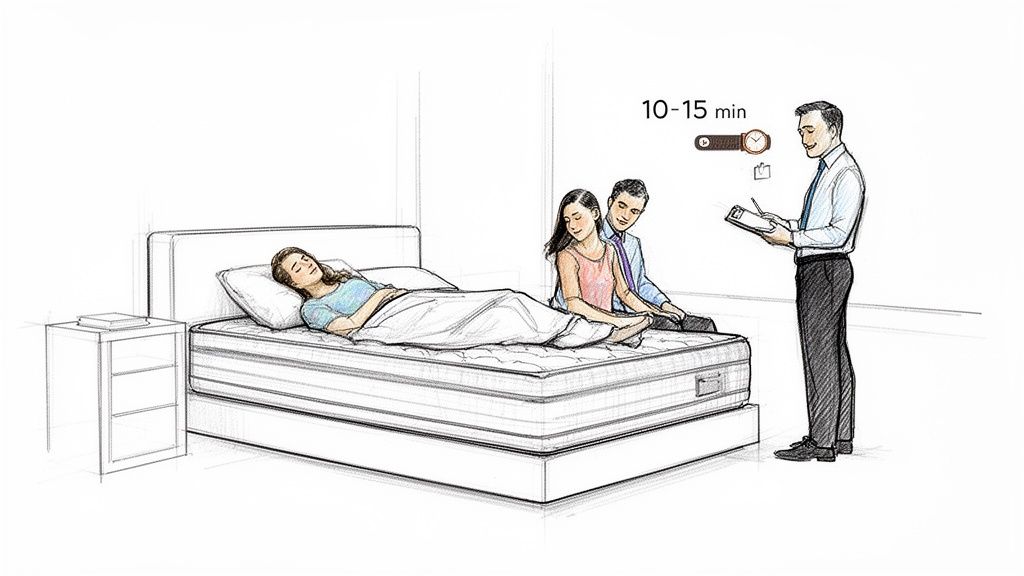
If there's one piece of advice to take away, it's this: you have to actually lie down. Don’t just sit on the edge or give it a quick push with your hand. That tells you next to nothing about how it will support your entire body for eight hours every night.
Your Game Plan for Testing a Mattress
To get the most out of your time in the store, think of it like you're testing a theory. Your theory is, "Will this mattress keep my spine aligned and feel comfortable all night long?" Here's how to find the answer.
1. Dress for the Part
Wear comfortable, loose-fitting clothes. It’s hard to get a true feel for a mattress if you’re stiff or worried about your outfit. Think casual clothes and shoes that are easy to slip on and off as you hop between beds.
2. Bring Your Partner
If you share your bed, you absolutely should shop together. A mattress can feel completely different with two people on it, and this is the single best way to test for motion transfer—which is just a fancy way of saying how much you'll feel your partner's tossing and turning.
3. Assume Your Position
On each mattress you're seriously considering, lie down in the position you actually sleep in. If you’re a side sleeper, get on your side. Back sleeper? Lie on your back. It's the only way to accurately judge if the mattress provides the right pressure relief and support for you.
The 10-Minute Rule: A few seconds isn't going to cut it. You need to spend at least 10 to 15 minutes on each mattress that makes your shortlist. This gives your body enough time to relax and really settle in, which is when you'll discover how the mattress truly supports you.
How to Properly Test for Support and Comfort
Once you're lying down, pay close attention to what your body is telling you. You're searching for that sweet spot—the perfect balance where you feel both supported and cushioned.
Check for Spinal Alignment
This is where your partner comes in handy. Have them look at your spine from the side. Is it relatively straight? If you’re a side sleeper, it should look horizontal. For back sleepers, you shouldn't see a big, noticeable gap between your lower back and the mattress surface.
Feel for Pressure Points
Do you feel any nagging pressure on your hips, shoulders, or lower back? If you do, the mattress is likely too firm. A good mattress should feel like it's contouring to your body's curves, not pushing against them.
Test the Edges
Sit right on the edge of the bed and see how much it sinks. Sturdy edge support is a tell-tale sign of a well-made, durable mattress. Plus, it makes getting in and out of bed easier and gives you more usable surface area to sleep on.
Asking the Right Questions
While you’re trying things out, a knowledgeable salesperson can be an incredible resource. Don't be shy about asking questions that go a little deeper than just the price or firmness level. Here are a few great conversation starters:
- "What are the specific materials in these top comfort layers? Is this memory foam, latex, or something else?"
- "Can you tell me more about the support core? Are we talking pocketed coils or a solid foam base?"
- "Does this model have any special cooling features built in?"
- "Since I'm a [side/back/stomach] sleeper, can you explain why you'd recommend this specific type of construction for me?"
Asking questions like these shows you’ve done a bit of homework and helps you get those final details you need to make the right call. Think of your in-store visit as the final, critical step in confirming that the mattress you've been researching is truly a good fit for your body.
Understanding Warranties, Trial Periods, and Delivery
You've done the hard part—now it's time for the final details. When you're nearing the end of your mattress shopping journey, you'll start hearing words like "warranty" and "sleep trial". While they might sound simple, they have very specific meanings, and it's smart to know what they are before you commit.
Let's clear up any confusion around what happens after you've picked out a mattress. This part of the process is less about comfort and more about confidence, making sure you have the full picture on support and logistics.
Demystifying the Mattress Warranty
Here’s one of the biggest points of confusion we see: a mattress warranty is there to protect you against manufacturing defects, not because you change your mind about the comfort level down the road. It's so important, it's worth saying again: a warranty covers things that go wrong with the mattress, not whether you still love it years later.
So, what does that actually mean? A typical warranty will cover issues like:
- Significant Sagging or Indentations: This is the most common claim. The warranty will specify a minimum depth for an indentation (often 1.5 inches or more) that has to be visible when nobody is on the bed.
- Coils Breaking or Popping Out: This is a clear-cut structural failure and is almost always covered.
- Flaws in the Seams or Stitching: Any problems with the mattress cover or its construction that shouldn't be there.
It's just as crucial to know what a warranty doesn't cover. Things like normal body impressions (those slight dips that are less than the specified depth), stains, or damage from using the wrong foundation or box spring won't be covered. Pro tip: keeping your mattress clean and on the right support system is the best way to keep your warranty valid.
The Real Purpose of a Sleep Trial
A sleep trial, sometimes called a comfort exchange period, is your chance to make sure the mattress is the right match for your body. It's best to think of it as an adjustment period, not a "free rental." If your old mattress was worn out, it can honestly take up to 30 days for your body to get used to a new, more supportive sleep surface.
A sleep trial acknowledges that a 15-minute test in a showroom isn't the same as spending eight hours a night on a mattress. It gives you peace of mind to confirm you’ve made the right decision for your long-term comfort.
Every retailer handles these differently, so always ask for the specific details. Make sure you know how long the trial is and if there are any fees for an exchange.
Navigating Delivery and Setup
Finally, you have to think about getting that brand-new mattress into your home. While you might be tempted to haul it yourself, professional delivery and setup is often a very wise choice. Modern mattresses, especially hybrids and those king-size models, can be incredibly heavy and awkward to wrestle up a flight of stairs.
Professional delivery crews have the experience to navigate tight corners and tricky hallways without scuffing up your walls or your new bed. Plus, they'll set up the new mattress and often haul away your old one, which saves you a major headache. Beyond just understanding mattress warranties, getting familiar with general warranty registration processes is a good habit for protecting any large purchase you make, including other sleep accessories.
Your Mattress Shopping Checklist
Alright, we’ve covered a ton of ground – mattress types, sleep positions, the nitty-gritty on warranties, and everything in between. Now it’s time to put it all together. Think of this checklist as your final game plan, a simple guide to keep in your back pocket as you head out to find a suitable mattress.
Following these steps will take the guesswork out of the process. It's your roadmap to moving from research to rest, stress-free, knowing you’ve checked all the boxes for a great night’s sleep.
Before You Go Shopping
A little prep work at home makes a world of difference. Spending a few minutes on homework now will make your time in the showroom much more focused and productive.
- Nail Down Your Sleep Profile: Figure out your go-to sleep position (side, back, stomach), and your partner’s too. Make a quick list of any problems you’re trying to solve—things like nagging back pain, waking up sweaty, or feeling every toss and turn from the other side of the bed.
- Set a Realistic Budget: Decide what you’re comfortable investing in your sleep. Don't forget to factor in a new foundation or box spring if you need one, and a quality mattress protector is a must to keep that warranty valid.
- Measure Everything: Get out the tape measure. Check your bedroom dimensions, but also the doorways and stairwells to make sure your mattress can actually make it into the room. If you’re keeping your current bed frame, measure it to ensure a good fit.
During Your In-Store Visit
This is where the magic happens. The showroom is your chance to put your research to the test and feel the difference for yourself. The goal is to compare different options side-by-side in a relaxed setting, without any pressure.
- Dress the Part: Wear comfy clothes you can easily move in and shoes you can kick off in a second. You’re here to lie down, after all.
- Use the 10-Minute Rule: This is critical. For any mattress you’re seriously considering, lie on it for at least 10 to 15 minutes in the position you normally sleep in. It’s the only real way to feel how it will support your body when it really counts.
- Test for Bounciness: If you’re sharing the bed, you have to shop together. Have one person lie down and close their eyes while the other person gets on and off the bed and moves around. Can you feel the motion?
- Check the Edges: Sit on the edge of the mattress. Does it hold its shape or collapse? Good, strong edge support gives you more usable sleeping space and is a great sign of durability.
- Ask Smart Questions: Don’t be shy! Ask the sleep expert about the specific materials in the comfort layers and support core. A knowledgeable pro can explain what different coil types or foam densities actually mean for your sleep.
At the end of the day, your decision should come down to two things: personal comfort and proper spinal alignment. The "best" mattress is simply the one that feels best to you. Ignore the hype and trust what your body is telling you.
Now you’re ready to put this knowledge into practice. We truly encourage you to visit a showroom and see how different mattresses feel. An informed choice is always a good one, and taking the time to find your perfect fit is an investment that will pay off in better sleep for years to come.
A Few Final Questions About Mattress Shopping
Even when you feel like you've got a solid plan, a couple of last-minute questions always seem to pop up. Here are the quick, straightforward answers to the queries we hear most often from shoppers, just to clear up any lingering uncertainties.
How Often Should I Replace My Mattress?
While there's no magic number written in stone, a good rule of thumb is to start thinking about a replacement every 7 to 10 years. Of course, this really depends on the mattress's original quality, the materials it’s made from, and how well you’ve taken care of it.
The most important thing, though, is how you feel. If you’re waking up with new aches and pains, or if you can actually see sagging spots or feel lumps, that’s your mattress telling you its support system is failing. At that point, it’s definitely time to start looking, no matter how old it is.
When Is a Good Time of Year to Buy a Mattress?
Lots of folks wonder if there's a "secret" best time to buy a mattress. While some retailers focus on holiday sales events, others believe in maintaining consistent, fair pricing year-round so you always get a reliable value.
Honestly, the best approach is simply to shop when you actually need a new mattress. Putting your sleep quality first instead of waiting months for a potential sale is always the better long-term investment in your health and well-being.
The right time to buy is when your current mattress no longer provides the comfort and support you need for restorative sleep. Don't wait for a specific date on the calendar if you're not sleeping well now.
And once you’ve made that investment, you’ll want it to last. Learning how to properly clean and maintain your mattress can protect it for years to come. Ultimately, when you're armed with the right info, you can feel confident making a great choice any day of the year.
Now that you have a complete guide to finding the right mattress, the next step is to experience the differences for yourself. At Woodstock Furniture & Mattress Outlet, our knowledgeable, no-pressure team is here to help you apply what you've learned and find a great fit for your sleep style and budget. Visit us to explore a great selection of trusted brands and find your perfect night's sleep.
Learn more and plan your visit at https://woodstockoutlet.com.