Figuring out how to arrange your patio furniture shouldn't start with a workout. The key is to map everything out before you even think about lifting a single chair. Take a few minutes to define your patio's main purpose and measure your space—this simple first step will save you a ton of hassle and ensure your layout is actually usable and inviting from day one.
Your Blueprint for a Functional and Inviting Patio
A common mistake is treating patio furniture arrangement as an afterthought. A truly great outdoor space doesn't just happen; it starts with a vision. You need a clear idea of what you want your oasis to be, long before you place the first chair. A bit of planning now prevents the frustration of ending up with a cluttered, awkward, or—worst of all—an unused patio.
Start with a Simple Sketch
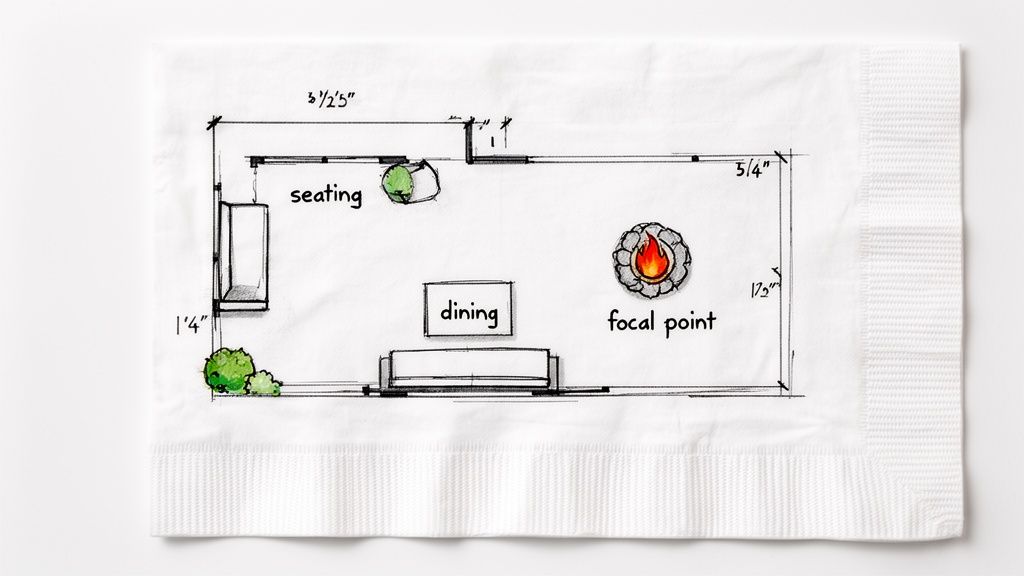
You don't need any fancy design software. Just grab a piece of paper (a napkin works in a pinch!) and draw the basic shape of your patio, deck, or balcony.
- Measure Everything: Use a tape measure to get the exact dimensions. Jot down the length and width right on your sketch.
- Mark Key Features: Pencil in any permanent fixtures—things like doors, windows, stairs, support columns, or a built-in grill. Knowing where these are is essential for creating good traffic flow.
- Note Utilities: Make a note of where your outdoor outlets or water spigots are. This is important if you're planning on adding string lights, speakers, or need easy hose access.
This quick map is now your guide. It helps you see the actual real estate you're working with, which is the best way to avoid the classic blunder of buying furniture that's way too big or comically small for the area.
Define Your Patio’s Purpose
Next, ask yourself the most important question of all: “How am I actually going to use this space?” Your answer here will drive every other decision you make. Is your patio going to be for:
- Morning Coffee and Solitude? A simple bistro set or a single, comfortable armchair might be all you need.
- Family Dinners and Barbecues? Then a large dining table and a full set of chairs need to be the main event.
- Evening Cocktails with Friends? Think conversation. A sectional sofa or a circle of club chairs around a coffee table is ideal for that.
- Poolside Lounging? Chaise lounges are the priority here, with a few small accent tables for drinks and sunscreen.
A patio without a clear purpose often becomes a space that serves no function well. By defining its primary role, you create a destination with intent, making it far more likely to be used and enjoyed.
Identify Your Focal Point
Every well-designed room, whether it's inside or out, has a focal point that anchors the entire layout. It’s the first thing that catches your eye and the spot where furniture arrangements just naturally make sense. Your patio might already have one.
Common outdoor focal points include things like:
- A stunning view of your garden or the landscape beyond
- A fire pit or an outdoor fireplace
- A swimming pool or a trickling water feature
- An interesting architectural detail, like a beautiful stone wall
If you don’t have a natural focal point, you can create one. A large statement planter, a bold outdoor rug, or a unique piece of furniture can do the trick. Arranging your main seating around this point instantly gives the whole space a sense of order and pulls it all together.
Of course, before you get to the fun of arranging furniture, you need a solid foundation. If you're starting from scratch, consider an expert patio paver installation to create that durable groundwork for your outdoor space.
Creating Comfortable Flow with Smart Zoning
Have you ever been to a party where everyone’s crammed into one corner, making the whole space feel awkward and tight? That's usually a classic sign of poor flow. A well-designed patio, on the other hand, guides people naturally, making the whole area feel bigger and more inviting.
The secret is to stop thinking of your patio as one single slab of concrete. Instead, picture it as several distinct "rooms" without any walls.
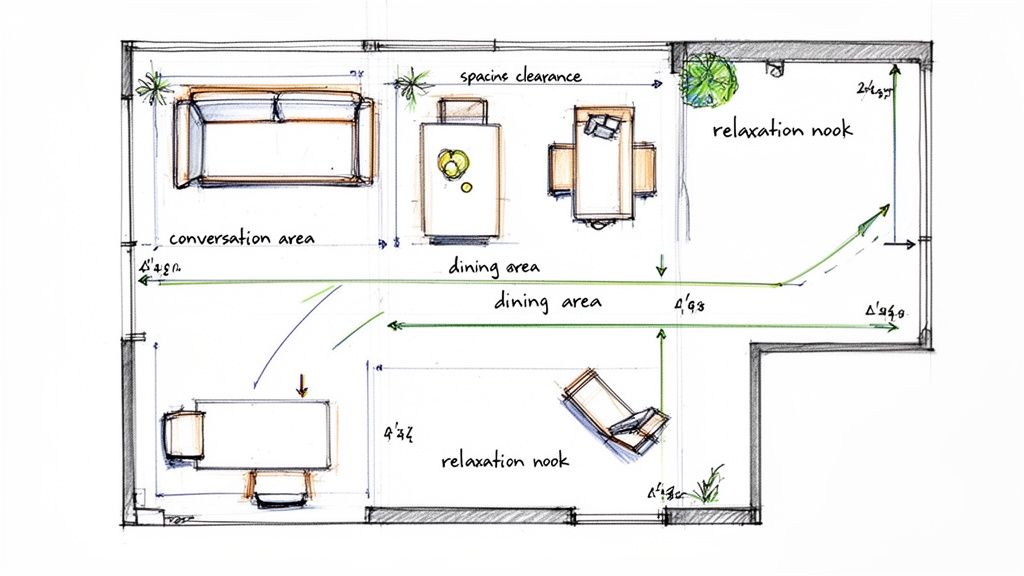
This simple but powerful idea is called zoning. It's all about creating dedicated spots for different activities—like chatting with friends, sharing a meal, or just kicking your feet up with a good book. When you give each part of your patio a specific purpose, every piece of furniture has a clear job, which cuts down on clutter and makes the space feel intentional.
Divide Your Space by Function
First, figure out what you actually do on your patio. You don't need to plan for every possible activity, just the ones that fit your lifestyle. For most people, a great patio layout includes at least two of these core zones:
- The Conversation Zone: This is your outdoor living room. It's built for connecting with people, usually centered around a coffee table or a fire pit. Think comfy seating like a sofa, a sectional, or a cozy grouping of club chairs.
- The Dining Zone: Whether you’re hosting big family dinners at a full-sized table or just enjoying morning coffee at a small bistro set for two, this area is all about the food. It’s a good idea to place this zone close to the kitchen door to make carrying dishes back and forth a breeze.
- The Relaxation Zone: This is your personal escape. It could be a pair of chaise lounges for soaking up the sun, a hanging chair tucked into a shady corner, or even just a single, plush armchair that’s perfect for reading.
By creating these separate areas, you build a patio that can handle multiple things at once. Guests can mingle, move between groups, and feel at ease without getting in anyone's way.
Prioritize Pathways and Traffic Flow
Once your zones are mapped out, the next critical piece of the puzzle is traffic flow. People need to be able to move around without bumping into furniture or cutting through a conversation. This is where clear, obvious pathways are a game-changer.
It all starts with proper spacing. As a rule of thumb, leave at least 18-24 inches between seating and tables so people can get in and out easily. For the main walkways between your zones, aim for a width of at least 36 inches. This single guideline prevents that cramped, bottlenecked feeling that can shrink a space in a hurry.
Making the most of the space you have is a real challenge for many; some reports even show that nearly 70% of urban patio owners struggle with it. Thoughtful furniture arranging is more important than ever, especially with the growing trend of seamless indoor-outdoor living. You can learn more about the latest trends by checking out outdoor furniture market projections on Statista.com.
A helpful tip: resist the urge to line up all your furniture against the house or railings. Pulling pieces away from the walls and grouping them within a zone—often anchored with an outdoor rug—instantly creates a more polished, intimate vibe and seriously improves the flow around the whole area.
At the end of the day, smart zoning and clear traffic flow are what turn a random collection of furniture into a truly functional and welcoming outdoor retreat.
Selecting Furniture That Fits Your Space and Lifestyle
Once you’ve mapped out your patio’s zones and flow, the next step is choosing the furniture. But this is about more than just picking a style you like; it’s about getting the scale and material right.
The goal is to find pieces that feel like they were made for your space. Get it right, and your patio will feel balanced and inviting. Get it wrong, and even a large patio can feel cramped, or a small one will just look cluttered.
Think about it this way: a massive, deep-seating sectional might look incredible in a showroom, but it could completely swallow a modest-sized deck, leaving you with no room to walk. On the flip side, a tiny bistro set can look lost and out of place on a sprawling stone patio.
Tailoring Furniture to Your Patio Size
Breaking down your space into small, medium, or large can simplify your choices. Each size brings its own opportunities and challenges.
For small patios or balconies, the focus is on verticality and versatility. Look for smart pieces that can pull double duty, like a storage ottoman that works as a seat or a coffee table. Taller, slender planters are also a useful trick—they draw the eye upward, making the space feel bigger without eating up precious floor real estate.
Medium-sized patios are where you have some real flexibility. This is where a classic layout shines, like a sofa and two chairs arranged around a coffee table. You’ve got enough room for a dedicated conversation zone and maybe even a separate small dining set without everything feeling on top of each other.
With a large patio, the main hurdle is often avoiding an empty, disconnected feeling. This is the perfect spot for a substantial L-shaped or U-shaped sectional to anchor your main hangout zone. From there, you can build out secondary areas, like a full dining set or a pair of chaise lounges, to fill out the space and give every corner a purpose.
A common problem homeowners face is pushing their furniture against the walls of a large patio. It creates a "dance floor" effect in the middle and makes it difficult to have a decent conversation. Instead, pull your seating arrangements in to create more intimate, usable spaces.
Choosing Materials for Your Local Climate
The material your furniture is made from is just as crucial as its size, especially in a place with weather like we have here in Georgia. The combination of intense sun, high humidity, and surprise downpours can be brutal on outdoor furniture. Picking materials built to handle those conditions is key to making sure your investment lasts.
Here are a few popular recommendations:
- All-Weather Wicker (Resin Wicker): This synthetic material is a fantastic, worry-free choice for our climate. It resists fading from UV rays, won't crack or peel when it gets wet, and it’s lightweight, so rearranging is a breeze.
- Aluminum: Powder-coated aluminum is another workhorse. It’s completely rustproof—a must-have in our humid environment—and light enough to move around whenever you feel like changing things up.
- Teak: It’s a classic for a reason. While teak requires a bit more upkeep, its natural oils make it incredibly resistant to water and pests. It will weather to a beautiful silvery-gray patina over time, but you can treat it to maintain its original honey color.
Patio Layout Ideas by Size
Sometimes a quick visual guide is all you need to get the ideas flowing. Here’s a simple table to help you match your patio’s square footage with the right kind of furniture and layout.
| Patio Size | Best For | Key Furniture Pieces | Arrangement Tip |
|---|---|---|---|
| Small | Cozy conversations, morning coffee | Bistro set, two armchairs, small loveseat | Use multi-functional pieces like a storage ottoman. Keep it simple. |
| Medium | Small gatherings, family lounging | Sofa & chair set, 4-person dining table, fire pit | Create a distinct conversation zone. Ensure clear pathways between areas. |
| Large | Entertaining, multiple activity zones | L-shaped sectional, 6+ person dining set, chaises | Anchor the space with a large seating group, then add secondary zones. |
This table is just a starting point, of course. Feel free to mix and match based on how you personally want to use your space.
By thinking through both the scale of your furniture and the materials it's made from, you’re setting yourself up for a beautiful, functional, and long-lasting outdoor retreat. It’s a good idea to visit a showroom to see and feel these different materials in person—it can make all the difference in getting a true sense of scale before you buy.
Making Your Patio Perfect for Conversation and Dining
A patio's real value isn’t just in the pavers or the plants, but in the memories you make there. Getting the layout right can turn a simple outdoor space into a favorite spot for connection.
Let's dig into the two most common ways people use their patios: for great conversation and for memorable meals. These are the layouts that encourage friends and family to settle in, relax, and stay a while.
When people are gathering, the goal is to make conversation feel completely natural. Nobody should have to crane their neck or shout across a huge empty space. This is where classic arrangements really shine, creating a sense of intimacy that brings everyone together.
Crafting a Welcoming Conversation Zone
The best layouts for chatting naturally draw people closer. One popular choice is the U-shaped arrangement, which you can easily create with a big sectional sofa or by placing a sofa directly opposite two comfy armchairs. This setup is fantastic for larger groups because it defines a clear social hub, usually centered around a fire pit or a coffee table.
Another effective option is the L-shaped layout, often made with a sectional or by pairing a sofa with a loveseat. This works well for defining a corner of a patio because it leaves plenty of room for people to walk around while still creating a cozy nook that feels both open and private.
No matter which shape you choose, the key is what some call the "conversational triangle"—making sure everyone is close enough to chat comfortably without feeling crammed in.
Here's a simple rule of thumb: try to keep seating pieces within about 8 feet of each other. Any further, and conversation starts to feel forced and disconnected. The idea is to close that distance and create a shared, comfortable space.
Designing a Functional Dining Space
When it comes to outdoor dining, function is just as important as style. Your main goal here is to give guests enough clearance to sit down and get up from the table without anyone having to do that awkward shuffle. It’s a small detail, but it makes a huge difference in how comfortable your guests feel.
To achieve this, plan for at least 36 to 48 inches of open space between the edge of your dining table and any wall, railing, or other obstacle. This gives everyone plenty of room to pull their chair out and lets others walk behind a seated guest without a problem.
There's some interesting science behind this, too. Arranging your patio furniture with ergonomic sightlines can actually boost enjoyment by as much as 45%. It's a big reason the outdoor furniture market is growing, with projections showing it'll grow from $54.7 billion in 2025 to $98.8 billion by 2035. When you nail the details—like keeping seat heights around 17-19 inches and spacing major pieces 48-60 inches apart—you create an environment that just feels right. Find out more about the trends driving the outdoor furniture market.
Adding Style and Function with Finishing Touches
With your main furniture pieces placed, it’s time for the final layers that transform a functional layout into a truly personal and inviting retreat. These are the details that inject personality, boost comfort, and make your outdoor space usable long after the sun goes down.
An outdoor rug is one of the quickest ways to anchor a seating area. It visually defines a conversation or dining zone, instantly making the space feel more like a deliberate, finished room. Beyond just looking good, it adds a layer of comfort underfoot, which is a welcome break from the hardscape of a concrete or paver patio.
Introduce Color, Texture, and Greenery
You'd be surprised how much of a difference the small details can make. Accent tables, for instance, are essential in my book. They’re necessary for holding drinks, a good book, or a plate of snacks, ensuring every seat has a convenient spot to set things down.
Planters are another one of my favorite tools for bringing a patio to life. You can use them to:
- Add vibrant color: Pack them with seasonal flowers to really brighten things up.
- Create texture: Get creative by mixing different leaf shapes and plant types for visual interest.
- Enhance privacy: A row of tall planters can create a natural, beautiful screen from the neighbors.
If you want to elevate the look and lean into natural elements, you can explore some unique and stunning succulent garden design ideas. They can add a sculptural, low-maintenance touch that complements almost any patio style.
Set the Mood with Outdoor Lighting
The right lighting is what makes a patio just as welcoming at night as it is during the day. This isn't just about being able to see; it's about creating a whole vibe.
Don't underestimate the power of layered lighting. A combination of ambient, task, and accent lighting can completely change the mood of your patio, making it feel cozy, festive, or serene depending on the occasion.
A simple strand of string lights hung over a dining or seating area adds instant charm and a warm, ambient glow. For pathways, solar-powered stake lights are an easy, no-fuss way to ensure safe navigation in the dark. Finally, lanterns—whether they're solar-powered or filled with flameless LED candles—can be placed on tables or on the ground to add a soft, flickering accent light that really dials up the cozy factor.
This concept map breaks down some common layout goals to help you visualize what might work for your own space.
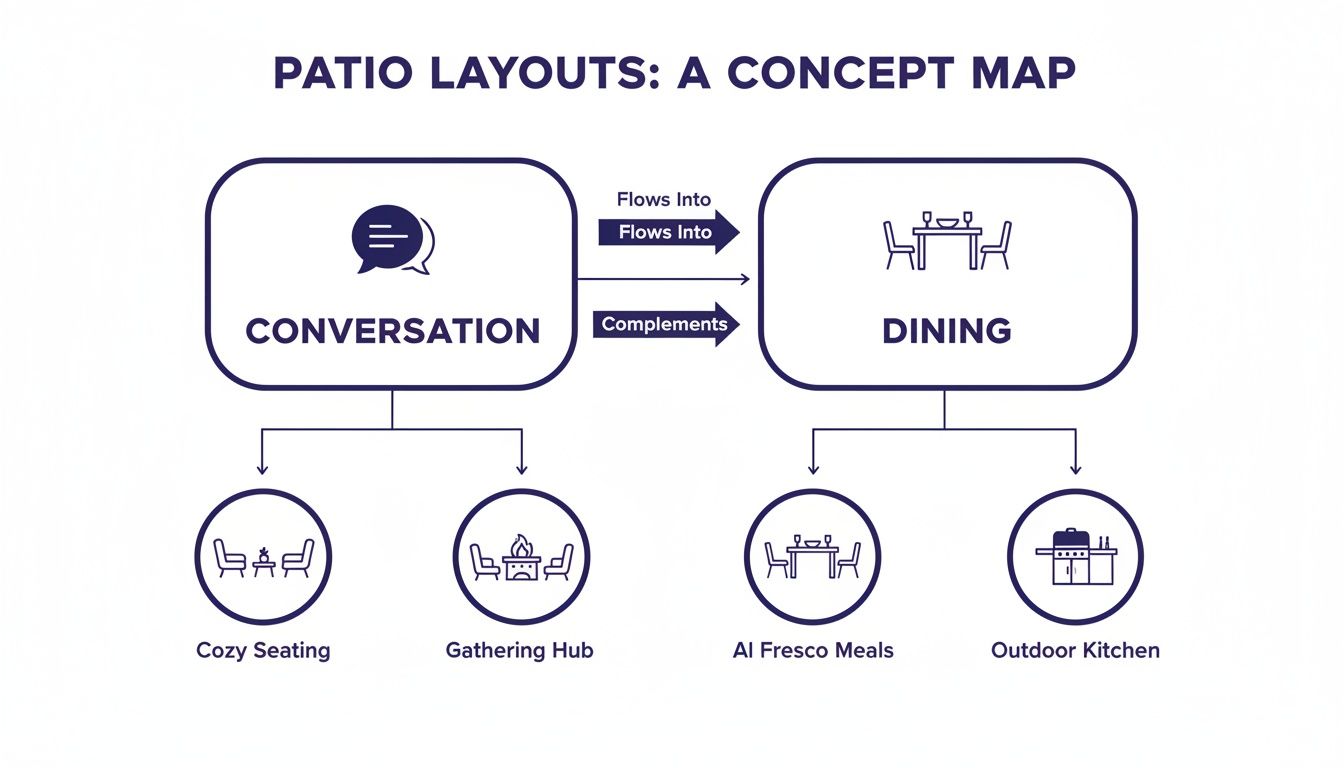
As you can see, conversation layouts prioritize easy interaction, while dining layouts are all about comfortable spacing and flow. Getting these arrangements right is a key reason the global outdoor furniture market is projected to grow from $50.89 billion in 2024 to $86.65 billion by 2033. It’s clear that more and more homeowners are looking to extend their indoor comfort to the outside.
Still Have Questions About Arranging Your Patio Furniture?
Even with a solid plan, a few specific questions always seem to pop up right when you start moving furniture around. Don't worry, it happens to everyone.
We've gathered some of the most common challenges we see homeowners run into. Let's get them cleared up so you can feel confident in your final layout.
How Much Space Should I Leave Between Patio Furniture?
This is probably the single most important question. Getting the spacing right is the secret to making a patio feel comfortable and easy to move around in, not cramped and awkward.
As a general rule, aim to leave 30 to 36 inches between major seating pieces, like a sofa and a couple of accent chairs. This gives enough personal space while still keeping things close enough for conversation.
For legroom, you'll want at least 18 inches between the edge of your sofa or chairs and your coffee table. But the most critical measurement is for your main pathways—keep those at least 36 inches wide so people aren't constantly bumping into things.
How Should I Arrange Furniture on a Small Balcony?
When you're dealing with a small patio or balcony, you have to think smart. This means going vertical and picking pieces that can pull double duty.
A compact bistro set is a classic choice for a reason—it gives you a spot for coffee or a meal without eating up the whole floor. A loveseat almost always works better than a full-sized sofa. And don't underestimate a good storage ottoman! It can be a footrest, extra seating, and the perfect place to stash cushions or blankets.
One of the most helpful tricks for small spaces is to push your largest furniture pieces—like the loveseat—up against a wall or railing. It's a simple move that instantly opens up the floor and makes the entire area feel bigger.
Can I Mix Different Styles of Outdoor Furniture?
Absolutely. In fact, mixing furniture styles is how you create a patio that feels personal and unique, not like you bought a showroom floor. The key to making it look intentional is to find a common thread that ties it all together.
Here are a few ways to do that:
- Stick with one material. You could use all-teak or all-aluminum pieces, for instance, even if the actual designs are very different.
- Use a consistent color palette. Maybe your furniture frames are all neutral grays and blacks. You can then pull everything together with pillows, an outdoor rug, and planters in a cohesive color scheme, like navy and coral.
- Choose a similar design vibe. Keep all the pieces in the same family, whether that's clean and modern or more rustic and traditional.
This approach ensures your patio looks thoughtfully curated, not like a random collection of stuff.
How Do I Arrange Seating Around a Fire Pit?
When a fire pit is involved, safety and conversation are your top priorities.
Always place chairs and sofas at least 3 to 4 feet away from the fire feature. This creates a safe buffer from the heat and keeps everyone clear of any stray sparks.
To make the space feel inviting, arrange your seating in a circle or a U-shape. This is the classic campfire setup for a reason—it gives everyone a great view of the flames and makes it easy for guests to chat with each other. Lastly, double-check that you have a clear, wide path for people to get in and out of the seating area safely.
Bringing your outdoor vision to life starts with finding the right pieces. Here at Woodstock Furniture & Mattress Outlet, our team has spent years helping North Georgia homeowners discover furniture that fits their space, style, and the way they live.
To see some of these concepts in person and explore a great selection of outdoor options, come see us or check out our collections at woodstockoutlet.com.