Tag: home decor tips

  • What Size Rug for Living Room? A Practical Guide

    What Size Rug for Living Room? A Practical Guide

    Figuring out the right rug size for your living room often comes down to one simple question: where will the furniture go? The answer is usually one of three simple placement rules that designers use: all furniture legs on the rug, only the front legs on, or no legs on at all.

    While it sounds straightforward, getting it right makes all the difference. A common and versatile choice is the front-legs-on approach, which anchors your space well without needing a massive, room-swallowing rug.

    Anchoring Your Space: The Function of a Good Rug

    Picking out a rug is about more than just finding a color or pattern you like. It’s about defining your living room's main conversation area. Think of a rug as the foundation that pulls your sofa, chairs, and coffee table together into a cohesive, intentional group.

    In essence, a well-placed rug creates a 'room within a room'. It's a key ingredient that makes a space feel organized, polished, and inviting. The key to unlocking that potential lies in three foundational placement rules that we use every day to help customers.

    The Three Foundational Rules of Rug Placement

    Each of these rules creates a distinct look and feel. Your choice will depend on your room's size, your furniture layout, and the overall vibe you're going for.

    • All Legs On the Rug: This is where every piece of furniture in your seating area—sofa, chairs, the works—sits entirely on the rug. It creates a truly luxurious and unified look, but it works best in large or open-concept living rooms. You’ll need a substantial rug, often 9×12 feet or larger, to pull this off without making things feel cramped.

    • Front Legs On the Rug: This is a popular option. By placing only the front legs of your sofa and chairs onto the rug, you visually connect all the pieces and anchor the space. This technique is incredibly flexible, makes the room feel spacious, and is an excellent go-to for most standard living rooms.

    • All Legs Off the Rug (The "Float"): In this layout, all the furniture sits completely off the rug, which "floats" in the center, usually just under the coffee table. This can work in smaller spaces, but it's a tricky one to get right. If the rug is too small, it can look like a lonely 'postage stamp' and make the whole area feel disconnected.

    The following graphic gives you a helpful visual for what we're talking about with each of these placement rules.

    As you can see, the relationship between your furniture and the rug's edge completely defines the feel of the space. Deciding on the right placement rule is your first and most important step.

    This choice matters. In fact, a recent survey found that 72% of homeowners who chose a rug large enough to cover a significant portion of their seating area felt their space was more comfortable and well-proportioned. If you're interested in the details, you can explore more market trends in the full area rug industry report.

    To make it even easier, we've put together a quick cheat sheet to help you compare these rules at a glance.

    Living Room Rug Placement Rules at a Glance

    Placement Rule Best For Visual Effect
    All Legs On Large, open-concept spaces or defining a specific zone. Creates a luxurious, unified, and grand feel. Clearly defines the seating area.
    Front Legs On Most living rooms, from small to large. A very versatile option. Connects the furniture and grounds the space without overwhelming it. Makes the room feel cohesive.
    All Legs Off ("Float") Smaller, more compact living rooms or when using a statement rug. Creates a sense of separation and can make a small room feel less cluttered if done correctly.

    Think of this table as your starting point. Once you decide which "rule" feels right for your home, you'll have a much clearer idea of what size rug you should be looking for.

    How to Measure for a Living Room Rug

    When we get asked, “What size rug do I need for my living room?”, our first piece of advice might surprise you. Put down the tape measure, at least for a minute.

    Instead of measuring your room from wall to wall, you’ll want to focus on your main seating area. In the design world, this is called the conversational area – basically, your sofa and any chairs that go with it. Go ahead and arrange your furniture exactly where you want it. Physically placing everything is more helpful than just guessing with a bunch of numbers.

    Top-down sketch showing a living room layout with furniture and various rug size options outlined.

    Use Painter's Tape to Create a Blueprint

    Now for a helpful trick for picking a rug. Grab a roll of painter’s tape.

    With your furniture all set up, use the tape to mark out different standard rug sizes right there on the floor. Outline an 8×10 first. Then, maybe try a 9×12. This simple step takes all the guesswork out of the equation. You can see, in real-time, how each size frames your furniture and affects the flow of the room. Does it feel anchored? Is there enough of your floor showing?

    Helpful Tip: As you're taping, keep this guideline in mind: try to leave about 18 to 24 inches of bare floor between the rug’s edge and the walls. This creates a clean border and keeps the rug from looking like a poorly-fitted carpet.

    Key Measurements to Check

    While you’re playing around with your taped-out rug shapes, there are a couple of key measurements to double-check. Getting these right is what gives a room that polished, professionally designed look.

    • Sofa Width: Your rug should extend at least 6 to 8 inches past your sofa on both sides. This simple detail makes the whole seating area feel more generous and balanced, preventing the sofa from looking like it’s swallowing the rug.
    • Walkways: Make sure people can walk through the room comfortably. You’ll want 18 to 24 inches for smaller pathways, like the space between your coffee table and the sofa. For the main traffic lanes that cut through the room, aim for a more comfortable 30 to 36 inches so nobody feels squeezed.

    By taping out your options and checking them against these simple guidelines, you move from just thinking about rules to creating a real, concrete plan for your own space. This bit of prep work is the secret to getting rid of that “what if I get it wrong?” anxiety and choosing the right size with confidence.

    Alright, you've got your painter's tape outline on the floor. Now what? Let's connect those tape lines to the real world of standard rug sizes.

    It's one thing to see an outline, but it's another to know how a 5×8, 8×10, or 9×12 rug actually behaves in a room. Think of this as your cheat sheet for matching a rug to your living room layout, making the final choice a whole lot easier.

    The 5×8 Rug: For Smaller, Cozier Spaces

    A 5×8 rug can be a good choice for smaller living rooms, apartments, or dens where a larger rug would overwhelm the room. This is where you’ll want to use the "all legs off" or "floating" placement we talked about.

    With this setup, your furniture frames the rug, and only the coffee table actually sits on it. This simple trick defines the conversation area without making a compact room feel cluttered or small. It can create the illusion of more floor space, which is a big plus.

    The 8×10 Rug: The Go-To, Versatile Standard

    There’s a reason the 8×10 rug is a popular size. It’s a versatile choice for most standard living rooms. This size is practically made for the "front legs on" rule.

    An 8×10 gives you enough room to place the front legs of your sofa and any accent chairs right on the rug. This anchors the whole arrangement, tying everything together into one cohesive, polished look. It’s big enough to ground your main seating area while still letting your hardwood or tile floors show around the edges.

    One useful tip we share is to pick a rug that’s at least 5-6 feet wider than your sofa. This should leave about 18-24 inches of exposed floor around the rug's border, giving the whole space a more open and airy feel.

    The 9×12 Rug (and Larger): For Grand and Open-Concept Rooms

    If you have a large, open-concept living room or a great room, you may need a larger rug. A 9×12 rug—or even a 10×14—is a good bet. These generous sizes are what allow you to use the impressive "all legs on" rule.

    This is where your entire furniture grouping—sofa, chairs, end tables, the works—sits completely on top of the rug. Doing this creates a very clear and luxurious "seating island," which is useful for defining the living space within a larger, multi-purpose room. For instance, an 8×11-foot rug often fits well in a typical 14×18-foot family room.

    In fact, one industry report found that 68% of families felt their room's traffic flow and function improved just by getting the right-sized rug. You can dig into more of the data on carpet market trends and consumer preferences here if you're curious. By going big, you create a layout that’s not just beautiful but also practical.

    To make it even simpler, we've put together a quick reference guide. Use this table to easily match standard rug sizes to your room's dimensions and preferred furniture layout.

    Standard Rug Size Recommendations for Living Rooms

    Rug Size (Feet) Ideal Room Size Common Placement Rule
    5' x 8' Small living rooms, apartments (approx. 7'x10') All Legs Off ("Floating")
    8' x 10' Standard living rooms (approx. 11'x13') Front Legs On
    9' x 12' Large or open-concept rooms (approx. 12'x18') All Legs On
    10' x 14' Very large great rooms (approx. 14'x20' or more) All Legs On (with more space)

    Keep this chart handy when you're shopping. It's a useful starting point for narrowing down your options and making sure you bring home a rug that truly fits your space.

    Solving Rug Puzzles for Sectionals and Tricky Layouts

    Figuring out the right rug for a standard sofa and a regular-shaped room is one thing. But what happens when you throw a massive sectional sofa or an odd-shaped room into the mix? All of a sudden, that simple question of "what size rug for my living room?" can feel like a high-stakes puzzle.

    The biggest mistake we see homeowners make is getting a rug that’s too small for their sectional. When you have a tiny rug floating under the coffee table, it makes that gorgeous, sprawling sectional look disconnected. It visually chops up the space and feels disjointed. The goal is to find a rug that creates a single, unified foundation for your entire seating area.

    A Good Approach for Sectional Sofas

    When it comes to sectionals, your best friend is often the front-legs-on rule. The rug has to be large enough to slide under the front legs of every single piece of your sectional—the main sofa part, the corner wedge, and the chaise lounge. This is what pulls the whole look together and makes it feel intentional.

    Think of your rug as the frame for your furniture. If you put a huge, beautiful painting in a dinky little frame, it just looks wrong. The same goes for your sectional. An undersized rug will always make the space feel unbalanced.

    The whole point of a living room rug is to anchor your main conversation area. A good rule of thumb is to aim for about 80% rug coverage under your furniture to create that cozy, intimate feeling. For many standard 12×12-foot rooms, a 7×9-foot or 8×10-foot rug is often a good fit. We've seen countless families use these sizes with their sectionals to instantly make the room feel warmer and more complete. If you're curious about how these choices fit into broader trends, you can explore market insights on home furnishings.

    Tackling Other Tricky Layouts

    Sectionals aren't the only thing that can give homeowners a headache. Other architectural features can make rug placement a real head-scratcher. Don't worry, though; a few simple guidelines can solve most of these common layout problems.

    • Long, Narrow Rooms: In a long room, putting a small rug in the middle just emphasizes the "bowling alley" vibe. The trick here is to work with the room's length. Opt for a longer runner-style rug or a large rectangular rug (like a 9×12) that fills most of the length of your seating area. This helps trick the eye into seeing the space as wider and more balanced.
    • Rooms with a Corner Fireplace: Corner fireplaces can create an awkward diagonal sightline that tempts people to angle their furniture and rug. It is often better to avoid this. Instead, orient your rug and furniture to create a primary seating group that makes sense for the room as a whole. Let the rug define that main conversation zone squarely, and just let the fireplace be a nice accent feature.

    By making sure your rug is properly scaled to your largest piece of furniture and clearly defines your main seating area, you can bring a sense of harmony and style to even the most unconventional rooms.

    Common Rug Sizing Mistakes to Avoid

    Knowing all the rules for rug placement is a great start, but sometimes seeing what not to do is even more helpful. Dodging a few common sizing mistakes is often the real secret to getting that polished, professionally-designed look in your living room.

    Once you know how to spot these pitfalls, you can be confident that the rug you choose will pull your space together, not fight against it.

    The Problem of the Postage Stamp Rug

    The single most frequent issue we see is a rug that’s just too small for the room. Designers have a name for it: the "postage stamp" effect. It’s that tiny rug floating awkwardly in the middle of a big space, making all the furniture around it feel disconnected and adrift.

    Worse yet, it can actually make your whole living room feel smaller and less welcoming. Instead of uniting your sofa and chairs into a cozy conversation area, a tiny rug becomes an isolated island that everything is trying to avoid.

    This is a classic case of good intentions gone wrong. You fall in love with a beautiful pattern, but it only comes in a 5×8. You try to make it work in a room that really needs an 8×10 or 9×12, and the result is furniture that looks like it's just tolerating the rug instead of being grounded by it.

    A well-sized rug should feel generous and purposeful. If you've got a gap of more than a few inches between your sofa's front legs and the edge of the rug, it's a huge red flag that the rug is probably too small.

    Other Sizing and Placement Errors

    Beyond the postage stamp, a few other common slip-ups can throw off the whole vibe of your living room. Keep an eye out for these to save yourself a ton of second-guessing down the road.

    • Blocking Main Walkways: Your rug's job is to define your seating area, not create an obstacle course. You need clear, open paths for people to walk through, ideally about 30 to 36 inches wide for major traffic routes. A rug that juts out into a main walkway will always feel clumsy and out of place.

    • Ignoring Your Floors: If you’re lucky enough to have beautiful hardwood or tile, you don't want to hide it completely! The goal is to frame the room. Leaving a consistent border of 18 to 24 inches of exposed floor around the perimeter strikes a good balance, showcasing your floors while defining the space.

    • Placing the Rug Crooked: Now, an angled rug can work as a bold, stylistic choice in the right room. But more often than not, it just looks like an accident. For a clean, orderly feel, it's almost always best to align your rug with the main lines of the room, like a prominent wall or the fireplace.

    Thinking Beyond Size: Let's Talk Materials & Rug Pads

    Okay, so you've nailed down the right size. High five! But before you call it a day, there are a couple of other key players that will make or break your living room setup: the material your rug is made of, and what you put underneath it. This is where we separate a good choice from a truly great one.

    Why a Quality Rug Pad Is a Must-Have

    Think of a rug pad as the unsung hero of your living room floor. It might be out of sight, but its job is absolutely essential. First and foremost, it keeps your rug from slipping, sliding, and bunching up—a non-negotiable safety feature in any home, especially with kids or pets running around.

    But that's not all it does. A good pad adds a welcome layer of extra cushioning under your feet, making the whole room feel cozier and more luxurious. It also acts as a protective barrier for your floors, preventing scratches and scuffs. Plus, it absorbs the daily impact of foot traffic, which can seriously extend the life of your rug. Skipping the rug pad is a shortcut you'll almost always regret later on.

    Matching Rug Materials to Your Lifestyle

    The material of your rug is a huge deal. It directly affects how it feels, how it wears, and how much work it is to keep it clean. The right choice comes down to being honest about how you actually use your living room. A material that's perfect for a quiet, formal space might be a total disaster in a busy family hub.

    Here’s a simple way to think about it:

    • For High-Traffic Family Rooms: If your living room is command central for kids, pets, and a whole lot of life, you need something tough. Look for a rug made from a durable synthetic blend like polypropylene or a hard-wearing natural fiber like jute. These materials are built to handle the chaos and are generally much easier to clean.
    • For Quiet, Formal Living Rooms: In a less-used space where you want to dial up the luxury, you can focus on a plush texture. Wool is a timeless choice, famous for its incredible softness, natural resilience, and rich appearance. It creates that cozy, inviting feel that's perfect for rooms meant for quiet conversation and relaxation.

    As you mull over materials, it's also smart to check out a guide on choosing an area rug for hardwood floors to make sure your picks are a good match. Of course, nothing beats seeing and feeling the options for yourself. We invite you to swing by one of our showrooms, where our team can help you find the right fit for your home.

    Your Living Room Rug Questions Answered

    Even after you’ve got all the guidelines down, picking out that perfect rug can still bring up some very specific questions. Don’t worry, that’s totally normal! This is the part of the process where things get real, and we’re here to tackle some of the most common questions we hear from shoppers every day.

    How Much Space Should I Leave Between the Rug and the Wall?

    The number we always tell our shoppers is 18 to 24 inches. You want to leave a deliberate border of bare floor between the edges of your area rug and the walls.

    This gap frames your seating area beautifully and keeps the rug from looking like an ill-fitting, wall-to-wall carpet. In cozier rooms, you can shrink that border down to about 12 inches, but you definitely want that breathing room.

    What if I’m Stuck Between Two Standard Rug Sizes?

    This happens all the time. You’ve measured your space, you know what you need, but your ideal size falls right between a standard 8×10 and 9×12. When you find yourself in this situation, our advice is almost always the same: go with the larger option.

    A rug that’s a touch too small can make your whole room feel unbalanced, creating that dreaded “postage stamp” look where the furniture feels like it's falling off the edges. A rug that’s a little too big, on the other hand, usually just looks more generous and intentional.

    If you're on the fence between an 8×10 and a 9×12, for instance, the 9×12 will almost certainly do a better job of anchoring your furniture and making the whole space feel more connected.

    How Close Can My Rug Get to the Fireplace?

    This is a big one, and it’s all about safety. You absolutely need to leave a gap between your rug and the fireplace hearth.

    Building codes often require at least 6 to 12 inches of non-combustible material (like stone, brick, or tile) around the fireplace opening. Make sure your rug stays completely off this surface to keep your home safe and your layout looking clean and correct.

  • Decorating ideas for living room: 12 timeless concepts you’ll love

    Decorating ideas for living room: 12 timeless concepts you’ll love

    Your living room is more than just a space; it's the heart of your North Georgia home, a place for relaxing after a long day, gathering with family, and making lasting memories. But turning a blank canvas or an outdated room into a functional and beautiful area can feel overwhelming. Where do you even start? What furniture works best for your layout? How do you pull it all together without making costly mistakes?

    This guide is designed to remove the guesswork and provide clear direction. We'll walk through practical decorating ideas for a living room, focusing on foundational principles that work for real homes, whether you're in a spacious house in the suburbs or a cozy apartment. Instead of listing fleeting trends, we'll explore proven strategies for layout, color, lighting, and accessorizing. For a comprehensive range of styles and inspiration, exploring various living room decor ideas can also help personalize your space.

    Our goal is to help you make informed decisions and create a living room that is both personal and timeless. You will learn how to:

    • Arrange furniture for optimal flow and conversation.
    • Choose color palettes that create a specific mood.
    • Layer lighting for both function and ambiance.
    • Accessorize thoughtfully to reflect your personality.

    From placing a sectional sofa to selecting the right area rug, this list provides the actionable steps needed to transform your living room into a space you truly love.

    1. Sectional Sofa Arrangement

    A sectional sofa arrangement is one of the most foundational decorating ideas for a living room, acting as the anchor for both seating and style. Unlike a traditional sofa, a sectional is a multi-piece unit designed to maximize seating capacity while creating defined zones. This makes it particularly effective in open-concept layouts common in North Georgia homes, where it can visually separate the living area from a dining room or kitchen. The right sectional invites connection and conversation, making your living room the true heart of the home.

    A hand-drawn sketch of a modern living room interior featuring a large sectional sofa, coffee table, and rug.

    Why It Works for North Georgia Homes

    Sectionals from brands like Ashley Furniture, Flexsteel, and La-Z-Boy are designed for real-life use, offering configurations that fit various room sizes and functions. For example, an L-shaped sectional with a chaise is a popular choice for contemporary living rooms, providing a comfortable spot to stretch out. In larger family rooms or finished basements, a U-shaped modular sectional can seat the whole family for movie night. Many modern designs also include built-in recliners, offering a blend of style and comfort.

    Key Takeaway: Before committing to a sectional, always measure your room, doorways, and hallways. A common mistake is choosing a piece that physically fits the room but overwhelms the space or blocks natural traffic flow.

    Actionable Tips for Implementation

    • Mind the Flow: Position your sectional to create clear pathways. Avoid placing it where it blocks entryways or makes it difficult to access other parts of the room.
    • Choose Durable Fabrics: For households with children or pets, a performance fabric is a smart investment that resists stains and wear.
    • Add a Coordinating Ottoman: An ottoman provides flexible seating, a footrest, or a surface for a tray, adding function without clutter.
    • Layer with Textiles: Use throw pillows and blankets to introduce color and texture. This allows you to update your living room’s look seasonally without buying new furniture.

    2. Neutral Color Palette with Accent Walls

    Employing a neutral color palette with an accent wall is one of the most versatile decorating ideas for a living room, offering a balance between calm and character. This approach uses foundational colors like whites, grays, beiges, or taupes for the majority of the room's surfaces while designating one wall for a bolder, more saturated hue. This creates a powerful focal point and adds depth without overwhelming the space, providing a sophisticated backdrop that is easy to update with accessories.

    A sketch of a contemporary living room with a beige sofa, a bold teal accent wall, and a framed abstract painting.

    Why It Works for North Georgia Homes

    This design strategy works well in the varied architecture of North Georgia homes, from modern new builds to classic ranch-style houses. For instance, a soft gray living room can be instantly energized with a deep teal or navy blue accent wall behind the sofa. In rooms with lots of natural light, a warm beige or cream palette paired with a rich emerald green accent wall can feel both grounding and luxurious. Color experts at Benjamin Moore and Sherwin-Williams often recommend this technique for creating visual interest while maintaining an open, airy feel.

    Key Takeaway: The 60-30-10 rule is a useful guide for this approach. Use your dominant neutral for 60% of the room (walls, large furniture), a secondary color for 30% (rugs, curtains), and your accent wall color for the final 10%, echoed in small decor items.

    Actionable Tips for Implementation

    • Test Your Paint: Always test paint samples on your chosen accent wall. Observe how the color changes throughout the day with different natural and artificial lighting.
    • Select the Right Wall: Choose a wall that you want to draw attention to, such as the one behind your primary seating area or a wall with a key architectural feature.
    • Balance with Furniture: Pair your bold accent wall with neutral-colored furniture to let the wall be the star and avoid a cluttered, chaotic look.
    • Incorporate the Accent Color: Weave small touches of the accent color into your decor, like throw pillows, artwork, or vases, to create a cohesive design.

    3. Layered Lighting Design

    A layered lighting design is a complete strategy for illuminating your living room, moving beyond a single, central fixture. This approach combines three types of light-ambient, task, and accent-to create a space that is both functional and full of atmosphere. Proper lighting is one of the most effective decorating ideas for a living room, as it eliminates harsh shadows, supports various activities, and adds visual depth. By thoughtfully placing fixtures, you can craft a warm, inviting, and dynamic environment.

    Why It Works for North Georgia Homes

    A well-layered lighting scheme makes a living room more versatile, a necessity for modern family life. Ambient light from recessed fixtures or a central chandelier provides general illumination. Task lighting, such as a floor lamp by an armchair or a table lamp on a console, offers focused light for reading or hobbies. Accent lighting from sconces or track lights draws attention to architectural features, artwork, or a stone fireplace, adding character that complements rustic and transitional North Georgia home styles.

    Key Takeaway: The goal of layered lighting is control. Installing dimmer switches for your ambient light sources is a simple change that offers a significant impact, allowing you to instantly shift the room’s mood from bright and energetic to soft and relaxing.

    Actionable Tips for Implementation

    • Start with Ambient: Establish your room’s base lighting with overhead fixtures like chandeliers, flush mounts, or recessed cans.
    • Add Task-Specific Lights: Place floor or table lamps near seating areas. A stylish lamp from a brand like Kichler or Uttermost can serve as both a light source and a decorative object.
    • Introduce Accent Lighting: Use adjustable spotlights or wall sconces to highlight a piece of art, a textured wall, or built-in shelving.
    • Choose Warm Bulbs: For a cozy, comfortable atmosphere, select LED bulbs with a warm temperature around 2700K. They create an inviting glow perfect for a living room.

    4. Statement Artwork and Gallery Walls

    Creating a visual focal point with artwork is one of the most effective decorating ideas for a living room, transforming a plain wall into a personalized statement. Whether you opt for a single, large-scale piece or a curated gallery wall, art injects color, texture, and personality into your space. This approach is all about self-expression, allowing you to tell a story and make your living room uniquely yours without requiring permanent structural changes.

    A hand-drawn sketch of a modern white sofa beneath a gallery wall with colorful abstract art and frames.

    Why It Works for North Georgia Homes

    Art personalizes the popular modern farmhouse and transitional styles prevalent in the region. A large abstract painting can introduce a contemporary edge above a rustic console table, while a gallery wall of family photos and botanical prints can add warmth and character to a neutral-toned living room. This method is incredibly versatile; it works just as well in a spacious family room in Cumming as it does in a compact apartment in Woodstock, allowing you to scale the display to your room's dimensions and your home's aesthetic.

    Key Takeaway: The goal is to create a cohesive look, not a cluttered one. Lay out your arrangement on the floor first to visualize the spacing and balance before putting any nails in the wall.

    Actionable Tips for Implementation

    • Plan with Tape: Use painter's tape to outline the shape and position of each frame on the wall. This lets you adjust the layout without making unnecessary holes.
    • Mind Your Height: A common rule is to hang artwork so its center is at eye level, approximately 57 to 60 inches from the floor. When hanging art above a sofa, leave about 6-8 inches of space between the furniture and the bottom of the frame.
    • Mix and Match Frames: For an eclectic gallery wall, combine different frame colors, materials, and sizes. To keep it cohesive, stick to a consistent color palette within the artwork itself.
    • Use Removable Hangers: For renters or those who like to change decor frequently, high-quality removable hanging strips are an excellent option that prevents wall damage.

    5. Comfortable Seating and Area Rugs

    Combining quality seating with the right area rug is a powerful decorating idea for a living room, creating a space that is both comfortable and visually cohesive. An area rug acts as a foundation, defining the seating area, adding warmth, and introducing color or texture. When paired with quality sofas, recliners, and accent chairs, this approach grounds the entire room, making your living room an inviting hub for family and friends. It’s a classic design principle that prioritizes comfort without sacrificing style.

    Why It Works for North Georgia Homes

    This combination works especially well for creating cozy, defined zones within the open-concept or large family rooms common in North Georgia. A large, neutral rug can anchor a sectional, while layering a smaller, patterned rug on top adds personality. For a relaxed, modern farmhouse feel, a durable jute or sisal rug paired with a plush, comfortable sofa creates a space that is both stylish and ready for everyday life. This pairing allows you to solve two design challenges at once: establishing a functional layout and infusing the room with warmth.

    Key Takeaway: The most common mistake is choosing a rug that's too small. A properly sized rug should have at least the front legs of your sofa and chairs on it, which helps unify the furniture into a single, intentional grouping.

    Actionable Tips for Implementation

    • Select the Right Size: Ensure your rug is large enough to anchor your seating arrangement. All furniture should be touching the rug in some way.
    • Layer for Texture: For added visual interest, place a smaller, decorative rug (like a faux cowhide or a vintage-style piece) over a larger, neutral base rug.
    • Prioritize Durability: In high-traffic living rooms, consider rugs made from durable materials like polypropylene or wool. For homes with children or pets, a washable area rug is a practical choice.
    • Use a Rug Pad: Always place a rug pad underneath to prevent slipping, protect your hardwood floors, and add an extra layer of cushioning underfoot.

    6. Entertainment Center and Media Storage

    A well-designed entertainment center or media console is a cornerstone among decorating ideas for a living room, serving as both a functional media hub and a stylish focal point. Far from just a stand for your television, modern units combine device storage, display shelving, and cabinetry into cohesive arrangements. They expertly organize cables, reduce visual clutter, and integrate technology seamlessly with your decor, all while adding valuable storage.

    Why It Works for North Georgia Homes

    In many North Georgia homes, the living room pulls double duty as a family gathering spot and a media room. An entertainment center from a brand like Ashley Furniture can anchor the space, providing a designated home for everything from gaming consoles to soundbars. For instance, a long, low-profile console offers a minimalist look, while a larger wall unit with integrated shelving and cabinets provides ample storage for books, games, and decor. These pieces help define the room's purpose and keep it organized.

    Key Takeaway: Before purchasing, measure your television and the available wall space. It’s also wise to consider the ideal viewing height from your primary seating to ensure comfort and prevent neck strain.

    Actionable Tips for Implementation

    • Plan for Ventilation: Leave adequate space around electronic devices like receivers and gaming systems to allow for proper airflow and prevent overheating.
    • Balance Storage Types: Combine open shelving for displaying decor with closed cabinets or drawers to hide clutter. This creates a look that is both personal and tidy.
    • Manage Cables Early: Plan your cable management strategy before setting everything up. Use clips, sleeves, or built-in channels to keep wires neat and out of sight.
    • Secure for Safety: Ensure any tall or heavy units are properly weighted or anchored to the wall, especially in households with children or pets.

    7. Window Treatments and Natural Light Management

    Strategic window treatments are fundamental decorating ideas for a living room that merge aesthetics with essential function. They control natural light, enhance privacy, and introduce crucial layers of color, pattern, and texture. The right treatment can transform a room’s atmosphere, making it feel cozy for a movie night or bright and airy for a sunny afternoon. From sheer curtains that filter soft light to blackout shades for a media room, the options are vast and can be tailored to any style.

    Why It Works for North Georgia Homes

    In North Georgia, where sunlight can be intense, managing light is as much about comfort as it is about protecting furniture and floors from fading. Layering treatments, such as pairing modern roller shades with lightweight curtain panels, offers a great solution. For homes with a modern farmhouse or transitional style, patterned Roman shades can add a clean, tailored look without the bulk of traditional drapes. Floor-to-ceiling curtains are an excellent choice for rooms with high ceilings, adding a sense of elegance and making the space feel even larger.

    Key Takeaway: The way you hang your curtains dramatically impacts the room’s perceived height. Mounting the curtain rod several inches above the window frame and extending it beyond the frame’s width makes windows appear larger and grander.

    Actionable Tips for Implementation

    • Layer for Control: Combine sheer curtains for daytime privacy with heavier, opaque drapes for light blocking and insulation.
    • Measure Accurately: Always measure your window’s height and width carefully. Ensure curtains are long enough to either kiss the floor or puddle slightly for a more formal look.
    • Complement Your Palette: Choose fabrics and colors that align with your wall paint and furniture. Neutral tones are timeless, while a subtle pattern can act as a quiet accent.
    • Consider Energy Efficiency: Opt for thermal-backed or lined drapes to help insulate your living room, keeping it warmer in the winter and cooler in the summer.

    8. Texturing with Throw Pillows and Blankets

    Among the most accessible decorating ideas for a living room, layering with throw pillows and blankets offers an immediate boost of comfort and visual depth. These simple accessories are powerhouse tools for introducing varied textures, patterns, and colors that make a space feel complete and personalized. By mixing materials like velvet, chunky knits, linen, and faux fur, you can transform a plain sofa into an inviting focal point, adding warmth that’s especially welcome during North Georgia’s cooler months.

    Why It Works for North Georgia Homes

    Throw pillows and blankets are an accessible and low-commitment way to experiment with style. For a home with a neutral modern farmhouse or transitional theme, adding pillows with geometric patterns or blankets in rich, earthy tones can instantly refresh the look without a major investment. Because they are easy to swap out, you can rotate them seasonally, bringing in warm, cozy textures for fall and winter and lighter, brighter fabrics like linen for spring and summer. This approach keeps your living room feeling fresh year-round.

    Key Takeaway: The goal is to create a collected, not chaotic, look. Balance busy patterns with solid-colored pieces and use a consistent color palette to tie everything together.

    Actionable Tips for Implementation

    • Vary Size and Shape: Use a mix of standard square pillows with lumbar or round cushions to create a more dynamic and professionally styled arrangement.
    • Play with Numbers: Arrange pillows in odd numbers, such as three or five, for a more modern and visually appealing composition on your sofa.
    • Mix Materials: Combine different textures to create tactile interest. For instance, pair a smooth velvet pillow with a nubby knit throw and a crisp linen cushion.
    • Connect with Color: Pull accent colors from your wall art, rug, or curtains to create a cohesive look. For detailed advice on selecting and arranging these soft furnishings, refer to this comprehensive guide to the perfect throw pillow for sofa styling.

    9. Green Plants and Natural Elements

    Bringing green plants and other natural elements into your living room is one of the most effective decorating ideas for creating a space that feels fresh, vibrant, and connected to the outdoors. This approach, rooted in biophilic design, uses living greenery, natural wood, stone, and organic materials to add texture and life. From a large potted fiddle leaf fig in a corner to a collection of hanging plants, these elements can improve air quality and add a layer of authentic warmth that complements any style.

    A vibrant sketch of a living room filled with various green potted plants, a white sofa, and a wooden coffee table.

    Why It Works for North Georgia Homes

    The lush landscapes of North Georgia provide the perfect inspiration for incorporating natural decor. Pairing a natural wood coffee table or live-edge shelving with greenery reflects the surrounding environment, creating a seamless indoor-outdoor feel. Stone and concrete accents can ground the space, adding an earthy, textural contrast to wooden furniture and soft textiles. This strategy adds visual interest and a sense of calm, turning your living room into a relaxing retreat.

    Key Takeaway: You don't need a green thumb to succeed. Start with low-maintenance plants like snake plants, ZZ plants, or pothos, which are famously forgiving and adapt well to various indoor light conditions.

    Actionable Tips for Implementation

    • Assess Your Light: Before buying plants, observe the natural light in your living room. Choose plants that will thrive in the conditions you have, whether it’s bright, indirect light or a lower-light corner.
    • Group for Impact: Create a "plant jungle" effect by grouping several plants of different sizes and species together. This makes a stronger visual statement and can simplify watering.
    • Vary Your Planters: Use a mix of pot styles, materials, and sizes to add another layer of texture and personality. Use plant stands to elevate certain plants for a more dynamic display.
    • Consider Pets: If you have pets, be sure to choose non-toxic, pet-safe plants to keep your furry family members safe from harm.

    10. Functional Coffee Tables and Side Tables

    Strategic selection of coffee tables and side tables is one of the most practical decorating ideas for a living room. These pieces are more than just surfaces; they are functional anchors that define a layout, provide essential storage, and support daily activities. A well-chosen coffee table serves as a central hub for conversation and display, while side tables offer convenient spots for lighting, drinks, and personal items. Together, they create a cohesive and organized living space.

    A hand-drawn sketch of a modern living room interior featuring a large sectional sofa, coffee table, and rug.

    Why It Works for North Georgia Homes

    In busy family households, functionality is key. Modern coffee tables with built-in drawers, lower shelves, or lift-tops that convert to a work surface provide clever solutions for hiding clutter and adapting to different needs. For smaller living rooms or apartments, nesting tables are an excellent choice, offering flexible surface area that can be expanded for guests and tucked away for daily use. Brands offer diverse materials like durable wood or sleek metal frames, ensuring there is a style that complements any North Georgia home, from rustic to contemporary.

    Key Takeaway: The ideal coffee table height is at or slightly below the height of your sofa's seat cushions. This ensures easy access without visually overpowering the seating arrangement. A common rule is to leave about 18 inches of clearance between the sofa and the table.

    Actionable Tips for Implementation

    • Prioritize Storage: If you need to manage clutter like remotes, magazines, or toys, choose a coffee table with drawers or a lower shelf.
    • Embrace Flexibility: Use nesting tables in tight spaces. They can be separated to serve different seating areas or consolidated to save floor space.
    • Mind the Gap: Maintain at least 18 inches of space between your coffee table and sofa to allow for comfortable movement and legroom.
    • Coordinate Materials: Pair tables with complementary materials or finishes to create a unified look. For example, a wood coffee table can be paired with metal-accented side tables for a balanced, mixed-media feel.

    11. Accent Chairs and Reading Nooks

    Beyond the main sofa, accent chairs are one of the most versatile decorating ideas for a living room. They create valuable secondary seating, introduce contrasting colors or patterns, and help define different activity zones. A well-placed accent chair can transform an unused corner into a cozy reading nook, offering a personal retreat within a shared family space. This approach prevents visual monotony and encourages the living room to be used in more varied ways throughout the day.

    Why It Works for North Georgia Homes

    Accent chairs provide a simple way to add personality and function. In a family room, a durable leather recliner can create a comfortable spot for watching TV that’s separate from the main sofa. In a more formal living room, a pair of elegant wingback chairs flanking a fireplace establishes a dedicated conversation area. Brands like Flexsteel and Ashley Furniture offer a wide array of styles, from mid-century modern designs that add a pop of character to classic barrel chairs perfect for a quiet corner. This flexibility allows you to tailor your space to specific needs without a complete redesign.

    Key Takeaway: An accent chair doesn't need to match your sofa. In fact, choosing a chair in a contrasting style, color, or fabric often creates a more interesting and professionally designed look. The goal is coordination, not perfect matching.

    Actionable Tips for Implementation

    • Create a Functional Nook: Pair your accent chair with a small side table and a dedicated reading lamp to make it a self-sufficient zone.
    • Consider Placement: Position chairs away from the primary seating group to define a separate area and encourage different activities.
    • Add an Ottoman: An ottoman provides a place to prop up your feet, offers extra seating, or can hold a tray for drinks and snacks.
    • Tie It All Together: Use a throw pillow or blanket on the accent chair that picks up a color from your sofa or rug to create a cohesive look.

    12. Fireplace Focal Points and Hearth Design

    A fireplace acts as a natural architectural anchor and gathering spot, making it an excellent starting point for many decorating ideas for a living room. Whether it's a traditional wood-burning hearth, a convenient gas insert, or a modern electric unit, a fireplace provides both warmth and a strong visual focus. Designing around it involves styling the mantel, selecting a surround, and arranging furniture to celebrate its presence, turning a simple feature into a stunning centerpiece.

    Why It Works for North Georgia Homes

    From rustic mountain cabins to contemporary suburban houses, fireplaces are a beloved feature in North Georgia homes. A floating wood mantel can add a touch of modern farmhouse charm, while a classic stone surround reinforces a traditional, cozy aesthetic. In new constructions, linear electric fireplaces are often integrated directly into entertainment centers for a clean, multipurpose look. The fireplace becomes the heart of the room, dictating furniture placement and creating an inviting atmosphere for family and guests to gather.

    Key Takeaway: The mantel is your stage for personal expression. Keep the decor balanced and uncluttered, using items of varying heights to create visual interest without overwhelming the space.

    Actionable Tips for Implementation

    • Arrange for Warmth: Position your primary seating, like a sofa and armchairs, to face the fireplace. This creates a conversational zone that also benefits from the heat.
    • Hang a Statement Piece: Place a large mirror or a favorite piece of art above the mantel to draw the eye upward and anchor the wall.
    • Style in Odd Numbers: Group decorative objects like candles, vases, or picture frames in threes or fives. This asymmetrical approach is often more visually appealing than even-numbered groupings.
    • Mind Safety Clearances: Always maintain proper clearance between the firebox and any combustible materials, including your mantel and décor, following manufacturer and building code guidelines.

    12-Point Living Room Decor Comparison

    Design Idea Implementation Complexity Resource Requirements Expected Outcomes Ideal Use Cases Key Advantages
    Sectional Sofa Arrangement Moderate — delivery and layout planning Large floor area, modular pieces, moving help Maximizes seating; defines conversation zones Open-concept or large family rooms High seating capacity; modular flexibility
    Neutral Color Palette with Accent Walls Low–Moderate — painting and color selection Paint, samples, possible pro painter Cohesive, calming backdrop with focal interest Versatile rooms needing timeless base Cost-effective, easy to update with accessories
    Layered Lighting Design High — electrical planning and fixture mix Multiple fixtures, dimmers, electrician Flexible mood control; improved functionality Multipurpose living rooms and media spaces Eliminates shadows; adaptable ambiance
    Statement Artwork and Gallery Walls Low–Moderate — planning and installation Artworks, frames, hanging hardware Strong visual focal point; personalization Above sofas, blank walls, entry views High impact; easily changeable
    Comfortable Seating and Area Rugs Low–Moderate — sizing and placement Quality seating, rugs, rug pads Defined seating zones; added warmth and acoustics Family rooms and cozy living spaces Comfort, floor protection, visual cohesion
    Entertainment Center and Media Storage Moderate–High — sizing and cable planning Large furniture, cable systems, possible pro install Organized media hub; reduced clutter TV-centric rooms and storage-heavy spaces Integrated storage; tidy technology integration
    Window Treatments and Natural Light Management Moderate — measuring and installation Fabrics, hardware, motorization optional Controlled light, privacy, improved efficiency Bright rooms, media rooms, climate-sensitive spaces Light control; thermal and privacy benefits
    Texturing with Throw Pillows and Blankets Low — simple styling updates Pillows, throws in varied fabrics Added texture and seasonal refresh capability Any living room needing quick updates Affordable, low-commitment personalization
    Green Plants and Natural Elements Low–Moderate — plant care and placement Plants, pots, stands, proper lighting Biophilic feel; improved air and warmth Rooms with natural light; organic design goals Natural texture; health and calming benefits
    Functional Coffee Tables and Side Tables Low — selection and sizing Tables (storage/nesting), possible assembly Practical surfaces; anchors seating layouts Daily-use living rooms and small spaces Storage options; convenience and versatility
    Accent Chairs and Reading Nooks Low–Moderate — space planning Chair, lamp, side table, ottoman optional Secondary seating; defined activity zones Reading corners, multi-user living rooms Flexible seating; stylistic contrast
    Fireplace Focal Points and Hearth Design High — construction or remodel often needed Mantel/surround materials, safety measures Strong architectural focal point; warmth Homes with fireplaces or renovation plans Ambiance, gathering focus, potential resale value

    Bringing Your Vision to Life with Confidence

    We have journeyed through a dozen fundamental decorating ideas for your living room, moving from the foundational decisions of furniture arrangement and color palettes to the finishing touches of accessories and lighting. Each element, from the placement of a sectional sofa to the selection of a single piece of statement art, plays a vital role in the room's final story. The goal is not to execute every idea perfectly but to understand the principles behind them so you can make confident, intentional choices that align with your North Georgia lifestyle.

    Thinking of your living room design as a series of layers can make the process feel much more manageable. You start with the largest, most impactful pieces-your seating and major casegoods-and then progressively add layers of function and personality.

    Key Takeaway: A successful living room design isn't about following a rigid formula. It's about understanding how layout, color, light, and texture work together to create an environment that feels uniquely yours and serves your family's daily needs.

    From Inspiration to Actionable Plan

    The difference between a living room you like and one you love often comes down to thoughtful planning. Before making any significant changes or purchases, take a moment to synthesize the concepts we've discussed.

    • Revisit Your Foundation: How does your current layout serve you? Does your seating arrangement encourage conversation and connection, or does it create barriers? Start by assessing your room's flow and focal point, as this will guide all other decisions.
    • Analyze Your Layers: Look at your lighting, textiles, and accessories. Are they working in concert? You might find that simply updating your window treatments to let in more natural light or introducing a new area rug can dramatically alter the room's atmosphere without a complete overhaul.
    • Prioritize Function and Comfort: A beautiful living room that isn't comfortable or functional is merely a showroom. Ensure your furniture choices, from a cozy accent chair in a reading nook to a durable coffee table, truly support how you live. This is one of the most practical decorating ideas for a living room that gets used every day.

    By breaking down the project into these manageable steps, you transform a potentially overwhelming task into an exciting creative process. Your living room should be a direct reflection of your personality and a sanctuary for your household. It’s the space where memories are made, conversations flow, and you can truly unwind after a long day. Mastering these design concepts empowers you to build that space with purpose, creating a room that is not only aesthetically pleasing but deeply personal and functional for years to come. Remember, the best designs are those that evolve with you.


    Ready to turn these decorating ideas for your living room into reality? With your measurements and inspiration in hand, come visit us at Woodstock Furniture & Mattress Outlet. Our knowledgeable, non-commissioned team is here to offer honest advice and help you find quality furniture that fits your home, budget, and lifestyle, all backed by our commitment to helpful service.

  • How to Choose a Coffee table for Your Living Room

    How to Choose a Coffee table for Your Living Room

    Choosing the right coffee table starts with understanding your living space and how you use it every day. The key is to grab a tape measure long before you start browsing a showroom. You’ll want to measure your seating area, make sure the table’s height works with your sofa, and leave plenty of room to walk around.

    A well-chosen coffee table should feel like a natural part of the room, not an obstacle.

    Start With Your Space, Not the Showroom

    It's a common experience: you fall in love with a piece of furniture on its own, without thinking about how it’s going to fit—literally and stylistically—into your home. This is one of the most frequent challenges we see shoppers face.

    A table that looks great in a large, open showroom can completely overwhelm a cozy living room. On the flip side, a smaller table can get lost in a large, open-concept space. The most helpful tool here is a simple tape measure, not a glossy catalog.

    Doing this bit of prep work takes the guesswork out of the equation. Before you even start thinking about interesting designs or rustic finishes, you need to nail down the ideal dimensions for your new centerpiece. This approach helps ensure your final choice will look great and function well in your room.

    Define Your Table's Footprint

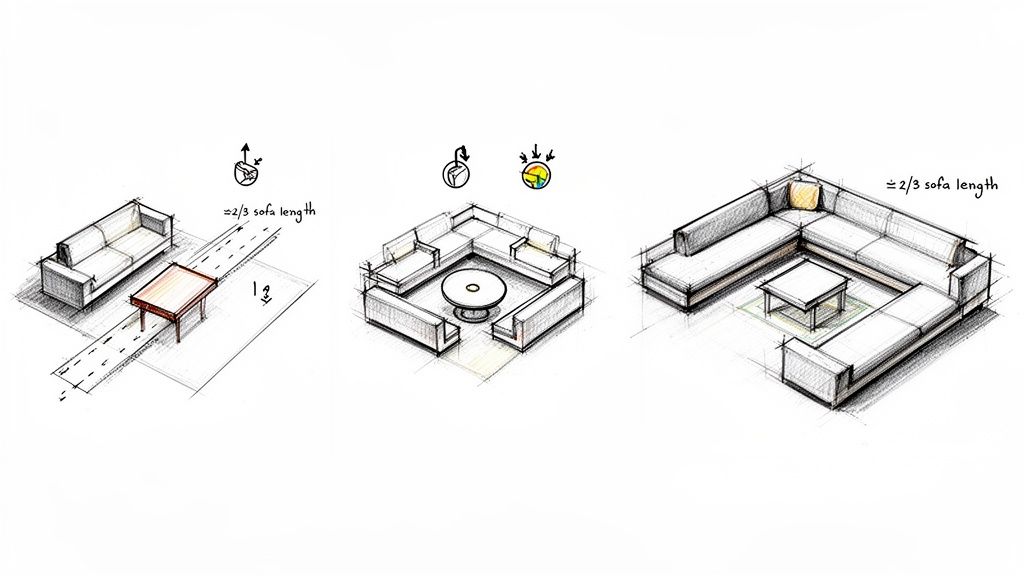
    First, let’s talk scale. A reliable rule of thumb is that your coffee table should be about two-thirds the length of your sofa. This simple ratio creates a satisfying visual balance. If the table is much longer, it can start to dominate the conversation area; if it's much shorter, it can feel like an afterthought.

    Next up is height. For a comfortable setup, find a table that is either the same height as your sofa cushions or just one to two inches lower. This keeps the sightlines across your room open, and more importantly, it makes it easy to reach for your drink or the remote without straining. A table that’s too high or too low can feel awkward to use.

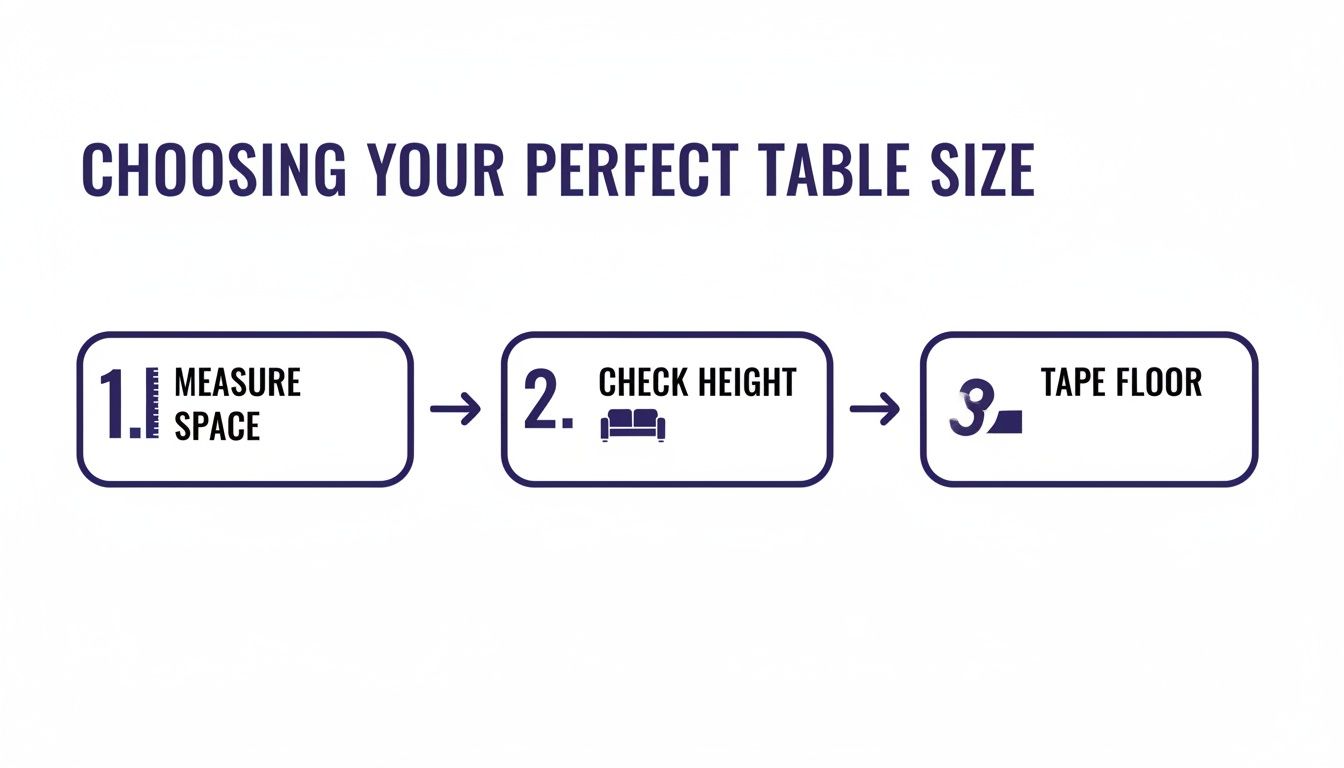
    A diagram outlining three steps to choosing the perfect table size: measure space, check height, and tape floor.

    These core measurement rules are your foundation. To make it even easier, here’s a quick-glance table to keep handy.

    Essential Coffee Table Measurements at a Glance

    This quick reference guide breaks down the standard rules for sizing and placing a coffee table to ensure it fits your living room well.

    Measurement Rule Recommended Distance/Height Why It Matters
    Clearance From Sofa 14 to 18 inches Provides enough legroom while keeping items within easy reach.
    Table Length vs. Sofa Two-thirds the length of your sofa Creates visual balance and prevents the table from overpowering or underwhelming the seating area.
    Table Height vs. Sofa Same height as sofa cushions or 1-2 inches lower Ensures a comfortable reach from a seated position and maintains an open, uncluttered sightline.
    Clearance From Other Furniture At least 30 inches Allows for clear, comfortable walkways and keeps the room from feeling cramped.

    Following these guidelines will help you find a coffee table that not only looks great but also works seamlessly with your lifestyle and existing furniture.

    Visualize It in Your Room

    Got your ideal measurements? Great. Now, go grab a roll of painter’s tape. Mark out the length and width of your potential coffee table right there on the floor. Don’t just look at it—live with that taped-off rectangle for a day or two. It’s a simple trick, but it gives you a real-world feel for the table’s footprint.

    Pro Tip: Walk around the taped area just like you normally would. Do you find yourself having to squeeze by to get to the couch? Does it block a main path through the room? This is a useful way to test your layout and make sure your new table enhances your space instead of getting in the way.

    The global coffee table market is growing—expected to hit $4.85 billion in 2025—which means homeowners have more choices than ever. For shoppers here in North Georgia, that translates to a wide variety of sizes, styles, and materials to fit any home. You can read more about this market growth on Archive Market Research. With so many options available, taking the time to measure your own space first is the most important step you can take to narrow the field and find a good fit.

    Finding the Right Shape for Your Room's Layout

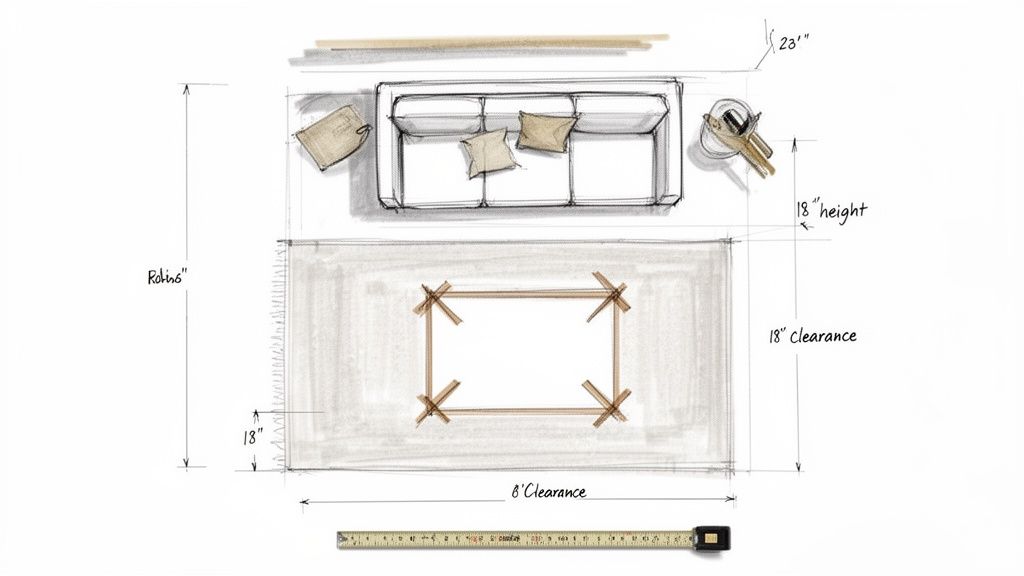
    Top-down sketch of a living room layout showing sofa, rug, coffee table, and furniture dimensions.

    Once you've nailed down the ideal size for your coffee table, the next big question is shape. This is about more than just looks—it’s about how your family and guests move through the room. The right shape guides traffic and works with your seating, making the space feel intuitive. The wrong one can turn your living room into an obstacle course.

    Think about a common living room setup: a standard sofa facing a TV or fireplace. For this kind of straight, linear arrangement, a rectangular or oval coffee table is almost always a good fit. It echoes the long lines of the sofa and gives everyone sitting on it a place to set their drink. An elongated shape also keeps the pathways on either side clear, so nobody's tripping on their way out of the room.

    Matching Shape to Seating

    Your seating arrangement is your best clue for choosing the right table shape. Different layouts just feel better with certain shapes anchoring them.

    • For Traditional Sofas: Stick with a rectangular or oval table. It keeps the proportions right and ensures the surface area is useful for everyone.
    • For Sectionals and U-Shaped Seating: This is where a square or round coffee table really shines. It nestles nicely into the L-shape of a sectional, creating a central hub that’s easy to reach from any seat.
    • For Conversational Layouts: If you have two sofas facing each other or a sofa with a pair of chairs, a large round or square table can be a great choice. It fills that central space and visually ties all the separate pieces together into one cozy gathering spot.

    A quick but important tip for those with little ones: safety and flow are huge. Round and oval tables don't have sharp corners, making them a more forgiving choice for homes with toddlers running around.

    You're really looking to create a nice visual conversation between your sofa and your coffee table. A structured rectangular sofa, for instance, can be beautifully softened by the gentle curves of an oval table. On the other hand, a big, cozy sectional often feels more grounded and complete with a solid square table at its center.

    Creating Visual Balance and Flow

    Take a minute to think about how people actually walk through your living room. Is there a main path that cuts right through the middle of everything? If so, a table with softer edges, like a round or oval one, can make a huge difference. These shapes encourage movement around them instead of creating a hard stop.

    For example, in a long, narrow room where people are always walking past the sofa to get to another part of the house, an oval table gives you the surface area you need but with rounded ends that are much easier to navigate around. It’s a subtle detail, but one that makes the room feel less cramped day in and day out.

    At the end of the day, the shape you pick helps set the tone for the whole room. The sharp, clean lines of a square or rectangular table tend to give off a more formal, structured vibe. In contrast, the soft curves of a round or oval table almost always create a more relaxed, casual, and inviting atmosphere. There's no substitute for seeing it in person, which is why a trip to a showroom can be so helpful to really get a feel for how different shapes and styles interact.

    Choosing Materials That Match Your Lifestyle

    Diagrams showing optimal coffee table placement and sofa arrangements for living spaces.

    A coffee table's material is really its personality. It sets the tone for the room's look and feel, but maybe more importantly, it dictates how much you'll have to fuss over it. The goal is to find a material that fits your real life, not one that just adds another chore to your list.

    Let's be honest for a second. Is your living room a strict "no-drinks-without-a-coaster" zone, or is it more of a relaxed, kick-your-feet-up kind of space? Answering that question will point you toward the right choice faster than any design trend.

    Wood: The Classic for a Reason

    Solid wood is a timeless choice, and for good reason. It brings a natural warmth and texture to a room, grounding the space with an organic feel you just can't fake. Woods like oak, walnut, and maple are incredibly durable and can stick around for decades with a little TLC.

    But, you do have to be mindful. Wood is vulnerable to those dreaded water rings from a sweating glass of iced tea and can get scratched by keys or laptops. While most modern wood tables have protective finishes, they’ll still thank you for using coasters and wiping them down gently. If you're open to pre-loved pieces, knowing how to choose second-hand furniture can open up a world of unique, character-rich wood tables.

    Here's a Pro Tip: If you have an active household with kids or pets, a rustic or reclaimed wood table is your friend. The existing imperfections and distressed finish are brilliant at hiding new dings and scratches. In fact, a little extra wear and tear often just adds to its character.

    Metal and Glass for a Lighter Touch

    If your style leans more modern or industrial, metal and glass are great options. They help create a sense of openness and light, which is a huge plus in smaller living rooms. A glass top lets you see the beautiful rug underneath, making the whole room feel bigger.

    The trade-off, of course, is the upkeep. Glass shows every single fingerprint, smudge, and speck of dust, so it needs frequent cleaning to look its best. Metal frames are tough but can be scratched, and some finishes might show wear over time.

    Upholstered Ottomans and Statement Stone

    Upholstered ottomans are an amazing, family-friendly alternative to a hard-surfaced table. They're soft, have no sharp corners (a win for homes with little ones), and can easily double as extra seating or a comfy footrest. We always recommend looking for one in a performance fabric to make clean-up a breeze.

    For a truly bold and sophisticated look, you can't beat stone. Materials like marble, travertine, or concrete make a powerful statement. They're incredibly durable when it comes to scratches, but they can be porous and stain easily from spills like red wine or coffee. You'll likely need to seal the surface regularly to protect your investment.

    Lately, sustainability has also become a huge factor for shoppers. Data shows that over 70% of consumers are making sustainability a priority when buying home furnishings. This shift means that here in North Georgia, we're seeing a wonderful variety of tables made from reclaimed wood, recycled metals, and other eco-friendly materials. To learn more about this trend, you can discover more insights about coffee table trends on JMDI Furniture's blog.

    Thinking Beyond the Surface With Smart Features

    While it’s easy to get caught up in style, shape, and material, the real magic of a modern coffee table is how it solves everyday problems. These days, a coffee table can be one of the hardest-working pieces in your living room, going way beyond just a spot to set your drink.

    To find the right one, you have to get honest about how you really use your space. Is it command central for family game nights? Your quiet corner for morning coffee and the newspaper? Does it have to double as a home office a few days a week? The answers to those questions will point you toward features that genuinely make your life easier.

    Do You Need a Place for Everything?

    Let's face it, clutter happens. Remote controls, magazines, charging cables, and the kids' latest favorite toys can stage a takeover of any living room. If that sounds painfully familiar, a coffee table with built-in storage is less of a want and more of a need.

    • Tables with Drawers: These are perfect for hiding away all those small odds and ends you need close by but don't want to look at—think remotes, coasters, pens, and charging cords.
    • Tables with Open Shelving: A lower shelf is a great spot to stack a few of your favorite art books, place a decorative basket for magazines, or keep a cozy throw blanket within arm's reach.
    • Ottomans with Hidden Storage: For the ultimate clutter-busting solution, you can't beat a storage ottoman. Just lift the top, and you've got a spacious compartment ready to swallow up board games, extra pillows, or toys in an instant.

    Choosing a table with the right kind of storage transforms it from a piece of furniture you just have to an active tool that helps you stay organized. It’s a simple change that makes a huge difference in keeping your living space tidy and relaxing with almost zero extra effort.

    Tables That Work Harder for You

    Your living room probably wears a lot of different hats, and your coffee table should be able to keep up. Innovative, functional designs can be a total game-changer, especially for busy households. Some people are even taking this a step further by looking into the best smart home devices to see how technology can add even more convenience to their living spaces.

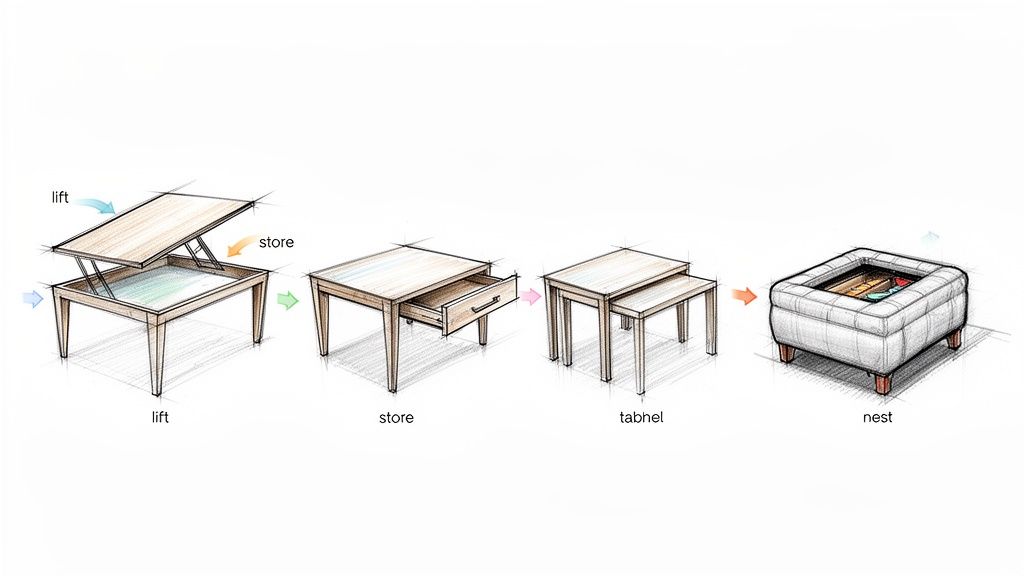
    A lift-top coffee table is a perfect example of this in action. Do you ever find yourself eating dinner on the couch or trying to work on your laptop? These tables are incredible. The top lifts up and pulls toward you, creating an elevated surface at a comfortable height, saving you from hunching over. In just a few seconds, your sofa area becomes a more usable desk or dining spot.

    If you're working with a smaller room or just need your space to be more flexible, nesting tables are a brilliant choice. You get two or more tables of varying sizes that tuck neatly together to save floor space. Then, when guests come over, you can pull them apart and give everyone their own spot for a drink and a plate of appetizers.

    To help you decide which features might be right for your home, here’s a quick comparison of the most popular functional coffee table types.

    Comparing Coffee Table Features for Your Needs

    Feature Type Best For Key Considerations
    Lift-Top Working from home, dining on the sofa, or crafting. The mechanism should be smooth and sturdy. Make sure the height is comfortable for you when seated.
    Hidden Storage Families with kids, anyone who hates clutter, storing blankets and games. Consider drawers vs. an open cavity. Drawers are better for small items; open storage is great for bulkier things.
    Nesting Tables Small spaces, frequent entertainers, and flexible layouts. Look for a stable design when nested and separated. Ensure the smaller tables are easy to pull out and move around.
    Open Shelving Displaying books or decor, easy access to frequently used items. Can look cluttered if not styled intentionally. Might require more frequent dusting than enclosed storage.

    Ultimately, the key is to look past the aesthetics for a moment and really think about how a coffee table can support your daily life. When you match these smart features to your family’s specific needs, you’ll end up with a piece that doesn't just look amazing—it makes your home function better, too.

    Making a Confident Choice in North Georgia

    Four sketch illustrations demonstrate various functional coffee table designs, including lift-top, storage, nesting, and ottoman with storage.

    You’ve done the homework—you measured your space, considered your family's daily grind, and maybe even bookmarked a few favorites online. So, what’s the final step in how to choose a coffee table? Seeing your top contenders in person.

    Online photos are a great starting point, but they can’t always capture the true color, texture, and sheer presence of a piece of furniture. Visiting a showroom is where you move from theory to reality. It lets you get a real feel for the coffee table’s quality and scale in a way a screen just can’t replicate. You can double-check the height, test the stability, and see how the finish really looks under normal lighting.

    What to Look For in a Showroom

    When you’re on the floor, it’s your chance to play detective and spot the signs of quality craftsmanship. Don’t be shy about it! This is your opportunity to make sure the piece is built to last.

    Here are a few things our own furniture experts always check:

    • Give it a nudge. Gently push on the table to see if it wobbles or feels flimsy. A well-built table should feel solid and grounded.
    • Inspect the details. If it’s a wood table, ask if it’s solid wood or a veneer. Look closely at the joints and connections for any gaps or sloppy construction.
    • Work the features. If the table has drawers, slide them open and shut. Do they glide smoothly? For a lift-top, test the mechanism to make sure it operates easily and feels secure when raised.

    This is also the perfect time to ask questions. Our staff can give you the lowdown on the materials, the durability of the finish, and the best way to care for your new table so it looks great for years.

    Visiting a showroom bridges that critical gap between your research and your final decision. It’s where you can confirm that the table you like online is the table you’ll love in your home.

    Bringing Your Vision Home

    This final, hands-on step is what helps you make a confident investment. By combining your careful planning with the real-world experience of seeing and touching the furniture, you all but eliminate any future surprises or buyer's remorse.

    So, take your time in the showroom. Find a nearby sofa and sit down to see how the table feels from a natural vantage point. Try to visualize it with your rug, your decor, and your family gathered around it. This thoughtful approach ensures the coffee table you bring home is more than just a piece of furniture—it’s a great fit for your North Georgia lifestyle.

    Common Questions About Choosing a Coffee Table

    Even after doing all your homework, a few last-minute questions always seem to surface right when you think you've found the right one. Don't worry, it happens to everyone. Think of this as your final check, where we give straight answers to the most common questions we hear on our showroom floors every single day.

    Should My Coffee Table Match My End Tables?

    This is easily one of the questions we get asked the most. The short answer? No, they absolutely don’t have to match. In fact, your room will probably look a lot more interesting and professionally designed if they don't. The goal is coordination, not a carbon copy.

    Instead of matching, look for a common thread that ties the pieces together. For example:

    • Material: Try pairing a solid oak coffee table with end tables that have oak legs but maybe a different top, like metal or stone.
    • Finish: A dark wood coffee table can look great with black metal end tables. The shared dark tones create a connected, intentional feel.
    • Shape: You could use a round coffee table to soften the lines of two square end tables. This contrast adds visual balance to the room.

    Ultimately, you want a space that feels curated and collected over time, not like you bought everything from a single page in a catalog.

    What’s the Best Coffee Table for a Home With Kids or Pets?

    When your living room doubles as a playground or a dog park, durability and safety are the name of the game. For homes with toddlers, an upholstered ottoman is a fantastic choice. No sharp corners for little heads to bump, and it provides a soft surface for them to play on.

    Another great option is a round or oval wood table. Again, no sharp corners means more peace of mind for you. If you go this route, look for a rustic or distressed wood finish. It's incredibly forgiving and will hide the inevitable scratches from toys or pet claws—in fact, a few dings and scrapes often just add to its character.

    Our Recommendation: Always look for tables with a tough, protective finish that can handle spills and daily use. When in doubt, a solid, heavy piece will always hold up better in a busy home than something more delicate.

    How Do I Know if a Coffee Table Is Good Quality?

    It's easy to get distracted by a table's looks, but a few simple checks can tell you if it’s built to last. When you're in the showroom, don't be afraid to get a little hands-on.

    First, give the table a little shove. A quality piece should feel solid and stable and shouldn't wobble or creak. Next, check out the moving parts. If it has drawers, pull them out and push them back in. Do they glide smoothly, or do they stick and rattle?

    For any wood table, ask if it's made from solid wood or a veneer. Solid wood is almost always more durable and has the huge advantage of being able to be refinished years down the road. Lastly, run your hand over the finish. It should feel even and smooth, with no rough spots or drips. These small details are the biggest clues to good craftsmanship and tell you a lot about how that table will stand up to time.


    Ready to see how the right coffee table can complete your living room? The knowledgeable team at Woodstock Furniture & Mattress Outlet is here to help you explore a great selection of styles, materials, and functional options in person. Visit one of our North Georgia showrooms today!