Tag: home decor ideas

  • 8 Brown Bathroom Ideas for a Warm, Modern Home

    8 Brown Bathroom Ideas for a Warm, Modern Home

    Could brown be the color that makes your bathroom feel warmer, calmer, and more finished without locking you into a style that dates fast?

    It often can. Brown is one of the most flexible color families in bathroom design because it covers a wide range of looks. Taupe can feel soft and quiet. Walnut can read refined and classic. Mocha can add depth. Stone-based browns often bring in the grounded feel many North Georgia homeowners want, especially in homes with limited natural light, wooded views, or more traditional architecture.

    The part that confuses people is that "brown" is not one decision. It is a set of smaller choices. Shade, undertone, texture, lighting, and the amount you use all change the result. A brown bathroom can feel airy like a spa or rich like a boutique hotel. The difference usually comes down to balance, much like choosing the right wood stain for a floor. The color family may stay the same, but the finish and surrounding materials decide whether it feels fresh or heavy.

    That is why this guide is built as a planning tool, not just a gallery of pretty rooms. Each idea focuses on a specific design problem to solve, such as how to keep brown from feeling dark, what materials pair well with it, where storage should work harder, and when a budget-friendly finish can give you the same effect as a premium one. If you want a broader starting point for palettes before narrowing in on brown, these curated bathroom colour design ideas can help you compare direction and mood.

    Before picking tile or paint, it helps to test the room itself. online bathroom planning lets you check layout, sightlines, and fixture placement first, so your color choices fit the bathroom you have. That matters in North Georgia, where an older hall bath in Canton, a brighter primary bath in Woodstock, and a cabin-style guest bath farther north may all need a different brown strategy.

    1. Warm Brown and Cream Neutral Foundation

    If you want brown to feel easy, start with cream.

    A warm brown and cream palette is one of the most forgiving brown bathroom ideas because it gives you contrast without harshness. The brown adds depth. The cream keeps the room open and calm. Together, they create a backdrop that works with traditional vanities, simple tile, or more furniture-like pieces.

    When brown tile is part of the plan, pairing it with cream, ivory, or taupe on nearby walls is a common design move because it balances the weight of the tile and keeps the room feeling open and spa-like, as noted in Edward Martin's guide to working with brown bathroom tiles. That's especially useful in North Georgia homes where bathrooms may have limited natural light or older layouts.

    How to Keep It From Feeling Heavy

    A warm tan wall with a cream vanity top often feels lighter than a dark brown wall with dark cabinetry. The mix matters more than the label on the paint chip. In a hall bath, for example, soft beige-brown walls with cream trim and a white sink can feel relaxed instead of muddy.

    Practical rule: Keep the ceiling and trim light when the walls lean medium or dark brown.

    This is also a good setup if you're unsure about undertones. Warm browns can shift throughout the day, so test samples beside your tile, countertop, and lighting. Morning light may make one shade look sandy, while evening light can pull it red or gray.

    A Good Real-World Version

    Try this combination in a guest bath:

    • Walls: Warm taupe or mocha paint in a matte finish
    • Countertop: Cream quartz or cream-toned stone look surface
    • Vanity: Natural oak or medium walnut
    • Hardware: Bronze or brushed nickel
    • Trim: Soft white

    If you'd like more ideas on coordinating warm neutrals, curated bathroom colour design ideas can help you compare similar palettes before you commit.

    2. Brown and White Subway Tile Contrast

    Subway tile keeps brown from taking over the room.

    That simple contrast is why this idea works so well. Brown tile on the lower wall or as a shower accent gives the bathroom warmth and identity, while white subway tile above it keeps the look familiar and clean. If you like classic bathrooms but don't want them to feel cold, this is one of the most practical brown bathroom ideas to consider.

    A stylish bathroom interior design sketch featuring brown subway tiles, a modern sink, and gold hardware fixtures.

    A farmhouse guest bath might use chocolate subway tile as wainscoting with white tile above. A more contemporary version might use warm tan subway tile in the shower niche or vanity backsplash while the rest of the walls stay bright.

    Small Decisions That Matter

    The transition height changes the whole look. If the brown tile stops too low, it can feel accidental. If it cuts at a natural visual line, often near vanity height or slightly higher, the room looks more intentional.

    Grout deserves more thought than people give it. Darker or tone-on-tone grout usually hides everyday wear better than bright white grout, especially around splash zones and lower walls.

    • For family bathrooms: Choose grout that won't show every mark.
    • For smaller bathrooms: Let white take up more wall space than brown.
    • For traditional homes: Stack the subway tile in a classic layout and keep fixtures simple.

    White and brown don't compete. They balance each other.

    This style also works well if you're remodeling in phases. You can tile one area now, then update paint, mirrors, and lighting later without reworking the whole room.

    3. Natural Brown Stone and Tile Finishes

    Brown gets more interesting when it isn't perfectly uniform.

    Natural stone and stone-look surfaces bring variation that flat paint can't. Travertine, slate, limestone-look porcelain, and other earthy tiles add movement through veining, texture, and small shifts in tone. That variation helps brown feel organic instead of flat.

    A luxurious modern bathroom featuring a white soaking tub against a textured travertine stone wall with natural light.

    In a primary bath, a travertine-look wall behind a soaking tub can create a quiet focal point. In a smaller powder room, even one stone-look backsplash or floor tile can do the job without overwhelming the room.

    Budget Versus Premium

    Real stone has a distinctive look and feel, but it asks more from you. It needs sealing, thoughtful cleaning, and careful use in wet areas. Porcelain and engineered surfaces usually ask less while still giving you much of the same visual warmth.

    For many North Georgia households, that tradeoff matters more than the prestige of the material. If kids share the bathroom or guests use it often, easier maintenance may be the better choice.

    • Premium route: Natural travertine or slate with a honed or brushed finish
    • Lower-maintenance route: Porcelain tile with stone veining and matte texture
    • Safer shower floors: Tumbled, brushed, or smaller-format tile with more grip

    Stone looks warm because it carries several browns at once, not just one.

    If you choose a strong stone pattern, let the other finishes stay quieter. Simple mirrors, plain wall color, and restrained hardware usually work better than trying to add another dramatic surface.

    4. Brown Wood Cabinetry and Vanity Foundation

    What if the easiest way to bring brown into a bathroom is not on the walls at all, but in the piece you use every day?

    A wood vanity often does the heavy lifting. It gives the room a warm center, much like a dining table grounds a kitchen eating area. That makes brown feel intentional instead of scattered. Walnut reads richer and more modern, oak feels lighter and more relaxed, and cherry-toned finishes add a more traditional note.

    This approach solves a common problem in North Georgia bathrooms. Many homes have bathrooms with limited natural light, and full brown walls can make those rooms feel smaller. A brown vanity keeps the warmth at eye level and below, while the surrounding walls, counters, and mirrors can stay light enough to bounce light back into the room.

    The vanity is also where function and style meet. You are choosing storage, sink space, countertop material, and daily durability all at once. That is why this idea works well as a planning framework, not just a look. If your current bathroom feels cold, cluttered, or too plain, the right cabinet style can address all three.

    How to Choose the Right Wood Vanity

    Start with the size and layout of the room. In a tight hall bath, a floating vanity or furniture-style base with visible floor underneath usually feels less bulky. In a primary bath, a wider double vanity can make the room feel balanced and give each user a defined zone.

    Then look at undertones. This is the part many homeowners second-guess. A vanity stain does not need to match the floor exactly, but the warmth level should make sense together. If the floor tile has gray-beige or taupe notes, a very red cherry finish may look out of place. If the floor leans warm, medium oak or walnut usually blends more naturally.

    Moisture resistance matters too. Bathroom cabinetry needs sealed finishes, stable construction, and hardware that holds up to frequent use.

    • Budget option: Stock oak or maple vanity with a medium stain and quartz top
    • Premium option: White oak or walnut vanity with dovetail drawers, soft-close hardware, and a furniture-grade finish
    • For small bathrooms: Choose drawers over deep cabinets if you want easier everyday storage
    • For family bathrooms: A quartz countertop is usually easier to maintain than marble or softer stone
    • For better lighting: Pair brown cabinetry with a white or cream counter and good mirror lighting so the vanity area does not read too dark

    If you want examples of layouts, sink configurations, and storage ideas before choosing a style, Trademaster Construction bathroom remodeling offers useful vanity-focused inspiration.

    One more practical tip. Brown wood looks best when nearby finishes give it room to stand out. A simple backsplash, quiet wall color, and mirrors with clean lines usually work better than competing with heavy grain, busy counters, and ornate lighting all at once.

    5. Brown Patterned Tile and Geometric Design

    Solid brown can feel calm. Patterned brown can feel alive.

    This approach works when you like the warmth of brown but want more movement, contrast, or personality. Geometric tile, Moroccan-inspired motifs, mosaics, and mixed-tone surfaces can turn brown into a feature instead of just a background color.

    A shower wall in a brown and cream geometric tile can bring energy to an otherwise simple bathroom. A powder room floor with a repeating brown pattern can add character without demanding a full remodel. Pattern is especially useful when the room lacks architectural detail.

    Where Pattern Helps Most

    Use it where the eye naturally lands. Behind the vanity, inside a shower surround, or underfoot in a powder room are all smart places. Covering every wall with a patterned tile often makes a small bathroom feel busy.

    This is also the section where scale matters. A large-format pattern may feel calm in a spacious primary bath but oversized in a narrow guest bath. Smaller repeated patterns usually behave better in tighter rooms.

    • For a bold focal point: Put the patterned tile on one wall only
    • For balance: Keep nearby walls plain and fixtures simple
    • For installation: Hire someone who's comfortable laying out repeating patterns cleanly

    If you're gathering ideas for vanity walls and accent surfaces, Trademaster Construction bathroom remodeling offers useful visual comparisons for feature-area planning.

    The busier the tile, the simpler the rest of the room should be.

    A practical example would be a cream bathroom with one brown patterned shower wall, plain bronze hardware, and a solid wood vanity. You still get personality, but the room stays readable.

    6. Brown and Brass or Bronze Metal Fixture Pairing

    Brown rarely looks finished until the metal is right.

    Warm metals like brass, bronze, and oil-rubbed bronze usually sit naturally beside brown because they share some of the same visual warmth. Instead of fighting the palette, they deepen it. That's why this pairing shows up so often in bathrooms that aim for a refined, hotel-like feel.

    A medium-brown vanity with brushed brass pulls can feel modern and polished. A tan tile bathroom with oil-rubbed bronze faucets can feel more classic. Both work, but they create different moods.

    Keep the Finish Story Consistent

    Mixing too many metal tones can make a warm bathroom feel unsettled. If the faucet is brushed brass, the mirror frame, sconces, and hardware should usually stay in that same family or at least not clash with it.

    The color of the light matters too. Warm lighting tends to flatter both brown surfaces and warm metals. Cooler bulbs can make the room feel sharper and less cohesive.

    Design guidance also recommends restraint with the brown palette itself. The practical "Rule of 3" suggests limiting the room to no more than three distinct brown shades so the space stays calm rather than visually crowded, as explained in Sanctuary Bathrooms' brown color ideas inspiration.

    A Reliable Pairing Formula

    • Light brown walls: Pair with brushed brass for a softer upscale look
    • Medium wood vanity: Pair with bronze for a grounded, classic feel
    • Dark chocolate tile: Pair with simpler metal shapes so the room doesn't feel too formal

    Order or borrow finish samples when you can. Brass can read yellow, muted, antique, or almost champagne depending on the brand and lighting. Brown shifts too, so the combination should be tested together, not chosen separately.

    7. Brown Accent Wall with Neutral Surrounding Surfaces

    What if you want the warmth of brown without making a small bathroom feel closed in?

    An accent wall solves that problem. It gives you one place to bring in depth and character while the surrounding walls, floor, or vanity keep the room bright. In design terms, it works like a visual anchor. Your eye lands there first, so the space feels intentional instead of scattered.

    This approach is especially useful in North Georgia homes where guest baths and older primary bathrooms can have limited natural light. A full room of medium or dark brown may feel heavier than expected. One brown focal wall usually gives you the mood people want from brown, but with less risk and more flexibility if you update the room later.

    Why an Accent Wall Works

    Brown has visual weight. That is not a bad thing. It just means the color tends to feel stronger and more grounding than white, cream, or pale gray.

    Using that weight on one surface is often easier to control. The neutral surfaces around it reflect more light, make cleaning details easier to see, and keep the room from feeling overly dark. If you are unsure how much brown your bathroom can handle, this is often the safest testing ground.

    Where to Place It

    The best accent wall is usually the one the room already wants to highlight.

    • Behind the vanity: Good for creating a strong focal point around the mirror and sconces
    • Behind the tub: Helpful when a plain wall needs more presence
    • Inside the shower or on the back shower wall: Adds depth, especially with tile, without changing the whole room

    If the room is narrow, placing the brown on the far wall can also make the layout feel more balanced. If the ceiling is low, keep the side walls light so the room does not feel compressed.

    Best Material Choices by Budget

    Paint is the easiest budget option. A warm cocoa, taupe-brown, or mushroom-brown wall behind the vanity can change the room quickly.

    Tile is the more durable upgrade, especially for shower areas. Porcelain in matte brown, walnut-look tile, or a stacked vertical tile in coffee tones gives texture as well as color. For a premium version, wood-look porcelain slabs or natural stone in brown and cream can create a custom feel while still tying into neutral surfaces.

    Wallpaper can work too, but choose it carefully. In a bathroom, subtle pattern usually ages better than a busy print.

    How to Keep It Balanced

    The surrounding finishes do most of the balancing work. White quartz counters, soft cream paint, light greige tile, and simple mirrors help the brown wall stand out without making the room busy.

    Storage matters here too. If the accent wall sits behind an open vanity packed with products, the focal point gets lost. A recessed medicine cabinet, closed vanity storage, or floating shelves with just a few organized items will keep the wall readable. Good lighting matters just as much. Warm white bulbs help brown look rich and grounded rather than flat or muddy.

    A simple rule helps. If the accent wall has strong color or texture, let the other surfaces stay quieter.

    That is what keeps the room polished.

    A Practical Planning Formula

    Use this framework if you are deciding whether an accent wall fits your bathroom:

    • Small, darker bathroom: Choose one medium brown wall and keep the other surfaces light
    • Average hall bath: Use paint for the accent wall and put the budget into better lighting and storage
    • Primary bath remodel: Use brown tile or stone on the focal wall, then balance it with neutral flooring and counters

    For homeowners who like brown but do not want to commit to it everywhere, this is often the smartest middle ground. You get warmth, contrast, and a clear focal point without asking every surface in the room to do the same job.

    8. Brown Textiles and Accessories Layering

    If permanent brown still feels like a big commitment, start with fabric and accessories.

    This is one of the easiest brown bathroom ideas for renters, first-time decorators, or anyone refreshing a bathroom on a tighter budget. Brown towels, bath mats, shower curtains, baskets, and even artwork can warm up a plain white or cream bathroom fast, without tile work or paint.

    A neutral apartment bathroom with white walls and a simple vanity can feel more settled with camel towels, a cocoa bath mat, and a linen shower curtain in a warm taupe. In a family home, those same changes can help test whether brown feels right before you invest in larger materials.

    How to Make Accessories Look Intentional

    The mistake people make is choosing one flat brown and repeating it everywhere. Better results usually come from layering a few related tones. Think sand, mushroom, walnut, and chocolate in different proportions.

    This approach also solves a real problem in resale prep. Brown bathrooms often get discussed in terms of color alone, but staging matters too. Guidance on brown bathroom decorating notes a gap in practical resale-specific advice, especially around using lighting, warm-toned textiles, and neutral-framed mirrors to make brown bathrooms feel brighter and more current, as discussed in Tip Top Furniture's brown bathroom decorating ideas.

    Soft goods can modernize a bathroom faster than many people expect.

    A Simple Layering Formula

    • Large item: One solid shower curtain or bath mat in a warm medium brown
    • Support pieces: Towels in lighter and darker related tones
    • Finishing touches: Wood tray, woven basket, or simple framed mirror

    If you're already updating nearby spaces, Woodstock Furniture & Mattress Outlet carries home décor items that can coordinate with brown bathroom textiles, which makes it easier to create a connected look from bath to bedroom or hallway.

    8-Point Comparison: Brown Bathroom Ideas

    Item Implementation complexity Resource requirements Expected outcomes Ideal use cases Key advantages
    Warm Brown and Cream Neutral Foundation Moderate, paint/tile/cabinet options, sample testing Low–Medium, paint or tile, possible lighting upgrades Cohesive, calming backdrop; versatile tone Whole-room schemes, spa-like bathrooms, flexible styles Timeless, hides minor stains, pairs with many finishes
    Brown and White Subway Tile Contrast Medium–High, precise tile work and grout choices Medium, tiles, grout, likely pro installation Clean, classic contrast; bright upper area, grounded lower Wainscoting, accent walls, traditional or contemporary baths Affordable, easy to clean, replaceable tiles
    Natural Brown Stone and Tile Finishes High, stone selection, sealing, specialist install High, costly materials, sealing, maintenance Luxurious, textured, unique natural appearance High-end renovations, spa bathrooms, feature floors/walls High-end aesthetic, durable when sealed, unique veining
    Brown Wood Cabinetry and Vanity Foundation Medium, cabinet selection, fit, moisture protection Medium–High, quality wood, finishes, proper ventilation Furniture-like focal point with ample storage Renovations needing storage, focal vanities, residential feel Anchors design, ages well, flexible with countertops/tiles
    Brown Patterned Tile and Geometric Design High, pattern planning, precise alignment, skilled installer Medium–High, specialty tiles, potential higher labor Dynamic, personality-rich surfaces that draw attention Feature walls, shower surrounds, eclectic or contemporary spaces Adds visual interest, masks marks, multi-tone depth
    Brown and Brass or Bronze Metal Fixture Pairing Low–Medium, selecting matching finishes, standard install Medium, higher-cost fixtures, order samples Cohesive warm aesthetic; curated, upscale finishings Final accents in renovations, cohesive metal palettes Warmer than chrome, hides spots, develops attractive patina
    Brown Accent Wall with Neutral Surrounding Surfaces Low, single-wall paint/tile or wallpaper Low–Medium, material for one wall only Focused statement without overwhelming space Small bathrooms, renters, incremental updates Flexible, less permanent, maintains sense of openness
    Brown Textiles and Accessories Layering Very low, purchasing and arranging textiles Low, towels, mats, shower curtains, seasonal updates Subtle warmth and depth; easy to refresh Renters, budget updates, testing color direction Non-permanent, inexpensive, highly flexible and seasonal

    Find Your Perfect Shade of Brown in North Georgia

    Which brown fits your bathroom, your light, and your home in North Georgia?

    The answer usually starts with the problem you are trying to solve. If the room feels cold, a warm taupe, mushroom, or walnut tone can add comfort. If it feels busy, a quieter brown with creamy undertones can settle it down. If the room already has a lot of visual weight from dark floors or cabinets, a lighter sandy brown often works better than a deep espresso.

    Brown works like wood stain selection. Two shades can look similar on a sample card and behave very differently once light hits them. A north-facing bathroom may make brown read cooler and flatter, while a bathroom with strong natural light can handle richer tones without feeling closed in. That is why testing the color next to your tile, countertop, and vanity finish matters more than choosing it in isolation.

    For many homeowners here, the best plan is to match the shade of brown to both the house style and the level of commitment you want. Newer suburban homes often look best with soft browns mixed with white, cream, or brushed metal finishes. Cabin-inspired or traditional homes can carry deeper wood tones, stone, and warmer bronze accents. In a small powder room, one brown feature such as a vanity or accent wall may be enough. In a larger primary bath, you may have room for layered browns through cabinetry, tile, and textiles.

    Budget matters too, and brown gives you more than one path. If you want a lower-cost update, paint, towels, a mirror frame, and a wood-toned vanity can shift the room quickly. If you are planning a longer-term remodel, tile, stone-look porcelain, quality wood cabinetry, and improved lighting give you a more finished result. The smartest choice is not always the most expensive one. It is the one that solves the room's weak spot first.

    Lighting is often that weak spot.

    Brown tends to look best with enough layered light to keep shadows from collecting in corners. A bathroom with overhead lighting only can make warm finishes look muddy. Adding vanity lighting at eye level, a brighter shower light, and a mirror that reflects natural light usually gives brown a cleaner, more intentional appearance. Storage plays a similar role. If counters stay cluttered, even a beautiful brown palette can feel heavy. Closed vanity storage, recessed niches, and a medicine cabinet help the color read as calm rather than crowded.

    North Georgia homes vary a lot, so there is no single correct shade. A compact hall bath may benefit from light oak, caramel, and cream. A primary suite with more square footage may support mocha cabinetry, stone-look tile, and brass or bronze fixtures. Older bathrooms that need a visual reset often respond well to one strong brown anchor, then lighter surrounding surfaces to keep the room open.

    If you'd like to see how different wood finishes and materials look in person, visit one of our North Georgia showrooms. Our experienced team is always here to help you pull your vision together.

    If you're comparing vanities, wood tones, mirrors, or coordinating décor for a bathroom refresh, Woodstock Furniture & Mattress Outlet is a helpful place to start. With North Georgia showrooms, knowledgeable staff, and a broad mix of home furnishings and accent pieces, the team can help you sort through real-world choices and find a look that fits your home, your layout, and your comfort level.


  • How to Choose an Accent Chair for Your Living Room: A Guide to Stylish Seating

    How to Choose an Accent Chair for Your Living Room: A Guide to Stylish Seating

    Finding the right accent chair for your home is less about some single, "best" option and more about discovering the perfect piece for your space, your lifestyle, and your personality. Is it a pop of color? A solution to a seating crunch? Or maybe just a cozy corner for you to claim as your own?

    How to Find the Right Accent Chair for Your Space

    This guide is designed to help you answer those questions with confidence. We're going to move beyond just showing you pretty pictures and really dig into the common hurdles and questions that pop up when you're furniture shopping. Our goal isn't to tell you what to buy, but to give you a solid framework for figuring out what you actually need.

    We get it. Staring at a showroom floor or endless online pages can feel overwhelming. You're probably wrestling with questions like:

    • How do I get a new chair to play nicely with my existing sofa?
    • What style won't swallow up my small living room?
    • Which fabrics can actually survive kids, pets, and Friday night pizza?
    • Where's the sweet spot between a chair that looks amazing and one you actually want to sit in?

    By tackling these questions head-on, we can get to the heart of what makes an accent chair a true win in a real-life home.

    Moving from Problems to Solutions

    An accent chair is so much more than just an extra seat. Think of it as a functional piece of décor—the final puzzle piece that pulls the whole room together. It can be the splash of color you've been craving, a new texture to soften the space, or an interesting shape that breaks up the monotony of your current furniture.

    A great accent chair has its own personality. It needs to complement what you already have, sure, but it should also be strong enough to stand on its own as a statement piece. The secret is often in the contrast—playing with different colors, shapes, or materials to create a look that feels intentionally layered and interesting.

    To get you feeling prepared, we'll walk through the different styles, materials, and crucial measurements you need to consider. We'll be honest about the pros and cons of different options so you know exactly what to expect.

    By the time you're done reading, you'll have the know-how to pick a chair that doesn't just look great on day one, but fits perfectly with how you actually live. And of course, our team is always here in our North Georgia furniture stores to help you see these options in person and find that piece that truly completes your living room.

    A Crash Course in Accent Chair Styles

    To find a suitable accent chair, you first have to know what you’re looking for. Stepping into the world of furniture can feel like learning a new language, but once you know the basics, you'll be able to spot exactly what you love—and what will work in your space.

    Every chair style was born from a specific idea, whether it was to create a cozy reading spot or to solve the puzzle of a small, tricky living room layout. Let's break down some of the most popular designs you'll find on showroom floors.

    The Classics: Timeless Comfort

    Some designs just never go out of style, mainly because they master the art of combining comfort with a look that lasts. Think of these as the foundational pieces that can truly anchor a room.

    • The Armchair: This is the quintessential accent chair, the one that probably pops into your head first. Defined by its supportive arms, it’s built for pure relaxation, making it a great partner for your sofa or a wonderful standalone piece for an empty corner.
    • The Club Chair: If a chair could give you a hug, this would be it. Known for its deep, plush seat and generous size, the club chair is all about creating an inviting, lounge-like vibe. Its low back and heavy frame give it a solid, grounding presence that works beautifully in a larger living room.
    • The Wingback Chair: This one has an interesting history. It was originally designed with a high back and signature "wings" to trap heat from a roaring fireplace. Today, that design creates a wonderful sense of enclosure, making it a great choice for a reading nook where you want to feel tucked away from the world.

    The chart below walks you through how your own personality and practical needs come together to find that "just right" chair.

    Flowchart illustrating how personality, style, and needs influence accent chair selection decisions.

    As you can see, the ideal choice always starts with you—your personal taste, your daily habits, and what your room is calling for.

    Smart Designs for Modern Living

    Let's be real, not every living room has space for a massive, commanding chair. Some of the most brilliant designs are the ones that pack a stylish punch in a smaller, more versatile package.

    • The Slipper Chair: This is your secret weapon for small spaces. A slipper chair is an upholstered, armless chair with a low profile. Its sleek, clean lines make it a fantastic solution for tight corners or any room where you need extra seating without adding a lot of visual weight.
    • The Swivel or Glider Chair: These chairs bring a little something extra to the table: motion. A swivel chair can effortlessly turn from the conversation to the TV to the window, making it incredibly practical in rooms that have to do it all. They're a game-changer for open-concept living areas.

    Choosing a chair style is about more than looks; it’s about deciding how you want to feel in your living room. A tall wingback feels like a private retreat, while an open slipper chair invites connection. Thinking about the mood you want to set is just as important as matching colors.

    While these styles have been staples for years, we're seeing a huge demand for chairs that meet very specific needs. For instance, the market for ergonomic office chairs and power lift recliners is growing. This trend tells us people are prioritizing comfort and accessibility more than ever. You can discover more insights about trending chairs and see what they say about how we live today.

    Choosing the Right Fabric for Your Lifestyle

    A chair's style might be what first catches your eye, but its fabric is what you'll live with day in and day out. The upholstery does more than just look pretty; it determines how the chair feels, how well it holds up, and how much cleaning it's going to need. This is where you have to be honest about your household and pick a material that fits your real life.

    Think of the fabric as the chair’s armor against spills, pets, kids, and general wear-and-tear. A material that looks pristine in a quiet, formal living room might not survive a week in a bustling family den. The secret is to match the upholstery to your lifestyle, not the other way around.

    Common Upholstery Options and Their Tradeoffs

    Let's break down some of the most popular fabric choices. Each one has its own personality and quirks, making it a better fit for some homes over others. Understanding these differences is the key to finding an accent chair you’ll love for years to come.

    • Natural Fibers (Cotton and Linen): People love these for their soft feel and breathability. Cotton brings a comfortable, casual vibe, while linen offers a more crisp, tailored look. The downside? Both can be prone to wrinkling and are magnets for stains unless they’ve been specially treated. They’re usually a good fit for rooms that don't see a ton of traffic.

    • Synthetics (Polyester and Microfiber): These are the workhorses of the upholstery world, engineered from the ground up for durability. Polyester is a champ at resisting fading, wrinkling, and stains. Microfiber, a special type of polyester, is famous for its incredible softness and how ridiculously easy it is to clean—making it a lifesaver for homes with children or four-legged family members.

    • Luxurious Textures (Velvet): Nothing adds a touch of sophistication and wonderful texture to a room quite like velvet. While old-school cotton velvet could be a bit delicate, modern performance velvets (often made from polyester) are surprisingly tough and can handle much more regular use.

    • Leather: A truly timeless choice. Genuine leather is known for its rugged durability and the beautiful, unique patina it develops as it ages. It’s simple to wipe clean and stands up to a lot, making it another fantastic option for busy households.

    Performance Fabrics: A Smart Choice for Active Homes

    For any home where life gets a little messy, performance fabrics are a game-changer. These aren't just regular textiles with a coating; they are engineered at a molecular level to repel stains and moisture. Spills literally bead up on the surface instead of soaking in, giving you precious time to grab a paper towel and clean them up.

    Think of performance fabrics as an insurance policy for your furniture. They give you the peace of mind to choose lighter colors or softer textures without constantly worrying that one little accident will cause a permanent stain.

    They might cost a bit more upfront, but the longevity and stress-free maintenance they offer make them one of the most practical choices you can make for a living room that sees a lot of action.

    What Lies Beneath: The Frame and Cushions

    The most beautiful, durable fabric in the world won't mean a thing if the chair itself isn't built to last. The parts you can't see—the frame and the cushion fill—are the unsung heroes of a quality accent chair. They are every bit as important as the upholstery when you're searching for a suitable accent chair for your living room.

    A solid frame, typically made from kiln-dried hardwood, provides the foundational strength. The kiln-drying process zaps moisture from the wood, preventing it from warping or cracking over time. This is a true hallmark of well-made furniture designed to last a generation.

    Likewise, the real comfort of your chair comes down to its cushions. High-density foam is a key feature to look for. It holds its shape far better and provides more consistent support than low-density alternatives that can flatten out and feel lumpy in no time. This is something you can really feel when you test a chair in person—visiting a showroom lets you not just see the fabric but also experience the quality of the construction hiding underneath.

    Mastering Scale and Proportion in Your Living Room

    Ever bought a piece of furniture that looked perfect in the store, only to get it home and realize it just… doesn't work? Getting the scale and proportion right is the secret to avoiding that awkward, "something's off" feeling in your living room.

    Think of your furniture pieces like a band. You need a lead singer (the sofa), a bass player (maybe a big coffee table), and some supporting artists. The accent chair is like the lead guitarist—it needs to complement the band, not overpower it or get lost in the background.

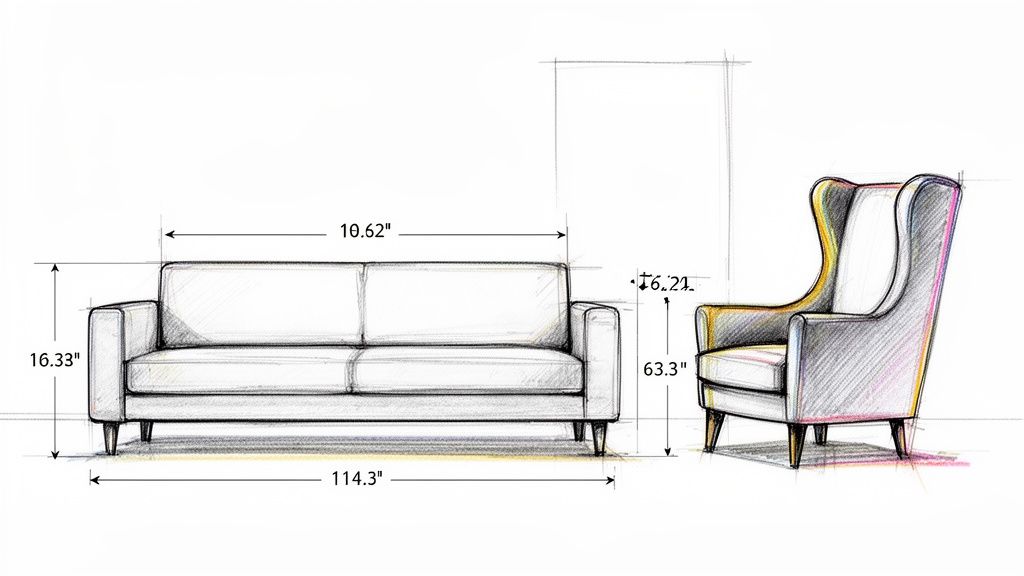
    Pencil sketch of a sofa and a wingback accent chair with detailed dimensions.

    This is where many people get tripped up. It's hard to visualize how a chair will actually feel in your space until it's there. A simple trick? Use painter's tape to outline the chair's dimensions on your floor. This helps you see how it affects traffic flow and interacts with your lighting and sightlines before you commit.

    Measure Twice, Buy Once: Your Pre-Shopping Checklist

    Before you even start browsing, grab a tape measure. It's an important tool for this process.

    First, get the basic length and width of your living room. Just as crucial, measure the width of every doorway, hallway, and staircase the chair will have to pass through on delivery day. Trust us, there's nothing worse than a beautiful new chair that can't make it through the front door.

    Here’s a quick-start guide:

    • Measure your room's dimensions and plan to leave at least 12 inches of walkway on each side of your main furniture grouping.
    • Jot down those door and hallway clearances so you don't have any delivery day surprises.
    • Sketching your layout on graph paper or using a digital room planner can give you a bird's-eye view and prevent costly mistakes.

    To make things even easier, here's a quick reference table to guide your choice based on your room's overall footprint.

    Accent Chair Size and Placement Guide

    Living Room Size Recommended Chair Style Key Consideration
    Under 150 sq ft Slipper Chair A low-profile design helps a small room feel more open and airy.
    150–300 sq ft Armchair or Club Chair Balance the chair's footprint with the need for clear walking paths.
    Over 300 sq ft Wingback or Swivel Go for something with more height and presence to match larger sofas.

    This table provides a great starting point for matching chair styles to your living room's scale.

    Avoiding Common Proportion Pitfalls

    The two biggest mistakes we see are chairs that are way too bulky or far too delicate for the room. A massive, overstuffed chair can swallow a small room and clog up traffic paths, while a tiny, leggy chair placed next to a hulking sectional can look like a forgotten toy.

    The goal is harmony.

    Balancing Visual Weight

    Think of your furniture's visual weight—how heavy it looks, not just what it actually weighs.

    If you have a large, low-slung sectional, pairing it with a tall, elegant wingback chair can add some much-needed height and contrast. On the flip side, if you have a sleek, modern sofa on thin legs, a more grounded club chair can provide a nice anchor.

    Consider each piece’s visual weight like balancing weights on a scale. You're not looking for perfect symmetry, but a pleasing sense of equilibrium.

    This simple concept can completely transform the feel of a room, creating a layout that's interesting and intentional. If you have a particularly tight space, check out these small room decorating ideas for more inspiration.

    Creating a Natural Rhythm

    A great room layout has a certain rhythm to it. You can create this by alternating between substantial and more delicate furniture forms.

    For example, try placing your robust sofa against one wall and a pair of sleeker, more open-armed accent chairs opposite it. This back-and-forth creates a dynamic flow. Leaving a little breathing room between each piece allows its individual shape and style to shine.

    We once helped a client with a 200-square-foot living room who brilliantly paired a deep, cozy club chair with a narrow slipper chair. This gave them plenty of comfortable seating without sacrificing clear pathways. By getting the scale right, they freed up nearly 20% more usable walking space, making the entire room feel larger and more functional.

    Using Room Planner Tools

    If you're more of a visual person, digital room planners can be a game-changer. These apps let you drop virtual furniture into a replica of your room, so you can play with different layouts and scales without breaking a sweat.

    • Many tools let you drag and drop furniture icons that are true to scale.
    • You can even upload a photo of your room to test out different colors and styles.

    Of course, nothing beats seeing and sitting in the real thing. When you visit our showrooms across North Georgia, our experienced staff can help you pull it all together. We can double-check your measurements, talk through style options, and help you find an accent chair that feels like it was made just for your home.

    How to Style Your Accent Chair for Maximum Impact

    You’ve found the one—the accent chair that fits your room's scale and your lifestyle. But now what? The next step is placement, and where your new chair lives is just as important as its style or fabric.

    This is what turns a simple piece of furniture into a core part of your living room's design. The right spot can create flow, encourage conversation, and add a layer of functional beauty to your space. An accent chair isn't just an afterthought; it’s a tool for shaping how your living room feels and functions. Think of it as creating a destination within the room.

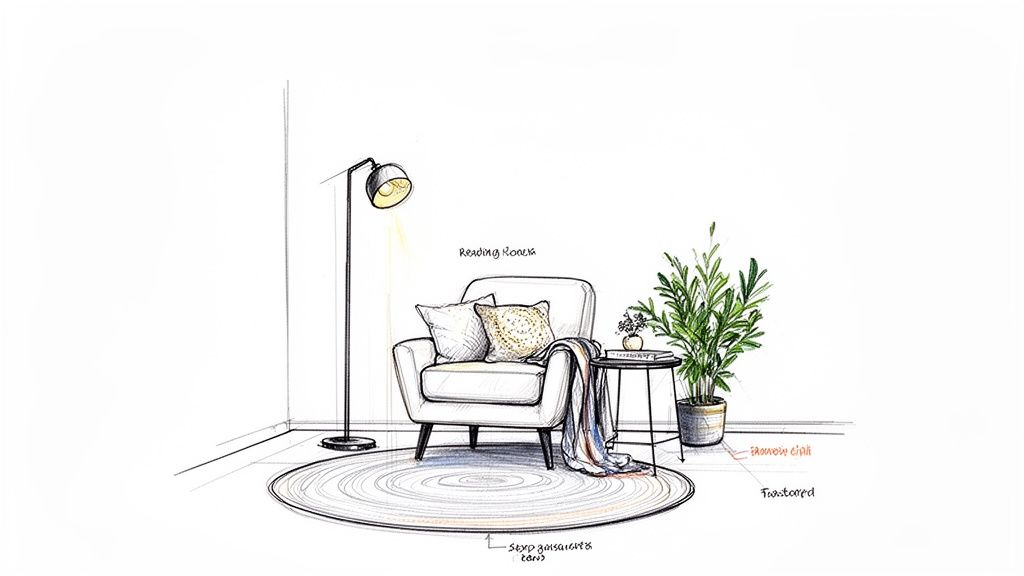
    A cozy sketch of a reading corner with an armchair, floor lamp, side table, and a plant.

    Creating Functional and Inviting Layouts

    The best layouts are born from how you actually live. Instead of just shoving a chair against an empty wall, think about creating a purposeful arrangement. Sometimes just walking through a showroom can spark an idea for what might work back at home.

    Here are a few practical ideas to get you started:

    • The Classic Reading Nook: There's a reason this is a timeless arrangement. Tuck your chair into a well-lit corner, add a small side table for a drink or a book, and finish it off with a floor lamp. This simple trio creates a cozy, self-contained retreat.
    • The Conversational Pair: Place a pair of matching or complementary accent chairs directly opposite your sofa. This creates a beautifully balanced and inviting conversation area, practically begging people to sit down and connect. A shared coffee table or ottoman in the middle ties it all together.
    • The Bold Focal Point: Use a single, striking chair to really make a statement. If you've got a chair in a vibrant color or an eye-catching pattern, let it shine! Place it where it can be appreciated, like flanking a fireplace or beside a large window.

    Accessorizing Your Chair to Tie the Room Together

    Accessories are the final touch, the glue that makes your new chair feel like it has always belonged there. This is your chance to connect its color, texture, and style to the rest of your decor for a polished, cohesive look.

    Think of throw pillows and blankets as bridges between your furniture pieces. They allow you to pull a color from your sofa, rug, or artwork and repeat it on your new accent chair, creating a subtle visual link that unifies the entire space.

    A patterned pillow can introduce a new design element, while a chunky knit throw adds a layer of irresistible texture. And if you're looking to protect a brand-new piece or give an older one a facelift, exploring options for fitted armchair covers can be an easy way to get an instant style update.

    The market for accent furniture—which includes chairs, tables, and bookcases—is always evolving, reflecting changes in how we all shop for those pieces that add personality to our homes.

    Making a Confident Final Decision

    Alright, you’ve done the homework. You’ve explored the classic styles, weighed the pros and cons of different fabrics for your lifestyle, and you’ve even got a handle on how to get the scale just right for your living room. Now it’s time to put all that knowledge to work. Choosing a suitable accent chair is really about trusting the research you’ve done and knowing what will genuinely fit your North Georgia home.

    Finding the right chair isn’t some mysterious process; it’s just a series of deliberate choices. By now, you’ve built a solid framework for making that final call. You know whether your space needs the cozy, enclosed feel of a wingback or the clean, space-saving profile of a slipper chair. You also get the real-world difference between a tough performance fabric for a house full of kids and pets, and a beautiful linen for a quiet reading nook.

    From Research to Reality

    Looking at chairs online is a great starting point, but a computer screen can only tell you so much. It can’t show you the true color of an upholstery fabric under your specific lighting, and it definitely can’t tell you how it feels to sink into the cushion after a long day. This is where seeing and feeling the furniture in person makes all the difference.

    The "sit test" is easily one of the most critical parts of your research. It's the only way to know for sure if a chair's seat depth, back height, and cushion firmness are a good match for you. What feels like a dream to one person might be all wrong for another.

    Visiting a showroom closes the gap between a picture on a website and knowing a piece is the one. It’s your chance to run your hand over the fabric, inspect the quality of the wood finish, and just get a feel for the chair's actual presence in a room.

    The Value of a Conversation

    Even with all this new information, you're bound to have a few specific questions pop up. This is where talking with an experienced, knowledgeable team member can really bring clarity. Instead of a sales pitch, you can get straight answers to practical questions like:

    • "Is it possible to treat this fabric for extra stain resistance?"
    • "Realistically, what’s the lifespan on this type of cushion fill?"
    • "How does the wood finish on this chair's legs compare to the oak on my existing coffee table?"

    This kind of one-on-one guidance helps you lock in your choice with confidence. Let's face it, the living room furniture market is huge—seating furniture alone was a $113.4 billion business in 2025 and is only getting bigger. With that many options out there, getting personalized advice helps cut through the noise and zero in on the few pieces that truly fit what you're looking for. You can learn more about the growth of the living room furniture market to see just how vast the industry is.

    Ultimately, when you combine solid information with that crucial real-world experience, you're in the best possible spot to choose an accent chair you’ll love for years to come.

    Have More Questions? We've Got Answers

    Even after you've got a game plan, a few questions always seem to pop up when bringing a new piece of furniture home. Let's tackle some of the most common ones we hear from homeowners trying to find the perfect accent chair.

    How Do I Mix and Match an Accent Chair with My Sofa?

    The best way to do this is to aim for a pleasing, intentional contrast. Got a solid, neutral-colored sofa? Think about adding an accent chair with a subtle pattern or a pop of complementary color to really bring some life to the space.

    Another trick is to create a connection through shared details. For example, you could match the wood tone on the chair's legs to your coffee table, or echo the finish of a nearby lamp in the chair's metal hardware. The goal here is coordination, not perfect matching. As long as the pieces feel right together in terms of scale, mixing different styles can add an incredible amount of depth and personality to your room.

    What Is a Reasonable Budget for a Quality Accent Chair?

    This is a great question, but the price range for accent chairs is huge. It's often more helpful to think about long-term value instead of a specific dollar figure. A well-built chair with a solid hardwood frame and high-density cushions is going to outlast one made from particle board and low-density fill every single time.

    It really is an investment in your home's comfort and style for years to come. While a higher price tag might seem like a lot upfront, buying a well-constructed piece often saves you money in the long run since you won't be repairing or replacing it anytime soon. You can really feel the difference in quality when you see these chairs in person.

    Can I Use an Accent Chair in a Different Style from My Other Furniture?

    Absolutely! In fact, that's often what makes an accent chair such a powerful and stylish addition. A sleek, modern chair can look absolutely stunning in a more traditional living room, just like a classic wingback can add a sense of history and grounding to a contemporary space.

    The secret is creating a visual link that makes the choice feel deliberate, not like a mistake. You can do this by pulling a color from the chair and repeating it in your artwork, the rug, or even a couple of throw pillows. It’s a simple technique that ties the whole room together, allowing the contrasting styles to play off each other beautifully.

    A thoughtfully chosen accent chair is so much more than just another place to sit; it’s a statement about your personal style. Hopefully, by answering these common questions, you feel better equipped to pick out a piece that not only looks fantastic but also works perfectly in your home.


    Ready to see how all these ideas look in a real room? The team at Woodstock Furniture & Mattress Outlet has been helping North Georgia homeowners find furniture that fits their space and lifestyle for decades. Come visit one of our showrooms to feel the comfort for yourself, see the true colors in person, and get some friendly, no-pressure advice. You can explore our selection online at https://woodstockoutlet.com or just stop by to find an accent chair that's right for you.