Tag: furniture layout

  • Finding the Right Dining Room Rugs Size Under Table

    Finding the Right Dining Room Rugs Size Under Table

    You’ve measured the table. You’ve found a rug you like. Then the doubt shows up.

    Will the chairs catch on the edge? Will the rug look too small once it’s in the room? Will a standard size work, or are you about to buy something that looks fine online and feels awkward every day?

    That hesitation is normal. Dining room rug sizing trips people up because the rug has to do two jobs at once. It has to look right, and it has to work when real people sit down, scoot back, and move around the room.

    In North Georgia homes, I see the same frustration over and over. A rug gets chosen for color or pattern first, then the size gets guessed. That usually leads to one of two outcomes. The rug is too tight under the chairs, or it spreads so far that the room starts to feel crowded.

    The good news is that dining room rugs size under table is one of the easier design problems to solve once you know what to measure. The key is not just the table. It’s the table, the chairs, and the room working together.

    Why Getting Your Dining Room Rug Size Right Matters

    A dining rug that fits well makes the whole room feel settled.

    You notice it most when it’s wrong. Someone pulls a chair back, and the back legs drop off the rug edge. The chair scrapes, the rug shifts, and dinner starts with everyone adjusting furniture instead of sitting down. That’s usually the moment people realize the rug was picked for appearance, not use.

    Function comes before style

    A properly sized rug helps the dining set feel anchored instead of scattered. It also protects the floor in one of the busiest spots in the house. Chairs move in and out constantly, and that repeated movement is hard on both floors and rug edges when the proportions are off.

    The visual side matters too. A rug that’s too small can make a nice dining set look undersized. A rug that fits the full footprint of the table and chairs makes the room feel intentional.

    Practical takeaway: In a dining room, the rug is not just décor. It’s part of how the furniture works day to day.

    The usual problem homeowners run into

    Homeowners often start with the table because that feels logical. They know the table size, and they assume that’s enough. It’s a useful starting point, but it’s not the full answer.

    A family with slim side chairs can often follow the usual sizing rule and be fine. A family with padded end chairs, wider seats, or deeper armchairs often needs more rug than expected. That’s where a lot of buying mistakes happen.

    I’d rather see someone choose a simpler rug in the correct size than a more decorative rug that fights the room every time the chairs move. In daily use, comfort wins.

    The Foundation How to Measure for Your Dining Rug

    Start on the floor, not on a product page.

    The usual 24 to 30 inch guideline is a good baseline, but I would not stop there. In real dining rooms, especially with upholstered seats, armchairs at the ends, or heavier ladder-back chairs, the chair footprint often decides whether the rug works.

    Infographic

    Start with the table at its largest size

    Measure the table fully extended if it takes leaves.

    That is the version of the table your rug has to handle on holidays, birthdays, and the nights you pull in extra seating. If you size the rug for the smaller setup, the room can feel fine most of the year and frustrating the first time the table grows.

    Use this measuring method on the floor

    Here’s the method I recommend in the showroom and in customers’ homes:

    1. Measure the full table length and width. Use the outer edges of the top.
    2. Add 24 to 30 inches on each side as a starting range. That gives you a rough target, not a final answer.
    3. Mark the rug outline with painter’s tape. It is the fastest way to test size before spending money.
    4. Set every chair in place and pull each one back as if someone is sitting down. Include the end chairs if they are wider or have arms.
    5. Check where the back legs land. They should stay on the taped area in a normal seated position.
    6. Walk the room. Make sure you still have comfortable clearance to pass by the table, open nearby doors, and access a sideboard if you have one.

    A simple example. A 36" x 70" rectangular table often lands in 8' x 10' territory, but that only holds if the chairs are fairly compact. If the seating is deep, padded, or wide at the arms, the safer move may be to size up rather than force the standard formula.

    Why the tape test matters

    Painter’s tape answers the questions that a size chart cannot.

    It shows whether the rug will run too close to a doorway, clip the path to a cabinet, or leave a pulled-out chair balancing on the edge. It also helps with a concern I hear all the time in North Georgia homes: “Won’t a bigger rug swallow the room?” Usually, once the table and chairs are sitting inside the outline, the size makes sense.

    The biggest measuring mistake is assuming the table tells the whole story. It does not. The table gives you a starting point. The chairs finish the measurement.

    Tip: If the taped outline feels a little generous but every chair stays on the rug when pulled back, that extra room is usually doing its job.

    Matching Rug Size and Shape to Your Table

    A rug can be technically big enough and still look wrong under the table. Shape plays a big role in that.

    A diagram illustrating the recommended rug size extension for round and rectangular dining room tables.

    Once you have your measured target, the practical job is choosing the closest standard rug size sold in stores. In most cases, that means rounding up to a common size instead of trying to match the math exactly.

    Quick size guide by seating

    These are solid starting points for standard dining sets with reasonably compact chairs.

    Table Seating Capacity Typical Table Shape Recommended Minimum Rug Size
    4 seats Rectangular 7' x 10'
    6 seats Rectangular 8' x 10'
    8 seats Rectangular 9' x 12'

    Those sizes feel more natural in real rooms because they reflect standard rug dimensions available to shop for. They also give you a cleaner decision path if your tape outline landed somewhere in between.

    A few practical shape pairings usually work best:

    • Rectangular table: Rectangular rug
    • Round table: Round rug
    • Square table: Square rug
    • Oval table: Rectangular rug, in most rooms

    The reason is simple. Matching the table shape to the rug shape usually looks settled and intentional.

    There is some flexibility. A round table on a square rug can look custom-fit, especially in a square room. A rectangular table on a round rug is harder to pull off because the rug often feels too small at the corners or too wide where you do not need it. In dining rooms, the straightforward match is usually the safer choice.

    Standard sizes versus exact calculations

    Exact calculations are a starting point, not a shopping size.

    If your numbers suggest something between an 8' x 10' and a 9' x 12', the larger rug is often the better call if the room has the space. That extra margin tends to look more finished, and it gives you more forgiveness once real chairs start sliding back and out.

    I see this all the time with North Georgia homes that use heavier seating instead of slim dining chairs. The table may point you toward one rug size, but the fuller visual weight of the chairs can make the next size up look more balanced under the whole set.

    If you are stuck between two sizes, choose the one that keeps the entire dining group feeling anchored rather than squeezed.

    Rule of thumb: Buy for the table and chairs as a set, not for the tabletop alone.

    Beyond the Table Why Your Chair Dimensions Matter

    This is the detail most sizing guides rush past.

    Two dining tables can be the same size and need different rug sizes because the chairs are different. That matters a lot in real homes, especially when the set includes upholstered end chairs, wider ladder-back seating, or dining armchairs.

    Standard chairs and bulky chairs do not behave the same way

    Standard dining chairs are typically 18 to 20 inches deep, while dining armchairs can be 24 to 28 inches deep. For those larger chairs, adding 30 to 36 inches of rug beyond the table edge is often necessary to keep the chairs from hanging off when pulled out, according to Slone Brothers’ dining room rug sizing article.

    That difference sounds small on paper. In a dining room, it changes everything.

    A slim side chair slides back neatly and stays supported on a standard-size rug. A deeper upholstered chair needs more landing space behind it. If the rug stops too soon, the back legs drop off the edge right when someone sits down or stands up.

    How to check your own chairs

    Don’t rely on the table alone. Measure the chair depth from front to back.

    Then ask a practical question. When someone uses this chair normally, how far back does it need to move before they can sit comfortably?

    A good real-world check:

    • Look at side chairs first. These usually fit standard guidance more easily.
    • Measure end chairs separately. They are often deeper and wider.
    • Test the biggest chair in the set. The rug has to work for that chair, not just the smallest one.
    • Watch arm width too. Wide chairs can make a rug feel visually tight even when the depth technically works.

    The mixed-seating issue

    A lot of dining rooms now use different chairs at the head and sides of the table. That can be a smart look, but it changes rug planning.

    If the end chairs are deeper, size for them. Otherwise the room works for everyday side seating but fails the minute someone uses the armchair at the table end. That’s one of the most common reasons a rug seems “almost right” but never feels right.

    Considering Your Room Layout and Scale

    A rug can fit the table and still feel wrong in the room. That usually comes down to scale.

    The easiest way to keep the room balanced is to leave visible floor around the rug instead of pushing it wall to wall. In many dining rooms, that border is what keeps the rug looking like a designed layer instead of a piece of carpet cut to fit.

    A diagram illustrating the 18-inch rule for rug sizing under a dining room table in a room.

    Leave floor showing around the edges

    A good visual target is 18 to 24 inches of exposed floor around the rug’s perimeter. That spacing helps the room feel more open and gives the rug a frame.

    If the rug runs too close to the walls, the room can start to feel crowded. If it’s too far from everything, the dining area can look disconnected.

    Dedicated dining room versus open layout

    These rooms behave differently.

    In a dedicated dining room, the rug usually sits as a centered layer under the table. The walls already define the space, so the rug’s job is to support the furniture and keep the scale balanced.

    In an open-concept layout, the rug helps define the dining zone. That means the edges of the rug become part of how the room is organized. A slightly larger rug can help the table area feel intentional when it sits next to a living area or kitchen.

    A few room-check questions help

    Before finalizing the size, stand back and ask:

    • Does the rug stop short of nearby case pieces? A sideboard should usually stay off the dining rug.
    • Does the room still have clear walking paths? You shouldn’t have to sidestep the rug to move around.
    • Does the rug look centered with the architecture? Windows, light fixtures, and openings affect how “right” the placement feels.

    Tip: A dining rug should contain the dining set, not swallow every other piece in the room.

    Smaller breakfast areas and eat-in kitchens sometimes force compromise. If you cannot meet the ideal extension and still keep the room usable, it may be better to skip the rug than force one that creates chair problems or blocks traffic.

    Choosing the Right Material and Pile for a Dining Room

    A dining rug can be the right size and still be wrong for the room.

    I see this a lot with families who focus on the table footprint, then bring home a thick, soft rug that fights every chair. The problem gets worse with deeper end chairs, armchairs, and heavier seating, which need a smoother surface to slide without catching.

    Low pile works better under real dining chairs

    For dining rooms, low-pile rugs under 0.25 inch are usually the safer pick. Chairs move more easily, the table feels steadier, and crumbs stay closer to the surface instead of disappearing into the pile.

    Plush rugs have their place. Under a dining set usually is not it.

    A thick rug can make a solid chair feel awkward, especially if the front legs drag when someone scoots back from the table. In homes with wider upholstered chairs, that extra resistance is often what people notice first.

    Material affects cleanup just as much as comfort

    Dining rooms get tested. Spills, dropped food, pet traffic, and constant chair movement all show up here faster than they do in many other rooms.

    Ballard Designs' rug buying guide suggests that properly sized, low-pile rugs made from durable materials like wool or synthetics tend to perform well in dining rooms because they resist wear, handle cleanup better, and allow easier chair movement than softer, thicker options. According to Ballard Designs’ rug buying guide, material and construction matter just as much as size if you want a rug to hold up under daily use.

    Materials that usually make sense

    A few materials consistently work well under dining tables:

    • Wool blends: Good resilience, a classic look, and better recovery from chair traffic than many softer natural fibers.
    • Performance synthetics: Easier to clean, often more forgiving in busy households with kids or frequent entertaining.
    • Flatwoven rugs: A clean profile with very little drag under chair legs, which helps a lot with bulkier seating.

    Materials that cause trouble are usually easy to spot. Shag, high pile, long fringe, and delicate woven textures tend to catch chair legs or show wear sooner.

    If your dining chairs are light and simple, you have a little more flexibility. If your set includes armchairs, slipcovered captains chairs, or broad upholstered seats, stay practical. In that case, a low-profile rug matters just as much as the rug's size.

    A dining rug should feel easy to live with. Smooth movement and simple cleanup matter more here than extra softness underfoot.

    Common Dining Room Rug Mistakes and How to Avoid Them

    Most dining rug problems come from a few repeat mistakes. They’re easy to avoid once you know what to look for.

    A diagram illustrating common mistakes when choosing a rug size for a dining room table set.

    The rug island

    This is the classic too-small rug. The table fits, but the chairs do not.

    It makes the dining set look stranded, and it usually creates the daily annoyance of chair legs catching at the border. If you see only a narrow strip of rug around the tabletop, the rug is probably undersized.

    The accidental wall-to-wall look

    This happens when the rug spreads so far that it nearly touches the walls or runs into surrounding furniture.

    Instead of framing the dining area, it makes the room feel heavy. Leaving visible floor around the rug usually fixes this.

    Forgetting the leaf or the end chairs

    Expandable tables cause a lot of mistakes because people measure the table as it sits most days, not as it sits when fully opened.

    Mixed seating causes the same issue. The side chairs fit, but the deeper end chairs do not. If any chair in the set needs more room, size for that chair.

    A quick visual walkthrough can help before you buy:

    Choosing texture over function

    A thick, soft rug can be tempting. Under a dining table, it often creates more hassle than comfort.

    If you want the room to feel easy to live with, keep the rug low, durable, and large enough for real chair movement. That combination usually ages much better than a purely decorative choice.


    If you want a second opinion before you decide, Woodstock Furniture & Mattress Outlet is a practical place to compare dining furniture, room planning ideas, and rug sizing guidance in person. Bring your table measurements, chair details, and a few photos of the room. That usually makes the decision much simpler.

  • How to Calculate Square Feet of a Room for Any Project

    How to Calculate Square Feet of a Room for Any Project

    To get the square footage of a room, you really only need one simple formula: multiply the room's length by its width. This single number is the most important starting point for almost any home project, whether you're buying a new rug or trying to find a sectional sofa that fits just right.

    Why Accurate Room Measurements Are Your Project’s Foundation

    Floor plan sketch of a room with a measuring tape, illustrating length and width for square footage calculation.

    Before you even think about shopping for furniture or ordering flooring, taking a moment to get your room's exact size is a critical first step. We have seen it many times—a beautiful new sofa that completely overwhelms a living room or a flooring project that runs out of material with just one row left to go.

    A precise square footage calculation helps you avoid these common frustrations. It’s not just about making things fit; it’s about making your home feel right from the very beginning.

    Make Smarter Decisions from the Start

    Knowing your square footage takes the guesswork out of the equation. It transforms what could be a stressful shopping trip into a confident, efficient process.

    With accurate numbers in hand, you can:

    • Create a balanced layout that allows for comfortable foot traffic and looks visually harmonious.
    • Budget more effectively because you’ll know exactly how much paint, flooring, or wallpaper to buy.
    • Avoid the disappointment of falling in love with a piece of furniture that simply won’t work in your space.

    This is especially true when you plan your home renovation, as every decision builds on those initial measurements.

    Accurate measurements are the bridge between the room you envision and the functional, comfortable space you can actually create. They turn abstract ideas into a concrete plan.

    Understanding Scale and Proportion

    Getting a feel for scale is important, especially when you consider the size of modern homes. In the United States, the average new build is around 2,299 square feet.

    This means a typical American living room can easily average between 300-400 square feet. That offers a lot of space, but it also makes it much easier to misjudge and choose furniture that’s either too big or too small if you don't measure first.

    Before you grab your tape measure, it can be helpful to have a ballpark idea of what to expect. These are just averages, of course, but they give you a frame of reference.

    Quick Guide to Estimating Square Footage by Room Type

    Room Type Typical Square Footage Range (Small – Large) Example Dimensions
    Living Room 200 sq. ft. – 450 sq. ft. 12' x 16' to 18' x 25'
    Primary Bedroom 150 sq. ft. – 350 sq. ft. 11' x 14' to 16' x 22'
    Kitchen 100 sq. ft. – 300 sq. ft. 10' x 10' to 15' x 20'
    Dining Room 120 sq. ft. – 250 sq. ft. 10' x 12' to 14' x 18'
    Guest Bedroom 100 sq. ft. – 150 sq. ft. 10' x 10' to 12' x 12'

    These figures can help you gut-check your own measurements. If your living room calculation comes out to 800 square feet, you might want to double-check your math.

    Ultimately, these simple calculations empower you to make smarter purchasing decisions, saving you time, money, and a whole lot of unnecessary stress. With solid measurements, you can confidently select pieces that will truly turn your house into a home.

    Gathering Your Tools to Measure a Simple Rectangular Room

    Alright, ready to measure a simple square or rectangular room? The good news is that you don't need a lot of fancy gear. For most spaces, a few basic items you probably already have are all you’ll need.

    Let's make sure you get solid numbers from the get-go. This gives you the confidence to move forward with your project, whether you're buying a new rug, ordering flooring, or just trying to see if that sectional will actually fit.

    The Toolkit You'll Need

    Before you start using a tape measure, let's get everything in one place. It’s a simple step, but having your gear handy means you won't be scrambling for a pen midway through.

    Here’s what you should grab:

    • A tape measure: A 25-foot retractable metal tape measure is a good option here. It's long enough for almost any room in the house, and the metal tape won't stretch or sag like a fabric one can, which is key for getting an accurate number. We see a lot of mistakes happen with flimsy tape measures.
    • A pen or pencil: Nothing fancy required.
    • Something to write on: A notepad, a sticky note, or the notes app on your phone will do just fine. One of the biggest mistakes you can make is trying to keep the numbers in your head. It’s a good idea to write them down immediately.

    If you can, grab a helper. Having a friend or family member hold the end of the tape measure flush against the wall is a game-changer. It ensures a straight, tight line, which is exactly what you need for a precise measurement.

    Getting Your Measurements

    With your tools ready, the actual process is pretty straightforward. For any basic rectangular room, you only need two measurements to figure out your square footage.

    First, tackle the length. Start with the end of your tape at the base of one wall and pull it straight across to the opposite wall. Make sure you measure along the floor. This helps you avoid odd readings from things like light switches, outlets, or art hanging a little too low.

    Next, you'll do the exact same thing for the width of the room. Measure from one of the other walls to its opposite, again keeping the tape flat and straight along the floor. You should now have two numbers written down: one for the room's length and one for its width.

    A Helpful Tip: Always measure twice. Taking a second set of measurements for both length and width is the easiest way to catch a small error before it turns into a big, expensive headache.

    Making Sure Your Numbers are Spot-On

    Here's something a lot of people don't think about: walls are almost never perfectly straight, even in a brand-new house.

    To account for this, it's a smart move to measure the length in two different spots. For example, measure a few feet in from one corner, and then do it again a few feet from the other corner. If you get two slightly different numbers, it's often a good idea to use the larger one.

    Doing this gives you a little bit of a buffer and helps you avoid the "I'm a few inches short on my flooring" moment.

    With these confirmed measurements in hand, you’re ready for the easy part: Length (ft) x Width (ft) = Square Feet. You’ve officially got the core data you need to start your project.

    Calculating Square Feet for Rooms with Irregular Shapes

    Many homes, especially older ones or those with custom designs, have rooms with real character. That character often means they aren't perfect squares or rectangles. You might have an L-shaped living and dining area, a bedroom with a cozy reading alcove, or a bonus room with a bay window.

    When you're faced with these unique layouts, the simple "length times width" formula won't cut it for the whole room at once. The good news is that you don't need a degree in advanced geometry to get an accurate number. A helpful approach is a simple strategy we call divide and conquer.

    Break It Down into Smaller, Simpler Shapes

    The trick is to visually slice up your irregular room into a collection of smaller, manageable rectangles or squares. Think of it like drawing invisible lines on your floor to create a few simple shapes you can easily measure. From there, you just calculate the square footage of each smaller section and add them all together for your grand total.

    Let’s walk through a common example: an L-shaped room.

    • First, see the space not as a single "L," but as two separate rectangles joined together. One large one and one smaller one.
    • Next, measure the length and width of the main, larger rectangular part of the room. Multiply those two numbers to get its area.
    • Now, do the exact same thing for the smaller rectangular section that makes up the rest of the "L."
    • Finally, just add the two square footage numbers you calculated. That’s it! That's the total square footage for your L-shaped room.

    This simple process of breaking down a complex space is the key to measuring almost any room in your house, no matter how quirky its layout.

    This three-step infographic visualizes the fundamental process. You gather your tools, measure your space, and then calculate the final numbers.

    A three-step infographic outlining the room measurement process to calculate area.

    This visual guide is a great reminder that no matter how odd the room's shape is, the core steps of getting your tools, measuring each distinct section, and adding up the areas always stay the same.

    Applying the Method with Simple Formulas

    This same "divide and conquer" logic applies to more than just L-shapes. If your bedroom has a bay window, you can often treat it as a small rectangle or a trapezoid attached to the main room. A room with a diagonal wall might be seen as a large rectangle with a triangle at one end.

    You can use these simple formulas to calculate the area of different shapes you might find when dividing your room.

    Shape Formula Example Calculation
    Rectangle Area = Length × Width 10 ft × 12 ft = 120 sq ft
    Triangle Area = (Base × Height) / 2 (6 ft × 4 ft) / 2 = 12 sq ft
    Trapezoid Area = [(Side A + Side B) / 2] × Height [(8 ft + 10 ft) / 2] × 5 ft = 45 sq ft

    Once you calculate the area for each smaller shape, just add all the numbers together to find your room's total square footage.

    The goal isn’t to measure the entire, complex room in one go. It's to measure the simple, manageable pieces that it's made of and then put those numbers together.

    This method empowers you to calculate the square feet of any room, no matter its quirks. It ensures you have an accurate total, which is crucial for buying the right amount of flooring or making sure that new sectional sofa will actually fit. Even complex spaces become perfectly measurable once you learn to see them as a simple collection of squares, rectangles, and triangles.

    Factoring In Obstructions to Find Your Usable Space

    Knowing your room's total square footage is a great starting point, but it’s really only half the story. When it comes to actually laying out a room, the number you really need is your usable square footage.

    This is the actual, open floor space you have to work with after you subtract any permanent fixtures you can't just pick up and move. Think of it as your practical, real-world footprint for design.

    Ignoring things like kitchen islands, fireplace hearths, or built-in cabinets can lead to some major headaches. A layout might look perfect on paper, but in reality, you end up with a room that feels cramped and poorly planned. Subtracting these obstructions gives you a far more accurate picture to work from.

    Identifying and Measuring Obstructions

    This part of the process is pretty straightforward. You're basically doing the reverse of what you did for those L-shaped rooms—instead of adding different sections together, you'll be subtracting from your total.

    First, walk through the room and make a list of anything that's permanently fixed to the floor. These are the things taking up space you can't use for a new rug or a sofa.

    Some common culprits to look out for include:

    • Kitchen Islands: These can take up significant space, especially in open-concept layouts.
    • Fireplace Hearths: Don't forget to measure the part that extends out onto the floor.
    • Built-in Bookshelves or Cabinetry: Their footprint is often deeper than you think.
    • Support Columns or Pillars: You’ll see these in basements or big, open-plan living areas.
    • Staircase Landings: Measure the floor area the bottom few steps take up.

    Once you’ve identified everything, measure the length and width of each obstruction one by one. Multiply those two numbers together to get the square footage for that specific item. For instance, a kitchen island that's 6 feet long by 3 feet wide eats up 18 square feet of your floor space.

    Calculating Your True Usable Space

    After you have the square footage for every single obstruction, just add them all up. This gives you the grand total of space that is not usable.

    Now for one last, simple bit of math:

    Total Room Square Feet – Total Obstruction Square Feet = Usable Square Feet

    Let's run through a quick example. Say you have a living room that's 20 feet by 15 feet, giving you a total of 300 square feet. But there's also a fireplace hearth that measures 6 feet by 2 feet, which is 12 square feet.

    • Total Area: 300 sq ft
    • Obstruction Area: 12 sq ft
    • Calculation: 300 – 12 = 288 sq ft

    Your usable square footage is the number you should be using for all your big decisions—furniture scale, rug size, and even how much flooring to buy. This ensures you’re planning for the room you actually have, not just the empty box it started as.

    This little extra step might take a few minutes, but it brings a ton of clarity to your project. It’s a helpful technique for making sure your new furniture doesn't just squeeze into the room, but actually fits and functions beautifully within it.

    Putting Your Measurements to Work in the Real World

    A top-down sketch of a room floor plan showing furniture arrangement, rug size, and clearance measurements.

    Okay, you’ve done the measuring, scribbled down the numbers, and crunched the math. Now you have that all-important square footage figure. So, what’s next? This is where the process gets fun—turning a simple number into a room that looks and feels just right.

    These measurements are your tool for making smart choices about furniture, flooring, and layout. They help you sidestep common design mistakes, like buying a gorgeous rug that ends up looking too small or a sofa so big you have to shuffle sideways to get past it. Let's get practical and see how to use that number.

    Choosing the Right Size Area Rug

    An area rug can make or break a room. It's one of the best tools for defining a space, but getting the scale right is everything. A rug that’s too small makes a room feel disconnected and awkward, while one that’s too big can overwhelm the space.

    A good rule of thumb is to leave about 18 to 24 inches of bare floor showing around the edges of the rug. If you're working with a smaller room, you can shrink that gap to around 12 inches. This border is what gives the room a sense of proportion and makes the rug look intentional.

    Here are a few quick tips for different rooms:

    • Living Room: The rug should be big enough for at least the front legs of your sofa and any chairs to sit on it. This anchors your seating area and makes it feel cohesive.
    • Dining Room: Make sure the rug extends at least 24 inches past the table on all sides. You want to be able to pull a chair out without its back legs falling off the rug.
    • Bedroom: A popular choice is to have the rug run about two-thirds of the way under the bed, giving you a soft, cozy landing spot on both sides and at the foot.

    Buying the Right Amount of Flooring

    When you're buying new flooring, your square footage is the critical starting point, but don't just order that exact amount. Pros always factor in an overage—a bit of extra material to cover cuts, mistakes, or weird angles. There’s nothing worse than running out of planks or tiles with just one corner left to go.

    A helpful tip: always order 10-15% more flooring than your total square footage. If your room has a bunch of nooks and crannies or you’re planning a diagonal layout, stick closer to the 15% mark to be safe.

    To figure this out, just multiply your room's total square footage by 1.10 (for a 10% overage) or 1.15 (for 15%). Think of that little bit of extra material as an insurance policy against a major headache.

    Picking Furniture That's Scaled to the Room

    Finally, let's talk furniture. Your square footage helps you pick pieces that are properly scaled, which is about more than just whether you can get a sofa through the door. It’s about creating a layout that feels balanced and easy to move through. It all comes down to clearance pathways.

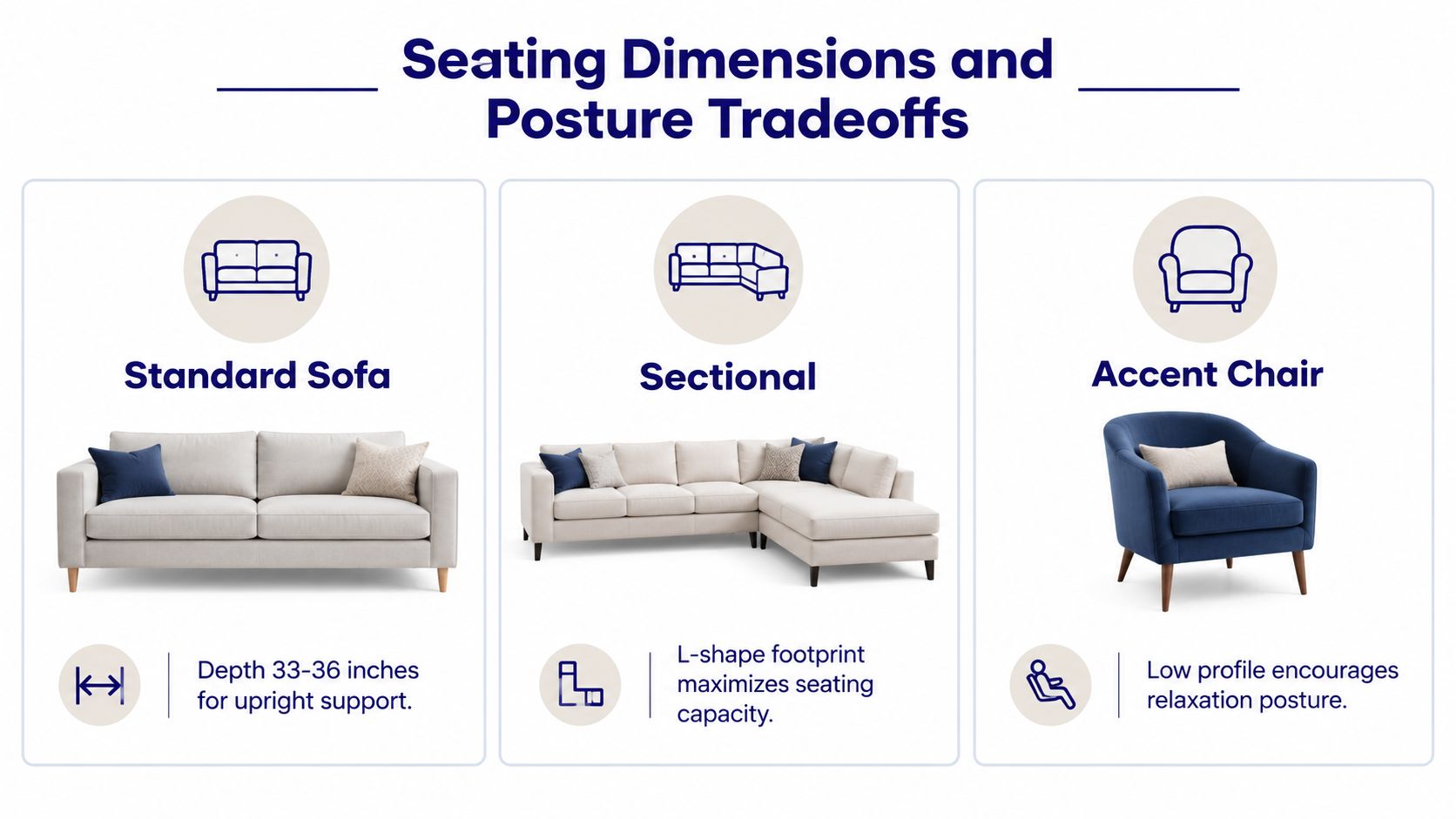
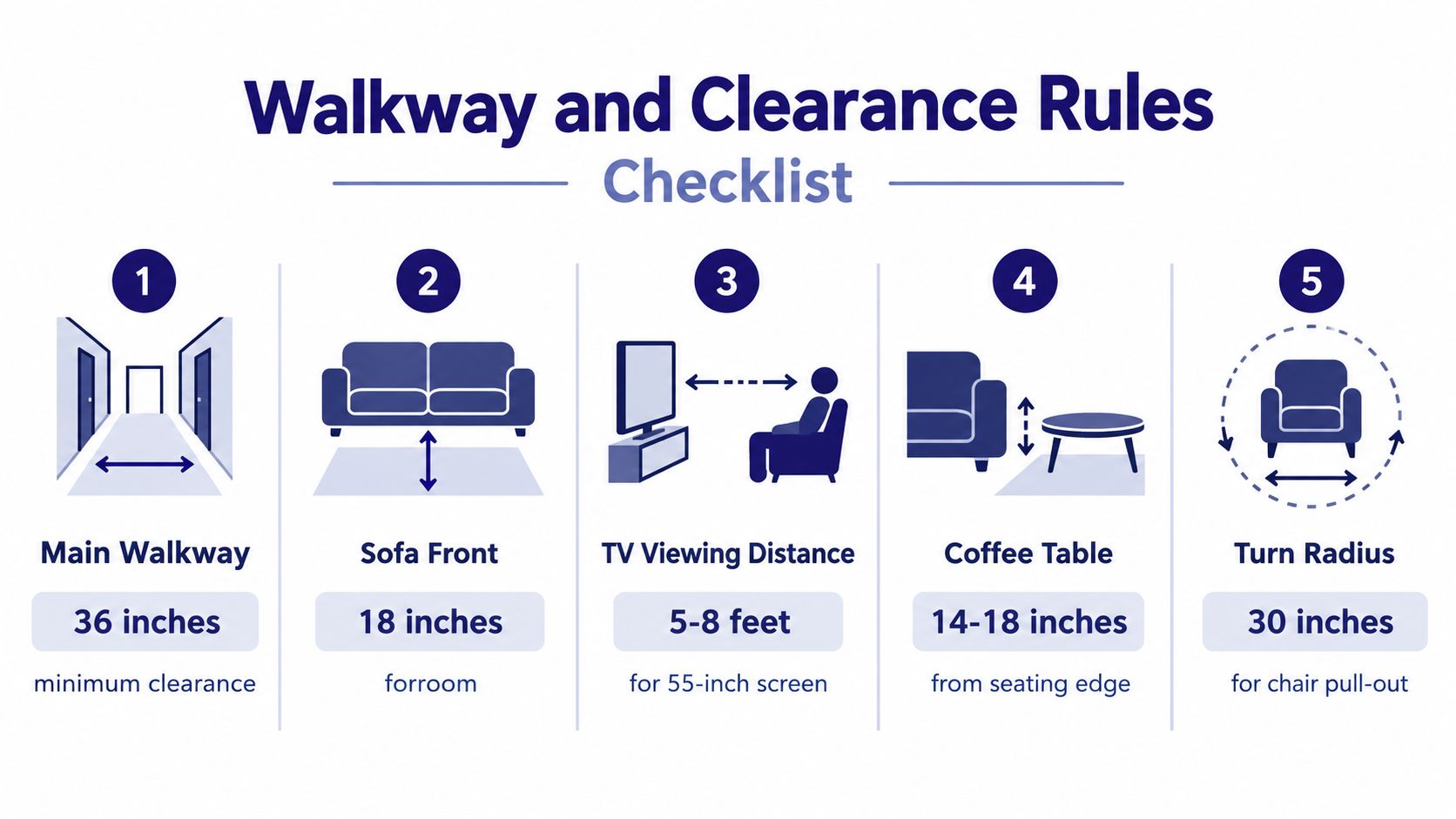
    As a general guideline, you want to leave at least 30 to 36 inches for any major walkways. For the space between a coffee table and the sofa, aim for around 14 to 18 inches—close enough to set down a drink, but with enough room to stretch your legs.

    By keeping these real-world applications in mind, you can take a simple number and turn it into a powerful design tool. All that initial effort to calculate the square feet of a room really pays off when you create a space that’s not just filled with stuff, but is thoughtfully and beautifully designed.

    Even after you’ve got the basics down, a few tricky situations always seem to pop up when it's time to actually measure. Getting these little details right is what separates a smooth project from one that hits a last-minute snag. We get these questions from homeowners all the time, so let's clear them up.

    Getting these specifics sorted out ensures your final numbers are genuinely useful for whatever you're planning next.

    Should I Count the Closet Space?

    This is a great question, and the answer depends entirely on what you're trying to accomplish.

    • For flooring projects, you absolutely should. If you plan on running the same carpet, tile, or hardwood into the closet (which is common), you need to account for that space. The easiest way is to measure the closet separately and just add its square footage to the room's total.

    • For furniture layout, you can usually ignore it. When you're figuring out if a new sectional or king-size bed will fit, you only care about the main, usable living area.

    A good tip? Keep two numbers handy: one for ordering materials (with closets) and another for space planning (without closets).

    What if My Tape Measure is Only in Inches?

    This happens all the time. Most standard tape measures are marked in inches, but you need feet for your final calculation. It’s a simple conversion: just divide the total number of inches by 12.

    Let’s say a wall measures 148 inches long. Here's the math:
    148 inches ÷ 12 = 12.33 feet

    For projects where every fraction matters, like flooring or custom cabinets, stick with the decimal. Don't round up or down. A tiny rounding error might seem harmless, but it can compound across a large room and cause issues later.

    Always measure twice. It’s a classic rule for a reason. Being off by just half an inch can be the difference between a seamless fit and a frustrating mistake. Double-check your numbers before you buy anything.

    How Does This Apply to Buying New Flooring?

    Once you've got your total square footage, you're ready to shop. But don't order the exact amount you calculated! You’ll always need a little extra. For example, it's critical to figure out your total square footage for tile projects correctly from the start.

    As a rule of thumb, always add 10-15% to your total square footage. This "overage" accounts for cuts, mistakes, and any uniquely angled pieces you’ll need to make everything fit perfectly.

    Is There a Better Tool Than a Tape Measure?

    For most quick jobs, a trusty tape measure is all you need. But if you want to make life easier—or if you’re measuring a long room by yourself—a laser measuring device is a fantastic tool.

    These gadgets have become very affordable and are incredibly easy to use. They give you a fast, precise reading with the push of a button, eliminating any chance of a tape measure sagging, bending, or being misread. If you've got a few home improvement projects on your to-do list, it’s a small investment that pays off in accuracy and convenience.


    By taking a few extra minutes to calculate the square feet of a room the right way, you’re setting your project up for success from the get-go. Now that you have your numbers, the fun part begins! If you're ready to find perfectly scaled furniture for your space, the knowledgeable team at Woodstock Furniture & Mattress Outlet is here to help. Explore our locations and plan your visit to get expert advice and see how our pieces look in a real-life setting.

  • What Size Rug for Living Room? A Practical Guide

    What Size Rug for Living Room? A Practical Guide

    Figuring out the right rug size for your living room often comes down to one simple question: where will the furniture go? The answer is usually one of three simple placement rules that designers use: all furniture legs on the rug, only the front legs on, or no legs on at all.

    While it sounds straightforward, getting it right makes all the difference. A common and versatile choice is the front-legs-on approach, which anchors your space well without needing a massive, room-swallowing rug.

    Anchoring Your Space: The Function of a Good Rug

    Picking out a rug is about more than just finding a color or pattern you like. It’s about defining your living room's main conversation area. Think of a rug as the foundation that pulls your sofa, chairs, and coffee table together into a cohesive, intentional group.

    In essence, a well-placed rug creates a 'room within a room'. It's a key ingredient that makes a space feel organized, polished, and inviting. The key to unlocking that potential lies in three foundational placement rules that we use every day to help customers.

    The Three Foundational Rules of Rug Placement

    Each of these rules creates a distinct look and feel. Your choice will depend on your room's size, your furniture layout, and the overall vibe you're going for.

    • All Legs On the Rug: This is where every piece of furniture in your seating area—sofa, chairs, the works—sits entirely on the rug. It creates a truly luxurious and unified look, but it works best in large or open-concept living rooms. You’ll need a substantial rug, often 9×12 feet or larger, to pull this off without making things feel cramped.

    • Front Legs On the Rug: This is a popular option. By placing only the front legs of your sofa and chairs onto the rug, you visually connect all the pieces and anchor the space. This technique is incredibly flexible, makes the room feel spacious, and is an excellent go-to for most standard living rooms.

    • All Legs Off the Rug (The "Float"): In this layout, all the furniture sits completely off the rug, which "floats" in the center, usually just under the coffee table. This can work in smaller spaces, but it's a tricky one to get right. If the rug is too small, it can look like a lonely 'postage stamp' and make the whole area feel disconnected.

    The following graphic gives you a helpful visual for what we're talking about with each of these placement rules.

    As you can see, the relationship between your furniture and the rug's edge completely defines the feel of the space. Deciding on the right placement rule is your first and most important step.

    This choice matters. In fact, a recent survey found that 72% of homeowners who chose a rug large enough to cover a significant portion of their seating area felt their space was more comfortable and well-proportioned. If you're interested in the details, you can explore more market trends in the full area rug industry report.

    To make it even easier, we've put together a quick cheat sheet to help you compare these rules at a glance.

    Living Room Rug Placement Rules at a Glance

    Placement Rule Best For Visual Effect
    All Legs On Large, open-concept spaces or defining a specific zone. Creates a luxurious, unified, and grand feel. Clearly defines the seating area.
    Front Legs On Most living rooms, from small to large. A very versatile option. Connects the furniture and grounds the space without overwhelming it. Makes the room feel cohesive.
    All Legs Off ("Float") Smaller, more compact living rooms or when using a statement rug. Creates a sense of separation and can make a small room feel less cluttered if done correctly.

    Think of this table as your starting point. Once you decide which "rule" feels right for your home, you'll have a much clearer idea of what size rug you should be looking for.

    How to Measure for a Living Room Rug

    When we get asked, “What size rug do I need for my living room?”, our first piece of advice might surprise you. Put down the tape measure, at least for a minute.

    Instead of measuring your room from wall to wall, you’ll want to focus on your main seating area. In the design world, this is called the conversational area – basically, your sofa and any chairs that go with it. Go ahead and arrange your furniture exactly where you want it. Physically placing everything is more helpful than just guessing with a bunch of numbers.

    Top-down sketch showing a living room layout with furniture and various rug size options outlined.

    Use Painter's Tape to Create a Blueprint

    Now for a helpful trick for picking a rug. Grab a roll of painter’s tape.

    With your furniture all set up, use the tape to mark out different standard rug sizes right there on the floor. Outline an 8×10 first. Then, maybe try a 9×12. This simple step takes all the guesswork out of the equation. You can see, in real-time, how each size frames your furniture and affects the flow of the room. Does it feel anchored? Is there enough of your floor showing?

    Helpful Tip: As you're taping, keep this guideline in mind: try to leave about 18 to 24 inches of bare floor between the rug’s edge and the walls. This creates a clean border and keeps the rug from looking like a poorly-fitted carpet.

    Key Measurements to Check

    While you’re playing around with your taped-out rug shapes, there are a couple of key measurements to double-check. Getting these right is what gives a room that polished, professionally designed look.

    • Sofa Width: Your rug should extend at least 6 to 8 inches past your sofa on both sides. This simple detail makes the whole seating area feel more generous and balanced, preventing the sofa from looking like it’s swallowing the rug.
    • Walkways: Make sure people can walk through the room comfortably. You’ll want 18 to 24 inches for smaller pathways, like the space between your coffee table and the sofa. For the main traffic lanes that cut through the room, aim for a more comfortable 30 to 36 inches so nobody feels squeezed.

    By taping out your options and checking them against these simple guidelines, you move from just thinking about rules to creating a real, concrete plan for your own space. This bit of prep work is the secret to getting rid of that “what if I get it wrong?” anxiety and choosing the right size with confidence.

    Alright, you've got your painter's tape outline on the floor. Now what? Let's connect those tape lines to the real world of standard rug sizes.

    It's one thing to see an outline, but it's another to know how a 5×8, 8×10, or 9×12 rug actually behaves in a room. Think of this as your cheat sheet for matching a rug to your living room layout, making the final choice a whole lot easier.

    The 5×8 Rug: For Smaller, Cozier Spaces

    A 5×8 rug can be a good choice for smaller living rooms, apartments, or dens where a larger rug would overwhelm the room. This is where you’ll want to use the "all legs off" or "floating" placement we talked about.

    With this setup, your furniture frames the rug, and only the coffee table actually sits on it. This simple trick defines the conversation area without making a compact room feel cluttered or small. It can create the illusion of more floor space, which is a big plus.

    The 8×10 Rug: The Go-To, Versatile Standard

    There’s a reason the 8×10 rug is a popular size. It’s a versatile choice for most standard living rooms. This size is practically made for the "front legs on" rule.

    An 8×10 gives you enough room to place the front legs of your sofa and any accent chairs right on the rug. This anchors the whole arrangement, tying everything together into one cohesive, polished look. It’s big enough to ground your main seating area while still letting your hardwood or tile floors show around the edges.

    One useful tip we share is to pick a rug that’s at least 5-6 feet wider than your sofa. This should leave about 18-24 inches of exposed floor around the rug's border, giving the whole space a more open and airy feel.

    The 9×12 Rug (and Larger): For Grand and Open-Concept Rooms

    If you have a large, open-concept living room or a great room, you may need a larger rug. A 9×12 rug—or even a 10×14—is a good bet. These generous sizes are what allow you to use the impressive "all legs on" rule.

    This is where your entire furniture grouping—sofa, chairs, end tables, the works—sits completely on top of the rug. Doing this creates a very clear and luxurious "seating island," which is useful for defining the living space within a larger, multi-purpose room. For instance, an 8×11-foot rug often fits well in a typical 14×18-foot family room.

    In fact, one industry report found that 68% of families felt their room's traffic flow and function improved just by getting the right-sized rug. You can dig into more of the data on carpet market trends and consumer preferences here if you're curious. By going big, you create a layout that’s not just beautiful but also practical.

    To make it even simpler, we've put together a quick reference guide. Use this table to easily match standard rug sizes to your room's dimensions and preferred furniture layout.

    Standard Rug Size Recommendations for Living Rooms

    Rug Size (Feet) Ideal Room Size Common Placement Rule
    5' x 8' Small living rooms, apartments (approx. 7'x10') All Legs Off ("Floating")
    8' x 10' Standard living rooms (approx. 11'x13') Front Legs On
    9' x 12' Large or open-concept rooms (approx. 12'x18') All Legs On
    10' x 14' Very large great rooms (approx. 14'x20' or more) All Legs On (with more space)

    Keep this chart handy when you're shopping. It's a useful starting point for narrowing down your options and making sure you bring home a rug that truly fits your space.

    Solving Rug Puzzles for Sectionals and Tricky Layouts

    Figuring out the right rug for a standard sofa and a regular-shaped room is one thing. But what happens when you throw a massive sectional sofa or an odd-shaped room into the mix? All of a sudden, that simple question of "what size rug for my living room?" can feel like a high-stakes puzzle.

    The biggest mistake we see homeowners make is getting a rug that’s too small for their sectional. When you have a tiny rug floating under the coffee table, it makes that gorgeous, sprawling sectional look disconnected. It visually chops up the space and feels disjointed. The goal is to find a rug that creates a single, unified foundation for your entire seating area.

    A Good Approach for Sectional Sofas

    When it comes to sectionals, your best friend is often the front-legs-on rule. The rug has to be large enough to slide under the front legs of every single piece of your sectional—the main sofa part, the corner wedge, and the chaise lounge. This is what pulls the whole look together and makes it feel intentional.

    Think of your rug as the frame for your furniture. If you put a huge, beautiful painting in a dinky little frame, it just looks wrong. The same goes for your sectional. An undersized rug will always make the space feel unbalanced.

    The whole point of a living room rug is to anchor your main conversation area. A good rule of thumb is to aim for about 80% rug coverage under your furniture to create that cozy, intimate feeling. For many standard 12×12-foot rooms, a 7×9-foot or 8×10-foot rug is often a good fit. We've seen countless families use these sizes with their sectionals to instantly make the room feel warmer and more complete. If you're curious about how these choices fit into broader trends, you can explore market insights on home furnishings.

    Tackling Other Tricky Layouts

    Sectionals aren't the only thing that can give homeowners a headache. Other architectural features can make rug placement a real head-scratcher. Don't worry, though; a few simple guidelines can solve most of these common layout problems.

    • Long, Narrow Rooms: In a long room, putting a small rug in the middle just emphasizes the "bowling alley" vibe. The trick here is to work with the room's length. Opt for a longer runner-style rug or a large rectangular rug (like a 9×12) that fills most of the length of your seating area. This helps trick the eye into seeing the space as wider and more balanced.
    • Rooms with a Corner Fireplace: Corner fireplaces can create an awkward diagonal sightline that tempts people to angle their furniture and rug. It is often better to avoid this. Instead, orient your rug and furniture to create a primary seating group that makes sense for the room as a whole. Let the rug define that main conversation zone squarely, and just let the fireplace be a nice accent feature.

    By making sure your rug is properly scaled to your largest piece of furniture and clearly defines your main seating area, you can bring a sense of harmony and style to even the most unconventional rooms.

    Common Rug Sizing Mistakes to Avoid

    Knowing all the rules for rug placement is a great start, but sometimes seeing what not to do is even more helpful. Dodging a few common sizing mistakes is often the real secret to getting that polished, professionally-designed look in your living room.

    Once you know how to spot these pitfalls, you can be confident that the rug you choose will pull your space together, not fight against it.

    The Problem of the Postage Stamp Rug

    The single most frequent issue we see is a rug that’s just too small for the room. Designers have a name for it: the "postage stamp" effect. It’s that tiny rug floating awkwardly in the middle of a big space, making all the furniture around it feel disconnected and adrift.

    Worse yet, it can actually make your whole living room feel smaller and less welcoming. Instead of uniting your sofa and chairs into a cozy conversation area, a tiny rug becomes an isolated island that everything is trying to avoid.

    This is a classic case of good intentions gone wrong. You fall in love with a beautiful pattern, but it only comes in a 5×8. You try to make it work in a room that really needs an 8×10 or 9×12, and the result is furniture that looks like it's just tolerating the rug instead of being grounded by it.

    A well-sized rug should feel generous and purposeful. If you've got a gap of more than a few inches between your sofa's front legs and the edge of the rug, it's a huge red flag that the rug is probably too small.

    Other Sizing and Placement Errors

    Beyond the postage stamp, a few other common slip-ups can throw off the whole vibe of your living room. Keep an eye out for these to save yourself a ton of second-guessing down the road.

    • Blocking Main Walkways: Your rug's job is to define your seating area, not create an obstacle course. You need clear, open paths for people to walk through, ideally about 30 to 36 inches wide for major traffic routes. A rug that juts out into a main walkway will always feel clumsy and out of place.

    • Ignoring Your Floors: If you’re lucky enough to have beautiful hardwood or tile, you don't want to hide it completely! The goal is to frame the room. Leaving a consistent border of 18 to 24 inches of exposed floor around the perimeter strikes a good balance, showcasing your floors while defining the space.

    • Placing the Rug Crooked: Now, an angled rug can work as a bold, stylistic choice in the right room. But more often than not, it just looks like an accident. For a clean, orderly feel, it's almost always best to align your rug with the main lines of the room, like a prominent wall or the fireplace.

    Thinking Beyond Size: Let's Talk Materials & Rug Pads

    Okay, so you've nailed down the right size. High five! But before you call it a day, there are a couple of other key players that will make or break your living room setup: the material your rug is made of, and what you put underneath it. This is where we separate a good choice from a truly great one.

    Why a Quality Rug Pad Is a Must-Have

    Think of a rug pad as the unsung hero of your living room floor. It might be out of sight, but its job is absolutely essential. First and foremost, it keeps your rug from slipping, sliding, and bunching up—a non-negotiable safety feature in any home, especially with kids or pets running around.

    But that's not all it does. A good pad adds a welcome layer of extra cushioning under your feet, making the whole room feel cozier and more luxurious. It also acts as a protective barrier for your floors, preventing scratches and scuffs. Plus, it absorbs the daily impact of foot traffic, which can seriously extend the life of your rug. Skipping the rug pad is a shortcut you'll almost always regret later on.

    Matching Rug Materials to Your Lifestyle

    The material of your rug is a huge deal. It directly affects how it feels, how it wears, and how much work it is to keep it clean. The right choice comes down to being honest about how you actually use your living room. A material that's perfect for a quiet, formal space might be a total disaster in a busy family hub.

    Here’s a simple way to think about it:

    • For High-Traffic Family Rooms: If your living room is command central for kids, pets, and a whole lot of life, you need something tough. Look for a rug made from a durable synthetic blend like polypropylene or a hard-wearing natural fiber like jute. These materials are built to handle the chaos and are generally much easier to clean.
    • For Quiet, Formal Living Rooms: In a less-used space where you want to dial up the luxury, you can focus on a plush texture. Wool is a timeless choice, famous for its incredible softness, natural resilience, and rich appearance. It creates that cozy, inviting feel that's perfect for rooms meant for quiet conversation and relaxation.

    As you mull over materials, it's also smart to check out a guide on choosing an area rug for hardwood floors to make sure your picks are a good match. Of course, nothing beats seeing and feeling the options for yourself. We invite you to swing by one of our showrooms, where our team can help you find the right fit for your home.

    Your Living Room Rug Questions Answered

    Even after you’ve got all the guidelines down, picking out that perfect rug can still bring up some very specific questions. Don’t worry, that’s totally normal! This is the part of the process where things get real, and we’re here to tackle some of the most common questions we hear from shoppers every day.

    How Much Space Should I Leave Between the Rug and the Wall?

    The number we always tell our shoppers is 18 to 24 inches. You want to leave a deliberate border of bare floor between the edges of your area rug and the walls.

    This gap frames your seating area beautifully and keeps the rug from looking like an ill-fitting, wall-to-wall carpet. In cozier rooms, you can shrink that border down to about 12 inches, but you definitely want that breathing room.

    What if I’m Stuck Between Two Standard Rug Sizes?

    This happens all the time. You’ve measured your space, you know what you need, but your ideal size falls right between a standard 8×10 and 9×12. When you find yourself in this situation, our advice is almost always the same: go with the larger option.

    A rug that’s a touch too small can make your whole room feel unbalanced, creating that dreaded “postage stamp” look where the furniture feels like it's falling off the edges. A rug that’s a little too big, on the other hand, usually just looks more generous and intentional.

    If you're on the fence between an 8×10 and a 9×12, for instance, the 9×12 will almost certainly do a better job of anchoring your furniture and making the whole space feel more connected.

    How Close Can My Rug Get to the Fireplace?

    This is a big one, and it’s all about safety. You absolutely need to leave a gap between your rug and the fireplace hearth.

    Building codes often require at least 6 to 12 inches of non-combustible material (like stone, brick, or tile) around the fireplace opening. Make sure your rug stays completely off this surface to keep your home safe and your layout looking clean and correct.