Creating an inviting outdoor living area is less about having the 'perfect' furniture and more about arranging it thoughtfully. Many homeowners invest in beautiful patio sets only to find their outdoor space feels awkward, cramped, or underutilized. The problem often isn't the furniture itself; it's the lack of a clear plan for flow, function, and conversation. A poorly arranged space can hinder movement and discourage use, turning a potential oasis into a mere collection of chairs.
This guide moves beyond generic tips to provide 10 distinct, actionable outdoor furniture layout ideas tailored to real-world spaces. We'll explore how to solve common arrangement challenges, from defining functional zones on a large deck to maximizing a small balcony, using proven design principles. You will learn how to create clear traffic paths, establish a focal point, and choose furniture that fits your space's scale and your family's needs. We aim to equip you with the practical knowledge to transform your patio, deck, or yard into a functional, comfortable, and beautiful retreat that truly extends your home’s living area.
To truly bring your outdoor vision to life, starting with a healthy foundation is key. A well-maintained lawn can significantly enhance the appeal of your furniture arrangements. Consider a comprehensive lawn care schedule template to ensure your outdoor canvas is perfect from the ground up. This curated list will provide the blueprint for what goes on top, helping you build a space you’ll enjoy all season long.
1. Lounge-Centric Conversational Layout
A lounge-centric conversational layout is one of the most popular and effective outdoor furniture layout ideas for fostering connection. This design arranges seating around a central focal point, such as a fire pit or a large coffee table, encouraging face-to-face interaction. Instead of positioning furniture to look outward, every piece is angled inward to create a cozy, enclosed atmosphere perfect for intimate gatherings.
This layout excels at transforming a standard patio or deck into a dedicated social hub. It is a highly functional design for homeowners who prioritize entertaining, as it naturally draws guests together and facilitates easy conversation. Whether you're hosting a small get-together or enjoying a quiet family evening, this arrangement makes the space feel welcoming and purposeful.
How to Implement This Layout
Successfully creating a conversational zone requires careful planning and precise measurements.
- Establish a Focal Point: Start by placing your central feature, like a cast aluminum fire pit or a durable low-profile table. This piece will anchor the entire arrangement.
- Arrange Primary Seating: Position your largest seating items, such as an outdoor sectional or sofa, facing the focal point. This establishes the primary boundary of your conversational circle.
- Add Secondary Seating: Fill in the gaps with smaller pieces like armchairs, loveseats, or ottomans. Angle them inward to complete the circle and ensure everyone can easily engage in conversation. Mixing seating heights and styles can add significant visual interest.
- Maintain Proper Spacing: Ensure there is enough room for comfortable movement. Leave at least 18-24 inches of clearance for walkways around the main seating area. The distance between seating and the central table should be close enough for guests to set down a drink, typically 14-18 inches.
Key Insight: The goal of this layout is to remove physical barriers to conversation. By turning chairs and sofas inward, you create a subtle psychological cue that encourages guests to connect with each other rather than observing the surrounding yard.
2. Dining-Forward Patio Layout
A dining-forward layout places an outdoor dining table and chairs at the heart of your patio or deck. This design treats the dining area as the primary anchor, making it the central feature for entertaining and daily life. All other elements, like lounge chairs or a grill station, are positioned as complementary, secondary zones.
This layout is one of the most practical outdoor furniture layout ideas for those who love hosting meals, from casual family barbecues to more formal alfresco dinners. It excels in creating a designated purpose for the space, transforming a simple patio into a functional open-air dining room. By prioritizing the dining set, you communicate that the area is meant for gathering, sharing food, and making memories.
How to Implement This Layout
Creating a functional and inviting dining-forward space requires thoughtful placement and proportion.
- Anchor with the Dining Set: Begin by positioning your dining table in the most prominent or convenient spot. This piece dictates the flow and scale of the entire layout. Consider placing it under a pergola or within easy reach of the kitchen.
- Ensure Adequate Clearance: Leave at least 36 inches of space around the entire table. This provides enough room for guests to pull out their chairs and for people to walk behind them without feeling cramped.
- Define the Zone: Use a large outdoor rug under the dining set to visually separate the dining area from the rest of the patio. This creates a distinct "room" and adds a layer of comfort and style. A collection of weather-resistant rugs can offer a great starting point.
- Add Supporting Elements: Place secondary items like a serving buffet, bar cart, or grill station along the perimeter. This keeps them accessible for serving but out of the main traffic path, ensuring the focus remains on the dining experience.
Key Insight: The success of a dining-forward layout hinges on comfort. Consider well-made outdoor dining chairs with cushions to encourage guests to linger long after the meal is over. An uncomfortable chair can cut an evening short.
3. Multi-Zone Activity Layout
A multi-zone activity layout is a sophisticated approach that maximizes the utility of larger outdoor spaces by dividing them into distinct functional areas. This design treats your patio or backyard like an open-concept home, creating separate "rooms" for different activities such as dining, lounging, and playing. By assigning a specific purpose to each section, you can host diverse groups and activities simultaneously without feeling crowded.
This layout is ideal for homeowners with expansive backyards or rooftop terraces who want a versatile, organized, and highly functional outdoor living area. It transforms a single, large space into a multi-faceted environment that can easily accommodate a family dinner at one end and a quiet conversation by a fire pit at the other. This strategic division ensures every square foot of your outdoor space is used effectively.
How to Implement This Layout
Creating a cohesive multi-zone layout requires thoughtful planning to define each area while maintaining a unified aesthetic.
- Map Your Zones: Begin by assessing your available square footage and listing the primary activities you want to accommodate. Common zones include a dining area with a table and chairs, a conversational lounge, and a recreational space.
- Anchor Each Zone: Use large outdoor rugs to visually anchor and define each distinct area. A rug under a dining set clearly separates it from the adjacent seating area. You can also use large planters or low-profile hedges as subtle dividers.
- Arrange Furniture by Function: Place furniture according to each zone's purpose. Group a dining table and chairs in one area, and arrange a sectional and coffee table in another for lounging. Maintain a consistent design theme (e.g., material or color palette) across all zones for a cohesive look.
- Establish Clear Pathways: Ensure there are clear and wide walkways, ideally 3-4 feet, connecting the different zones. This allows for safe and easy traffic flow, preventing the space from feeling disjointed or obstructed.
Key Insight: The success of a multi-zone layout lies in creating visual separation without building actual walls. Using elements like rugs, lighting, and strategic furniture placement allows you to define distinct "rooms" that feel both separate and connected, offering great outdoor versatility.
4. L-Shaped Sectional Lounging Layout
An L-shaped sectional lounging layout is one of the most efficient outdoor furniture layout ideas for maximizing both seating and comfort. This design anchors your space with a large sectional sofa, typically placed against a corner or along two walls, to create a defined and inviting outdoor living room. It’s a popular choice for its ability to offer extensive seating without the clutter of multiple separate pieces.
This layout is exceptionally effective for transforming a deck or patio into a relaxed, cohesive social area. It excels for casual entertaining, family lounging, and creating a modern, resort-like feel. By using a single, large furniture piece to define the zone, you establish a strong visual anchor that makes the entire space feel more organized and intentional.
How to Implement This Layout
Creating a functional and stylish sectional lounge requires careful measurement and thoughtful furniture selection.
- Measure Your Corner: Before you start looking at furniture, accurately measure the dimensions of the corner where you plan to place the sectional. A common mistake is underestimating the footprint; many L-shaped sectionals require a space of at least 15×15 feet to feel balanced.
- Select a Modular Sectional: Consider a modular outdoor sectional. These versatile pieces allow you to reconfigure the layout, add or remove seats, and adapt the sofa to your specific space.
- Accessorize for Comfort: Layer in comfort with high-quality cushions made from quick-dry foam and performance fabrics that resist stains, mildew, and sun fading. Add outdoor throw pillows and blankets to introduce color and texture.
- Incorporate Storage and Surfaces: Complete the layout with a low-profile coffee table or a set of nesting tables for drinks and snacks. A nearby waterproof storage ottoman is a practical addition for stowing away cushions and accessories when not in use.
Key Insight: The primary strength of an L-shaped sectional is its ability to create a visually enclosed “room” within an open outdoor space. It defines a boundary and a purpose, turning an undefined patio into a dedicated destination for relaxation and connection.
5. Symmetrical Formal Layout
A symmetrical formal layout brings a sense of order, elegance, and classical tradition to your outdoor space. This design approach is rooted in balance, arranging furniture and decor in a mirror-image formation along a central axis. By creating this perfect harmony, the layout establishes a sophisticated and structured atmosphere that feels intentional and visually calming.
This style is particularly effective in spaces that complement traditional or transitional architecture, such as classic estate gardens or formal courtyards. It elevates the outdoor area from a casual hangout to a refined extension of the home, ideal for serene relaxation or hosting elegant gatherings. The inherent order of a symmetrical layout draws the eye and creates a powerful, cohesive design statement.
How to Implement This Layout
Creating a successful symmetrical layout requires precision and a strong central organizing principle.
- Define Your Center Line: First, establish a central axis. This could be a physical element like a walkway, a visual line aimed at a stunning view, or an imaginary line running through the center of a key architectural feature like a set of French doors.
- Place Your Focal Point: Position a strong focal point along this center line. A classic three-tiered fountain, a stately urn, or a timeless sculpture works perfectly to anchor the entire design.
- Arrange Mirrored Pairs: Place matching furniture pieces equidistant from the center line, creating a mirror image. For example, position two identical outdoor loveseats or sets of armchairs facing each other across the axis. Collections of traditionally styled outdoor furniture can offer numerous matching pieces to achieve this look.
- Reinforce with Decor: Complete the scene with paired accessories. Place identical planters, side tables, or outdoor lanterns on each side to reinforce the symmetry. An outdoor rug can also help define the space and ground the arrangement.
Key Insight: The power of this layout lies in its predictability and balance. By repeating elements on both sides of a central line, you create a sense of rhythm and peace that is inherently pleasing to the eye, making the space feel both grand and restful.
6. Shade Structure-Centric Layout
A shade structure-centric layout uses an architectural element like a pergola, gazebo, or pavilion as the anchor for the entire outdoor space. Rather than letting the furniture float on an open patio, this approach organizes seating and dining areas beneath a protective covering. This design creates a distinct "room" outdoors, providing shelter from the sun and elements while defining a clear focal point.
This layout is one of the most functional outdoor furniture layout ideas for extending the usability of your space across different weather conditions. It excels in climates with intense sun or frequent rain, transforming a patio into a reliable, all-day destination. By centering your activities under a structure, you create an inviting and comfortable retreat that feels both integrated with nature and protected from it.
How to Implement This Layout
Creating an effective shade-centric layout means treating the structure as the heart of your design.
- Select and Position Your Structure: First, choose and install your primary shade structure. Position it to block the most intense morning or afternoon sun based on your climate and how you use the space. Ensure a minimum of 8 feet of headroom clearance, with 9-10 feet being ideal for an open, airy feel.
- Arrange Anchor Furniture: Place your main furniture, such as a large outdoor dining table or a full seating group, directly underneath the structure. This anchors the zone and ensures maximum protection for you and your guests.
- Define Traffic Flow: Keep clear pathways around the perimeter of the shade structure. A clearance of at least 24-36 inches allows for easy movement without disrupting those seated within the covered area.
- Integrate Ambiance and Comfort: Enhance the space with functional accessories. Adding LED string lights or an outdoor pendant light provides evening ambiance, while an outdoor ceiling fan improves air circulation on hot days. When designing a Shade Structure-Centric Layout, choosing the right material for sun shades for your patio can define the space's comfort and usability.
Key Insight: This layout moves beyond simple furniture arrangement and into architectural design. The structure itself becomes the primary feature, dictating the flow, function, and feel of the entire outdoor environment.
7. Curved and Organic Layout
A curved and organic layout moves away from traditional straight lines and rigid angles, embracing flowing, natural forms instead. This contemporary approach uses rounded furniture and soft pathways to create a relaxed, dynamic atmosphere. By arranging pieces in gentle arcs and circles, you can make an outdoor space feel more harmonious and connected to the surrounding landscape.
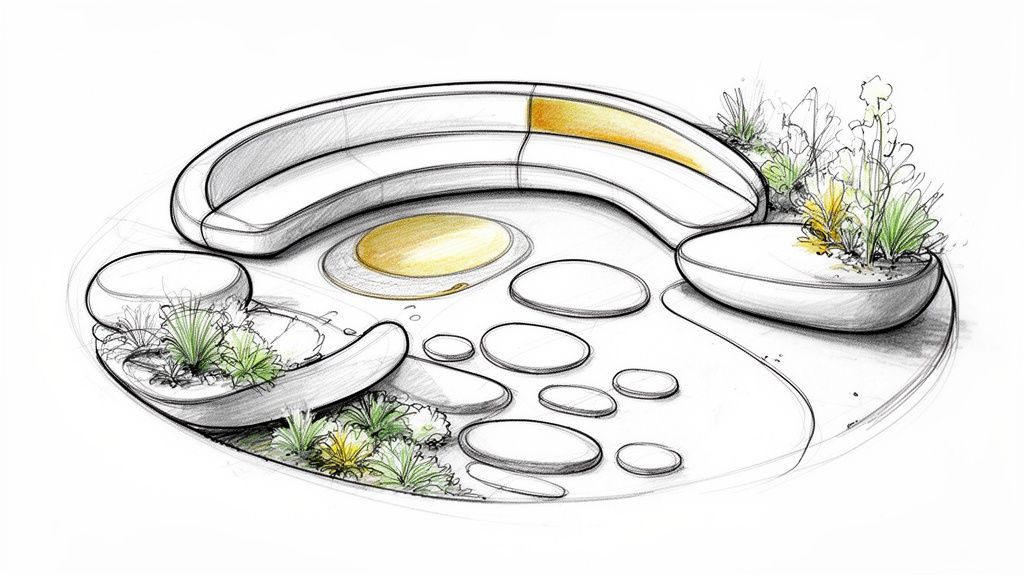
This design is one of the most visually interesting outdoor furniture layout ideas for modern backyards, poolside lounges, and even urban rooftop terraces. It excels at softening hard architectural elements and creating a gentle, inviting flow that encourages guests to move through and explore the space. The result is an environment that feels less formal and more like a serene, natural retreat.
How to Implement This Layout
Creating an organic layout is about achieving a balanced, asymmetrical look that feels both intentional and effortless.
- Anchor with a Curved Piece: Start with a significant curved furniture item, like a rounded outdoor sectional or a circular daybed. This piece will set the tone and establish the primary flowing line of your design.
- Create Fluid Pathways: Guide movement with curved pathways made from stepping stones or pavers. Avoid straight walkways that would conflict with the organic feel of the furniture arrangement.
- Incorporate Rounded Elements: Enhance the theme with rounded planters, circular area rugs, and spherical lighting fixtures. These complementary shapes reinforce the layout’s natural aesthetic.
- Layer with Soft Textures: Add softness and visual flow with outdoor cushions, pillows, and throws in natural textures and colors. This layering helps to blur any remaining hard edges in the space.
Key Insight: The power of a curved layout is its ability to mimic nature. There are few straight lines in the natural world, so incorporating organic shapes into your outdoor design creates a subconscious sense of calm and tranquility.
8. Fire Pit Gathering Layout
Among the most sought-after outdoor furniture layout ideas, the fire pit gathering layout creates an irresistible destination for evening entertainment and cooler weather. This design uses a fire pit or outdoor fireplace as its definitive focal point, with seating arranged in a circle or semi-circle around it. The fire serves as both a functional heat source and an atmospheric centerpiece that naturally draws people together.
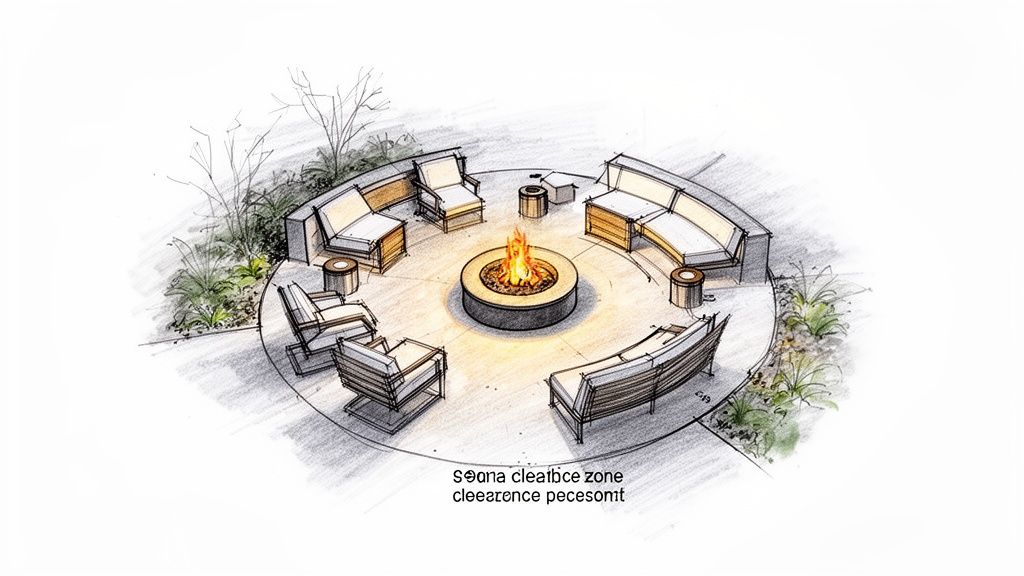
This layout is ideal for extending the use of your outdoor space beyond daylight hours and warm seasons. It excels in suburban backyards and patios where creating a dedicated zone for relaxation and socializing is a priority. From hosting s'mores nights with family to enjoying a quiet drink with friends, a fire pit layout transforms your patio into a cozy, year-round retreat.
How to Implement This Layout
Creating a safe, comfortable, and functional fire pit area requires attention to placement, materials, and spacing.
- Prioritize Safety: Place your fire pit on a non-combustible surface like stone pavers or concrete, at least 10-15 feet away from your home, sheds, and any overhanging tree branches. Always check local fire codes and any HOA restrictions before installation.
- Arrange Seating for Comfort: Position seating, such as deep-seated chairs or a curved sectional, approximately 6-8 feet away from the fire. This distance provides comfortable warmth without being overwhelming.
- Add Functional Surfaces: Place side tables or small C-tables between chairs or at the ends of a sofa. This ensures guests have a convenient spot to place drinks, plates, and s'mores supplies without having to reach over the fire.
- Incorporate Ambient Lighting: Since this layout is designed for evening use, supplement the fire's glow with other light sources. String lights, path lighting, or solar-powered lanterns placed around the perimeter can enhance visibility and ambiance without detracting from the fire.
Key Insight: The success of a fire pit layout hinges on balancing ambiance with safety. The arrangement should feel intimate and enclosed, but with clear, safe pathways and adequate distance from the heat source to ensure everyone can relax and enjoy the space comfortably.
9. Poolside Resort-Style Layout
A poolside resort-style layout transforms your backyard into a personal oasis, inspired by high-end hotels and vacation destinations. This approach organizes furniture into distinct functional zones around a pool or water feature, emphasizing relaxation, entertainment, and comfort. The goal is to create a seamless, cohesive environment that feels like a retreat, complete with multiple lounging options and convenient amenities.
This layout is ideal for homeowners with a pool who want to maximize their outdoor living space for both private relaxation and hosting guests. By creating dedicated areas for sunbathing, conversation, and refreshments, it provides a highly functional and visually stunning setting. It elevates a simple pool area into a comprehensive outdoor experience, making every day feel like a getaway.
How to Implement This Layout
Creating a true resort feel requires thoughtful zoning and attention to detail to ensure both beauty and functionality.
- Zone Your Space: Identify key activity areas around the pool. Designate a primary zone for sunbathing with a row of sleek chaise lounges. Create a separate conversational nook with a weather-resistant deep seating set, and consider a third zone for a bar or dining area.
- Prioritize Comfortable Lounging: Select high-quality, comfortable seating. Adjustable lounge chairs with thick, quick-drying cushions are essential. Supplement these with an outdoor daybed or a small sectional to offer varied relaxation options.
- Integrate Shade and Amenities: No resort is complete without shade. Strategically place large cantilever umbrellas or a permanent pergola to offer respite from the sun. Add a mobile beverage cart or a small bar table with stools to keep drinks and snacks easily accessible.
- Ensure Safety and Flow: Maintain clear, unobstructed pathways around the pool deck, adhering to local safety codes. Keep at least 3-4 feet of walking space around the perimeter. Ensure any furniture or decor does not block access to pool entry points or safety equipment.
Key Insight: The success of a resort-style layout lies in its ability to anticipate needs. By providing a variety of seating, ample shade, and convenient access to refreshments, you create an effortless, high-end experience that encourages guests to relax and stay awhile.
10. Flexible Modular Furniture Layout
A flexible modular furniture layout is a contemporary and highly adaptable approach that prioritizes versatility above all else. This design uses individual, portable pieces that can be easily reconfigured to suit different occasions, from a large party to an intimate dinner. By using modular seating units, stackable chairs, and movable side tables, a space can transform from a dining setup to a lounging area with minimal effort.
This layout is one of the most practical outdoor furniture layout ideas for modern homeowners who need their space to serve multiple functions. It's an ideal solution for renters, hosts who entertain diverse group sizes, or anyone who enjoys refreshing their outdoor look seasonally. The ability to quickly adapt the furniture arrangement makes the patio or deck a truly dynamic extension of the home.
How to Implement This Layout
Creating a cohesive and functional modular space is about selecting the right pieces and having a plan for reconfiguration.
- Select Versatile Core Pieces: Start with a modular outdoor sectional or a set of armless chairs that can be clustered together or used separately. Lightweight materials like aluminum or all-weather wicker make rearrangement much easier.
- Incorporate Multi-Function Furniture: Choose ottomans that can double as extra seating or coffee tables. Nesting side tables are perfect as they can be spread out for guests or tucked away to save space.
- Establish Visual Cohesion: To prevent a mismatched look, stick to a consistent color palette or material family. For example, pair a teak modular sofa with matching wood side tables, even if they are from different collections.
- Plan for Storage: Consider a deck box or waterproof bin to store cushions and smaller pieces when not in use. This keeps the area tidy and protects your furniture from the elements.
Key Insight: The power of a modular layout is its ability to adapt to your life in real time. Before purchasing, think about the top three ways you'll use the space (e.g., dining, lounging, sunbathing) and ensure your chosen pieces can accommodate each scenario.
10 Outdoor Furniture Layouts Comparison
| Layout | Implementation complexity | Resource requirements | Expected outcomes | Ideal use cases | Key advantages |
|---|---|---|---|---|---|
| Lounge-Centric Conversational Layout | Low–Medium (simple arrangement, needs clearance) | Moderate (modular seating for 4–8, central focal point) | Intimate, conversation-focused gatherings | Families and social entertainers on patios/decks | Encourages engagement; flexible seating |
| Dining-Forward Patio Layout | Medium (clearances, shade, circulation) | High (large dining table, chairs, shade structure, serving surfaces) | Organized dining-focused entertaining | Homeowners who host frequent outdoor meals | Maximizes dining capacity; easy service flow |
| Multi-Zone Activity Layout | High (zoning, circulation, cohesion) | Very high (multiple furniture sets, landscaping, lighting) | Multi-functional space for simultaneous activities | Large yards, frequent entertainers with varied needs | Versatile use; supports diverse guest groups |
| L-Shaped Sectional Lounging Layout | Low–Medium (placement of sectional) | Moderate (sectional, coffee table, cushions) | Cozy, defined outdoor living room feel | Small–medium patios; lounging-focused users | Space-efficient seating; modular reconfiguration |
| Symmetrical Formal Layout | Medium (precise symmetry and sightlines) | Moderate–High (matching pieces, central feature) | Elegant, balanced and formal aesthetic | Traditional/formal yards and classic-style homes | Timeless, visually harmonious design |
| Shade Structure-Centric Layout | High (structure installation, permits) | Very high (pergola/gazebo, integrated utilities) | Protected, extended-use outdoor room | Hot climates; year-round outdoor entertainers | UV/weather protection; architectural focal point |
| Curved and Organic Layout | Medium–High (non-linear planning, sourcing) | Moderate–High (curved furniture, landscape elements) | Relaxed, dynamic flow with contemporary look | Irregular patios, modern design enthusiasts | Natural movement; forgiving for odd shapes |
| Fire Pit Gathering Layout | Medium (safety clearances, ventilation) | Moderate (fire pit or fireplace, seating, safety features) | Inviting evening gatherings with warmth and ambiance | Fall/winter entertainers and cozy social groups | Extends season; strong social focal point |
| Poolside Resort-Style Layout | Very high (complex planning, safety) | Very high (pool, cabanas, multiple seating zones) | Luxury resort-like environment with multiple zones | High-end homeowners with pools; large entertaining | Sophisticated amenities; varied seating options |
| Flexible Modular Furniture Layout | Low (easy reconfiguration) | Moderate (many movable pieces, storage solutions) | Highly adaptable spaces that transform easily | Renters, small patios, changing lifestyle needs | Maximum flexibility; easy to reconfigure and store |
Bringing Your Vision to Life
You've explored the conversational nooks, the expansive dining setups, and the cozy fire pit arrangements. Now, the blank canvas of your patio, deck, or balcony should feel less like a challenge and more like an opportunity. Moving from inspiration to implementation is the most exciting part of this process. The outdoor furniture layout ideas we've covered aren't just templates; they are strategic frameworks designed to help you create a space that is a true extension of your home and a reflection of your lifestyle.
The core principle connecting all these concepts is intentionality. A successful outdoor space doesn't happen by accident. It is the result of thoughtful planning that considers who will use the space, how they will use it, and how it can best serve their needs season after season. Remember, the right layout for your neighbor might not be the right one for you, and that’s perfectly okay. The goal is to design a personal retreat that enhances your daily life, whether that means hosting lively family barbecues, enjoying quiet morning coffees, or unwinding under the stars.
Core Principles for Lasting Success
As you finalize your plans, keep these fundamental takeaways at the forefront of your decision-making process. These principles are the difference between a functional space and an exceptional one.
- Function Before Form: Always start with the primary purpose of your outdoor area. Do you need a dining space for eight, or a comfortable lounging zone for two? Answering this question first will guide every subsequent choice, from the size of your sofa to the placement of your accent tables.
- Master the Measurements: This cannot be overstated. Accurate measurements prevent the common problem of purchasing furniture that is too large or too small for your space. Remember to account not just for the furniture's footprint but also for the crucial "negative space" needed for clear pathways and comfortable movement. A minimum of 30-36 inches for main walkways is a reliable rule of thumb.
- Respect the Flow: A well-designed layout feels intuitive. Consider the natural entry and exit points, such as the back door or a gate. Your arrangement should facilitate easy movement between these points and key zones without creating awkward obstacles or bottlenecks.
- Create Your Zones: Even in smaller areas, defining distinct zones for lounging, dining, or playing brings a sense of order and purpose. Area rugs are one of the most effective tools for visually separating these spaces and making a patio feel more like a deliberate, well-designed room.
Putting Your Plan into Action
With these foundational ideas in mind, your next steps are practical and straightforward. Begin by sketching your space on paper or using a simple online tool. Mark your dimensions, windows, and doors. Then, start experimenting with the layouts that resonated most with you. Cut out paper shapes to scale to represent furniture pieces; this tangible approach makes it easier to visualize spacing and flow before you commit.
Ultimately, crafting the perfect outdoor living area is a journey of blending practical logic with personal creativity. By applying the principles of scale, flow, and zoning, you are empowered to transform any outdoor space into a beautiful, functional, and cherished haven. The most effective outdoor furniture layout ideas are the ones that are thoughtfully adapted to your unique home and family, creating the perfect backdrop for making memories for years to come.
Feeling inspired but want to see how these concepts look in person? Seeing and touching the furniture can make all the difference. At Woodstock Furniture & Mattress Outlet, our spacious showrooms allow you to experience different layouts and materials firsthand, helping you make a more confident and informed decision for your home.