You've found the right patio corner, chosen a color that works with the house, and started picturing long afternoons with a book and a cold drink. Then the practical questions arrive: Will the frame handle humid weather? Will the cushions stay comfortable after repeated rain? Can the daybed fit without turning the patio into an obstacle course?
An outdoor patio furniture daybed is more than an oversized lounge cushion. It has to balance comfort, structure, drainage, sun exposure, and available space. The category is also becoming more substantial, with one report estimating the global outdoor daybed market at USD 2.1 billion in 2025, projected to reach USD 3.2 billion by 2034 at a 5.8% CAGR (global outdoor daybed market analysis). That growth gives shoppers more choices, but it also makes it easier to choose based on appearance alone.
What Makes an Outdoor Daybed Different
A shopper may walk into a showroom with a simple image in mind: a deep cushion, a clean frame, perhaps a canopy, and enough room to stretch out. That picture is useful, but it doesn't tell you whether the piece is designed to live outside.
Indoor daybeds assume a relatively controlled environment. Their fabrics, foam, fasteners, and finishes aren't expected to deal continuously with direct sunlight, rain, humidity, airborne salt, or abrupt temperature changes. An outdoor model needs construction that anticipates those pressures from the start.
Look beyond the silhouette
The first test is the frame. Check whether it feels stable when you apply gentle pressure to the arms or back. Look closely at joints, welds, hardware, woven panels, and the points where the cushion rests. A stylish profile can't compensate for movement, exposed hardware, poor drainage, or a finish that begins to break down under regular weather exposure.
Outdoor daybeds commonly use powder-coated aluminum, teak, all-weather wicker, PE rattan, and treated hardwoods because these materials are selected for resistance to sun, rain, humidity, fading, mold, and mildew (outdoor daybed material guidance). Each material still has limits, and the local climate determines how quickly those limits matter.
Practical rule: Treat the cushion, frame, and drainage system as one product. A strong frame won't make a daybed comfortable if the cushion stays wet, and a premium cushion won't rescue a frame that shifts or corrodes.
Think about how you'll use the piece. A covered porch offers more protection than an exposed pool deck. A daybed used occasionally may tolerate a different maintenance routine than one used every afternoon. The right purchase starts with those conditions, not with the photograph.
Choosing the Right Frame Material for Your Climate
Frame material should follow the weather pattern around your home, not the color palette of your patio. A dry, sunny setting puts sustained pressure on finishes and woven materials. A rainy region makes drainage and moisture management more urgent. Coastal and humid locations add salt and persistent dampness to the equation.
Powder-coated aluminum
For many climates, powder-coated aluminum is the most technically durable choice. Aluminum itself doesn't rust, while the powder coat creates a bonded protective layer that helps resist chipping, corrosion, and UV-related finish breakdown. Independent outdoor-furniture guidance identifies accelerated UV testing, including ASTM G154, as useful for comparing materials, while cautioning that test results don't translate directly into a specific number of outdoor years. With proper maintenance of the coating and hardware, practical service expectations commonly fall in the 15 to 25-plus year range (weatherproof patio furniture guidance).
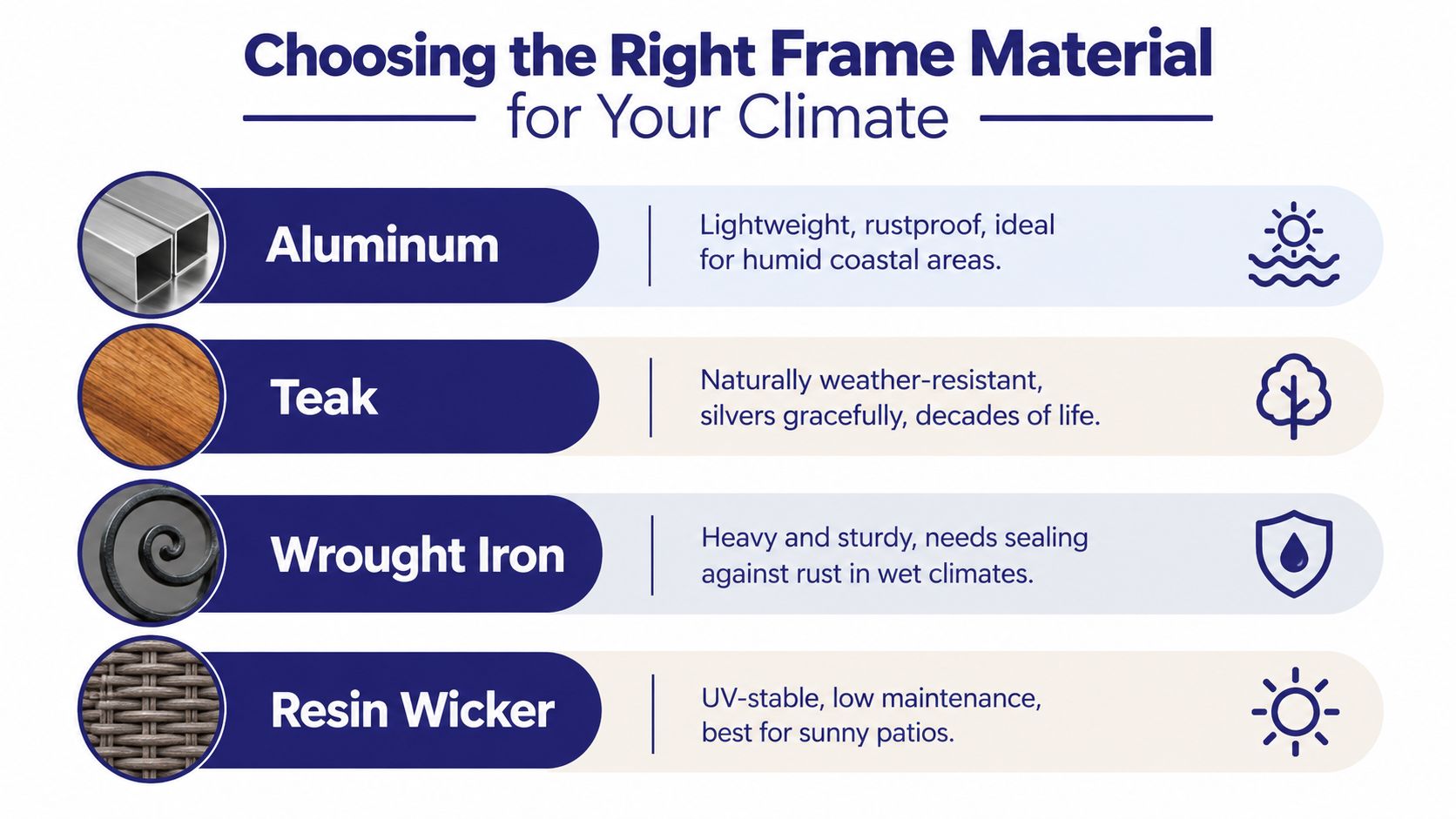
Aluminum is relatively easy to move and doesn't require the same ongoing sealing routine as many wood frames. The trade-off is that lighter construction can feel less planted in strong wind, so stability, base design, and placement still matter.
Wood, iron, and synthetic weave
Teak has natural weather resistance and develops a silver-gray appearance as it ages. That change is attractive to some homeowners and undesirable to others. If you want the original wood tone, expect more upkeep. Treated hardwoods can bring warmth and substantial visual presence, but their finish requires attention as weather exposure increases.
Wrought iron feels heavy and sturdy, which can be useful in windy settings. It needs effective rust protection, especially where rain and humidity are frequent. Resin wicker or PE rattan can offer a softer, woven appearance with relatively low maintenance, but look for UV-stable material and a frame beneath the weave that suits your climate.
The most sensible choice is the material whose maintenance requirements match your habits. A beautiful wood daybed that you won't reseal may age less gracefully than an aluminum model you can clean and inspect easily.
Sizing and Layout – Finding the Right Fit
A daybed can look compact in a large showroom and surprisingly dominant on a real patio. Measure before you shop, and measure the route the furniture must take to reach its final position.
Start with the usable footprint
Clear the area of temporary items, then measure the width and depth available for the daybed itself. Account for steps, columns, railings, doors, grill access, and the swing path of nearby doors. If the daybed includes a canopy, chaise extension, or adjustable back, measure the space in its most extended position.
One major retailer groups outdoor daybeds into four width bands: small, under 70 inches; standard, 71 to 86 inches; long, 87 to 100 inches; and extra-long, over 100 inches (outdoor daybed size categories). These categories can help narrow the search, but width alone doesn't tell you how comfortable the surrounding layout will be.
Protect circulation
Leave at least 18 inches of clearance around walkways, with two feet preferred for more comfortable movement (outdoor daybed layout guidance). Mark the proposed footprint with painter's tape or flattened cardboard. Walk around it while carrying a tray, opening the patio door, and accessing other seating. That quick exercise often reveals a problem that a product page won't show.
- Small patio: Position the daybed against a wall or railing and keep the remaining furniture visually light.
- Covered porch: Use the daybed as an anchor, but preserve a clear route from the entry to the yard.
- Large deck: Create a relaxation zone with a side table, while keeping dining and cooking areas separate.
Don't assume a larger daybed automatically delivers better value. If it blocks circulation or forces other furniture into awkward positions, a smaller model may provide more usable comfort.
Understanding Cushions and Weatherproofing
Many daybed problems begin with the cushion rather than the frame. A frame can remain stable while the cushion cover fades, the filling compresses, or trapped moisture creates an unpleasant sitting surface.
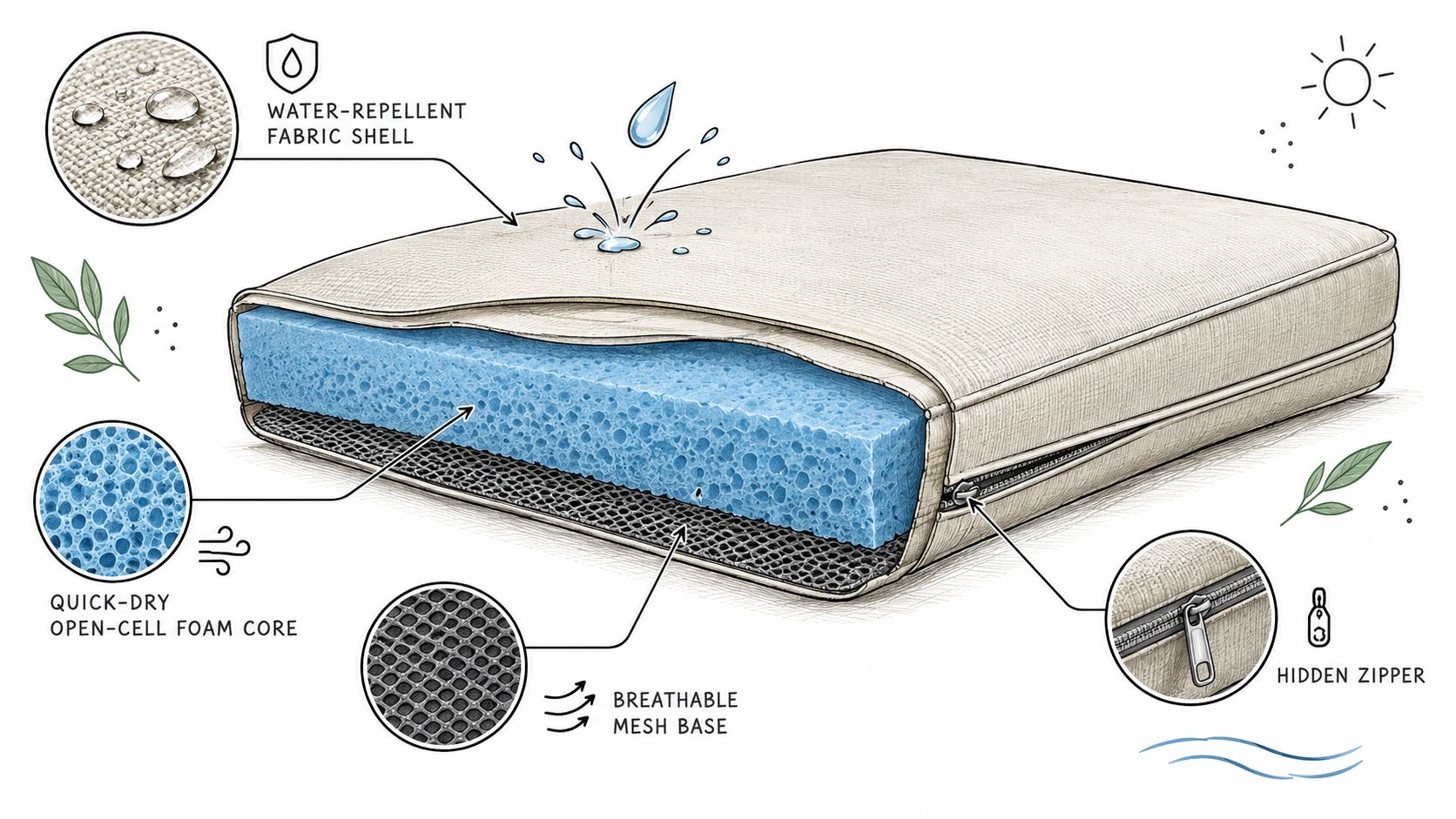
Outdoor covers commonly use weather-resistant polyester, olefin, or solution-dyed acrylic because these textiles resist water absorption, fading, and mildew better than standard indoor fabrics. Foam and foam blends provide support, but they can retain moisture if the cushion lacks quick-drying covers, airflow, and a drainage-friendly base (outdoor cushion and patio seating guidance).
Comfort needs airflow
A very soft cushion may feel inviting during the first sitting, but support matters when you stay on the daybed for a long afternoon. Ask how the cushion holds its shape, whether the cover can be removed, and whether the underside allows water to escape. A zipper is useful for cleaning and replacement, but it isn't a substitute for proper drainage.
Sun and rain affect different parts of the cushion system. UV exposure attacks color and fibers, while moisture affects foam, seams, and the base beneath the cushion. A covered porch reduces exposure but doesn't eliminate it, especially when wind-driven rain reaches the furniture.
Covers help, but they aren't magic
Use a breathable, well-fitted cover when the daybed won't be used for an extended period, and remove it when conditions allow the furniture to air out. Avoid trapping damp cushions beneath a cover. If rain has reached the foam, give the cushion time to dry fully rather than stacking or covering it immediately.
The practical buying question isn't just, “Is this cushion weatherproof?” Ask instead how the complete system manages sunlight, water, airflow, cleaning, and replacement.
Styles and Configurations for Different Needs
A daybed's configuration should reflect the job you expect it to perform. A simple bench-style design can be ideal for reading and casual lounging, while a larger piece with a chaise extension may make more sense when you regularly stretch out or host overnight guests.
Match the shape to the routine
Bench-style daybeds have a straightforward footprint and often work well against a wall or beneath a covered porch. They're easier to arrange around existing furniture, but they may offer less room for two people to recline fully.
Round or island-style daybeds create a relaxed, social feel and can work beside a pool or in the center of a large patio. Their curved footprint is less efficient in compact spaces, and they usually need room around every side.
Chaise-style designs give one or more users a defined lounging position. They suit homeowners who prioritize reading, napping, or sunbathing, but the extended shape requires careful measurement.
Canopy daybeds add shade and a stronger sense of enclosure. They're useful on open decks and sunny patios, although the canopy can catch wind and may need to be folded, secured, or removed during severe weather.
Be honest about overnight use
A daybed may provide occasional guest overflow, particularly on a covered porch, but outdoor models aren't automatically substitutes for a dedicated bed. Recent daybed coverage commonly treats overnight use as secondary and positions these pieces more naturally for short naps (daybed market and use-case coverage).
Consider three realistic scenarios:
- Resort-style lounging: Prioritize depth, shade, durable upholstery, and a side surface for drinks.
- Guest overflow: Check the usable sleeping length, support across the full surface, and weather protection.
- Poolside relaxation: Favor easy-clean fabrics, drainage, and materials suited to moisture and sun.
Storage-integrated designs can keep throws and cushions close at hand, but inspect the compartment for ventilation and water management. More features aren't automatically more useful. Choose the configuration that supports your routine without creating maintenance you won't keep up with.
Simple Maintenance Tips for Long-Lasting Enjoyment
Outdoor furniture lasts more comfortably when care becomes a small routine rather than a rescue project. The goal isn't to keep the daybed untouched. It's to remove dirt, moisture, and early signs of wear before they create larger problems.
Use a simple care cycle
- Brush away loose debris. Clear leaves, grit, pollen, and sand from the frame, weave, seams, and cushion surfaces before they become embedded.
- Clean with mild soap and water. Use a soft cloth or brush appropriate to the material, then rinse thoroughly so residue doesn't remain on the finish or fabric.
- Dry every component. Stand cushions on edge when practical and allow air to reach both sides. Don't put damp cushions into storage.
- Inspect the structure. Check fasteners, welds, feet, moving parts, and canopy attachments. Tighten or replace hardware according to the product's care guidance.
- Cover selectively. Use a breathable cover during prolonged exposure or severe weather, but allow the furniture to dry before covering it.
Cushions deserve their own check. Look for fading, persistent dampness, flattened support, open seams, and damage around zippers. If the frame remains sound, replacing a cushion or cover may be more sensible than replacing the entire daybed.
A useful habit: Clean after periods of heavy pollen, storms, or pool use. Small deposits are easier to remove before they combine with moisture and heat.
Climate should also determine the routine. Sunny areas call for closer attention to UV exposure, rainy regions need dependable drying, and coastal homes should inspect metal components and fasteners for signs of corrosion. Store removable cushions in a dry, ventilated place when the daybed won't be used for a while, and follow the manufacturer's specific cleaning instructions before applying any treatment.
A thoughtful purchase includes a realistic care plan. If you won't move a heavy frame, select a stable location. If cushions won't be stored regularly, prioritize quick drying and breathable construction. The daybed that looks good after years outdoors is usually the one whose materials and maintenance demands fit the way its owner lives.
At Woodstock Furniture & Mattress Outlet, you can explore outdoor furniture options such as sectionals, fire pits, patio umbrellas, and porch swings while comparing how each piece fits your space and climate. Visit Woodstock Furniture & Mattress Outlet to see available options in person and speak with a knowledgeable team about measurements, materials, cushion care, and practical patio layouts.