When you’re trying to pick furniture for a small space, it's easy to get tunnel vision. But the secret isn't finding one single, magical piece of furniture—it’s about having the right strategy. The most successful rooms combine multifunctional pieces, the right scale, and a smart layout to create a space that feels open, not cramped.
Thinking Beyond the Product: The Real Strategy for Small Spaces
Furnishing a small apartment, condo, or home can feel like a high-stakes game of Tetris. The gut reaction is to start hunting for specific items, like a "small" sofa or a "narrow" table. But a more effective approach starts with a mindset shift. Stop hunting for products and start solving spatial problems.
This is exactly what interior designers do to turn tight quarters into comfortable, livable homes. They don’t just find smaller furniture; they lean on a few core design principles to make the entire space work harder. Once you understand these concepts, you'll be able to make confident choices that you’ll be happy with for years.
The Core Principles for Making Small Spaces Work
At the heart of this strategy are a few key ideas that should guide every single choice you make. When you start thinking this way, you'll be able to look at a piece of furniture and judge it not just on its style, but on whether it truly belongs in your home.
Here are the big three:
- Scale and Proportion: This is all about how a piece of furniture’s size relates to the room itself and everything else in it. A well-scaled piece just feels right. On the other hand, an oversized sofa can make the whole room feel claustrophobic, even if there’s still plenty of floor space around it.
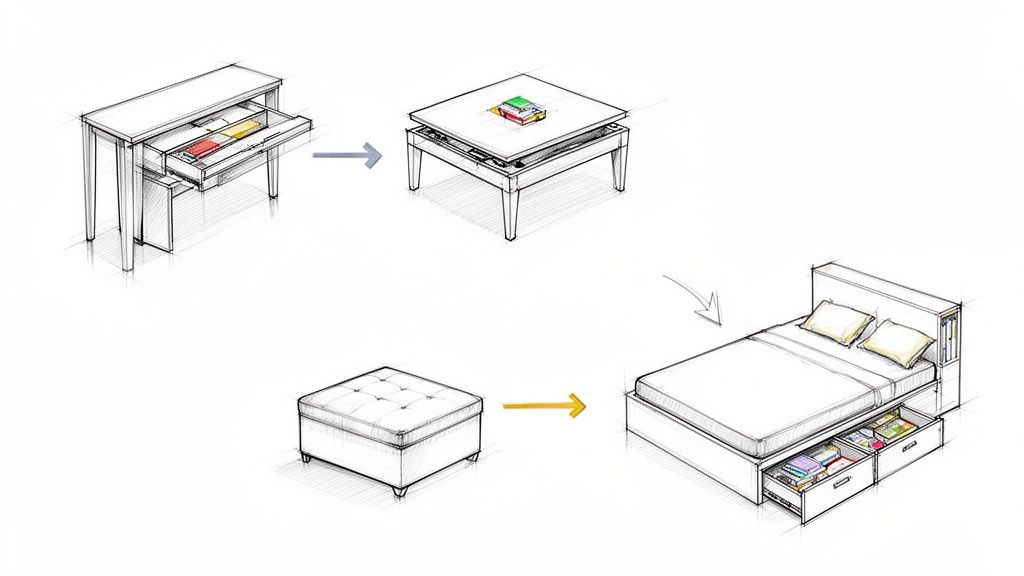
- Multifunctional Design: In a small home, every piece of furniture should earn its keep. Ideally, it needs to do more than one job. Think of a storage ottoman that doubles as a footrest and extra seating, or a console table that can expand into a dining table when company comes over.
- Visual Weight: This is a key designer concept. It’s not about how much something actually weighs, but how heavy it looks. A glass coffee table has far less visual weight than a solid oak one of the exact same dimensions. Choosing furniture that feels lighter—like pieces with raised legs that let you see the floor underneath—instantly creates an illusion of more space.
To give you a quick reference, we've put these foundational ideas into a simple table.
Core Principles for Small Space Furnishing
| Principle | What It Means | Why It Matters |
|---|---|---|
| Scale & Proportion | Ensuring furniture size is appropriate for the room's dimensions and other items. | Prevents a single piece from overwhelming the space and making it feel cramped. |
| Multifunctionality | Choosing pieces that serve two or more purposes (e.g., storage bed, sleeper sofa). | Maximizes utility in limited square footage, reducing the need for extra furniture. |
| Visual Weight | Selecting items that appear lighter and less bulky (e.g., glass, slender legs, light colors). | Creates an illusion of openness and airiness, making the room feel larger than it is. |
Keep these three principles in mind as you shop, and you'll be well on your way to making smart, effective choices for your home.
This problem-solving approach isn't just a design trend; it's becoming a necessity. As more people move to cities, the global market for small-space furniture is growing, projected to hit USD 4.84 billion by 2031.
Ultimately, when you focus on these principles, you stop just filling a room and start thoughtfully designing it. For a deeper dive into making every square foot count, check out these expert tips for decorating a small apartment to maximize space. It's this mindset that helps ensure every piece you bring home works together to create a space that’s not just beautiful, but truly livable.
Mastering the Art of Measurement and Scale
One of the most common mistakes people make when furnishing a small space is buying furniture that’s just plain too big. A piece might look perfect in a large showroom, but once you get it home, it swallows the room whole. Your potential sanctuary suddenly becomes a cramped, frustrating obstacle course.
To avoid this all-too-common headache, you need to get comfortable with a tape measure. This is about more than just the length and width of the floor. It's about thinking through how you actually live in the space—making sure there’s room to walk, open doors, and just… breathe.
Thinking in Three Dimensions
Picture your room like a puzzle. You’re not just fitting pieces flat on the floor; you’re considering how they interact with everything around them. Sure, that sofa might fit flush against the wall, but can you still get into the closet next to it? Will the drawers on that new dresser hit your bed frame when you pull them out?
These are the practical, real-world measurements that make or break a layout. Always, always account for:
- Traffic Flow: You need to leave at least 30 to 36 inches for your main walkways, like the path from the doorway to the sofa. Anything less and you'll be doing a constant side-shuffle.
- Door Swing: Get out your tape measure and check the arc of every door in the room—entry doors, closet doors, even cabinet doors. Make sure they can open fully without smacking into your new furniture.
- Breathing Room: Furniture shouldn't be crammed together or pushed right up against the walls. Leaving just a couple of inches between the back of a sofa and the wall can trick the eye and make the entire room feel bigger and less stuffy.
Here's a helpful tip we often share: Aim for about 18 inches between your coffee table and your sofa. It’s a good distance—close enough to be useful, but with enough space to walk through without banging your shins.
The Power of a Floor Plan
You don't need to be an architect to map out your room. A simple sketch on graph paper can work wonders, but free online room planners are also a great option. These tools let you plug in your room's dimensions and drag-and-drop furniture to see exactly how things will fit before you spend a dime.
This is where you can really visualize scale and proportion. You can test whether a comfy sectional works better than a sofa and two chairs, or see if that round dining table opens up the space more than a rectangular one. It’s a completely risk-free way to experiment and dodge those costly "oops" moments.
This simple strategic process is something we recommend to everyone.
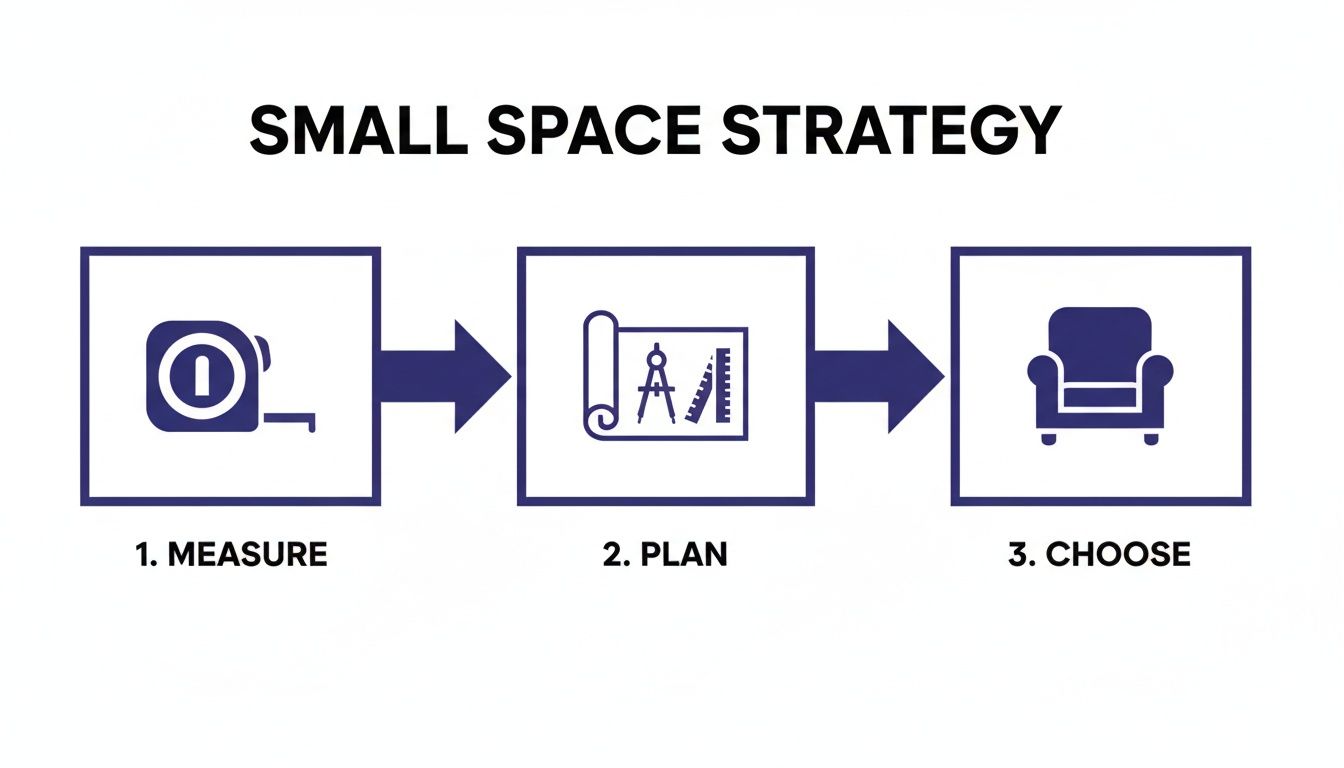
This flow is your roadmap to success: Measure your space accurately, create a solid plan, and then start looking for the right furniture.
Scale Beyond Size
Lastly, don't forget that scale is about more than just physical measurements—it's also about visual weight. Think about it: a delicate armchair on tall, skinny legs takes up the same physical footprint as a bulky, overstuffed one, but it feels infinitely lighter and smaller in the room.
When you nail your measurements and keep visual scale in mind, you’re no longer guessing. You're making informed choices and can pick furniture for your small space with confidence, knowing every piece won't just fit—it will help create a home that feels comfortable, open, and totally functional.
Choosing Furniture That Works Harder for You
When you're working with a small home, every single piece of furniture needs to pull its weight. A simple table or chair that only does one thing can be a luxury you don't have the square footage for. The real heroes of compact living are the clever, hardworking pieces that do two, or even three, jobs at once. This isn't about making sacrifices; it's about making smarter choices that solve real, everyday problems.
Think of it this way: instead of seeing a lack of space, see an opportunity for clever design.
-
Problem: You need a home office but don't have a spare room.
-
Solution: A slim console table tucked behind your sofa can easily double as a desk when you need it.
-
Problem: Your living room is drowning in clutter—blankets, remotes, magazines, you name it.
-
Solution: A storage ottoman gives you a place to prop up your feet, offers extra seating for guests, and provides a hidden spot to stash all that stuff.
Adopting this problem-solving mindset completely changes how you shop for furniture. You start looking for pieces that not only fit your style but also actively make your home work better for you.
Unlocking Potential with Multifunctional Pieces
Multifunctional furniture has become so popular that it's now a huge focus in modern design. In fact, adaptable and convertible pieces now account for over 45% of the small-space furniture market. The folding furniture segment alone is a multi-billion dollar industry, which just goes to show how many people are on the hunt for these exact solutions.
So, let’s get into some of the most effective types of hardworking furniture out there.
Lift-Top Coffee Tables
A lift-top coffee table is a game-changer for any small living room. When it's down, it’s a standard coffee table. But when you need a place to work or a comfortable spot for a casual meal, the top lifts up and forward. Suddenly, you have an elevated surface that's perfect for a laptop or a dinner plate.
This one piece can take the place of a separate desk or clunky TV trays, saving you a ton of floor space while adding some serious practicality.
Expandable Dining Tables
Hosting a dinner party in a small apartment can feel like an impossible dream. An expandable dining table makes it happen. Day-to-day, it can be a compact table for two, maybe pushed against a wall. When guests come over, you can add leaves or unfold it to comfortably seat four, six, or even more.
Look for drop-leaf, butterfly leaf, or refectory-style tables. They all have different ways of expanding, but the goal is the same: to give you the flexibility to match your dining area to the occasion.
Choosing furniture that can adapt is the core principle. A piece that can shrink and grow with your needs helps ensure your home is always ready for both quiet nights in and lively gatherings with friends.
Beds with Built-In Storage
The bedroom is clutter's favorite hiding spot. A bed with built-in storage drawers underneath is one of the most brilliant ways to reclaim that space. Those drawers are perfect for storing off-season clothes, extra bedding, or shoes, keeping everything organized and out of sight without needing a separate, bulky dresser.
If you have a guest room or studio apartment, a sleeper sofa or a Murphy bed that folds up into the wall offers the ultimate space-saving trick, turning a living area into a bedroom in just a few seconds.
Making the Right Choice
When you're picking out multifunctional furniture, you'll want to keep a few things in mind.
- Mechanism Quality: Always test the moving parts. A lift-top table or sleeper sofa should move smoothly and feel solid. A flimsy mechanism will be a constant source of frustration and probably won't hold up to daily use.
- Style Cohesion: Make sure the piece looks good in all its forms. Does that expandable table look just as nice when it's small as it does when it's fully extended?
- True Utility: Be honest with yourself. Are you really going to use the storage in that ottoman, or is it just going to become a forgotten junk drawer? Pick pieces that solve a real, recurring problem in your life.
By focusing on furniture that pulls double or even triple duty, you're not just filling your home—you're investing in smart solutions that make your space more organized, versatile, and just plain enjoyable. To make sure your choices are spot on, dig into some designer furniture for small spaces and style secrets to perfectly blend function with great looks.
Layout Strategies That Make a Room Feel Bigger
Once you’ve got the right furniture, how you arrange it is your secret weapon. A good layout can make a small room feel bigger, more organized, and way more functional. Honestly, sometimes the placement has a bigger impact than the furniture itself. It’s all about creating smart visual cues that trick the eye and improve the flow of your space.
A lot of folks think the answer is to push everything against the walls to open up the middle of the floor. But that can backfire, creating a weird, long “bowling alley” effect. A truly well-designed layout uses every part of the room—walls and vertical space included—to build a real sense of balance and openness.
Go Vertical and Draw the Eye Up
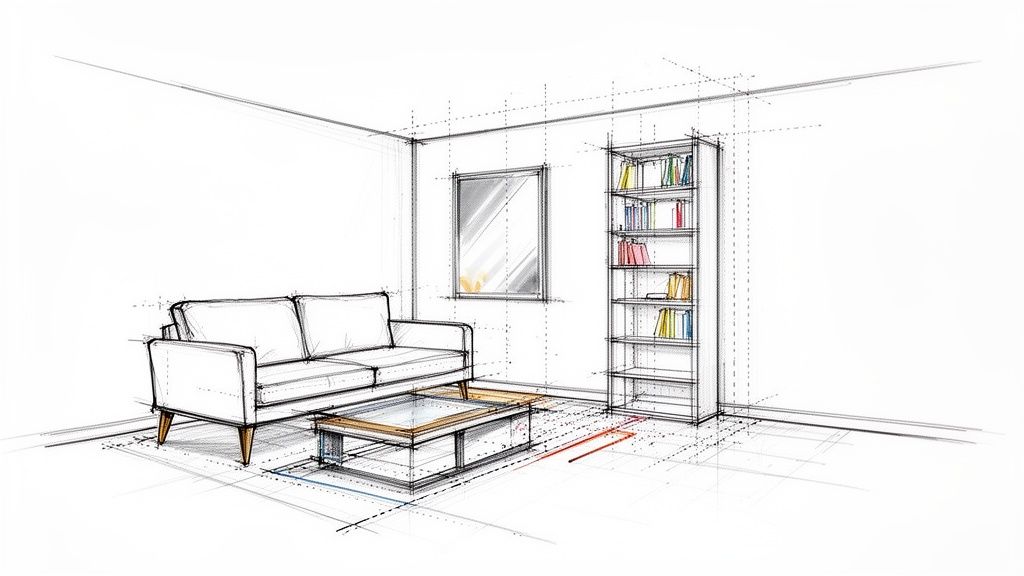
One of the most powerful things you can do is make people look up. When you draw the eye upward, the room’s height becomes a key feature, making the whole space feel taller and grander. This is where tall, narrow furniture becomes your friend.
- Tall Bookcases or Shelving Units: Instead of a low, wide media console that eats up horizontal space, think about a taller entertainment unit or an étagère-style bookshelf. These pieces pull the eye upward while giving you tons of storage on a smaller footprint.
- High-Mounted Curtains: This one’s a classic for a reason. Hang your curtain rods several inches above the window frame and let them extend wider than the window itself. The window will look bigger and your ceilings will feel higher.
- Vertical Art Arrangements: A gallery wall with smaller frames arranged in a column has the same lifting effect as one huge piece of art. It’s a great way to add personality while making the room feel more expansive.
Create Distinct Zones for Different Activities
Even in a tiny studio, you can create the illusion of multiple rooms by setting up distinct “zones.” This little trick helps organize the space and makes it feel more intentional—less like one big, cluttered area. The best part? You can do it all with furniture placement.
An area rug, for instance, can anchor your living room zone, clearly marking it off from a dining or office nook. A strategically placed open-backed bookshelf can work as a room divider, creating separation without completely blocking light or sightlines. This simple act of zoning makes one room feel like it can do it all.
A common mistake is thinking a small space must serve only one purpose. By creating a reading corner with a comfortable chair and a floor lamp, you add another layer of function and personality that makes the whole room feel more complete.
Use Visual Tricks to Expand Your Space
Beyond where you put the big pieces, certain decor choices can create a powerful illusion of depth and openness. Think of these as the finishing touches that tie your whole strategy together.
Choose "Leggy" Furniture
Furniture raised on slender legs—what we call "leggy" furniture"—is a game-changer for small spaces. When you can see the floor under your sofa, chairs, and tables, it creates an unbroken sightline that makes the room feel much larger and airier. In contrast, heavy, boxy furniture that sits flat on the floor can feel bulky and stop the eye in its tracks.
The Strategic Placement of Mirrors
Mirrors are the oldest trick in the book because they just flat-out work. A large mirror can visually double the size of your space. For the biggest impact:
- Place a mirror directly opposite a window. It will reflect all that natural light and the view, making the room feel brighter and more connected to the outdoors.
- Lean a large floor mirror against a wall. This not only creates a dramatic focal point but also adds a real sense of depth.
By combining these layout strategies, you're doing more than just cramming furniture into a room. You’re actually shaping the space, turning its limitations into design opportunities. The end result is a home that feels comfortable, open, and perfectly you.
Using Color and Light to Create an Open Feel
Once you've got the right furniture and layout nailed down, it’s time to talk atmosphere. Two of the most powerful—and most underestimated—tools in your small-space toolkit are color and light. Working together, these elements can completely change how a room feels, turning a cramped space into one that feels open, airy, and inviting.
This isn’t just about painting all your walls white. It’s a bit of visual trickery, really. Light, bright surfaces bounce light around, making a space feel bigger. Dark, matte surfaces do the opposite—they absorb light and can make a room feel a bit closed-in. This simple principle applies to everything, from your paint choices to your furniture.
Building a Light and Airy Color Palette
While it’s true that shades of white, cream, and pale gray are helpful for maximizing the sense of space, a totally colorless room can feel a little sterile. The real goal is to build a palette that’s light and bright but still has some personality.
- Monochromatic Schemes: Sticking to different shades of a single light color (like various tones of beige or a soft blue) creates a seamless, uncluttered look. It helps the eye travel smoothly around the room without getting hung up on jarring transitions.
- Strategic Pops of Color: This is where you bring in your personality. Use your favorite bold colors as accents—think vibrant throw pillows, a stunning piece of art, or a single statement chair. You get all the character without overwhelming the room.
- Cool vs. Warm Tones: Here's a neat trick: colors with cool undertones, like soft blues and greens, tend to recede visually, which can make walls seem farther away than they actually are.
Your largest pieces of furniture, like a sofa or bed frame, have a huge impact on the room's overall feel. Choosing these anchor pieces in lighter neutral fabrics can make a massive difference in preserving an open atmosphere.
The Reflective Power of Materials
Beyond just color, the materials you pick play a huge role in how light behaves in your room. Bringing in reflective and translucent surfaces is one of the easiest ways to crank up the brightness and create a sense of depth.
Think about it this way: a dark, solid wood coffee table feels heavy and seems to suck the light out of its corner. But a glass or acrylic table? It lets light pass right through, allowing you to see the floor underneath and making the whole area feel more open.
Consider working in some of these materials:
- Glass and Acrylic: Perfect for coffee tables, console tables, or even a small dining table.
- Mirrored Surfaces: A well-placed mirror or a mirrored closet door can visually double the space. It’s an old trick for a reason!
- Light-Toned Woods: Woods like birch, maple, or ash have much less visual weight than dark walnut or espresso.
- Polished Metals: A little bit of chrome, brushed nickel, or brass on table legs and light fixtures can catch the light and add a welcome touch of sparkle.
Layering Light to Eliminate Shadows
A single, harsh overhead light is a small room’s worst enemy. It flattens everything out and casts dark, gloomy shadows in the corners. The solution is to layer your lighting by combining three different types to create a warm, balanced glow that makes the space feel surprisingly spacious.
- Ambient Lighting: This is your main light source. Think of a flush-mount ceiling fixture or recessed lighting that provides general illumination.
- Task Lighting: This is your focused, functional light for specific activities. A floor lamp by a reading chair or under-cabinet lighting in the kitchen are perfect examples.
- Accent Lighting: This is the fun part. Accent lighting adds dimension and highlights features you love, like a small lamp on a bookshelf or a picture light over a piece of art.
By combining these three layers, you chase away all those dark corners and create a bright, welcoming environment where the room's boundaries seem to just melt away. It’s the finishing touch that makes all your other choices—from the right furniture for small spaces to your color palette—truly shine.
How to Confidently Plan and Purchase Your Furniture
Alright, this is where the rubber meets the road. You’ve got a solid plan, a clear vision for your layout, and a style you’re excited about. Now it’s time to turn that well-thought-out strategy into reality by making smart, confident purchases that you’ll be happy with for years to come.
First things first: set some practical priorities. It's rare to furnish an entire space all at once, so figure out where to put your money first. It's often wise to invest in the pieces you use the most. Think about your sofa, your mattress, or a dining table that also serves as your desk. These are the workhorses of your home, and investing in quality here really pays off in long-term comfort and durability.
From Digital Plan to Physical Reality
Online room planners are amazing tools for mapping out your vision, but they can't tell you the whole story. There is simply no substitute for getting out there and experiencing furniture in person. A photograph can’t convey how a fabric feels against your skin, how truly comfortable a chair is after you’ve sat in it for a minute, or how the sheer size of a piece feels in a real, three-dimensional room.
Seeing your top contenders firsthand is a game-changer. It allows you to:
- Judge True Scale: Get a real feel for a piece’s height, depth, and overall presence in a way that on-screen dimensions just can’t capture.
- Test Comfort and Quality: Go ahead, sit on that sofa. Open and close the dresser drawers. Give that table a little nudge to check its sturdiness. This is the crucial step that prevents buyer’s remorse.
- Confirm Colors and Textures: See how that upholstery fabric or wood finish looks under real-world lighting, which is often completely different from what you see in a polished studio photo.
The Value of a Knowledgeable Guide
Let's be honest, navigating the world of furniture can get complicated, especially when you’re dealing with the unique challenges of a small space. This is where leaning on the experience of a knowledgeable team becomes helpful. A seasoned furniture expert can often suggest a creative solution you hadn’t even thought of, or point you to a multifunctional piece that perfectly solves one of your biggest headaches.
A great furniture professional doesn’t just sell you an item; they help you solve a puzzle. They listen to your needs, understand your space constraints, and help you find the right fit for both your home and your budget.
This kind of collaborative approach takes so much of the pressure and guesswork out of the process. The U.S. furniture market is expected to hit USD 265.56 billion in 2026, which means more innovative, space-saving options are hitting the market every day. For our friends and neighbors in North Georgia, having an experienced guide can help you sift through the noise and find the gems. If you want to dive deeper, you can check out more about the U.S. furniture market trends on Statista.com.
By zeroing in on your needs, setting a realistic budget, and taking the time to see your options in person, you can move forward with total confidence. The goal here isn't just to buy furniture; it's to make informed decisions that fill your home with pieces you’ll absolutely love for years to come.
Common Questions About Furnishing Small Spaces
Even after you’ve got a solid plan, a few nagging questions can pop up when you're dealing with a small space. Don’t worry, we get it. To help you move forward with total confidence, we’ve put together answers to a few of the most common concerns we hear from shoppers every single day.
What Is the Biggest Mistake People Make When Furnishing a Small Space?
Hands down, the number one issue we see is choosing furniture that’s totally out of scale with the room. This usually means picking pieces that are way too big or just look too visually heavy for the space. A single overstuffed sofa or a massive, dark wood media console can instantly make a room feel cramped and uncomfortable.
The fix for this is all in the prep work. Before you even think about shopping, you have to measure your room, note the dimensions of any furniture you're considering, and sketch out a simple floor plan. Taking this one step will save you from that sinking feeling when a beautiful piece of furniture arrives and just completely swallows your home.
Are Dark Colors a Bad Idea for Small Rooms?
Not at all! But you do need to use them strategically. While a light, airy color palette is a safe bet for making a space feel bigger, dark colors can create a wonderfully cozy, dramatic, and sophisticated vibe. It’s all about balance.
If you go for a deep, rich color on a wall, you’ll need to lighten things up elsewhere. Try pairing it with lighter-colored furniture, adding reflective surfaces like a big mirror or a metallic lamp, and making sure you have plenty of layered lighting. This combo keeps the space from feeling like a cave and turns it into an intentional, stylish retreat.
Here's a helpful tip: a dark, moody accent wall behind a light-colored sofa can actually create an illusion of depth, making that wall seem farther away. It's a powerful designer trick that adds a ton of character without shrinking the room.
How Can I Add Storage Without Adding Bulky Furniture?
The trick here is to think vertically and look for pieces that pull double duty. Your walls and the hidden potential inside your furniture are your best friends when it comes to storage.
- Go Vertical: Instead of a low, wide bookcase that eats up floor space, go for a tall, narrow one. Floating wall shelves are also brilliant because they use wall space without taking up any floor space. This move also draws the eye upward, which makes the whole room feel taller.
- Embrace Multifunctionality: This is where you can get really creative with furniture for small spaces. Look for an ottoman that opens up to hide blankets, a coffee table with drawers, or a bed frame with built-in storage underneath. These pieces cleverly work storage into the furniture you already need.
Should All My Furniture Match in a Small Room?
Definitely not. In fact, buying a perfectly matched "room-in-a-box" set can sometimes make a small space feel a little dated and one-dimensional. A much more modern and effective approach is to create a cohesive look through a consistent color palette, similar materials, or a shared style (like mid-century modern or industrial).
Mixing and matching adds personality and keeps the eye moving. It lets you build a space that feels collected over time and uniquely yours. As long as the scale and proportions of the pieces work well together, a thoughtfully curated room will always feel more spacious and interesting than one filled with a generic, cookie-cutter set.
At Woodstock Furniture & Mattress Outlet, our team is here to help you work through these questions and find real, practical solutions for your home. Stop by one of our showrooms to see these ideas in action and explore a great selection of furniture that's well-suited for your space. Explore your options today at Woodstock Outlet.