Tag: backyard design

  • 8 Outdoor Fire Pit Seating Ideas for 2026

    8 Outdoor Fire Pit Seating Ideas for 2026

    A fire pit usually disappoints in the same way. The flame looks inviting, everyone heads outside, and within ten minutes one person is too hot, another is too far back to feel the heat, and someone has to stand up so others can squeeze through.

    Good seating solves that before you buy a single chair. The key is balancing comfort, circulation, and safe spacing so the area works for conversation instead of fighting it. That matters even more on patios that are narrow, off-center, or shared with a grill, steps, or a pool.

    Most homeowners are not choosing between chair styles in a vacuum. They are solving a specific problem. A small patio may need compact seats with open sightlines. A larger family setup may need flexible pieces that can handle extra guests without turning the fire pit into a crowded ring. In Georgia, material choice matters too. Humidity, pollen, and long warm seasons can make high-maintenance wood finishes and thick cushions harder to live with than they look in photos.

    Start with layout geometry. Round fire pits tend to work best with individual seats that can arc around the flame. Square and rectangular pits often pair better with benches, loveseats, or modular pieces that follow the lines of the patio. Keep enough room between the fire feature and the seating for comfort, and enough space behind the chairs for people to pass without brushing heat or backing into furniture.

    The sections that follow look at eight seating ideas through that practical lens. Not just what each piece looks like, but which problem it solves, where it falls short, and how to choose materials and spacing that hold up in real backyard use.

    1. Adirondack Chairs

    If you want a setup that almost always works, start here. Adirondack chairs have earned their place around fire pits because they solve several problems at once. They’re individual seats, so people can shift position without disturbing anyone else, and the wide arms give guests a natural place for a drink, plate, or blanket.

    They also make layout planning simpler. Around a fire pit, individual chairs are forgiving. If your patio isn’t perfectly round or your pavers don’t line up evenly, Adirondacks still look intentional.

    Why they work so often

    The shape helps. A sloped seat and angled back encourage relaxed posture, which suits an evening fire better than a rigid upright dining chair. Materials matter too. In Georgia’s humidity, poly lumber versions are easier to live with than natural wood if you don’t want seasonal sealing.

    Real examples span several price points and looks. Polywood is a familiar option for low-maintenance composite construction. Teak District leans more natural and classic. Coastal homes often use painted wood versions, while many everyday patios mix neutral composite chairs with outdoor cushions to soften the look.

    Practical rule: Adirondacks work best when every seat has a clear view of the flame and an easy path in and out. Don’t pack the circle too tightly just because the chairs technically fit.

    Where they fall short

    They’re not the easiest chairs to get in and out of. That’s fine for some households, but less ideal for older guests or anyone who prefers a higher, more upright seat. They also take up more visual space than people think because of the wide arms and sloped profile.

    A few ways to make them work better:

    • Choose the right material: Composite or poly styles usually handle moisture with less upkeep than unfinished wood.
    • Think in mixed seating: Pair Adirondacks with one bench or two upright side chairs if you want more flexibility.
    • Plan storage early: If you won’t leave them out year-round, stackable or lighter-weight versions are easier to manage.

    For classic, low-fuss outdoor fire pit seating ideas, Adirondacks are still one of the safest bets.

    2. Outdoor Sectional Sofas

    A sectional suits the fire pit area that gets used like a real outdoor room. One person stretches out after dinner, two kids pile into the corner, and a few guests stay longer than planned because nobody is balancing on a stiff chair.

    It solves a different problem than Adirondacks. A sectional helps when you need to seat several people without scattering furniture all over the patio, and it can define the layout around a round pit or a rectangular fire table. In U-shaped arrangements, sectionals and benches can support groups of 6 to 12 people while maintaining 36- to 48-inch pathways and at least 24 inches of clear space behind chairs, with outdoor sectional sofas also rising in popularity according to Houzz data cited by SERWALL. Those spacing rules matter because deep cushions eat up floor area fast.

    A modern outdoor patio set with a circular fire pit and sectional sofa on stone tiles.

    Best for larger gatherings

    The main advantage is social. People sit closer together, conversation flows across one continuous piece, and the fire pit reads as part of a lounge setup instead of a ring of separate chairs.

    Modular sectionals are usually the smartest version to buy. They let you adjust the footprint if you change the fire feature later, add a side table, or need to open up more walking space for parties. Brands like Room & Board and West Elm have popular modular options, but the brand matters less than the proportions. Check corner depth, arm width, and overall seat height before getting attached to a look.

    For Georgia patios, cushion fabric and frame material deserve extra attention. Aluminum frames handle humidity well and are easier to move than steel. Performance fabrics with quick-dry foam hold up better through summer storms, pollen, and long stretches of heat. Natural teak frames can look great, but they ask for more upkeep and usually come with a higher price.

    What people get wrong

    The biggest mistake is scale. A sectional that looks comfortable in a showroom can overwhelm a modest patio once you account for fire pit clearance, legroom, and the path people need to walk around the back.

    Layout geometry matters here. L-shaped sectionals work better in corners or along the edge of a patio where they can anchor the space without boxing it in. U-shaped sectionals fit bigger pads and larger groups, but they need careful spacing so people on the ends do not feel too far from the flame. If the seat depth is very generous, the fire pit may need to be slightly larger or closer than you first planned, while still staying within the manufacturer's safety guidance.

    A sectional should frame the fire, not crowd it.

    There is also a comfort trade-off. Sectionals are excellent for lingering, but they are less flexible than separate chairs when you want every guest facing the flame equally or when older family members prefer a firmer, higher seat. If you like the sofa look but want better mobility, use a smaller sectional as the anchor and add one or two movable chairs to round out the layout.

    3. Outdoor Lounge Chairs and Recliners

    A fire pit setup changes fast once someone wants to stay out for two hours instead of twenty minutes. Standard patio chairs can handle a quick drink. Lounge chairs and recliners are better for the person who reads outside, stretches out after dinner, or wants neck and back support that upright seating does not give.

    They solve a specific problem. Some patios need seating for longer stays, not the highest headcount.

    That shift affects layout. Lounge seating usually works best in smaller groupings of two to four seats, where comfort matters more than packing in extra guests. On a large patio, they can anchor one side of the fire pit while simpler chairs handle overflow. On a tight patio, a full ring of recliners often eats up too much clearance and makes the space feel crowded before anyone even sits down.

    Best for relaxed, longer stays

    The main advantage is posture flexibility. A good lounge chair supports a more natural sitting angle, and a recliner lets each person adjust based on height, mobility, or how close they want to feel to the heat. That matters in real use. People who are happy in a dining-height chair for half an hour may start shifting constantly later in the evening.

    There is a trade-off, though. The deeper the seat and the farther the chair reclines, the more distance you may need between the seat front and the fire pit to keep legroom comfortable and traffic paths open. In Georgia, where outdoor spaces often stay in use well into warm evenings, that extra space matters even more because people tend to spread out, move around, and stay outside longer.

    Material choice matters here too. Aluminum frames are the practical pick if you expect humidity, summer storms, and frequent furniture moves. Sling loungers dry faster and need less cushion storage, but they usually feel less plush. Cushioned lounge chairs are more inviting for long evenings, but the cushions need quick-dry fills and fabrics that can handle moisture, pollen, and strong sun without getting musty or faded.

    Where they work best

    Lounge chairs fit naturally in a few common situations:

    • Couples' setups: Two lounge chairs across from each other or slightly angled toward a round pit create a quiet, easy layout.
    • Mixed-seating patios: Use two loungers as the comfort seats, then add more upright chairs for guests who prefer easier entry and exit.
    • Poolsides or deep patios: Recliners need room behind and in front, so they make more sense where the footprint is generous.

    Angle matters more than people expect. Chairs pointed straight at the flame can feel formal and rigid. Turn them slightly inward and conversation gets easier without losing the view of the fire.

    What people get wrong

    The common mistake is treating recliners like standard club chairs. They are not. Once the back tilts or the footrest comes out, the chair claims more space and can block the walking path behind it. I usually recommend testing the fully open position on paper or with painter's tape before buying anything bulky.

    Seat height matters too. Very low loungers look great in photos, but they are not ideal for every household. Older adults, anyone with knee issues, and guests who like to sit upright by the fire often do better with a lounge chair that has a slightly higher seat and firmer cushion.

    Lounge seating should make the fire pit area more restful, not harder to move through.

    For a lot of backyards, the best answer is restraint. Two well-made lounge chairs or recliners can add comfort without turning the whole fire pit area into a row of oversized furniture. That gives you a softer, more relaxed zone while keeping the layout functional.

    4. Wooden Benches and Picnic Seating

    A fire pit area usually starts to feel cramped when every guest needs a full chair footprint. Benches solve that problem fast. They let you seat more people along the edge of a patio, and they keep the layout from looking overfurnished.

    They also work well for households that host in different group sizes. On a quiet weeknight, one bench and two chairs may be enough. When friends come over, the bench absorbs extra people without forcing a full furniture reset.

    Best for compact footprints and larger groups

    Wooden benches make sense when the main problem is capacity, not all-night lounging. A curved bench can follow the shape of a round fire pit and keep conversation angles more natural. A straight bench fits better along a hard boundary such as a retaining wall, deck rail, or fence line.

    Picnic-style seating has a place too, especially in backyards where the fire pit doubles as a casual hangout spot for kids, snacks, or board games. The trade-off is legroom. Fixed picnic benches can make entry and exit awkward, so they are usually better in open yards than on tight patios where people need to pass behind the seats.

    One practical layout I like for small patios is a built-in or freestanding bench on one side of the pit, then lighter chairs opposite it. That gives you efficient seating on the tight side and easier pull-up access on the open side. It also avoids the common problem of two long benches facing each other while everyone twists sideways to see the fire.

    Bench seating saves space well, but comfort depends on back support, seat depth, and cushion quality.

    Material choices that hold up outdoors

    Wood changes the feel of the space more than metal or resin does. A chunky, rustic bench feels relaxed and informal. A cleaner teak or eucalyptus bench reads a little sharper and works better on patios that already have a more refined look.

    In Georgia, moisture and heat matter as much as appearance. Untreated wood can swell, check, or mildew faster than homeowners expect, especially after humid stretches and afternoon storms. Sealed hardwoods and naturally rot-resistant species are easier to live with. They still need maintenance, but they usually age better than softwoods left exposed.

    Cushions help a lot here. They make a bench more usable for longer conversations, but they also add one more thing to manage when the weather turns. If storms roll in often at your house, use quick-dry inserts or choose bench seating that still feels acceptable without thick cushions.

    What people get wrong

    The biggest mistake is treating a bench like a universal replacement for chairs. It is not. Benches are efficient, but they do not suit every guest equally well. Older adults often prefer arms and a defined seat edge. Anyone staying out for a long evening may want more back support than a simple backless bench gives.

    The second mistake is ignoring clearance. A bench may look slimmer than a set of chairs, but people still need room to slide in, stand up, and walk around the fire pit safely. Leave enough distance so knees are not pushed too close to the heat, and keep a clear path behind the seating if the bench sits near a wall or planter.

    For many patios, the best answer is mixed seating. Use a bench where you need efficiency, then add a couple of chairs where you need comfort and easy access. That usually gives the fire pit area a more natural feel and handles real-life use better than an all-bench setup.

    5. Swivel and Rocking Chairs

    This is the category people don’t always think they need until they sit in one. Swivel and rocking chairs add movement, which changes how the whole seating area feels.

    They’re especially useful on patios where the fire pit isn’t the only view. Maybe you also face a pool, a tree line, or the rest of the yard where kids are playing. A swivel chair lets someone stay part of the conversation without staying locked in one direction.

    Why movement matters

    With fixed seating, every chair asks the user to commit to one angle. Swivel chairs are more forgiving. That makes them useful in multipurpose outdoor spaces where people shift between talking, watching the fire, and checking on what’s happening elsewhere.

    Rockers bring a different feel. They’re slower and more nostalgic. For some households, that gentle motion is exactly what makes the patio relaxing. For others, it’s less practical because rocking chairs need room behind them and can feel less stable on uneven surfaces.

    A few practical buying notes help here:

    • Look for rust resistance: Powder-coated finishes hold up better in humid conditions.
    • Test the motion: A stiff swivel or jerky rocker gets old fast.
    • Leave room behind the chair: Rockers need space to move without clipping another seat or a wall.

    Where they fit best

    Swivel chairs usually shine as part of a mixed layout rather than a full matching set. Two swivel chairs opposite a loveseat or bench can make the arrangement feel more dynamic without turning the whole space into a furniture showroom experiment.

    Rockers tend to work better on covered patios or more traditional settings where the motion matches the style. If the fire pit area is very modern and low-profile, a rocker can sometimes look visually out of place even if it feels comfortable.

    The bottom line is simple. If your patio serves more than one purpose, a little movement in the seating can make the whole area easier to use.

    6. Metal Fire Pit Seating and Conversation Sets

    Sometimes the easiest decision is to buy the group, not build the group one piece at a time. That’s the appeal of outdoor conversation sets.

    They’re a good solution for homeowners who want a coordinated look and don’t want to spend weeks figuring out whether one chair is too low, another is too deep, and the coffee table blocks the fire pit. A metal-frame set can simplify that process, especially if the pieces were designed to live together from the start.

    Best for a polished, matched layout

    Aluminum is usually the most practical metal here because it’s lighter and easier to move than steel. Cushioned conversation sets also bridge the gap between upright dining-style chairs and deep lounge furniture. They often feel balanced for guests because they’re comfortable but not hard to exit.

    Symmetry matters more than people realize with these sets. Outland Living notes that symmetry-matched seating layouts such as circular sofas around round pits or U-shaped seating around rectangular pits correlate with 85% user satisfaction in outdoor living surveys. That matches what many people notice in real patios. When the furniture shape fits the fire feature shape, the whole area feels calmer and easier to use.

    The real trade-off

    Metal can get hot in direct sun and feel hard-edged if the cushions are thin or cheap. That doesn’t make metal a bad choice. It just means you should pay attention to cushion quality and frame finish instead of assuming all conversation sets are basically the same.

    What tends to work well:

    • Aluminum frames: Easier to shift when you need to clean or reconfigure.
    • Removable cushion covers: More practical for pollen, spills, and damp weather.
    • Built-in coordination: Matching seat height and depth usually creates better sightlines around the pit.

    What tends not to work well is choosing a set solely by appearance, then realizing the seats are so low that everyone feels swallowed by the cushions. If you can, test seat height and arm height before deciding.

    7. Ottoman Cubes and Poufs with Storage

    Not every fire pit layout needs more full-size chairs. Sometimes it needs flexibility. Ottoman cubes and poufs are useful when the guest list changes often, the patio is tight, or you want seating that can shift between footrest, side table, and extra perch.

    They’re especially smart for renters or anyone who doesn’t want to commit every square foot of the patio to large furniture. If your normal setup is four main seats but you occasionally host more people, poufs can handle the overflow without making the patio look overfurnished on ordinary nights.

    A pencil sketch illustration showing various outdoor fire pit seating ideas including cubes and round cushions.

    Best for flexible seating

    Storage ottomans do more than add seats. They also help with the stuff that accumulates around a fire pit, like blankets, roasting tools, or extra outdoor pillows. That kind of hidden function makes a patio easier to maintain because the setup feels ready without staying cluttered.

    This is one of the few categories where visual lightness really matters. Cubes and poufs can tuck under a console, slide beside a chair, or move to the perimeter when not needed. That makes them useful around both compact pits and larger conversation areas.

    Their limitations

    Most poufs aren’t ideal as primary seating for an entire evening. They’re lower, softer, and often harder for some guests to get up from. Storage ottomans can be sturdier, but they still work best as support players rather than the whole cast.

    Extra seating is only helpful if guests can use it comfortably. Keep poufs for casual overflow, not as the only seat you offer older relatives or anyone who needs firmer support.

    A good setup might use two lounge chairs, a loveseat, and a pair of movable ottomans that can become extra seats when needed. Neutral colors usually age better visually, especially if you already have patterned cushions elsewhere in the space.

    8. Hanging and Suspended Seating

    Hanging seating gets attention fast. Egg chairs, suspended pods, and hammock-style seats add personality that standard patio chairs usually don’t. They can be comfortable, but they’re rarely the best choice for every seat around a fire pit.

    That’s why I usually think of them as accent seating. One or two suspended seats can make the area feel more layered and interesting. Building the whole fire pit layout around them often creates more problems than it solves.

    A look at varied layouts helps make that point clearer.

    Best as a feature, not the whole plan

    Suspended seating works best when the fire pit zone is part of a larger outdoor room. Maybe the hanging chair sits just off the main circle, giving one person a cozy perch while the main seating stays grounded and social. That arrangement feels intentional. It also avoids the issue of everyone swinging at slightly different angles while trying to talk.

    There’s also a practical code and compliance side to built-in or unusual seating forms. For low-profile or more customized fire pit setups, permit checks and local rules matter more than many homeowners expect. The Unilock article highlights the gap around local rule awareness and notes projected permitting and HOA friction concerns tied to fire features and code-compliant alternatives such as modular seating in some areas in this fire pit seating discussion. If you’re considering anything recessed, attached to a structure, or heavily customized, it’s worth checking local requirements before buying furniture around the idea.

    Installation matters more than style

    A hanging chair is only as good as its support. Freestanding frames are simpler. Ceiling-mounted or pergola-mounted versions need real structural confidence, not guesswork. Even when the chair itself is weather-friendly, the hardware and anchor points have to be suitable for outdoor use.

    This video gives a helpful visual sense of how suspended seating changes an outdoor setup:

    What usually works best is balance. Pair one hanging chair with grounded seating that’s easier for everyday use. That way you get the visual appeal without making the fire pit area harder to move through or less welcoming for guests who prefer stable seating.

    Outdoor Fire Pit Seating: 8-Item Comparison

    Seating Type Implementation complexity Resource requirements Expected outcomes Ideal use cases Key advantages
    Adirondack Chairs Low, minimal assembly or placement Moderate, weather‑resistant wood/composite, occasional sealant Comfortable, classic lounging and upward sightlines to fire Casual fire‑pit setups, coastal and rustic yards, mixed seating circles Iconic aesthetic, very comfortable, durable options, relatively affordable
    Outdoor Sectional Sofas High, layout planning and assembly High, large footprint, premium fabrics, cushions storage Defined lounge area, accommodates large groups, upscale look Large patios, frequent entertaining, modern outdoor living Modular customization, ample cushioned seating, cohesive design
    Outdoor Lounge Chairs & Recliners Low–Medium, some assembly, adjustable setup Medium, deeper clearance, cushions maintenance Personalized reclined comfort for relaxation Small patios, reclining relaxation, sunbathing near fire pit Multi‑position comfort, ergonomic support, portable options
    Wooden Benches & Picnic Seating Low, simple placement or basic assembly Moderate, durable wood, periodic staining/sealing Communal, space‑efficient seating with rustic charm Cottage/farmhouse yards, family gatherings, linear seating needs Affordable per seat, sturdy, low tech, accommodates multiple people
    Swivel & Rocking Chairs Medium, mechanism setup and spacing Medium, moving parts maintenance, rust‑resistant finishes Interactive, soothing motion and flexible viewing angles Relaxation areas, conversational groupings, coastal or traditional styles Motion comfort, 360° views (swivel), versatile style options
    Metal Fire Pit Seating & Conversation Sets Medium, assembly and clearance planning Medium–High, heavy frames, heat‑resistant fabrics, cushions care Coordinated, durable seating optimized for proximity to fire Purpose‑built fire‑pit areas, cohesive patio sets, seasonal collections Built for heat resistance, cohesive sets, robust and low‑maintenance frames
    Ottoman Cubes & Poufs with Storage Low, plug‑and‑play placement Low, compact, lightweight, affordable materials Flexible overflow seating and multifunctional surface/storage Small spaces, extra seating for guests, multifunctional layouts Highly portable, storage options, budget‑friendly, versatile use
    Hanging & Suspended Seating High, structural support and professional installation High, mounting hardware, pergola/frame or tree, inspection Distinctive focal seating offering cocooning comfort Feature installations, small‑footprint focal points, modern/boho designs Unique aesthetic, space‑efficient footprint, memorable guest experience

    Bringing Your Fire Pit Vision to Life

    A fire pit setup usually looks great on day one. The test comes on a cool Friday night when six people show up, someone needs to pass behind a chair with a drink, and the seat closest to the flame feels too hot. That is when layout decisions either work or start causing friction.

    The strongest outdoor fire pit seating ideas solve a specific problem. A sectional helps if you host often and want a clear social zone. A bench-and-chair mix makes better use of a tight patio where every inch matters. Two Adirondacks can be the right answer for a quiet corner, especially if you want simple maintenance and a clear view of the fire without filling the whole space.

    Start with geometry before style. Round fire pits usually pair best with chairs spaced in an arc or full circle, because everyone gets a similar sightline and conversation feels balanced. Rectangular pits often work better with a U-shape or parallel seating, especially in long, narrow patios. The trade-off is circulation. If you crowd the perimeter to add one more seat, people end up turning sideways to pass, and the area feels smaller than it is.

    Clearance matters just as much as comfort. Seats need enough distance from the fire to feel warm, not harsh, and people need a walking path that stays usable even when chairs are pulled out. In practice, I tell homeowners to picture the space in use, not just from above on a sketch. Reclined backs, side tables, and foot traffic all take more room than expected.

    Georgia weather changes the material conversation. Humidity, pollen, strong summer sun, and surprise rain punish high-maintenance furniture fast. Composite, powder-coated aluminum, and outdoor fabrics with removable covers are often easier to live with through a full season. Natural wood still has a place, especially if you like the look of teak or acacia, but it asks for regular care and usually makes more sense when you are willing to stay on top of cleaning and sealing.

    A simple filter helps narrow the field:
    How many people do you seat on a normal night?
    How much upkeep will you do in July?
    Do you want the area to feel conversational, loungy, or flexible enough to rearrange for guests?

    Answer those truthfully, and the right seating style usually becomes clear.

    If you want to compare materials, seat heights, and footprint in person, a showroom visit can save a lot of trial and error. Woodstock Furniture & Mattress Outlet is one regional option with outdoor furniture and fire pit seating setups that let you check comfort and scale before making a patio decision. You can also explore more planning inspiration through these fire pit installation ideas if you are still shaping the overall space.

    If you want help comparing patio seating styles in person, Woodstock Furniture & Mattress Outlet is a practical place to start. You can look at outdoor chairs, sectionals, and coordinated sets side by side, check comfort before you commit, and get guidance on what may fit your space and how you plan to use it.
  • Inspiring Outdoor Seating Area Ideas for 2026

    Inspiring Outdoor Seating Area Ideas for 2026

    So, you’re dreaming of the perfect outdoor oasis—a place to sip your morning coffee, host a great backyard barbecue, or just unwind after a long week. The best outdoor spaces feel like a natural extension of your home, and getting there all starts with a little bit of planning.

    How to Start Planning Your Outdoor Seating Area

    Top-down architectural drawing of an outdoor living area with coffee, lounge, and dining zones.

    Before you even think about scrolling through pictures of patio sets, the most important first step is to figure out what you really want to do with the space. Thinking about how you’ll genuinely use it—not just how it looks in a magazine—is the secret to creating a spot you’ll love for years. This vision becomes the blueprint for everything that comes next.

    It’s interesting to think that this focus on private, functional backyards is a relatively modern idea. The big shift from front porches to secluded backyard patios was really driven by the suburban boom in the U.S. after World War II. With over 13 million new homes built between 1945 and 1954, families started turning their yards into personal retreats, which kicked off a huge demand for patio furniture. By 1960, an estimated 85% of suburban homes had a patio or deck. You can actually learn more about how the American backyard was invented through the Smithsonian's historical insights.

    Define Your Space’s Core Purpose

    First things first, ask yourself: how do I picture myself spending time out here? Your answer is the key that unlocks all your other decisions, from the furniture you pick to the way you arrange it. Are you building a social hub or a private escape?

    • Social Gatherings: If you enjoy hosting, your plan might revolve around a large dining table or a comfy chat set centered on a fire pit. The goal here is to make it easy for people to mingle and relax together.
    • Family Relaxation: For everyday lounging with the family, a durable outdoor sectional with deep, cozy cushions might be a great fit. It creates a casual, kick-your-feet-up kind of vibe that everyone can enjoy.
    • Quiet Retreat: If you’re dreaming of a peaceful hideaway, your focus might be on a single, super-comfortable chaise lounge for soaking up the sun or a small bistro set tucked in a quiet corner.

    Strong outdoor designs are a mirror of how you actually live. If you prefer small get-togethers, a massive seating area designed for a crowd won't feel right. Designing around your lifestyle is what makes an outdoor space feel truly effortless.

    Assess and Measure Your Available Area

    Okay, now for the practical part. It’s time to get a real sense of the space you’re working with. Don’t just eyeball it—grab a tape measure. Knowing your exact dimensions is crucial for picking furniture that fits properly without making your patio feel cluttered.

    Measure the full length and width of your deck, patio, or the grassy area you plan to use. Be sure to note the location of anything permanent, like doors, steps, pillars, or a built-in grill. This simple step can save you from the headache of buying a beautiful dining set, only to realize it completely blocks the path to the back door.

    Drawing a quick, simple sketch of the area is also incredibly helpful. Mark down your measurements and any of those fixed features. This little map lets you experiment with different layouts on paper before you buy a single thing, ensuring your final arrangement is both beautiful and functional.

    Choosing a Functional Layout for Your Space

    A great outdoor escape starts long before you pick out a single piece of furniture. It begins with the layout. Think of it as the blueprint for your backyard oasis—it determines how people move, where they gather, and the overall vibe of the space. Getting the layout right is the difference between a patio that just has furniture and one that actually invites you to sit down and stay a while.

    A good layout isn't just about fitting in as many chairs as possible. It's about creating a space that works for you. Whether you're picturing big family cookouts or quiet mornings with a cup of coffee, a little intentional planning can turn any deck or patio into your favorite "room" in the house.

    Designing for Your Primary Activity

    So, how do you plan to use your outdoor space? The best layouts are born from honesty about how you and your family will actually live out there. A setup designed for large parties will look and feel totally different from one built for cozy, intimate chats.

    • The Conversational Circle: This is a go-to for social gatherings. Arrange your sofas, sectional, or chairs in a U-shape or a full circle. The key is to have a central anchor point, like a fire pit or a coffee table, that brings everyone together and encourages face-to-face conversation.

    • The Dining-Focused Setup: If al fresco dining is your main goal, the dining table is your star player. Make sure you leave plenty of room around the table for chairs to be pulled out easily and for people to walk past without squeezing by. A good rule of thumb is to allow at least 36 inches of clearance for any main walkways.

    • The Lounging Zone: For those who just want to kick back, relax, and soak up some sun, a layout with chaise lounges or deep-seated armchairs is perfect. Position them to face the best view or to catch the afternoon sun. Just be sure to place small side tables within arm's reach for your drink, book, or phone.

    Creating Clear Zones and Pathways

    Even if your patio is on the smaller side, creating distinct "zones" can make a world of difference. A zone is just a designated spot for a specific purpose—think a dining zone and a separate lounging zone. An easy trick here is to use an outdoor rug to visually define a seating area and anchor all the furniture.

    A well-planned layout ensures your outdoor space never feels cramped, even when it’s full of people. The goal is to create natural, intuitive pathways that allow guests to move freely without bumping into furniture or each other.

    To make this happen, you have to think about traffic flow. How will people get from the back door to the chairs? Is the path to the grill clear? Keeping these walkways open and unobstructed is just as crucial as arranging the seats themselves.

    Matching Furniture Scale to Your Space

    One of the most common problems homeowners face is choosing furniture that’s the wrong size for their space. Huge, oversized furniture can swallow a small patio, while undersized pieces can look lost and awkward on a large deck.

    Before you buy, grab a tape measure and sketch out a quick floor plan. This simple step helps you visualize how different pieces will fit together and, just as importantly, ensures you leave enough "negative space." That empty area is what makes a layout feel balanced, open, and inviting.

    To give you a head start, we've put together a few of the most common layouts and some helpful tips for getting them just right.

    Common Layouts for Outdoor Seating Areas

    This handy table breaks down some popular arrangements to help you find the perfect fit for your patio, deck, or porch.

    Layout Type Best For Key Furniture Arrangement Tip
    Conversational Socializing, evening chats Sectional, sofa, armchairs, fire pit, coffee table Arrange seating to face inward, creating a U-shape or circle to encourage interaction.
    Dining Family meals, entertaining Dining table, dining chairs, buffet or serving cart Ensure 24-30 inches behind each chair for easy access and comfortable movement.
    Lounging Sunbathing, reading, relaxing Chaise lounges, deep-seated chairs, side tables Position seating to capture sunlight or enjoy a view, leaving ample space between each piece.
    Bistro Small balconies, intimate nooks Small round table, two chairs Tuck the set into a corner to maximize floor space while creating a cozy, defined spot.

    Ultimately, the best layout is one that feels like a natural extension of your home and your lifestyle. By thinking about function, flow, and scale, you'll be well on your way to creating an outdoor space you'll love for years to come.

    Understanding Outdoor Furniture Materials

    Picking the right material for your outdoor furniture is one of the most critical decisions you'll make. It’s a choice that affects not just the look of your patio, but also how much time you'll spend maintaining it. Think of it like choosing the siding for your house; it has to look great, but it also has to stand up to our Georgia weather, year after year. Let’s walk through the honest pros and cons of the most popular options out there.

    Believe it or not, the idea of mass-produced outdoor furniture has been around for a long time. It really kicked off during the Industrial Revolution, when cast iron benches started popping up around 1820. Factories were soon cranking out over 50,000 units annually, which brought costs down and made outdoor seating something more widely accessible. Today, modern materials like cast aluminum and recycled plastic carry on that legacy of durability, as you can read more about in this piece on the evolution of outdoor furniture.

    Cast Aluminum

    If you're looking for a great all-around material, cast aluminum is a strong contender, especially in a humid climate like ours. It’s surprisingly lightweight, which is great when you want to rearrange your setup, but it’s also incredibly strong and won't rust. That means no more worrying about rust stains on your patio.

    Because it's cast in a mold, you'll find it in all sorts of intricate, elegant designs that can really elevate a space. The main trade-off? It can be a bigger investment upfront compared to other materials, but its long life often makes it a smart choice in the long run.

    All-Weather Resin Wicker

    Do you love the classic, cozy look of wicker but worry about it falling apart in the rain? That's where all-weather resin wicker comes in. It’s made from a tough synthetic material woven over a sturdy frame (usually aluminum), giving you that timeless look without the headaches of natural wicker, which can't handle the moisture, rot, and bugs that come with outdoor living.

    Resin wicker is specifically made to handle sun and rain, so it’s a great low-maintenance option. One thing to watch out for is that quality can vary. You’ll want to check that the weave is tight and the frame underneath feels solid and well-built.

    Natural Woods like Teak and Acacia

    There’s just something special about the warmth and organic beauty of real wood furniture. Woods like teak and acacia are go-to choices for the outdoors because they have natural oils that help them resist water and pests.

    Teak is known for its durability and will gracefully age into a beautiful silvery-gray patina if you leave it untreated. Acacia gives you a similar look at a more approachable price, though it might need a fresh coat of sealant more often to keep its color and weather resistance. The main thing to remember with any wood is that it will require some maintenance to keep it looking its best.

    This flowchart can help you visualize how the way you plan to use your space should guide your furniture and layout choices.

    A flowchart layout decision guide for furniture choices based on main use (social or dining) and guest frequency.

    It’s a simple guide that shows how the whole setup changes depending on whether you’re creating a spot for social hangouts or for dining.

    Recycled Plastic

    A category that’s getting more and more popular is furniture made from recycled plastics, often sourced from things like milk jugs. This material is incredibly tough and built to last for decades.

    Recycled plastic furniture is a prime example of an eco-conscious choice that doesn’t sacrifice performance. It’s heavy, so it won’t blow around in a storm, and the color is solid all the way through, meaning scratches are much less noticeable.

    It requires almost no work beyond an occasional wipe-down and is completely immune to moisture, rot, and insects. The main trade-offs are its weight (it's heavy!) and a higher upfront cost, but for many homeowners, its set-it-and-forget-it nature makes it a compelling choice. Getting a handle on these material differences is the key to creating outdoor seating area ideas that are both beautiful and practical for your home.

    Essential Furniture for a Complete Outdoor Space

    Sketches of various outdoor furniture: sectional sofa, conversation set, dining set, Adirondack chair, and lounge.

    Turning a simple patio or deck into a true outdoor living room is about more than just a table and a few chairs. It’s all about getting the right mix of core furniture and versatile accent pieces. That’s what transforms a patch of concrete into a destination for relaxing, dining, and making memories.

    To get it right, it helps to think of outdoor furniture in two simple categories: anchor pieces that set the stage, and accent pieces that add function and personality. Understanding the role each one plays is the key to creating an outdoor space you’ll be excited to use.

    Anchor Pieces: The Foundation of Your Layout

    Think of anchor pieces as the heavy lifters of your outdoor design. They’re the large, central items that your whole layout revolves around. These pieces define how you’ll use the space, whether it's for kicking back with a book, hosting big family cookouts, or chatting with friends.

    • Outdoor Sofas and Sectionals: Just like its indoor cousin, an outdoor sofa or sectional immediately signals comfort and conversation. These are perfect for carving out a dedicated lounging zone and making sure there’s plenty of room for everyone. A sectional, in particular, is a game-changer for larger patios or for creating that perfect cozy corner.

    • Dining Sets: If you dream of enjoying meals under the stars (or the afternoon sun), a proper dining set is essential. They come in all shapes and sizes, from big rectangular tables that can seat eight or more, to small, intimate bistro tables for two. This choice really brings home the primary purpose you have in mind for your space.

    • Conversation Sets: Looking for a coordinated, straightforward solution? A conversation set is a great option. These typically come with a loveseat, a couple of armchairs, and a matching coffee table. They take the guesswork out of curating a polished, ready-made social hub from day one.

    Accent Pieces for Comfort and Versatility

    Once your big anchor pieces are in place, the real fun begins. Accent pieces are where you layer in extra comfort, style, and some much-needed functionality. These are the supporting players that make your outdoor space feel truly complete and custom-tailored to you.

    Fire Pit Tables
    A fire pit table is an amazing two-for-one. It creates a natural gathering spot for those cooler North Georgia evenings while also giving you a handy surface for drinks and appetizers. It’s the one piece that practically begs people to pull up a chair and stay a while.

    Adirondack Chairs
    The classic Adirondack chair is an outdoor icon for a reason. Its famously reclined design is the universal symbol for "relax," and those wide armrests are just right for holding a cold glass of sweet tea. A pair of these tucked into a quiet corner or facing a beautiful view creates an instant escape.

    A well-furnished outdoor area offers more than just a place to sit. It provides different options for different moods and activities, from a large social gathering to a quiet moment alone with a book.

    Chaise Lounges
    If your primary outdoor goal is to soak up some sun, nothing gets the job done better than a chaise lounge. They are absolutely essential for poolside lounging, but they’re just as great on any sunny spot on your deck or patio.

    Ottomans and Benches
    Never underestimate the power of a piece that can do more than one job. An outdoor ottoman can be a footrest one minute and extra seating the next. Add a tray on top, and it’s a side table! A bench can provide flexible seating at a dining table or work beautifully placed against a wall. These versatile pieces help you adapt your space for any occasion.

    Adding Comfort And Ambiance With Key Accessories

    outdoor seating area ideas

    Alright, you’ve picked out your core furniture pieces. Now for the fun part! This is where you get to transform a simple patio setup into a true outdoor oasis. Accessories are what give your space personality, texture, and a cozy atmosphere—turning it from just a place to sit into a spot you’ll never want to leave.

    Think of it this way: the furniture is the foundation, but the accessories are what make it feel like home. We all saw a crash course in this a few years back with the temporary outdoor dining structures in cities like New York. What started as basic boxes on the sidewalk quickly morphed into creative spaces with string lights, lush planters, and comfy touches that made them feel genuinely inviting. It was a perfect real-world lesson in the power of the finishing touches.

    Define The Space With Outdoor Rugs

    One of the fastest ways to make your outdoor seating area feel like a dedicated "room" is to lay down an outdoor rug. It does an amazing job of anchoring the furniture, adding a welcome bit of softness underfoot, and injecting some color and pattern into the scene.

    Don't worry about leaving them outside. Today's outdoor rugs are built to last, made from tough synthetic materials that are designed to stand up to moisture, sun-fading, and mildew. Just be sure to pick a size that's large enough for at least the front legs of your main seating pieces to rest on. This little trick visually pulls the whole arrangement together.

    Layer In Comfort With Cushions And Pillows

    This one’s a no-brainer. Cushions and pillows are your best friends for bringing in both comfort and style. They're an easy way to splash your personality across the space, and you can even swap them out with the seasons for a quick refresh.

    For long-lasting results, look for cushions made with quick-drying foam and wrapped in performance fabrics that are made to resist the sun and rain. And don't be shy about mixing and matching patterns, colors, and textures! A good combination of pillows adds visual depth and makes your outdoor sofa feel just as plush as the one in your living room.

    A Quick Guide to Accessorizing Your Outdoor Space

    • Outdoor Rugs: Anchor the furniture and define your "room."
    • Cushions & Pillows: An easy way to add comfort and personal flair.
    • Lighting: Sets the mood and lets you enjoy the space after dark.
    • Plants & Planters: Bring life, color, and a natural feel.
    • Throw Blankets: A must-have for cozying up on cooler evenings.

    Create Atmosphere With Thoughtful Lighting

    The right lighting is what will keep the good times rolling long after the sun goes down. It can completely change the vibe of your space, turning it into a warm, almost magical retreat. You’ve got a few great options to play with:

    • String Lights: Draped over a pergola, strung along a fence line, or woven through tree branches, these deliver a festive, gentle glow that makes any evening feel a little more special.
    • Solar Path Lights: These are perfect for lining walkways or tracing the edge of your patio. They give off a subtle, functional light with zero wiring required.
    • Lanterns: Whether they’re solar-powered or hold a simple candle, lanterns add a charming, portable glow and can be placed on tables or on the ground.

    Add Life With Plants And Cozy Blankets

    Finally, you can bring some actual life into the space with greenery. Planters overflowing with flowers, fragrant herbs, or lush foliage will soften the hard edges of your patio and beautifully connect your seating area to the surrounding yard. Need a bit more privacy? Taller planters with dense plants can create a fantastic natural screen.

    And for those cooler Georgia nights, having a few soft throw blankets draped over the chairs is non-negotiable. They add another cozy texture and make sure you and your guests can stay comfortable and keep the conversation going. Of course, to keep all these wonderful additions looking their best, it’s smart to know how to remove mildew from patio furniture and fabrics before it becomes a problem.

    Bringing Your Outdoor Vision to Life

    Okay, you've done the hard work and have a solid plan in your hands. Now comes the exciting part: watching all those ideas for your outdoor seating area finally come together. This is that moment where your decisions on purpose, layout, materials, and accessories start to look like the real thing.

    You’ve figured out what you'll use the space for, measured everything out, and landed on a layout that feels right. You've even picked out materials you think will last and have a list of accessories to make it feel like home. But there’s one step in this process that you just can't do online—getting a real feel for the furniture.

    The Value of an In-Person Visit

    Online photos and descriptions are a fantastic starting point, but they can't tell you how a deep-seated chair really feels after a long day or what a table's finish looks like in the afternoon sun. Visiting a showroom lets you actually sit on that sofa, run your hand over the weave of an all-weather wicker chair, and truly understand the scale of a dining set in person.

    Seeing furniture with your own eyes takes the guesswork out of the equation. You can confirm if a cushion is as comfy as it looks, compare material finishes side-by-side, and get a sense of quality that a computer screen just can’t show you.

    This hands-on experience is huge for making a final decision you'll be happy with for years to come. You can check that the chairs are the right height for your table or that a sectional is deep enough for some serious lounging. Plus, our team is right here to answer your questions about maintenance, what holds up well in the Georgia climate, and how each piece can fit into your overall vision.

    Creating your dream outdoor space is really all about extending the comfort of your home into the fresh air. For more great ideas on putting it all together, check out these resources on creating beautiful outdoor seating areas that will perfectly match your home's style. We’re here to help you build a retreat for your family that’s beautiful, functional, and built to last.

    Frequently Asked Questions

    When you’re dreaming up a new outdoor space, it’s natural for a bunch of questions to pop into your head. We get it. Here are some of the most common ones we hear from shoppers, along with answers to help you create a backyard retreat that’s both beautiful and built to last.

    How Do I Protect My Outdoor Furniture from Georgia Weather?

    This is a very common question for any Georgia homeowner. Our humid climate can be tough on furniture, but you can absolutely keep yours looking great. It really comes down to a few key things.

    First, start with the right materials. You want something that's made to live outside, like powder-coated aluminum, all-weather wicker, or naturally tough woods like teak. These are your best defense right from the get-go.

    Next, consider getting good, breathable furniture covers. Tossing them on when you're not using your furniture shields it from both the relentless sun and the pop-up showers, preventing a ton of wear and tear.

    Finally, a little housekeeping goes a long way. Wiping everything down regularly to get rid of pollen, leaves, and dirt will make a huge difference. For your cushions, hunt for options with quick-drying foam and UV-resistant fabrics. This is your secret weapon against mildew and fading.

    What Is a Good Furniture Arrangement for a Small Patio?

    Got a small patio or balcony? The trick is to be smart with the space you have. A compact bistro set is a go-to for a reason—it gives you a spot to eat and relax without gobbling up the whole area.

    The secret to small-space design is thinking vertically and choosing versatile pieces. Use your walls for planters and pick furniture that can do more than one job. This keeps your floor space feeling open and uncluttered.

    Look for furniture that pulls double duty. Think about a storage ottoman that’s also an extra seat, or a bench that can slide neatly under a table when you're done. Pushing furniture up against the walls or railings also helps open up the middle of the space, making it feel surprisingly roomy.

    How Can I Create More Privacy in My Outdoor Area?

    You've got plenty of great options for making your outdoor spot feel more like a private escape.

    • Go Green: Tall planters packed with dense plants like bamboo or arborvitae can create a gorgeous, living privacy screen.
    • Add Some Structure: Freestanding decorative screens or a trellis with climbing vines work wonders and add a nice architectural touch.
    • Use Fabric: If you have a pergola or covered porch, outdoor curtains are perfect. You can pull them closed for instant privacy whenever you want it.
    • Get Strategic with Shade: Even a large, well-placed cantilever umbrella can be angled just right to block the view from your neighbors' upstairs windows while keeping you cool.

    How Much Space Should I Leave for Walkways?

    This is a big one. Getting the spacing right is what makes your patio feel comfortable and easy to move around in, not cramped and awkward.

    As a rule of thumb, leave at least 36 inches for main pathways. This lets people walk through comfortably without having to turn sideways. For your seating area, aim for about 18 inches between a sofa and a coffee table—that’s the sweet spot for legroom. And if you have a dining set, make sure there's 24 to 30 inches of space behind each chair so folks can get in and out of their seats without a struggle.


    Ready to put some of these ideas into action? The friendly, knowledgeable staff at Woodstock Furniture & Mattress Outlet would love to help you feel the different materials, try out various styles, and find the perfect pieces for your home. Visit one of our showrooms and let's start building your dream outdoor space today.

  • 10 Outdoor Furniture Layout Ideas to Transform Your Patio in 2024

    10 Outdoor Furniture Layout Ideas to Transform Your Patio in 2024

    Creating an inviting outdoor living area is less about having the 'perfect' furniture and more about arranging it thoughtfully. Many homeowners invest in beautiful patio sets only to find their outdoor space feels awkward, cramped, or underutilized. The problem often isn't the furniture itself; it's the lack of a clear plan for flow, function, and conversation. A poorly arranged space can hinder movement and discourage use, turning a potential oasis into a mere collection of chairs.

    This guide moves beyond generic tips to provide 10 distinct, actionable outdoor furniture layout ideas tailored to real-world spaces. We'll explore how to solve common arrangement challenges, from defining functional zones on a large deck to maximizing a small balcony, using proven design principles. You will learn how to create clear traffic paths, establish a focal point, and choose furniture that fits your space's scale and your family's needs. We aim to equip you with the practical knowledge to transform your patio, deck, or yard into a functional, comfortable, and beautiful retreat that truly extends your home’s living area.

    To truly bring your outdoor vision to life, starting with a healthy foundation is key. A well-maintained lawn can significantly enhance the appeal of your furniture arrangements. Consider a comprehensive lawn care schedule template to ensure your outdoor canvas is perfect from the ground up. This curated list will provide the blueprint for what goes on top, helping you build a space you’ll enjoy all season long.

    1. Lounge-Centric Conversational Layout

    A lounge-centric conversational layout is one of the most popular and effective outdoor furniture layout ideas for fostering connection. This design arranges seating around a central focal point, such as a fire pit or a large coffee table, encouraging face-to-face interaction. Instead of positioning furniture to look outward, every piece is angled inward to create a cozy, enclosed atmosphere perfect for intimate gatherings.

    This layout excels at transforming a standard patio or deck into a dedicated social hub. It is a highly functional design for homeowners who prioritize entertaining, as it naturally draws guests together and facilitates easy conversation. Whether you're hosting a small get-together or enjoying a quiet family evening, this arrangement makes the space feel welcoming and purposeful.

    How to Implement This Layout

    Successfully creating a conversational zone requires careful planning and precise measurements.

    • Establish a Focal Point: Start by placing your central feature, like a cast aluminum fire pit or a durable low-profile table. This piece will anchor the entire arrangement.
    • Arrange Primary Seating: Position your largest seating items, such as an outdoor sectional or sofa, facing the focal point. This establishes the primary boundary of your conversational circle.
    • Add Secondary Seating: Fill in the gaps with smaller pieces like armchairs, loveseats, or ottomans. Angle them inward to complete the circle and ensure everyone can easily engage in conversation. Mixing seating heights and styles can add significant visual interest.
    • Maintain Proper Spacing: Ensure there is enough room for comfortable movement. Leave at least 18-24 inches of clearance for walkways around the main seating area. The distance between seating and the central table should be close enough for guests to set down a drink, typically 14-18 inches.

    Key Insight: The goal of this layout is to remove physical barriers to conversation. By turning chairs and sofas inward, you create a subtle psychological cue that encourages guests to connect with each other rather than observing the surrounding yard.

    2. Dining-Forward Patio Layout

    A dining-forward layout places an outdoor dining table and chairs at the heart of your patio or deck. This design treats the dining area as the primary anchor, making it the central feature for entertaining and daily life. All other elements, like lounge chairs or a grill station, are positioned as complementary, secondary zones.

    This layout is one of the most practical outdoor furniture layout ideas for those who love hosting meals, from casual family barbecues to more formal alfresco dinners. It excels in creating a designated purpose for the space, transforming a simple patio into a functional open-air dining room. By prioritizing the dining set, you communicate that the area is meant for gathering, sharing food, and making memories.

    How to Implement This Layout

    Creating a functional and inviting dining-forward space requires thoughtful placement and proportion.

    • Anchor with the Dining Set: Begin by positioning your dining table in the most prominent or convenient spot. This piece dictates the flow and scale of the entire layout. Consider placing it under a pergola or within easy reach of the kitchen.
    • Ensure Adequate Clearance: Leave at least 36 inches of space around the entire table. This provides enough room for guests to pull out their chairs and for people to walk behind them without feeling cramped.
    • Define the Zone: Use a large outdoor rug under the dining set to visually separate the dining area from the rest of the patio. This creates a distinct "room" and adds a layer of comfort and style. A collection of weather-resistant rugs can offer a great starting point.
    • Add Supporting Elements: Place secondary items like a serving buffet, bar cart, or grill station along the perimeter. This keeps them accessible for serving but out of the main traffic path, ensuring the focus remains on the dining experience.

    Key Insight: The success of a dining-forward layout hinges on comfort. Consider well-made outdoor dining chairs with cushions to encourage guests to linger long after the meal is over. An uncomfortable chair can cut an evening short.

    3. Multi-Zone Activity Layout

    A multi-zone activity layout is a sophisticated approach that maximizes the utility of larger outdoor spaces by dividing them into distinct functional areas. This design treats your patio or backyard like an open-concept home, creating separate "rooms" for different activities such as dining, lounging, and playing. By assigning a specific purpose to each section, you can host diverse groups and activities simultaneously without feeling crowded.

    This layout is ideal for homeowners with expansive backyards or rooftop terraces who want a versatile, organized, and highly functional outdoor living area. It transforms a single, large space into a multi-faceted environment that can easily accommodate a family dinner at one end and a quiet conversation by a fire pit at the other. This strategic division ensures every square foot of your outdoor space is used effectively.

    How to Implement This Layout

    Creating a cohesive multi-zone layout requires thoughtful planning to define each area while maintaining a unified aesthetic.

    • Map Your Zones: Begin by assessing your available square footage and listing the primary activities you want to accommodate. Common zones include a dining area with a table and chairs, a conversational lounge, and a recreational space.
    • Anchor Each Zone: Use large outdoor rugs to visually anchor and define each distinct area. A rug under a dining set clearly separates it from the adjacent seating area. You can also use large planters or low-profile hedges as subtle dividers.
    • Arrange Furniture by Function: Place furniture according to each zone's purpose. Group a dining table and chairs in one area, and arrange a sectional and coffee table in another for lounging. Maintain a consistent design theme (e.g., material or color palette) across all zones for a cohesive look.
    • Establish Clear Pathways: Ensure there are clear and wide walkways, ideally 3-4 feet, connecting the different zones. This allows for safe and easy traffic flow, preventing the space from feeling disjointed or obstructed.

    Key Insight: The success of a multi-zone layout lies in creating visual separation without building actual walls. Using elements like rugs, lighting, and strategic furniture placement allows you to define distinct "rooms" that feel both separate and connected, offering great outdoor versatility.

    4. L-Shaped Sectional Lounging Layout

    An L-shaped sectional lounging layout is one of the most efficient outdoor furniture layout ideas for maximizing both seating and comfort. This design anchors your space with a large sectional sofa, typically placed against a corner or along two walls, to create a defined and inviting outdoor living room. It’s a popular choice for its ability to offer extensive seating without the clutter of multiple separate pieces.

    This layout is exceptionally effective for transforming a deck or patio into a relaxed, cohesive social area. It excels for casual entertaining, family lounging, and creating a modern, resort-like feel. By using a single, large furniture piece to define the zone, you establish a strong visual anchor that makes the entire space feel more organized and intentional.

    How to Implement This Layout

    Creating a functional and stylish sectional lounge requires careful measurement and thoughtful furniture selection.

    • Measure Your Corner: Before you start looking at furniture, accurately measure the dimensions of the corner where you plan to place the sectional. A common mistake is underestimating the footprint; many L-shaped sectionals require a space of at least 15×15 feet to feel balanced.
    • Select a Modular Sectional: Consider a modular outdoor sectional. These versatile pieces allow you to reconfigure the layout, add or remove seats, and adapt the sofa to your specific space.
    • Accessorize for Comfort: Layer in comfort with high-quality cushions made from quick-dry foam and performance fabrics that resist stains, mildew, and sun fading. Add outdoor throw pillows and blankets to introduce color and texture.
    • Incorporate Storage and Surfaces: Complete the layout with a low-profile coffee table or a set of nesting tables for drinks and snacks. A nearby waterproof storage ottoman is a practical addition for stowing away cushions and accessories when not in use.

    Key Insight: The primary strength of an L-shaped sectional is its ability to create a visually enclosed “room” within an open outdoor space. It defines a boundary and a purpose, turning an undefined patio into a dedicated destination for relaxation and connection.

    5. Symmetrical Formal Layout

    A symmetrical formal layout brings a sense of order, elegance, and classical tradition to your outdoor space. This design approach is rooted in balance, arranging furniture and decor in a mirror-image formation along a central axis. By creating this perfect harmony, the layout establishes a sophisticated and structured atmosphere that feels intentional and visually calming.

    This style is particularly effective in spaces that complement traditional or transitional architecture, such as classic estate gardens or formal courtyards. It elevates the outdoor area from a casual hangout to a refined extension of the home, ideal for serene relaxation or hosting elegant gatherings. The inherent order of a symmetrical layout draws the eye and creates a powerful, cohesive design statement.

    How to Implement This Layout

    Creating a successful symmetrical layout requires precision and a strong central organizing principle.

    • Define Your Center Line: First, establish a central axis. This could be a physical element like a walkway, a visual line aimed at a stunning view, or an imaginary line running through the center of a key architectural feature like a set of French doors.
    • Place Your Focal Point: Position a strong focal point along this center line. A classic three-tiered fountain, a stately urn, or a timeless sculpture works perfectly to anchor the entire design.
    • Arrange Mirrored Pairs: Place matching furniture pieces equidistant from the center line, creating a mirror image. For example, position two identical outdoor loveseats or sets of armchairs facing each other across the axis. Collections of traditionally styled outdoor furniture can offer numerous matching pieces to achieve this look.
    • Reinforce with Decor: Complete the scene with paired accessories. Place identical planters, side tables, or outdoor lanterns on each side to reinforce the symmetry. An outdoor rug can also help define the space and ground the arrangement.

    Key Insight: The power of this layout lies in its predictability and balance. By repeating elements on both sides of a central line, you create a sense of rhythm and peace that is inherently pleasing to the eye, making the space feel both grand and restful.

    6. Shade Structure-Centric Layout

    A shade structure-centric layout uses an architectural element like a pergola, gazebo, or pavilion as the anchor for the entire outdoor space. Rather than letting the furniture float on an open patio, this approach organizes seating and dining areas beneath a protective covering. This design creates a distinct "room" outdoors, providing shelter from the sun and elements while defining a clear focal point.

    This layout is one of the most functional outdoor furniture layout ideas for extending the usability of your space across different weather conditions. It excels in climates with intense sun or frequent rain, transforming a patio into a reliable, all-day destination. By centering your activities under a structure, you create an inviting and comfortable retreat that feels both integrated with nature and protected from it.

    How to Implement This Layout

    Creating an effective shade-centric layout means treating the structure as the heart of your design.

    • Select and Position Your Structure: First, choose and install your primary shade structure. Position it to block the most intense morning or afternoon sun based on your climate and how you use the space. Ensure a minimum of 8 feet of headroom clearance, with 9-10 feet being ideal for an open, airy feel.
    • Arrange Anchor Furniture: Place your main furniture, such as a large outdoor dining table or a full seating group, directly underneath the structure. This anchors the zone and ensures maximum protection for you and your guests.
    • Define Traffic Flow: Keep clear pathways around the perimeter of the shade structure. A clearance of at least 24-36 inches allows for easy movement without disrupting those seated within the covered area.
    • Integrate Ambiance and Comfort: Enhance the space with functional accessories. Adding LED string lights or an outdoor pendant light provides evening ambiance, while an outdoor ceiling fan improves air circulation on hot days. When designing a Shade Structure-Centric Layout, choosing the right material for sun shades for your patio can define the space's comfort and usability.

    Key Insight: This layout moves beyond simple furniture arrangement and into architectural design. The structure itself becomes the primary feature, dictating the flow, function, and feel of the entire outdoor environment.

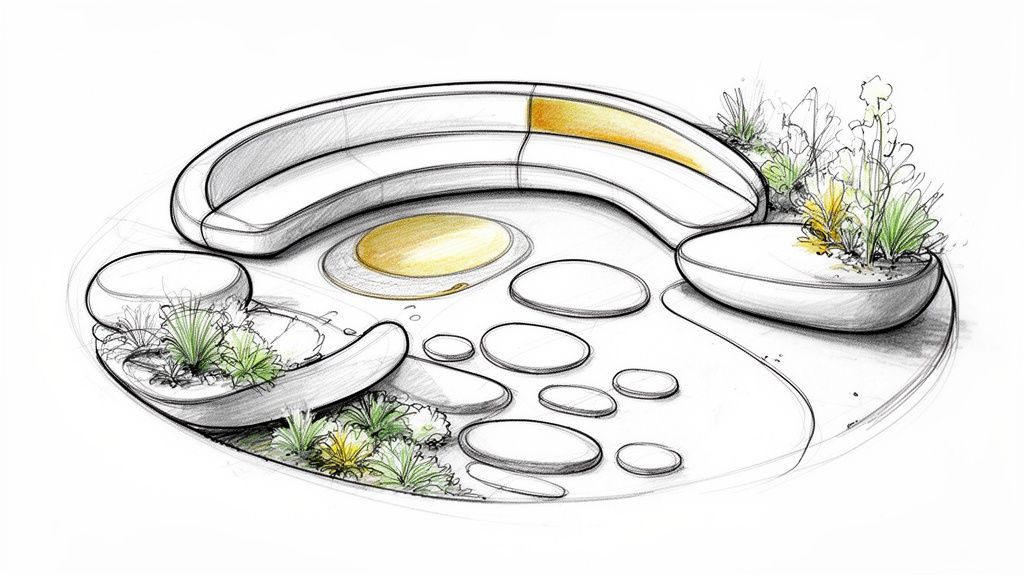
    7. Curved and Organic Layout

    A curved and organic layout moves away from traditional straight lines and rigid angles, embracing flowing, natural forms instead. This contemporary approach uses rounded furniture and soft pathways to create a relaxed, dynamic atmosphere. By arranging pieces in gentle arcs and circles, you can make an outdoor space feel more harmonious and connected to the surrounding landscape.

    Pencil sketch of an elegant outdoor furniture arrangement featuring a curved sofa, green plants, and stepping stones.

    This design is one of the most visually interesting outdoor furniture layout ideas for modern backyards, poolside lounges, and even urban rooftop terraces. It excels at softening hard architectural elements and creating a gentle, inviting flow that encourages guests to move through and explore the space. The result is an environment that feels less formal and more like a serene, natural retreat.

    How to Implement This Layout

    Creating an organic layout is about achieving a balanced, asymmetrical look that feels both intentional and effortless.

    • Anchor with a Curved Piece: Start with a significant curved furniture item, like a rounded outdoor sectional or a circular daybed. This piece will set the tone and establish the primary flowing line of your design.
    • Create Fluid Pathways: Guide movement with curved pathways made from stepping stones or pavers. Avoid straight walkways that would conflict with the organic feel of the furniture arrangement.
    • Incorporate Rounded Elements: Enhance the theme with rounded planters, circular area rugs, and spherical lighting fixtures. These complementary shapes reinforce the layout’s natural aesthetic.
    • Layer with Soft Textures: Add softness and visual flow with outdoor cushions, pillows, and throws in natural textures and colors. This layering helps to blur any remaining hard edges in the space.

    Key Insight: The power of a curved layout is its ability to mimic nature. There are few straight lines in the natural world, so incorporating organic shapes into your outdoor design creates a subconscious sense of calm and tranquility.

    8. Fire Pit Gathering Layout

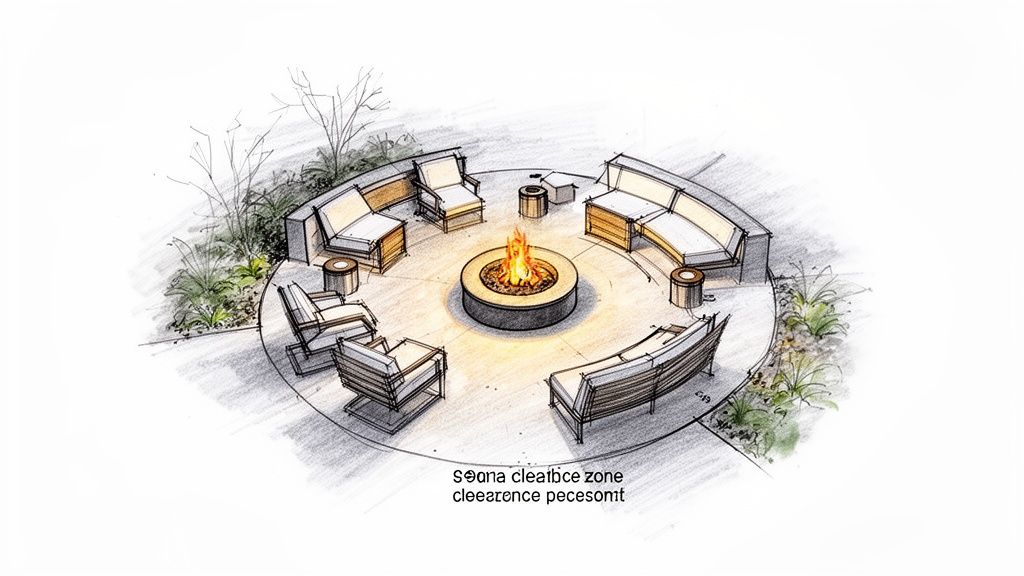
    Among the most sought-after outdoor furniture layout ideas, the fire pit gathering layout creates an irresistible destination for evening entertainment and cooler weather. This design uses a fire pit or outdoor fireplace as its definitive focal point, with seating arranged in a circle or semi-circle around it. The fire serves as both a functional heat source and an atmospheric centerpiece that naturally draws people together.

    A hand-drawn sketch of a circular outdoor patio with a fire pit, surrounding sofas, chairs, and side tables.

    This layout is ideal for extending the use of your outdoor space beyond daylight hours and warm seasons. It excels in suburban backyards and patios where creating a dedicated zone for relaxation and socializing is a priority. From hosting s'mores nights with family to enjoying a quiet drink with friends, a fire pit layout transforms your patio into a cozy, year-round retreat.

    How to Implement This Layout

    Creating a safe, comfortable, and functional fire pit area requires attention to placement, materials, and spacing.

    • Prioritize Safety: Place your fire pit on a non-combustible surface like stone pavers or concrete, at least 10-15 feet away from your home, sheds, and any overhanging tree branches. Always check local fire codes and any HOA restrictions before installation.
    • Arrange Seating for Comfort: Position seating, such as deep-seated chairs or a curved sectional, approximately 6-8 feet away from the fire. This distance provides comfortable warmth without being overwhelming.
    • Add Functional Surfaces: Place side tables or small C-tables between chairs or at the ends of a sofa. This ensures guests have a convenient spot to place drinks, plates, and s'mores supplies without having to reach over the fire.
    • Incorporate Ambient Lighting: Since this layout is designed for evening use, supplement the fire's glow with other light sources. String lights, path lighting, or solar-powered lanterns placed around the perimeter can enhance visibility and ambiance without detracting from the fire.

    Key Insight: The success of a fire pit layout hinges on balancing ambiance with safety. The arrangement should feel intimate and enclosed, but with clear, safe pathways and adequate distance from the heat source to ensure everyone can relax and enjoy the space comfortably.

    9. Poolside Resort-Style Layout

    A poolside resort-style layout transforms your backyard into a personal oasis, inspired by high-end hotels and vacation destinations. This approach organizes furniture into distinct functional zones around a pool or water feature, emphasizing relaxation, entertainment, and comfort. The goal is to create a seamless, cohesive environment that feels like a retreat, complete with multiple lounging options and convenient amenities.

    This layout is ideal for homeowners with a pool who want to maximize their outdoor living space for both private relaxation and hosting guests. By creating dedicated areas for sunbathing, conversation, and refreshments, it provides a highly functional and visually stunning setting. It elevates a simple pool area into a comprehensive outdoor experience, making every day feel like a getaway.

    How to Implement This Layout

    Creating a true resort feel requires thoughtful zoning and attention to detail to ensure both beauty and functionality.

    • Zone Your Space: Identify key activity areas around the pool. Designate a primary zone for sunbathing with a row of sleek chaise lounges. Create a separate conversational nook with a weather-resistant deep seating set, and consider a third zone for a bar or dining area.
    • Prioritize Comfortable Lounging: Select high-quality, comfortable seating. Adjustable lounge chairs with thick, quick-drying cushions are essential. Supplement these with an outdoor daybed or a small sectional to offer varied relaxation options.
    • Integrate Shade and Amenities: No resort is complete without shade. Strategically place large cantilever umbrellas or a permanent pergola to offer respite from the sun. Add a mobile beverage cart or a small bar table with stools to keep drinks and snacks easily accessible.
    • Ensure Safety and Flow: Maintain clear, unobstructed pathways around the pool deck, adhering to local safety codes. Keep at least 3-4 feet of walking space around the perimeter. Ensure any furniture or decor does not block access to pool entry points or safety equipment.

    Key Insight: The success of a resort-style layout lies in its ability to anticipate needs. By providing a variety of seating, ample shade, and convenient access to refreshments, you create an effortless, high-end experience that encourages guests to relax and stay awhile.

    10. Flexible Modular Furniture Layout

    A flexible modular furniture layout is a contemporary and highly adaptable approach that prioritizes versatility above all else. This design uses individual, portable pieces that can be easily reconfigured to suit different occasions, from a large party to an intimate dinner. By using modular seating units, stackable chairs, and movable side tables, a space can transform from a dining setup to a lounging area with minimal effort.

    This layout is one of the most practical outdoor furniture layout ideas for modern homeowners who need their space to serve multiple functions. It's an ideal solution for renters, hosts who entertain diverse group sizes, or anyone who enjoys refreshing their outdoor look seasonally. The ability to quickly adapt the furniture arrangement makes the patio or deck a truly dynamic extension of the home.

    How to Implement This Layout

    Creating a cohesive and functional modular space is about selecting the right pieces and having a plan for reconfiguration.

    • Select Versatile Core Pieces: Start with a modular outdoor sectional or a set of armless chairs that can be clustered together or used separately. Lightweight materials like aluminum or all-weather wicker make rearrangement much easier.
    • Incorporate Multi-Function Furniture: Choose ottomans that can double as extra seating or coffee tables. Nesting side tables are perfect as they can be spread out for guests or tucked away to save space.
    • Establish Visual Cohesion: To prevent a mismatched look, stick to a consistent color palette or material family. For example, pair a teak modular sofa with matching wood side tables, even if they are from different collections.
    • Plan for Storage: Consider a deck box or waterproof bin to store cushions and smaller pieces when not in use. This keeps the area tidy and protects your furniture from the elements.

    Key Insight: The power of a modular layout is its ability to adapt to your life in real time. Before purchasing, think about the top three ways you'll use the space (e.g., dining, lounging, sunbathing) and ensure your chosen pieces can accommodate each scenario.

    10 Outdoor Furniture Layouts Comparison

    Layout Implementation complexity Resource requirements Expected outcomes Ideal use cases Key advantages
    Lounge-Centric Conversational Layout Low–Medium (simple arrangement, needs clearance) Moderate (modular seating for 4–8, central focal point) Intimate, conversation-focused gatherings Families and social entertainers on patios/decks Encourages engagement; flexible seating
    Dining-Forward Patio Layout Medium (clearances, shade, circulation) High (large dining table, chairs, shade structure, serving surfaces) Organized dining-focused entertaining Homeowners who host frequent outdoor meals Maximizes dining capacity; easy service flow
    Multi-Zone Activity Layout High (zoning, circulation, cohesion) Very high (multiple furniture sets, landscaping, lighting) Multi-functional space for simultaneous activities Large yards, frequent entertainers with varied needs Versatile use; supports diverse guest groups
    L-Shaped Sectional Lounging Layout Low–Medium (placement of sectional) Moderate (sectional, coffee table, cushions) Cozy, defined outdoor living room feel Small–medium patios; lounging-focused users Space-efficient seating; modular reconfiguration
    Symmetrical Formal Layout Medium (precise symmetry and sightlines) Moderate–High (matching pieces, central feature) Elegant, balanced and formal aesthetic Traditional/formal yards and classic-style homes Timeless, visually harmonious design
    Shade Structure-Centric Layout High (structure installation, permits) Very high (pergola/gazebo, integrated utilities) Protected, extended-use outdoor room Hot climates; year-round outdoor entertainers UV/weather protection; architectural focal point
    Curved and Organic Layout Medium–High (non-linear planning, sourcing) Moderate–High (curved furniture, landscape elements) Relaxed, dynamic flow with contemporary look Irregular patios, modern design enthusiasts Natural movement; forgiving for odd shapes
    Fire Pit Gathering Layout Medium (safety clearances, ventilation) Moderate (fire pit or fireplace, seating, safety features) Inviting evening gatherings with warmth and ambiance Fall/winter entertainers and cozy social groups Extends season; strong social focal point
    Poolside Resort-Style Layout Very high (complex planning, safety) Very high (pool, cabanas, multiple seating zones) Luxury resort-like environment with multiple zones High-end homeowners with pools; large entertaining Sophisticated amenities; varied seating options
    Flexible Modular Furniture Layout Low (easy reconfiguration) Moderate (many movable pieces, storage solutions) Highly adaptable spaces that transform easily Renters, small patios, changing lifestyle needs Maximum flexibility; easy to reconfigure and store

    Bringing Your Vision to Life

    You've explored the conversational nooks, the expansive dining setups, and the cozy fire pit arrangements. Now, the blank canvas of your patio, deck, or balcony should feel less like a challenge and more like an opportunity. Moving from inspiration to implementation is the most exciting part of this process. The outdoor furniture layout ideas we've covered aren't just templates; they are strategic frameworks designed to help you create a space that is a true extension of your home and a reflection of your lifestyle.

    The core principle connecting all these concepts is intentionality. A successful outdoor space doesn't happen by accident. It is the result of thoughtful planning that considers who will use the space, how they will use it, and how it can best serve their needs season after season. Remember, the right layout for your neighbor might not be the right one for you, and that’s perfectly okay. The goal is to design a personal retreat that enhances your daily life, whether that means hosting lively family barbecues, enjoying quiet morning coffees, or unwinding under the stars.

    Core Principles for Lasting Success

    As you finalize your plans, keep these fundamental takeaways at the forefront of your decision-making process. These principles are the difference between a functional space and an exceptional one.

    • Function Before Form: Always start with the primary purpose of your outdoor area. Do you need a dining space for eight, or a comfortable lounging zone for two? Answering this question first will guide every subsequent choice, from the size of your sofa to the placement of your accent tables.
    • Master the Measurements: This cannot be overstated. Accurate measurements prevent the common problem of purchasing furniture that is too large or too small for your space. Remember to account not just for the furniture's footprint but also for the crucial "negative space" needed for clear pathways and comfortable movement. A minimum of 30-36 inches for main walkways is a reliable rule of thumb.
    • Respect the Flow: A well-designed layout feels intuitive. Consider the natural entry and exit points, such as the back door or a gate. Your arrangement should facilitate easy movement between these points and key zones without creating awkward obstacles or bottlenecks.
    • Create Your Zones: Even in smaller areas, defining distinct zones for lounging, dining, or playing brings a sense of order and purpose. Area rugs are one of the most effective tools for visually separating these spaces and making a patio feel more like a deliberate, well-designed room.

    Putting Your Plan into Action

    With these foundational ideas in mind, your next steps are practical and straightforward. Begin by sketching your space on paper or using a simple online tool. Mark your dimensions, windows, and doors. Then, start experimenting with the layouts that resonated most with you. Cut out paper shapes to scale to represent furniture pieces; this tangible approach makes it easier to visualize spacing and flow before you commit.

    Ultimately, crafting the perfect outdoor living area is a journey of blending practical logic with personal creativity. By applying the principles of scale, flow, and zoning, you are empowered to transform any outdoor space into a beautiful, functional, and cherished haven. The most effective outdoor furniture layout ideas are the ones that are thoughtfully adapted to your unique home and family, creating the perfect backdrop for making memories for years to come.


    Feeling inspired but want to see how these concepts look in person? Seeing and touching the furniture can make all the difference. At Woodstock Furniture & Mattress Outlet, our spacious showrooms allow you to experience different layouts and materials firsthand, helping you make a more confident and informed decision for your home.