Furnishing a small home isn't about shrinking everything down; it’s about being clever and strategic. A common challenge is picking pieces that are both functional and stylish without making the room feel like the walls are closing in. This guide is built on real-world experience helping people solve this exact puzzle.
Rethinking Your Approach to Small Space Furnishing
First things first, let's shift your perspective. Stop seeing your home's square footage as a limitation and start seeing it as an opportunity for smart, creative design. When you view furniture as a versatile tool rather than just a static object, you can build a home that's comfortable and genuinely usable, no matter the size.
This way of thinking is catching on as more people embrace compact living. The demand for furniture designed for small spaces is growing. The global market was valued at $6.68 billion in 2025 and is projected to grow to $10.17 billion by 2032. That surge shows just how many of us are living in apartments and studios where every single inch counts.
The Foundation of Smart Furnishing
So, what's the key? It all boils down to prioritizing pieces that do more than one job. When you think this way, you can furnish your home with fewer, more capable items. That saves you both space and, in the long run, money.
Before you even start browsing, it helps to get a handle on the basic strategies of how to choose the perfect furniture for small spaces. Understanding this foundational knowledge can set you up for success right from the start.
The most successful small spaces are not filled with tiny furniture. They are filled with smart furniture—pieces that are correctly scaled, serve multiple functions, and enhance the feeling of openness.
Key Principles to Adopt
To help you get started, here are a few core strategies that can make a significant difference. Think of these as your foundational rules before you buy anything.
Here's a quick table to summarize these key ideas.
Key Principles for Furnishing a Small Space
| Principle | Why It Matters | Example in Action |
|---|---|---|
| Function First | Every item must earn its spot. This avoids clutter and maximizes utility. | An ottoman that offers hidden storage and doubles as a coffee table. |
| Scale & Proportion | The right size furniture prevents a room from feeling overwhelmed or empty. | A sleek, armless loveseat instead of a bulky three-seater sofa. |
| Visual Lightness | Creates an illusion of more space by keeping sightlines open. | A glass coffee table or a sofa with visible legs that let you see the floor underneath. |
Embracing these principles is the first step. You'll move from just filling a room with stuff to thoughtfully designing a space that truly works for you.
Creating Your Small Space Blueprint to Avoid Mistakes
A common mistake people make when furnishing a small space happens way before they ever step into a showroom. It’s skipping the prep work. Creating a room blueprint is your secret weapon against buyer’s remorse, making sure every single piece you bring home not only fits, but actually works for how you live.
This isn't just about measuring from wall to wall. A solid plan takes into account all the little things that define how you use a room.
Mapping Your Functional Layout
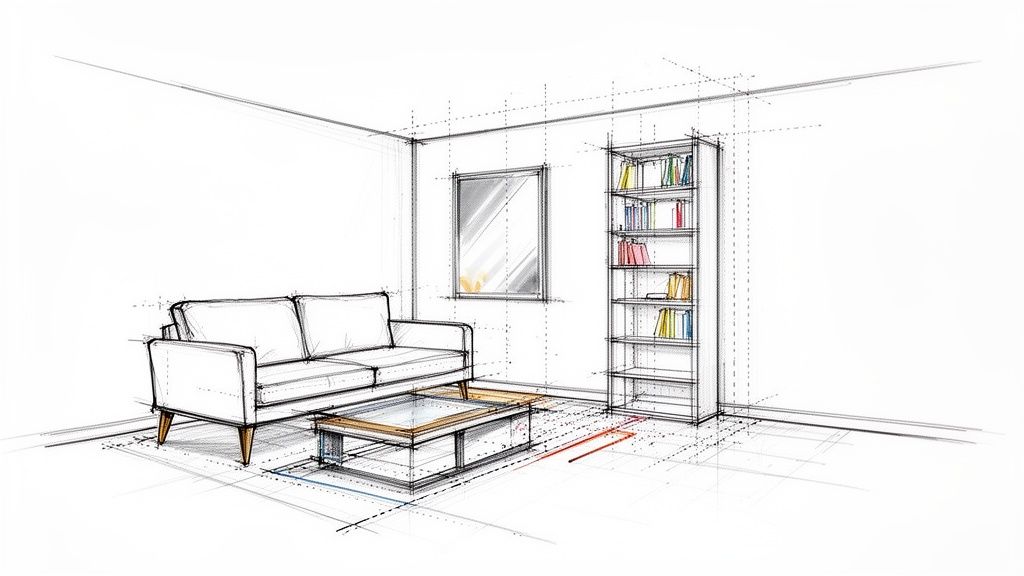
Before you fall in love with a sofa online, it's helpful to get intimately familiar with your space. Grab a tape measure, a pen, and a notebook, and let's get to work documenting these critical details:
- Traffic Flow: Where do people naturally walk through the room? You’ve got to keep the main pathways clear, especially from one doorway to another. Nothing makes a room feel smaller than having to shuffle around furniture.
- Door and Window Clearance: Pay attention to which way your doors swing open and how high your window sills are. A console table you’re eyeing might be less useful if it blocks a window or keeps a door from opening all the way.
- Outlet and Vent Locations: We’ve seen it many times—a customer buys a large bookcase only to realize it covers the room’s most convenient outlet. Mark all your power sources, light switches, and HVAC vents on your plan.
Here's a tip we share with customers: use painter's tape on the floor. Mark out the dimensions of that sofa or dining table you're considering. This simple trick lets you feel the footprint of the furniture and see how much space it will really take up. It's a useful way to avoid that "it technically fits, but I can't move" feeling.
Thinking Vertically and Virtually
Once you have your floor plan down, it’s time to look up. Many small spaces have tons of unused vertical real estate. Think about it—tall, narrow bookcases or wall-mounted shelving can draw the eye upward, which creates a sense of height and openness. Plus, it gets things off your floor, freeing up that precious space for other essentials.
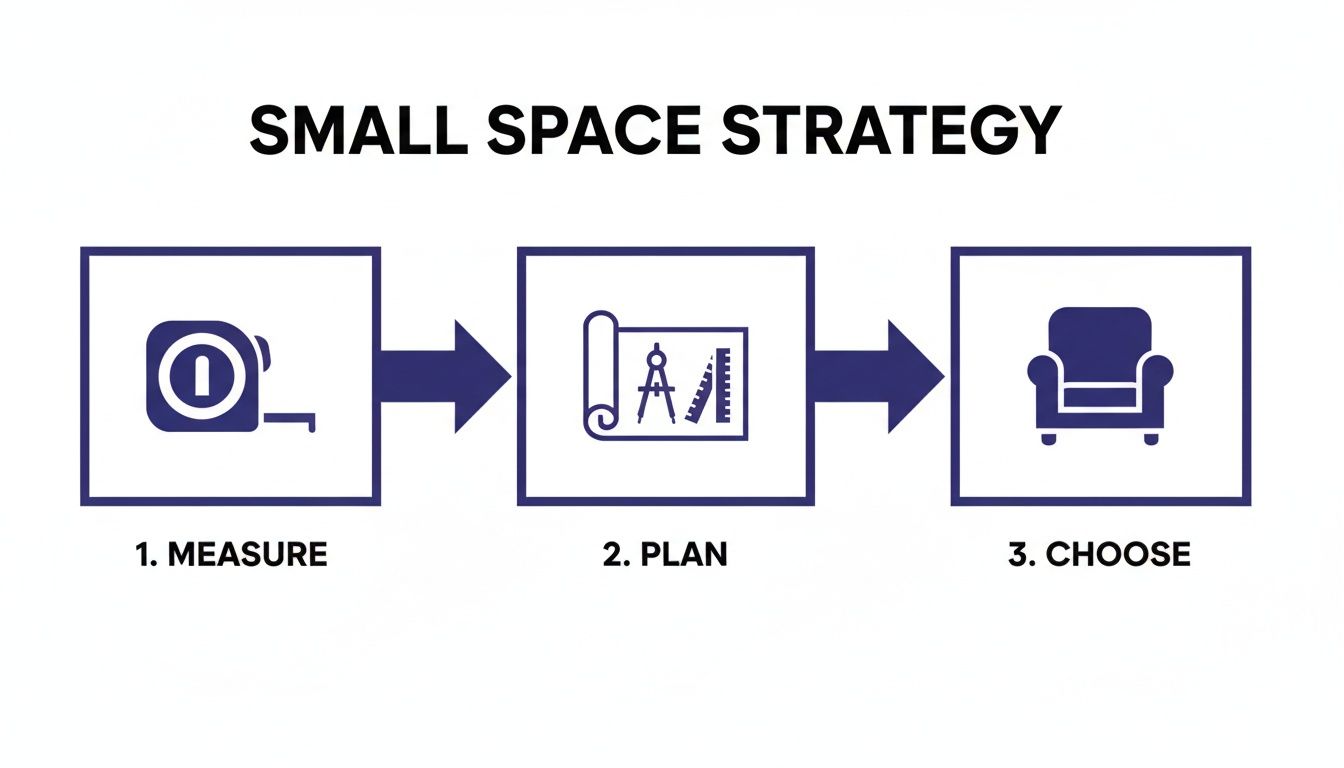
This whole process can feel a bit overwhelming, but it can be broken down into three simple ideas. First, know your limits by measuring everything. Second, make smart, functional choices based on that layout. And finally, prioritize multi-use pieces.

Following this "Limit, Smart, Multi-Use" flow can turn a daunting task into a manageable, strategic game plan.
To make this even easier, you can take your blueprint digital. Tools like our free Room Planner let you experiment with different layouts without any risk. It can take the guesswork out of the equation and help you sidestep costly mistakes. You can test different arrangements to find a suitable spot for every piece, ensuring your final choices are as practical as they are beautiful.
Choosing Furniture That Works Harder

When you're living in a compact home, every piece of furniture has to earn its keep. This is where multi-functional furniture becomes a helpful ally, and we're talking about more than just the classic sofa bed. Smart, versatile pieces let you furnish your home with fewer items, which can save you space and, just as importantly, money.
The idea is to find affordable furniture for small spaces that solves more than one problem at a time. It's a simple approach that can declutter your home and makes sure every piece is pulling its weight. Once you start looking for furniture that works this hard, you'll be amazed at the clever solutions you can find. A great starting point is to browse a curated collection of the best furniture for small spaces just to see what’s possible.
Solving Common Small-Space Problems
Multi-functional furniture is really all about tackling the everyday headaches of living in a tight space. It’s less about a gimmick and more about real-world utility that just makes your daily life easier.
Think about the usual pain points you might run into in a studio apartment or a cozy living room:
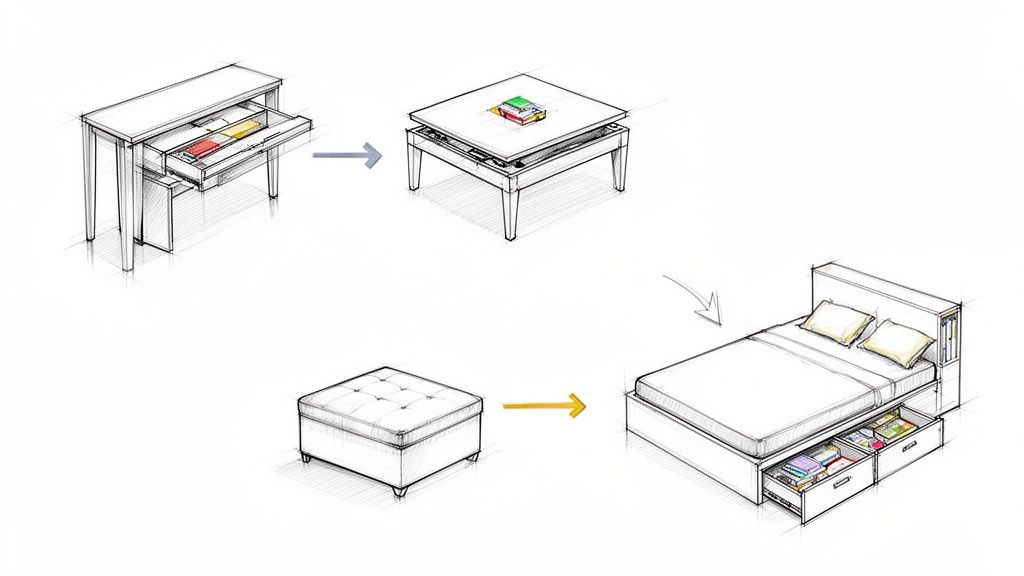
- Nowhere for a home office? A lift-top coffee table can be a game-changer. It goes from a casual surface for your drinks to a desk in seconds. When work is done, it drops back down, and your living room is a living room again.
- Can't fit a large dining table? Look for a dining table with a hidden butterfly leaf. It can sit against a wall for your daily meals, then expand when you have friends over.
- Closet bursting at the seams? A platform bed with deep, built-in storage drawers can often replace a bulky dresser entirely. That move alone can free up a significant amount of floor space in a small bedroom.
The most impressive pieces are the ones that blend their different uses so well you'd hardly know. You shouldn't have to give up style for function—well-designed furniture integrates its multiple purposes seamlessly.
The Power of Modular and Adaptable Pieces
Beyond single items that do double duty, modular furniture gives you another layer of flexibility. Modular sectionals, for example, are a fantastic solution for small or awkwardly shaped living rooms. You can rearrange the pieces to create one long sofa, a chaise for movie night, or even separate seating when you have a party.
This kind of adaptability is exactly why multi-functional furniture isn't just a niche market anymore. People want versatility, and the demand for these smart designs is growing. Industry projections show that beds with built-in storage and convertible tables are leading the charge, with an estimated 200 million units expected by 2025 to meet this need for compact living.
Ultimately, picking furniture that serves more than one purpose is a smart, strategic move. It helps you create a home that feels uncluttered, works for you, and seems much larger than it really is. By focusing on fewer, more capable pieces, you build a space that adapts to your life, not the other way around.
Using Visual Design to Make Your Room Feel Bigger

Once you've got your multi-functional pieces picked out, the next step is using a few clever design tricks to make your room feel more open and airy. It’s not just about the floor plan; it's about creating an illusion of space, and the right affordable furniture can do most of the heavy lifting for you.
One of the easiest and most effective things you can do is choose furniture with visible legs. When a sofa, armchair, or media console is lifted off the ground, your eye can travel underneath it. This keeps sightlines open and gives a sense of spaciousness you just can’t get with heavy, floor-hugging furniture.
Lighten the Visual Load
Ever notice how some furniture just feels heavier than other pieces, even if they're the same size? That’s what designers call “visual weight,” and it has a huge impact on how a room feels. Dark, heavy wood can be great for anchoring a large room, but in a small space, it can become overwhelming.
On the other hand, materials you can see through have almost zero visual weight.
- An acrylic or glass coffee table gives you a functional surface but seems to almost disappear, keeping the space from feeling cluttered.
- A metal-frame bookshelf with open sides feels way lighter and more modern than a solid, chunky bookcase.
Color plays a huge part in this, too. Lighter-hued furniture—your whites, beiges, and soft grays—reflects more light. This naturally makes a room feel brighter and bigger.
There's a reason a strategically placed mirror is one of the oldest tricks in the design book—it just works. Hang a large mirror on the wall opposite a window, and it will bounce natural light all over, instantly making the room feel more expansive.
Add Personality Without the Clutter
Just because your space is small doesn't mean it has to be boring. You can absolutely bring in your personality with patterns and textures, but the secret is to find the right balance. Instead of a huge, bold pattern on your main sofa, try adding interest through smaller, textural elements.
For instance, you could bring in some warmth with:
- Throw pillows that have a subtle, interesting weave.
- A soft, textured area rug to define your seating area.
- A cozy knit blanket casually draped over an armchair.
These little touches add that much-needed visual interest and coziness without making the room feel busy or crowded. By combining these smart material and color strategies, you'll find furniture that not only fits perfectly but also makes your home feel more open, comfortable, and inviting.
Smart Shopping Strategies for Lasting Value
Finding affordable furniture for a small apartment or home shouldn't mean you have to settle for pieces that fall apart in a year. The approach isn't just about finding the lowest price tag; it's about being smart with your money to get lasting value. The key is knowing exactly where to invest your budget and where you can save.
Think of it like this: your most-used furniture items are the workhorses of your home. It makes sense to put more of your budget toward the pieces that see daily action and have the biggest impact on your comfort.
Prioritize High-Use, High-Impact Pieces
If you're going to invest anywhere, your sofa and your mattress are two important places to consider. These are the items you'll be using every single day, and their quality has a direct line to your overall comfort and well-being.
Your Sofa: This is often the centerpiece of a living space. Spending a bit more for a sofa with a sturdy, kiln-dried hardwood frame and resilient cushions is an investment in years of comfort and durability. An inexpensive sofa might look good at first, but it can start sagging, creaking, and losing its shape surprisingly fast.
Your Mattress: We can't say it enough—quality sleep is the foundation of good health. Prioritizing a supportive, comfortable mattress is really an investment in yourself.
Once you have those core pieces locked down, you can be much more frugal with the supporting cast. Things like accent tables, lamps, decorative shelving, and area rugs are suitable for finding great deals. Plus, they are much easier and less expensive to swap out later when you want to refresh your style.
The convenience of online shopping is fantastic, but it can't replace the experience of seeing and touching furniture in person. Photos can be deceiving when it comes to the true color, texture, and especially the scale of a piece.
Stopping by a showroom lets you actually sit on that sofa, open the drawers on that dresser, and get a real feel for how a dining table will fit in your space. This hands-on step is helpful for preventing buyer's remorse. It takes the guesswork out of the equation and makes sure that a piece doesn't just look good online, but feels right for your home.
This practical approach is more important than ever as the furniture market continues to grow. With more people living in smaller urban spaces, the demand for smart, affordable furniture is high. Projections even show U.S. furniture e-commerce revenues could reach $125 billion by 2026, with a reported 62.3% of related searches being made by people ready to buy.
For our customers right here in Georgia, we see this trend play out every day. There's a high demand for pieces that offer lasting value, like adjustable mattress bases for customized comfort, kids' storage beds that save space, and compact outdoor sectionals for a small patio. You can learn more about how e-commerce is changing the furniture world over on the Cylindo blog. By being a savvy shopper, you can navigate this large market to find pieces that offer both a good price and the quality to last for years to come.
Your Small Space Furniture Questions, Answered
When you're trying to furnish a compact home, apartment, or studio, a ton of questions pop up. Here at Woodstock Furniture & Mattress Outlet, our furniture experts have heard many of them from shoppers trying to make the most of their square footage.
Based on our years of hands-on experience helping customers find a suitable fit, here are the answers to some of the questions we hear frequently.
What Is the Most Important Piece for a Small Living Room?
This is one of the most common questions we get, and while the "right" answer depends on how you live, the sofa is almost always the anchor piece that defines the whole room. We often point shoppers toward an "apartment-sized" sofa or a small-scale sectional that fits the layout without taking over.
Look for pieces with clean lines, a tight back, and visible legs. These features make furniture look less bulky and create a much more open, airy feeling. And if you have friends or family stay over often, a quality sleeper sofa can be a multi-functional investment.
Pro Tip from the Showroom Floor: Before you buy any sofa, grab some painter's tape and outline its dimensions on your floor. This simple trick helps you visualize its actual footprint and ensures it won’t eat up all your physical and visual space. You'll end up with a comfortable, durable centerpiece that fits.
Is Dark-Colored Furniture a Bad Idea for Small Rooms?
We hear this one all the time: "I can't use dark furniture in a small room, right?" That's a myth! While a room jam-packed with dark, heavy furniture will feel cramped, a single dark piece can be a fantastic, sophisticated anchor. Think a navy sofa or a rich espresso bookcase.
The secret is balance. You just need to create plenty of contrast with lighter elements to make it work. Try pairing that dark anchor piece with:
- Light-colored walls to reflect and bounce light around the room.
- A light, airy area rug to define the space.
- Reflective surfaces like mirrors, glass, or metallic accents.
- Good, layered lighting from various sources like lamps and overhead fixtures.
A dark piece adds depth and character when you use it strategically, so don't be afraid to go for it.
How Can I Create a Dining Area in a Studio Apartment?
Even in the tightest of spaces, you have some great options for carving out a dining spot. The drop-leaf table is a classic for a reason. You can keep it pushed against a wall with one leaf down for everyday meals and pull it out with both leaves up when you have company.
Another solution is a counter-height or pub-style table with a couple of stools. This setup can easily pull double-duty as extra kitchen prep space or even a standing desk. For truly tiny apartments, a convertible coffee table that lifts up to dining height is a game-changer. And never underestimate a narrow console table paired with two small stools that can be tucked completely underneath when not in use.
Where Should I Save and Where Should I Invest When Buying Furniture?
Our advice is always the same: invest your money in the pieces that get the most daily use and have the biggest impact on your comfort. For most people, this means your sofa and your mattress.
A well-made sofa with a solid frame and high-resiliency cushions will feel better and last so much longer, giving you far more value for your money. The same goes for your mattress—quality sleep is priceless.
You can feel more comfortable saving money on the items that are more decorative or see less wear-and-tear. This often includes:
- Accent tables and end tables
- Lamps and other lighting
- Decorative shelving units
- Area rugs and home décor
These pieces are much easier and more affordable to swap out later as your style evolves or your needs change. This strategy lets you build a foundation of quality where it really matters and fill in the gaps with budget-friendly finds.
At Woodstock Furniture & Mattress Outlet, our team is here to help you answer these questions and many more. Visit one of our North Georgia showrooms to see these options in person and get practical advice on finding affordable furniture for small spaces that you'll love for years to come. You can also explore our selection online at https://woodstockoutlet.com.