Tag: apartment decorating

  • Decorating Tips for Small Living Rooms: Maximize Style in Tiny Spaces

    Decorating Tips for Small Living Rooms: Maximize Style in Tiny Spaces

    A small living room presents a unique design challenge: how do you create a space that’s functional, comfortable, and stylish without feeling cramped? The key isn't about finding a secret way to add square footage, but about using smart, proven design principles to make the space you have work harder. It's about choosing furniture that serves multiple purposes, arranging it for optimal flow, and using visual strategies to create an illusion of openness. This guide moves beyond generic advice to provide practical, actionable decorating tips for small living rooms that you can implement.

    We'll explore how strategic choices in color, storage, and layout can transform a compact area into a welcoming and functional heart of your home. We'll focus on real-world solutions that help you solve common problems, from clutter and poor traffic flow to a lack of light. To further enhance comfort and airflow without compromising on style, exploring a guide to the best ceiling fans for small rooms can provide tailored solutions for your compact living space. By the end, you'll have a clear roadmap for creating a living room that feels both spacious and personal, no matter its dimensions.

    1. Multifunctional Furniture with Hidden Storage

    One of the most effective decorating tips for small living rooms involves choosing furniture that does more than one job. Multifunctional pieces combine essential functions like seating, sleeping, or surface space with concealed storage, allowing you to maximize every square foot without adding clutter. This strategy is foundational for small spaces because it eliminates the need for extra, space-consuming storage units like bookshelves or cabinets.

    By integrating storage directly into the furniture you already need, you maintain a clean, open, and organized environment. An ottoman can double as a coffee table and a hidden chest for blankets, while a sectional can house a pull-out bed and a chaise with a lift-top compartment for board games or pillows.

    Why This Approach Works for Small Spaces

    In a compact living room, every piece must justify its footprint. A standard sofa only offers seating, but a storage sectional provides seating and a place to tuck away seasonal decor or extra linens. This dual-purpose design is the key to creating a functional room that feels larger than it is.

    Key Insight: The goal is to reduce the total number of furniture items in the room. By making each piece work harder, you free up valuable floor space, which improves traffic flow and creates a more breathable, uncluttered atmosphere.

    Actionable Tips for Implementation

    Before purchasing, think carefully about what you need to store and how you will use the piece daily.

    • Measure First: Check the dimensions of the internal storage compartments to ensure they can hold the items you have in mind, whether it's throw pillows, magazines, or electronics.
    • Prioritize Easy Access: For items you use frequently, opt for pieces with easy-to-lift lids or smooth-gliding drawers. Ottomans on wheels offer extra flexibility, allowing you to move them easily for cleaning or rearranging.
    • Organize Internally: Use drawer dividers or fabric bins inside larger compartments. This prevents your hidden storage from becoming a chaotic mess and helps you find what you need quickly.
    • Consider Weight and Durability: Look for soft-close mechanisms to prevent slamming and wear. If you plan to store heavy items, check the weight capacity and construction of the piece to ensure long-term durability.

    At Woodstock Furniture & Mattress Outlet, our knowledgeable team can help you find multifunctional solutions that fit your specific layout and storage needs, guiding you to pieces that offer both style and practicality.

    2. Strategic Use of Vertical Space and Wall-Mounted Storage

    One of the most impactful decorating tips for small living rooms is to draw the eye upward. Utilizing vertical space with wall-mounted storage is a classic design strategy that maximizes your room’s potential without sacrificing precious floor area. This approach uses otherwise empty walls for practical storage, creating an open, airy feel while keeping essentials organized and accessible.

    By mounting shelves, cabinets, or even an entire entertainment unit to the wall, you reclaim the floor for traffic flow and seating. This technique is especially powerful in compact rooms because it not only adds function but also creates the illusion of higher ceilings, making the entire space feel larger and more expansive.
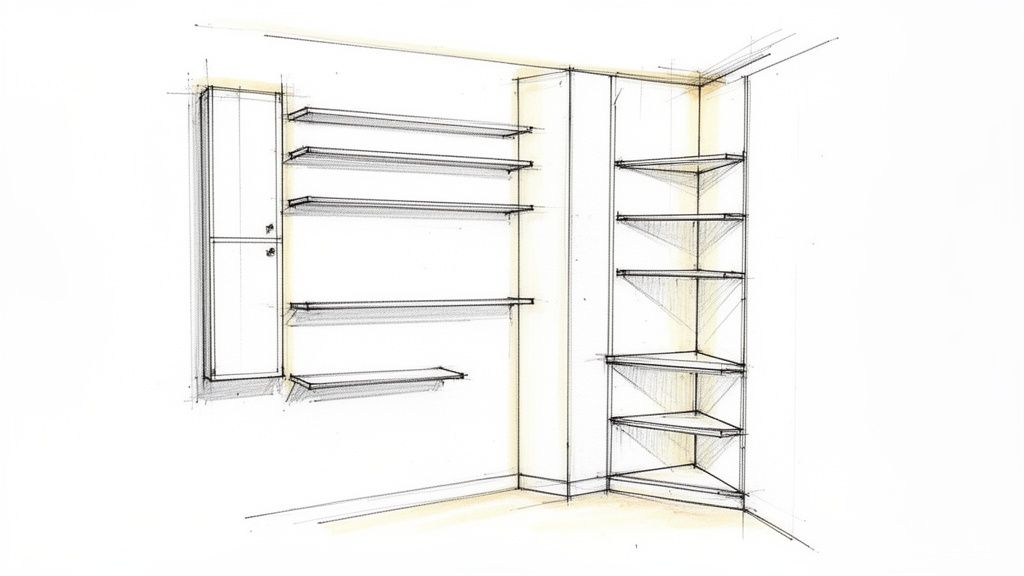
    Hand-drawn sketch illustrating a custom built-in shelving and cabinet unit in a corner.

    Why This Approach Works for Small Spaces

    In a small living room, the floor is a valuable asset. Wall-mounted solutions like floating shelves or tall, narrow bookcases free up that real estate completely. Instead of a bulky media console sitting on the floor, a wall-mounted version provides the same function while visually "floating," which reduces visual weight and clutter.

    Key Insight: Directing focus vertically tricks the eye into perceiving more volume and height. This visual lift prevents the room from feeling cramped or boxed-in, a common challenge in smaller layouts.

    Actionable Tips for Implementation

    Proper installation and styling are key to making vertical storage look intentional rather than cluttered.

    • Secure Installation: Always anchor shelves and cabinets to wall studs for maximum stability and safety. If studs aren't available, use appropriate drywall anchors rated for the weight of your items.
    • Create Breathing Room: Avoid packing shelves completely full. Aim to leave around 30% of the surface as "negative space" to maintain a clean, uncluttered aesthetic.
    • Balance Open and Closed Storage: Combine open shelves for displaying decor with wall-mounted cabinets or baskets to hide less attractive items like cables, remotes, or paperwork.
    • Style with Intention: Group objects of varying heights, shapes, and textures to create visually interesting vignettes. Use cohesive elements like matching baskets or boxes to unify the look.

    At Woodstock Furniture & Mattress Outlet, you can find a variety of bookcases and entertainment centers that help you take advantage of your home's vertical space, and our team is always ready to offer guidance on selecting pieces that fit your room's scale and style.

    3. Light Colors and Reflective Surfaces for Visual Expansion

    One of the most powerful decorating tips for small living rooms is to harness the power of light. By strategically using light colors and reflective surfaces, you can create a powerful optical illusion that makes a compact room feel significantly larger, brighter, and more open. This technique works by maximizing both natural and artificial light, causing it to bounce around the space and trick the eye into perceiving more depth.

    Light, neutral palettes like soft whites, creams, pale grays, and light blues make walls appear to recede, pushing them visually outward. When combined with reflective elements such as mirrors, glass tabletops, or metallic accents, this effect is amplified. A well-placed mirror can double the visual space and light, while a glass coffee table keeps sight lines clear, preventing the room from feeling crowded.
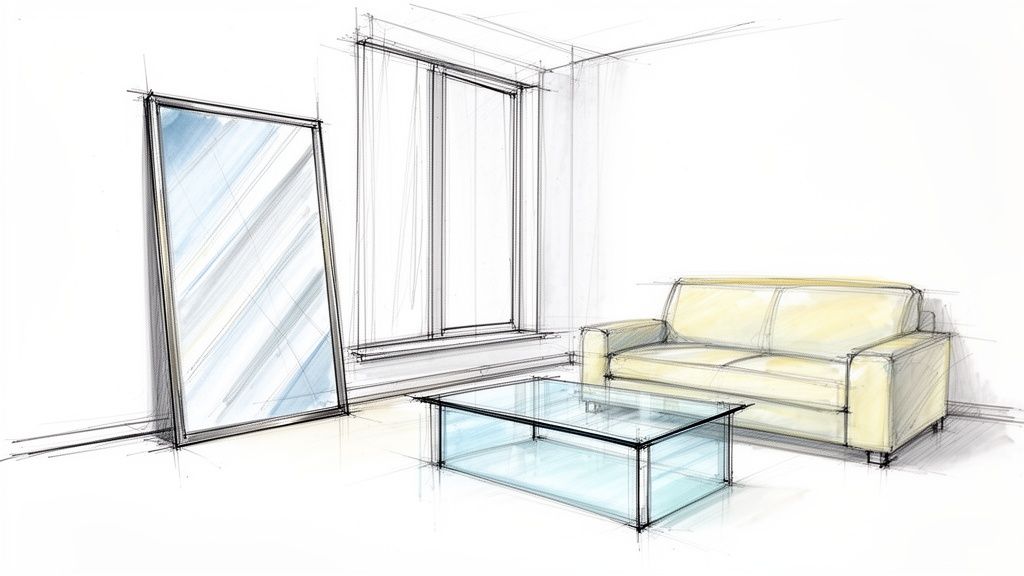
    A hand-drawn sketch illustrating a modern living room with a yellow sofa, glass coffee table, and large mirror.

    Why This Approach Works for Small Spaces

    In a small living room, dark colors can absorb light and make the walls feel like they are closing in. Light colors do the opposite; they reflect light, creating an airy and expansive atmosphere. Mirrors and other reflective surfaces act as secondary light sources, scattering brightness into darker corners and adding layers of visual interest without taking up physical space.

    Key Insight: The goal is to manipulate light to erase boundaries. A mirror doesn’t just show a reflection; it can create a "window" to a perceived continuation of the room, effectively expanding its dimensions without any structural changes.

    Actionable Tips for Implementation

    To make this strategy effective, balance is key. You want to create a bright space that still feels warm and inviting, not sterile or cold.

    • Choose the Right Paint: Opt for light neutrals with warm undertones to prevent the room from feeling chilly. Test paint swatches on your walls at different times of day to see how they interact with your home's natural light.
    • Strategic Mirror Placement: Position a large mirror directly opposite a window to capture and reflect the maximum amount of daylight. Placing one on a wall perpendicular to a window can also help distribute light more evenly throughout the room.
    • Incorporate "Invisible" Furniture: Select pieces like a glass coffee table, acrylic console table, or chairs with open bases. These items serve their function without visually obstructing the floor, which helps maintain a sense of openness.
    • Balance with Texture: To avoid a sterile look, introduce soft textures through area rugs, plush throw pillows, and cozy blankets. Natural wood accents can also add warmth and ground the light color scheme.

    At Woodstock Furniture & Mattress Outlet, you can find a wide range of accent pieces, from elegant mirrors to glass-topped tables, that will help you bring this light-enhancing strategy to life in your home.

    4. Smart Layout and Furniture Arrangement for Flow

    How you arrange your furniture is one of the most impactful decorating tips for small living rooms. Strategic placement maximizes floor space and creates natural traffic pathways, preventing the room from feeling cramped or difficult to navigate. Instead of pushing every piece against the walls, this approach involves creating intentional zones and ensuring clear sight lines.

    Thoughtful furniture arrangement considers the room's focal points, such as a window, fireplace, or media center, and organizes seating around them. By "floating" furniture away from the walls, you can paradoxically make the space feel larger, more open, and more inviting. This technique transforms a room from a simple container for furniture into a functional and harmonious living area.

    Why This Approach Works for Small Spaces

    In a small living room, every decision must support the feeling of openness. Pushing furniture against the walls creates a tight, crowded perimeter and leaves an awkward, underutilized space in the middle. Floating the main seating group and creating clear pathways directs movement and allows the room to breathe.

    Key Insight: A well-planned layout creates a sense of purpose and order. By establishing clear zones for conversation, entertainment, or reading, you make the room more intuitive and comfortable to use, which enhances the perception of spaciousness.

    Actionable Tips for Implementation

    Before moving heavy items, map out your new layout to ensure it works for your space and lifestyle.

    • Plan Virtually First: Use a tool like the Woodstock Furniture & Mattress Outlet Room Planner to experiment with different arrangements digitally. This saves you the effort of physically moving furniture until you find a layout that works.
    • Create Clear Pathways: Ensure there are at least 18 to 24 inches of clearance for major traffic routes. This prevents the room from feeling like an obstacle course.
    • Anchor Your Arrangement: Use a large area rug to define the main seating area. The front legs of your sofa and chairs should sit on the rug to create a cohesive, anchored look.
    • Float Your Sofa: If space allows, pull your sofa 12 to 18 inches away from the wall. This simple trick creates visual depth and makes the room feel wider.
    • Embrace Angled Placement: Don't be afraid to angle an accent chair or a small table in a corner. This can break up boxy lines and add dynamic visual interest.

    5. Strategic Lighting Layers to Enhance Space and Ambiance

    Effective lighting is one of the most transformative decorating tips for small living rooms, yet it's often overlooked. A single, harsh overhead light can cast shadows that make a room feel smaller and more enclosed. Strategic lighting layers, however, combine multiple light sources at different heights to create depth, eliminate dark corners, and foster a warm, inviting atmosphere.

    This approach involves balancing three types of lighting: ambient (overall illumination), task (focused light for activities like reading), and accent (light that highlights decor or architectural features). By layering them, you can draw the eye around the room, making it feel more dynamic and spacious. Well-placed floor lamps, table lamps, and wall sconces can make a small room feel open, airy, and welcoming.

    Why This Approach Works for Small Spaces

    In a compact living room, shadows are the enemy of spaciousness. Dark, unlit corners can visually shrink the room’s boundaries. A layered lighting plan ensures that light reaches every part of the space, creating an even, consistent glow that pushes the walls back.

    Key Insight: The goal is to create visual interest and guide the eye upward and outward. By placing lights at various heights, from a table lamp to a floor lamp to a wall sconce, you add vertical dimension that prevents the room from feeling flat and cramped.

    Actionable Tips for Implementation

    Think of lighting as a tool to sculpt your room’s dimensions and mood. Start with your overhead fixture and build layers from there.

    • Install Dimmers: Add dimmers to your main overhead lights. This gives you complete control over the ambient brightness, allowing you to transition from a bright, functional space to a cozy, relaxed environment.
    • Warm Up the Tone: Choose light bulbs with a warm-white color temperature (around 2700K). This creates a comfortable and inviting feel, unlike cool or blue-toned lights that can feel sterile.
    • Target Dark Corners: Place a tall floor lamp or an uplight in a dark corner. This simple trick instantly makes the entire room feel larger by illuminating its full perimeter.
    • Balance with Task Lighting: Add table lamps on end tables or a console. Not only do they provide necessary light for reading, but they also contribute to the overall balance and symmetry of your decor.
    • Highlight Key Features: Use accent lighting, like a picture light over artwork or LED strips under shelves, to draw attention to your favorite decorative elements.

    At Woodstock Furniture & Mattress Outlet, we offer a great selection of floor lamps, table lamps, and accent furniture for building your layered lighting scheme. Our team can help you choose pieces that complement your style and solve your small-space challenges.

    6. Decluttering and Minimalist Design Principles

    One of the most impactful decorating tips for small living rooms costs nothing but time: embracing decluttering and minimalist design. This approach centers on intentionally keeping only essential and cherished items, which creates visual breathing room and makes a compact space feel significantly larger and more serene. Clutter consumes both physical and visual space, making a room feel chaotic and cramped.

    Minimalism isn't about creating a cold or empty environment; it’s about quality over quantity. By carefully curating your decor, limiting your color palette, and displaying items with purpose, you create a calm and functional atmosphere. Whether it's a living room organized with Marie Kondo's KonMari method or a space inspired by clean Japanese design, this principle can transform a room from stressful to restful.

    Why This Approach Works for Small Spaces

    In a small living room, every object competes for attention. Excess items, from too many throw pillows to crowded bookshelves, create visual noise that makes the brain perceive the space as smaller than it is. A minimalist approach removes this distraction, allowing the room's architecture and key furniture pieces to stand out.

    Key Insight: Decluttering is the foundation of effective small-space design. Before you can optimize a room with mirrors or multifunctional furniture, you must first create a clean slate by removing what doesn’t belong.

    Actionable Tips for Implementation

    Adopting a minimalist mindset is a gradual process. Start small to avoid feeling overwhelmed and focus on creating a space that feels personal and functional.

    • Curate with Intention: Begin by removing items that don’t serve a practical function or bring you joy. If an item doesn't have a purpose or a special meaning, it may be contributing to the clutter.
    • Implement the 'One In, One Out' Rule: To maintain a clutter-free space, make a habit of letting go of one item every time you bring something new into the room.
    • Keep Surfaces Clear: Limit tabletop and shelf decor to a few carefully chosen items. A clean surface on a coffee table or console creates an immediate sense of openness.
    • Edit Your Textiles: Instead of a dozen pillows and multiple throws, choose two or three high-quality pieces that add texture and comfort without overwhelming the sofa.
    • Digitize What You Can: Reduce physical clutter by scanning old photos, documents, and manuals, then storing them digitally.

    At Woodstock Furniture & Mattress Outlet, we believe a great room starts with a thoughtful plan. Our team can help you select foundational pieces that support a clean, organized aesthetic, ensuring your small living room is both beautiful and functional.

    7. Strategic Use of Area Rugs, Textures, and Layering

    While minimalism is often recommended for small spaces, a room devoid of texture can feel cold and uninviting. Strategic layering with area rugs, varied textiles, and décor adds depth, personality, and warmth. This approach makes a small living room feel intentionally designed and curated, balancing a clean layout with a cozy, welcoming atmosphere.

    An area rug can anchor a furniture arrangement, creating a defined zone for conversation or relaxation without the need for walls. Layering different textures, such as a soft wool throw on a linen sofa or a woven jute basket next to a smooth metal lamp, creates a rich visual experience that makes the space feel more substantial and complete.
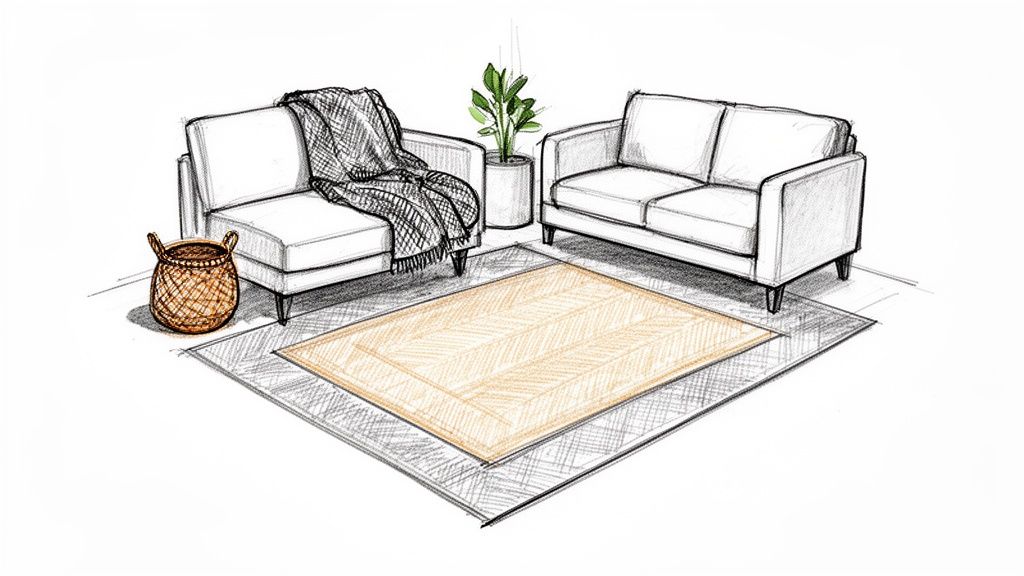
    A hand-drawn sketch showing two sofas, a plant, and a basket in a small living room setup.

    Why This Approach Works for Small Spaces

    In a small room, adding visual interest without adding physical bulk is essential. Textures and layers engage the eye and create a sense of depth, preventing the space from feeling flat or one-dimensional. An appropriately sized rug can also trick the eye into seeing the room as larger by clearly defining the living area’s boundaries.

    Key Insight: Layering is a powerful tool in decorating tips for small living rooms because it adds character and comfort without consuming valuable floor space. It’s about creating a rich sensory experience that makes a compact room feel luxurious and thoughtfully composed.

    Actionable Tips for Implementation

    To layer effectively, focus on balance and cohesion to avoid a cluttered look.

    • Get the Rug Size Right: A common mistake is choosing a rug that's too small. Ensure the rug is large enough for at least the front legs of your sofa and any armchairs to rest on it. For expert guidance, there are excellent resources like this guide on how to choose the perfect area rug that covers sizing and placement in detail.
    • Mix Materials: Combine a variety of textures for a dynamic effect. Pair soft elements like velvet pillows or chenille throws with rougher materials like jute, rattan, or natural wood.
    • Incorporate Natural Elements: Plants, wooden accent tables, or leather ottomans add warmth and an organic feel, making the space more inviting.
    • Use Pillows and Throws: These are easy and affordable ways to introduce new textures and colors. You can swap them out seasonally to refresh the room’s look.

    7-Point Comparison: Small Living Room Decorating Tips

    Strategy Implementation complexity Resource requirements Expected outcomes Ideal use cases Key advantages
    Multifunctional Furniture with Hidden Storage Medium — choose pieces and ensure fit/assembly Moderate — cost of furniture, measuring, delivery/assembly Increased storage without extra footprint; less visible clutter Small living rooms, studios, multi-use spaces Maximizes usable space; hides clutter; multifunctional use
    Strategic Use of Vertical Space and Wall-Mounted Storage Medium–High — requires secure installation Low–Moderate — shelving, anchors, possible pro install Frees floor area; creates taller visual lines Rooms with free wall area or high ceilings Adds storage with minimal footprint; customizable to wall
    Light Colors and Reflective Surfaces for Visual Expansion Low — paint, mirrors, select finishes Low — paint, mirrors, a few reflective accents Brighter, visually larger room; improved light distribution Dim or small rooms lacking natural light Cost-effective visual expansion; broadly compatible with styles
    Smart Layout and Furniture Arrangement for Flow Low–Medium — planning and measuring required Low — time, measuring tools, possible new scale-appropriate pieces Better traffic flow; clearly defined zones; more intentional feel Irregular layouts; multipurpose living rooms Improves function without large purchases; flexible and reversible
    Strategic Lighting Layers to Enhance Space and Ambiance Medium — planning fixtures and control Moderate — fixtures, bulbs, possible electrician Eliminates dark corners; adds depth and mood control Dark rooms or spaces used for varied activities Enhances perceived space; adaptable ambiance and task lighting
    Decluttering and Minimalist Design Principles Low — requires editing and behavior change Very low — time and organizational supplies Cleaner, calmer room that reads larger Overcrowded rooms; those seeking low-maintenance design Cost-effective; improves maintenance and perceived space
    Strategic Use of Area Rugs, Textures, and Layering Low–Medium — styling and scale decisions Low–Moderate — rugs, textiles, accessories Warmth, visual depth, and defined zones without walls Rooms needing personality while keeping openness Adds comfort and depth; defines areas without built partitions

    Your Space, Your Way: Bringing It All Together

    Transforming a compact living room from a challenge into a chic, functional haven is a journey of intentional design, not of limitation. Throughout this guide, we've explored a variety of powerful decorating tips for small living rooms, each designed to maximize both style and utility. The core principle tying them all together is simple: every element should serve a purpose, and often, multiple purposes.

    The journey begins with a foundation of smart furniture choices. Opting for multifunctional pieces like storage ottomans, lift-top coffee tables, or sleeper sofas isn't just a space-saving trick; it’s a lifestyle upgrade that streamlines your daily routine. By selecting furniture that works harder, you inherently reduce clutter and create a more organized, serene environment. This philosophy extends upward, as we’ve seen how leveraging vertical space with tall bookshelves and wall-mounted shelving draws the eye upward, creating an illusion of height and freeing up precious floor area.

    Key Takeaways for Lasting Impact

    The visual expansion of your space hinges on the thoughtful interplay of light and color. A strategic palette of lighter hues on walls, combined with the reflective power of well-placed mirrors, can dramatically alter the perception of a room's boundaries. But remember, a room devoid of depth can feel sterile. This is where strategic layering comes in.

    • Layer Your Lighting: Combine ambient, task, and accent lighting to add warmth, dimension, and functionality. Avoid a single, harsh overhead light, which can make a small space feel flat and uninviting.
    • Embrace Texture: Introduce varied textures through rugs, pillows, and throws. A well-defined area rug, for instance, anchors your furniture arrangement and creates a cohesive, designated living zone.
    • Curate with Purpose: The minimalist principle of "less is more" can be a powerful tool. Regularly declutter and choose decor that is meaningful and appropriately scaled. This allows each piece to breathe and contribute to the overall aesthetic without overwhelming the room.

    Ultimately, mastering these decorating tips for small living rooms is about creating a space that supports and enhances your life. It’s about being deliberate with your layout to ensure easy traffic flow, choosing pieces that solve real-world problems, and styling with a personal touch that makes the room feel truly yours. A small living room, when designed with care, can be one of the most comfortable and character-filled spaces in your home. It proves that thoughtful design always triumphs over square footage.


    Ready to put these ideas into action? Seeing how different scales, styles, and multifunctional pieces work in a real-world setting can be a helpful next step. We invite you to visit a Woodstock Furniture & Mattress Outlet showroom to explore a selection of furniture suited for cozier spaces and get hands-on guidance from our knowledgeable team.
  • 8 Smart Decorating Tips for Small Living Room Layouts

    8 Smart Decorating Tips for Small Living Room Layouts

    A small living room presents a unique design challenge: how do you create a space that’s functional, comfortable, and stylish without feeling cramped? It’s not about having less, but about being more intentional with every choice. The key is to solve common problems like limited floor space, visual clutter, and poor traffic flow with smart, strategic decisions that maximize both form and function. This guide moves beyond generic advice to provide practical, actionable decorating tips for a small living room, helping you transform your compact area into an inviting and efficient hub for relaxation and daily life.

    We will explore how furniture scale, color, light, and organization work together to create an illusion of greater space and a genuine atmosphere of comfort. For further inspiration on crafting an atmosphere of warmth and personal comfort in any space, explore various cozy home decor ideas. The goal of this article is to equip you with specific strategies, from utilizing vertical space to selecting multi-functional pieces, so you can make informed decisions that reflect your lifestyle. Ultimately, these tips will help you make your small living room work harder and smarter for you, proving that great design isn't about the size of the room, but the ingenuity behind it.

    1. Embrace Multi-Functional Furniture to Maximize Utility

    In a compact living room, every square inch counts. One of the most effective decorating tips for a small living room is to select furniture that does more than one job. Multi-functional pieces maximize your room's utility without consuming precious floor space. Instead of a standard coffee table, consider one with built-in drawers or a lift-top that reveals hidden storage. This approach ensures that each item earns its place, contributing to both the room's style and its overall function.

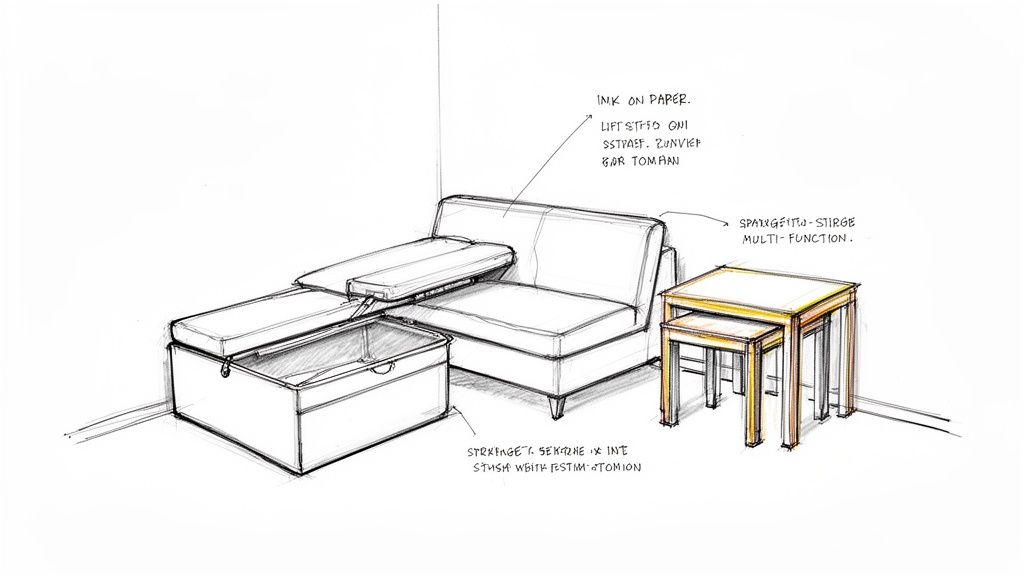
    This strategy isn't about compromise; it's about smart design. A storage ottoman can provide extra seating for guests, a comfortable footrest, and a concealed home for blankets or board games. Similarly, a sectional sofa with a storage chaise keeps your living area tidy by hiding away seasonal decor or extra pillows, eliminating the need for a separate bulky cabinet. By choosing pieces that serve dual or even triple purposes, you create a space that feels larger, more organized, and perfectly suited to your lifestyle.

    A detailed sketch of multi-functional furniture, including a sofa with a lift-top chaise and nesting tables for small spaces.

    How to Choose the Right Multi-Functional Pieces

    Selecting the right multi-use furniture involves more than just finding an item with a hidden compartment. It requires a thoughtful assessment of your daily needs and long-term goals for the space.

    • Prioritize Primary Use: A sofa bed must first and foremost be a comfortable sofa. Test its cushions and construction for daily use. The guest bed function is secondary, so don't sacrifice everyday comfort for a feature you'll only use occasionally.
    • Measure Everything: Before purchasing, measure not only the space where the furniture will go but also your doorways, hallways, and stairwells. This ensures a smooth delivery and prevents the disappointment of a piece that won't fit through the door.
    • Evaluate Storage Capacity: Think about what you plan to store. A lift-top coffee table is ideal for smaller items like remotes and magazines, while a storage chaise offers deeper space for bulky blankets or pillows.
    • Consider Construction Quality: Multi-functional furniture often has moving parts like hinges, lifts, or pull-out mechanisms. Look for pieces with durable components that can withstand regular use. Our knowledgeable team can help you understand the differences between various options and find well-built pieces that offer lasting value.

    2. Utilize Vertical Space to Draw the Eye Upward

    When floor space is limited, the most overlooked asset in your small living room is the walls. A key decorating tip is to draw the eye upward, creating an illusion of height and openness. Utilizing vertical space means using walls for storage, decor, and functional elements rather than cluttering the floor. This shifts the room's focus from its small footprint to its full height, making the entire area feel more expansive and thoughtfully designed.

    This strategy is about reclaiming unused territory. Instead of a wide, low media console, consider a wall-mounted TV with floating shelves above and below. Floor-to-ceiling bookcases that flank a doorway or fireplace create a grand, built-in look while offering immense storage. By encouraging an upward gaze, you make the room feel airier and more dynamic, transforming empty walls into stylish, functional assets.

    How to Effectively Use Vertical Space

    Implementing this concept correctly involves more than just hanging a few shelves. It requires a balanced approach to ensure the walls feel curated and intentional, not crowded.

    • Choose Tall, Slender Furniture: Opt for tall, narrow bookcases and étagères instead of short, wide ones. These pieces naturally guide the eye upward and occupy a smaller footprint.
    • Mount Shelving Strategically: Floating shelves are a great choice for small living rooms because they provide storage without the visual weight of a traditional cabinet. Install them above a sofa or desk to display books and decor.
    • Create a Vertical Gallery Wall: Arrange artwork and photos in a vertical orientation. This grouping pulls the eye up and can make a low ceiling feel higher than it actually is.
    • Balance Open and Closed Storage: To avoid a cluttered look, mix open shelving with closed, wall-mounted cabinets. This allows you to display your favorite items while hiding everyday essentials from view. We can help you find pieces that offer this blend of style and practicality.

    3. Light and Neutral Color Palettes

    Color has a profound impact on how we perceive the size of a room. One of the most classic decorating tips for a small living room is to use a light and neutral color palette. Shades of white, cream, soft gray, and beige reflect light, creating an open, airy feeling that makes the space seem larger and more expansive than it actually is. This foundation of light colors serves as a canvas, tricking the eye into seeing a brighter, less cluttered environment.

    This approach is about creating visual harmony, not a boring, sterile room. A neutral backdrop allows architectural details and carefully chosen furniture to stand out. Imagine light gray walls paired with white trim and warm, natural wood floors; the combination feels both spacious and inviting. By establishing a bright, cohesive base, you set the stage for a room that feels calm, organized, and elegantly styled.

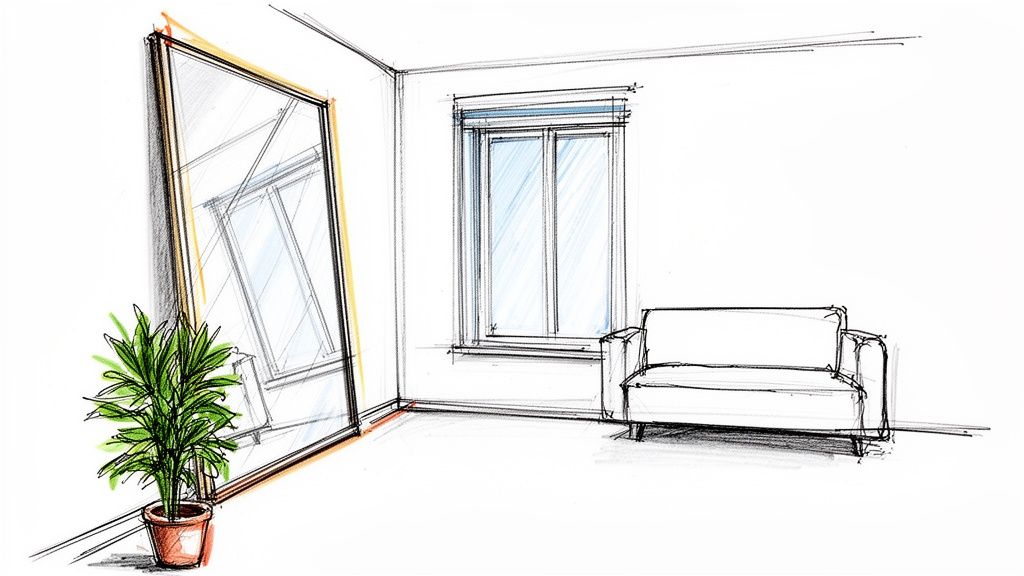
    Hand-drawn sketch of a living room with a large mirror, potted plant, window, and armchair.

    How to Implement a Light and Neutral Palette

    Successfully using neutrals is a balancing act between creating space and adding personality. The key is to layer textures and subtle variations in tone to build depth and warmth.

    • Layer Tones for Depth: Instead of using one single shade of white or beige, layer several. Combine an off-white sofa with cream-colored pillows and a slightly darker taupe rug. This monochromatic layering adds sophisticated dimension without overwhelming the space.
    • Introduce Texture: Prevent a neutral room from feeling flat by incorporating a variety of textures. Think of a chunky knit throw, a woven jute rug, linen curtains, or a distressed wood coffee table. These elements create visual interest and a cozy, lived-in feel.
    • Use Accents Strategically: Pops of color are useful for personality. Reserve bold hues like emerald green or deep navy for smaller, easily swappable items such as accent pillows, artwork, or a single statement chair. This maintains the room's airy quality while adding a focal point.
    • Balance with Warmth: To keep a light-colored room from feeling cold or clinical, ground it with warm elements. Natural wood tones, brass or gold metallic accents, and leather pieces introduce richness and warmth, making the space feel more inviting and balanced.

    4. Strategic Mirror Placement

    Among the most classic decorating tips for a small living room, strategic mirror placement remains one of the most effective. Mirrors are powerful tools that do more than just reflect your image; they reflect light and create the illusion of depth, visually expanding the dimensions of your room. A well-placed mirror can bounce both natural and artificial light around the space, instantly making it feel brighter, larger, and more open.

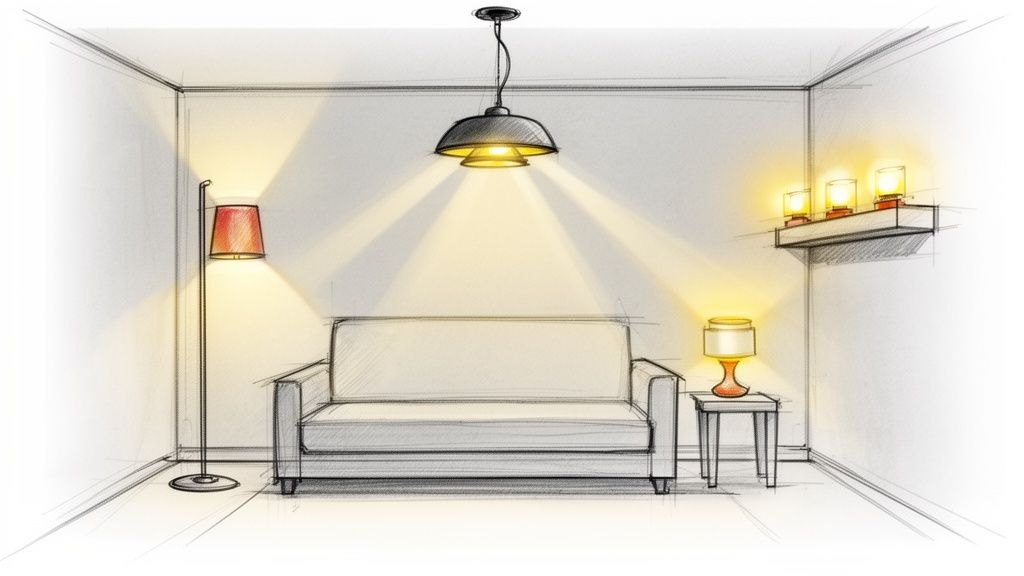
    A detailed sketch of a living room showcasing various lighting options and a sofa.

    This technique works by tricking the eye into perceiving more space than actually exists. By reflecting a view or an open area, a mirror adds a new visual plane to the room, preventing walls from feeling like they are closing in. Whether you opt for a large, statement-making floor mirror or a gallery wall of smaller decorative pieces, incorporating mirrors is a simple yet transformative way to enhance a compact living area without sacrificing any floor space.

    How to Position Mirrors for Maximum Impact

    Effective mirror placement is an art that requires considering sightlines, light sources, and what you want to reflect. The goal is to amplify the best features of your room while minimizing any sense of confinement.

    • Reflect Natural Light: The most impactful placement is often opposite a window. This captures the maximum amount of daylight and scatters it throughout the room, creating a bright and airy atmosphere that combats the shadows common in small spaces.
    • Create a Focal Point: Use an oversized or ornately framed mirror as a piece of art. Placing a large mirror above a fireplace, console table, or sofa anchors the space and draws the eye, making the room feel more intentional and grand.
    • Double Your View: Position a mirror to reflect something you love, like a favorite piece of art, a beautiful light fixture, or a glimpse into an adjacent room. Be mindful to avoid reflecting cluttered areas, as this will only amplify the sense of disorganization.
    • Lean, Don't Hang: For an effortless and renter-friendly option, lean a large floor mirror against a wall. This adds a casual, modern touch and avoids the need for installation while still providing a significant space-expanding effect. You can find a variety of mirror styles to complement any decor in our showrooms.

    5. Smart Storage Solutions and Organization

    A small living room can quickly feel cluttered and chaotic, but strategic storage is a powerful decorating tip to reclaim your space. The key is to hide clutter and maximize usable areas while maintaining visual openness. Smart storage solutions go beyond simple containers; they integrate seamlessly into your decor, ensuring items are accessible when needed but concealed from view to create a serene, organized environment. This approach transforms potential clutter zones into functional and stylish parts of the room.

    From built-in cabinetry flanking a fireplace to a sleek TV stand with closed doors, the goal is to create a home for everything. A storage bench under a window can hold seasonal blankets, while a chic ottoman with a removable top can hide away toys or magazines. By thoughtfully selecting pieces that conceal items, you reduce visual noise and make the room feel significantly larger and more intentional. To implement these solutions effectively, consider exploring proven small living room storage ideas that maximize space without compromising style.

    How to Implement Smart Storage and Organization

    Choosing the right storage involves more than just buying bins. It's about creating a system that works for your lifestyle and enhances your room's aesthetic.

    • Prioritize Closed Storage: For items you don't use daily, such as extra cables or seasonal decor, closed cabinetry is ideal. This keeps surfaces clear and maintains a clean, uncluttered look.
    • Utilize Vertical Space: Don't forget your walls. Floating shelves or tall, narrow bookcases draw the eye upward and provide valuable storage without taking up floor space.
    • Establish Zones: Group similar items together. Designate one cabinet for media and electronics, a basket for blankets, and a drawer for remotes and chargers. This makes finding things effortless.
    • Choose Storage that Complements Your Decor: Look for storage pieces that match your room's style. Woven baskets add a natural, textured look, while a sleek, modern media unit can become a sophisticated focal point. The right furniture can add both function and beauty.

    6. Choose Scaled and Low-Profile Furniture

    When decorating a small living room, the size and shape of your furniture can either create an open, airy feel or make the space feel cluttered and cramped. Appropriately scaled furniture is proportionate to the room's dimensions, ensuring that each piece fits comfortably without overwhelming the area. Opting for low-profile designs with clean lines and exposed legs is one of the most effective decorating tips for a small living room because it creates a sense of spaciousness and light.

    This approach is about visual weight. A bulky, oversized sectional with a high back and thick, rolled arms can dominate a room and block sightlines. In contrast, a slim-armed sofa or a compact loveseat with visible wooden legs allows light and air to flow underneath, making the floor appear more expansive. This simple trick draws the eye upward and gives the illusion of higher ceilings and more open space, proving that smart furniture selection is as crucial as layout.

    How to Select Scaled Furniture

    Choosing the right pieces requires a keen eye for proportion and a clear understanding of your room's limitations. Focus on furniture that offers comfort and style without consuming unnecessary visual or physical space.

    • Prioritize Visible Legs: Furniture with exposed legs, like a mid-century modern sofa or a floating media console, instantly makes a room feel larger. This design maintains open sightlines to the floor and walls, preventing the room from feeling boxed in.
    • Opt for Slim Silhouettes: Look for sofas and chairs with straight, slim arms rather than bulky rolled or pillow-top arms. Seating with lower backs also helps maintain an unobstructed view across the room, which is especially important if it faces a window.
    • Measure Before You Buy: Take precise measurements of your living room, including ceiling height and doorways. Bring these dimensions with you when you shop to avoid purchasing a piece that's too large. Our team can help you find options that fit your specific measurements.
    • Test for Comfort: Scaled-down furniture should never mean sacrificing comfort. Sit on sofas and chairs in the showroom to ensure they provide adequate support. Quality construction is key to getting both a compact footprint and lasting usability.

    7. Layered Lighting Design

    One of the most transformative decorating tips for a small living room involves moving beyond a single overhead light. A layered lighting design uses multiple sources to create depth, ambiance, and functionality, preventing the harsh shadows and dark corners that can make a space feel cramped. This approach combines three types of light: ambient (overall illumination), task (focused light for activities), and accent (light that highlights specific features).

    By strategically placing different fixtures at various heights, you draw the eye around the room and create a sense of spaciousness. For instance, a central ceiling fixture provides general ambient light, a floor lamp in a corner offers task lighting for reading, and a small accent lamp on a bookshelf highlights your favorite decor. This multi-source strategy not only makes the room feel larger and more inviting but also adds a layer of visual interest and sophistication that a single light source cannot achieve.

    How to Implement a Layered Lighting Scheme

    Creating an effective layered lighting plan requires thinking about how you use your living room throughout the day. The goal is to build a flexible system that can adapt to different moods and activities.

    • Start with Ambient Light: Your base layer should provide soft, general illumination. This can be a stylish flush-mount ceiling light, a chandelier, or recessed lighting. Installing a dimmer switch is a great option, as it allows you to adjust the overall brightness from bright and energetic to soft and relaxing.
    • Add Task Lighting: Identify areas where you perform specific activities. Place a reading lamp next to your favorite armchair or sofa. If you have a desk in your living room, a focused table lamp is essential. This ensures you have adequate light where you need it most without illuminating the entire room.
    • Incorporate Accent Lights: Use accent lighting to create focal points and add character. Wall sconces can frame a piece of art or a mirror, while track lighting can be aimed at architectural details or a gallery wall. Even small, battery-operated picture lights can make a big impact.
    • Vary Fixture Heights: A key to successful layering is placing lights at different levels. Combine a floor lamp (high), with table lamps (medium), and perhaps uplighting behind a plant (low). This distribution guides the eye vertically and horizontally, enhancing the perception of space.

    8. Minimalist Décor and Intentional Accessorizing

    In a small living room, clutter is the enemy of spaciousness. Adopting a minimalist approach to décor is one of the most transformative decorating tips for a small living room, focusing on quality over quantity and ensuring every item has a purpose. This philosophy encourages you to eliminate unnecessary objects and instead curate a collection of accessories that are either functional or deeply meaningful. The result is a clean, uncluttered, and personalized environment.

    This strategy is about making deliberate choices, not about creating a sterile, empty room. By being intentional with your accessories, you allow each piece to stand out and contribute to the overall aesthetic without overwhelming the space. For example, instead of a busy gallery wall, a single, impactful piece of artwork can serve as a stunning focal point. This approach creates visual breathing room, making the entire living area feel more open, serene, and thoughtfully designed.

    How to Curate Your Décor Intentionally

    Editing your accessories requires a mindset shift from filling empty surfaces to celebrating open space. It's about personalizing your room with items that add value, not just volume.

    • Edit with Purpose: Regularly review your décor. Ask yourself if an item brings you joy, serves a function, or holds sentimental value. If it doesn't, consider storing it or letting it go. The "one in, one out" rule can be helpful; when you bring a new item home, an old one must leave.
    • Create Visual Groupings: When arranging accessories on a shelf or coffee table, group them in odd numbers like three or five. This is a classic design principle that creates a more dynamic and visually appealing composition than even-numbered groupings.
    • Embrace Negative Space: Don't feel the need to cover every surface. Leaving empty space around objects allows them to be appreciated individually and prevents a cluttered look. Treat this "negative space" as a key element of your design.
    • Prioritize Quality and Meaning: Choose décor that you genuinely love and that reflects your personality. A handcrafted vase, a book from a favorite author, or a single beautiful plant can have more impact than a dozen generic, mass-produced items. Our accessory collections offer unique pieces that can help you tell your story.

    8-Tip Comparison for Small Living Room Decor

    Strategy Implementation complexity Resource requirements Expected outcomes Ideal use cases Key advantages
    Multi-Functional Furniture Medium — choose and fit combined pieces Moderate — purchase specialty furniture, delivery/assembly More functions per footprint; added hidden storage and guest capacity Studios, multifunction rooms, tight floor plans Saves floor space, consolidates functions, cost-efficient vs separate items
    Vertical Space Utilization Medium — planning and secure wall mounting Low–Moderate — shelving, brackets, bookcases, possible pro install Frees floor area; creates vertical interest and perceived height Small rooms with limited floor area or high walls Maximizes storage, enhances height perception, customizable
    Light and Neutral Color Palettes Low — paint and textile selection Low — paint, fabrics, accessories Brighter, airier feel; visually larger rooms Any small room needing visual expansion or staging Enhances light, timeless backdrop, versatile for decor changes
    Strategic Mirror Placement Low–Medium — selecting size and secure hanging Low — mirrors and mounting hardware Increased brightness and depth; illusion of space Dark rooms, spaces with windows, staging situations Cost-effective, immediate visual impact, portable
    Smart Storage Solutions and Organization Medium — planning, zoning, and setup Moderate — built-ins, storage furniture, bins Clutter reduced; efficient, accessible storage Homes with many items, families, organized lifestyles Hides clutter, maximizes usable space, improves order
    Scaled and Low-Profile Furniture Low — measurement and selection Moderate — purchase of appropriately sized pieces Maintains sightlines; rooms feel less crowded Narrow rooms, low ceilings, minimalist schemes Visual lightness, better traffic flow, easier arrangement
    Layered Lighting Design Medium–High — fixture planning, wiring, placement Moderate–High — multiple fixtures, dimmers, possible electrician Flexible moods, reduced shadows, perceived depth and space Rooms with poor natural light or multiple activities Improves function and ambiance, highlights features, adjustable
    Minimalist Décor and Intentional Accessorizing Low — editing and curation Low — fewer, higher-quality items Calm, uncluttered environment; focal points emphasized Small modern apartments, low-maintenance lifestyles Maximizes visual space, easier upkeep, emphasizes quality

    Bringing It All Together in Your Home

    Decorating a small living room can feel like a complex puzzle, but with the right approach, it becomes a rewarding opportunity to create a space that is both stylish and highly functional. Moving beyond generic advice, we’ve explored a range of practical, actionable decorating tips for a small living room, focusing on the core principles that make a tangible difference: maximizing light, optimizing your layout, and choosing furniture that works smarter, not just harder.

    The key takeaway is that a successful small space design isn't about restriction; it's about intention. Every piece of furniture, every color choice, and every accessory should serve a purpose. By embracing multi-functional furniture like storage ottomans and sleeper sofas, you reclaim valuable floor space. By drawing the eye upward with vertical storage and tall curtains, you create an illusion of height and openness. These aren't just tricks; they are proven design strategies that directly address the common pain points of a compact living area, transforming a room that feels cramped into one that feels curated and comfortable.

    Your Actionable Path Forward

    Think of these tips not as rigid rules but as a flexible framework for experimentation. The true test of any design is how it functions in your daily life. Start by identifying your biggest challenge: is it clutter, a lack of seating, or poor lighting?

    • For Clutter & Storage Issues: Revisit the sections on smart storage solutions and multi-functional furniture. A single, well-chosen media console or a set of floating shelves can completely change your room's organization.
    • For Layout & Flow Problems: Focus on scaled furniture and strategic placement. Use painter's tape to map out potential furniture footprints on your floor before committing. This simple step can prevent costly mistakes.
    • For a Dark or Cramped Feeling: Prioritize layered lighting and the strategic use of mirrors. Combining ambient, task, and accent lighting gives you ultimate control over the mood and perceived size of your space.

    Ultimately, the most effective decorating tips for a small living room are the ones that resonate with your personal style and support your lifestyle. The goal is to build a haven that feels uniquely yours, a space that is not defined by its square footage but by its thoughtfulness and charm. Seeing and feeling furniture in person is often the final, crucial step in this process. It allows you to verify the scale, test the comfort, and truly visualize how a piece will fit into your home, removing the guesswork and building confidence in your decisions.


    Ready to put these ideas into practice? Seeing appropriately scaled furniture in person can make all the difference. Visit any of our North Georgia showrooms to explore a great selection of sofas, accent chairs, and smart storage solutions perfect for smaller spaces, and let our experienced team at Woodstock Furniture & Mattress Outlet help you find the right pieces for your home.