Tag: accent chair guide

  • Fabric Accent Chair Guide to Fit, Fabric, and Style

    Fabric Accent Chair Guide to Fit, Fabric, and Style

    A lot of rooms in North Georgia homes reach that frustrating point where they're almost done. The sofa is in place. The rug is down. The lamps work. But one corner still looks empty, or the room feels flat even though nothing is technically wrong.

    That's often where a fabric accent chair earns its keep.

    A good one can do several jobs at once. It adds a place to sit, softens a room with texture, and gives the eye somewhere to land besides the biggest piece of furniture in the room. In a bedroom, it can turn unused square footage into a reading spot. In a living room, it can keep the space from feeling like every seat is lined up against the wall. In a home office, it can make the room feel less like a workstation and more like part of the house.

    People often hesitate here because an accent chair seems simple until they start shopping. Then the questions pile up. Should the chair match the sofa or contrast with it? Which fabric is easier to live with if you have pets, kids, or red clay dust coming in from outside? How big is too big? Why do some chairs look great online but awkward in a real room?

    Those are fair questions. A fabric accent chair isn't just decor. It's one of the easiest ways to change how a room looks and feels without replacing everything else.

    The Finishing Touch Your Room is Missing

    One of the most common situations we hear about is the room that feels 90 percent finished. Maybe the sofa and coffee table are set, but the arrangement still feels one-sided. Maybe there's a blank area near a window that looks forgotten. Maybe the bedroom has enough furniture, but not enough comfort.

    That missing piece is often a chair.

    Not a giant recliner. Not a full matching set. Just one well-chosen upholstered seat that makes the room feel intentional instead of incomplete.

    Why one chair changes more than people expect

    A fabric accent chair works because it's independent. It doesn't have to match every line and finish in the room. In fact, accent chairs are meant to stand apart and pull focus, which is one reason textured fabrics such as velvet and tweed are often recommended to soften harder surfaces and create contrast in mixed-material rooms, as noted by The Archiology's overview of accent chairs.

    That matters in real homes. If your living room already has a smooth leather sofa, glass table, or painted wood pieces, fabric can keep the room from feeling cold. If your room already has plenty of soft surfaces, the chair can introduce pattern or shape instead.

    A room rarely needs more stuff. It usually needs one piece that makes the other pieces make sense.

    Where homeowners usually get stuck

    Individuals don't struggle with whether they like a chair. They struggle with whether it will work after it's in the house.

    Common concerns usually sound like this:

    • “I love the look, but will it fit?” A chair can look compact online and still feel bulky in a smaller living room.
    • “Will this fabric hold up?” That matters a lot more in a busy family room than in a guest bedroom.
    • “Do I need it to match my sofa?” Usually no. It needs to relate to the room, not disappear into it.
    • “Will it just become a clothes chair?” That depends on placement, comfort, and whether you're buying for function or for visual balance.

    The helpful way to shop is to treat the chair as a tool. First decide what problem it's solving. More seating, more softness, better balance, or a stronger focal point. Once you know that, the right fabric, size, and style get much easier to sort out.

    Choosing Your Fabric Natural Synthetic and Performance

    The fabric decision trips people up because stores and websites often lead with color first. Color matters, but daily life matters more. The better question is this: what do you need the chair to put up with?

    Think of upholstery the way you'd think about clothing. You wouldn't wear a delicate dress shirt to paint a room. You wouldn't pick a heavy winter coat for a July afternoon in Georgia. A fabric accent chair works the same way. The right material depends on where it's going and who will use it.

    Choosing Your Fabric Natural Synthetic and Performance

    Natural fabrics

    Natural upholstery often appeals to people who want a relaxed, familiar look. Linen blends and cotton-like textures can feel easygoing and approachable, especially in casual living rooms, bedrooms, and lighter interiors.

    They're often chosen because they don't feel overly slick or formal. In the right room, that's a strength. A soft woven fabric can help a chair feel settled and lived in from day one.

    What catches people off guard is upkeep. Many shoppers focus on how the chair looks on the floor and not how it will behave after months of use. That's one reason there's a gap in guidance around stain resistance, removable covers, and pet-friendliness in this category, something reflected in Modway's range of accent lounge chair constructions.

    Synthetic fabrics

    Synthetic upholstery is often the practical middle ground. Polyester, in particular, shows up often because it tends to be stable, consistent, and easier to use for everyday seating than many delicate natural fibers. One product example uses 100% polyester upholstery over plywood and solid wood, a common build that balances cost and stability, as shown in the Tillman fabric accent arm chair listing.

    For many households, synthetic fabrics make sense because they're less fussy. They often come in a wider range of colors and textures, and they usually fit homes where the chair will get regular use instead of occasional use.

    Practical rule: If the chair is going in the spot where everyone drops bags, sits with coffee, or climbs in with the dog, start your search with easier-care synthetics.

    Performance fabrics

    Performance fabrics are less about a single fiber and more about a goal. They're designed for the kind of use that tests furniture. Spills, repeated sitting, pets hopping up, and busy family routines.

    That doesn't mean every household needs one. If the chair is headed to a quiet bedroom corner, a more decorative fabric may be perfectly reasonable. But if you want low-maintenance confidence, performance-focused upholstery is worth asking about in the store.

    Fabric types at a glance

    Fabric Category Best For Considerations
    Natural Fabrics Relaxed spaces, lighter-use rooms, soft casual styling Can require more care depending on weave and finish
    Synthetic Fabrics Everyday living rooms, family use, budget-conscious updates Feel and texture vary widely, so touch samples in person
    Performance Fabrics High-use homes, pet households, spill-prone areas Style selection can differ by brand and collection

    A simple way to narrow the choice

    Use these questions before you fall in love with a color:

    • Who's really going to use it If it's the chair everyone grabs first, prioritize easy care over trend appeal.
    • Will the cover come off Removable covers can matter a lot for renters, families, and anyone who wants simpler upkeep.
    • Is the room formal or forgiving A chair in a front sitting room can be more decorative than one in the main TV room.
    • Do you want texture or smoothness Velvet, tweed, and other textured fabrics can add visual depth where the rest of the room feels flat.

    If you sew, reupholster, or want a clearer feel for how different textiles behave, this fabric guide for slow fashion sewists is useful because it helps train your eye for hand feel, drape, and practical trade-offs.

    What Makes a Fabric Chair Durable

    People sometimes assume durability is just about whether the fabric feels thick. That's only part of the story. A durable chair comes from the combination of fiber, weave, construction, and where the chair will live.

    A chair in a sunny bonus room faces one kind of challenge. A chair in the family room near the kitchen faces another. If you only judge by softness, you can miss the details that matter after months of use.

    What Makes a Fabric Chair Durable

    Look past the surface

    When you sit in a chair on a showroom floor, you're feeling comfort first. Durability lives underneath that first impression.

    A practical construction example is a chair with 100% polyester upholstery over a frame that uses plywood and solid wood. That combination is common because it balances stability and cost while making use of polyester's abrasion tolerance and dimensional stability for everyday use, as shown in the earlier product example.

    That tells you something important. Fabric performance doesn't exist in isolation. A sturdy frame and a sensible upholstery choice often work together.

    The durability questions worth asking

    You don't need to sound like an upholsterer to ask smart questions. These are the ones that matter most in everyday shopping:

    • How will this fabric respond to friction Repeated getting in and out of the chair wears some fabrics faster than others.
    • Will it pill easily Some textured weaves look rich at first but start fuzzing in ways owners don't expect.
    • How does it handle light A chair near bright windows can age differently than one in a den.
    • Is the weave tight or open Open textures can be beautiful, but they may grab lint, pet hair, or snags more easily.

    Match durability to location

    The biggest mistake isn't buying a weak chair. It's buying the wrong chair for the wrong place.

    A quiet reading corner can handle more delicate texture. A chair near a doorway, kitchen pass-through, or kid-heavy living room usually needs a tougher, easier-care fabric. If the room gets strong daylight, ask how the color is likely to hold up over time. If the chair is mostly decorative, you may have more freedom to choose based on look and feel.

    Durability isn't a trophy. It's a fit question. Buy for the way the chair will actually be used, not for the version of life you hope to live.

    A quick durability checklist

    Before you commit, check these details:

    • Frame materials Ask whether the chair uses solid wood, plywood, or a combination.
    • Seat use Decide if this will be daily seating or occasional seating.
    • Fabric texture Run your hand over the fabric and picture pet claws, denim seams, and everyday friction.
    • Cleaning expectations If you won't baby it, don't buy a chair that needs babying.

    Matching Style and Scale to Your Space

    You bring the chair home, set it in the corner, step back, and something feels off. The fabric is right. The color works. Yet the room suddenly feels cramped, awkward, or slightly out of tune. In North Georgia homes, that usually comes down to scale and visual balance, not bad taste.

    Matching Style and Scale to Your Space

    Start with the room's proportions

    A fabric accent chair should relate to the pieces around it, especially the sofa. If your sofa sits low and deep, a tall, upright chair can feel like it was borrowed from another room. If your sofa has a more structured shape and visible legs, an oversized, overstuffed chair can make the seating group feel uneven.

    Seat height is one of the easiest details to compare. Keeping the chair reasonably close to the sofa's seat height usually makes the room look more settled and makes conversation seating feel more natural too. Width matters just as much. A chair with thick rolled arms can take up far more visual space than its measurements suggest.

    The goal is not perfect matching. The goal is compatibility.

    Style labels help, but shape tells the real story

    Many shoppers start with labels such as barrel, club, wingback, or swivel. Those labels are useful, but shape tells you more about how the chair will live in the room.

    • Club and barrel chairs usually feel grounded and cozy. They suit family rooms, reading corners, and spaces that need a little softness.
    • Open-frame chairs look lighter because you can see through more of them. They often work well beside a large sectional or in a smaller living room.
    • Wingback-inspired chairs add height and a more traditional presence. They can help a room with low furniture feel less flat.
    • Swivel chairs fit flexible spaces, especially where the chair may turn from the TV to the fireplace or window.

    If you are still sorting out your overall look, this guide to find your style at Joey'z Shopping can help you compare relaxed, classic, and more polished room styles.

    Visual weight can fool your eye

    This is the part online shopping often misses. Two chairs can have similar measurements and still look completely different in a room.

    A chair with exposed legs usually reads lighter. A chair upholstered down to the floor reads heavier. Narrow arms, a lower back, or a slimmer frame can help a chair feel easier to place in a den, condo, or bonus room. Bold prints and dark fabrics also pull more attention than soft neutrals, so they can make a chair feel bigger than the tape measure suggests.

    A simple store-floor trick helps here. Squint at the chair from a few feet away. You stop noticing small details and start seeing its overall mass, which is what your room will notice too.

    Match the chair to the job the room is doing

    North Georgia homes often mix uses in one space. A living room may need to handle conversation, TV watching, holiday guests, and a quiet cup of coffee in the morning. That means style choices have to work harder than they do in a staged photo.

    Use this quick guide:

    Room Situation Better Direction
    Large sectional already dominates the room Choose a lighter silhouette or more open shape
    Smaller living room or townhouse layout Watch arm bulk and overall depth closely
    Formal sitting area A taller back or more structured profile often fits better
    Bedroom corner or upstairs landing Softer lines usually feel warmer and less stiff

    Test scale before you buy

    Painter's tape on the floor works like a dress rehearsal. Mark the chair's width and depth, then add the space your knees and elbows will use in practice. If the taped outline already feels tight, the physical chair will not feel any better once a side table, lamp, or basket joins it.

    If you are shopping in person, sit down and notice where your shoulders hit the back, where your feet land, and how the arms feel. If you are shopping online, compare the listed dimensions to a chair you already own and like. That gives you a real-life reference point, which is far more helpful than guessing from photos.

    One last tip. Measure the empty floor area, then measure the nearby sofa seat height and arm height too. That extra minute helps you choose a chair that looks like it belongs in your home, not one that only looked good on a product page.

    Smart Placement for Function and Flow

    You bring the chair home, set it where the online photo suggested, and within a day everyone is walking around it. That is the moment placement stops being decorating and starts being problem-solving.

    In many North Georgia homes, one room has to handle several jobs at once. It may be where you watch TV, talk with family, read in the evening, and cut through to the kitchen or hallway. A fabric accent chair should support that daily movement, not interrupt it.

    Smart Placement for Function and Flow

    A good placement rule is simple. Put the chair where a person would naturally want to sit, then check whether the room still feels easy to move through. If either part fails, the spot needs work.

    Placements that usually work well

    Some locations keep showing up in real homes because they solve a real need.

    • By a window for reading This works well when you can add a small table and lamp, so the chair becomes a usable corner instead of a lonely filler piece.
    • Across from the sofa This helps a room feel more conversational, especially if your current setup points every seat at the TV.
    • Near a fireplace A chair can strengthen that focal area and make the room feel more balanced.
    • In a bedroom corner This gives you a place to sit for shoes, folding laundry, or a quiet phone call without turning the bed into the only landing spot.

    How to protect traffic flow

    Walkways matter more than people expect. If someone has to turn sideways to pass the chair, squeeze between it and the coffee table, or bump the arm every evening, the placement is off.

    Start by walking the usual routes in your room. Front door to sofa. Sofa to kitchen. Hallway to favorite chair. Those everyday paths tell you more than a staged photo ever will.

    Seat height matters too. A chair that sits close to the sofa in height usually feels more natural in a conversation area. If the room already feels visually heavy, an open-frame chair or a swivel chair can help keep the layout from feeling crowded. The designer video on accent chairs with sectionals shows this idea clearly in real layouts.

    A simple filter before you commit

    Before you settle on a spot, ask:

    1. Will someone use this chair here? A reading chair with no light or table often becomes a clothes holder.
    2. Does it interrupt a natural walking path? Check the routes people use without thinking.
    3. Does it connect to the rest of the seating? A chair should feel invited into the conversation, not parked off to the side.

    A chair can fit the wall and still feel wrong in the room.

    That is why honest trade-offs matter. The dramatic corner placement may look good in a photo, but a slightly less flashy spot often works better for everyday life. In North Georgia homes where families, guests, pets, and foot traffic all share the same space, the best placement is usually the one that keeps the room comfortable on an ordinary Tuesday, not just pretty when everything is freshly arranged.

    Caring for and Cleaning Your Fabric Accent Chair

    A chair lasts longer when the owner does a few small things consistently. It doesn't need a complicated routine. It needs attention before dirt and spills settle in.

    For most homes, regular upkeep means vacuuming with an upholstery attachment, brushing out creases where dust gathers, and keeping the chair from becoming the household drop zone for damp towels, jackets, or pet blankets. If the chair has loose cushions, rotate them occasionally so one side doesn't wear faster than the other.

    Learn the cleaning code first

    Before you use any product, check the manufacturer's tag. Upholstered furniture often includes a cleaning code that tells you what kind of cleaner is considered safe.

    The basic codes are:

    • W means water-based cleaners are generally appropriate.
    • S means solvent-based cleaner only.
    • W/S means either water-based or solvent-based cleaner may be used.
    • X means vacuum only or professional cleaning only.

    If the tag is missing or hard to read, don't guess. Test any cleaner in a hidden spot first, and if you're not confident, call the manufacturer or a professional upholstery cleaner.

    Handle spills with a light hand

    When coffee, juice, or something messier lands on the fabric, speed matters. Rubbing doesn't help. Blotting does.

    A safer first response usually looks like this:

    • Blot immediately Use a clean cloth and press gently to lift moisture.
    • Check the code Don't reach for a random spray bottle first.
    • Use less product than you think Overwetting can spread the stain or leave rings.
    • Let the chair dry naturally Strong heat can create new problems.

    A few habits that prevent bigger problems

    Sunlight, pet claws, and neglected dust do plenty of damage over time. Keep the chair out of harsh direct light when possible, especially if it sits by a bright window. If your household includes pets, trim snag risks by avoiding rough play on more delicate weaves.

    Most cleaning mistakes happen because people treat all upholstery the same. They don't. The tag matters, the fabric matters, and the safest cleaning routine is the one that matches both.

    Your North Georgia Buying Checklist and Final Tips

    You find a chair you love online. The color looks right, the shape is sharp, and the price fits the budget. Then it arrives, and one of three things happens. It blocks the walkway, feels stiff after ten minutes, or looks much larger in your room than it did on a screen.

    That is why the last step in this process is less about trend and more about fit. In North Georgia homes, a good fabric accent chair has to work with your floor plan, your daily routines, and the amount you want to spend now versus later on replacement.

    Chair styles have a long history, and upholstered seating became more available as furniture production grew and materials became more affordable, as explained in this history of chair design from Living Spaces. For today's shopper, the practical lesson is simple. A chair can add personality, but it still needs to earn its spot in the room.

    Your pre-shopping checklist

    Bring a short checklist before you shop. It works like a packing list before a trip. A few minutes of prep can save you from a costly wrong turn.

    • Measure the room first Include wall space, nearby tables, and the walking path people use every day.
    • Measure entry points Doorways, stair turns, elevators, and hallways can stop a good choice before it reaches the room.
    • Take photos of your current furniture Sofa arms, rug colors, paint, and wood tones are easier to match when you can see them side by side.
    • Know the chair's real job Reading seat, daily seat, guest seat, bedroom corner chair, or a visual accent that gets light use.
    • Set a comfort standard Some chairs look polished but feel upright and firm. If possible, sit in them long enough to notice seat depth, back support, and arm height.

    The last in-person check

    Online browsing helps narrow the field. It does not tell you how a fabric feels against your hand or whether the seat hits the back of your knees in a comfortable spot.

    If you want to compare materials, shapes, and scale in person, Woodstock Furniture & Mattress Outlet is one local option where shoppers can look at accent chair styles on the floor and judge comfort, texture, and size before buying.

    A few honest final tips

    Buy for the way the chair will be used. A chair that gets daily use deserves more attention to cushion support, fabric durability, and comfort than one that mainly fills an empty corner.

    Ask plain questions before you pay. What does delivery include? Is assembly required? What does the warranty cover? Are replacement cushions available? Those questions may feel small in the store, but they matter a lot once the chair is in your home.

    One more point matters in North Georgia. Our homes range from compact townhomes to larger family rooms with open layouts, and the right answer is not always the biggest chair or the boldest pattern. The better choice is usually the one that still fits your space, your habits, and your budget a year from now.

  • How to Choose an Accent Chair for Your Living Room: A Guide to Stylish Seating

    How to Choose an Accent Chair for Your Living Room: A Guide to Stylish Seating

    Finding the right accent chair for your home is less about some single, "best" option and more about discovering the perfect piece for your space, your lifestyle, and your personality. Is it a pop of color? A solution to a seating crunch? Or maybe just a cozy corner for you to claim as your own?

    How to Find the Right Accent Chair for Your Space

    This guide is designed to help you answer those questions with confidence. We're going to move beyond just showing you pretty pictures and really dig into the common hurdles and questions that pop up when you're furniture shopping. Our goal isn't to tell you what to buy, but to give you a solid framework for figuring out what you actually need.

    We get it. Staring at a showroom floor or endless online pages can feel overwhelming. You're probably wrestling with questions like:

    • How do I get a new chair to play nicely with my existing sofa?
    • What style won't swallow up my small living room?
    • Which fabrics can actually survive kids, pets, and Friday night pizza?
    • Where's the sweet spot between a chair that looks amazing and one you actually want to sit in?

    By tackling these questions head-on, we can get to the heart of what makes an accent chair a true win in a real-life home.

    Moving from Problems to Solutions

    An accent chair is so much more than just an extra seat. Think of it as a functional piece of décor—the final puzzle piece that pulls the whole room together. It can be the splash of color you've been craving, a new texture to soften the space, or an interesting shape that breaks up the monotony of your current furniture.

    A great accent chair has its own personality. It needs to complement what you already have, sure, but it should also be strong enough to stand on its own as a statement piece. The secret is often in the contrast—playing with different colors, shapes, or materials to create a look that feels intentionally layered and interesting.

    To get you feeling prepared, we'll walk through the different styles, materials, and crucial measurements you need to consider. We'll be honest about the pros and cons of different options so you know exactly what to expect.

    By the time you're done reading, you'll have the know-how to pick a chair that doesn't just look great on day one, but fits perfectly with how you actually live. And of course, our team is always here in our North Georgia furniture stores to help you see these options in person and find that piece that truly completes your living room.

    A Crash Course in Accent Chair Styles

    To find a suitable accent chair, you first have to know what you’re looking for. Stepping into the world of furniture can feel like learning a new language, but once you know the basics, you'll be able to spot exactly what you love—and what will work in your space.

    Every chair style was born from a specific idea, whether it was to create a cozy reading spot or to solve the puzzle of a small, tricky living room layout. Let's break down some of the most popular designs you'll find on showroom floors.

    The Classics: Timeless Comfort

    Some designs just never go out of style, mainly because they master the art of combining comfort with a look that lasts. Think of these as the foundational pieces that can truly anchor a room.

    • The Armchair: This is the quintessential accent chair, the one that probably pops into your head first. Defined by its supportive arms, it’s built for pure relaxation, making it a great partner for your sofa or a wonderful standalone piece for an empty corner.
    • The Club Chair: If a chair could give you a hug, this would be it. Known for its deep, plush seat and generous size, the club chair is all about creating an inviting, lounge-like vibe. Its low back and heavy frame give it a solid, grounding presence that works beautifully in a larger living room.
    • The Wingback Chair: This one has an interesting history. It was originally designed with a high back and signature "wings" to trap heat from a roaring fireplace. Today, that design creates a wonderful sense of enclosure, making it a great choice for a reading nook where you want to feel tucked away from the world.

    The chart below walks you through how your own personality and practical needs come together to find that "just right" chair.

    Flowchart illustrating how personality, style, and needs influence accent chair selection decisions.

    As you can see, the ideal choice always starts with you—your personal taste, your daily habits, and what your room is calling for.

    Smart Designs for Modern Living

    Let's be real, not every living room has space for a massive, commanding chair. Some of the most brilliant designs are the ones that pack a stylish punch in a smaller, more versatile package.

    • The Slipper Chair: This is your secret weapon for small spaces. A slipper chair is an upholstered, armless chair with a low profile. Its sleek, clean lines make it a fantastic solution for tight corners or any room where you need extra seating without adding a lot of visual weight.
    • The Swivel or Glider Chair: These chairs bring a little something extra to the table: motion. A swivel chair can effortlessly turn from the conversation to the TV to the window, making it incredibly practical in rooms that have to do it all. They're a game-changer for open-concept living areas.

    Choosing a chair style is about more than looks; it’s about deciding how you want to feel in your living room. A tall wingback feels like a private retreat, while an open slipper chair invites connection. Thinking about the mood you want to set is just as important as matching colors.

    While these styles have been staples for years, we're seeing a huge demand for chairs that meet very specific needs. For instance, the market for ergonomic office chairs and power lift recliners is growing. This trend tells us people are prioritizing comfort and accessibility more than ever. You can discover more insights about trending chairs and see what they say about how we live today.

    Choosing the Right Fabric for Your Lifestyle

    A chair's style might be what first catches your eye, but its fabric is what you'll live with day in and day out. The upholstery does more than just look pretty; it determines how the chair feels, how well it holds up, and how much cleaning it's going to need. This is where you have to be honest about your household and pick a material that fits your real life.

    Think of the fabric as the chair’s armor against spills, pets, kids, and general wear-and-tear. A material that looks pristine in a quiet, formal living room might not survive a week in a bustling family den. The secret is to match the upholstery to your lifestyle, not the other way around.

    Common Upholstery Options and Their Tradeoffs

    Let's break down some of the most popular fabric choices. Each one has its own personality and quirks, making it a better fit for some homes over others. Understanding these differences is the key to finding an accent chair you’ll love for years to come.

    • Natural Fibers (Cotton and Linen): People love these for their soft feel and breathability. Cotton brings a comfortable, casual vibe, while linen offers a more crisp, tailored look. The downside? Both can be prone to wrinkling and are magnets for stains unless they’ve been specially treated. They’re usually a good fit for rooms that don't see a ton of traffic.

    • Synthetics (Polyester and Microfiber): These are the workhorses of the upholstery world, engineered from the ground up for durability. Polyester is a champ at resisting fading, wrinkling, and stains. Microfiber, a special type of polyester, is famous for its incredible softness and how ridiculously easy it is to clean—making it a lifesaver for homes with children or four-legged family members.

    • Luxurious Textures (Velvet): Nothing adds a touch of sophistication and wonderful texture to a room quite like velvet. While old-school cotton velvet could be a bit delicate, modern performance velvets (often made from polyester) are surprisingly tough and can handle much more regular use.

    • Leather: A truly timeless choice. Genuine leather is known for its rugged durability and the beautiful, unique patina it develops as it ages. It’s simple to wipe clean and stands up to a lot, making it another fantastic option for busy households.

    Performance Fabrics: A Smart Choice for Active Homes

    For any home where life gets a little messy, performance fabrics are a game-changer. These aren't just regular textiles with a coating; they are engineered at a molecular level to repel stains and moisture. Spills literally bead up on the surface instead of soaking in, giving you precious time to grab a paper towel and clean them up.

    Think of performance fabrics as an insurance policy for your furniture. They give you the peace of mind to choose lighter colors or softer textures without constantly worrying that one little accident will cause a permanent stain.

    They might cost a bit more upfront, but the longevity and stress-free maintenance they offer make them one of the most practical choices you can make for a living room that sees a lot of action.

    What Lies Beneath: The Frame and Cushions

    The most beautiful, durable fabric in the world won't mean a thing if the chair itself isn't built to last. The parts you can't see—the frame and the cushion fill—are the unsung heroes of a quality accent chair. They are every bit as important as the upholstery when you're searching for a suitable accent chair for your living room.

    A solid frame, typically made from kiln-dried hardwood, provides the foundational strength. The kiln-drying process zaps moisture from the wood, preventing it from warping or cracking over time. This is a true hallmark of well-made furniture designed to last a generation.

    Likewise, the real comfort of your chair comes down to its cushions. High-density foam is a key feature to look for. It holds its shape far better and provides more consistent support than low-density alternatives that can flatten out and feel lumpy in no time. This is something you can really feel when you test a chair in person—visiting a showroom lets you not just see the fabric but also experience the quality of the construction hiding underneath.

    Mastering Scale and Proportion in Your Living Room

    Ever bought a piece of furniture that looked perfect in the store, only to get it home and realize it just… doesn't work? Getting the scale and proportion right is the secret to avoiding that awkward, "something's off" feeling in your living room.

    Think of your furniture pieces like a band. You need a lead singer (the sofa), a bass player (maybe a big coffee table), and some supporting artists. The accent chair is like the lead guitarist—it needs to complement the band, not overpower it or get lost in the background.

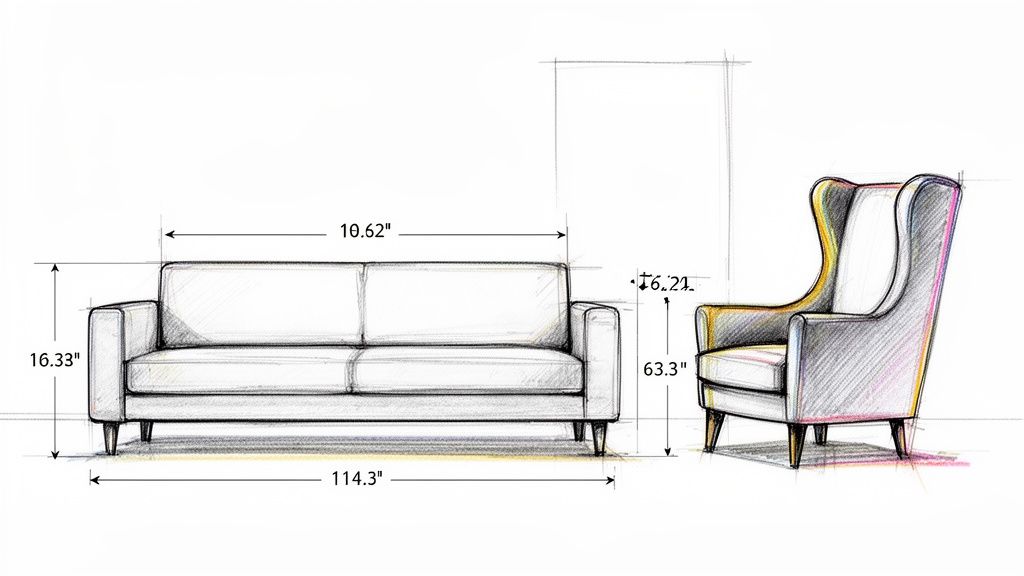
    Pencil sketch of a sofa and a wingback accent chair with detailed dimensions.

    This is where many people get tripped up. It's hard to visualize how a chair will actually feel in your space until it's there. A simple trick? Use painter's tape to outline the chair's dimensions on your floor. This helps you see how it affects traffic flow and interacts with your lighting and sightlines before you commit.

    Measure Twice, Buy Once: Your Pre-Shopping Checklist

    Before you even start browsing, grab a tape measure. It's an important tool for this process.

    First, get the basic length and width of your living room. Just as crucial, measure the width of every doorway, hallway, and staircase the chair will have to pass through on delivery day. Trust us, there's nothing worse than a beautiful new chair that can't make it through the front door.

    Here’s a quick-start guide:

    • Measure your room's dimensions and plan to leave at least 12 inches of walkway on each side of your main furniture grouping.
    • Jot down those door and hallway clearances so you don't have any delivery day surprises.
    • Sketching your layout on graph paper or using a digital room planner can give you a bird's-eye view and prevent costly mistakes.

    To make things even easier, here's a quick reference table to guide your choice based on your room's overall footprint.

    Accent Chair Size and Placement Guide

    Living Room Size Recommended Chair Style Key Consideration
    Under 150 sq ft Slipper Chair A low-profile design helps a small room feel more open and airy.
    150–300 sq ft Armchair or Club Chair Balance the chair's footprint with the need for clear walking paths.
    Over 300 sq ft Wingback or Swivel Go for something with more height and presence to match larger sofas.

    This table provides a great starting point for matching chair styles to your living room's scale.

    Avoiding Common Proportion Pitfalls

    The two biggest mistakes we see are chairs that are way too bulky or far too delicate for the room. A massive, overstuffed chair can swallow a small room and clog up traffic paths, while a tiny, leggy chair placed next to a hulking sectional can look like a forgotten toy.

    The goal is harmony.

    Balancing Visual Weight

    Think of your furniture's visual weight—how heavy it looks, not just what it actually weighs.

    If you have a large, low-slung sectional, pairing it with a tall, elegant wingback chair can add some much-needed height and contrast. On the flip side, if you have a sleek, modern sofa on thin legs, a more grounded club chair can provide a nice anchor.

    Consider each piece’s visual weight like balancing weights on a scale. You're not looking for perfect symmetry, but a pleasing sense of equilibrium.

    This simple concept can completely transform the feel of a room, creating a layout that's interesting and intentional. If you have a particularly tight space, check out these small room decorating ideas for more inspiration.

    Creating a Natural Rhythm

    A great room layout has a certain rhythm to it. You can create this by alternating between substantial and more delicate furniture forms.

    For example, try placing your robust sofa against one wall and a pair of sleeker, more open-armed accent chairs opposite it. This back-and-forth creates a dynamic flow. Leaving a little breathing room between each piece allows its individual shape and style to shine.

    We once helped a client with a 200-square-foot living room who brilliantly paired a deep, cozy club chair with a narrow slipper chair. This gave them plenty of comfortable seating without sacrificing clear pathways. By getting the scale right, they freed up nearly 20% more usable walking space, making the entire room feel larger and more functional.

    Using Room Planner Tools

    If you're more of a visual person, digital room planners can be a game-changer. These apps let you drop virtual furniture into a replica of your room, so you can play with different layouts and scales without breaking a sweat.

    • Many tools let you drag and drop furniture icons that are true to scale.
    • You can even upload a photo of your room to test out different colors and styles.

    Of course, nothing beats seeing and sitting in the real thing. When you visit our showrooms across North Georgia, our experienced staff can help you pull it all together. We can double-check your measurements, talk through style options, and help you find an accent chair that feels like it was made just for your home.

    How to Style Your Accent Chair for Maximum Impact

    You’ve found the one—the accent chair that fits your room's scale and your lifestyle. But now what? The next step is placement, and where your new chair lives is just as important as its style or fabric.

    This is what turns a simple piece of furniture into a core part of your living room's design. The right spot can create flow, encourage conversation, and add a layer of functional beauty to your space. An accent chair isn't just an afterthought; it’s a tool for shaping how your living room feels and functions. Think of it as creating a destination within the room.

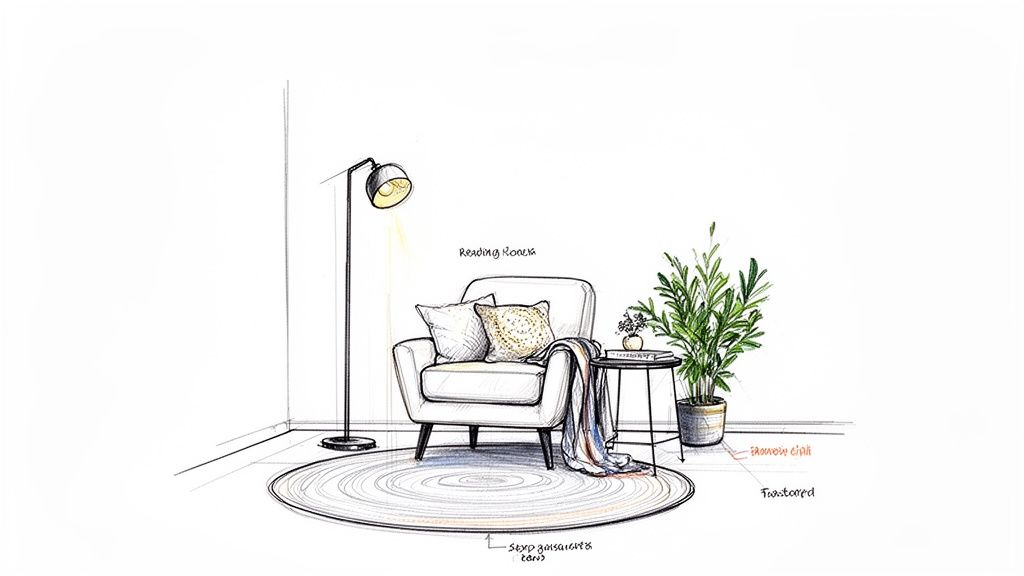
    A cozy sketch of a reading corner with an armchair, floor lamp, side table, and a plant.

    Creating Functional and Inviting Layouts

    The best layouts are born from how you actually live. Instead of just shoving a chair against an empty wall, think about creating a purposeful arrangement. Sometimes just walking through a showroom can spark an idea for what might work back at home.

    Here are a few practical ideas to get you started:

    • The Classic Reading Nook: There's a reason this is a timeless arrangement. Tuck your chair into a well-lit corner, add a small side table for a drink or a book, and finish it off with a floor lamp. This simple trio creates a cozy, self-contained retreat.
    • The Conversational Pair: Place a pair of matching or complementary accent chairs directly opposite your sofa. This creates a beautifully balanced and inviting conversation area, practically begging people to sit down and connect. A shared coffee table or ottoman in the middle ties it all together.
    • The Bold Focal Point: Use a single, striking chair to really make a statement. If you've got a chair in a vibrant color or an eye-catching pattern, let it shine! Place it where it can be appreciated, like flanking a fireplace or beside a large window.

    Accessorizing Your Chair to Tie the Room Together

    Accessories are the final touch, the glue that makes your new chair feel like it has always belonged there. This is your chance to connect its color, texture, and style to the rest of your decor for a polished, cohesive look.

    Think of throw pillows and blankets as bridges between your furniture pieces. They allow you to pull a color from your sofa, rug, or artwork and repeat it on your new accent chair, creating a subtle visual link that unifies the entire space.

    A patterned pillow can introduce a new design element, while a chunky knit throw adds a layer of irresistible texture. And if you're looking to protect a brand-new piece or give an older one a facelift, exploring options for fitted armchair covers can be an easy way to get an instant style update.

    The market for accent furniture—which includes chairs, tables, and bookcases—is always evolving, reflecting changes in how we all shop for those pieces that add personality to our homes.

    Making a Confident Final Decision

    Alright, you’ve done the homework. You’ve explored the classic styles, weighed the pros and cons of different fabrics for your lifestyle, and you’ve even got a handle on how to get the scale just right for your living room. Now it’s time to put all that knowledge to work. Choosing a suitable accent chair is really about trusting the research you’ve done and knowing what will genuinely fit your North Georgia home.

    Finding the right chair isn’t some mysterious process; it’s just a series of deliberate choices. By now, you’ve built a solid framework for making that final call. You know whether your space needs the cozy, enclosed feel of a wingback or the clean, space-saving profile of a slipper chair. You also get the real-world difference between a tough performance fabric for a house full of kids and pets, and a beautiful linen for a quiet reading nook.

    From Research to Reality

    Looking at chairs online is a great starting point, but a computer screen can only tell you so much. It can’t show you the true color of an upholstery fabric under your specific lighting, and it definitely can’t tell you how it feels to sink into the cushion after a long day. This is where seeing and feeling the furniture in person makes all the difference.

    The "sit test" is easily one of the most critical parts of your research. It's the only way to know for sure if a chair's seat depth, back height, and cushion firmness are a good match for you. What feels like a dream to one person might be all wrong for another.

    Visiting a showroom closes the gap between a picture on a website and knowing a piece is the one. It’s your chance to run your hand over the fabric, inspect the quality of the wood finish, and just get a feel for the chair's actual presence in a room.

    The Value of a Conversation

    Even with all this new information, you're bound to have a few specific questions pop up. This is where talking with an experienced, knowledgeable team member can really bring clarity. Instead of a sales pitch, you can get straight answers to practical questions like:

    • "Is it possible to treat this fabric for extra stain resistance?"
    • "Realistically, what’s the lifespan on this type of cushion fill?"
    • "How does the wood finish on this chair's legs compare to the oak on my existing coffee table?"

    This kind of one-on-one guidance helps you lock in your choice with confidence. Let's face it, the living room furniture market is huge—seating furniture alone was a $113.4 billion business in 2025 and is only getting bigger. With that many options out there, getting personalized advice helps cut through the noise and zero in on the few pieces that truly fit what you're looking for. You can learn more about the growth of the living room furniture market to see just how vast the industry is.

    Ultimately, when you combine solid information with that crucial real-world experience, you're in the best possible spot to choose an accent chair you’ll love for years to come.

    Have More Questions? We've Got Answers

    Even after you've got a game plan, a few questions always seem to pop up when bringing a new piece of furniture home. Let's tackle some of the most common ones we hear from homeowners trying to find the perfect accent chair.

    How Do I Mix and Match an Accent Chair with My Sofa?

    The best way to do this is to aim for a pleasing, intentional contrast. Got a solid, neutral-colored sofa? Think about adding an accent chair with a subtle pattern or a pop of complementary color to really bring some life to the space.

    Another trick is to create a connection through shared details. For example, you could match the wood tone on the chair's legs to your coffee table, or echo the finish of a nearby lamp in the chair's metal hardware. The goal here is coordination, not perfect matching. As long as the pieces feel right together in terms of scale, mixing different styles can add an incredible amount of depth and personality to your room.

    What Is a Reasonable Budget for a Quality Accent Chair?

    This is a great question, but the price range for accent chairs is huge. It's often more helpful to think about long-term value instead of a specific dollar figure. A well-built chair with a solid hardwood frame and high-density cushions is going to outlast one made from particle board and low-density fill every single time.

    It really is an investment in your home's comfort and style for years to come. While a higher price tag might seem like a lot upfront, buying a well-constructed piece often saves you money in the long run since you won't be repairing or replacing it anytime soon. You can really feel the difference in quality when you see these chairs in person.

    Can I Use an Accent Chair in a Different Style from My Other Furniture?

    Absolutely! In fact, that's often what makes an accent chair such a powerful and stylish addition. A sleek, modern chair can look absolutely stunning in a more traditional living room, just like a classic wingback can add a sense of history and grounding to a contemporary space.

    The secret is creating a visual link that makes the choice feel deliberate, not like a mistake. You can do this by pulling a color from the chair and repeating it in your artwork, the rug, or even a couple of throw pillows. It’s a simple technique that ties the whole room together, allowing the contrasting styles to play off each other beautifully.

    A thoughtfully chosen accent chair is so much more than just another place to sit; it’s a statement about your personal style. Hopefully, by answering these common questions, you feel better equipped to pick out a piece that not only looks fantastic but also works perfectly in your home.


    Ready to see how all these ideas look in a real room? The team at Woodstock Furniture & Mattress Outlet has been helping North Georgia homeowners find furniture that fits their space and lifestyle for decades. Come visit one of our showrooms to feel the comfort for yourself, see the true colors in person, and get some friendly, no-pressure advice. You can explore our selection online at https://woodstockoutlet.com or just stop by to find an accent chair that's right for you.