When it comes to switching your toddler to a bed, success often comes down to one thing: timing. While most parents make the move sometime between age two and three, it's far more important to watch your child for cues than to circle a date on the calendar. You're looking for clear signs that they're truly ready for the new freedom a bed brings.
Recognizing the Right Time to Leave the Crib
Figuring out when to move on from the crib is a huge milestone, and the timing is different for every child. Rushing it can create new sleep problems. That's why we encourage parents to look for specific developmental signs instead of just focusing on age.
A 2019 study in Sleep Medicine that surveyed nearly 2,000 parents found that the most common window for this transition is between 2 and 2.5 years old. The data revealed a big shift right around the two-year mark: while 63.4% of toddlers aged 18-24 months were still sleeping in their cribs, that number dropped to just 34.3% for those 24-30 months old.
Key Signs of Readiness
So, how do you know if your toddler is ready? Forget the calendar for a second and keep an eye out for these tell-tale signs. They're much better indicators than age alone.
To help you spot the signals, here's a quick reference table outlining the most common signs that your little one is ready to make the big move.
Signs Your Toddler Is Ready for a Bed
| Readiness Sign | What to Look For |
|---|---|
| The Great Escape | They are actively climbing or attempting to climb out of the crib. Once they can get a leg over the rail, it's an immediate safety issue. |
| Outgrowing the Space | They look cramped. If their head and feet are getting close to the ends of the crib, they may be too uncomfortable to sleep well. |
| Asking for a "Big Kid Bed" | They show genuine interest or excitement about getting a new bed, often after seeing an older sibling's or friend's bed. |
| Potty Training Progress | They are night-time potty training (or close to it) and need the freedom to get to the bathroom on their own. |
| Understanding Boundaries | They can follow simple instructions and understand concepts like "stay in your bed until the sun is up." |
Spotting one or more of these signs is a good indicator that your transition will likely go much smoother.
It also helps to consider your child's overall growth. Understanding the various stages of child development by age can give you a better sense of whether they've hit the right cognitive and physical milestones for this change.
The goal is to make the switch when your toddler is actually capable of understanding the new rules that come with an open bed. For a lot of kids, that necessary impulse control doesn't fully click until they're closer to age three.
Bottom line? If your child is still sleeping well and is safely contained in their crib, there's no reason to rush. Waiting until they are truly ready usually makes the whole process a lot less stressful for everyone.
Preparing for a Positive and Gentle Transition
Once you’ve decided the time is right, it's all about setting the stage for success. A smooth toddler bed transition is built on thoughtful prep work, not just swapping out the furniture one afternoon and crossing your fingers. The goal here is to frame this big step as an exciting adventure, not a scary upheaval.
Start by casually dropping the idea of a "big kid" bed into your conversations. You can find books about characters getting their first big bed or even point them out when you're visiting friends. This helps plant a positive seed long before the new bed ever shows up, turning a big unknown into something they can actually look forward to.
This quick graphic breaks down the key triggers that usually signal it's time to start thinking about this transition.
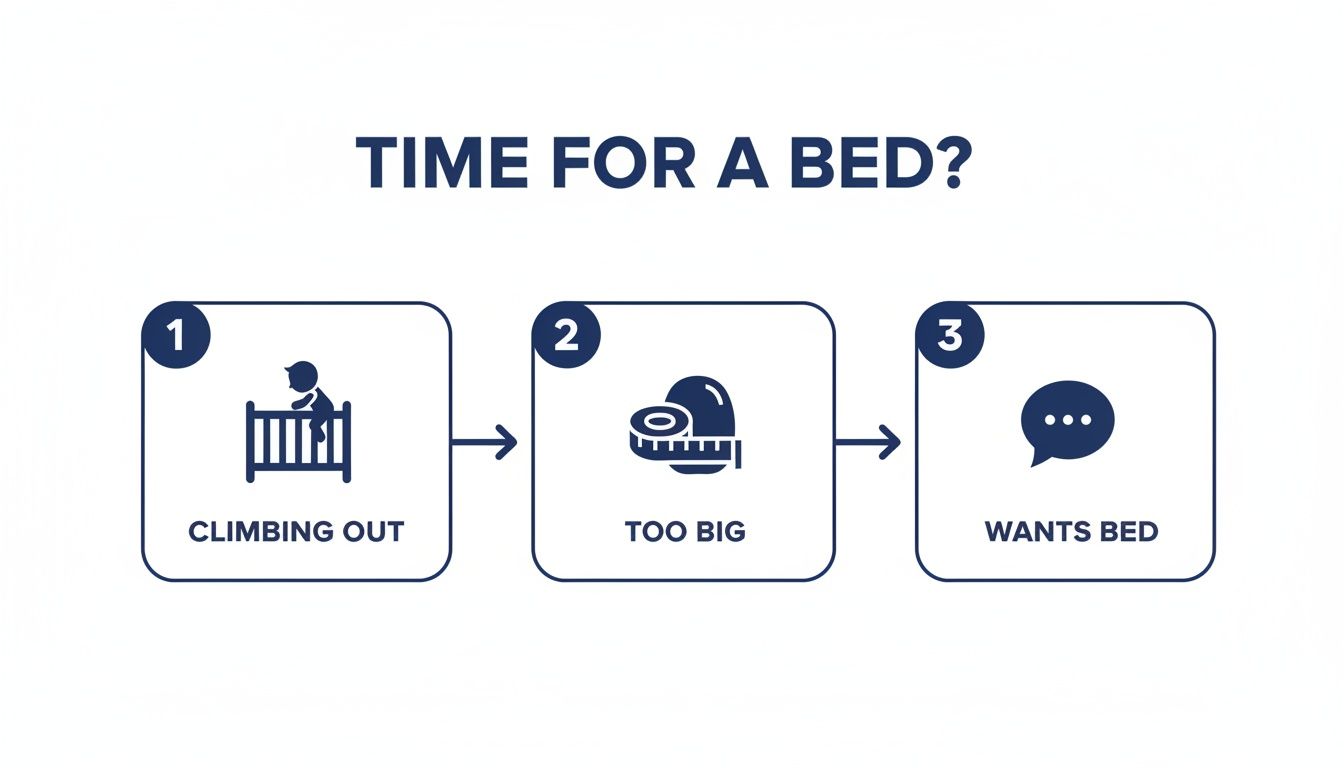
As you can see, the main reasons for the switch are either driven by safety (climbing out), practicality (they've just gotten too big), or development (they're starting to ask for one).
Involve Your Toddler in the Process
One of the most effective things you can do is give your little one a sense of ownership in this whole process. When they feel involved, they're much more likely to meet the change with excitement instead of anxiety.
You can do this by letting them help with small, manageable choices. While you’ll handle the big-ticket items like the bed frame and mattress, empower them with some of the fun stuff:
- Pick out the bedding: Let them choose between the dinosaur sheets and the rocket ship comforter. This simple decision gives them a real, tangible connection to their new sleep spot.
- Decide on a "first friend": Ask which stuffed animal or doll gets the honor of being the very first to sleep in the new bed.
- Help with the "build": Let them "help" you put the pillow on the bed or smooth out the new blanket. Even a tiny contribution makes them feel proud and part of the team.
This involvement helps build positive momentum and gets them genuinely excited about their new bed.
A gradual introduction can work wonders. Instead of making the switch suddenly, think about setting up the new bed in their room a few days before they’ll actually sleep in it. This lets the bed become a familiar piece of furniture used for reading stories or quiet play before it’s officially "bedtime."
Keep the Rest of the Routine Consistent
In the middle of this big change, keeping everything else the same is key. Your child’s bedtime routine is a huge source of comfort and predictability for them. The only thing that should change is the very last step—where they finally lay their head down.
Keep the bath time, pajama ritual, story time, and goodnight cuddles exactly as they've always been. This familiar sequence signals to your toddler that even though their bed is different, the loving and secure process of getting to sleep hasn't changed one bit. This consistency provides a much-needed anchor of comfort during a period of adjustment.
Creating a Safe and Comforting Bedroom
With a toddler bed comes a new world of freedom—the freedom for your little one to get up and explore their room whenever they please. This exciting milestone also means it’s time to look at their bedroom from the perspective of a curious, newly mobile toddler. The goal is to create a "yes" space, a room where you can have peace of mind knowing they're safe, even if they decide to go on an adventure before you’re awake.
The first step is a thorough safety audit. Get down on your hands and knees and see the world from their eye level. What looks climbable? What can be pulled on? This simple trick helps you spot potential hazards you’d miss from a standing position.
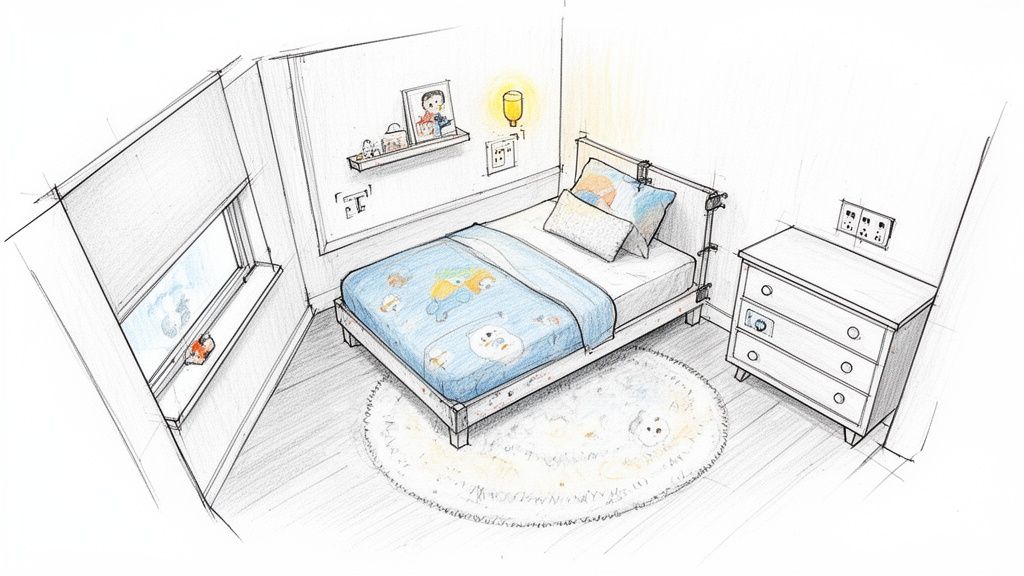
One of the biggest concerns for any parent during this transition is a child falling out of bed.
Beyond just the bed itself, making the whole room a safe environment is critical. This focus on safety is something parents everywhere are thinking about; the market for toddler bed rails is projected to grow from $130 million in 2024 to $210 million by 2033. This shows a collective effort to prevent falls, especially when you consider that the U.S. Consumer Product Safety Commission (CPSC) reports around 20,000 bed-related injuries in young children each year, with many linked to the move from a crib.
Creating a Secure Space: A Checklist
To make sure the entire room is just as safe as their old crib was, run through this practical checklist. It covers the most common spots that need attention once a toddler can roam their room unsupervised.
- Anchor All Heavy Furniture: This is a big one. Dressers, bookcases, and changing tables must be securely anchored to the wall. Toddlers are natural-born climbers, making this a non-negotiable safety step to prevent tip-over accidents.
- Cover Electrical Outlets: Any outlet they can reach should have a safety cover.
- Secure Cords: Tie up and hide any loose cords from blinds, curtains, or electronics like baby monitors and sound machines. If you can, cordless window treatments are an excellent long-term solution.
- Check Windows: Make sure windows are locked or have guards that prevent them from opening more than a few inches.
Making the Room Feel Cozy and Inviting
A safe room is essential, but a comforting one is what encourages restful sleep. The room's atmosphere plays a huge part in helping your toddler feel secure in their new big-kid bed. You’re aiming to create a peaceful sanctuary they enjoy spending time in.
A soft, warm nightlight can offer a sense of security, making the room feel less vast and intimidating in the dark. Keeping the room calm and uncluttered also helps, since a chaotic space can be overstimulating at bedtime. Creating a comforting bedroom involves picking the right decorations, so you might want to explore these 10 nursery wall decor ideas to get your creative juices flowing.
By toddler-proofing the environment and adding comforting touches, you’re not just changing their bed—you're updating their entire sleep space to safely support their next stage of independence.
How to Choose the Right Toddler Bed
Picking out that very first "big kid" bed is a huge moment for your toddler. When you start looking, the focus should always be on safety, how it'll function in your space, and what suits your child’s personality. This isn't just about furniture; it’s about giving them a safe foundation for independent sleep.
The good news for parents is that the market for kids' furniture has a strong emphasis on safety and smart design. In fact, the global toddler bed market is expected to jump from $2.7 billion to an estimated $4.5 billion by 2032. This growth shows that parents everywhere are looking for secure, well-made options for this big step. You can dig deeper into this trend in the full toddler bed market report.
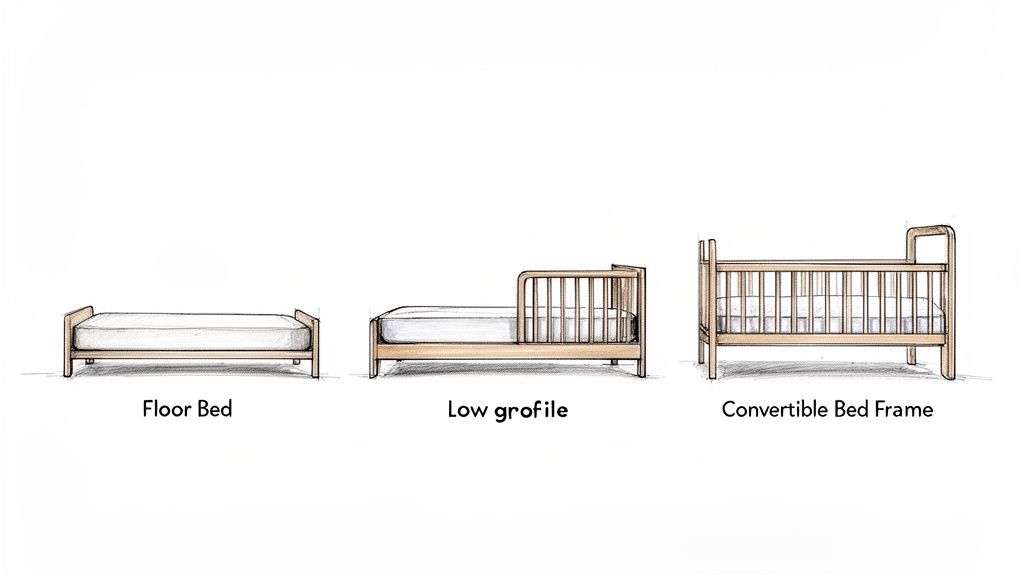
Key Features to Consider
As you browse different toddler beds, there are a few features that make a difference for both safety and your little one's comfort. Keeping these in mind will help you narrow down your choices and find a good fit.
- Low-Profile Design: A bed that’s low to the ground is probably the single most important safety feature. Tumbles are likely to happen. A lower height means a much shorter, less jarring fall.
- Built-In Guard Rails: Many toddler beds come with guard rails already attached. These give you peace of mind and help your child feel snug and secure, much like they did in their crib.
- Durable and Non-Toxic Materials: Always look for beds made from solid wood or other sturdy materials that have non-toxic finishes. Toddlers have a knack for chewing on just about anything, so making sure the materials are safe is non-negotiable.
Choosing the Right Mattress
The bed frame is only half the battle—the mattress is just as crucial. For toddlers, you want to prioritize safety over softness. Your goal is to find a mattress that is firm, which provides the proper support their growing bodies need.
Mattress thickness is the other critical piece of the puzzle. A toddler mattress should have a low profile, typically under 6 inches thick. Why? A mattress that’s too thick can actually make the guard rails useless by reducing their effective height, which creates a serious safety risk. Many toddler beds are designed to use a standard crib mattress, which already meets these firmness and thickness requirements perfectly.
By zeroing in on these practical elements—a low height, secure rails, and a firm, thin mattress—you can confidently choose a bed that makes this transition safer and more comfortable for your little one.
Navigating Common Sleep Challenges After the Move
Let’s be honest. Even with thoughtful plans, the first few nights in a new bed can be a little bumpy. Your toddler's amazing new freedom is great during the day, but it can quickly turn into a headache when the lights go out.
If you're seeing a bit of sleep regression, you're not alone. This is completely normal as your child tests the boundaries of their new world. The key is to stay calm, be positive, and remain incredibly consistent. You're not just teaching them to sleep in a new bed; you're teaching them the new rules that come with it. This phase is temporary, and your steady hand will guide them through without creating long-term sleep battles.
Handling the "Curtain Call" Phenomenon
One of the first things many parents experience is the "curtain call." This is when your toddler pops out of bed over and over again for one more hug, one more sip of water, or one more story. It can test anyone's patience, but it's a classic case of a child figuring out their new limits.
Your job here is to be lovingly boring. When they get out, calmly and quietly lead them back to their bed with as little interaction as possible. Don't turn it into a game or get drawn into a long conversation. A simple, firm, "It's time for sleep now" is all you need. You might feel like a broken record for a few nights, but this consistent, unemotional response is what eventually teaches them that leaving their bed doesn't lead to extra playtime or attention.
It's important to remember that most children under the age of three don't have the developmental impulse control to fully grasp the command "stay in your bed." This is a learned skill that your patience and consistency will help build.
When Bedtime Becomes a Battle
Suddenly, your once-smooth bedtime routine might hit a wall of resistance. Your toddler might refuse to get in bed, throw tantrums, or come up with a million requests to delay lights-out. This pushback is often just a little bit of anxiety about the change mixed with the excitement of their newfound freedom.
The best defense is a strong, predictable bedtime routine. Stick to the exact same sequence every single night: bath, pajamas, brushing teeth, stories, and finally, tucking into the new big-kid bed. This predictability offers a huge sense of security when everything else feels different. Reinforce that the routine ends with them staying in bed, and shower them with praise in the morning when they're successful.
To help you troubleshoot, we've put together a quick guide for some common bumps in the road and gentle ways to handle them.
Common Transition Problems and Gentle Solutions
Even the smoothest transition can have its moments. Here are some of the most frequent challenges parents face, along with some practical, positive strategies to get things back on track.
| Common Problem | Suggested Approach |
|---|---|
| Middle-of-the-Night Visits | Calmly walk them back to their own bed every single time. Keep the lights low and avoid conversation or eye contact to make the trip as boring and unrewarding as possible. |
| Fear of the Dark or Monsters | Validate their feelings without feeding the fear. A comforting nightlight can work wonders. You can also do a fun "monster check" before bed and assign a special stuffed animal as the official "guard" for the night. |
| Waking Up Too Early | An OK-to-wake clock can be a helpful tool for many families. This simple visual cue helps them understand when it's officially morning and okay to leave their room. |
Remember, if this transition feels completely overwhelming and is causing major stress for you and your child, it is 100% okay to hit pause. You can always go back to the crib for a few more weeks and try again when your child seems more ready. This isn't a failure—it's just smart, responsive parenting.
Frequently Asked Questions About the Transition
Even with a good plan, you're bound to run into a few hiccups along the way. Below are some straightforward answers to the questions we hear most often from parents navigating this exact milestone.
What If My Toddler Keeps Getting out of Their New Bed?
This is, without a doubt, the number one challenge parents face. The good news is that it's completely normal. The key is to respond with calm, consistent redirection, every single time.
When they pop out of bed, quietly and calmly lead them back. Keep the interaction to a minimum—this isn't the time for a big chat or a fun game of chase. A simple, firm phrase like, “It’s time for sleep now,” is all you need. Be prepared to repeat this process many times on those first few nights. But your consistency is what will ultimately teach them the new boundaries. Some families also find success with toddler clocks that change color when it's okay to get up, which gives them a helpful visual cue.
Should I Use a Toddler Bed or Go Straight to a Twin?
This is a classic dilemma, and the right answer really comes down to your child's personality, your budget, and the size of their room. There are pros and cons to each.
- Toddler Bed: This is often a straightforward path. It uses the same crib mattress, so it feels familiar and less intimidating for a little one. Their low-to-the-ground height and smaller size are a good fit for younger or more active toddlers.
- Twin Bed: Going straight to a twin is a good long-term investment, but it can feel very large to a small child. If you choose this route, we recommend a very low-profile frame and adding guard rails. The goal is to make it feel just as secure as their old crib.
The most important factor isn't the size of the bed itself, but how secure your child feels in it. A low height and sturdy guard rails are your best friends for creating a safe sleep space, no matter which size you choose.
A New Baby Is Coming… Do I Have to Move My Toddler?
Timing is everything here. You want to avoid making the move feel like the new baby is "kicking them out" of the crib. If at all possible, try to transition your toddler into their new bed at least two to three months before the baby is due. This gives them time to adjust and feel proud of their new big-kid space without connecting the change to their new sibling.
If the timing is just too tight, it might be better to start the new baby in a bassinet for a few months. Delaying the transition until your toddler is genuinely ready often leads to a much smoother experience for the whole family.
Ready to find that first "big kid" bed? The knowledgeable team at Woodstock Furniture & Mattress Outlet is here to help you explore safe, durable, and comforting options for your toddler. Come visit one of our showrooms to see our selection in person and get helpful advice to make this transition a success. Find out more at https://woodstockoutlet.com.
Leave a Reply
You must be logged in to post a comment.