Here’s the simple truth: a mattress foundation gives you the firm, rigid support that modern memory foam and hybrid mattresses need. A box spring, on the other hand, uses flexible coils to absorb shock, which is designed for traditional innerspring beds. Getting this right is critical for your comfort, your mattress’s lifespan, and keeping its warranty valid.
Understanding Your Mattress Support Options
When you’re excited about a new mattress, it’s easy to forget that what goes underneath it is just as important. The right support system ensures you’ll enjoy every bit of the comfort and durability you paid for. The wrong one can lead to a saggy, uncomfortable mattress much sooner than you'd expect.
For years, many people just called the thing under the mattress a "box spring," but today’s mattresses have evolved and demand a more thoughtful choice.
The two main options are the mattress foundation and the traditional box spring. They might look similar when covered in fabric, but what’s inside is completely different. Each one is built for a specific job and a specific type of mattress. Understanding that difference is the first step to building a better bed.
Key Differences at a Glance: Foundation vs. Box Spring
To get straight to the point, let’s put these two side-by-side. This table breaks down what really separates a foundation from a box spring, looking at how they're built, what mattresses they work with, and what they're actually designed to do.
| Feature | Mattress Foundation | Box Spring |
|---|---|---|
| Internal Construction | A wooden frame with solid wood slats or a flat, rigid surface. | A wooden or metal frame containing a grid of steel coils (springs). |
| Primary Function | To provide a solid, unyielding, and even surface. | To absorb shock, add bounce, and support an innerspring mattress. |
| Best For | Memory foam, latex, and hybrid mattresses. | Traditional innerspring mattresses only. |
| Feel | Firm and stable with no additional bounce or give. | Flexible and springy, adding a slight cushioning effect. |
| Durability | Generally more durable and less prone to sagging over time. | Coils can wear out, weaken, or break down over many years. |
Ultimately, your mattress determines the correct choice. If you put a new foam mattress on an old-school box spring, the foam can start to sag into the gaps between the coils, potentially damaging it. Conversely, an innerspring mattress on a rigid foundation might feel firmer than you expect. This is why matching your mattress to its support system isn't just a suggestion—it’s a requirement for lasting comfort and performance.
Understanding the Traditional Box Spring
For a long time, the words "box spring" and "bed base" meant pretty much the same thing. Its job has always been to be the partner for a very specific kind of mattress—the innerspring—creating a complete system designed for a particular feel and support.
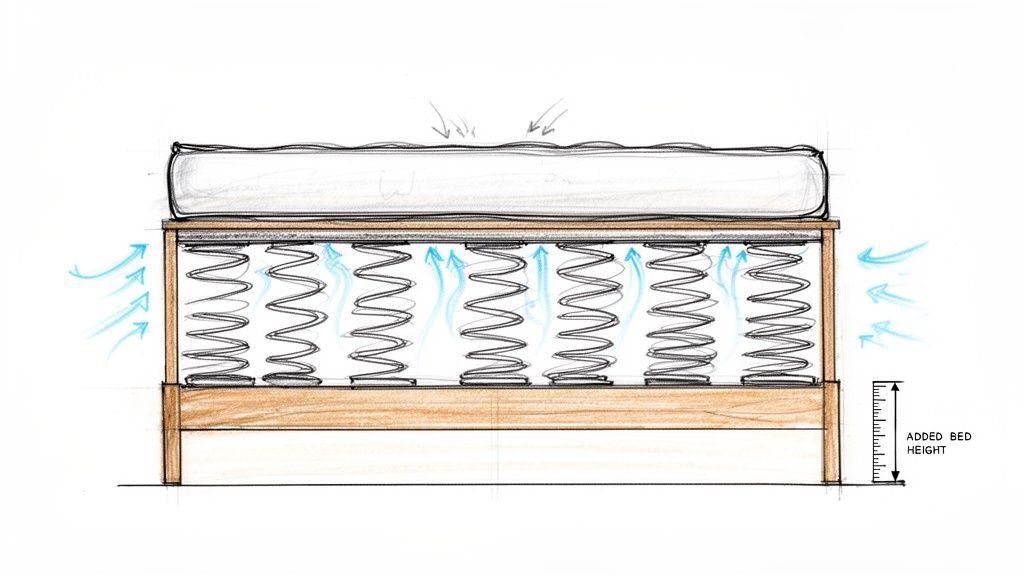
A classic box spring is built with a wood or metal frame that holds a grid of steel coils. This network of springs inside is engineered to do one thing very well: absorb shock. You can think of it like the suspension system in a car. When you get into bed, those coils compress and take the brunt of the impact, which reduces the wear and tear on the innerspring mattress sitting on top.
This design gives the bed that familiar, responsive feel with a bit of a gentle lift and bounce that many people still enjoy. Plus, the open coil structure is great for airflow, which helps keep your mattress from getting too hot during the night.
Why It Pairs So Well with Innerspring Mattresses
The partnership between a box spring and an innerspring mattress is a textbook case of purpose-built design. Since an innerspring mattress has its own set of coils, placing it on a box spring creates a unique "spring-on-spring" system.
This combination does a few key things:
- Shock Absorption: The box spring cushions a lot of the initial force and movement, protecting the coils inside the mattress itself from getting overworked and helping it last longer.
- Enhanced Responsiveness: The two sets of springs work together to create a more buoyant, resilient sleep surface, giving you that classic "bouncy" bed feel.
- Added Height: Box springs also raise the mattress up to a more comfortable height, making it easier to climb in and out of bed.
It's a common myth that box springs are just old, outdated tech. The truth is, they're a specialized support system that is still the intended choice for its partner—the innerspring mattress. When you pair them correctly, a box spring improves both comfort and the mattress's lifespan.
Trying to use a box spring with any other mattress type, like memory foam or a hybrid, is a mistake. Modern mattresses need a firm, completely even surface, which is the exact opposite of what a box spring provides. The foam can sink into the gaps between the box spring's coils, which can cause damage and will almost certainly void your warranty.
The Enduring Popularity of the Box Spring
Even with all the new mattress types on the market, the classic innerspring mattress and its box spring partner are far from obsolete. In fact, innerspring mattresses still have a massive footprint in the industry, making up 45.3% of the United States mattress market according to recent data.
This number shows why box springs are still a fixture in many bedrooms. At Woodstock Furniture & Mattress Outlet, our knowledgeable team frequently helps customers looking for that reliable, time-tested support for trusted brands like Sealy and Stearns & Foster. The box spring, with its shock-absorbing coils and signature bounce, is just what those innerspring designs need. You can explore more data on mattress market trends to see for yourself.
At the end of the day, whether you need a box spring comes down to one simple question: what kind of mattress do you have? If it's a traditional innerspring, a box spring isn't just a good idea—it's the correct support system you need to get the performance and durability you expected.
Exploring the Modern Mattress Foundation
As mattresses have gotten more advanced, so have the things we put them on. Enter the modern mattress foundation, the go-to support system built specifically for today’s popular beds—memory foam, latex, and hybrids.
Unlike the bouncy box spring, a foundation is all about providing a solid, rigid base. The construction is straightforward but effective: a sturdy wooden frame supporting either a completely flat, solid platform or a row of wide wooden slats. This design creates the firm, even surface that modern mattresses need to perform their best.
This solid structure isn't just a suggestion; it's a requirement for any bed that contains foam. The dense materials in memory foam and latex mattresses need consistent, edge-to-edge support to do their job and keep from wearing out prematurely.
The Required Partner for Modern Mattresses
Let’s be clear: if you own a memory foam, latex, or hybrid mattress, using a foundation isn’t just a good idea—it’s the proper way to protect your investment. These mattresses are engineered to contour to your body and relieve pressure, and they can only do that when they're resting on a perfectly flat, stable surface.
Think of a foundation as the silent partner to your mattress. It doesn't add bounce or flex. Instead, it provides the unwavering support that lets the high-tech materials in your mattress work as intended, ensuring you get consistent comfort and preventing sagging down the road.
What happens when you put a new foam mattress on an old, unsuitable base like a traditional box spring? The foam can start to sink between the coils or gaps. Not only can this feel uncomfortable, but it causes the mattress materials to break down faster, leading to permanent dips and sags.
The numbers back this up. The U.S. mattress bases market, which is largely this showdown between foundations and box springs, is expected to hit USD 3.4 billion by 2031. This trend is no accident; it’s being pushed by the huge popularity of foam and hybrid mattresses, which now make up 45% of the market. These beds simply demand a firm, flat foundation, which can add 2-3 years to their lifespan. On top of that, the solid support from slats or a platform can cut down on pressure points by up to 33% for side sleepers—a significant benefit for anyone sleeping on mattress types that excel at pressure relief. You can read up on the mattress bases market and its growth for more insights.
Protecting Your Warranty and Ensuring Longevity
Beyond just comfort, using the right foundation is a huge deal when it comes to mattress care and, importantly, your warranty. Just about every mattress manufacturer spells out exactly what kind of support system is required in their warranty terms. Using the wrong base is one of the fastest ways to void it completely.
- Warranty Compliance: Manufacturers are very specific about support. They often detail the maximum distance allowed between slats (usually no more than 3 inches apart) to guarantee the mattress doesn't sag.
- Structural Integrity: A proper foundation keeps the mattress from bowing or developing soft spots, which helps it maintain its original shape and feel.
- Optimized Performance: By giving your mattress a stable base, a foundation lets the comfort layers do what they were designed to do—deliver the pressure relief and support you paid for.
At the end of the day, a mattress foundation isn’t just an optional accessory; it's a critical part of your entire sleep setup. It’s what makes sure your memory foam, latex, or hybrid mattress feels great, performs correctly, and lasts as long as it should.
Comparing Support Systems for Your Sleep Needs
So, when it comes down to choosing between a mattress foundation vs. a box spring, you’ve got to look beyond the basic definitions and get into a real, practical comparison. The right choice truly affects everything—from how long your mattress lasts and how comfortable you are, to the final height of your bed. Let's break down the key factors that will point you in the right direction.
Durability and Lifespan
The biggest difference in how long these supports last boils down to how they're built. A mattress foundation is all about unwavering stability, thanks to its rigid wooden frame and solid slats. Since there are no moving parts like coils, it's far less likely to break down. You can count on it to support even the heaviest modern mattresses for a decade or more without sagging.
On the other hand, a box spring uses a network of steel coils. While they’re great shock absorbers, those coils are also the first thing to give out over time. All that constant weight from sleeping can cause them to weaken, sag, or get squeaky, which means they’re no longer supporting you properly.
Mattress Compatibility: A Critical Factor
This is the most important part. A foundation’s firm, flat surface is non-negotiable for today's mattresses. Memory foam, latex, and hybrid beds absolutely need this solid base to keep their foam layers from sinking and breaking down prematurely.
A box spring's bouncy coils are made for one thing: innerspring mattresses. This "spring-on-spring" setup lets the two work together to absorb impact and give you that classic bouncy feel. Trying to use a box spring with a foam mattress is a surefire way to ruin it, and it will likely void your warranty.
This handy visual guide makes it clear which modern mattresses need a foundation.
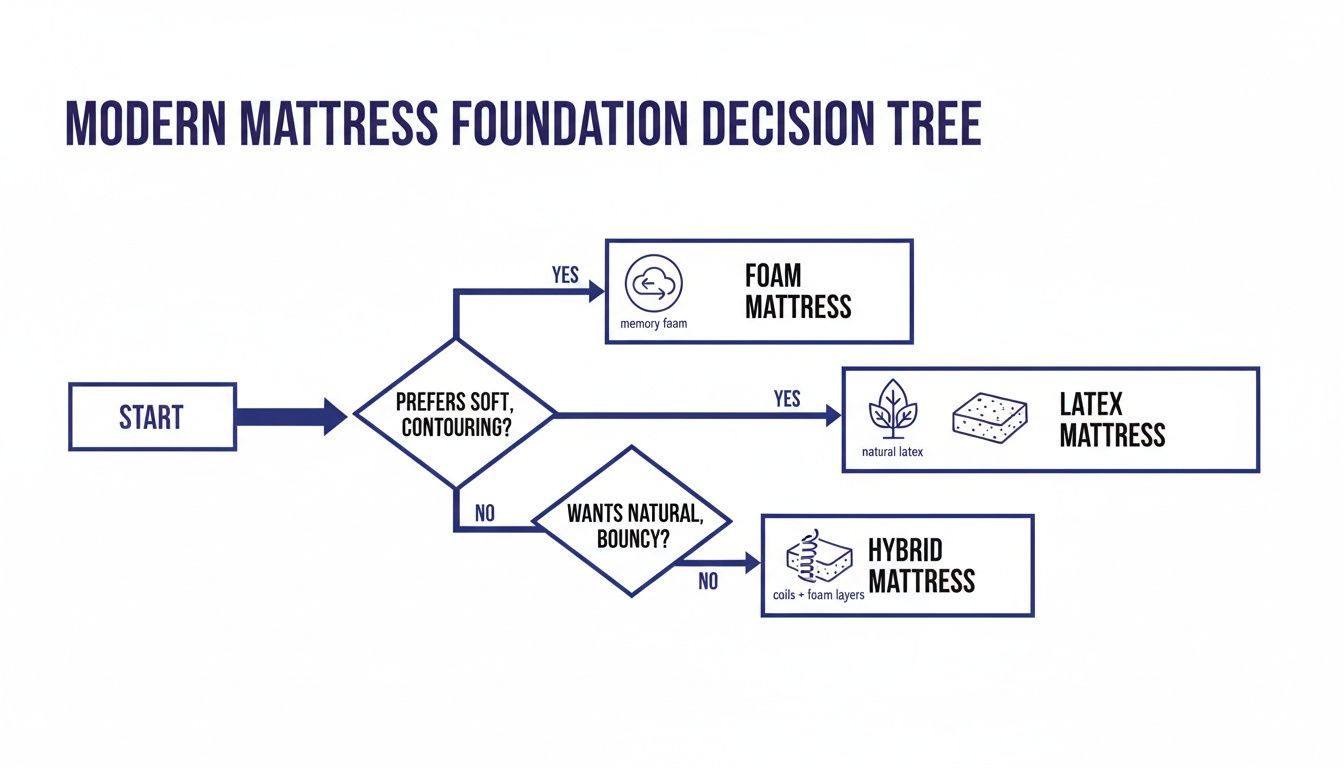
As you can see from the decision tree, foam, latex, and hybrid mattresses all require the kind of consistent, rigid support that only a foundation can deliver.
Overall Bed Height and Aesthetics
How high your bed sits off the floor can make a huge difference in your comfort and how your room looks. Box springs tend to be on the taller side, usually around 7 to 9 inches, which gives you that more traditional, elevated bed look.
Foundations give you more options. You can find standard profiles that are about the same height as a box spring, but low-profile versions (around 4-5 inches) are very common. This lets you customize the height to your liking, which is especially helpful with today's taller mattresses, making it easier to get in and out of bed.
Noise Potential and Motion Isolation
Since foundations don't have any moving parts, they are practically silent. They create a stable platform that helps your mattress soak up movement, which is helpful for light sleepers or couples who don't want to be woken up every time their partner rolls over.
Box springs, with all their metal coils, can start making noise as they get older. As the springs wear out, they can begin to squeak or creak when you move. That built-in bounce can also mean more motion is transferred across the bed, though your innerspring mattress is still the main player there.
The key takeaway here is that your choice of support directly impacts your sleep quality. A foundation helps your mattress isolate motion better, while an old box spring can add both noise and movement, which can disrupt a good night's rest.
Cost and Value Considerations
At first glance, a box spring might seem less expensive than a high-quality foundation. But when we talk about value, it’s about more than just the sticker price. Foundations are built to last longer and, more importantly, they protect your investment in a modern mattress. That's what gives them better long-term value.
You’ll likely have to replace a box spring more often, and using the wrong support can force you to replace your much more expensive mattress sooner. It’s a smarter financial move to invest in the right support from day one.
This whole debate is especially important for the most popular mattress size. Queen-size mattresses are on track to hold a 35.06% global market share by 2026 and already make up 46% of the U.S. market, with the entire mattress market growing at a 7.49% CAGR. In many homes, foundations are the clear choice for these beds, providing the solid platform needed to keep the foam in today's mattresses from breaking down. When you’re weighing your options, also think about how proper support helps with spinal alignment and its potential role in finding natural pain relief for back pain.
Making the Right Choice for Your Bed
Trying to figure out which mattress support to buy can feel a little overwhelming, but the final decision really just boils down to a few practical things. At the end of the day, the goal is to protect your mattress investment and make sure you’re comfortable for years to come.
So, let's get past the technical details and focus on what you actually need to do to make the right call. By tackling a few common situations we see all the time, you can walk away feeling confident in your choice.
Answering Common Real-World Questions
Every sleeper's setup is a little different, so general advice doesn't always cut it. Here are some of the most frequent questions we get from shoppers and the straightforward answers that go with them.
"What kind of support do I need for my platform bed?"
Platform beds already have their own support system built right in, usually wooden slats or a solid surface. In almost all cases, you do not need to add a mattress foundation or a box spring. The bed frame itself is the foundation. The only time you might need something extra is if the slats are too far apart (generally more than 3 inches). If that's the case, a simple bunkie board will create the solid, even surface your mattress needs."How can I tell if my current box spring needs replacing?"
Putting a brand new mattress on an old, worn-out box spring is a recipe for trouble. To check its condition, just lay it flat on the floor and press down firmly all over the surface. If you feel any major sags or soft spots, or if you hear loud creaks and pops, it's time for a new one. A bad box spring gives your mattress uneven support, which can damage it and lead to uncomfortable nights."I just bought a memory foam mattress. Can I use my old box spring?"
We get this one a lot, and the short answer is no. Memory foam mattresses need a completely solid, flat base to do their job. A traditional box spring has coils that flex, which will cause the foam to sink and sag into the gaps. Not only does this feel uncomfortable to sleep on, but it can permanently damage the structure of your new mattress.
The Critical Role of Your Mattress Warranty
This is the part many people forget, but it’s one of the most important factors: your mattress warranty. Mattress manufacturers are very specific about the kind of support you need to use to keep your warranty valid. Using the wrong base is one of the fastest ways to void it completely.
Why are they so specific? Because the wrong support is a leading cause of a mattress failing before its time. For instance, if you put a brand-new hybrid mattress on a worn-out old box spring, it's going to develop dips and sags. Those issues won't be covered by the warranty, because the problem isn't a mattress defect—it's the faulty support system underneath it.
Your mattress warranty isn't just a piece of paper; it's a guide to proper care. Always read the fine print. It will tell you the exact requirements for your support system, including the maximum allowable spacing between slats. Following these rules is the best way to protect your investment.
Ignoring these guidelines can turn a simple warranty claim into a situation where you're stuck buying a whole new mattress out-of-pocket. Protecting your mattress starts from the ground up.
Seeing the Difference in Person
Reading articles online is a great start, but sometimes you just need to see and feel the difference for yourself. Getting a hands-on look at a mattress foundation versus a box spring can clear up any lingering confusion and help you picture how each one will work with your bed.
When you visit a showroom, you can see how they’re built, compare the heights of low-profile vs. standard options, and get advice tailored to your specific mattress. Here at Woodstock Furniture & Mattress Outlet, our helpful team can walk you through the options, answer your questions about warranty rules, and help you find the right fit. Seeing them in person is often the final piece of the puzzle, ensuring you make a choice that will give you great sleep for years to come.
Frequently Asked Questions About Mattress Supports
Even after we've laid everything out, you might still have a few nagging questions. That's normal. Below are a few of the most common questions we hear every day in our showrooms, with clear answers to help you make that final decision.
Can I Put a New Mattress on an Old Box Spring?
We hear this one all the time, and while it's tempting to try and save some money, we almost always advise against it. This is especially true if you’re buying a new foam or hybrid mattress. Over the years, the springs or supports inside an old box spring weaken and wear out, creating a surface that's no longer flat or supportive.
Putting a brand-new mattress on a worn-out, sagging base is a recipe for problems. Your new mattress can start to develop dips and soft spots almost immediately. More importantly, this kind of damage from improper support will almost certainly void your new mattress warranty. Manufacturers see it as neglect, not a product defect.
If you have a new innerspring mattress, you should still give that old box spring a very critical look. If it's sagging, has broken parts, or squeaks and groans every time you move, it's time to let it go. Protect your investment.
Do I Need a Box Spring with a Platform Bed?
No, you do not. In fact, adding a box spring to a platform bed is one of the most common mistakes we see. The whole point of a platform bed is that the support system is built right in, usually with a solid surface or a set of sturdy wooden slats spaced closely together.
This built-in system is designed to provide the solid, even support that today's mattresses—especially foams and hybrids—absolutely require. Adding a box spring on top of that is not only redundant but would likely make your bed awkwardly and uncomfortably high. The platform bed frame itself is all you need.
What Is a Bunkie Board and When Do I Need One?
Think of a bunkie board as a simple problem-solver. It’s a flat, rigid board, usually just 1 to 3 inches thick, made from plywood or a similar material and wrapped in fabric. Its job is to create a solid surface where one doesn't exist.
There are two main times a bunkie board becomes essential:
- Platform Beds with Gaps: If you have a platform bed, but the slats are spaced more than 2.75 to 3 inches apart, you may need a bunkie board. It bridges those gaps, creating the solid, uniform surface a foam or hybrid mattress needs to prevent sagging into the spaces.
- Traditional Bed Frames, Low Profile Style: If you have a classic metal or wood bed frame that was designed for a box spring but you prefer a lower, more modern bed height, a bunkie board is a great solution. It gives you the necessary support without adding the 8 or 9 inches of a box spring.
How Do I Check My Mattress Warranty Requirements?
This is critical. The best way to know what your mattress needs is to read the warranty paperwork it came with. Mattress brands are incredibly specific about support requirements because using the wrong base is one of the top reasons warranty claims get denied.
The warranty isn't just making suggestions—it's stating the terms of your coverage. It will explicitly list the required support, whether that’s a solid platform or a foundation with slats no more than a certain number of inches apart. Following these rules keeps your warranty active.
If you've lost the paperwork or the legal jargon is confusing, your next best move is to call the store where you bought it or contact the manufacturer directly. A quick phone call can save you a huge headache down the road and ensure you're doing everything right to protect your purchase. It’s a key part of the mattress foundation vs box spring decision.
Still have questions? That's what we're here for. At Woodstock Furniture & Mattress Outlet, our sleep experts can walk you through all these scenarios right on the showroom floor. We'll show you the difference, check the requirements for the mattress you love, and make sure you have the proper support system for years of great sleep. Visit us to explore your options and get expert advice.
Leave a Reply
You must be logged in to post a comment.