If you've ever asked, "what size is a king bed?", you're not alone. The simple answer is that a standard king bed is 76 inches wide by 80 inches long.
A helpful way to visualize this is to picture two Twin XL mattresses sitting side-by-side. Put them together, and you have the exact footprint of a standard king. This generous width is precisely why it’s a popular choice for couples who want more personal space.
Understanding Standard King Bed Dimensions
A standard king mattress, which you'll sometimes hear called an Eastern King, is one of the widest mattress sizes you’ll typically find. That expansive surface gives each sleeper 38 inches of personal space. To put that in perspective, that's a significant upgrade in elbow room compared to what a full or queen mattress can offer. This makes it a great mattress for couples who value stretching out without bumping into their partner all night.
The king bed became more common during the post-WWII suburban boom in the 1950s and 60s. As American homes became larger, so did the desire for more spacious furniture. The king bed fit that need well and has remained a popular option for master bedrooms ever since. If you're curious, you can find some interesting information on how mattress sizes evolved and became standardized over the years.
Standard King Bed Dimensions at a Glance
To make it even easier to picture how a king bed will fit in your space, we've put together this quick reference with all the key numbers.
| Measurement | Inches | Feet | Centimeters |
|---|---|---|---|
| Width | 76" | ~6.33 ft | ~193 cm |
| Length | 80" | ~6.67 ft | ~203 cm |
| Surface Area | 6,080 sq. in. | ~42.2 sq. ft | ~39,174 sq. cm |
Having these measurements handy will be very useful when you're taping out the floor of your bedroom or shopping for a new bed frame.
Comparing a King Bed to Other Mattress Sizes
Knowing the exact dimensions of a king bed is a great start, but those numbers only tell part of the story. To get a feel for how it works in a real room, it helps to compare it to other popular sizes, like the Queen and California King. Understanding these trade-offs is key to picking a mattress that fits your life.
A standard king mattress offers the most width available in standard mattress sizing. That makes it an excellent choice for couples who prefer their own personal space. If you find yourself sharing the bed with kids or pets, that extra real estate can be the difference between a restless night and a peaceful one.
King vs. Queen: The Width Factor
The most noticeable difference between a king and a queen is the width. A king bed is a full 16 inches wider than a queen. While they’re both the same length (80 inches), that extra foot-and-a-half of side-to-side space on a king is like giving each person their own Twin XL mattress to sleep on. For many, that's a significant improvement in comfort.
On the other hand, a queen bed, at 60 inches wide, is often a more practical choice for smaller master bedrooms. It still provides ample space for a single sleeper and is usually comfortable for couples who don't mind sleeping closer together.
King vs. California King: Length vs. Width
This is where things can get a little confusing for shoppers, so let's clear it up. A California King is not wider than a standard king. In fact, it’s actually four inches narrower, measuring 72 inches across. The trade-off is that it’s also four inches longer, hitting 84 inches from head to toe. This makes it a great mattress for taller folks (usually over 6 feet tall) who are tired of their feet dangling off the end of the bed.
The decision really boils down to this: a standard king is built for more width, while a California King is built for more length. Pick the one that solves your biggest sleep problem.
It’s an interesting bit of history that the California King was introduced back in the 1960s to offer a longer option for taller individuals, providing 7% more length than a standard king. You can read more about the history of mattress standardization and its impact if you're curious!
For our North Georgia customers, we're seeing more people pair spacious king mattresses from brands like Helix or DreamCloud with adjustable bases. They can be helpful for improving circulation and easing back pain.
This diagram gives you a simple, clear look at a standard king bed's measurements.
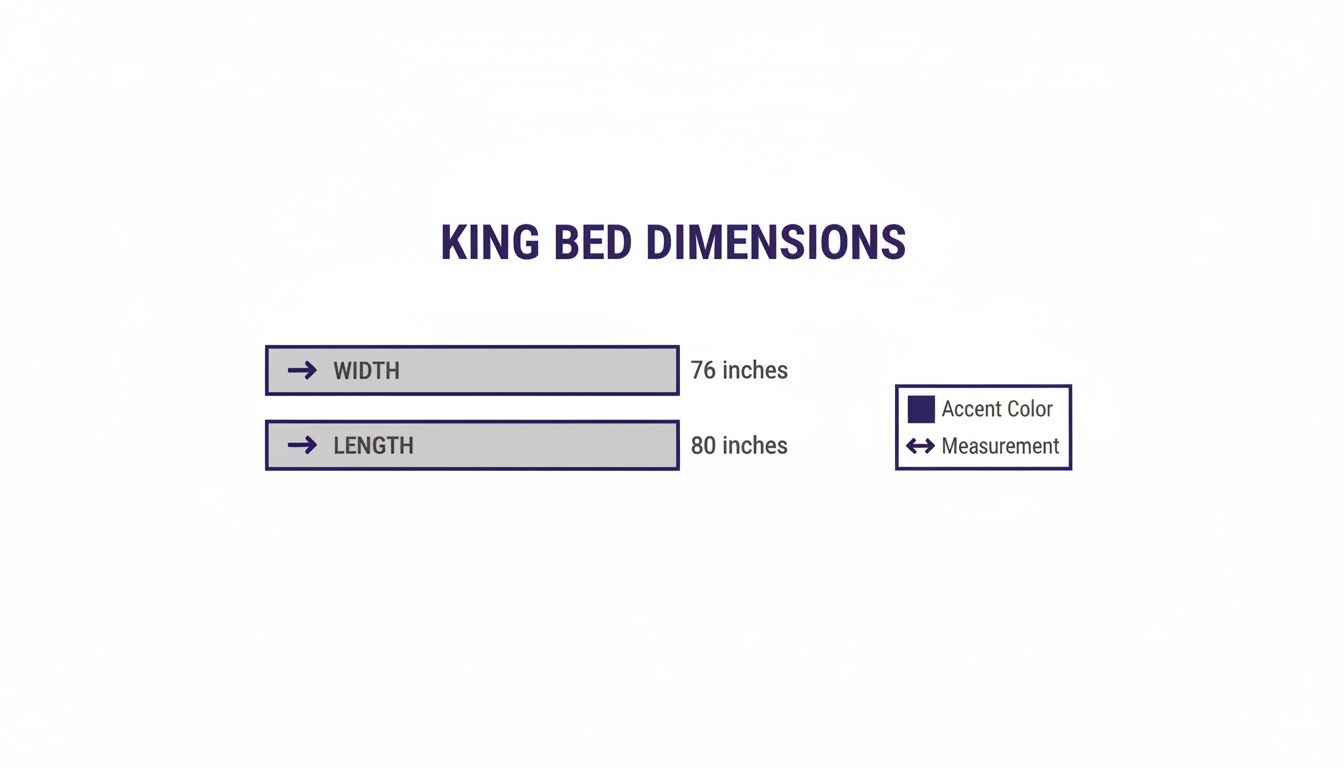
As you can see, that 76-inch width is the defining feature that delivers its roomy feel, especially for couples.
To make comparing sizes even easier, we've put together this simple chart.
Mattress Size Comparison Chart
| Mattress Size | Dimensions (Inches) | Surface Area (Sq. Inches) | Best For |
|---|---|---|---|
| Twin | 38" x 75" | 2,850 | Children, single adults in small spaces |
| Twin XL | 38" x 80" | 3,040 | Taller children, college dorms, single adults |
| Full | 54" x 75" | 4,050 | Single sleepers who want more width |
| Queen | 60" x 80" | 4,800 | Single sleepers, couples, guest rooms |
| King | 76" x 80" | 6,080 | Couples who value personal space, families |
| California King | 72" x 84" | 6,048 | Taller individuals and couples (over 6') |
Seeing the numbers side-by-side really helps put the sheer size of a king mattress into perspective.
Will a King Bed Fit in Your Bedroom?
We see it all the time. A customer loves the spacious feel of a king mattress, only to get it home and realize it swallows their bedroom. A common pitfall when buying a king bed is underestimating its sheer size. A little planning upfront can save you a ton of hassle and keep your bedroom feeling like a peaceful retreat, not a cluttered obstacle course.
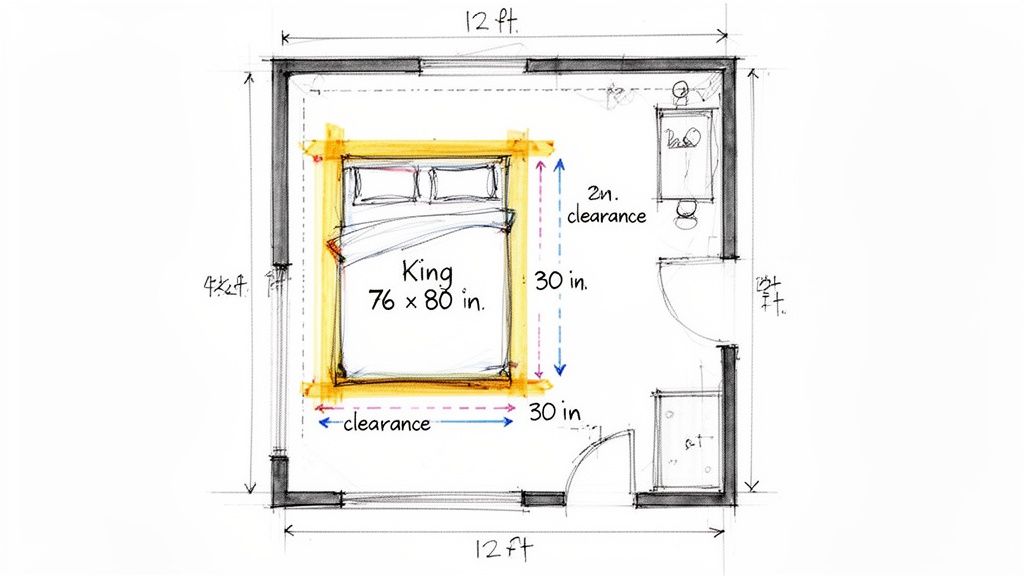
As a good rule of thumb, your bedroom should be at least 12 feet by 12 feet to comfortably house a king bed. This size generally gives you enough room for the bed itself, a couple of nightstands, and a dresser without making the room feel cramped.
Measure Twice, Buy Once
Before you start browsing, grab a tape measure. Accurately measuring your room is the one step you should not skip.
Once you have your room's dimensions, here's a simple trick we always recommend: use painter's tape to mark out the bed's footprint (76 inches by 80 inches) on the floor. This gives you a powerful visual of exactly how much space it will take up. It's much more effective than just trying to picture the numbers in your head.
Your goal is to leave at least 30 inches of clearance around the sides and foot of the bed. This is a good amount of space for comfortable walking paths and for opening drawers or closet doors without having to squeeze by.
That clearance is what keeps your bedroom functional. Anything less, and the room starts to feel difficult to navigate. If you want to get a better sense of your layout without the guesswork, you can even use a home design AI tool to get a clear preview of your new bedroom setup.
Choosing the Right Frame and Foundation
A great mattress is only half the equation for a good night's sleep; what’s underneath it is just as important. The right support system isn't just for looks—it plays a huge role in how your mattress performs and how long it lasts. Let's make sure your entire bed setup works together.
Your frame or foundation choice should fit both your mattress type and your lifestyle. For example, most memory foam or hybrid mattresses sold today work well on a solid platform bed. This setup gives them the firm, even support they need to feel their best.
Common Foundation Types for a King Bed
When it comes to supporting your king mattress, you generally have three main options. Each one has its own set of benefits, and figuring out which one is right for you is a key step to building a comfortable bed.
Box Spring: This is the traditional choice, typically a fabric-wrapped wooden frame. For a king mattress, you'll almost always see a "split" foundation, which is just two separate Twin XL-sized boxes placed side-by-side. This design makes it much easier to navigate tight corners, stairwells, and doorways during delivery.
Platform Bed: These beds have a built-in solid or slatted surface, which means you don't need a separate box spring. They offer a clean, modern look and the kind of consistent support that memory foam and hybrid mattresses thrive on.
Adjustable Base: If you want more customizable comfort, an adjustable base lets you raise your head and feet with a remote. It's a great option for anyone who likes to read or watch TV in bed, or for those who need to sleep in a specific position to help with things like snoring or acid reflux.
One of the biggest things to think about when it comes to a king foundation is just getting it into your house. A split foundation (two 38” x 80” bases) is the standard for a reason—trying to move a single 76” x 80” foundation through a doorway would be next to impossible for most people.
Finding the Perfect Bedding for Your King Bed
You’ve brought home your new king mattress, and now comes the fun part: dressing it up. But this is also where many people run into a common snag, especially when it comes to the difference between a standard king and a California king. We see this all the time. Just remember this one critical fact: their bedding is not interchangeable.
It all comes down to their different shapes. A standard king is wider and a bit shorter (76" x 80"), while a Cal king is narrower but longer (72" x 84"). If you try to put a Cal king fitted sheet onto a standard king mattress, you'll find it's too narrow to fit and has frustrating extra fabric at the ends. The reverse is just as problematic; a standard king sheet will never stretch to cover the full length of a Cal king. Getting this right is the key to a snug, clean fit.
Tips for a Perfect Fit
Beyond just grabbing the right "king" label off the shelf, a couple of tips can make a world of difference in how your bed looks and feels.
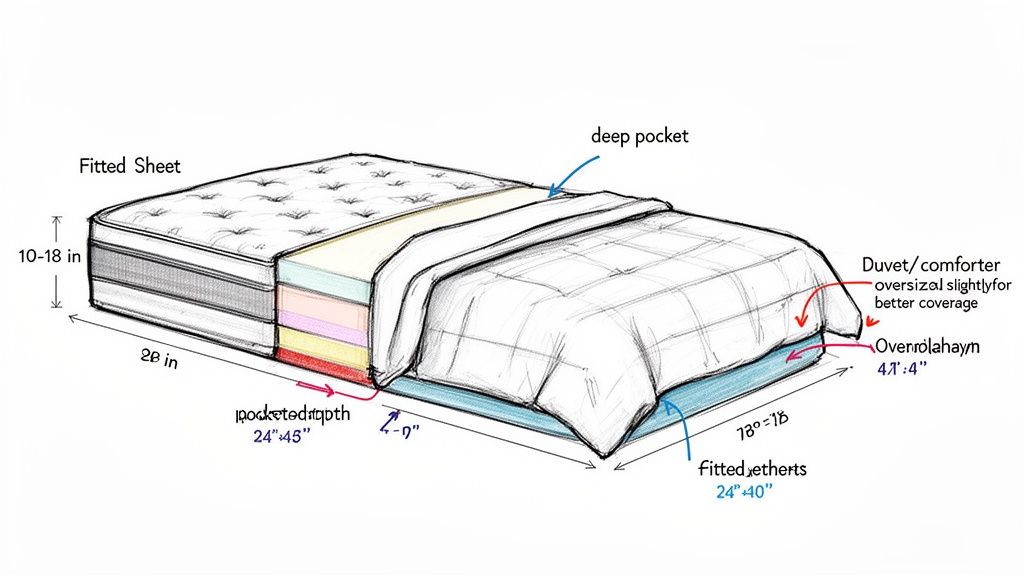
- Check Mattress Depth: Today's mattresses come in all sorts of thicknesses, from sleek low-profile models to plush pillow tops. Before you buy a fitted sheet, always check the "pocket depth" listed on the packaging. This tells you the maximum mattress height it can handle, ensuring it wraps securely around the corners without popping off every time you move.
- Consider Upsizing Your Comforter: For a luxurious, hotel-style vibe where the comforter drapes generously over the sides, consider buying your comforter or duvet one size up. Using a California king comforter on a standard king bed provides extra overhang for better coverage and a plush look.
Paying close attention to these details isn't a new concept. While massive communal beds like the 11×11 foot Great Bed of Ware existed in the 16th century, the California King didn't show up until the 1960s to accommodate taller people. Even now, bed sizes vary across the globe, with places like New Zealand and Portugal having their own unique king dimensions. You can learn more about the fascinating history of bed sizes if you're curious.
Common Questions About King Size Beds
Even after you've done your homework, a few questions always seem to pop up when shoppers are trying to decide if a king bed is the right choice. Getting straight answers can make all the difference, so we've put together the most common questions we hear on our showroom floors to help you feel confident in your choice.
Are a King and a California King the Same Size?
No, and this is probably the single most common point of confusion we see. They are different. A standard king is wider and a bit shorter, clocking in at 76 inches wide by 80 inches long. This makes it a great choice for couples who value their personal space and don't want to bump elbows all night.
A California king, on the other hand, flips those priorities. It's narrower but longer, measuring 72 inches wide by 84 inches long. That extra length makes it a helpful solution for taller folks who are tired of their feet dangling off the end of the bed. Just remember to buy the right sheets and frame for whichever one you choose!
Can I Use Two Twin XL Mattresses on a King Frame?
Yes, you can! In fact, it's a popular and clever setup that we call a split king. When you place two Twin XL mattresses side-by-side, they measure 76" x 80" — the exact same dimensions as a standard king mattress.
This is the go-to configuration for adjustable bed bases. It allows each person to raise or lower their side of the bed independently. So, if one of you wants to sit up and read while the other lies flat, a split king makes it happen.
Key Takeaway: A split king offers customized comfort for couples. It's the standard solution for pairing a king size bed with an adjustable base, giving you a level of flexibility that a single mattress just can't match.
What Is the Minimum Room Size for a King Bed?
To keep your bedroom from feeling like it's all bed and nothing else, we generally recommend a room that's at least 12 feet by 12 feet. This usually gives you enough room for the bed and a couple of nightstands, plus the crucial 30 inches of clearance on both sides and at the foot of the bed. You'll want that walkway space for getting around without stubbing your toes or bumping into furniture.
At Woodstock Furniture & Mattress Outlet, our team is always here to answer any other questions you might have and help you find the right sleep setup for your home. Feel free to visit one of our North Georgia locations to see these options for yourself.
Leave a Reply
You must be logged in to post a comment.