
For a lot of homeowners here in North Georgia, the hunt for a great outdoor rug starts with one simple idea: making a patio or deck feel just as cozy and inviting as the living room. An outdoor rug is really the foundation that ties your whole outdoor space together. It adds comfort, carves out different zones, and lets you show off your personal style, all under the open sky.
Your Guide to Choosing the Right Outdoor Rug
An outdoor rug does so much more than just look pretty. It truly anchors your patio, porch, or deck, turning it into a genuine extension of your home. Think of it as the starting point for your outdoor "room"—that one design piece that can transform cold concrete or plain wood into a welcoming oasis.
The right rug can solve several common outdoor design headaches all at once. It can:
- Define Functional Zones: Use a rug to visually separate your dining area from the seating area where everyone hangs out. This little trick creates a much more organized, intentional layout, even if you’re working with a wide-open space.
- Add Comfort Underfoot: A quality outdoor rug feels great on bare feet, making your patio more comfortable and creating a cozier vibe for you and your guests.
- Introduce Style and Color: It’s one of the easiest ways to bring your unique style outside. Add a pop of color, a sophisticated pattern, or a calming texture that plays well with your home’s exterior and patio furniture.
The Foundation of a Lasting Outdoor Space
While looks are important, the most critical things to consider when picking an outdoor rug are its material and construction. This is especially true here in Georgia, where the trifecta of high humidity, intense sun, and pop-up rainstorms demands some serious durability. A rug that isn’t built for our climate can fade, grow mildew, or fall apart in no time.
A true outdoor-ready rug is engineered from the ground up to withstand the elements. That means it has features like UV resistance to keep the colors from fading in our bright sun, and a construction that actively resists mold and mildew. Getting a handle on these core features is the first step toward making a smart choice you won't regret.
This desire to create better outdoor living spaces is a trend we're seeing everywhere in the home furnishings world. In fact, the global market for carpets and rugs is expected to jump from USD 121.39 billion in 2025 to a whopping USD 174.79 billion by 2032. It just goes to show that homeowners are ready to invest in quality pieces that truly extend their living spaces. You can read more about this market growth on ResearchAndMarkets.com.
By focusing on these fundamentals from the get-go, you’ll be able to pick a rug that not only looks fantastic but will also hold up for many seasons to come.
Understanding Outdoor Rug Materials That Last
The true test of an outdoor rug isn't how it looks the day you unroll it, but how it holds up to a North Georgia summer. Intense sun, punishing humidity, and those sudden afternoon downpours can quickly ruin a rug that isn't made from the right stuff. The material is the single most important factor that will determine your rug's lifespan, feel, and how much work it takes to keep it clean.
Making sense of the options can feel a bit technical, but it really boils down to two main camps: hardworking synthetics and classic natural fibers. Each has its own set of pros and cons, especially when you throw our local climate into the mix. Getting a handle on these differences is the key to choosing a rug you'll be happy with for seasons to come.
This visual guide can help you map out the decision-making process, starting with your outdoor space's purpose and leading you to the right material and style.
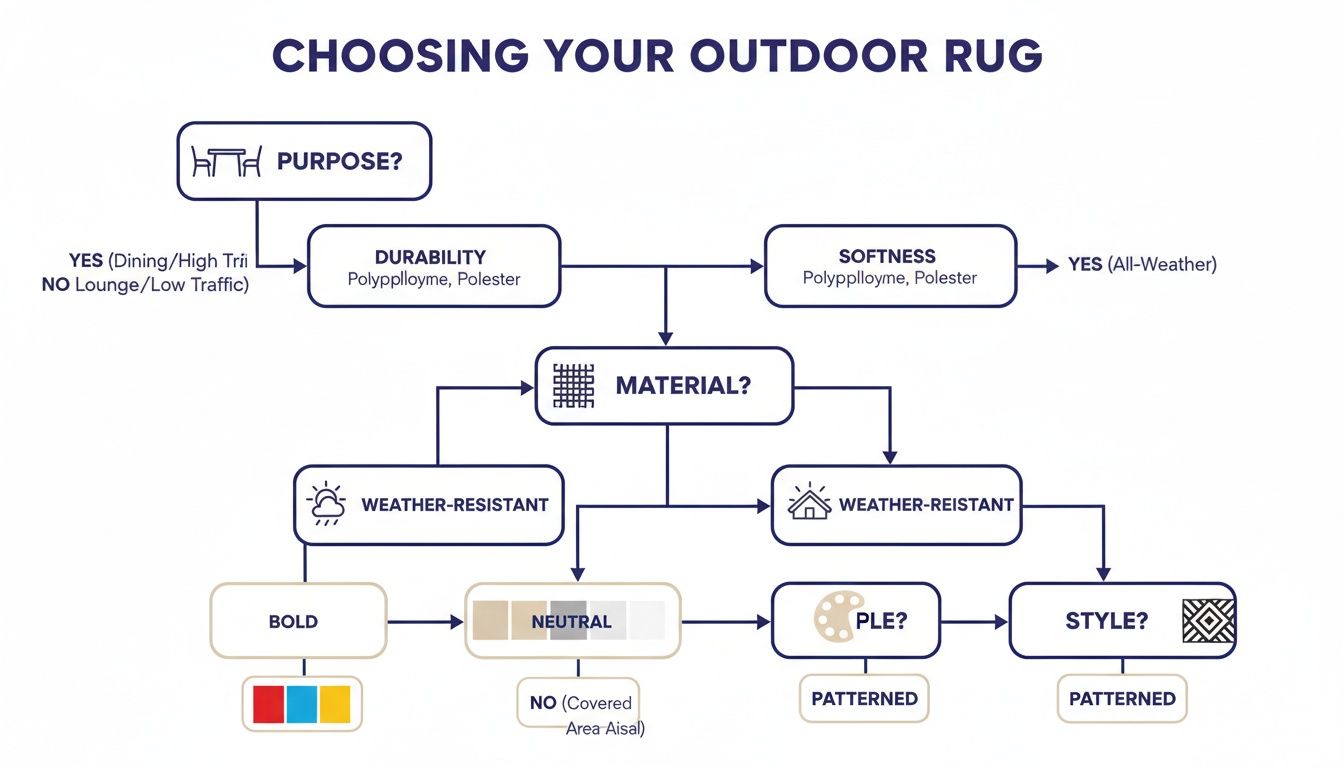
As you can see, your choice of material is a critical step that influences both how long your rug will last and the whole vibe of your outdoor area.
To make it even simpler, we've put together a quick comparison of the most common materials you'll find.
Outdoor Rug Material Comparison for Georgia Homes
| Material | Weather Resistance | Stain Resistance | Feel Underfoot | Ideal For |
|---|---|---|---|---|
| Polypropylene | Excellent | Excellent | Varies; can be soft | High-traffic, fully exposed areas like patios and decks |
| Polyester | Very Good | Excellent | Soft, often plush | Poolside, lounge areas; good for vibrant colors |
| Natural Fibers | Poor | Poor | Textured, natural | Covered and screened-in porches only; low-moisture zones |
| Bamboo | Fair | Good | Firm, smooth | Covered porches; needs protection from direct rain |
This table gives you a snapshot, but let's dig into what makes these materials tick.
Synthetic Rugs: The All-Weather Champions
When you imagine a rug you can just hose off and leave to dry in the sun, you’re thinking of a synthetic rug. These materials are essentially man-made plastics engineered specifically to fight off the very things that destroy other fabrics outdoors: moisture, mold, mildew, and fading from UV rays.
They are, without a doubt, the most practical choice for fully exposed patios, decks, and poolside areas. Let's look at the most common types.
- Polypropylene (or Olefin): This is the workhorse of outdoor rug materials, and for good reason. Polypropylene is what’s known as a solution-dyed fiber. Think of a carrot versus a radish—the color of a carrot goes all the way through, while a radish is only red on the outside. Polypropylene is like a carrot; the color is part of the plastic itself, making it incredibly fade-resistant. It also repels water, which is huge for preventing mold and mildew. It's tough, a breeze to clean, and offers fantastic value.
- Polyester: Known for its brilliant, vibrant colors and a surprisingly soft feel, polyester is another strong contender. It has excellent stain and fade resistance. A cool bonus is that some modern polyester rugs (often labeled as PET) are made from recycled plastic bottles, giving you a more sustainable option. While it’s very durable, it might not hold up to years and years of heavy foot traffic quite as well as polypropylene.
These durable materials are a big reason why residential applications have become such a key growth driver in the flooring industry. In fact, consumer preferences have shifted so much that materials like nylon were valued at USD 22.50 billion in 2022, signaling a strong demand for performance-driven fibers in home settings. You can discover more industry insights on Technavio.com.
Natural Fiber Rugs: A Cautious Consideration
Natural fiber rugs bring an organic texture and earthy style to an outdoor space that’s hard to beat. Materials like jute, sisal, and bamboo look beautiful and feel great underfoot. However—and this is a big however—they come with a significant trade-off, especially in a humid state like Georgia.
Key Takeaway: Natural fiber rugs are basically giant sponges. When exposed to rain or persistent dampness, they can quickly develop mold, mildew, and even start to rot and fall apart. They are best suited for covered, well-protected areas like screened-in porches or sunrooms where they are completely shielded from the weather.
If you love the look of natural fibers but need true outdoor durability, there's a great compromise. Look for a polypropylene rug designed to mimic the appearance of sisal or jute. This gives you the aesthetic you want without the maintenance headaches. You get that lovely braided, textured look with all the weather-resistant, easy-clean benefits of a synthetic. It’s truly a great combination.
How to Select the Perfect Rug Size and Placement
Think of an outdoor rug like the frame on a beautiful piece of art. The wrong one can make the whole thing feel off. In the same way, a poorly sized or placed rug can throw off your entire patio, making it feel unbalanced and awkward. Getting the size and placement right is just as critical as picking the right material or color—it’s what anchors the space, defines its purpose, and makes your furniture feel like a cohesive, intentional group.
The single biggest mistake we see homeowners make? Picking a rug that’s way too small for their furniture. A little rug floating by itself in the middle of a big patio looks like an afterthought and makes the whole area feel disconnected. The goal is to find a size that pulls your seating or dining area together into one, unified zone.
First things first, break out the tape measure. Get the total dimensions of your patio, deck, or porch. Then, measure the footprint of your furniture grouping exactly as you have it arranged. This gives you a clear picture of the minimum and maximum sizes that will work, taking a ton of the guesswork out of the equation.
Here's a look at how different arrangements can play out. Visualizing the layout ahead of time is a huge help.
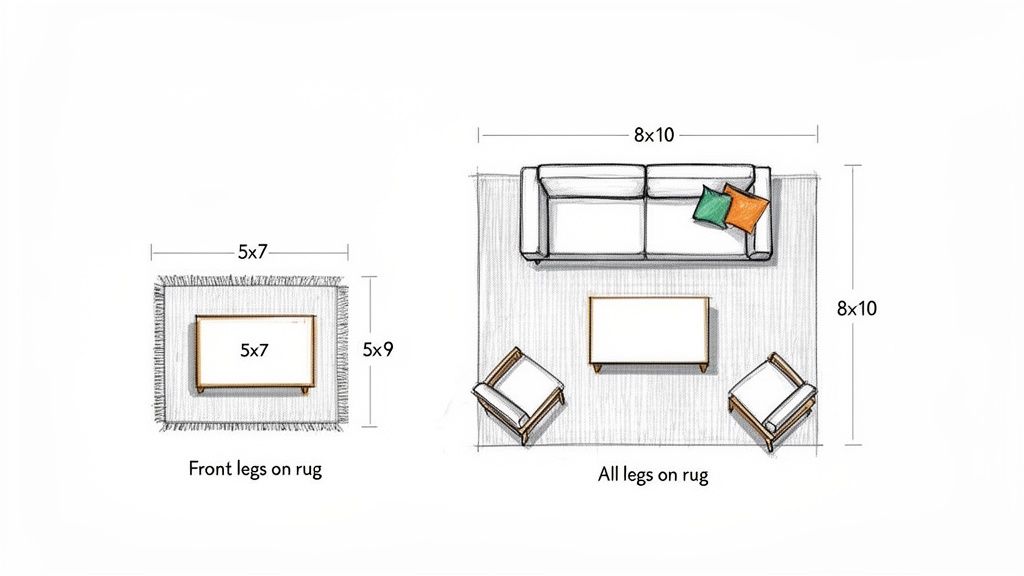
Seeing how the rug connects all the pieces ensures you choose a size that truly complements your setup, rather than fighting with it.
Sizing Rules for Outdoor Seating Areas
For outdoor living rooms built around a sofa, loveseat, and chairs, there are a couple of tried-and-true placement strategies. The key is to connect the furniture, not just plop a rug in the empty space between everything.
- All Legs On the Rug: This is the gold standard for creating a luxurious, well-defined outdoor room. You’ll need a rug large enough for every piece of furniture—sofa, chairs, coffee table, and end tables—to sit completely on top of it. This approach works best in larger, more open spaces where you really want to carve out a distinct zone.
- Front Legs On the Rug: This is a more common—and often more practical—option. With this layout, you only place the front legs of your sofa and chairs onto the edge of the rug. It still ties all the furniture together visually and anchors the conversation area, but without requiring a massive, budget-busting rug.
As a general rule of thumb, make sure your rug extends at least 6 to 12 inches beyond the sides of your biggest piece of furniture, usually the sofa. This creates a little visual breathing room and helps the whole arrangement look more balanced.
Sizing Rules for Outdoor Dining Areas
When you’re putting a rug under an outdoor dining set, function is the name of the game. You absolutely need a rug that’s large enough for the chairs to stay on it, even when people are pushing back to get up from the table.
There’s nothing more annoying than a chair leg catching on the edge of the rug every single time someone stands up. To avoid that headache, just follow this simple guideline:
- Measure the length and width of your dining table.
- Add a minimum of 24 inches to each of those measurements.
- This buffer guarantees that when chairs are pulled back, all four legs stay comfortably on the rug. It makes for a much smoother, more stable dining experience.
Tackling Awkward Spaces
Of course, not every North Georgia patio is a perfect square or rectangle. If you’re dealing with an L-shaped sectional, a narrow balcony, or an oddly shaped deck, finding the right rug can feel like a puzzle. In those cases, you might have to get a little creative.
- Use Multiple Rugs: For a big, L-shaped patio, trying to find one giant rug is often a challenge. Instead, consider using two separate rugs to define distinct zones—one for your dining area and one for the seating area.
- Focus on the Main Zone: On a long, skinny balcony, a small rug or a runner placed just under your main bistro set or lounge chair can be enough to define that single functional spot without overwhelming the space.
- Think About Custom or Round Rugs: For circular patios or unique layouts, a round rug can be a game-changer. It softens all the hard angles and creates a more organic, flowing feel that really complements the space.
By thinking about how your furniture will actually live on the rug, you can pick a size that not only looks fantastic but makes your outdoor space more functional and enjoyable for years to come.
Matching a Rug to Your Outdoor Style and Decor
Okay, once you’ve nailed down the practical stuff like material and size, you get to the fun part—picking a rug that actually shows off your personality. An outdoor rug is one of the quickest and most effective ways to set the vibe for your patio or deck. It can be a quiet, grounding element that pulls everything together, or it can be a bold statement piece that steals the show.
The real key is to step back and think about how a rug’s color, pattern, and texture will play with your existing furniture, the outside of your house, and the general atmosphere you’re trying to create.
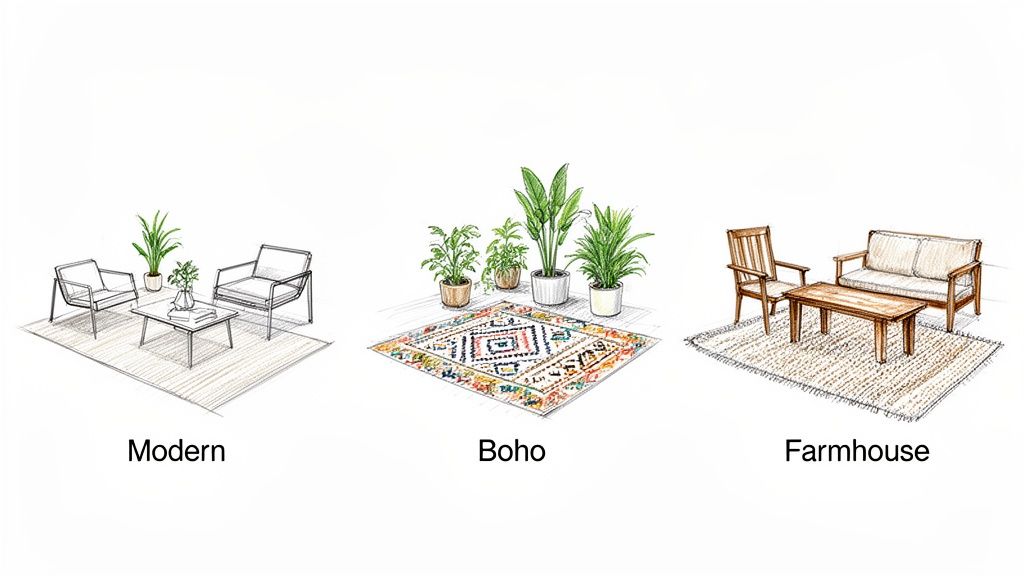
Creating a Cohesive Outdoor Look
Well-designed outdoor spaces feel intentional, and the rug is a huge part of that. Before you fall in love with a specific pattern, do a quick inventory of your space. What color is your siding or brick? What finish is your deck? What colors are already in your patio cushions?
Your goal is to find a rug that complements these existing pieces. You can go about this in a couple of ways:
- The Harmonizing Approach: This is a safe bet. Pick a rug with colors that are already present in your outdoor area. For instance, if your house has gray siding and you’ve got navy blue cushions, a rug with shades of blue and gray will create a beautifully seamless, coordinated look.
- The Contrasting Approach: Want to liven things up? Use the rug to inject a pop of accent color. If your patio is mostly neutral—think beiges and browns—a vibrant rug in terracotta, teal, or a sunny yellow can add a jolt of energy and create a clear focal point.
Design Insight: A great trick is to pull a secondary color from your surroundings for your rug. If your house is beige with dark green shutters, a rug that features that same green will feel deliberate and tie the whole look together perfectly.
Translating Interior Styles to Your Outdoor Oasis
So many of today’s popular interior design styles translate beautifully to outdoor living. Your rug is the perfect anchor to establish a specific theme, turning your patio into a true extension of your home.
Think about these common styles and how the right rug can help you nail the look:
- Modern Minimalist: This style is all about clean lines, uncluttered space, and a simple color palette. You’ll want to look for rugs with subtle geometric patterns, solid colors in neutral tones like charcoal or beige, or a classic, simple stripe. The rug should ground the space without screaming for attention.
- Rustic Farmhouse: For that cozy, modern farmhouse feel, look for rugs that mimic natural textures. A polypropylene rug designed to look like jute or sisal is a fantastic, durable choice. Simple patterns like plaid, wide stripes, or distressed traditional motifs in muted colors also work wonders.
- Vibrant Bohemian (Boho): This style is all about being eclectic, colorful, and full of personality. This is a great place to go bold with a rug featuring intricate medallions, global-inspired patterns, or a riot of warm colors like pink, orange, and rust. Fringed edges are another great touch that adds to the relaxed, boho vibe.
- Coastal or Nautical: To capture that breezy, on-the-water feel, lean into blues, whites, and sandy beiges. Classic stripes are the go-to for this style, but you can also find rugs with subtle wave patterns or even rope-like textures that really evoke a seaside atmosphere.
The Role of Color and Mood
Beyond just matching your furniture, the color of your rug has a huge impact on the mood of your outdoor space. Color psychology isn’t just for your living room; it works just as well under the sun and stars.
Think about the atmosphere you want to cultivate out there:
- For Relaxation and Calm: Cool colors like blues and greens are known to have a calming effect. They're perfect for creating a tranquil outdoor lounge area where you can kick back and unwind.
- For Energy and Socializing: Warm colors like reds, oranges, and yellows can create a more energetic and inviting vibe. This makes them ideal for a dining area where you host lively get-togethers with friends and family.
- For a Sophisticated Foundation: You can never go wrong with neutrals. Tones like gray, beige, and cream provide a versatile and timeless base that allows your furniture, plants, and other decor to really pop.
To really round out your new look, think about adding some essential outdoor entertaining accessories that tie in with your rug and elevate the space. The right mix of outdoor lighting, planters, and serving ware can take your styled patio from nice to absolutely stunning.
Keeping Your Outdoor Rug Clean and Maintained
Picking out the perfect outdoor rug is step one, but knowing how to care for it is what really makes it last season after season. Here in Georgia, the constant exposure to sun, a thick blanket of spring pollen, and those classic pop-up showers mean your rug needs a little attention to stay looking its best.
The good news? Most modern outdoor rugs, especially the polypropylene ones, are designed to be incredibly low-maintenance. A little bit of consistent care prevents dirt and grime from getting ground deep into the fibers, which is what causes a rug to look old before its time.
Routine Upkeep for Lasting Freshness
Simple, regular cleaning habits will do more for your rug than any deep-cleaning marathon. Think of it less as a big chore and more of a quick touch-up for your patio or deck.
- Sweep or Vacuum Regularly: Just like its indoor cousins, your outdoor rug is a magnet for dust, leaves, and dirt. Once a week, give it a good sweep with a broom. You can also use a vacuum, but just make sure to use a setting without the spinning beater bar to avoid snagging the fibers.
- Shake It Out: If your rug isn't too big to manage, giving it a good shake is a fantastic way to knock out all the trapped dirt. This works wonders on flatweave designs.
- Hose It Down Monthly: For a slightly deeper clean, pull the rug out onto the driveway or lawn and give it a thorough rinse with your garden hose. This is the easiest way to wash away that layer of pollen and grime that builds up over time.
Crucial Tip: The single most important thing you can do is let your rug dry completely after hosing it down or after a heavy rain. Drape it over a deck railing or a couple of patio chairs so air can circulate underneath. This is your number one defense against mold and mildew.
Tackling Common Stains and Issues
Life happens outside. Spills, bird droppings, and muddy paw prints are just part of the deal. Thankfully, synthetic outdoor rugs are built to resist stains and moisture, so when messes do happen, they’re usually easy to handle.
For most everyday spills, a simple mix of mild dish soap and water is your best friend. Grab a soft-bristled brush, gently scrub the spot, and then rinse it completely with clean water from the hose.
Here’s how to handle a few specific outdoor challenges:
- Mildew or Mold: If you spot some mildew starting to form, mix a solution of one part white vinegar to three parts water. Spray it on the area, let it sit for about 10-15 minutes, scrub gently with a soft brush, and rinse thoroughly.
- Tree Sap: This sticky stuff can be a pain. Try dabbing it with a rubbing alcohol-based hand sanitizer. Let it sit for a few minutes to break down the sap, then blot and scrub the area before rinsing it clean.
- Grease Stains: For those inevitable oily drips from the grill, immediately sprinkle cornstarch on the stain to soak up the grease. Let it sit for an hour, scrape it away, and then clean what's left with your trusty dish soap and water mixture.
Off-Season Storage to Protect Your Rug
While many synthetic rugs are tough enough to be left out all year, storing them during the winter months when you're not using your patio will seriously extend their lifespan. Protecting your rug from the worst of the cold and wet weather preserves its color and keeps the fibers strong.
Before you put it away, make absolutely sure the rug is completely clean and bone-dry. Any moisture trapped in the fibers can lead to musty smells or mildew while it's in storage.
Roll the rug up tightly with the colorful top side facing inward—this protects the pattern. Try to avoid folding it, as that can create permanent creases that are tough to get out. Stash it in a dry, protected spot like a garage, shed, or basement. If you can, keep it up off the concrete floor to avoid any potential dampness. Taking this one simple step ensures your rug will be fresh and ready to unroll the moment spring arrives.
Finding Your Perfect Outdoor Rug in North Georgia
After digging through all the details on materials, sizes, and styles, there's really only one thing left to do—see your options for yourself. Online research is a fantastic place to start, but nothing beats seeing and feeling a rug in person. It’s the final step that takes all the guesswork out of the equation.
Let’s be honest, digital photos can only tell you so much. Hopping into a showroom lets you see how vibrant the colors really are and feel the actual texture under your hand. Is that polypropylene weave softer than you thought? Is the pattern as bold as it looked on your phone? Answering these questions on the spot ensures the rug you bring home is the one you truly envisioned for your space.
Why a Local, Hands-On Approach Matters
Visiting a local store also gives you the chance to ask questions that are super specific to our North Georgia climate. You can chat with someone about which materials hold up best to our infamous pollen season, how certain colors resist fading in that intense summer sun, and get real, practical advice on cleaning and care from people who know their stuff.
Making a confident choice for your home is about more than just buying a product; it’s about feeling sure that your investment will last. Experiencing different outdoor rugs in person is one of the most effective ways to build that confidence.
It's clear that homeowners are putting more and more love into their spaces, both inside and out. In fact, the U.S. market for carpets and rugs is booming, with projections showing it could hit USD 13.24 billion by 2026, largely thanks to positive trends in homeownership. This just goes to show how much we all value creating beautiful, functional places to live. You can read more about these market trends over at Fortune Business Insights if you want to get nerdy with us.
Here at Woodstock Furniture & Mattress Outlet, our whole goal is to be that helpful local resource for you. We invite you to come by, walk around, and explore a great selection of outdoor rugs and furnishings in a friendly, no-pressure environment. Our team is here to help you pull all these ideas together so you can create an outdoor oasis you’ll love for years to come.
A Few Common Questions We Get About Outdoor Rugs
Once you've narrowed down your choices, a few final, practical questions usually pop up. We hear them all the time from North Georgia homeowners just like you, so we've put together some straightforward answers to help you feel totally confident in your decision.
Can My Outdoor Rug Actually Get Wet?
Yes, absolutely! Think of it this way: a good outdoor rug is designed for the outdoors, and in Georgia, that means rain. High-quality rugs, especially those made from synthetics like polypropylene, are built to handle moisture.
The fibers themselves don't absorb water, and the woven construction is meant to let it pass through and dry out. The real key here isn't keeping it dry, but making sure it can get dry. After a big storm, it's a smart move to lift a corner or even drape the rug over a porch railing for a bit. This lets air circulate underneath and prevents any musty smells.
How Do I Keep My Outdoor Rug from Blowing Away?
This is a huge one, especially for those of us with open patios or breezy decks. You don't want to chase your rug across the yard every time the wind picks up. The easiest and most effective trick is to use your furniture as an anchor.
By arranging your seating area so that at least the front legs of your chairs and sofa are sitting on the rug, you add a ton of weight that keeps it in place. If that's not quite enough for a lighter rug or a particularly windy spot, you've got a few other options:
- Outdoor Rug Pads: These are a great idea. Not only do they add some weight, but they also provide grip to keep the rug from sliding around on smooth concrete or decking.
- Double-Sided Carpet Tape: Look for a heavy-duty, weather-resistant version. A few strips along the corners and edges can work wonders.
- Large Planters: This is a great trick because it's both functional and stylish. Placing a heavy potted plant on each corner is a beautiful way to weigh a rug down.
Will an Outdoor Rug Damage My Wood Deck?
A well-chosen outdoor rug won't damage your wood deck, but the wrong one (or the right one cared for improperly) can. The enemy here is trapped moisture. If water gets stuck between the rug and the wood, it can lead to discoloration or even rot over time.
To avoid this, stick with a rug that has a breathable weave—something that water can pass through easily. And just like we mentioned above, make it a habit to lift the rug and let the deck air out completely after a heavy rain. The one thing you absolutely want to avoid is a rug with a solid rubber or latex backing, as those are notorious for trapping water.
Ready to see for yourself how the right rug can completely transform your patio, porch, or deck? At Woodstock Furniture & Mattress Outlet, we have a great selection of outdoor furnishings ready to help you build the outdoor living space you've been dreaming of. Come on down to one of our North Georgia showrooms to see and feel the options in person. Find your nearest location and start planning your visit today!
Leave a Reply
You must be logged in to post a comment.